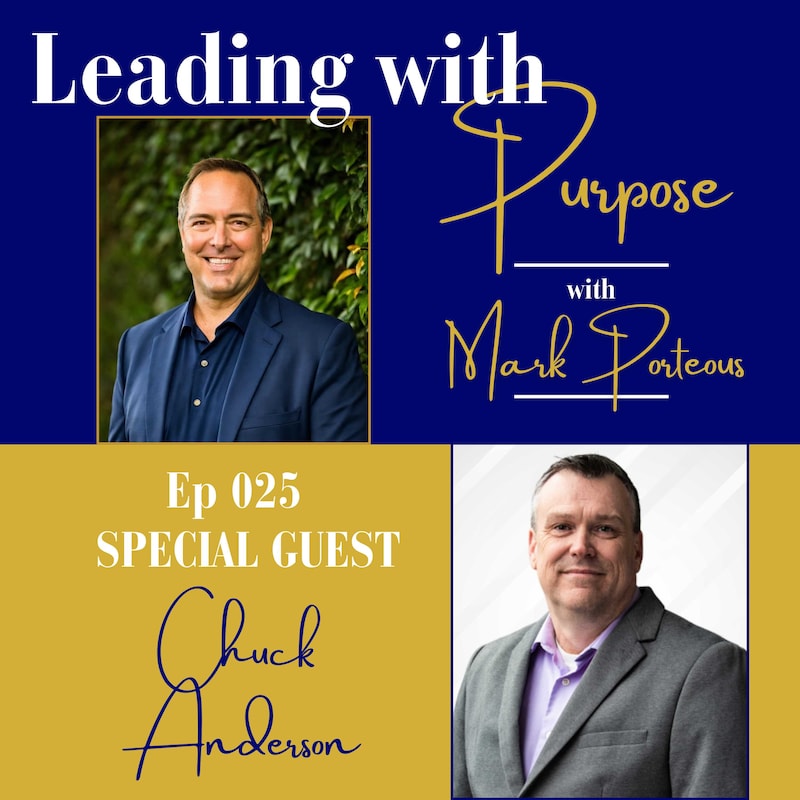
Shownotes
Most business owners know affiliate marketing could work for them… but they never build it into something consistent. In this conversation, Mark Porteous sits down with Chuck Anderson to break down what actually makes affiliate partnerships perform. Chuck shares how to move beyond one-off promotions and into a structured ecosystem where partners are aligned, supported, and motivated to follow through.
What really stands out is how simple this can be when it’s done right. Instead of chasing content, ads, or constant launches, this approach focuses on relationships, collaboration, and creating offers that others genuinely want to promote. The result is a more predictable way to generate leads, fill events, and grow without burning out.
Key Takeaways:
- Affiliate marketing works best when it’s treated as a long-term system, not a one-time promotion.
- The most effective traffic strategy is referral-based because you only pay after results happen.
- Most affiliate campaigns fail not because of partners, but because of poor structure and support.
- A compelling, clear commission offer makes all the difference in getting partners excited to promote.
- Free entry points like webinars or workshops convert far better than sending traffic directly to paid offers.
- Follow-up and relationship management dramatically increase affiliate performance.
- The strongest affiliate ecosystems are built on collaboration, not transactional promotion swaps.
About Chuck Anderson:
Chuck Anderson is a trusted guide in the world of affiliate management, bringing over 20 years of expertise to the table. As an authority in recruiting, training, and managing affiliates, he has dedicated his career to mastering the intricacies of what it takes to run a highly successful affiliate program. In his upcoming presentation, Chuck will share the insights and strategies you need to attract and empower affiliates to promote your products, events, and services effectively.
Website: https://www.chuckandersoncoaching.com/
Free Gift: https://www.cmapn.com/webinar
About Me:
Hi, I’m Mark Porteous; the Soul Connector.
My stand is for ALL people to recognize themselves as Divine Beings who have chosen the human experience for a reason and to live in alignment with that knowing, so they can THRIVE in their purpose of transforming lives.
I help mission driven entrepreneurs to make their Soul Connections so that they can impact and change the world, scale their businesses to six and seven figures, and enjoy thrilling Soul Success in every arena of their lives.
Connect with me at:
https://www.linkedin.com/in/markcporteous
https://www.instagram.com/mark.porteous1/
https://www.facebook.com/markcporteous/
Take the Soulful Leadership Assessment here: https://markporteous.com/#tve-jump-184964db927
Thanks for listening!
Thanks so much for listening to our podcast! If you enjoyed this episode and think that others could benefit from listening, please share it using the social media buttons on this page.
Do you have some feedback or questions about this episode? Leave a comment in the section below!
Subscribe to the podcast
If you would like to get automatic updates of new podcast episodes, you can subscribe to the podcast on Apple Podcasts or Stitcher. You can also subscribe in your favorite podcast app.
Leave us an Apple Podcasts review
Ratings and reviews from our listeners are extremely valuable to us and greatly appreciated. They help our podcast rank higher on Apple Podcasts, which exposes our show to more awesome listeners like you. If you have a minute, please leave an honest review on Apple Podcasts.
Transcripts
Mark Porteous: Chuck. Hello. Today's guest is Chuck Anderson, a strategist who helps business owners design, recruit, train and manage affiliate partner networks that actually perform consistently. Chuck specializes in turning scattered or underperforming affiliate efforts into structured, scalable systems. His work helps entrepreneurs move away from one off promotions and instead build a long term ecosystem where affiliates are motivated, supported and aligned with the mission of the business. You know, I love that. If you've ever thought, I know affiliates could work for my business, but I don't know how to make it sustainable. This conversation is for you. Hello, Chuck. Welcome to leading with purpose.
Chuck Anderson:Mark. I am so honored to be here, and that was a very nice introduction. Well done. I hope I live up to that today.
Chuck Anderson:Mark Porteous: Well, I know that based on your history, that is what you do for clients all the time. People will get out of this. What they get out of it, but I know that you always come fully ready to be generous with your wisdom, your experience. And some people may not even know what an affiliate is. I talk about all the time, you and I, it's normal stuff, but people also define it a little bit differently for different people. Tell us when people say, what is an affiliate? How do you define that for our industry?
Chuck Anderson:Yeah, and I thank you for that, because I think the word has a different definition for a lot of people, especially in the transformational industry and coaches and consultants that we tend to work with, when they hear the word affiliate, what they automatically think of is a JV or a joint venture or a promotion swap. And that's one type of affiliate relationship. But very simple, an affiliate program is, you know, an affiliate is someone who promotes you, promote some some offer that you have, and that's going to help you to generate leads and bring in clients. And when your clients pay you, you then take a percentage of the money that your clients pay you, and you pay it back to your affiliate as a commission. And on the other side, you can also be an affiliate. You can promote other people's stuff that has an affiliate program, and you can earn commissions. And that's really what an affiliate program is. It's it's the two sides, you have affiliates who are promoting offers, looking to earn commissions or or a portion of the the revenue on you. On the other side, you have the offer, you are looking for affiliates to promote you. And so we work with the latter, and that is most of our clients are and the people that we work with are coaches and consultants and people with services and offers, and they want to get as many affiliates promoting them as possible, because that's where their leads and their clients come from.
Chuck Anderson:Mark Porteous: So I know this is a big voted question about, How do you get people to do that? Because it seems like the main thing most of the partners that I want, that I work with, they want the same thing for them. So it's usually, is a cross promotion. If you're asked people to promote you, then they Okay, can you promote me also? Or is there a way to get more people to promote you than you're promoting back,
Chuck Anderson:yeah, there absolutely is a way, and it takes some creativity and and some planning ahead. And what happens is, when you don't you know first of all, the this side of it, and that is when you when you don't plan ahead, when you don't already have a plan on how you're going to do that, then you end up doing the default and and I always talk about how, you know, JVs or promotion swaps tend to be the default, especially in our industry. And so if you're on a one on one call with somebody who you're asking them to promote you, if you don't have a structure or an offer and a reason for them to promote you. Without you promoting them back, then you're going to end up with the default and and in in so most people, just because they don't have that in place, are going to say, Okay, well, Mark, could you promote my webinar in February? And you say, Yeah, that's great. I will definitely do that. And by the way, my my workshop is in March, I'll get you to promote me back. And that's a perfectly fine proposition when it makes sense for your list, when it makes sense for, you know, your promotion schedule and all of that, but, but I talked to so many people, and they're like, Well, do I have to do the reciprocal thing all the time? And actually, you don't. And you know, in my background where we I ran an affiliate program for a $20 million seminar company. 40% of our sales of that 20 million came from our affiliate partners. Uh, reciprocal promotions were like the smallest part of that whole a. Arrangement, the majority of our affiliates were people with media. So at the time, a lot of email newsletters. Today, it's still email newsletters, it's Facebook groups, it's podcasters, it's people with communities, it's people with YouTube channels, anyone who has reach, and they are just simply looking for an opportunity to monetize their audience and so, so really, the proposition is they will promote you, and you do your best to take those
Chuck Anderson:leads and turn them into clients. And when they do and when your client pays you, you're going to pay them a commission, and that's helping them monetize. Now you can still do do this with with people who you would typically partner with or swap with, but again, you have to be creative, and what we like to do is do things like collaborative campaigns and so. So if you don't want to do the default where I promote you, you promote me. Come up with a collaborative campaign that sits in between your you know, outreach and where you meet people. Could be at networking events, could be through your podcast, could be whatever, and then ultimately, what they want people to promote. And our favorite kind of collaborative campaign is, is is a virtual Summit. So our partners are, they're promoting us, but they're really simultaneously promoting themselves. In fact, they perceive it as a way to promote themselves. They're not really doing it to promote me. It's a collaborative effort. So, you know, for example, we just, we just did a webinar recently where it was a panel webinar. It was me plus five of my guests, and we, I interviewed them on a panel, and they all helped to promote the event. And so none of them are asking us to promote them back. That was the collaborative event. It was, it was something that they perceived as something that would promote them. And so it's, it is a one way. And now anyone that signed up for that event, who becomes our client, we're going to pay them a very healthy commission and share of the revenue because of that. And so it's win, win, win. It's a win for the audience, it's a win for your partners, it's a win for you. And when you when you structure that. This is why we start talking about ecosystems and things like that, where if you build more of this collaborative stuff into your offers, then you don't have to rely on the default do swaps when they make sense, but don't have that be the default way that you partner
Chuck Anderson:Mark Porteous: Somebody that might be listening and not familiar with affiliates. This might sound a little overwhelming, so I'm gonna I'm gonna bring it back in a moment, but before we do that, I wanna make sure they understand why they wanna listen a little bit more about the basics of it. What do you think is the reason why this is the number one marketing strategy? Because, again, for somebody that's just hearing it's like, oh, that's just one more thing to do. I'll just keep posting on Facebook, or I'll just keep doing the thing that I'm doing. Why is affiliate marketing your go to?
Chuck Anderson:Yeah, well, first of all, you're probably you are busy doing things like creating content for Google and for Facebook and Instagram and LinkedIn and all of the things, maybe even YouTube and it's, it's a lot of work. A lot of people think of that as free advertising. It's not really free, because you're paying with your time, and what is your time worth? And and so we always talk about that. There's three types of traffic. There's the organic traffic, which a lot of people think is free, and that's the that's what we just talked about, the Googles, the Facebook's, the linkedins, the social media, the youtubes. Then when you get frustrated you don't have enough time, you go, well, maybe I just pay for the traffic, and you'll run ads like Facebook ads or something like that. And of course, you can open your wallet, you can buy as many leads as you want, but you probably don't have the budget for that. So then there's the third way, and that is referral traffic, and that is what you want to think about, is who already has lists or groups or reach of my ideal customer that I want to get, and how can I structure a program where they will promote me to that group and and it's not something you have to pay upfront for. And so getting back to your question is, why? Because it's the only strategy where you pay after the sale is made, whereas all of the other strategies, and this is why I prefaced it the way I did, is because even with the so called free, not free, traffic that you're getting, you're paying with your time constant content. Creation with all of that, or the paid traffic, where you're paying with your money and hoping and praying that you're going to get a positive return on investment. And both of those are what most people are doing. It's in my and I've taught you know, I used to own an ADS agency. I used to own a an SEO agency, so I know all of the things. When I really look at my entire history of almost 30 years online
Chuck Anderson:now, can't believe it's been that long. I had to ask myself, what, what has always worked the best, what has always been the most consistent, and that is referral traffic, having other people promote us to their lists and then compensating them very, very well for doing that.
Chuck Anderson:Mark Porteous: And we talked about ecosystems. You help clients create a 12 month affiliate strategy in as little as 90 minutes. What are the core elements that most people are missing when they try to wing it with affiliates.
Chuck Anderson:Yeah, there's, there's, there's a few things. Number one is you, you along, even work backwards, right? And so I think it has to start with a really compelling offer. Be generous with the amount, you know, the percentage of revenue that you're willing to share with your affiliate, but not too generous. And so the mistake there is some, some people try to pay the bare minimum. And so it's like, you know, here's my $5,000 coaching program, and I'm going to pay you the equivalent of what would be like 3% of that, and it's not exciting enough to get people involved. But at the same time, if you have a $5,000 coaching program, you don't have to give them 50% either, right? And so that there's being generous, but too generous. And so So you want to come come up with $1 amount. People often think in percentages, but I'm going to suggest take that a step further. Do the math for them. Don't say, Oh, I paid 20% tell them that you pay them $1,000 commission on this $5,000 product. Now everyone knows what $1,000 is, so they're going to be excited about it. So that's the first thing. Is, you have to have an offer. That's clear. And so Mark, every time someone you refers to me, you refer to me, becomes a client, I'm going to pay you $1,000 for that. Great that's exciting. Everyone knows what they could do with $1,000 so that's, that's tick box number one, and that is a compelling offer. The second thing is, what are you going to ask them to promote? Is it going to be a webinar, a workshop or an event or a lead magnet? And highly recommend that it's something free to start with. A lot of people try to shortcut the system. Go well, my affiliates can just send them right to my order page, and they're gonna sign up for my $5,000 coaching program, my $500 program, they're not, but they're not Hi, yeah, or even the $100 program, to be perfectly frank. Like, if we compare the results between having a free offer that leads to a paid offer and just
Chuck Anderson:going directly to the paid offer, the free that leads to the paid wins every time, right? We're very big on tracking the numbers and all of that. So you want to have a free offer that's a value add for your affiliate, so when they send it out to their list, they look like a hero for for recommending. And it's like, Hey, here's this free thing that you know, it's going to help you out, and so that's going to help you to generate leads that you can then turn into clients. But it doesn't stop there, because, again, you got to remember your affiliates and your partners. They don't work for you. They're busy, busy, busy people. You got to make it very, very easy for them. So pre write emails that they can copy, paste and send, pre write social media posts that they can copy, paste and post and even write little invite scripts that they could send to their friends via text message or WhatsApp or Facebook or LinkedIn or whatever, and invite people personally and and so you just make it so brain dead simple, that all they have to do is copy, paste and send, right? That's the first thing, or that's the second thing. So working backwards, we have our offer, then we've made it our affiliate program, with our copy and everything. That just makes it really, really super easy, and then, and then what you want to use to fill that is you need some way of meeting affiliates. And so going to networking events is a great way to meet partners and events I oh and partners and affiliates, and I meet a lot of them at virtual events and live events. In fact, historically, that's where majority of them have been,
Chuck Anderson:where we meet and partner with people. People, and so events are absolutely the best. And in between events, I like using my podcast because, you know, let's say mark, you and I didn't know each other, and I email you and say, Hey, Mark, I came across you on LinkedIn, and I think we'd make really good partners, and I'd like to invite you to my affiliate program so I can pay you some money. And you think that that is exciting, but probably that's going to get get ignored or perceived as spam or whatever. So we need a good way to get into relationship with people that doesn't involve pitching them right out of the gate. For that, I use my interview style podcast, and so I can identify mark as being, Oh, Mark, you're you. I found you on LinkedIn. You looks like we serve the same group. I have a podcast, and I would love to invite you to be interviewed on my podcast. Would you be open to that? Now you're going to perceive that as a way to promote yourself. So you're likely to say yes, and then, you know, we can propose partnership a little bit later on, once we've gotten to know each other. But you know, you've got to have your go to way of meeting affiliates. Networking events are great. I love using my LinkedIn plus my interview style podcast. So if you have a podcast, you can use it in that way. So you need those three parts. You need a way to find affiliates. You need to give them everything. They need to make it super easy. And you need that compelling offer that is really exciting, generous, but not too generous, so that they will want to promote you.
Chuck Anderson:Mark Porteous: I love that. And again, always start with that win, win win attitude in mind. And I know that when you work with your clients, you always start by reviewing past results, both the wins, the things that went well, and the failures, things that didn't go so well. Why do you believe this step is so critical, and what patterns do you typically uncover when people look honestly at what they've already tried?
Chuck Anderson:Yeah, the one of the mistakes that I see is that people's marketing attempts are very iterative. So, you know, I try something that didn't work, and instead of reverting back to a time where they were getting the best possible result, they just plan something else and go, and then they plan something else and go, and you're just, you're just, it's like spinning the roulette wheel, like you're hoping for a win, but, you know, maybe you'll win, but most likely you're not going to. And so it's you're just kind of hoping and praying things are going to work. And and so instead, and then you end up at a place where, well, nothing works. So I'm just going to go create this new thing, right? And we hear it all the time in our industry, oh, I'm creating a new program. Whenever I hear that, I'm like, Why? Why are you creating a new program? What was wrong with the old program? So rather than going down that path, what if we just went back to a time where you were succeeding, where you were the most successful, and and say, Okay, what worked. We can also look at what didn't work, but what worked, and how do we do more of that? And how can we leverage that with our partners and our affiliates so that we're giving them an offer to promote that work, so rather than just, you know, test after test or attempt after attempt after attempt, go back to a time where you're getting the best result and try to improve that result. If it improved, great. That becomes the new standard. If it didn't work, go back and test something else, but always branching off your last best result. And so I believe that the numbers and the story behind your best result is really going to hold the keys to building an even more successful campaign.
Chuck Anderson:Mark Porteous: And I love the focus on what worked. It is really important to be able to continue tweaking the things that do work, but when affiliate promotions don't perform, I know that a lot of times I've seen this without with our own clients, business owners often blame the affiliate, like, Oh, my launch didn't go well because the of the affiliates in your work, what are some of the most common real reason campaigns fail? And how do you think that those common mistakes can be corrected?
Chuck Anderson:Well, first of all, I'm going to say it's never the affiliate's fault. And being the enlightened beings that we are in the transformational industry, we have to take responsibility for our results. And so that means, and this is how I approach it is, what can I do to make my affiliates more successful. What can I do to make this whole campaign work better? And what do my affiliates need? And so let's say for the common thing that we hear is that, well, I got these affiliates that said they will promote me, but they didn't promote me. Me. And in fact, in the early days in the industry, we used to joke that the 8020 rule was more like the 99 one rule, and that is, 99% of your results came from 1% of your affiliates. And then we would just say, like, don't bother with the rest. And you know, I feel bad I was part of that club there for a while, but what I realized is that's very transactional thinking, right? It's like, oh, that affiliate promoted me, but they didn't make any sales, so therefore I'm never working with that person again. What if it wasn't that? What if you, if you spent some time unpacking, especially if they put in a really good attempt, and you can see that they they promoted you, it just didn't convert. What about what do you need to learn about that experience and their traffic and their audience to make it work, right? How do we make it easier for our affiliates to promote and the take the follow through? How do we structure our campaign to where following through is a no brainer, right? And this is why we love summits and giveaways and and panels and collaborative events so much, because they have a vested interest in it. And so we've made it a no brainer. They perceive it as promoting themselves even more than promoting me. And so we get a 99% follow through rate. Well, we've flipped the 99 one rule on its head right, and so it's not transactional. It's not like, what would these lazy affiliates are not promoting me? It's
Chuck Anderson:like, no, no. What can I do to inspire or build into my ecosystem where follow through is automatic and and and that's what really solves the problem, and that's where we have to take a very responsible approach to to look at this and go, you know, okay, so they're not falling through on my offer. They're probably just busy, or they don't know what to do, or maybe they needed a little bit of training, right?
Chuck Anderson:Mark Porteous: Absolutely, all those things. And a lot of times they have people say, oh, you know, they didn't, I'm looking at the clicks, I'm looking at the numbers. It doesn't even look like they and they may not have, they may not have even seen your emails. And so people are afraid to, like, follow up and say, Did you get it? And do you have everything that you need?
Chuck Anderson:You know, I did a campaign just this past week where we had five major partners promoting it, and a few days before the event, we were looking at it, and three out of the five were killing it. They were doing very, very well, and two out of the five it looked like one hadn't done anything, and it looked like the other one had done very little, and and so. So we could say, we have a choice. We could say, oh, those two partners, right? Or we could say, how can we support those two? What is it that is missing from our end, that that we could bring to the table that will, that will inspire those two to follow through. And honestly, sometimes it's just as simple as an email saying, hey, just checking in See how it's going. Do you need any support? Do you need any help? It's not like, Hey, you agreed to promote on Wednesday and you didn't promote on Wednesday. No, that's transactional, thinking. It's more. We're just trying to, you know, find out from them what they need. So we did that, and one of those two ended up being our top promoter for the event. It's just from a simple reach out. There was one little thing that, you know, she was using the wrong link, or, or, or, you know, something. And so we cleared it up, and she became our top promoter. So you never know it. Don't make it transactional. Make it about relationships. So if you really honor the relationship, then reach out and support and and really nurture the follow through. And when you do that, then you'll win. And 80% of the time, I think that the lack of follow through could be solved with just some simple love and outreach to the partner who already agreed to promote you absolutely.
Chuck Anderson:Mark Porteous: And I think a lot of times again, people are afraid to follow up because they don't want to seem transactional. They're like they said they were going to mail today, but I'm not seeing anything. And when you say, Hey, we're friends, I can just reach out and just say, Chuck, I know you said you mailing today, and we're not saying that. Oh, my God, I mailed this morning. We the affiliate link is broken. That stops you from the next mailing that you're about to do, from sending another broken one, because otherwise people don't hear it. They're keep promoting a bad link. So the idea of, when you're building a real relationship, it's okay to just reach out and say, you know, we were tracking this. But that brings up a question generally around tracking, because there's lots of different ways to do it. Having a good affiliate system is important, I think, as far as tracking. Can goes and kind of the technology. What should business owners look for when they're setting up their own systems?
Chuck Anderson:Well, the very first step you're going to take is you're going to look at your existing systems and see if it has affiliate tracking capabilities. Because I get asked all the time like, what's the go to software platform, or what's the go to CRM platform? And, you know, depending on when you're listening to this, I mean, at the time, I will mention go high level is very, very popular. And, you know, yes, it has affiliate tracking capabilities. Is that the go to platform, not necessarily, if you're already in it, then great, you have affiliate tracking capabilities. But you the platform you're already in might have affiliate tracking capabilities. And I will tell you that moving from one platform to another is there's usually not a good business case for doing that, it's just a Make Work Project, and you're going to lose 75% of your list right now in the process of moving it from one platform to another. So step one is check what you already have and see the word how the affiliate was that
Chuck Anderson:Mark Porteous: You mentioned the word CRM, and I know what that is, but just for anybody who may not be who?
Chuck Anderson:Yeah, yeah, customer relationship management platform, and so in other words, it's where you host your email list and how you generate leads. So for example, a lot of people will use a platform like MailChimp or something like that, to host a email list, and they gather leads, and they will use that to email out now, just so and why? Because it's a free it's usually free to start, and a lot of people are using it for their newsletters. However, it does not have affiliate tracking capabilities. So that's an example of one where you're probably going to want to move your list or or, or at least connect it to something else that does have affiliate tracking capabilities. So So you might be in something like go high level or System IO or kartra or Kajabi or click funnels, and there's lots and lots of platforms that we could mention that do have affiliate tracking capabilities. The very first step you're going to do is check to see what you are currently using to host your business and to host your contacts list and and look into whether or not it has those capabilities.
Chuck Anderson:Mark Porteous: So that brings to mind kind of a shift in the conversation. There's kind of two parts I see with affiliate management. We were just talking about the kind of the the the structure of it, the technology, the tracking. That's not my favorite part, but it's such an important piece of it. The upfront piece is really the relational part of, how are we a good fit? How are we both serving? Talk about that. Win, win, win. What are some of the things that you look for? Like, how do you know, because you do a lot of networking, and not everybody is a good fit for everybody. So whether it's for yourself or for your clients, particularly, what is the process that you go through to tell somebody's a really good, aligned partnership, and are there steps that you do in the beginning of partnering with somebody.
Chuck Anderson:And in fact, I'll take that further, and there's there's five steps that we do that are that really map out the entire journey. We call it the five keys of running a highly successful affiliate program. And the first one is recruiting your affiliates or finding a partner or affiliate. Most people start and stop there. There's definitely four more things you need to do after that. But the first thing is recruiting not just anyone, but the right fit. And the first thing I look for is, okay, Mark, do we serve the same target audience? Do we serve the same kind of people? Is there good collaboration opportunity here. So if you promote me, and if we end up doing a swap, I promote you. Is that a good mint, good fit? Is it a good match? And and, you know, you can go on, you know, some people go further than that and go, Well, you know, what's your list size and things like that? I it's a question I very rarely ask because list size is so relative. But I will, I might, in my discovery, find out some, you know, hey, you know, do you run webinars and events, and when you promote them, how many people do you typically have on your events? I mean, that's much more useful information to me than how much is, you know? How big is your list? That are 100,000 people that couldn't put 10 people in a webinar, right?
Chuck Anderson:Mark Porteous: Yeah, I'm so glad you brought that up, because, again, some people get really uncomfortable about that, and we get uncomfortable asking it. And the way that you shape that is so different. Instead of saying, you know, how big is your list, you can say, well, how well do you perform?
Chuck Anderson:Really, without actually. Saying the word perform, but yes, asking some other question that give, just give you a sense. I and it's not like, oh, well, you can put 100 people in your webinar, and I can put 300 people in mine. So it's not about comparison. It's just about, you know, guest engaging. Are we a good fit or not? And because I don't care, like, I don't care if you can put 10 people in my event or 100 people in my event. Are we a good fit? That's the first No. Are we a good match? So recruiting, so we find our affiliates that way. But then we, like I said, most people, start and stop there. They recruit their affiliate, they give them an affiliate link and some swipe copy and go, Okay, go, promote me. Why didn't you promote me? And so we have to go beyond that. So the second step is to train them. Do not assume that they know what to do with your swipe copy. Even though everyone knows how to send an email, don't assume that they're they know what to do. They're going to open the document, and they're not going to do any thinking, right? They just don't. They're already busy, so you have to show them. Take this email, copy and paste it in, do the first name thing, put your affiliate link in and send it out, right? It takes two minutes to say that on a video tutorial or in a live meeting. So we train them. Here's what you do with the emails, here's what you do with the social media posts. Here's the schedule that we're following or the date range that we're asking to send these out in we give them that training. And so so we we set those expectations along with dates, dates. And so we'll say there's our promotion window, and here's three emails. Can you pick three dates within those with within that window that work for you, and or we will suggest dates and go, Okay, great. So now that you know what to do and you have the dates, is it okay? And this is the the answer to your other question mark, about being shy about following up
Chuck Anderson:with them, because the third step is management. I so in between training and management, we say one very important yes or no question, and that is, is it okay if I reach out to you during the promotion period to just check in and see how it's going? And they always say yes to that, right? So now you have permission. You can you can email them all you want. Hey, it's Wednesday. You know they said they were going to do it on Tuesday. Let me check in. Hey, Mark, just wanted to see I know in our last conversation, you were going to email on this date, this date and this date. Just wanted to check in and see how that's going. And so that's the management piece, and some people call it herding of the cats. But when you do it right, there's no herding of any cats. Like they're not cats. They're they're very willing participants who want to follow through because they want to be. They want to follow through on their word. They said integrity, right in integrity. And if they're not, and they go, Oh man, I messed that up, they're like, Oh yeah, no problem. I'll send it today, right, like, and sometimes that happens, but you're managing the follow through. Don't just give them the copy and the link and the dates and hope for the best. Actually work with them. You know, this is the relationship piece. So that's the first the third step, the fourth step, is to celebrate, celebrate the wins and show gratitude. And I've had people who did a promotion who we thought we'd do more. They only sent us one lead, but we sent them a letter of gratitude and and saying, Hey, thank you so much. We look forward to your participation again. And they're like, Oh man, thanks. But you know, I'm so embarrassed I only sent one and I'll def when's your next one? I'll do it. And then they go from one to 100 just because we said, Thank you, right, thank you not like, oh, that silly affiliate only sent me one lead. We said, Thank you for sending that one lead. That's amazing.
Chuck Anderson:We look forward to doing this again. And that's the fifth step, is to ask them to repeat. Could they do it again in the future? So we it's our mantra, our five keys, recruit, train, manage, celebrate, repeat. And that's if you do all those five things, you can't help but to win, because you're you're approaching it from a relationship point of view, and not a transaction.
Chuck Anderson:Mark Porteous: Absolutely, one of the things that came up when you're talking about the five steps, I think, was during Step three, I was thinking about how you want to be the kind of partner that you want to attract as well, and so while you want to be as clear and communicating and that make sure everybody has all the information so they can follow through that you also want to follow through. You want to make sure that you do put it on the counter. And I know that it's really easy with all the things that people have going on that they don't see an email or whatever else. And so again, when somebody reaches out. To us and says, Hey, do you have the calendar that? Oh, thank goodness you reminded me ahead of time. You know, be grateful for that and not feel like, Oh, they're just being transactional. No, they're just helping you to stay organized. Because, you know, we all need it. So being the kind of partner that you
Chuck Anderson:Yes, I love that. Be the kind of partner that you want to attract. And so that because, because it's, it's, again, that's an integrity conversation as well. Is like, if I'm expecting you mark to to to do 110% effort in promoting me and I do the bare minimum, there's there, there's a miss, there's a misalignment there, and that energy, okay, for those in we're in the transformation industry, so we might as well go, go with that. But the energy of doing the bare minimum is, if you believe in what you put out there, you'll receive back. You're going to receive back the bare minimum
Chuck Anderson:Mark Porteous: Totally. And you mentioned the transformation industry. We've talked about integrity a lot. You are a leader of leaders, the people that you serve are leading communities, and you're helping lead them in this marketing strategy. The name of our show is leading with purpose. And I'm curious for you, what does leading with purpose mean to you Chuck?
Chuck Anderson:Leading with purpose? First of all, you know what? What's the mission? What's the we call our we call the people we work with, big impact experts. And we know that because from the conversations we have with them, they prioritize impact over profits. When we ask them why they do what they do, it's because they want to make a big positive impact in the lives of their clients, in their communities, in their country and even the world, right? Because they're very you know, impact means a lot. They want to know that their work is meaningful, that it is benefiting people in a positive way. So when I think of what is my purpose, the check in always, is, is this making a difference? Is this? Is there a ripple effect to the work that I do? So Mark, if you're a leader of leaders, also which you are, and I'm working with you, there is a ripple effect of that. And so I work with you, you work with others. They work with others. They work with others, etc, and that makes a huge impact. And so for me, I always envision, everything I do, everything I create, every decision I make, every podcast that I'm on, every event that I host, is it making a difference? And for me, if the answer is no, I stopped doing it right, or maybe I thought it would make a difference, and I'm like, yeah, no, the energy was all wrong on that. Yeah, right. And getting back to that, does it align with what I really want to do? And you know, my legacy is that I want the work to have made a difference positively in the lives of others.
Chuck Anderson:Mark Porteous: I love that. And you mentioned every event you do you wanted to make it make a difference. You host an event every month that goes over a lot of these things tell us a little bit about what that event is and how people can participate in that.
Chuck Anderson:Yeah. So, so I do a workshop every month. It's a free 90 minute workshop, and it's very important to me. It's free. It's, I consider it to be the front door of my business. It's, it's, you know, it's, it takes everything that we've talked about here, and I teach it at, you know, A to Z, A to Z, however you want to say it. Z, I'm Canadian, so I didn't even know how to say it anymore. The Zed we know from start to finish, we'll put it that way. Okay, so it's called How to Get affiliates to send you clients and fill your events. And I added that and fill your events part because so many people that we know in the transformation industry get clients through webinars and workshops in some sort of sort of virtual event, and we don't want you to give up on them because you can't fill them, and affiliates will help you to fill them. In fact, in that workshop, you're going to learn three types of affiliate relationships that can fill any webinar workshop or coaching program to full capacity when you do it right, and you do some of the things that I've already talked about here today. So it's 90 minutes, it's absolutely free, you'll walk away knowing exactly what what it is, the map, the business model that you can start to use immediately, regardless of your stage of business. You could be early stage, or you could be like Mega influencer, the the models the same, just that scale, and so you're going to walk away knowing all of that and what to do, and plus some some tips on how to accelerate your growth through affiliate partnerships.
Chuck Anderson:Mark Porteous: I love that you brought up that it's the. The full spectrum, whether you're just starting off, because a lot of times people like, Oh, I'm not ready for JVs yet. And like, you know, plant the tree now, so that when you are ready, you know, come and learn. But then there's also a lot of people like, Oh, I've been doing JVs forever. And like, Okay, well, how are they working out? Oh, I'm not filling my events. And anytime I hear that, I'm like, if you're not filling your events through JVs, there's something that could probably be tweaked and done better. And I believe Chuck could probably help you out with that. So even if you are experienced, if you're not getting the results from your JVs or you're not able to fill your events, definitely come to this. We'll put the links below, but tell us. What is the URL again, it's
Chuck Anderson:Well, I wish I had a better one. It's C, M, A, P, N, it's my initials.com, forward slash webinar. And so yeah, you can also find me at Chuck Anderson coaching.com the links are already there. That's probably we'll put, we'll send you both of those. And I just, I wanted to add something that you really said, that was that really stood out to me about stage of business, right? Because we could take someone, obviously, who has 100,000 person list, and we could really leverage that, and there's a lot of scalability that we can add to that, because they have this big list and a lot of early stage people like our events. We survey all of our events, we know that 70% of our audience are early stage. People like, I'm just starting my coaching program, and I'm like, awesome. And they're like, I'm not ready for this yet. I'm like, let me ask you a question. Do you have a list of at least zero? If the answer is yes, then we have a solution for you. In fact, if you go and try to do some of the other things like partner swaps and things like that, with a list that's too small, you're going to spin your wheels and you're going to get very frustrated. But if you have a list of zero, but you have a purpose, you have a message and you have an ideal audience, we can help to structure a collaborative campaign that will help you to go from zero to growing list right away. In fact, if I had to start my business again, all over again, from clean slate tomorrow, this is exactly what I would do before I do any sort of Google stuff, social media, YouTube, even podcasting, I wouldn't do any of it. I would host a webinar. I would craft the message for that webinar, and I would go and find partners to help me fill it. You go from zero to launched in one event, and it's you know, hear me when I say this. It does not have to be hard.
Chuck Anderson:Mark Porteous: That is an important message, because I think that the work that we do is very serious and we are big impact focused, and we can't do the big impact stuff if we're not having fun taking care of ourselves and enjoying the ride.
Chuck Anderson:Absolutely, in fact, yeah, absolutely enjoy the ride. They say that life's too short. Yeah, it's too short to do things you don't love to do. And that's what's wonderful about the transformational industry, because we're a lot of us got into this because we wanted to make a big impact while doing work that we love with people that we love to serve. Right?
Chuck Anderson:Mark Porteous: And well, Chuck, I am very excited again. I want people to check out. We'll put the links below to come check out your monthly workshop. What would what are the last words you'd like to leave our listeners with today?
Chuck Anderson:Yeah, so here's, here's, here's how I end every conversation, and that is, there's no challenge too big to be overcome, and you might be one collaboration or partnership away from the big, big breakthrough that you need to make, that big, positive impact in the world that you know you are meant to make. So just keep moving forward. Look for people to work with, and that's it. That's you know, the only way to fail is to quit. So keep moving forward.
Chuck Anderson:Mark Porteous: I love it. I appreciate it, and thank you so much for the work that you do. I'm grateful for our connection, and look forward to more collaborations with you.
Chuck Anderson:Thank you, Mark. I really appreciate this time. Thank you
Chuck Anderson:Mark Porteous: My pleasure for all of you out there. We appreciate you, not only here listening, but for you showing up, for your clients and for your partners, and we'd love to hear from you. So if you want to post questions or comments below, we'll make sure to respond as well. Thank you. Keep shining your light. You.




