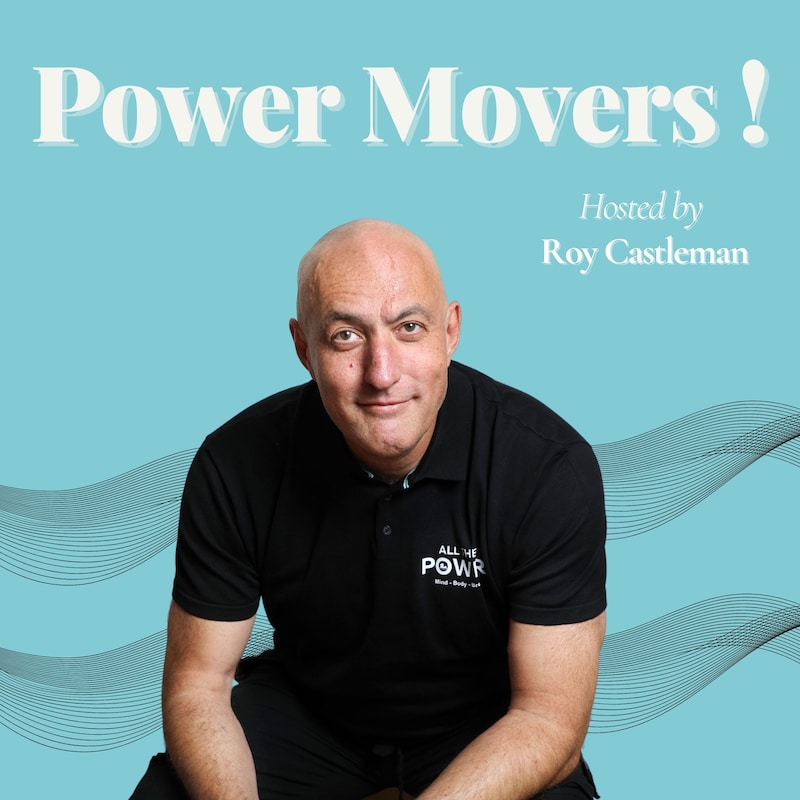
Shownotes
EPISODE OVERVIEW
Duration: Approximately 35 minutes
Best For: Trapped entrepreneurs who feel stuck in a role they once loved, knowing something needs to change yet paralysed by fear of making the wrong move
Key Outcome: Listeners will understand why they overestimate the harm of making a bold decision and underestimate their own resilience, giving them the clarity to finally take action
He was a pastor carrying everyone else's burdens. Then his body gave him stress headaches every single day for two years.
THE BOTTOM LINE
You know that feeling. The business you built to serve people has become the thing that owns you. You wake up exhausted, answer emails before sunrise, and tell yourself you cannot possibly step away because everyone depends on you. Eric Robinson lived that exact trap. As a Baptist pastor, he carried the weight of his congregation until his body screamed for him to stop. The thing is, when he finally made the terrifying leap to join the FBI at 32, something remarkable happened. The headaches vanished. Not because the FBI was easier. He spent 15 years on SWAT, investigated terrorists, and witnessed humanity at its worst. They vanished because he stopped being the bottleneck, stopped carrying burdens alone, and discovered what happens when you finally trust yourself to make the bold move you have been putting off. Over 24 years, Eric earned two Attorney General Awards, helped bring justice to torture victims, and stopped a plot to kill a federal judge. His story reveals a truth trapped entrepreneurs desperately need to hear. You are more resilient than you believe, and the decision you keep delaying is costing you more than making the wrong choice ever could.
WHY THIS EPISODE MATTERS TO YOU
The longer you stay trapped in indecision, the more your health, relationships, and freedom slip away. Eric's daily headaches were his body's warning. What is yours?
You will discover why the fear of making the wrong choice is actually more damaging than any mistake you could make. Because wrong choices can be corrected. Paralysis cannot.
Learn how FBI agents handle extreme stress through team support and shared stories, a model you can apply to escape the isolation that comes with running everything yourself.
If you keep delaying the changes you know you need to make, you will still be having this same conversation with yourself a year from now. Only more exhausted.
KEY INSIGHTS YOU CAN IMPLEMENT TODAY
Your body is keeping score. Eric had stress headaches every single day for two years because he carried everyone's problems alone. The moment he made his decision, they stopped. Your physical symptoms are data. What is your body telling you about the trap you are in?
Teams absorb what individuals cannot. In ministry, Eric felt he could not show weakness. In the FBI, agents took care of each other through shared stories and survivor humour. The trapped entrepreneur who insists on handling everything alone is not strong. They are stuck. Find your team.
Vulnerability opens doors that authority cannot. Whether interviewing criminals or working with informants, Eric discovered that authenticity and openness created connection that force never could. The same applies to your team, your clients, and your family. Stop performing. Start connecting.
You overestimate harm and underestimate resilience. This was Eric's parting wisdom and it cuts to the heart of why you remain trapped. You imagine catastrophe if you step back, delegate, or make a bold change. That said, you have survived everything life has thrown at you so far. You are, as Eric says, undefeated.
Movement beats perfection. A legitimately wrong decision still moves you forward. You course correct and rebuild. Paralysis offers no such option. The entrepreneurs who escape the trap are not the ones who make perfect choices. They are the ones who make choices.
GOLDEN QUOTES WORTH REMEMBERING
"I think that human beings overestimate the harm that will be done if they choose wrong. We underestimate our resilience, the ability to snap back if something bad happens to us." - Eric Robinson
"I'm undefeated. I have gotten through all the things. Anything bad has happened, I'm here. Any stupid decision I made, I'm still here. So make those stupid decisions. Because movement is better than no movement." - Eric Robinson
"The FBI doesn't give you anything for stress. What I experienced is that agents take care of each other. We would tell stories recounting harrowing experiences. And then they were survivor stories." - Eric Robinson
"You can keep the human in, elevate the human to be able to do more human, and let the AI do the stuff that it doesn't need to do. Then you can be powerful." - Roy Castleman
"I didn't feel like I could give an image of I'm not perfect, I'm not holding it together. And so much of what you're describing, I think yeah, that was me." - Eric Robinson on the isolation of leadership
QUICK NAVIGATION FOR BUSY LEADERS
00:00 - Introduction: Meet the man who left the pulpit for the FBI
03:15 - The 24 Year Journey: Why Eric never lost his fascination with FBI work
05:40 - From Pastor to Agent: What drove the career change at 32
08:20 - The Headache Revelation: How stress manifests when you carry everyone's burdens
11:45 - Attorney General Award Cases: Justice for torture victims in Chicago
15:30 - Stopping a Terrorist Plot: The judge assassination attempt
20:15 - Different Stressors: Why FBI trauma was easier than pastoral care
23:40 - How Teams Handle Stress: The power of shared stories and survivor humour
27:00 - AI and Human Connection: Why technology cannot replace authentic communication
30:20 - Vulnerability in Leadership: Drawing out truth through openness
33:45 - Writing the Book: Using conversation to unlock buried stories
36:15 - The Resilience Principle: Why you overestimate harm and underestimate your ability to recover
GUEST SPOTLIGHT
Name: Eric Robinson
Bio: Eric Robinson spent 12 years in Christian ministry before making the bold leap to join the FBI at age 32, where he served for 24 years. He investigated drugs, gangs, public corruption, organised crime, crimes against children, financial crimes, and national security. Eric spent 15 years as a SWAT operator and firearms instructor. His upcoming book "Irreverend: From Saving Souls To Chasing Sinners In The FBI" releases in the autumn.
Connect with Eric:
Website: preachertobreacher.com
LinkedIn: https://www.linkedin.com/in/eric-robinson-9220053a4/
Instagram: https://www.instagram.com/_eric_robinson/
YOUR NEXT ACTIONS
This Week: Identify the one decision you have been delaying because you fear making the wrong choice. Write down specifically what you think will happen if it goes wrong. Notice how catastrophic your imagination makes it. Then ask yourself what is actually likely.
This Month: Find or create your team. Join an entrepreneurial community, schedule regular conversations with peers who understand your world, or simply start sharing your real challenges with someone who has walked a similar path. Stop carrying everything alone.
This Quarter: Make the bold move. Whether it is delegating a major responsibility, stepping back from day to day operations, or making a significant change you have been putting off, commit to action. Your resilience is greater than your fear.
EPISODE RESOURCES
Book mentioned: "Irreverend: From Saving Souls To Chasing Sinners In The FBI" by Eric Robinson (releasing autumn)
Book mentioned: "Thinking Outside Your Brain" by Roy Castleman (releasing 4th May)
Book mentioned: "Book Magic" by Lucy McGrath
Programme mentioned: The Dance Program by Daniel Priestley
━━━━━━━━━━━━━━━━━━━━━━━━━━━━━━━━━━━━━━━━━━━━━━━━━━━━
READY TO ESCAPE THE TRAP?
Take the Freedom Score Quiz: https://scoreapp.atpbos.com/
Discover how trapped you are in your business and get your personalised roadmap to freedom in under 5 minutes.
Book a Free Strategy Session: https://www.atpbos.com/contact
Let's discuss how to build a business that works WITHOUT you.
━━━━━━━━━━━━━━━━━━━━━━━━━━━━━━━━━━━━━━━━━━━━━━━━━━━━
CONNECT WITH YOUR HOST, ROY CASTLEMAN
Roy is the founder of All The Power Limited and creator of Elevate360, a business coaching system for entrepreneurs ready to scale without burnout. As a certified Wim Hof Method Instructor and the UK's first certified BOS UP coach, Roy combines AI automation, wellness practices, and business operating systems to help trapped entrepreneurs reclaim their freedom.
Website: www.atpbos.com
LinkedIn: https://www.linkedin.com/in/roycastleman/
YouTube: https://www.youtube.com/@allthepowerltd
Transcripts
1
::Good morning, good afternoon, good evening wherever you are in
2
::the world today, we're in for something different. We have
3
::Eric Robinson here with us. Robinson. And Eric is a
4
::former FBI agent, is that right? That is correct. Three
5
::months removed from the FBI. When I was accepted
6
::in the FBI, I remember being two years old and
7
::I was giddy. I thought, this is amazing. And despite
8
::tedium and disappointment and frustrations over 24 years, I never
9
::lost fascination. I really get to do this. This is
10
::really part of my life. Despite the many downtimes I
11
::did keep, this sense of this is very remarkable that
12
::I get to be here. What were you doing? What
13
::weren't you doing? That's about right. I started in Chicago,
14
::Illinois. I did narcotics investigations, gangs, public corruption
15
::and civil rights. Then I moved to the Toledo, Ohio
16
::office and I worked organized crime, crimes against children, financial
17
::crimes, and then national security. So I've done most of
18
::what the FBI covers at some point. What inspired you
19
::at the ripe old age of 32 to do such
20
::a change in career? I had started out in Christian
21
::ministry for a number of years and it seemed like
22
::the kind of thing that I wanted to do. I
23
::was driven towards this. I saw the benefits in working
24
::in ministry and though I didn't know how to handle
25
::dealing with people's problems, so when they came to me
26
::with their life issues, I was burdened with it. And
27
::that resulted in me having stress related headaches every single
28
::day for two years until I finally realized I can't
29
::do this anymore and applied for two jobs. But
30
::how do you go from there? Surely that's out of
31
::the frying pan into the fire. I have a wife
32
::that's way out of my league. And so you got
33
::to take a shot sometimes at the pretty girls. And
34
::I thought, okay, let me. The FBI would be amazing.
35
::I don't even remember what brought it to mind to
36
::say, I think I can do this. But I thought,
37
::I'll give it a try. And this was in the
38
::nascent days of the Internet. So I was filling out
39
::paper, I thought, let me take a try. This could
40
::be great. And I applied for one other job I
41
::was overqualified for. They turned me down. And the FBI
42
::said, hey, let's keep this going. And April of 2002
43
::is when I came on board. April 2002, when I
44
::started my first company. Fantastic. Yeah. And what a journey
45
::that's been. Yeah. So I was chatting with a friend
46
::who was nearing retirement in the FBI and he was
47
::remarking on somebody he was interacting with 25 years ago.
48
::And I was like, Buddy, everything's 25 years ago anymore.
49
::This large period where that was the previous life. Here's
50
::the FBI now. Looking back, one of the things that
51
::I do a lot of is I work with AI,
52
::come out of the FBI as AI is really coming
53
::into its own. And I can see so many challenges
54
::day to day for people because of job and all
55
::the standard things that people are worried about. And so
56
::many opportunities for everybody else. Right. For anyone that actually
57
::dives into it. How do you think going into this
58
::stage of turmoil that we're going into how society going
59
::to react based on history? Probably not. Well, like
60
::any other tool, good people are going to use it
61
::for good things and bad people are going to use
62
::it for their own benefits. That's going to open up
63
::so much more issues that you and I have no
64
::concept of as we sit here today. The concept of
65
::AI being used by the FBI was coming into an
66
::idea of, hey, I wonder what this will be and
67
::how we might use it. But just talk yet. We've
68
::had computer systems, we've had sophisticated devices, we've
69
::had great judicial process and intelligent agents over the years.
70
::And yet it always comes down to it has to
71
::be person to person. Even if the Bureau adopts use
72
::of AI, it's going to have to still be used
73
::by people, enhancing what they're able to investigate and find
74
::out. I believe that you can keep the human in,
75
::elevate the human to be able to do more human,
76
::and let the AI do the stuff that it doesn't
77
::need to do. Then you can be powerful. Yeah. And
78
::you can see how when something comes out and it
79
::is just artificial intelligence, it's somebody saying, hey, make me
80
::this, and then walks away. It stands out as this
81
::tastes saccharine, this feels off, and it's not authentic, as
82
::opposed to give me something and now I'm going to
83
::make it mine on top of this. Yeah, for sure.
84
::And it's an energy piece of building rapport and actually
85
::feeling what the person is feeling. Even if we're on
86
::the other side of a zoom call, we can still
87
::react as humans and. Yeah. What's it, 95% of communication
88
::is nonverbal, Right? Yeah. Some ridiculous thing. You must have
89
::some really interesting stories to tell us. So pick an
90
::interesting story and hit us with it. I was privileged
91
::enough to work two cases throughout my career that were
92
::awarded with the Attorney General's Award. One of them, I
93
::worked in Chicago with my partner Jake, that brought about
94
::justice for the city because four Years, there was a
95
::police commander for the Chicago police who had been torturing
96
::suspects. He and his team had been doing that, and
97
::that was in the 70s and 80s. And the Chicago
98
::police just brushed it aside. These guys were getting results.
99
::The FBI did the same until many years later, we
100
::were able to get charges upon him for obstruction of
101
::justice and perjury. That was a case that I would
102
::say I'm very proud of having been a part of.
103
::Then there was a later case where my friend Sean
104
::had indicted three brothers from India, and they had been
105
::funding Anwar Alaki, the spokesperson for Al Qaeda. That's
106
::illegal in the United States. You can't fund terrorists. Charges
107
::were brought on him, and the three were put in
108
::jail awaiting trial. Meanwhile, Yahya Farooq Muhammad decided
109
::he would be best served if he could kill his
110
::judge. And he told another inmate, hey, if I can
111
::get my judge killed, I think that I can get
112
::out, and now I can do some actual harm to
113
::people instead of just giving money. So he tells this
114
::man, I'm looking to see my judge killed. That guy
115
::comes to us. And I've had jailhouse informants, and
116
::they're not the most reliable, and many are just looking
117
::to have fun. So a lot of them just make
118
::up stories. Maybe they'll get something out of it. Who
119
::knows? And I didn't really believe this guy, but Sean
120
::said, yeah, let's try it out. And it's a complicated
121
::process to put recording equipment on an inmate, send it
122
::back in and do it safely. And we sent him
123
::back in, and he went to the subject and he
124
::said, hey, you know all that stuff you said about
125
::killing your judge? Tell me that again. And the guy
126
::told him again. Now we had the guy who wants
127
::to kill his judge. From there, we went through the
128
::process of introducing an undercover that he could call. Meanwhile,
129
::the informant was just some hillbilly, just some nobody, except
130
::that he did probably know Hitman in his life. He
131
::was confiding in him and trusting in him. They worked
132
::out plans to blow up bridges, create a terrorist training
133
::camp, and they even had a plan where, if he
134
::got out, he could go to the Mall of America,
135
::huge mall, and they would just kill as many people
136
::as possible. All of these terrible things, along with killing
137
::his judge. We had the undercover meet with him. They
138
::had a jail call, and he gave him the code
139
::word, which was, I'd like to buy some puppies. That
140
::would be a little unusual for a Muslim man to
141
::do. That was arranged. And then our subject had his
142
::wife pay our undercover, $1,000 for the puppies. And then
143
::the undercover showed him this photo which was the
144
::face of the judge superimposed onto one of my buddies.
145
::And so I remind him, when we needed a 7
146
::year old Lebanese man to look like he was dead,
147
::clearly he had the body of that, from there went
148
::forward, added charges, got 26 and a half years on
149
::a guy who had plans to kill many Americans. So
150
::going through all of this, you told us previously that
151
::you were stressed out by people coming to you as
152
::a pastor and offloading problems. How does seeing the total
153
::low life of the world not affect you in the
154
::same way? Yeah, I don't know, but it didn't. They
155
::were different stressors. One was dealing with people I
156
::cared about. A woman comes to me, she's on our
157
::worship team and she says, my, a friend of mine,
158
::her husband is having a psychic break and he's going
159
::to leave the family with their four kids and run
160
::off with a woman he met on the Internet. And
161
::that bothers me. So I don't just talk to him
162
::and go, okay, that's solved. Whereas the work I was
163
::doing with the FBI, they're stressors. And then the body
164
::says, I'm going to give you what you need to
165
::deal with it. And now we're done. So it just
166
::happened to be that these things that I struggled with
167
::previously did not have the same effect of the weight
168
::still being there. And I'll tell you, when I got
169
::accepted in the FBI, when I got that conditional acceptance
170
::that day, I just didn't have headaches anymore. So I
171
::don't know the science, but I can tell you that
172
::was a cue to me that this was the right
173
::decision. And yeah. Does the FBI give you different
174
::tools to deal with stress? We as business owners, we
175
::deal with stress a lot in such a different way
176
::because it's quite a lonely job, for sure. People think,
177
::yeah, great, you're the top of the pyramid, but you're
178
::actually the bottom of the pyramid where it all ends,
179
::holding up the pyramid. And I don't have anyone to
180
::talk to because your wife doesn't really want to know.
181
::You want to keep her safe from the problems. Your
182
::family doesn't want to know. You can't tell your staff,
183
::you can't tell your suppliers. That's a lonely and very
184
::stressful job. So I'm interested if the FBI has any
185
::secrets in dealing with stress. You described how I felt
186
::as a pastor. I was the one leading, we had
187
::a decent sized church, but it was just me and
188
::I didn't feel like I could talk to people because
189
::there was only so many people. I didn't feel like
190
::I could give an image of. I'm not perfect. I'm
191
::not holding it together. And so much of what you're
192
::describing, I think, yeah, that was me. In the FBI,
193
::it's a team. SWAT is a team. Your squad is
194
::a team. And to directly answer your question, no, the
195
::FBI doesn't give you anything. We have employee assistance, and
196
::no one avails themselves of that. We have chaplains and
197
::people don't engage with that. But what I experienced
198
::is that agents take care of each other. So we
199
::would tell stories recounting some of those harrowing experiences. Maybe
200
::small t trauma, maybe a difficulty or reflecting
201
::on. We could have been killed. And then they were
202
::survivor stories of. And yet we're here. Yeah. And guys
203
::are laughing full time. That's a very powerful point you
204
::put in there. Yeah. The place where we feel most
205
::connected as entrepreneurs is when we get into the entrepreneurial
206
::communities. Yeah. I've got a small community that I run.
207
::Brings business owners together. And when you go out and
208
::you meet other business owners that have the same problems,
209
::that sense of community is so important. Right. And I
210
::imagine that your stories that you share with each other
211
::are going to be somewhat similar of telling of risk
212
::and almost failure, but success or challenges overcome. And
213
::they don't have to be great ones, but down to
214
::the last dollar. And then finally we had this. And
215
::those are survivor stories as well. And just speaking them
216
::out loud brings it out of what's buried inside. Otherwise.
217
::Yeah. Being able to actually connect as a human. Some
218
::people journal, some people talk to a therapist. And for
219
::us in the FBI, we have similarly experienced people. And
220
::so we can just say, hey, I don't need to
221
::update you on what this looks like. You can put
222
::yourself there because you've been places like that, too. I
223
::have a ChatGPT or a Claude I can talk to
224
::if that helps you. The strange thing is. And I
225
::just slightly. Because it's not. You spoke about journaling and
226
::I think I'm similar to many entrepreneurs is mildly adhd.
227
::Maybe not mildly. You're always doing a million things at
228
::once and my head gets full. Yeah. I don't write
229
::fast. I don't type fast. So I've always found this
230
::barrier in being able to get what's in here out.
231
::Now I can talk. Yeah. And I can just. I
232
::literally do this exercise if I get too stressed out.
233
::Okay. I've got this problem. I've Got that problem, I
234
::got this problem. I'll stop for two minutes. I've got
235
::this problem, look at that problem, I got this problem
236
::and I just talk it all out. Yeah, and now
237
::it's written down somewhere. Yeah. Do you also find that
238
::along the way in doing that you're now self examining
239
::too? So not just record keeping of I got to
240
::get these ideas, but by talking about it, do you
241
::find that you're also examining purposes and that go along
242
::with those ideas? I think what happens is because I've
243
::got a specific protocol and I use, which is 3,
244
::4, however many times it takes for me to get
245
::my head here right, I know at the end I'm
246
::saying to the AI agent, okay, now my goal in
247
::two weeks time is to get this done of these
248
::things that I've thrown at you actually take me to
249
::that goal, which then don't I know there's a resolution
250
::coming out of it. And the reason I do, two
251
::minutes, three minutes, stop, let my brain sit because then
252
::anything that's below the surface comes up. It's like this,
253
::okay? It's coming out, it's coming out. When it's empty,
254
::then I know, okay, now I've got capacity to work,
255
::now I've got capacity to carry on. So it's interesting
256
::and I think in the same way I know
257
::we're going on a bit about AI, but communication is
258
::so important, right? Oh yes, communication is everything. And you
259
::don't communicate very well, right? I think, yeah, we think
260
::we do. We will tell our wife or our partner
261
::or our business partner or we'll tell them exactly what
262
::we're thinking. But we have all this context in our
263
::head, right? So we just say it and they'll say,
264
::yeah, yeah, because they want to keep the report going.
265
::Yeah. And then they'll leave and come back and they've
266
::done the totally wrong thing. We didn't understand it. And
267
::what's really blown my mind is that AI is exactly
268
::the same, right? I will just go, what it gives
269
::me back is rubbish. Then I know rubbish is gone
270
::in has actually helped me communicate way better with everybody
271
::else around me. And then what I had found in
272
::ministry and then working in the FBI was I can
273
::express myself at any period. But then I had to
274
::not just be the one who has the information, has
275
::all the answers, that when congregants came to me and
276
::said, hey, I've got this issue, I don't just go,
277
::okay, here's some Bible verses and that's it. Those might
278
::have been the right verses. But I had to be
279
::open and curious about what they had to say. And
280
::that same issue came up in the FBI that I'm
281
::working with informants. They could tell me, hey, this guy
282
::is saying he's going to do this. I don't just
283
::take it as that I need to dig in with
284
::them more, say, that's our starting point. What more can
285
::I get out of you? And that would be the
286
::same with victims and criminals, too, that I can't come
287
::to the criminals saying, I, I know everything. I'm going
288
::to try to draw them out and take them from
289
::a position where this is the worst point in their
290
::life, that I realize this, and I'm going to help
291
::you through it. And now they owe me. I'm going
292
::to be their guide through this. Because this might have
293
::only happened to you once or twice. I've done this
294
::a thousand times. Let me help you. And now they've
295
::opened up, and now we've brought it from adversarial to
296
::more of a conversation that is a familiar position to
297
::them. And then the mind tricks them to think this
298
::is normal, this is back and forth. And now I'm
299
::saying things I shouldn't be saying. And I think there's
300
::an element of vulnerability that comes into this that we
301
::don't like to do as humans. Right. And I've learned
302
::that the more vulnerable I am with people, the more
303
::honest I am, the more authentic I am in what
304
::I'm saying and sharing what I believe to be my
305
::truth, the more they will open up to me and
306
::share their truth, and then we can meet at a
307
::much more balanced level. Yes. Applying it to that
308
::idea, to what I went through. I am pretty sure
309
::what the truth is because I've spent months investigating, and
310
::I'm going to posit that as what I see as
311
::true. But I want you to now tell me what
312
::your truth is. And so even if I know that
313
::truth isn't true, I'm going to let you go, because
314
::that's going to help me understand your mindset. Because if
315
::you're going to keep sticking to this, and I know
316
::you're not going to work with me, and it also
317
::might open up to me. All right, Now I know
318
::what your defense is, because you keep coming back to
319
::this one thing, and I might actually learn something, too,
320
::God forbid that I'm open to what a criminal has
321
::to say, and now I learn more. You must have
322
::learned a huge amount about people generally on both of
323
::these sides of the equation, right? Yeah. And now if
324
::I'm learning from my mistakes or I'm learning from what
325
::I did, well, that carries on to, I'm going to
326
::arrest a guy sometime in the future. And now what
327
::I failed at here, I need to tweak that and
328
::try something new for the next guy. So what does
329
::the future hold for you? You're a young guy. You're
330
::obviously. Yeah. Am I? You just need to shave all
331
::the hair off and then you look like me. Exactly.
332
::Get the gray out. I have written a book about
333
::the crazy experience of what happens when a Baptist pastor
334
::leaves the pulpit and joins the FBI. A guy who's
335
::never handled a gun before ends up joining a SWAT
336
::team and works on it for 15 years, telling that
337
::story and preparing for that publication in the fall. And
338
::then from there, trying to take what I learned through
339
::all those years. The FBI has given me a lot
340
::of good training and trying to pass that on to
341
::others as well. Did the process of writing the book,
342
::how was that in terms of therapy? It was. I
343
::have journaled in the past. I'm not a journaler now.
344
::Here we are, where I'm getting to relive these stories.
345
::I always had that fascination of, this is great to
346
::be in the FBI. And then at the end of
347
::my career and now after. It's wonderful because now I
348
::get to look back. The idea of being an FBI
349
::agent is so much seeded to one's identity, and it
350
::definitely was for me. So I went from being that
351
::guy to just a guy. But looking back helps. It
352
::helps in the transition to go. Yeah. I get to
353
::talk to people like you and tell you, I used
354
::to be cool. And you're like, yeah, great, you're still
355
::cool. Yeah. I've literally. My book launches on the 4th
356
::of May. Okay. And it talks about AI, but as
357
::a. Thinking outside your brain is the name of it.
358
::For me, it was about finding my voice. I have
359
::a hundred stories. I was born in Zimbabwe. I grew
360
::up in South Africa. I came to the UK with
361
::£400 in my pocket, own four companies, and I do
362
::a podcast. There's been a whole host of things. There's.
363
::But I could never get it out. Yeah. I couldn't
364
::write properly and I couldn't type properly. Right. But now
365
::I can talk it out. Right. And I just talked
366
::it out. And I have all these skills that I
367
::didn't have before. And it was a very therapeutic process.
368
::Did you map out how the book should be and
369
::then add pieces to it, or did you just sit
370
::down and just Start talking it out. I'm. I'm a
371
::learner. I love learning. And so on this program called
372
::the Dance Program, which is Daniel Priestley, and one of
373
::his things is how to write a book. So they've
374
::got a course in there for writing books, and there's
375
::a book called book Magic. Lucy McGrath wrote it. So
376
::I looked at that. I was like, okay, yeah, we
377
::need to learn some of this. Yes. And so I
378
::took Lucy McGrath's book and I put it into my
379
::AI and said, I want to write a book in
380
::a format, something like this. So I was like, okay,
381
::fine. So then I said, oh, I need to do
382
::that. You need this many of these things and this
383
::many of these things and this many of these things.
384
::So then I spoke in my stories into the AI
385
::to go put them in the databases over there. So
386
::just put story after story. And I've got 30 or
387
::40 stories in there. And yeah, I sat down and
388
::did that in two days. Yeah. Because I just went
389
::on a time basis then over the time since then,
390
::I've been adding to it, adjusting. And then I used
391
::the AI to say, okay, now how do I put
392
::this all together? How do I structure it? Where does
393
::it fit in? This is the message I'm trying to
394
::get across. How do I put that together? So it
395
::was a really good learning process in what A is
396
::capable of. I often say I've authored the book, I
397
::haven't written it. It's my stories, it's my words, it's
398
::my way of talking. But if I went out to
399
::a ghostwriter, the ghostwriter would have to sit there, write
400
::it down, record it. Then they'd have to take away.
401
::They'd have to massage it. Yeah. Put it into something
402
::that's consumable by other people. And this is what I've
403
::used AI for, to be my ghostwriter. It's been an
404
::interesting experience. That's useful for me. I was thinking, let
405
::me skeletonize this. Let me put all the parts down,
406
::because I know otherwise I'm just going to be the
407
::guy who just sits and types. I sat down and
408
::I read like you. I'm reading a book on how
409
::to write a book. I sat down at the computer
410
::to give structure. While I was sitting there, I thought,
411
::let me just start with the first chapter. And then
412
::it just started going because the stories are there. And
413
::here's a story, and here's a story. And like, oh,
414
::my gosh, here's another one I'm writing. Remember these on
415
::the side? So many of these, like when the agents
416
::sit around and chat and they start saying, I'll remember
417
::that time we did this. I can take myself out
418
::of that and look at it and go, you guys
419
::have any idea how incredible that is? These are just
420
::simple things where we talk about, oh, yeah, on this
421
::operation, remember this happened. And most people, most
422
::regular folks, if they heard that, would probably say, that's
423
::amazing. I can't believe that. Or, I'm sorry you had
424
::to experience that. You're like, oh, I'm sorry. I thought
425
::it was funny. That was our day in life. And
426
::that's it. You sit around the table with five people
427
::and you start telling stories, and then it starts flying.
428
::Except it was just me writing the book. I used
429
::AI to say, I'm going to tell a story, but
430
::I want you to ask me questions about what I'm
431
::missing from the story. So interview me. Yeah. I'd say
432
::this is what happened. My partner, Laura, she's. I've done
433
::some crazy things. I jump out of airplanes, go free
434
::diving, go ice diving. But I'll tell a story. I
435
::was run over by a drunken driver when I was
436
::19 and broke my leg in two places. Broke my
437
::arm, my face. I always used to tell the story
438
::in a bland way. When I told that to AI,
439
::it interrogated me. On my instruction, I interrogated, what about
440
::this? How did you feel here? What happened here? And
441
::then I could start thinking, okay, this is what's missing
442
::in the picture. To the point that I wrote the
443
::first story like this and I read it out and
444
::I brought myself to tears because I'd never felt it
445
::like that. Right. You know, you're doing well if you
446
::can make yourself cry. For sure. So that was there.
447
::Yeah. I think you have to have that connection with
448
::your words. Otherwise, they're not your words. Yeah. Look out
449
::for it on the 4th of May. Yeah. If you
450
::want to know anything about AI, it's not an AI
451
::tool book. It's how humanity has to think about the
452
::power that it can bring us. You released a book,
453
::and now I see a course in your future where
454
::you train people. Fifteen years on swat, Firearms instructor, tactical
455
::instructor. I've had the experience of working with local law
456
::enforcement, and I have seen how FBI agents get very
457
::high level of training, whereas the police, who are more
458
::often in the mix with people, get a lot less.
459
::And that's a gap that I tried to fill when
460
::I was an agent to help out and have things
461
::to pass along. Now, one of my favorite things to
462
::do when I was training the police was I would
463
::say, hey guys, guess what I used to do before
464
::I came in the FBI and if you get it
465
::right, I'll give you a patch. And only had one
466
::person get it. Over the years, I've seen in the
467
::business world there's so many missing elements in how you
468
::handle yourself. And I can't help thinking that with what
469
::you've been through, there's probably a cross thread that you
470
::can actually do something quite useful for business owners that's
471
::also a thought of providing some direction and security for
472
::how, from what I've experienced, what are indicators of threats?
473
::How do we mitigate these threats as well? I was
474
::talking with a few people from church leadership and security
475
::of so many things within religious buildings,
476
::mosques, whatever it might be that they're so focused on.
477
::Like the pastor's got to focus just on taking care
478
::of people. And yet there are very soft targets and
479
::threats can come from the side and threats can come
480
::from within. And there's no preparation for. Do we think
481
::ahead of time of what we're going to do if
482
::there are allegations of some type of impropriety towards this
483
::member or towards someone in the staff? And then people
484
::make poor decisions in the heat of those moments. What's
485
::your from all your years of experience both pastoring and
486
::FBI, what would be one thought you'd leave my listeners
487
::with? So I was in my 30s, early 30s, late
488
::20s when I was pastoring and then struggling with the
489
::headaches. Part of my process of putting off making a
490
::change was that I thought this was right. Part of
491
::it obviously was that I was afraid to make a
492
::wrong choice, that this seemed. This is a calling, this
493
::is what I meant to do. How do I choose
494
::something else? And what if that's wrong? And so
495
::now, years later, from experience, from having repetitions in making
496
::poor choices, I think that human beings overestimate the
497
::harm that will be done if they choose wrong, if
498
::they go through trauma, if they have something like legitimately
499
::a poor choice, we will re center and have a
500
::new life now in a different avenue. And we underestimate
501
::our resilience, the ability to snap back if something bad
502
::happens to us, whatever it might be. And from the
503
::years of seeing what has happened, what I like to
504
::say is I'm undefeated. I have gotten through all the
505
::things. Anything bad has happened, I'm here. Any stupid decision
506
::I made, I'm still here. So make those stupid decisions.
507
::Because movement is better than no movement, right? Yeah. You
508
::make the decision. And even if it's wrong. Legitimately, objectively
509
::wrong. You come back. Well, thank you very much for
510
::joining me, Eric and I look forward to the book.
511
::Thanks so much, Roy. Appreciate it.

