Shownotes
The way we work has changed dramatically. Yet many workplaces are still built around assumptions of what a “typical” employee looks like, thinks like, and needs to perform at their best.
But what happens when people experience the world differently?
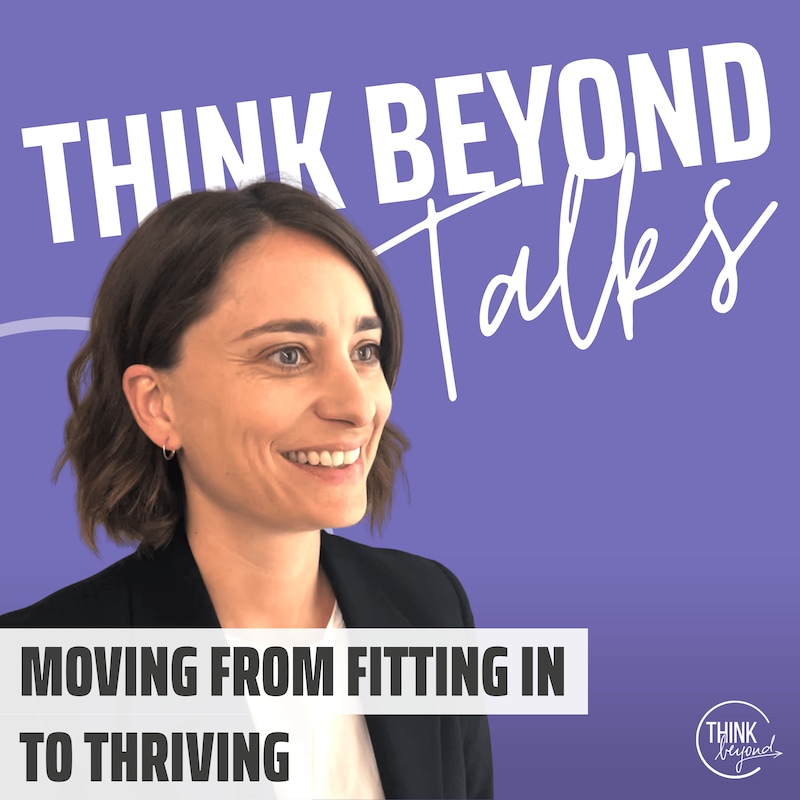
In this episode of Think Beyond Talks, Julia Baumann — systemic coach, neurodiversity specialist, and Think Beyond Impact Partner — explores how leaders can create environments where different ways of thinking, processing information, and experiencing the world are not merely accommodated, but valued.
Drawing on her own leadership experience in the corporate world, her personal journey through burnout and self-discovery, and her work with gifted, highly sensitive, autistic, and ADHD individuals, Julia offers a nuanced perspective on neurodiversity beyond stereotypes and labels.
With warmth, honesty, and practical insight, she explains why neurodivergence is not about deficits or superpowers. Instead, it is about understanding the interaction between human potential and the environments in which people work, learn, and grow.
Julia's website: https://www.juliabaumann.ch/
Julias podcast (in german): https://www.die-neurodivergenten.ch/
Transcripts
So today I'm speaking with our impact partner Julia Baumann in Zurich, Switzerland. Julia is a systemic coach who supports people in realizing their full potential. Many of her clients are multi-passionate, highly curious individuals who want to create a more meaningful and aligned life for themselves. And she is specialized in neurodiversity, meaning she is working with highly sensitive, gifted, autistic and ADHD individuals. Before becoming a coach, Julia built her career in the corporate world, specifically the IT sector. She was an experienced team manager and an agile and change management expert. I know Julia through an intervision coaching group for coaches working with neurodivergent clients, which has given me the opportunity to experience both her thinking and her coaching presence firsthand.
She's also the host of the podcast, she's also the host of the podcast, the Neurodivergenten, where she and Simone Eppler explore everything around neurodiversity with death, honesty, and a lot of nuance. And today I'm grateful that she's a guest in our podcast. Welcome, Julia.
Julia Baumann (:Thank you, Anna, for this great introduction. I'm so happy to be here. I'm very excited.
Think Beyond Talks (:Yeah, same you. Yeah, I'm really glad you're here. Let's dive right in. As I introduced you, coming from the corporate sector and leadership background, what happened along the way that led you to specialize in neurodiversity?
Julia Baumann (:Well, thank you for this great question. As always, I'm going to have to really try and stay very focused. I could tell like a very long story. We could fill the whole podcast with this because, well, I find personal development just so interesting. And obviously it's also part of my life story. I guess I could even start a bit sooner. So I am blessed with many talents and
as obviously it's a privilege, I know that, but it's also very challenging. So basically after school already, it was really difficult for me to just pick any kind of specialty because in my ideal world, I could have just studied everything. So that's why I went for business. It seemed a good choice to keep my options open. so, yeah, I was working in very different areas in the corporate world. I explored lots of lateral changes, but
The majority of my corporate life I guess I spent in intersections between IT and business and I really enjoyed working in the digital and agile areas and I'll come to that later because in my opinion the agile whole
mindset is very closely linked to neurodiversity because the whole Silicon Valley is full of neurodivergent people. yeah, we can come back to that. Anyway, so there was like my 15-20 years of corporate career with
Think Beyond Talks (:Mmm.
Think Beyond Talks (:Please.
Julia Baumann (:all of the usual, you know, challenges being a woman in IT, being a young person with lots of senior managers, being a talented person. And then the combination, was also, I'm originally from Germany and I live and work in Switzerland. So I was often the odd one out. And I like we could go into that too, but.
that adds to the challenge, right? Being any kind of minority, even though, you know, I'm privileged on many levels, but I was also a minority often anyway. So that was one of the contributors to my first burnout, I guess. I had two halfway burnouts in my career. The first...
one being more in your classical version, with lots of external expectations of fast moving up the career ladder and being the only woman in the leadership team, being younger, being the only German person and then having like this intense inner ambition to do a really good job. But
You know, that could be your classical woman socialized in capitalist, patriotic society. You know, that brings a lot of those patterns. Anyway, and then I also have two children. So it's this whole working parent, working mother, combining care work and all that. and but then.
But getting older and the pressure just increasing when I had my second burnout, it was different than the first one and I realized there was more to it. So I really needed much, much bigger break and I spent like a lot of work.
Julia Baumann (:a lot of extra therapy work, more than I did before, and a lot of extra personal development work. And luckily enough, I had a very fateful encounter with someone. It was in a yoga teacher retreat. So maybe just to add that extra bit. I'm aware this is a long answer, but this is what happens when you talk to me. There's just so much context. There's just so much context that is necessary. Anyway, so was a very classical midlife crisis thing. You know, I'm doing yoga now and I also
Think Beyond Talks (:That's totally fine.
Julia Baumann (:pottery, all that. Anyway, and she just, she asked me if I had ever considered giftedness, because she was working and specializing with giftedness, and that just rang so true.
And so that led to like a very, very deep dive down the rabbit hole. So, and what us neurodivergent people do, if we find a new thing that interests us, we make it like a whole thing. So I wrote my master thesis on it because I was doing a second education at the same time.
and have now made it my specialty. So it started with giftedness and after I was diving into giftedness and meeting more people from that realm, I realized that I...
interacted most intensely with people who also identified as autistic in ADHD. And so I started looking into that and that it's not something that would have ever occurred to me because you know when you think of autism and ADHD it just had nothing to do with my
a self-image, the representation, like I'm not a Sheldon Cooper or that kind of trope and cliche. So only after having access to a more nuanced mirroring, I am, I was able to get in touch with that part of my identity. And it has been so deeply meaningful. And I feel like I have finally got access to
Julia Baumann (:the answers and the vocabulary that explains me. And that's why I've made it my my mission to really talk about this, put myself out there. That's why I've created the podcast with my friend. And that's why I'm so glad that you're giving me this platform today to give a different face to these to these labels and to highlight how important it is to understand these these aspects. Yes.
Think Beyond Talks (:Thank you so much for your answer, Julia. I'm sure there's so much more layers, so many more layers to it. And still, before we dive in deeper to all the layers you addressed, what do we actually mean when we say neurodiversity and neurodivergence?
Julia Baumann (:Thank you so much. this is actually a great clarification because the vocabulary isn't used properly much. And while at the same time being in everyone's being more and more commonly talked about. So neurodiversity.
really means everyone. means all neurotypes, the sum of all neurobiological possibilities. A bit like biodiversity is the sum of everything biological. Then we avoid talking about normal because what is normal really, right? So the term that you could use here is neurotypical. Neurotypical means your neurological profile and development are like the majority.
And then there is the term neurodivergent, meaning different from the majority. And that really describes a different way of perceiving and processing information.
So cognitively, emotionally, sensory, physically, how do people perceive the world? And it can lead to a very, different experience of the world, just when you are getting different cognitive, emotional, sensory, physical input.
And the most commonly known examples are autism, ADHD, giftedness, dyslexia, dyspraxia, those a bunch of other letter combinations. But yeah, let's stick to the most commonly known ones. And there's a differentiation. Some of these are actual diagnostics, like, you know, in the DSM-5 or the ICD-11, the diagnostic manuals. So in our
Julia Baumann (:medical model of society, some of might be regarded as disabilities. And then of course you can draw different distinctions between what is what, but I work with a very broad understanding of neurodivergence, a very inclusive one that also includes high sensitivity and
And then people often ask for numbers and the numbers, there's really not a lot of reliable data. It also very much depends on where you draw the line, but in a very, very conservative estimation, you get up to 15 to 20 % of adults worldwide. And that's really like the most conservative one. can go much, much higher when you're looking also at temporary restrictions in information processing, et cetera.
Think Beyond Talks (:Mm-hmm.
Julia Baumann (:more widely common than was previously expected.
Think Beyond Talks (:Mm-hmm Yeah, and you already mentioned that while there is more talk about neurodiversity and neurodivergence Maybe we see it on LinkedIn for example more and more articles appear also now the a new version of One of the first book or their first book on highly sensitive people from Elaine Aaron just Was published so
So there is maybe more awareness. I also know the awareness more in the field of disability inclusion or the coming from the area of diversity, equity and inclusion. Yeah, but at the same time, we also have these stereotypes. already mentioned Sheldon from Big Bang Theory. for example, I got to know a woman in my former workplace.
only diagnosed in her 40s with autism. Yeah, so maybe you can speak a little bit more about the issue of stereotypes and, yeah, what new diversity looks beyond them.
Julia Baumann (:Yeah, well, thank you very much for that question. And I might just share a little historic snippet without getting too deeply into it. But
Well, we, most of us know right now that the world of medicine is deeply biased and there's a lot of gender bias. so sadly, that's also very much true in this area. For example, today it's still four to one people are diagnosed with, men are diagnosed with autism versus women. And this stems from
Think Beyond Talks (:Mm-hmm.
Julia Baumann (:The beginning of the research in our Western world, because that was mostly done by a man called Asperger. Some of you might know the term Asperger's. It's actually not used anymore. It was integrated into autism spectrum disorder diagnosis. And Asperger was also a Nazi, so we don't like him. And he was only interested in the...
Think Beyond Talks (:You
Julia Baumann (:quote unquote good autistics and that's why he was only looking at boys. He just disregarded all data for girls and that's why we still have that the science still carries that bias that it's basically just looking at the data of little boys. So all of these you know autistic people like to play with trains etc.
That's still rooted in there and all of these misconceptions that when you think of autism, you think of the Sheldon Cooper or Rain Man, all of these tropes. And then, you know, that's just gender. When you look at other discrimination marks, intersectionality, you know, as a person of color or as a person from a non-academic background, you are so much less likely to have access to the proper
diagnostics and the proper care is really very, very tragic. So, but I can only speak to the areas where I have something to say. So I'm trying to put myself out there a lot. And so maybe just one fun fact, like a lot of autistic women, for example, make psychology their special interest. So there's a lot of us in the realm of coaching and therapy, because often
neurodivergent people have a very high...
sensitivity not just sensorily but also energetically and they really want to understand why they are sensing all of this, why they are feeling all of this and that's why psychology becomes a special interest and it was definitely the case for me. So that's just one aspect but I could talk more and more. Maybe just one last thing to say it's so important representation shapes recognition we know that and
Julia Baumann (:or missed consequences, late or missed diagnoses have consequences. Workplaces, educational systems are built for the norm. So just talking about it means making room for an understanding that there is so much, so much more, so much nuance that we can easily accommodate if we just think about it more.
Think Beyond Talks (:Yeah, thank you for this. There is another aspect that I would love to explore. You mentioned at the beginning being a talented person. And you also mentioned that you work with gifted people. And I think when hearing about talented and gifted people, many people would assume, well, that's great. Those are the high achievers. These are the people we need in our workplace.
So, but I know that you differentiate between them, not just you, but there is a differentiation between high achievers and gifted people. It would be really interesting for me to hear how you differentiate it.
Julia Baumann (:Absolutely. Thank you so much for the question. Maybe I can even open it up a little bit because even these days when we talk about neurodiversity and neurodivergence, often the term superpower is used. So people claim their neurodivergence as a superpower, like my ADHD is my superpower. And, you know, it's a lovely thing. It's wonderful. I definitely don't want to pathologize it very much. I support people who
own their own profile with this positivity. But we have to be aware that it's not something to exploit in a way. It doesn't...
There's aspects of it that can be great, like superpowers, but it's always a result of a match between your potential and the circumstances, the surroundings, the conditions, the workplace conditions or the school conditions. Yeah. So for giftedness and for ADHD and for autism, there's some beautiful strength in that, but there's also a lot of aspects that can lead to challenges.
and particularly if the match between what a person's potential and...
like their instructions, the settings are and what the environment is. Like let's say if you're a very artistic person and you're born into an artistic family, those talents might be nurtured and you might turn out to be a beautiful artist because you're just in tune with the world. But if you're a very artistic person and you are born into, let's say, maybe a very academically focused family or maybe a working family where there
Julia Baumann (:would just not be able to appreciate that and then all you ever hear is that you're no good and that you're not living up to their standards then your gifts might not be able to blossom at all and often these kids already might fail in the school system and I'm putting fail in quote unquote again because it's just a very obviously a mismatch and then maybe later in life they find their passion and they get to shine but sadly enough often also
Think Beyond Talks (:Mm-hmm.
Julia Baumann (:This mismatch results in trauma, and we know today about CPTSD, so complex trauma, this might be equally traumatic than what we used to think of what trauma needs to look like being a big, bad external event. But this deep mismatch can already lead to what is called, for example, gifted trauma.
That can then mean this person will not be able to fulfill their potential. So I'm always very keen on having the opportunity to explain that giftedness and neurodivergence is really a way of thinking. It's the setup that you come into this world with. It's the potential. It's the...
the tools you have, it has nothing to do with, or it is not the outcome, so it's process over product. It can mean that you can create great products, right? But often in our minds it's linked like,
Think Beyond Talks (:Mm-hmm.
Julia Baumann (:I cannot be gifted because I haven't won a Nobel Prize yet. I haven't written a book. I don't feel objectively successful. I don't feel objectively like a genius or something. But really all it means is that I have a different way of thinking and of feeling and of also how important values are to me. And, you know, there's a lot of these layers and it can mean that you produce great output.
But it can also mean that you don't if the setting isn't right.
Think Beyond Talks (:Thank you and your elaboration really shows us there are these individual traits, but if you can fulfill your potential, if you can really shine, really is so much about the environment, also brings us to work environments. And I would love to explore with you what are challenges that neurodivergent people might experience at work.
Julia Baumann (:Yes, thank you so much. I usually, so I work with the giftedness model from Intergifted and they differentiate six areas of intelligence and I really like that and I use them often in my work and those areas are cognitive intelligence, physical intelligence, sensory, emotional, creative and existential.
but I've slightly modified them.
the areas for accommodations I've added structural and organizational and social. So these are the areas that the categories in which you will find challenges but also easy fixes. I'll just name a few. I actually have a whole podcast episode on that. It's in German but we can link it for those who are interested.
So cognitively it can be for gifted people for example, but also for ADHD people that they process information at different speeds.
And then often that would be faster, but that could also be slower. So for example, for me, I used to think I cannot listen to podcasts and to audio books because I just, my brain wouldn't follow until I realized that it's a question of speed. I need to put it on 1.3 or 1.4. And then it's perfectly fine. And then I love it. But then there's also people who say they don't process information auditively really well.
Julia Baumann (:referred in a written way. So one accommodation could be that, you know, for meetings or for presentations, that you just consider, is there a different way of information processing? Can I supply some of the information beforehand or afterwards a transcription? There's a technology is giving great support here. And that could just mean that more people will be more fully interacting with the content that you are actually trying to share.
then sensory is a big, big, thing for autistic people, for highly sensitive people. But really, and I'll get to that more, really for everyone. So basically, whenever you're making something more comfortable for an autistic, an ADHD, or a highly sensitive person, it will benefit everyone, right? It's the good stuff. There's a thing called...
It's called the cannery in a coal mine. Have I talked to you about this before?
Think Beyond Talks (:We talked about it, I mean there is a new book, The Canary Coat. Yes, but yeah, when we had our preparation talk, we already talked about the metaphor.
Julia Baumann (:yeah, true.
Julia Baumann (:And so to explain it to our listeners, back in the days in coal mining, people would bring a cannery because if there was a gas leak, the cannery would be the first one to die. So it's a bit of a dramatic example. But in this matter for neurodivergent people are the canneries and they are the first one to react to something that's not healthy for everyone. Just everyone else is finding it may be easier to put up with it and
neurodivergent people might be...
just suffering so much more that they just cannot bear. So an example would be like a very long meeting in a closed room with no good air supply, way too much talking, not enough chance to move around. So sitting still in a stuffy room for very long time. I don't think humans are really made for that, but some people might be able to suffer through it, but I personally cannot.
Think Beyond Talks (:Mm-hmm.
Julia Baumann (:And so that might have to mean, you know, really ensuring the work environment, you know, are the spaces airy? Is there a possibility to move around? Really, breaks, breaks is like the magical solution for most of things, having more breaks, more frequent breaks, longer breaks, being able to go out in nature, maybe having a one-on-one.
while you are taking a walk and having just a much more stimulating experience at the same time. These can all be things that could be easy fixes for something that's going to make a person suffer really badly if they have to sit through that while just the whole body is basically telling them no. Now,
Communication, communication styles, ambiguous communication can be very challenging. In the context of ADHD, there's a thing called rejection sensitivity dysphoria. People with ADHD are often much more sensitive to rejection. So if someone just sends them a meeting invite, we need to talk, they'd be like, my God, and they might actually be panicking for the whole time before the meeting, making it impossible for them to focus on anything else.
know just be more clear and precise in the communication or offer different modes of communication. And then of course a lot of social things like unwritten rules.
Like if you don't join people for the after-work drinks, you are considered anti-social, you will not be considered for promotion or something. But it might just be, you know, you don't even have to be autistic, you might also just be introverted. Or you just might be sensory overwhelmed, or you're a working parent and you just don't want to put in the extra hours. There's usually a lot of reasons why some of these social codes wouldn't be right for everyone. think about it.
Julia Baumann (:what are you trying to achieve as a leader with your team and talk to the people, know, how can you connect with them in a way that fits people's preferences. And once you get to that level of interaction, there's some beautiful stuff that can be developed. It might not be what you've always done, but it might be a lot better.
Think Beyond Talks (:Yeah, thank you for sharing all of these examples that really show it doesn't cost extra. Most of the initiatives can be, as you said, like very easily and quickly implemented. And also my experience and what you just shared, it just improves it for everyone.
Everyone likes fresh air. Everyone likes to take a break before the next meeting. It would be great in advance what the meeting is about so you can have a more productive meeting. And I'm sure no one really appreciates an email saying we have to talk. Like, so yeah, I think it really shows how inclusion of a specific group we're talking about actually can mean more wellbeing and more productivity for all.
But maybe someone is listening and wonders, how do I get this conversation started? Like, do I just start even if I don't know if in my team there are neurodivergent people? Like, what is your recommendation for that?
Julia Baumann (:Great question. And also just I'd like to add one thing because as you already know, I love it when a thing has a name and then I want to share it because I enjoy these little teachings and learnings. What you just named before is called the Cut the Curb Effect.
And this example is from general inclusion theory. You know when a sidewalk is not very accessible to wheelchairs, so you need to have these cuts in the curb so that a wheelchair can go up the sidewalk.
Think Beyond Talks (:Mm-hmm.
Julia Baumann (:And so initially you might think, but that's only to make it accessible for wheelchairs. But it really isn't. It makes it so much better for so many people, like for parents with the stroller, for kids with their scooters, but also for business people with the suitcases and for DHL delivery, UPS delivery people with their heavy packages. So yeah, the cut the curb effect.
and I very strongly believe in that effect. creating space for dialogue and accommodations really benefits a team as a whole and society as a whole. Now to your question, how can we get that conversation started? maybe I also add...
So it might be on two levels, right? I might be a leader suspecting someone in my team, but I also might be a leader just wanting to open the conversation.
I generally recommend
not talking about, you know, you wouldn't want to go like, so does anyone here have ADHD? This is a very different conversation when you're like coach or you're working with people who are coming to you for help. But there's such great ways you can talk about it. Like I, for example, always lead with just asking people, how do you thrive at work? What are the conditions that make you bring out your best self? And there's actually
Think Beyond Talks (:You
Julia Baumann (:There's also some great tools that support this in the holacracy or the self-organization and agile leadership principles. is widely recognized that this can make a team work better together. So some of the common tools like Confluence, for example, has a My User Manual template.
that asks you questions like what makes your team members tick and then you can fill it out like things I need, how I learn best, things I struggle with, preferred ways of communicating and that can be a great way.
to not expose the people who might need the most support, but really acknowledge that all of us have these aspects that, you know, it could be something like, don't talk to me before before my first coffee. But it can also be other other stuff. And the interesting is there's so much more that usually comes out, right? It could be this person who is really just adjusting to the new glasses and would like everyone to be more mindful of the colors they use in the
presentation because it's not very accessible visually. Or it could be really so many more things. Basically what you are doing when you are
including these aspects in the conversation is that you are adding to the psychological safety of your team. And I think most of us have gotten to a point where they understand the value of that of psychological safety. And this is just one door that you can go through to get to a place of more psychological safety. there's just because we were talking about the tool, there's another tool, we can add it in the show notes, manual of me, but there's really, and I'm sure there's myro board templates,
Think Beyond Talks (:Mm-hmm.
Julia Baumann (:too. So ask people about their work preferences or another question you can ask is also how do you process information best? How do you learn best? What are the circumstances that you enjoy work the most and really just take it from there.
Think Beyond Talks (:Okay, I want to pick up on an example since the pandemic hit and luckily it's over, but it spiked a whole conversation about home office and remote work. And I think many people understood also for themselves, I actually am more productive in home office. But then you also have, I think the fear of many managers, I'm not seeing the person actually working, which then
brings us to the issue of trust. So what would you say to managers who say, well, if I accommodate one person, for example, granting more work from home, then everyone wants special treatment. How can we address that fear? Or maybe also this reality.
Julia Baumann (:Yeah, it's a great question, thank you. I'm gonna come at it from a few different angles, I think. First of all, it is true. think dealing with neurodivergence and doing these exercises that I just named, it can be a moment of truth for a team.
but just as so many other aspects could be, right? So it could be like everyone in the team has been working full time and now a few people in the team are becoming parents and wanting to work like in a lower workload or...
someone is their spouse is moving somewhere, whatever, and they want to work remotely, right? So this is very much not a neurodivergent problem. I think this is a leadership reality that will come at any leader from any direction very regularly. And it shows us how much psychological maturity do we have, how much
Are we willing to accept any kind of challenge as a growth opportunity? do we react to it with opening up or do we react to it with contracting, with becoming more rigid, with an impulse to control? Or do we see it as an opportunity to change, develop and grow? In my opinion, this is the essence of leadership, of personal leadership.
But very concretely, also think another distinguishment, this just...
Julia Baumann (:is necessary. I mean, I know that I know that the same thing from my personal work. I work remotely with many of my clients, but I also work face to face. And I have come to regard it as two different settings or interventions in their own right. Just like I read physical hard copy books and I read books on my e-reader and there is pros and cons for both of them.
and I don't go around being like, it only has to be this or it only has to be that. I mean, we don't live in a black and white universe. So I try to very actively decide when is the right setting for what. And then there's always this navigating my interests and your interests, right? So, and then it depends on in what role are we to each other. So generally, I think
We need to be aware of all the options that we have about what are the pros and cons of them and then decide what fits best for what situation. So generally, in my experience, it can be very.
meaningful to have a face-to-face meeting for an early phase of a project life cycle. Let's say the kickoff, we want everyone at the same table, we want everyone together or for like a new team forming and that could be something I as a manager, I had the same desire. was like, okay, once a week, I want everyone to come together in the office, but then I trust people enough to do their work
for the rest of the week and let's coordinate what the state can be and then what can exceptions be. generally the important thing is that you don't get to a point where it's.
Julia Baumann (:everyone can just do whatever and anything they please. It's my needs as a manager are important, but the needs of my team are important too. And then we come to a consensus that works for everyone. And that might have to be renegotiated as things change. But generally, maybe also as I come from agile leadership, I really like that in their principles too. Having a very
strong structure, like a very clearly defined set of agreed rules. It's like having a healthy boundary, but within that, lots of freedom for creativity and individual expression.
Think Beyond Talks (:And from your experience, do you believe every team can achieve this kind of balance between, that every team can achieve both having the boundaries and the trust in order to really flourish? Or do you think it needs some special conditions to establish this?
Julia Baumann (:Well,
Julia Baumann (:I always, so generally I think everything is multifaceted. So I'm not a great fan of like, always yes or always no answers. It very much depends. As I said before, I think it very much depends on the maturity of the leadership, but definitely it also depends of course, of the nature of the work, right? There is work that the...
it requires a higher degree of structure and of agreed processes. And I don't know, let's say, you if you're working the emergency room in a hospital, you can't have people doing home office. you know, so obviously you have to look at what kind of line of work are we in. But I very, very firmly believe.
that there's always room for creativity, there's always room for surprising solutions. If people are encountering each other with curiosity and an openness and a deep respect,
for the validity of everyone's needs, that no one is trying to be difficult, but most people are really, really trying to do a good job. And if you meet them in positivity, in loving interest and kindness, and support them in that, I think there's so much to gain. But of course, there could be a culture or
this might not be the understanding of the people and then that will result in a different culture and an outcome. But that's not how I work.
Think Beyond Talks (:Okay, thank you. Just on a... How do you say? Now I would ask you about if the listeners are interested in trying something out, but you already gave the manual. So I wonder, do you have maybe something else or should we tweet it in like if listeners want to learn a bit more and then you give recommendations to... Yeah, okay. Great.
Yeah, so we're coming to the end of this episode and I know there is that and I know there would be so much more to explore listeners already heard from listeners already aware of your podcast and we will share it. But if they're now super curious and they want to learn more, what where could they start?
Julia Baumann (:Well, I think they could start probably by just being very open and looking around. These days, there's... I wonder if you could meet someone who wouldn't have anyone in their family or in their, you know, like children or friends, anyone around them. And now it's always... It's a bit of a balancing act, right? Because as someone who is part of, and I would...
say minority, you often carry the burden of educating the rest. It's like if you're always asking, it's like all the women having having to do the educational work and the patriarchy. So be mindful of not exploiting people to to explain the system to you.
But I would encourage you to just be open if someone mentions anything like that. You know, they just say, maybe someone says they have ADHD. Ask them, how does that impact our work? Is there anything I can do to support you in our cooperation? This is always a lovely phrase I like. If you are in any kind of leadership position,
but that might just be that you are hosting a meeting. Take a second to think of others and what you could do to make this meeting more inclusive. If you're holding an event or anything, know, just think, how could I include other perspectives? How could I accommodate other information needs? Be aware of your own
preferences, just understanding, you know, just like you might have done a Myers-Briggs type test and you know you are introverted or extroverted or you are this or that. Start thinking about other elements. Yeah, what is, is, you know, you might have a strong...
Julia Baumann (:communication preference. Maybe you just enjoy the phone so much more and you kind of judge people who like written conversation better. But just be open to that it's a preference and inviting others in. So you could just have conversations with the people around you about their preference and these things. And then of course the internet is full of information. You can go to my blog. I have a bunch of links there and the
and those good books really I'd say it's quite difficult even to not come across it these days so just meet it with curiosity.
Think Beyond Talks (:Great. And if somebody wants a bit more support than just reading and listening about it, how can they work with you?
Julia Baumann (:well, thank you very much. Well, I do my main work on two elements. I do one-on-one coaching with people either in leadership positions, but also just people who would like to understand their own profile better, their own sensitivity or intensity or complexity, to understand how they can create the environment for them to thrive. It's often people who have spent a lot
of their time living in a life that maybe seemed good from the outside, but it just doesn't feel like it's theirs. It doesn't feel like it's truly aligned with their values, with their potential. It might also just feel like they have to mask too much. They have to wear a mask all the time and they want to come to a more authentic.
way of life and that's most of the work I do with my clients and it's so beautiful what happens and very very very very rewarding and then of course I work with organizations, I work with teams and that can be anything from acting more in an expert role
doing stuff like we just did together, educating about what is neurodiversity and how can we bring it into teams. But it can also be very concretely if there is a team that has maybe already a few people working there who are neurodivergent and the team wants to support them in a better way. It could be conflict mediation. So basically your general coaching leadership and organizational development
with the expert understanding of neurodiversity and neurodivergence. Yes?
Think Beyond Talks (:Great, thank you so much, Julia, for taking us on a learning journey. I'm sure our listeners enjoyed it and yeah, see you soon.
Julia Baumann (:Thank you so much and was a great pleasure and looking very much forward to connecting again. Thank you, bye.
Think Beyond Talks (:Bye bye!
