Shownotes
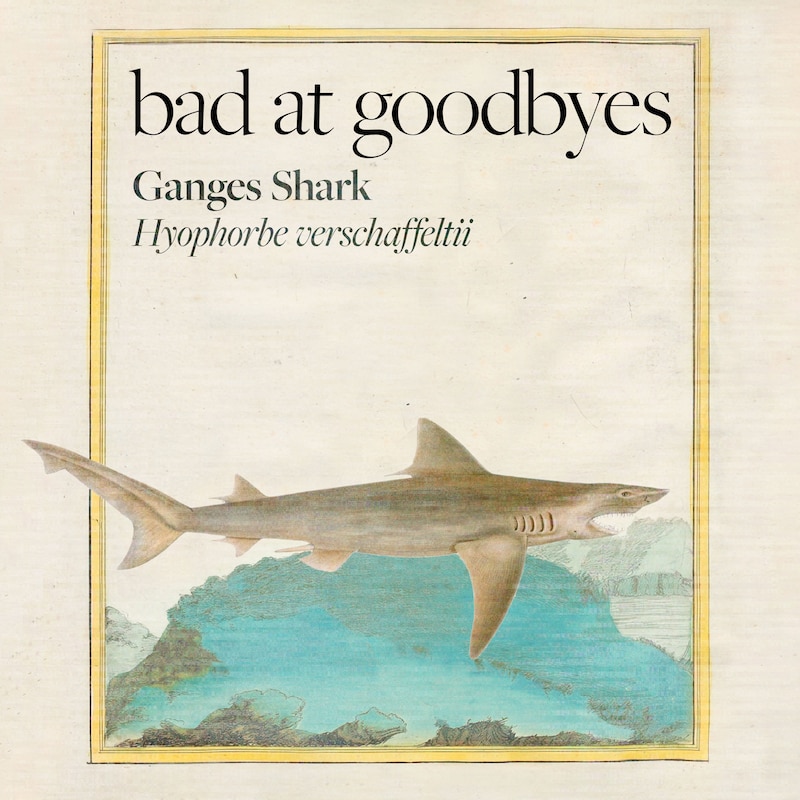
Ganges Shark :: Glyphis gangeticus
Bad at Goodbyes :: Episode 083
On today’s show we learn about the Ganges Shark, a critically endangered freshwater shark native to South and Southeast Asia, to the river systems of India, Bangladesh and Indonesian Borneo. Its scientific name is Glyphis gangeticus and it was first described in 1839.
For more information about Shark conservation please see the Shark Conservation Fund at https://www.sharkconservationfund.org.
- (00:05) Intro
- (02:05) Species Information
- (19:53) Citations
- (21:39) Music
- (29:55) Pledge
Research for today’s show was compiled from:
- Chowdhury, G., Akash, M., Haque, A. (2017). Status of the Ganges river shark Glyphis gangeticus (Müller & Henle, 1839). Dhaka University Journal of Biological Sciences. 26. 111-116. – https://doi.org/10.3329/dujbs.v26i1.46355
- Compagno, L. J. V. (n.d.). Glyphis gangeticus. Sharks of the World, Naturalis Biodiversity Center. – https://sharks.linnaeus.naturalis.nl/linnaeus_ng/app/views/species/taxon.php?id=62717
- De, K., A. Dwivedi. 2025. Call to Action for Conservation of the Critically Endangered Ganges Shark (Glyphis gangeticus). Aquatic Conservation: Marine and Freshwater Ecosystems , 35(2). – https://doi.org/10.1002/aqc.70080
- Duhigg, K. (2020, June). The rare shark of the Ganga. Mongabay India. – https://india.mongabay.com/2020/06/the-rare-shark-of-the-ganga/
- Dunphy-Miller, S. 2025. "Glyphis gangeticus" (On-line), Animal Diversity Web. Accessed July 2, 2026 – https://animaldiversity.org/accounts/Glyphis_gangeticus/
- Haque AB, Das SA (2019) New records of the Critically Endangered Ganges shark Glyphis gangeticus in Bangladeshi waters: urgent monitoring needed. Endangered Species Research 40:65-73. – https://doi.org/10.3354/esr00981
- iNatualist - Hooghly River / Sesayap River Delta
- Jabado, R.W., Kyne, P.M., Nazareth, E. and Sutaria, D.N. (2018), A rare contemporary record of the Critically Endangered Ganges shark Glyphis gangeticus. Journal of Fish Biology, 92: 1663-1669. – https://doi.org/10.1111/jfb.13619
- Martin, R.A. 2005. Conservation of freshwater and euryhaline elasmobranchs. Journal of the Marine Biological Association of the United Kingdom, 85: 1049-1073. – https://doi.org/10.1017/S0025315405012105
- Martin, R. A. (n.d.). The mysterious, endangered river sharks (Glyphis spp.). ReefQuest Centre for Shark Research. – http://www.elasmo-research.org/conservation/river_sharks.htm
- Rigby, C.L., Derrick, D., Dulvy, N.K., Grant, M.I. & Jabado, R.W. 2021. Glyphis gangeticus. The IUCN Red List of Threatened Species 2021: e.T169473392A124398647. – https://dx.doi.org/10.2305/IUCN.UK.2021-2.RLTS.T169473392A124398647.en
- Saha, S., Pal, P., Halder, S., Dhara, K., & Saha, N. (2022). Shark diversity in the Indian Sundarban biosphere. FishTaxa, 23, 53-56. – https://fishtaxa.com/index.php/FishTaxa/article/view/50
- Wikipedia - https://en.wikipedia.org/wiki/Ganges_shark
Please find us on the web at Bad at Goodbyes and on instagram. Please subscribe and rate/review Bad at Goodbyes wherever you listen to podcasts. Please help spread the word about the show and about the species we feature. Please take care of each other, and all of our fellow travelers.
A note on accuracy: I strive for it! These episodes are well-researched and built from scholarly sources, hoping to provide an informed and accurate portrait of these species. That said, I’m a musician! I am not an academic and have limited scientific background. I may get things wrong! If you are using this podcast for scholarship of any kind, please see the cited sources and double-check all information.
Transcripts
Welcome to Bad at Goodbyes.
On today’s show we consider the Ganges Shark.
Species Information:The Ganges Shark is a critically endangered freshwater shark native to South and Southeast Asia, to the river systems of India, Bangladesh and Indonesian Borneo. Its scientific name is Glyphis gangeticus and it was first described in 1839.
The Ganges Shark is a river shark, medium-sized, roughly 6-7 feet in length snout to tailfin, with a kind of flattened streamlined grey, grey-ish brown body.
They are covered in densely packed, microscopic, overlapping placoid scales. These are tiny strong scales embedded in the skin that overlap like shingles on a roof, creating a flexible yet strong armor that protects the shark from predators and from abrasions: scrapes and scratches on their rocky riverbeds.
The shape and arrangement of the placoid scales also play a role in hydrodynamics, how water moves across the shark's body; reducing drag and turbulence allowing for faster and more efficient movement through the water.
Shark bodies are described in three major sections, the head, the trunk (which is like the torso, the middle bit) and the tail.
The Ganges Shark has eight fins. Two dorsal fins on their back, two large pectoral fins on each side toward the front of the trunk, two smaller pelvic fins near the rear of the trunk, one anal fin and one caudal fin, that is the tailfin.
The Ganges Shark's head has a short and rounded snout with a pair of nostrils at the underside of the tip. Their mouth is wide and long, with powerful jaw muscles. Their upper teeth are sharp and serrated for cutting, and their lower teeth are curved like hooks, designed for grasping and holding onto struggling prey.
Their eyes are small and dark and upward facing, a specific adaptation for their river habitat. The shark traverses the river bottom, visually scanning for the silhouette of prey above. They have specialized (NIK-ti-tay-ting) nictitating eyelids, a translucent membrane that protects the eye from murky sand and sediment-filled water, while still allowing them to see.
Toward the rear of the head on both sides are their gill slits, five on each side, which facilitates breathing, their underwater respiration.
The Ganges Shark's snout and head are covered in thousands of tiny pores called ampullae of Lorenzini, part of a specialized electroreceptive sense system. The shark are able to detect the weak electrical fields generated by all living organisms; currents of micro-voltage produced by movement, muscle contraction, heartbeats, respiration.
The pores on the head open to gel-filled canals beneath the shark's skin, leading to a cluster of sense cells. The gel-like substance acts as a conductor, allowing electrical signals from the environment to reach the shark's nervous system. Now, this only works within like inches of the shark's snout, but if say in dark murky waters, conditions with poor visibility, a prey fish swims, that muscle movement creates a tiny electric field. That electric field creates a voltage difference between the external pores on the shark's snout and the receptors at base of the internal canal at the nervous system. And so the shark can sense that differential, that voltage change, now alert to the presence of possible prey.
The Ganges Shark preys on small to medium-sized fish and crustaceans in their river habitat. Contrary to popular myth, the Ganges Shark does not consume mammals and specifically does not prey upon humans. Just fish, crustacean and occasional stingray.
Their hunting strategy likely involves a combination of seeking, ambush, and active pursuit. Their flattened body and coloration blend with the riverbed, their highly tuned sensory systems always scanning. Once a potential target is detected, the shark uses its strong tailfin to powerfully propel itself forward, seizing the prey within their wide jaws, with their hooked lower teeth.
Ganges Shark hunt alone, and in general are primarily solitary, only interacting with their own species for mating. Mating involves internal fertilization, with the male using his claspers (modified bits of the pelvic fins) to transfer sperm inside the female via her cloaca, an opening used for both digestive waste and reproduction. Once fertilized the embryos develop inside the mother's body, receiving nourishment through a yolk sac placenta, connected to the uterine wall: the mother transfers oxygen and nutrients directly from her bloodstream to the developing pup via an umbilical cord.
Sharks are viviparous, they give birth to live young. So after gestation, the female births a litter of roughly 6 pups. The pups are born well-developed, already roughly 2 feet in length and capable of fending for themselves, able to navigate their environment and find food on their own. There is no parental care.
Juvenile Ganges Shark reach reproductive maturity at about 9 years, and they can live to roughly 25 years old.
————
In the dream,
To sense the spark of life.
To shiver in unknowable ways for the electricity of a breath,
Of a heart.
To read the world in waves of voltage,
Privy to an invisible matrix,
The tiny charges that power our movement,
Our hunger, our being.
In the dream.
————
The Ganges Shark is native to South and Southeast Asia, to the lower river systems of West Bengal India, Bangladesh, and to the province of North Kalimantan, Indonesia on the island of Borneo. Specifically the Ganges river basin, and Hooghly River in India/Bangladesh and the Sesayap River Delta in Indonesia.
The Ganges Shark ranges from low-salinity very near-shore coastal waters, through the brackish river deltas and up roughly 60 miles upstream. These are tidal river systems, estuaries where freshwater meets the sea and river conditions are affected by the ocean tides, and by annual dry seasons and wet monsoon seasons.
The Ganges Shark moves throughout their range based on this seasonal salinity; moving upstream during the dry season as tidal saltwater pushes inland, and then back toward the river deltas when monsoon rains flood fresh water through the river systems
The climate is tropical. Summer temperatures can reach into the 100s°F, while winter lows can dip into the 40s°F. Rainfall is highly variable with roughly 80% of annual rainfall occurring during monsoon season, from June to October.
The Ganges Shark shares its home with:
Mola Carplet, Watercress, Green Puffer, Indian Ricefish, Cannonball Mangrove, Northern Fatnose Goby, Golden Snapper, Brittle Naiad, Blotched Tigertooth Croaker, Tank Goby, Java Barb, Sea Hibiscus, Four-banded Tiger Perch, Javanese Ricefish, Apple Mangrove, Climbing Perch, Mangrove Palm, Banded Archerfish, Orange Mangrove, Pool Barb, Rohu, Peach Knight Goby, Dussumier's Fiddler Crab, Spotted Snakehead, Bartail Flathead, Gulio Catfish, and many many more.
The small remaining Ganges Shark population is threatened by overfishing and specifically bycatch. The shark will become entangled in fishing gear intended for other species, leading to accidental capture and mortality. They are less often hunted directly, though their fins and meat are sometimes consumed.
Additionally human encroachment has led to habitat loss and degradation. Construction of dams along their river systems has disrupted movement, and the migration and movement of their prey species. Pollution from industry, agricultural runoff, and untreated sewage threatens to contaminate their habitat. As a long-lived species, river sharks are susceptible to the bioaccumulation of heavy metals and pollutants, which can lead to organ failure, and reproductive issues.
Human induced climate change, the result of persistent over-reliance on fossil fuels further compounds these threats. Rising temperatures, altered rainfall patterns, and increased frequency of extreme weather events like flood disrupt ecosystem patterns, impacting prey abundance.
Fortunately the Ganges Shark is legally protected in both India and Bangladesh.
And in: ed on the IUCN Red List since:Our most recent counts estimate that less than 250 Ganges Shark remain in the wild.
Citations:Information for today’s show about the Ganges Shark was compiled from:
ry, G., Akash, M., Haque, A. (: pp/views/species/taxon.php?id=: De, K., A. Dwivedi.:https://doi.org/10.1002/aqc.70080
Duhigg, K. (: Dunphy-Miller, S.: Haque AB, Das SA (:iNatualist - Hooghly River / Sesayap River Delta
zareth, E. and Sutaria, D.N. (: Martin, R.A.:Martin, R. A. (n.d.). The mysterious, endangered river sharks (Glyphis spp.). ReefQuest Centre for Shark Research. – http://www.elasmo-research.org/conservation/river_sharks.htm
., Grant, M.I. & Jabado, R.W.: r, S., Dhara, K., & Saha, N. (:Wikipedia - https://en.wikipedia.org/wiki/Ganges_shark
For more information about Shark conservation please see the Shark Conservation Fund at https://www.sharkconservationfund.org.
Music: Pledge:I honor the lives of all Ganges Shark. I will commit their name to my record. I am grateful to have shared time on our planet with this being. I lament the ways in which I and my species have harmed and diminished this species. I grieve.
And so, in the name of the Ganges Shark I pledge to reduce my consumption. And my carbon footprint. And curb my wastefulness. I pledge to acknowledge and attempt to address the costs of my actions and inactions. And I pledge to resist the harm of plant and animal kin and their habitat, by individuals, corporations, and governments.
I forever pledge my song to the witness and memory of all life, to a broad celebration of biodiversity, and to the total liberation of all beings.




