Shownotes
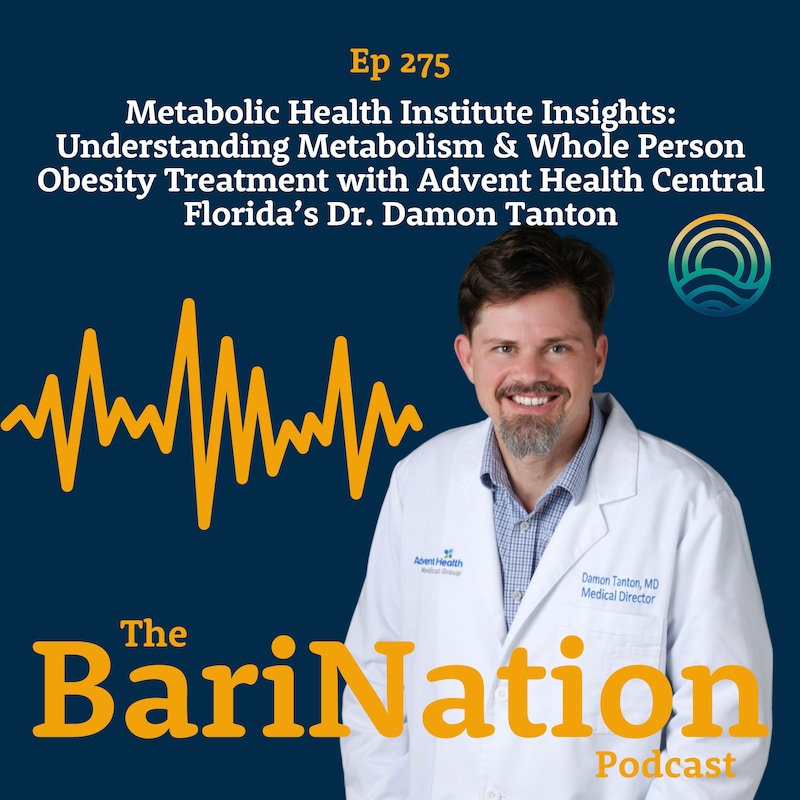
Metabolic health is more than weight loss—it's about addressing the root causes of obesity as a disease. Today’s episode is sponsored by AdventHealth and we were excited to sit down with Dr. Damon Tanton, Executive Medical Director of AdventHealth Central Florida's Metabolic Health Institute, to explore how insulin resistance drives weight gain and metabolic dysfunction. Dr. Tanton explains why treating obesity requires whole-person care rather than focusing solely on diet and exercise. We discuss the root causes of metabolic syndrome and how personalized care is transforming lives by addressing hyperinsulinemia and reversing metabolic damage before it becomes irreversible.
What You Will Learn in this Episode:
✅ Why insulin resistance is the foundation of metabolic health issues and how hyperinsulinemia causes your body to store fat rather than burn it for energy preferentially.
✅ Why whole person care and personalized treatment are essential for long-term success, and how AdventHealth Central Florida's approach eliminates shame and judgment from obesity medicine.
✅ How understanding the cause can determine the best treatment course, and how bariatric surgery and GLP1/GIP medications work as potent insulin sensitizers that can reverse years of metabolic damage and reduce inflammation throughout the body.
Tune in, and don’t forget to join the BariNation Community to attend community meetups, watch exclusive bonus content and support the podcast for as little as $5 per month! You can also contribute to BariNation and become a Drive To Thrive Supporter with a one-time or recurring donation.
TIMESTAMPS:
00:00 Metabolic health, obesity medicine and understanding insulin resistance and hyperinsulinemia
06:56 Why obesity is a physiological, not a behavioral issue, and obesity is not your fault
18:52 How visceral fat triggers the metabolic disease cascade and the domino effect
28:30 The importance of early intervention in metabolic syndrome
30:43: Discussion of personalized individualized care and the frustration with healthcare
38:20 Whole person care approach at AdventHealth Central Florida
44:34 Overcoming shame and judgment in obesity treatment and creating trust between patient and doctor
55:50 Life gained through metabolic wellness and authenticity, and when is the best time to have surgery
1:00:22 Jason shares how his life has changed, and Dr. Tanton encourages being your authentic self to the listener
KEY TAKEAWAYS:
💎 Insulin resistance affects over 100 million Americans and is the underlying cause of 70% of all diseases, including cardiovascular disease, cancer, anxiety, and reproductive problems. Addressing hyperinsulinemia is the key to reversing metabolic health decline.
💎 The medical system has been backwards for decades, blaming patients for behavioral issues instead of addressing the science first. Personalized care that treats the whole person without judgment is essential for sustainable results.
💎 Bariatric surgery and GLP-1 medications are not just weight loss tools—they're powerful treatments that correct physiological dysfunction by dramatically lowering insulin levels and reducing inflammation throughout the body.
ABOUT THE GUEST:
Damon Tanton, MD, is board-certified in endocrinology, diabetes and metabolism. He serves as Executive Medical Director of the Metabolic Health Institute at AdventHealth and sees patients at AdventHealth Medical Group in Orlando, Florida. A University of Miami School of Medicine graduate, he completed his residency at Wright-Patterson Medical Center and fellowship in endocrinology at Lackland Air Force Base. He specializes in diabetes, insulin resistance, obesity treatment, PCOS, and thyroid disorders.
AdventHealth Central Florida - Instagram
AdventHealth Orlando - Website
AdventHealth Central Florida, Damon Tanton, MD,
RESOURCES MENTIONED:
Transcripts
April Williams: You've just tuned into a podcast that welcomes you into a community, a resource center, and a safe place that powers your [00:00:15] journey towards personal wellness.
Natalie Tierney: Our goal is you leave us today feeling hopeful, inspired, and ready to live your best bariatric life.
liams: Hi, Fred. Jason and I [:Jason Smith: Yeah, there's gonna be a lot of information about metabolic health, [00:00:45] wellness, how it's achieved, what it looks like.
engaged in paying attention [:Well, you've got this, and as always, we've got you if you do come up and find yourself that you have any questions that you want further information on. Please reach out and let us know, because [00:01:15] that just means we get to have another episode with Dr. Tanton and that's amazing.
April Williams: Our mission here at Variation is to connect you with the education that we all need to thrive along our obesity health journey.
hey believe in the education [:Alright, friends, let's dive in. [00:01:45] Hello, Bari Nation. Welcome back to the show. Today we are thrilled to be having a very important conversation with Dr. Tanton, advent Health Central Florida, director of the Metabolic Health Institute. Dr. Tanton, will [00:02:00] you introduce yourself?
Dr. Damon Tanton: Well, hello, I'm glad to, uh, to join this podcast.
Health Institute. Um, I'm an [:I think that's the, the biggest change we've had.
April Williams: Obesity, [:If you have struggled with your weight for a very long time and just don't know what to do. If you are thinking about onboarding treatment and doing something differently, or if you have already onboarded [00:03:15] treatment, better are finding it difficult to kind of navigate life after that, this conversation is for you and it is an important one to have because obesity medicine is going through a major transformation again, and Advent Health [00:03:30] Central Florida is really kind of leading this transformation in the most meaningful ways.
ndition, but you're going to [:Is going to allow you to regain control of your life. So we're gonna dive in.
ht loss. What is it exactly? [:Dr. Damon Tanton: Well, Jason, that's a loaded question, uh, because, uh, when, when people talk about, uh, metabolism or metabolic health, um, there are many, uh, ideas that come to mind depending [00:04:30] on your perspective.
everything is hormones. Uh, [:There may be, the listeners may be thinking [00:05:00] of, you know, what does that mean? Um, you know, the hormones that we look at in obesity are your, your big hormones that handle the, the way the food is addressed once you eat [00:05:15] it. Um, and not only the way the food is, is, uh, managed, but whether you want the food in the first place.
obesity is insulin. The vast [:Stores preferentially stores fat. And so, [00:06:00] you know, the, the, the issue is, um, that if we don't correct the high insulin levels that are circulating, um, is very, very difficult for someone to get control of their weight. [00:06:15]
April Williams: And really what, what I hear you saying is that if you struggle with your weight for a long time and you're trying to tackle it with diet and exercise alone, it's not that you're doing something wrong, right?
whole foods or what you may [:Is that correct?
for another documentary that [:Um, and you know, we've, we've had this problem for 50 years. Um, we've been blaming the patient, uh, and I say we, the [00:07:30] medical establishment has been blaming the patient and, um, has reduced obesity to just a, you know, a hand to mouth disease. And that couldn't be farther from the truth. And the reason I [00:07:45] break up insulin first is because insulin is the foundation.
als with the macronutrients. [:April Williams: Which [00:08:45] as a person, and Jason, I know, uh, you shared this with me, who struggled with excess weight forever. I never had this, this knowledge. I, I didn't understand insulin. I didn't understand the signals that my body was [00:09:00] sending me because as, as you said, and I really appreciate you saying this, it's not only the medical community who has been telling us this is a behavioral issue.
ndustry, all of these things [:This is your body's wiring not working or not set up in the way that an effective system is. It's not your fault, but if we don't do anything, if we don't partner up and team up to address this underlying [00:09:45] issue, you're gonna continue to struggle. And nobody wants that.
Dr. Damon Tanton: Yeah, I couldn't have said it better.
nts, um, of our clinics, um, [:Right. Um, that the assumption when you come in is, oh, you obviously, uh, just don't have any willpower, or you obviously are lazy, or you obviously want to be fat, [00:10:30] whatever the, the, the assumptions are. But after doing this for 20. 20 some odd years and seeing thousands and thousands of patients and gaining better understanding over the years, you know, [00:10:45] as to what's, what's causing, uh, this, we've realized that it is, uh, a much more complicated than, uh, we like to, or we have traditionally, uh, made it out to be.
you mentioned that 'cause as [:So it's good to open it up to, uh, you know, kind of a wider array of experts and talk to them because you can speak to things that most people can't speak to. So, hearing you talk about treating it from, you know, treating [00:11:30] the issue person, then worrying about, you know, the, the US problems is. I, I believe that needs to be the vision for the future if it's not already in everybody on, on everybody's watch list for 26.
is, is to, you know, kind of [:Like the way that you guys do your, your, your, you know, whole patient care, first person being, make sure that you're totally involved from, you know, point A to point Z is just phenomenal. And just what we got to see while we were there just blew our minds. [00:12:15] We kept waiting for it to kind of fall off like the bright and shiny up front, and then it just kind of folds.
ld. It was beautiful. It was [:But it just wasn't there. Like, it was just phenomenal on every level. And the fact that it felt like a resort and [00:12:45] why it felt like a resort and not a hospital and why, you know, everything was just so patient forward. I felt comfortable being there and I wasn't even a patient. I was like, this would be awesome.
w what it needs to be worked [:Dr. Damon Tanton: Well, thank you for those [00:13:15] words. Um, we do our best to, uh, uh, it, we're not perfect, but we do our best to try to put the patient first. I don't know if, if, if you spend a lot of time being a patient, but I've had an experiences in the [00:13:30] past as being the patient, right? And you're already, you already feel vulnerable, you already feel, um, overwhelmed.
already feel judged. And so [:But what I am going to be able to do is, is tell you what the situation is from a scientific standpoint, tell [00:14:15] you what we have to offer you from a, uh, a, a scientific standpoint, and then offer you the support, um, with the science, support and science, right. Um, and, [00:14:30] and, and then after that, if you want to talk about, uh, behavior management and things like, that's fine, right?
he most part. Maybe it's too [:Insulin resistance. Right? And you hear insulin resistance all the time. Uh, in other names for, for insulin resistance are metabolic syndrome, uh, [00:15:15] prediabetes, polycystic ovarian syndrome, they're all the same thing, right? And insulin resistance is the precursor for what we call diabetes, right? Even though I hate the, the, the term diabetes, uh, I think it's an artificial, uh, [00:15:30] demarcation, but that's another podcast.
diseases, are predicated on [:Right? Um, that's why when we [00:16:15] treat, you know, with these insulin sensitizers, the ones that have become famous, right? Um, uh, they, the, those medications, um, that, that, um, that everybody wants, um, really if you boil it [00:16:30] down, they're just very robust. Insulin sensitizers. So if someone loses, let's say someone loses a hundred pounds on Ozempic or Mounjaro or Wegovy or that bound, you know, and they're holding up the jeans, I lost a hundred [00:16:45] pounds, you know, that's great.
ch around those medications, [:So, so that's, I I think that's, uh, a key. I like what, what you had said, uh, earlier, before we even started recording that, um, you know, that, that the weight [00:17:30] is, is just bonus. You know, it's, it's just that really what I try to, uh, get across to patients is to improve the metabolic health is the number one thing that you can do for your health [00:17:45] for the next 10, 20 years.
d, and so yes, we see weight [:Um, they are fulfilled by the fact that they see in the, in the mirror and, and they get that kind of feedback, right. We both win. Uh, the weight loss is the hook that, that keeps people motivated, but it's not, [00:18:30] but it's not the foundational, um, a advantage that we get from these medications.
ulin resistance and all that.[:I'm gonna tell you right now, the scale and the jeans fitting better make me happier than reading a lab report. I'm just saying, I'm just saying nobody's like,
me what their insulin level [:Uh, because the insulin parallels their weight. And, and let me take it one step deeper. You know, often I'm asked, well, what causes insulin resistance? If we have a, a a [00:19:15] hundred million people with insulin resistance, how is that happening? And, and I think the easiest way to, to, to kind of simplify it is if you're looking at a bunch of dominoes, um, the first domino [00:19:30] to fall is fat deposition in the organs, principally liver fat.
, what we call visceral fat. [:And you think about it, the liver is very important in handling sugar, keeping sugar, normal glucose. So if the liver gets full of fat, then [00:20:30] it doesn't handle sugar very well. So the pancreas says, Hmm, okay. I can make more insulin to overcome that resistance to keep the sugar normal. And so the insulin goes up, and then of course, when the insulin [00:20:45] goes up, then you start gaining more fat again because it's insulin is the most anabolic, uh, hormone.
g all of the, you have this, [:Their GI diseases, their, their, um, [00:21:30] arthritis, um, their, you know, et cetera. Because everything, or not everything, but almost everything is inflammation.
s often. We hear things from [:What I am just so thankful for is you very clearly giving us this domino visual, [00:22:00] right? Because if you're watching or you're listening to this, this podcast episode, at some point you have experienced one of these things, and it does feel like a, a domino cascade that is well out of your control. Because once that [00:22:15] first domino falls, chin, chin, chin, chin, other things happen, right?
g that your doctor has said, [:Oh, now it's this. My quality of life is, is worse. I'm winded when I try to play with my kids or [00:22:45] grandkids, or you just start seeing these things being taken away from you slowly, but you're only listening to the voice that's going on up here, which is telling you it's your fault. It's your fault. It's because you're not moving enough.
ong. It's, it's because you, [:And when you start that treatment, now you're knocking down the dominoes in a positive way. Oh, okay. We're, we're, we're, we're gonna get some labs. We're gonna understand this. Oh, we're gonna teach you [00:23:30] why your body is responding this way. We're gonna do some education on, on this insulin and hormones and what's actually happening in your body.
re gonna treat you. And it's [:It's the one you want to play because the things falling in place are treatment, [00:24:00] are things that are making the most positive difference in your life.
m, it should never, ever be, [:We can see type two diabetes coming for 15 years, you know, type one's different. What type one is, you know, a, uh, you know, when the, the pancreas dies from autoimmunity attack, [00:24:30] um, you know, that's like a tornado, uh, a type two diabetes, like a hurricane. You know, you sit there and watch the, the person on TV tell you the hurricane's coming for four days, right?
's on you, right? Um, and so [:You start feeling tired [00:25:15] after, after meals. You start feeling anxious for no reason. You start waking up at two or two o'clock in the morning, um, completely awake and ready to start the day, even though it's two o'clock in the morning, right? [00:25:30] All of those are manifestations of insulin dysregulation. And the reason we know that is because of the continuous glucose monitors, you know, the little patches you see people wearing.
d a lot about that, uh, that [:And so if you think about, uh, you know, the ultimate treatment, the ultimate treatment is like I said, getting the fat out of the, or the organs because that is what we consider to be [00:26:15] pre inflection point before the disease, you know, has the, the spike up, right? Um, so much of our medical system is focused on post inflection point.
ble into the hospital and we [:you
April Williams: know,
rweight and we say, Hey, you [:No, no, no. You should have done something about it 10 years ago. And I don't mean you, the patient, I mean, the medical system should have done something about it 10 years ago.
n and I are nodding here in, [:What I'm hearing you say, and what Advent Health of Central Florida is doing is you're saying no more, we are not going to continue to treat this disease and these other metabolic symptoms and syndromes in the way that we have [00:27:30] before. We need to get people continuous care immediately, and we need to take some of that burden off of them because just like what you were saying, right, I, I suffered for 25 years as, as a young adult into adulthood with the things that, that you're [00:27:45] talking about and was never spoken to or offered any type of obesity treatment or education, never.
it's not acceptable anymore [:This is not working. We [00:28:15] need to pivot. We need to address this disease head on, and we need to give people who are suffering a very low barrier to entry, so to speak. Right? If you have these things, if you're noticing this, you are a candidate for treatment and [00:28:30] here's where you start, that's a powerful shift.
let's say that every person [:Right. And don't get me wrong, I'm a, I'm a huge advocate of surgery. Right. But it's one of the many, uh, services and options that we have, and it's [00:29:15] along the spectrum or the, you know, the, the continuum of care, right? Because, uh, we have patients that come in that, that all that they end up getting from us is, um, some education, which is great, right?
[:Um, about 35 of them are endocrine related. Um, about 10 of them are bariatric surgery related. Um, and then we have a few that are [00:30:15] what we call health optimization clinic. That's kind of the glue that holds it all together, right? We end up see, looking at th this is one disease, right? It's not a surgical disease, it's not a medical disease behavioral disease.
It, it's one disease [:April Williams: Why is now the [00:30:45] time for personalized individualized care?
though I don't like the word [:Because we, we demand personalization in every other facet of our lives, right? When it comes to [00:31:15] healthcare. For some reason we've been like, I don't know, just okay with everything being the same. Right? And I don't, I mean okay. Mean that collectively we've been okay because we [00:31:30] haven't changed it.
Jason Smith: Right?
Dr. Damon Tanton: Um, I know that individually we're all a little bit frustrated and disappointed with the way that healthcare is rendered, right?
nough to change the overall, [:I mean, that's just science, right? But everyone is an in individual. And so I think that [00:32:15] the more that healthcare systems will embrace this, the more business they'll have, right? Mm-hmm. Um, and you know, unfortunately, it, it's difficult at scale, right? So anything as [00:32:30] easy, if you have a small little clinic and you see 20 patients a day, I mean, of course you can be as personalized as you wanna be, right?
[:Mm-hmm. You have to change the mon the mantra, what, what's behind it, right? Um, and so that's when I, when I hire clinicians for the, uh, for the Metabolic Health Institute, you know, I'm really keen [00:33:15] on their philosophy, um, towards patients. Um, if, you know, I don't like, uh, any paternalism or authoritarianism or, you know, uh, you know, having, having kind of a [00:33:30] judgmental, um, kind of, um, me centered, um, I, I'm, I'm not, I'm not okay with that.
an say that 'cause I am one, [:Jason Smith: Well, and when you, you spoke about that earlier, you were talking about how, you know, the first thing coming [00:34:00] in, it's like you, you, you discussed not, not the, the patient-centered issues, but the, the actual metabolic issues so that it's, you know, 'cause so many people you walk in and they're like, oh, you need to lose weight before we can even have a consultation.
surgery. You need to do this [:Because I know we've heard stories from countless number of people. That just felt like they weren't treated fairly, weren't treated like people. They were treated like, you know, numbers. They were treated like the next check. They were treated like however you want [00:34:45] to put it. Yeah. But it was so demeaning in such a way, like I finally got myself up, got the courage up to ask for help, and this is how I was treated.
the medical judgment is way [:A lot of times she talked about it. Like, you know, you're just, oh, well you're just big. You know, if you just lose some of that weight, everything will be fine. We'll just, we'll fix all your problems. You drop some [00:35:15] of that weight and then you come to find out like, oh, you mean that didn't help, that didn't fix it all.
Oh, sh gee. Like, but now we have to really work and figure out what the problem is. But that judgment is just that it's, it's really
nd, and now I'll go one step [:'cause I don't know about you guys, but most of the doctors that I see walking around, they're not perfect [00:36:00] specimens for health. And you know, I, I tell my patients the best physical cue that you might be having metabolic issues is the flatness of your stomach. So all you have to do, you don't have to get fancy insulin [00:36:15] levels and, and scans and everything.
segment is, guess what, when [:And, and then I look down and, Hmm, I think I have some [00:36:45] fat here. So it's a re it's a very arrogant, um, stance and I think we need to, to start, uh, eliminating it from our, our medical system.
it just, the L is silent. So [:Dr. Damon Tanton: It's flat.
Jason Smith: That l is, the l is really silent in mine. So there's, there's some going on there.
April Williams: Oh my God. [:Dr. Damon Tanton: Yeah.
ing about this, where we are [:Jason's had revision. I, I've had one. And we both went into surgery thinking, oh, this is it. This is, this is gonna be the thing that helps with all of these other things. And pretty quickly on in our [00:37:45] journey, we realized, oh yeah, no, this is not going to be the only thing. Jason and I both continue to have health issues related to metabolic syndrome, right?
function in our lives. We've [:As we age, the disease ages with us, and it is really important to have a care team that is looking at you as a whole person, [00:38:30] not as a singular issue within, because as we know, the disease of obesity impacts every facet of our life. You've described this beautifully, right? It impacts us metabolically in so many different ways, and you really do need that team that can look [00:38:45] at your disease, not only from you as the individual, but from how the disease is operating and impacting your life.
, but if you don't have [:Dr. Damon Tanton: I, I couldn't agree more. Um, [00:39:15] I, I think that.
to do, um, because it's much [:But life's messy, right? And, and people are, are not just diseases. There's a lot more, uh, that is involved. [00:40:00] Um, and, and so to take on Whole Person Care is a big undertake. I mean, it, it, it, and so you need a, a big team, a dedicated team, um, to, to be able to do it. [00:40:15] Because that's the reason why surgery is not the, the only, uh, treatment, uh, but is a tool in the, in the, the toolbox, right?
Because it does help to [:Like you could have an insulin that was 12, 15 times normal, um, [00:41:00] and you go in, have the surgery, and before you've lost any weight. The insulin goes to normal. So yes, you, you correct some of that, uh, uh, initially, right? Um, and then you have adaptation where the [00:41:15] body starts to adapt back to where it was before.
uh, on the GLP ones or G Gs, [:I've had some patients [00:41:45] that the body resets this equilibrium point for insulin resistance. They come off the ozempic or whatever, and, and they, they never move back. That the body just stays there. I've got others that they come off [00:42:00] and then they start inching right back up on, not just on the weight, but on the insulin level.
composition, how much yo-yo [:April Williams: I think th this is one of the main reasons that people struggle to onboard care or they struggle to continue to seek care. [00:42:45] Uh. I've experienced weight recurrence, I've experienced some numbers ticking up after surgery. Jason experienced it on a lot of different levels too, and that shame that we can feel around, right?
The weight [:That isolation, that shame feels just like it felt in the years that it took you to, to walk [00:43:30] into right. That doctor's appointment in, in the first place. But what I hear in this new model that Advent Health Central Florida is really working to pioneer. We're, you're closing the gap or you're, you're really working [00:43:45] hard to eliminate that shame so that people are staying engaged with their care for their lifetime, not just for that singular moment that, that they make that decision to, to onboard.
people think that bariatric [:But it's not cosmetic at all. Excess weight [00:44:15] is the outward sign that you have something really serious going on on the inside. And if you keep letting that, that shame or that, that, that blame to prevent you from doing this, you're only going to continue to deteriorate, uh, [00:44:30] internally and cut your life short.
I mean, for obvious reasons, [:Um, and not look at potentially reasons why they're susceptible to, uh, certain disease patterns, right? Um, and I, and I've been guilty of that when I started, when I [00:45:15] was a young doctor. Uh, you know, I I was kinda like, come on, you know, this is all reversible. You just need to, just need to be more dedicated.
Um, uh, and, but. That, [:And so [00:46:00] that, that kind of plays into that, you know, arrogance, right? April Williams: I, I feel a sports metaphor here. There's a commercial and I, I don't know what commercial it is, right? But it's, somebody is doing [00:46:45] something and they're messing it up, and their friend, their partner, their spouse is like, all right, you're out.
I'm bringing in, I'm bringing in the bench, right? Like I'm bringing in you.
Oh,
about a little bit earlier, [:Yeah. But when you have been told, and when and when you have internalized the statement that this is all your fault and you do not deserve treatment, let [00:47:15] alone you don't deserve personalized treatment, then it's a big ask. And it's a big ask for everybody, not just for practitioners and, and, and, and practices and systems to make this holistic shift.
atients to kind of embrace a [:Dr. Damon Tanton: well. I, yeah, I think that, you know, it, there's a trust issue also, right?
with patients that have had [:Um, because all of they, that they have received from the medical com community in the past has been judgment, um, and, and disappointment. Um, and [00:48:30] so I think it'll take some time, uh, because yes, patients, uh, need to change their mindset, but it, it's not that easy. You can't just switch on a, a mindset. You have to, to be reinforced by a different [00:48:45] system and not be disappointed yet again when you come in vulnerable and get an experience that is deflating.
u know that while you That's [:And the white coat syndrome thing is real. Like when my, when I first met with my original bariatric surgeon, he is like, what surgery you want to have? And I'm like, um, not my job. I don't know what the hell do I know? I was like, I didn't even stay at a Holiday Inn Express last night. I could even play doctor.
I don't even have my [:It's just like you said, like aging out of the practice is something that really, I think needs to be looked at because it really is a thing. Like I, I talked to one of my really good friends that's gonna have, that's looking to have surgery and he went to his primary care doctor and they were like, well, that's not gonna do anything for you.[00:50:00]
What do you mean it's not gonna do anything for you? What are you talking about? Like, surgery surgery's not for you. Like, that doesn't even work. And I was like, what? What? What? I was like, oh, okay. That's cool. But I mean, the, the sad thing is, is you hear that a lot from primary care doctors who just don't believe in it.
They're just flat, like, [:I don't weigh [00:50:30] 600 pounds yet. And she was like. You don't think it's for you? Like she didn't, like I wasn't, she
Dr. Damon Tanton: was the opposite,
Jason Smith: right? Yeah, she, right. Like I was sitting there trying to fool myself, like my blood type wasn't chocolate milk at the time. 'cause I was born eight, eight pounds. Like I was, I was big as could get.
Like I, I'm the biggest [:'cause you're not gonna be here. So to [00:51:00] go from hearing that, to hearing other doctors that are just like, yeah, that doesn't work. And I'm like, like, luckily I didn't have one of those 'cause I would've believed it, I would've hooked line and syndrome. I'm like, well, it's not for me. Then, like I said, if it doesn't work, I just would've gone on Just jolly as as can be thinking it was gonna, that [00:51:15] that's how life was supposed to be.
cause of course it's harder, [:I wish somebody had been honest with you about 200 pounds earlier. Um, but better late than never, right? Um, and so I, I think, you know, it's, [00:52:00] everybody has their own process and timing. Uh, but I think, you know, that's the reason I wear my, uh, memento moori ring. Um, basically, you know, we're, you know, I believe that we're always, we're always dying, right?
And that's not a [:Because, you know, we're all, time is always ticking away. And, and I don't mean that in a, in a depressing way, but, um, there's no better time than now to address the issues. Um, and the earlier [00:53:00] that you address them, the easier, um, that we can, we can make meaningful change.
April Williams: I am so thankful that you said that because it, it, it is true.
We are aging every. Every [:Every doctor, every clinician can have a different philosophy. [00:53:45] But I think what our hope is with this conversation is that, you know, if you're watching or you're listening, you know that there are different practices, there are different systems, there are different options out there for you. And now is the [00:54:00] time.
hink about what your body is [:You have it there, [00:54:30] and not only do you have it there, but you, you have one phone call to make and then you are met with kind, compassionate, whole person care that is gonna walk you through everything. You don't have to know all the answers. You don't need to know what everything means. You don't need to know all the specialties.
You [:You're not living your full life. And Jason and I and thousands of other people who are part of our, our Bari nation world have experienced [00:55:15] access to more of our full life. And that's why we do this podcast. It's why we talk with people like you. It's why we host the membership community. Everybody deserves the access to their full life.
ld needs the best version of [:Dr. Damon Tanton: I tell you what, you didn't think that this was, uh, gonna be philosophical.
Did you?
April Williams: [:Dr. Damon Tanton: go. Correct, Jason? Okay. Yeah. Yeah. Um, but yeah, I mean, it's, you know, it, it, you know, with bariatric surgery, right? You know, it's o often the question is, you know, when's the right time to have there? [00:56:00] You know, there is a time urgency. So, um, you know, with, you know, I always say that it's not the first option, but it definitely should not be the last, right?
s burned out and, and you're [:You know, uh, self care, right? Uh, you know, sometimes, um, I mean I, I've been guilty of this getting to this kind of vortex of [00:56:45] like, you know, you know, no self-care and, and, and all of a sudden you're like, Ugh. And that's when I look down Jason and I say, my belly is getting big. I better, I, I better [00:57:00] have, uh, more self care or else I'll be in trouble.
e lost is just, I mean, it's [:Dr. Damon Tanton: I, I really like that. So say that again. [00:57:30] The life,
Jason Smith: the life I've gained and the weight that I've lost.
e about, uh, you know, half, [:But, um, there's nothing better to start a clinic. But having a couple of patients at the beginning that have lost, you know, 60, 70, 80 pounds, not [00:58:00] because strictly the, the weight, but because of the way that it has transformed them, not not just physically, but the whole person. And we're talking about whole person care.
The, the whole, um, [:April Williams: It's hope. We, we talk about this all the time in the Bari Nation community and, and on [00:58:45] this platform. When you treat the disease of obesity, you get access to hope again, and you have to have a tiny little shred of hope. When you make that initial appointment or when you start this journey. Hope is what drives you to do those things.[00:59:00]
hing. Jason, earlier in this [:You had said, I mean, I'm not gonna lie, it's pretty exciting when you, when you pull on clothes and, and they fit differently and you lose weight, [00:59:30] that is a part of it. And that is going to be the thing that will motivate you to keep going in the short term. But what I've seen, and I'm gonna, I'm gonna love on you here a little bit, Jason.
ally after your revision, is [:Yep. That, that's one thing. But to see you become more metabolically aware, more metabolically active, and more present. That's really what. Keeps you keeping on, on, on those hard days. It, it's not your size and [01:00:15] your shape. And it's okay if it is in the beginning and it's okay if it is forever, but I've seen this shift and it's, it's what we're really talking about today.
ally changed, um, everything [:I love it now because it wasn't an option before. Now I don't know, but now I'm like, this is amazing that I even get the opportunity to do this 'cause it almost wasn't the case. And to see my [01:01:00] grand babies grow up, to be able to play with my grand babies, to be able to run and chase and do the things and get down on the floor and, and put stuff together and get back, you know.
e, oh damn. Like I just did. [:And I got down to do a plank and I did a minute and a half plank and then I just stood right back up and I was like, oh, well that was easy. [01:01:30] It just, uh, stuff like that, you just don't think about it.
Dr. Damon Tanton: Yeah. It's, it's one of those things that, um, uh, those that haven't dealt, had that history wouldn't understand necessarily.
Right. Like, for [:Um, but now that, that he has lost the weight, it's, it's not [01:02:15] necessarily the weight he's talking about. It's the fact that now he can ride the, the, the rides at Disney that he wanted to ride, that he can, you know, do you know I have another patient that when, when they, when uh, he, he lost a considerable amount of weight, he finally learned how [01:02:30] to swim well, why, why did he not know how to swim?
u know, if you haven't dealt [:April Williams: We are constantly amazed at what we gain when we lose.
[:Canton's team. It is going to be the place that you can really tap into that whole person care no matter where you are in your health journey. If you're thinking that maybe if you look down and you see your stomach's a little around. If you have been asking yourself, [01:03:45] uh, I, uh, I don't know. I, I haven't been able to, yes, the answer is yes.
scared, or you're, or you're [:But you have to make the first move. You have to make the first move. Call, email, do it, do it for you, do it for us, do it for the world. It's what is needed right now. Dr. Tanton, as [01:04:30] always, this conversation, what in directions that we didn't quite anticipate, but it was certainly a direction that, that people needed to hear.
his conversation with today? [:Dr. Damon Tanton: I'm hoping that they, that they gained some understanding that, um, that even doctors don't, uh, know everything. Uh, and that, uh, [01:05:00] if you, if you think about the way that this is, um, uh, developed over time, right?
eptance paradigm. And that's [:Um, and, and so when Jason talks about, uh, you know, turning 50, [01:05:45] I don't know if he's turned 50 yet, but, um, uh, let me tell you what happens when you turn 50, uh, uh, you, you start to, to realize, and, and, and maybe some, some people realize this a lot [01:06:00] earlier, but you start to realize that life's too short to not live an authentic life.
uh, you know, what you think [:Um, and that's what you were talking about is you, is by losing you gained, right? And [01:06:45] so, you know, I, not to get too philosophical at the, at the end here, but you know, I do believe that I, I have become more authentic as I've aged. And I think everybody should strive to [01:07:00] gain that authenticity. Um, but assure a lot easier to be authentic when you're not dealing with, uh, huge health issues.
thing that you, that you can [:Now. If you have an unbelievable amount of excess waste, wait, dress it down, right? I mean, because otherwise, uh, you're not gonna be [01:07:45] able to be as authentic as you could be.
formation that we're seeing, [:It really is exciting, it's empowering, and we are very thankful to be able to help you spread, spread the word, because this is the care and the treatment that people need and [01:08:15] deserve now. So thank you.
Dr. Damon Tanton: Well, thank you for the platform and uh, I hope you can find a couple of decent soundbites in this, uh, interview.
Jason Smith: It's called the entire episode there.
Dr. Damon Tanton: There's no,
Jason Smith: yeah.
Dr. Damon Tanton: Okay. Yeah.[:April Williams: Thank you friends for tuning in. And I do wanna let you know if you are feeling inspired because of this conversation, but you're a little bit nervous, reach out to us so we can be that one That's just encouraging you, [01:08:45] right? Uh, over the virtual space, we're there to say, you can do it, you, you can do it scared, you can do it nervous.
episode resonated with you. [:Dr. Damon Tanton: Alright, see you.
g by joining the Bari Nation [:Natalie Tierney: Join us at BariNation.mn.co. If you found this podcast valuable, help us produce it by becoming a $5 monthly [01:09:30] supporter at Barinationpodcast.com.
we'll see you next time. Bye [: