Shownotes
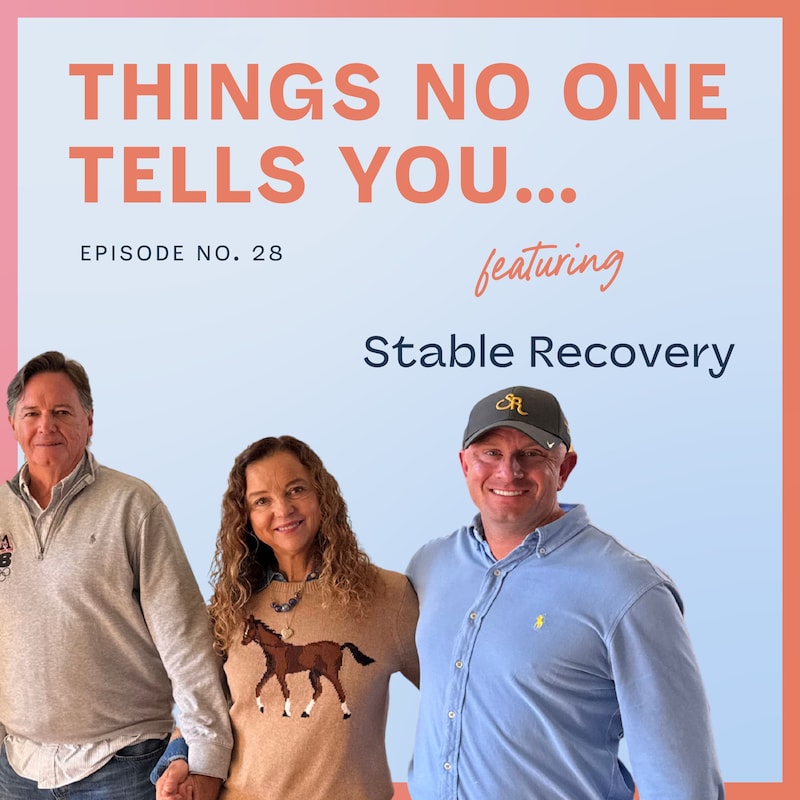
When I first visited Stable Recovery, I knew something meaningful was happening there: not just treatment, but transformation. In this episode, founder Christian Countzler shares his journey from addiction to building a place designed to remove the barriers he faced when trying to get well. Alongside him are Sandy and Dave Schimizzi, my aunt and uncle, who speak openly about losing their son Alex and the heartbreaking gaps they encountered while trying to help him.
Together, we talk about the individuality of addiction, the pressures families aren’t prepared for, and the moments that make long-term recovery so difficult without real support. This is an emotional episode, but it’s also hopeful, a reminder that change is possible when communities, not just individuals, show up.
What You’ll Discover:
- Christian’s story and the origins of Stable Recovery (06:25)
- Alex’s journey and early emotional struggles (11:57)
- The fear and uncertainty families live with daily (23:01)
- The critical need for purpose and follow-up care (27:44)
- The depth of despair people can experience (57:09)
- The limitations of sentencing and current treatment options (72:19)
- Why it’s important to not give up on loved ones (80:05)
This conversation doesn’t offer easy answers. But it does offer truth, the kind that helps people feel less alone.
You can watch this interview on YouTube: https://youtu.be/PKllImyOOlo
For a full transcript and more, check out our blog post: https://www.lindsaycz.com/show-notes/stable-recovery-28
Check out more from Stable Recovery:
See their website.
Follow Stable Recovery on Instagram.
Learn more about Lindsay’s visits to Stable Recovery from these videos:
Horses Hold the Power on Path to Lasting Sobriety
The Healing Power of Horses ‘Putting People Back Together’
Mike Lowery’s Passion for Horses and Gratitude for a New Lease on Life
Read more from Christian Countzler about navigating sobriety during the holidays with his article: “If you’re navigating sobriety during the holidays, know you’re not alone”
If you are in the US and need immediate help, connect with treatment and mental health referrals near you by: Calling 1-800-662-HELP (4357) Texting your zip code to HELP4U (435748)
Transcripts
[00:00:19] Lindsay: Hey guys, that's my friend, Christian Countzler ,talking about his battle with addiction and why he's so passionate about the work he does at Stable Recovery, which is the recovery program in Lexington, Kentucky, that they use, working with horses to help provide purpose for addicts going through their program.
[:[00:00:57] So, real quick, my uncle is a dentist. My aunt, by trade, was a professional counselor with a specialty in rehab counseling. And the reason that I'm sharing that is bthatit has become so clear to me that you can have any sort of background. You can have the best resources, and addiction does not discriminate.
[:[00:01:41] And I think in that moment. It floored me because it was something that we, all of us in our family, which feels a little small, like we all were so worried about this because we knew how hard he battled and all the ups and downs he had, and how he was in and out of rehab. He had held onto jobs, nd then he lost them.
[:[00:02:11] Flash forward to me going to visit Stable Recovery, that recovery program I talked about last year, because I was working on a story. We were doing a feature on the program, and we were highlighting how they use these horses and the work with horses to create a sort of passion and a purpose to help them move on.
[:[00:02:55] I want them to know what goes on here. And I wanted my aunt and my uncle to see that, because even though we can't help my cousin, we couldn't save my cousin. I know that a program like this could have, and I know that my aunt and uncle did everything in their power to help him while he was living.
[:[00:03:17] Christian: The amount of work that goes into trying to help someone.
[:[00:03:45] But, what about the other eight that were in that group or that class or whatever that was, you know, so, I think it gets lost in translation that, you know, addiction is a personal problem to each individual. And if you don't treat each individual differently, then we're gonna be behind the eight ball here, and we're just not doing a very good job of helping lots of people.
[:[00:04:31] I guarantee it. You know, and I don't understand why we're not highlighting that problem.
[:[00:04:38] Sandy: I totally agree with what you're saying. From our experience, when our son needed help, it was almost like a scramble. We really had no clue what was out there, and there were no professionals, no information as to what treatments work best.
[:[00:05:33] And it's like, how can, looking back, how can you parent somebody when you professionals know what's going on, but they can't tell you? And, I don't know if that would've had an, made much of an, a difference early on, but the earlier you catch it, the, better outcomes. But we just struggled with finding the right treatments, and it just seemed like most of them that our son was involved in were cookie-cutter types that were sort of like a farm.
[:[00:06:10] And, the follow-up was always very poor, as far as there were some good halfway houses, some community living, but still the end product, which hopefully would've been a decent job, a place to be, a place to feel better about yourself.
[:[00:06:51] Christian: Yeah.
[:[00:07:02] I just thought that. You know, the old just say, No, thing was gonna work. You know, he should, hehe justhould quit. He should just quit, you know?
[:[00:07:23] I still feel helpless to this day.
[:[00:07:43] And the thing about addiction is it is a progressive disease. It continues to get worse and worse every single time. So finding a way to stop the progression is something that we should focus on, right? And think that, in hearing guys talk, you know, you had very little support. You didn't know what to do once it started.
[:[00:08:12] Lindsay: I pulled out of this farm when we were here this past, I guess, the end of winter. And I remember feeling. This is agame-changerr. You can feel it when you're here. You hear it, you meet the men at that time, and we are going through it.
[:[00:08:46] And I remember hearing you talk about your own personal experience, and I would, I think that it would be great to set the table with the experiences, both Alex, you know, I wanna talk about my cousin, but I would love you to share about what you went through and how that became part of this.
[:[00:09:04] I, and I, wish I could sit here and tell everybody that this thing that happened to me at this age was the catalyst for what turned into my full-blown addiction. I can't do that. You know, I had kind of a troubled childhood. I had an abusive father. And, stuff like that.
[:[00:09:28] ended up becoming a coal miner, where I was introduced to opiates. And it's kind of the, you know, sad Kentucky story of a guy that was trying to support his family. I had a decent job, but I was introduced to opiates pretty quickly, quickly in that job. And, where I had been able to manage alcohol and manage recreational-type drug stuff, you know, once I started opiates, I couldn't manage that anymore.
[:[00:10:17] As that progressed, it obviously was getting worse and worse. And, at age 35, I started using drugs intravenously. They had finally cracked down on the opiates and taken, you know, the ease of being prescribed that drug away. And so I was left with the choice, and I had to get high.
[:[00:11:03] Helping me on an individual basis. Right. And I kept going to these short-term treatment centers and spending a short amount of time in jail. And then inevitably I would be kicked out right into the same environment that I came from, and without a solution towhat was going on in my life, I would use again, and then the cycle would start all over, you know?
[:[00:11:48] but I took all of that and that, that's, I didn't know then, but I was researching how to build a recovery program, you know, through my own lived experience. And so, after meeting Frank and having worked in the field for a period of time, I was given the opportunity to write the program for stable recovery.
[:[00:12:29] Some of us need a little motivation for that. And so, that's what I try to do here at Stable Recovery is to make sure that every single morning when these folks are waking up, they know they're important, they know what they're doing is working towards a better life, and then pushing them towards that for a period of a prolonged period of time.
[:[00:12:54] Lindsay: And then I still can't believe that Alex is gone if we're being honest, right? I mean, Alex is so smart. He was just such a loving person. When did he, when did you first know that there was something going on with him?
[:[00:13:36] Christian: Yeah.
[:[00:13:44] I had him tested, and he was on the spectrum, so he really had some social difficulties with other kids. And he was in a situation where he had a very difficult time at school one day. And he actually suffered post-traumatic stress from that. And, at that point, we started to have him treated; this was when he was in fourth grade.
[:[00:14:40] And that's what started him on that path. And, Yeah. And that's, I feel like that's when we lost him.
[:[00:14:59] And I had no reason for that. But there was, when you were that young, always. Always something different inside of me. I either felt left out, not a part of, unworthy, and that, you know, I wish I could blame trauma, but I don't remember a time when I was a child where I did not feel different.
[:[00:15:40] And, you know, we obviously gravitate back to that because it's the one thing that's worked. It is the only thing that worked to remove that feeling of being different, you know? And so,
[:[00:15:59] Lindsay: Yeah.
[:[00:16:25] Reaching out for anything. In his case,
[:[00:16:42] I was constantly seeking different ways to make me feel better inside.
[:[00:16:49] Christian: Exactly. Because
[:[00:16:51] Christian: He had that feeling inside that
[:[00:16:57] Christian: Yeah.
[:[00:17:01] Yeah. And then it just proceeds,
[:[00:17:05] Lindsay: Yeah. So that feeling is like a feeling of acceptance.
[:[00:17:09] Lindsay: Is that what you think it is? Yeah.
[:[00:17:15] Lindsay: Trying to get rid of
[:[00:17:18] and then talking about Alex, like a lot of times we'll go to the extreme opposite of the thing like, like dressing completely different than what other people are dressing because maybe that will be. Will set me apart from, whatever it is, you know,
[:[00:17:36] And you,, I know. And that's just another layer of guilt. It is. That I have on my shoulders. Oh, I'm
[:[00:17:44] Dave: Yeah. Oh yeah. Yeah. We lived in, and then, we wanted him to be in, we wanted him to be a part of something, so we wanted him to be in the band.
[:[00:17:52] Sandy: Which he was. Right. He was a good musician. He was a good musician.
[:[00:18:02] Lindsay: Yeah. So that becomes the why. Right. Or some of the background story. Sure. And then, so once, once you're in it, and once you've experimented with the thing that feels really good and you're there, what was that journey or struggle like for you?
[:[00:18:21] Dave: The struggle that he went through.
[:[00:18:26] Dave: weWeried everything, Lindsay. We tried everything, you know, starting with sports, which didn't go well. Then we started with karate. He went, and we put him in a karate school.
[:[00:18:47] Sandy: But he perpetually had a feeling of, he would, I just feel so lonely. I don't have a friend. He just never felt like he connected with anyone.
[:[00:19:00] Sandy: But I've read, just like you were saying, people don't decide I'm gonna try opiates today. You know, every person I've ever spoken to and counselors that we've been in touch with, Alex's journey, I'll say if it's either physical or psychological, social, emotional, something is, triggers a need to make me feel better.
[:[00:19:30] Sandy: I need to feel better. I just feel so bad about myself.
[:[00:19:48] That's what they're doing. So the people on the fringe. Yeah. So I'm gonna do that. You know?
[:[00:19:55] Christian: Exactly. You know, but the circumstances are, it can be so different. It can be an ACL tier in a high school football game. It can be peer pressure from a group of friends.
[:[00:20:29] I was a good kid. I was, I did not want to ever, I never thought I would be standing in front of a judge dressed in orange ever. And then after you have broached that and you're in a jail cell thinking, how in the world did I ever end up here? Feelings of guilt, shame, and remorse. I've got to make those go away.
[:[00:20:55] Lindsay: What is it like being the family of someone going through that in-state? What is it like as a family? What is it like being,
[:[00:21:20] Dave: Well, when he lived with us, remember when he had, he lived, we had a two-story home, so he was, his bedroom was upstairs. So every day I would get up, the first thing I would do is go to the stairway and say, Alex.
[:[00:21:35] Christian: Yeah.
[:[00:21:52] It was, and we did. I mean, we paid for a place for him. I mean, we didn't cut him off. That's one thing we could not do, but it was too much trauma for us on a daily basis.
[:[00:22:10] Dave: Oh, we knew he was using heroin at that point.
[:[00:22:13] Dave: We couldn't stop him,
[:[00:22:18] Dave: When he was clean, he was the nicest kid you could ever find.
[:[00:22:21] Dave: I mean, he and I could sit down and have a conversation about music. He loved music so much. I mean, and I did too. I did too. So we could talk for hours about
[:[00:22:35] Dave: Anything, I mean, he was very knowledgeable
[:[00:22:36] About things.
[:[00:22:42] Lindsay: Dave said he would always make Alex's partner on Trivial Pursuit because that's how he would always win. We always won. We always won.
[:[00:23:02] Christian: Yeah.
[:[00:23:06] Christian: Yeah.
[:[00:23:10] Christian: I don't think any mom ever, you know, I don't think your son probably, yeah. Let me use my own experience with that. I never thought I would ever stick a needle in my arm full of heroin ever. Did I think that? Or methamphetamine, whatever it was, you know?
[:[00:23:50] Whatever it is. You know, and I go through this with families all the time now because I either have their loved one in the program or they're trying to get their loved one into this program, and you know, you guys were, we were talking about support. I wish I could, when a mom calls me or a dad calls me, I could say, well, do A, B, and C.
[:[00:24:31] How do you do that? The, you know, I don't know how to tell you all to do that, or, you know, I'm sure you weren't told how to do that. You know,
[:[00:24:40] Christian: Exactly.
[:[00:24:42] Lindsay: Meaning you were
[:[00:24:44] Christian: You told me that. And I was shocked by that.
[:[00:24:48] Put him on a plane to anywhere. One-way ticket.
[:[00:24:57] Dave: I guess, to ease our trauma? I don't know.
[:[00:25:04] Dave: Yeah.
[:[00:25:25] Christian: You get written off at a certain point when you've, whatever circumstances you get written off in society is basically, once you're written off, well, they're a lost cause.
[:[00:25:36] Sandy: That is what we found.
[:[00:25:49] If there was ever a lost cause, I was it. And it wasn't until I found, you know, the right people and the right circumstances that believed in me. Long enough for me to start believing in myself. And I'm telling you right now that the worst of the worst can get better from this if they receive the right support, right?
[:[00:26:22] Lindsay: And people need to know to look for that. That's it. And you said something, earlier to me, about how you believe it takes a year of time for someone to believe in themselves. Is that right?
[:[00:26:35] Christian: Minimum, right. Minimum, like, you know, at least,
[:[00:26:44] Christian: Alex, 31, when he passed. You started using it at a very young age. So take 15, 16, 17 years of the progression of this disease.
[:[00:26:57] Dave: Rehab for what? 30 days to fix that.
[:[00:27:04] Lindsay: So, and then when you're done with that rehab program, and you've completed it, then what happens?
[:[00:27:10] Lindsay: And what happens there?
[:[00:27:15] Christian: And that's the really important thing to be said here is these, with the rehab centers and stuff like that, again, a lot of them do a lot of really good work. But if you don't support that individual post-treatment, you know, wraparound services, like continued therapy and a purposeful job, a nd this, that, and the other, if you don't provide that for that individual, they're going back around the same people, places, and things. Same environment. They may hold on for dear life for a period of time for dear life, but.
[:[00:28:04] Sandy: And you write about the lack of support once you get out.
[:[00:28:19] Christian: Yeah.
[:[00:28:33] A lot of jobs where nobody else wanted to work. Yeah. So employers would be open to hiring people who just came outta rehab and sort of rehab, and it was hard to survive in that kind of situation. And it was unfortunate thing was when the last time he was in a treatment program, he was sober for at least six months.
[:[00:29:09] Christian: Yeah. He couldn't get hit. Couldn't, Yeah. Couldn't get Yeah.
[:[00:29:13] Yeah. And
[:[00:29:18] Christian: Yeah.
[:[00:29:21] Christian: Cycle. And that's another, I can't do it. A very important aspect of the year, you know, because yes, six months, it's hard enough to get to six months, but that's when things get really tough. Yes. Because now you've got bills, now you have a responsibility that you obviously couldn't handle beforehand.
[:[00:29:53] Well, you need to get down to the DMV and get your ID, and then you gotta take your ID to get your social security card, and then you know, that can be overwhelming for somebod,y absolutely overwhelming. And so if they don't receive support in these very basic things, it's much easier just to make a bad choice and go back to where you were
[:[00:30:13] Christian: Exactly.
[:[00:30:14] Christian: Yeah. Yeah.
[:[00:30:27] Christian: Yeah.
[:[00:30:39] You need, if you can't get to work, how can you get yourself esteem back? How can you? That's it. How can you support your family? These people end up divorcing if they're not divorced before. Yeah. They can't support their kids. They don't even see their kids. Yeah. But yeah, it's just, it's a horrible cycle.
[:[00:31:07] Lindsay: Yeah. Well, it's a disease. It is. It is a disease. Right. And so in terms of how progress that's been made, what do you guys think, or what do you think is the most important thing for people to take away in terms of the stigma?
[:[00:31:43] And that's a huge number. Don't think people understand how large a number that is. And, you know, where we live in Western Pennsylvania, it's a weekly thing, or it was a daily thing for a while. Yeah. Now it's cut back a little bit, but it's still a weekly thing. People in their twenties and thirties are dying.
[:[00:32:01] Dave: And then like, people are like, well, okay, they chose to die. So there it is. I mean, you've gotta change the way people view this situation. It has to be given a name, it has to be given a reason. And research has to go into the development of some kind of cure. Treatment, cure. Yeah. Not just sitting down and talking to someone.
[:[00:32:30] Christian: Right. One of the really important things we do here at Stable Recovery is ensuring that, you know, everybody here is motivated towards doing, doing what they need to do to not only get out of the hole that they dug for themselves. Okay. They've dug themselves into a hole. It's not about just getting out of the hole because then you're out of the hole, but you have no car, you don't have a job, you don't have any of that. It, you've gotta overcome that, you know, and so I. A large way I think it should be done is you find something that you wanna be successful at, right?
[:[00:33:26] That's, you know, it's an altruistic thing. And it's absolutely necessary. This is a community problem that needs to be solved by the community, not just individual treatment centers. And, you know, a few, you know, this, needs to be, we need state and federal level help. This crisis, this is a hundred thousand people a year, you heard about it, it was headline news, a few years ago.
[:[00:34:02] Lindsay: Uncle Dave and I just wanna ask you this, and I understand if it's too personal, but you're a dentist. Dentist by trade.
[:[00:34:15] Dave: Well, the first time we did not have Narcan, so I had to do CPR and keep him alive.
[:[00:34:26] Dave: EMTs arrived. Yeah, but they had Narcan. We did not have it, but after that first thing, that first occurrence, we had Narcan in the house, and we had to do it at least, I don't know, at least twice more. At least twice more with Narcan.
[:[00:34:47] Dave: Well, I, you know, that was a shock to me because I really didn't know. He was a teenager then. He was a teenager. I didn't really know what he was using. I mean, as I said, we were very naive.
[:[00:35:05] Lindsay: And there are men that I watched in this program share their stories that were the same exact situation.
[:[00:35:12] Lindsay: Oh yeah. Yeah. You know, which is what they do.
[:[00:35:16] Sandy: Yeah. Dave kept him alive.
[:[00:35:37] Yeah. If I were not a light slipper, he would've died that night. Wow.
[:[00:36:04] Christian: Yeah.
[:[00:36:16] You put a, you hit, not hit a person like that with Narcan. They're sitting up and talking to you in 10 seconds. They are in 10 seconds. They are 10 seconds.
[:[00:36:24] Dave: He could be on the floor. On the floor, like you were thinking, he's dead. You hit him with Narc, and in 10 seconds, he's talking to you.
[:[00:37:07] But if you don't get that individual the help they need after they've been brought back to life, guess what? You're just gonna end up having a Narcan 'em again.
[:[00:37:17] Dave: You know? He, every time we had to do that, he went to rehab.
[:[00:37:23] Dave: Just said, okay, we got him back.
[:[00:37:30] Christian: But did he receive the care he needed in rehab? Apparently not. Yeah.
[:[00:37:33] Christian: Yeah.
[:[00:37:48] And that was a moment that was just so eye-opening to me, hearing each of their personal accounts, the rock bottom. What is the answer there? Because you guys brought up a good point. You aren't ready to let Alex hit rock bottom. And I don't know as a parent how you make the decision that you're going to do that.
[:[00:38:11] Sandy: Well, I don't wanna
[:[00:38:12] that we didn't want him to hit rock bottom. We didn't want to keep him out of our lives. Okay. So
[:[00:38:21] Sandy: We decided that we would stay close. Our relationship.
[:[00:38:27] Sandy: We wanted to keep a relationship.
[:[00:38:46] Don't let him in. But he was an addict, and they told her that she was being mmadethey had a codependent relationship. Sure.
[:[00:39:18] Dave: Well, I didn't,
[:[00:39:19] Dave: We didn't want him homeless. We didn't want him sleeping on the streets under a bridge somewhere. I don't know.
[:[00:39:28] Dave: We just decided that's not what we wanted to do with our only child.
[:[00:39:37] Lindsay: To be honest, even if he's not,yeahh.
[:[00:39:43] Sandy: I don't think either of us would ever turn anybody away.
[:[00:39:48] Sandy: And, in our heart, we wanna help. Of course, when he was in the states like that, we always made sure, or said you're gonna rehab, which he did.
[:[00:39:59] Oh yeah, you're lucky he doesn't have brothers and sisters because he would poison them. And so if you have an addict. Who's a teenager or something, and he has younger siblings.
[:[00:40:11] Dave: A lot of people recommend you get him out, get him,
[:[00:40:13] Dave: The house, get him out, because he'll influence the other ones, and you'll have more than that on your hands.
[:[00:40:19] Lindsay: Yeah, Okay.
[:[.00:40:24] Sandy: The other thing.
[:[00:40:27] Sandy: There is in the statistics. Even then, I could not find, because this whole time I just kept reading everything I could, trying to study everything I could.
[:[00:40:53] Christian: No, you probably won't. You know, and that, that's the other thing is there aren't enough statistics.
[:[00:41:03] Dave: We're thinking rock bottom is death. Well, so, I mean, that's not a solution. Andwelll that wasn't a solution for us.
[:[00:41:17] Dave: Sure.
[:[00:41:18] Dave: And when he apologized to me over and over again, Oh.
[:[00:41:22] Dave: Every time he came outta rehab, he's apologized.
[:[00:41:28] Sandy: But he, just his journals from when he was in treatment. Certainly sounded like somebody who had hit rock bottom.
[:[00:41:44] Sandy: So I, that' just it.
[:[00:41:55] and that's, ultimately, where every one of us goes untreated.
[:[00:42:16] Sandy: Stressors.
[:[00:42:19] Sandy: People in the community. And he's able to get it again, people, places, and things that start a fire,
[:[00:42:30] Christian: Yeah,
[:[00:42:31] Christian: You know, and especially on a restaurant scene, you know, I used alcohol to quit drugs and drugs to quit alcohol.
[:[00:42:46] Dave: For those people, having a beer is not partying.
[:[00:42:54] Lindsay: You talked about yourself having the needle in your arm. Yeah. And just realizing that maybe that would be better if the outcome was not to be here anymore.
[:[00:43:17] I didn't wanna wake up and burden society. I didn't wanna wake up and, you know, go through the grueling aspects of finding. The money to get what I needed, finding the dope dealer to spend the money at, and then finding a place to go do the dope. It was just there. It is really hard work to stay high once you've lost your rent, once you've lost money, and mom and dad aren't supporting the habit anymore, all of that kind of stuff, it becomes work.
[:[00:44:10] You know? And so that, you know, but there were many nights that I lay down, and I thought, man, please let this be the last time that I,
[:[00:44:26] Sandy: 11 months.
[:[00:44:45] Christian: It's a checkout.
[:[00:44:47] Christian: No, when you were describing
[:[00:44:50] No one was around, no one was there to save him. Yeah. I wasn't there to save him.
[:[00:44:54] Dave: he didn't do the test strip for the fentanyl.
[:[00:44:55] Dave: He had those. And, yeah. And I remember the judge saying, Next time you come before me, it's 11 months in jail.
[:[00:45:12] Sandy: I said to Dave when the judge said that and wrote that down, and in his recommendations said, Well, the judge just put a death sentence on our son.
[:[00:45:24] Sandy: Because it's so easy to relapse.
[:[00:45:29] Sandy: And to threaten that.
[:[00:45:37] Sandy: Right. For a mental illness, serves
[:[00:45:40] Christian: None. No.
[:[00:46:01] Christian: That's a great overeat. That's a great way to put it.
[:[00:46:19] Lindsay: For all the advancements in medicine, why can't there be an advancement? That is something that can be helpful for, I think it was interesting, Christian, when you were talking about even the way you felt like a need for acceptance, who, it seems that the trigger for some of this stuff is similar. Right? True. So just there's so much I think to explore,
[:[00:46:50] Because there is research being done by the NIH, and I was feeling really optimistic. There are some good. thingsPrograms, good research. There, there's one where they were testing it all on rats and ready to start on humans. Yeah.A vaccine that would help. Just recently, with alcoholism, and I know I'm gonna say the wrong word, but they have identified the synapse where the brain wants to seek the pleasure of alcohol.
[:[00:47:53] Addiction, and I put, and they were looking for human beings to be part of it. And I put him on the list, and you know, I have, I used my email address, and he still hasn't been called, which means to me that there are other people out there that I'm sure are on that list, that are hoping to get,
[:[00:48:16] There, there's actually, you know, and I don't know it well, but it's something that they can place. Yes. And it helps with the withdrawal symptoms of it. And then hopefully it will help sustain the curb, the cravings that go along with that kind of stuff, you know. So I think they're making some progress with that.
[:[00:48:34] Sandy: I would like to see the NIH, really. Talk about these to the public to take away the stigma that it's not just a just ay no. Decision. Right. It is a medical issue, nd there are vaccines that are a hope, hopefully will be available in the near future. Yeah. And that there are treatments, medical treatments, to treat this medical problem.
[:[00:49:09] Christian: Yeah.
[:[00:49:14] Christian: No. Well, I didn't go to the methadone clinic, but I've got guys that are literally in the program because of the methadone. Yeah. Like, like it, you know,
[:[00:49:22] Christian: That doesn't fix the problem. That is a crutch.
[:[00:49:27] Christian: Yeah. To get his dose into the Meso clinic.
[:[00:49:31] Christian: No, it takes more than that. And that's where, you know, we've got the horses out here that we're utilizing to help support our program. And there's something, and talking about the brain and how the disease centers there and stuff like that, but something about being around these horses.
[:[00:50:01] You know, and so, I'd really, I hope, you know, stable recovery's only been around three years, but I'm hoping that through some research, you're gonna find that I, don't know if it's the prefrontal cortex, but something about being, maybe it's not just horses, maybe it's animals. Maybe, you know, something, maybe it's the purpose of a decent job, but something that helps rebuild these synapses or whatever it is. I'm not, you know, I'm not educated in that area, but there, there are, signs especially in our program right now, that there are ways to fix this. Yeah. You know, and help someone receive the care and support that they need so that they.
[:[00:51:03] That's when these thoughts will occur, that, man, I should probably just give up and go do this or go do that. And that's, you know, that's the super scary part of it. So, again, the altruism of being surrounded by other folks who are motivated towards doing the right thing. Yeah. When that thought occurs, you can wake somebody up and say, Hey dude, I just thought about using again.
[:[00:52:00] You'll lose every bit of that, you know? And so the responsibility for me, for all the men and women in stable recovery, is to make sure that they have a safe, healthy environment to do the really hard work that they need to do, so that they have a chance at sustaining recovery.
[:[00:52:21] I, I told them like, he would always call me cousin, you know? Yeah. Like, so our relationship was when we would see each other, which was more than just on holidays. But he was just, he was always so caring about, like, the individual stories that you brought. Like, he was just so kind and interested in everyone.
[:[00:52:49] Sandy: Oh, he did. Throughout his life, he would do some journaling, but I found those.
[:[00:52:59] But, so I wanted to read this one because, I mean, there are so many to choose from, but it's called group home, and I think that it really is. I would just love to hear your thoughts, Christian, too, and to get what you guys think. He, I mean, it's so strange to read these now, right? But he wrote about group home living at the group home, nowhere to go.
[:[00:53:48] Statistically. We're human corp walking corpses, redemption out of reach. I mean, what did you just find this? Did you know that he wrote this?
[:[00:54:14] Lindsay: I know, I mean, and I've never done this for, you know, to go out publicly either, but I just, based on what we're talking about the homes, this is his account of what he was feeling, being in a home, being in rehab, being in a halfway house, wherever he wrote this.
[:[00:54:51] Christian: Shame on us for ever allowing a human being that it's supposed to be in a positive environment to get help for allowing a human being to feel that way. To feel that.
[:[00:55:14] Christian: Yeah.
[:[00:55:23] Right. But did not focus on individual needs. But
[:[00:55:40] Sandy: Well, and the depth, the depth of his despair.
[:[00:55:44] Sandy: Yes.
[:[00:55:45] it. Right? Like he is desperate at that point in, in my head. And, you know, but when I hear that's aga guyhat's, in a place that is still absolutely desperate for help. And you're supposed to be in a place that's being helpful.
[:[00:56:04] Lindsay: And meanwhile, maybe a few months before or after, he's at my grandma's house asking questions. Yeah. Right. Like, the juxtaposition of understanding that is like fairly jarring.
[:[00:56:25] You know, what can, what could we have done? What could I have done with Alex in front of me? What, so what do you need? How can I help you? What do you need to
[:[00:56:38] Sandy: That's what I said. Yeah. We would say to what do we need to do?
[:[00:56:44] Just please call me before you use.
[:[00:57:10] What should they do?
[:[00:57:36] Pay close attention to every individual. If you are gonna take on the care of these very sick people, you had better doggone, if I'm telling you that, yes, send your son to me, we're gonna take care of him. That is my responsibility to take care of him. Everything around that, you know, and then we will get into the argument of, you know, well, he's an adult and well this, that and the other.
[:[00:58:21] But probably, you know, as far as maturity goes, I had not matured enough. But it's attention to the individual, right? Every single human being deserves the attention they need to get better, right? And you can't just throw this blanket coverage out there and hope that it works for a few, 'cause that's what's going on.
[:[00:59:02] Lindsay: So seriously, if someone's like, if someone's in that position right now, is it a phone call somewhere? Is it a, like, where do you even
[:[00:59:35] but the unfortunate fact of the matter is, there, there aren't, there are some, but there's not a lot, you know? And so, I don't have a good answer for that, Lindsay. I wish I could, you know, that, that's the sad fact. That's why we're sitting here right now, is there aren't enough good options for a mom, a dad, an individual male or female, what it doesn't matter, to say, Hey, do this and this is what's gonna happen with that, you know?
[:[01:00:06] Christian: For everybody. No, you're exactly right about that.
[:[01:00:17] Christian: That's right.
[:[01:00:20] Christian: Yeah. I get a lot of those guys here, you know, and that's where
[:[01:00:25] Christian: Very expensive places. You know,
[:[01:00:28] Christian: Yeah.
[:[01:00:31] Christian: Right. Yeah. No, we've gotta do better, as a nation, in, in, you know, we were talking about, prevention and education, you know, and we were talking a little bit about the DARE program and just say, no. And, you know, that's the best that we have as far as education and prevention right now.
[:[01:01:11] Right. You know, so we're way behind the eight ball when it comes to addiction in this country. It's why it's one of our biggest problems. You know, we're not doing enough about it. Times, especially if you're poverty-stricken or don't have an education or something like that, it is a really hard time to live right now.
[:[01:02:08] Lindsay: My, my mom, Alex's aunt shared a, that she had sent them a letter, or he had, sorry, Alex had sent my parents a letter, and he referenced that he was the things that he was working on and that he was, you know, trying both, like physically trying to get more fit, but then other things that he was doing to just try to heal.
[:[01:02:45] Sandy: He just tried really hard.
[:[01:03:17] Sandy: He just fought, and he lost.
[:[01:03:26] And we discuss that a lot. No amount of willpower can pull you out of this. Like, it takes more, it takes the support that we've talked about. It takes the education that we've talked about. It takes society to remove the stigma and be willing to give these folks a chance, right? Like they.
[:[01:04:06] Lindsay: Yeah.
[:[01:04:11] Lindsay: Yeah. It takes people coming together, and that's it. And continuing to talk about it.
[:[01:04:16] Lindsay: When we talk about it, like, you know, like you guys have talked about it.
[:[01:04:20] Lindsay: Uncle Dave, you talk about like, and I know I keep saying Uncle Dave, sorry, I just call you Dave.
[:[01:04:42] Dave: Yeah. I try to hold onto that. But, you know, it's, it's hard to think that I wasn't able to save him.
[:[01:04:56] Christian: Well, I'd like to say, you know, and I don't know if it'll help at all, but, you know, no amount of love would've saved me. And that I, I mean that with everything inside of me, my mom, who was my rock, my superstar, you know, she did everything in her power.
[:[01:05:37] Like it wasn't ever intentional to harm her or, you know, it's just one of those things that, once he got in, he just couldn't get out. And that's, there, there are lots of other people suffering just like that right now. Just like that. Yep. My kids, the love of my kids. You know, I can remember Christmas time, I was I had just gotten 'em all bikes for Christmas, a nd I was on my way to take their bikes back because I needed money for dope.
[:[01:06:32] Dave: Right. Well, Alex always said he would never have children. He said, I'm not gonna bring, child into this. Yeah. Into this situation. Yeah. I'll give him credit for that. I, you know, I, you know, I don't know.
[:[01:06:48] Dave: He was in a relationship with a woman and, you know, just, there was no way he would’ve continued that.
[:[01:06:57] Sandy: Yes. Yeah. Right.
[:[01:07:03] Sandy: I think
[:[01:07:06] Sandy: But I think that the people that were in his life, he loved, yeah. His girlfriend and I know he loved us, but the disease was bigger.
[:[01:07:18] Sandy: It was bigger. And like I said, I have no doubt that he fought, and I know he fought so hard that that's why in one of my last conversations with him was when he said, I can't do this again.
[:[01:07:42] Oh, that, lose their, oh yeah. Even the love you feel for Alex, that connection between a mother and her child. Yeah. This disease will rip that apart. That's how strong it is. It can literally break a maternal instinct that is literally in our DNA; that's the power of addiction. It can literally disconnect that, you know?
[:[01:08:20] Lindsay: What have you observed with the horses and with the men that are starting this program? If it's, if there's a switch that sort of goes off, it's what it is…
[:[01:08:43] You know, I saw a guy come in here who was absolutely broken in every way that I know you two have seen before. Andd within days of being in a barn, he was smiling,, and he was laughing and he was interacting with his peers, and he started to feel better about himself. Like, wow, I have a chance to be something, you know?
[:[01:09:21] Lindsay: Sandy, is there anything you would say to people that might be in a similar situation?
[:[01:09:54] I just feel very strongly that they know that their care, that someone does care about you. And I never wanted that to leave Alex. And, I think that, as Dave and I were saying, I really think that at the end, when he did relapse, and as he said he can't do this again, and he knew that there was this sentence of 11 years or 11 months ahead of him, I think he quit.
[:[01:10:30] Christian: Yeah. Go on. Yeah. He was tired
[:[01:10:33] Christian: He gave u up, and look, I can completely relate to that. Yeah.
[:[01:10:40] Christian: Death, the thought of death was the only thing that brought me peace. And that's a staggering statement.
[:[01:10:52] Sandy: Yeah. You know, I sort of wonder what makes a judge, what makes the, not the district attorney, but the attorneys represent, not my son, but on the other side, you know, what makes them come up with these punishments?
[:[01:11:30] Yeah. You know, I mean, it's just like, like people were literally dying every single day, and it took years after that before we ever did anything about it. That's right. And now we're still suffering, you know, the repercussions of what that did. Heroin had almost gone away in America. It was almost gone.
[:[01:12:05] Sandy: My husband had a really good point whenever they settled the opioid case. Sure. So the money goes to this, the police, and the judicial system, to that part of it. And it's like, well, what about these people who are suffering? Yeah. That cannot afford. To get a car, to go to work. I mean, maybe some money should be trickling in to help those who help addicts live in a place other than on the street.
[:[01:12:39] Sandy: I think we do now
[:[01:12:42] Sandy: Yeah. Not for a long time. Nobody wanted, nobody wants
[:[01:12:47] Sandy: Pardon me?
[:[01:12:51] They gave that to facilities like Stable Recovery, and the treatment places actually got the money. Not all of it. A lot of, you know, so,
[:[01:13:07] Christian: There you go.
[:[01:13:30] And try to call apartments, but that doesn't give you much time.
[:[01:13:48] Sandy: Yeah.
[:[01:13:50] Sandy: Call the right people. Yeah. Call the call. It's insane.
[:[01:13:58] Dave: He's not even in the county where we live. Wow. It's in a different county. Wow.
[:[01:14:16] Christian: There are really good places out there. And it's not just stable recovery, so. Unfortunately, you did a ton of research, you know, and I hate to use this word when we're talking about life or death, but it's, you're almost lucky if you happen to come across the right one. Yeah. And it shouldn't be that way, you know, like it shouldn't be luck of the draw.
[:[01:14:57] Sandy: Yeah. In our county, they give a list of facilities. And you would. I hope that you chose a good one. Well, they have to have a bed too.
[:[01:15:08] Dave: A lot of times there's no openings.
[:[01:15:13] faces is, you know, the problem. And that's again, why aren't we talking more about the problem? We can't even get these folks in to help 'em. We're so inundated.
[:[01:15:23] Christian: So, you know, there's where a lot of the money could have gone is let's just start some new facilities and get some more beds.
[:[01:15:30] Sandy: We have a good program in our county called Sage's Army. I was telling you about, and that is probably a good place. It's private to start. Yeah. Started by an amazing man who lost a side.
[:[01:15:45] Sandy: An overdose. And, you know, they would be able to provide you with ideas on places to go for treatment.
[:[01:16:11] Dave: Alex's funeral provided one of their biggest donations of all time
[:[01:16:16] To this. We recommended that people donate to Sage's army. Wow. Because they were such a good program.
[:[01:16:33] Lindsay: Yeah. There were.
[:[01:16:54] Yeah. And I think that was my first inkling. That was before I had been here like, like, you know, I know who he is as a person, but you also year of the struggle. You see the struggle, and it's just.
[:[01:17:09] Lindsay: He touched a ton of people. And it also made me think this could happen to anybody.
[:[01:17:29] Christian: Yeah.
[:[01:17:35] Dave: He was a caring individual. He wanted to know how your life was going. Even though his life was not going well. Yeah. He was more worried about how yours was going. That's, he talked to people all the time. He was a caring individual. I don't know how else to say it.
[:[01:18:05] Wow, and people would say, What a nice son you have. Yeah. And we got that a lot. He really reached out to other people, and he liked helping other people. I think those are his best qualities.
[:[01:19:22] Christian: That's a fact. Yep.
[:[01:19:25] Christian: I hope that, I hope somebody.Yes. I hope that ht will. It will.
[:[01:19:32] Dave: It will.
[:[01:20:58] Christian: I tell our folks here all the time, and we talked about it, I think previously, it's one bad day and everything that everyone has worked so hard for. Yeah. You know, and that's the most for me, you know, being on this side of things, it, when we lose a guy, you know, maybe not the debt, but you know, the amount of work and to see how good they were doing, feeling about themselves and their family and all of that.
[:[01:21:45] It's a tough deal. Super tough.
[:[01:21:50] Christian: Yeah.
[:[01:22:01] Sandy: I don't think so. Except I do wanna say, and I hope I can say this without really crying, but
[:[01:22:29] Lindsay: That's true.
[:[01:22:32] Sandy: I almost made it.
[:[01:22:39] Lindsay: But that's important. I love that you just said that. That's really important.
[:[01:22:43] Sandy: but I think maybe that's a,
[:[01:22:45] Sandy: That's a message for other people that it might feel like hell, but it's still your child.
[:[01:22:56] Christian: They're good.
[:[01:23:03] Lindsay: To shed a light on the kind of parents that we're sitting next to. They're both absolutely amazing, and Sandy. Literally on her own
[:[01:23:32] Yeah. And I think the parents that you have been, that you are, it is exactly what Alex needed. Yeah. You know? Yeah. It really is. Thank you.
[:[01:23:43] Lindsay: And the time that you gave him to come back to that warm environment every time he did. And see the love that you gave him, that's enough. You know, it really is.
[:[01:24:20] One thing I did wanna mention is, you know, we have been told that from now, during this holiday season, we know the holidays are, they're hard for a lot of people, but especially for addicts who are going through a recovery program. This time of year, starting from now where we are until well into January, is known it is the hardest time for them.
[:[01:25:06] And they said when they went on the trip to go to Louisville, that they actually stopped by Lexington first to take a look around. And I thought it was ironic that it was the first time they'd been back. Again, I just, for families that are going through this, we see you, and I certainly learned so much from this conversation and what my aunt and my uncle have personally dealt with, as well as Christian.
[:[01:25:48] Thanks so much for joining me. I can't wait to see you back here next week. Please don't forget, follow, and subscribe to Things No One Tells You. And of course, if you're listening on Apple Podcast, don't forget to leave a five-star review because that's really what helps people get more. Listeners, we would love to grow this community.
[:



