Shownotes
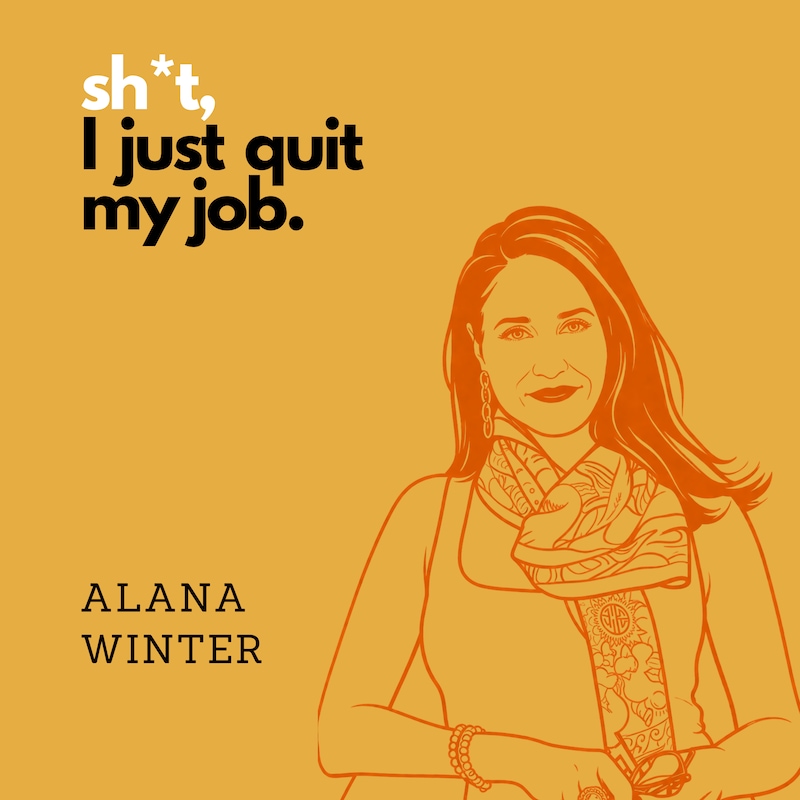
Alana Winter spent 25 years building a national video distribution business before realizing she'd built something successful without ever asking herself what she actually valued. In this episode, Alana and Maricella talk about being raised by a serial entrepreneur dad who taught her to control her destiny, the moment the business became a grind and she didn't know who she was without it, and the three-year process of figuring out her own core values, and how she helps leaders do the same in a much shorter time frame. They get into the difference between needs, values, and your why (and why most people confuse all three), what she means by "the how matters less than the what," and her story about the bathroom attendant at the Beacon Theater that made me tear up.
About Alana Winter:
Alana Winter is an executive coach, facilitator, and serial entrepreneur who helps leaders navigate the moments when outward success no longer matches their inner truth.
After building and running businesses for more than 25 years, including a nationwide video distribution company and the internationally covered Stiletto Spy School and MI6 Academy, Alana found herself in the disorienting space that comes after a major chapter ends. That experience led her into a deep exploration of identity, core values, and what it really means to build a life and business from the inside out.
Today, Alana works with founders, CEOs, executive teams, and leadership groups around the world, helping them clarify their values, communicate more honestly, make better decisions, and lead with greater self-awareness. Her work blends psychology, lived entrepreneurial experience, and a highly intuitive ability to see the patterns beneath the surface.
She holds a B.A. in psychology from Wesleyan University and has worked with thousands of leaders through EO, YPO, WPO, Chief, and private executive coaching engagements. Her work has been featured by NPR, The Today Show, The Wall Street Journal, Psychology Today, and other major media outlets.
Show Notes:
(00:00) - Nothing To Do Identity
(00:21) - Show Intro And Premise
(00:52) - Purpose Values Episode Setup
(02:05) - Meet Alana Winter
(04:54) - Childhood Dreams Icebreaker
(06:19) - Raised To Be Entrepreneur
(07:37) - Building Video Distribution
(13:10) - Meaning Fades Business Grind
(16:16) - Betrayal And Embezzlement
(23:09) - Burnout Signs And Body
(25:57) - After the Exit Void
(28:09) - Meaning Over Opportunity
(30:33) - Purpose Work for Kids
(33:34) - Three Year Values Quest
(38:15) - Values Needs Why Framework
(44:20) - Living Values Anywhere
(47:16) - Clarity Becomes a Calling
(50:06) - Advice for the Goo Phase
(52:18) - Podcast Closing
Transcripts
What immediately hit me was like, I'm done.
2
:I have nothing to do.
3
:There will be no emails coming in,
there will be no phone calls coming in.
4
:I have nothing to do.
5
:And.
6
:Who am I if I have nothing to do?
7
:Oh, that feeling.
8
:Oh, I know that feeling.
9
:Have you ever felt like the script you're
following doesn't quite fit anymore?
10
:Then you're in the right place.
11
:I'm Rera and I started.
12
:Should I just quit my job after
walking away from a job I.
13
:To find me, forget the highlight reels.
14
:Here we talk about the messy middle,
the doubts, the detours, and the chaos
15
:that come with rethinking who we are.
16
:Because the truth is it was
never just about quitting a job.
17
:It was about questioning
everything I thought I knew.
18
:Hi everyone.
19
:Thanks for joining me.
20
:I am a little behind.
21
:With episodes, so I apologize I couldn't
post this episode last week, but maybe
22
:that means you'll get two weeks in a row.
23
:I have a couple that I've been working
on, this being one of them that I think
24
:will be ready to go pretty soon, but
I'm happy to be here and I'm happy to
25
:share this conversation today because.
26
:I've been wanting to post
this one for a while.
27
:It touches on something that I think
is really close to my heart and also
28
:something I've been thinking about
a lot, which is purpose and finding
29
:purpose and our why and our values.
30
:And I know those words sound like
something we throw around, but
31
:I do think they really matter.
32
:I do think that clarifying
those can really help us.
33
:The path that we're gonna move
forward in a way that feels
34
:grounded, that feels worthwhile.
35
:And so you're gonna listen to my
conversation with Elena Winter.
36
:She's an executive coach, a facilitator,
an entrepreneur, serial entrepreneur.
37
:Ran a business, started a business,
and ran a business for like 25 years,
38
:and it became this big national.
39
:Video distributor, which is
like a type of business that
40
:I don't get to discuss a lot.
41
:So that was really cool.
42
:But Atlanta moved from that world, from
that chapter to the next one in a way that
43
:had her wondering like, what do I want?
44
:Who am I?
45
:These questions of
identity and core values.
46
:What it really means to build a business.
47
:That's something that
you care about deeply.
48
:I mean, she cared about her business,
but it's something that comes from
49
:a deeper, deeper level of purpose.
50
:And Alana did the work to
clarify those things for herself.
51
:And now.
52
:Helps others, helps particularly
leaders do that work so that they can
53
:navigate messy middle of change, that
they can manage these identity shifts
54
:so that they are not tied to that
role or title, but can go much deeper.
55
:And it was interesting to talk to Alana
about her journey and about how she
56
:approaches both now, how she approaches
teaching this or helping leaders go
57
:through this more than teaching them
how she facilitates these discoveries
58
:and conversations with leaders,
but also how she did it herself.
59
:And spoiler alert, the person
who helped her figure out her own
60
:why is probably the person who.
61
:Knows more about this than a
lot of people in this world.
62
:He's very much an expert make of that.
63
:What you'll, or just listen
to the episode and find out.
64
:It was really great to have this
conversation with Alana, and
65
:I'll be honest, after it, I kept
thinking about my own why and my
66
:own values and my own purpose.
67
:I think I have to do more work
exploring it, and I've done some
68
:and I wanna continue, and of course
I will share once I get to that
69
:point, but it really inspired me
and I hope it does the same for you.
70
:I hope you like it.
71
:I hope it makes you question some things
as well, and I'll see you next time.
72
:What did you wanna be
when you were growing up?
73
:A princess.
74
:I love it.
75
:No one has answered that.
76
:I mean, castle and like who doesn't?
77
:Beautiful dresses in
a big four poster bed.
78
:I do believe that there's something
about what we wanted that shows a
79
:little bit about our personalities
that we sometimes forget.
80
:Probably.
81
:I mean, I still love beautiful
ball gowns, so very playful.
82
:How about you?
83
:What did you wanna be when you grew up?
84
:A writer.
85
:Mm, A writer.
86
:I went through faces.
87
:I think we all do, but that one
was the one that stuck the longest.
88
:I feel like that's still what
I wanna be when I grow up.
89
:Yeah.
90
:Well now I wanna be a
writer when I grow up also.
91
:But at Three Princess for sure.
92
:But from Princess to
Entrepreneur is a big jump.
93
:That's interesting.
94
:I guess I always saw the princesses
being able to do what she wanted and
95
:being able to create whatever she wanted.
96
:So I don't know.
97
:I think I see, yeah, I can see it.
98
:Connection.
99
:I can see it.
100
:I can see it.
101
:So tell me a little bit about what
led you, 'cause you did have a
102
:company for a really long time.
103
:Alana Winter: So from what we've talked.
104
:It seems like that was the like
real first big thing, right?
105
:For you?
106
:Oh, yeah.
107
:I grew up in a family of
entrepreneurs on my dad's side.
108
:Basically, everybody was, my
mom wasn't, but her mom was.
109
:And so from the time I was little, like
literally from four years old, my father
110
:would ask me, honey, what kind of business
are you gonna open when you grow up?
111
:Wow.
112
:Wow.
113
:Yeah.
114
:It was never, what kind
of job are you gonna have?
115
:That was not a word that I even heard.
116
:It was, what kind of business
will you open when you grow up?
117
:It was the only option
that I ever knew existed.
118
:Wow.
119
:Mm-hmm.
120
:I come from a family of entrepreneurs,
but I never had that and I
121
:never actually thought that I
would become an entrepreneur.
122
:So sometimes you never
know, but it's interesting.
123
:That was forever what
you had in your mind.
124
:It really is.
125
:'cause I know that it's not the
way that most people are raised.
126
:Right?
127
:Right.
128
:Most people, your parents want safety
for you, and people don't think of
129
:entrepreneurship as the safe route.
130
:But the way that my dad explained
to me, my dad always said to me, you
131
:have to be in control of your destiny.
132
:Mm-hmm.
133
:He literally said to me, I was probably
10, he said to me, I don't care if you
134
:have a hot dog, stand on the corner.
135
:He said, literally, as long as you
are in control of your destiny,
136
:that's what it's all about.
137
:Wow.
138
:And so you build your company.
139
:Tell me a little bit about that, because
I know it was what, 25 years that you
140
:had the company before you sold it.
141
:And I wanna talk a little bit about
the journey, because I also know there
142
:were some winding twists and turns.
143
:Always, as always, tell our guests a
little bit about it, what it was, and.
144
:When did you start it?
145
:My main business, I had a few
different ones, but my main business
146
:was in the video distribution space.
147
:Mm-hmm.
148
:Which means that back when you went
to a physical location and you wanted
149
:to watch a movie and you got physical
medium, a disc or a cassin, and saying
150
:that because there may be people listening
who never had that experience hunting so.
151
:Sounds like, wait, you did what?
152
:And you had these tapes
and you had to rewind them.
153
:Yeah, so back in those days, I distributed
and I sold to all those stores, you
154
:know, blockbuster video when it was
first opening and first starting.
155
:We supplied all of that inventory and
we stocked their stores, and then there
156
:were videos in convenience stores.
157
:But what people don't realize
is still to this day, if you
158
:walk into a public library.
159
:There's a huge section of DVDs and so
that's still a business supplying those,
160
:that physical medium to public libraries.
161
:It's a huge source of traffic to them.
162
:There are plenty of public
library systems that have a
163
:million dollar budgets to to buy.
164
:What led you to that industry?
165
:It was super random when I was getting
out of school and I had you no idea.
166
:I started college very young, and
my dad at some point even said to me
167
:when I turned 17, he's like, well,
I can pay for the rest of college,
168
:or I could just give you the money
now you could start a business.
169
:He said, I'll never give you another dime.
170
:This is your only option.
171
:But at 17, I knew that.
172
:I had no idea what I was gonna do, and
I knew enough to know that I didn't
173
:know how to manage that sum of money.
174
:So I said, dad, pay for school.
175
:I'll figure out a way to get money
and start a business on my own later.
176
:But for now, I wanna stay in school.
177
:So when I graduated from college and
I went off traveling for a bit and
178
:I came back and I remember my dad
picked me up at the airport and we're
179
:driving home and he looks at me, he
is like, so whatcha gonna do now?
180
:And I was like, what do you mean?
181
:He's like, well, you figured
out your life, right?
182
:And I was like, uh, wow.
183
:No.
184
:And for the first time my dad looked at
me like, what are you some kind of loser.
185
:He said, oh my God.
186
:And he said, okay, listen.
187
:I opened up a video store.
188
:It's this pretty recent thing.
189
:He said, I will give you a job as a clerk.
190
:I will pay you minimum wage.
191
:You have a job for one month.
192
:Mind you, it was over an hour
away that I had to drive each way.
193
:By the way, also, he said,
you have a job for one month.
194
:You have one month to
figure your life out.
195
:Mm.
196
:I was like, oh, okay, sounds good.
197
:So the next morning, literally I got in my
car and I drove an over an hour up to the
198
:boonies to, to work at this video store,
and the month went by, and of course I
199
:hadn't figured my life out in a month.
200
:Surprise.
201
:But on the last day of the month, my
dad called me and he said, okay, I
202
:just found out the manager is stealing.
203
:So you still have a job, you've been
promoted to manager of the store.
204
:So I worked for my dad for.
205
:Another few months went by and
then my dad's like, okay, I
206
:wanna open up some more stores.
207
:And we looked around at the inventory
and at the time to stock a video store,
208
:it was really expensive to buy a tape.
209
:They were over a hundred
dollars wholesale.
210
:He said, but you know what?
211
:There's some other stores and I bet
they've got inventory that slowed down.
212
:Let's go drive around and visit some
other stores and see if we can pay them
213
:cash and buy some inventory from them.
214
:They'll be happy about it.
215
:We'll be able to open our
store at a lower cost.
216
:Store at a fraction of the cost of what
other people were opening stores at.
217
:And then we opened up another one.
218
:Another one.
219
:I was helping him with all of this.
220
:And a year goes by, I am still working
for my dad, managing his store.
221
:And one day he calls me
and he goes, you're fired.
222
:And it's like, uh, okay.
223
:And by the way, he says, you know
how we opened up stores and we
224
:saved a lot of money in doing that.
225
:He said, I bet there's a business there.
226
:I was like, okay.
227
:And I hung up the phone and it
took me a few minutes to put two
228
:and two together and figure out
what he was actually saying to me.
229
:So I called him back five minutes later
and I said, Hey, you know you've got
230
:some excess inventory in your store.
231
:Can I take that on consignment and use
that to start a business doing this?
232
:And he is like, yep.
233
:So by 3:00 PM that day, I was in business.
234
:So that's how I got started
and that's what I did for.
235
:25 years and it expanded from working
with stores all around the country,
236
:buying their excess inventory, buying
overstock from eventually the studios
237
:and manufacturers, et cetera, and then
winding up, supplying, as I said, like
238
:blockbusters, they were starting to bomb
and pops to convenience store chains, to
239
:public libraries all over the country.
240
:Maricella Herrera: So
built into distribution.
241
:Wow.
242
:I love this story.
243
:Your dad clearly has had an incredible.
244
:Impact and impact your trajectory and
how great to have someone that pushes
245
:you to figure out your life, but in a way
that is helping you take control of it.
246
:Yeah.
247
:That was very much a
fly little bird of time.
248
:Alana Winter: Mm-hmm.
249
:Mm-hmm.
250
:You know what's interesting
about all of that?
251
:Marcella though, I went into
that business, there was an
252
:incredible market opportunity.
253
:I was super lucky to just be at that.
254
:Point to see that market
opportunity and to be in a
255
:position to take advantage of it.
256
:And I am very grateful for that.
257
:And on the other hand, another thing
I'll say about that, it was, while it
258
:was a fantastic opportunity there and it
provided me entrepreneurship and freedom
259
:and all that, if you think about meaning,
there wasn't any meaning in it for me.
260
:There was nothing in there that spoke
to my soul and the way that manifested,
261
:well, at first, the business was actually
an amazing opportunity, an amazing time.
262
:Like any business, when there's an amazing
opportunity, other competitors come
263
:in, opportunities shrink every market
ultimately become super competitive and
264
:margins reduce down in any marketplace.
265
:And that's what happened,
of course, in my market.
266
:And so that means that
business becomes hard.
267
:And when business becomes hard, if
you are not doing something that you
268
:are actually passionate about and that
has meaning to you, life becomes hard.
269
:And eventually that is what happened.
270
:And life became hard when
the business became a grind.
271
:And I would try all
different kinds of things.
272
:I had a warehouse that was
in Garfield, New Jersey, and
273
:it was right next to Passaic.
274
:And there were, there was a lot
of under privileged people living
275
:in the area, and I try to recruit.
276
:Single moms, young single moms.
277
:There were a lot of girls
there that were like 18 to 21
278
:years old, single and had kids.
279
:And so I was trying to
make my office a social.
280
:Good kind of place.
281
:Mm-hmm.
282
:But all of that came with its
own challenges and struggles
283
:also, I got a call on a weekend.
284
:We had a very busy time, and
sometimes we'd work seven days a
285
:week if we were busy filling orders.
286
:And I get a call from a warehouse
manager on a weekend that one of the
287
:girls, her baby daddy is there with a
knife to her throat in the bathroom.
288
:Wow.
289
:And there's like, I mean, crazy,
crazy, crazy stuff was happening.
290
:But anyway.
291
:And there were days where I just was like,
Ugh, I don't even wanna go to the office.
292
:I don't wanna go to work.
293
:I don't wanna, I don't wanna go
in and deal with this myself.
294
:And so I found ways I put people in
charge, but you still have to run stuff.
295
:And eventually I had a competitor
who was one of, I did a lot of
296
:work with my competitors 'cause
we would exchange inventory when
297
:one of us had something we needed.
298
:And one of my competitors who knew
that I really was looking for a way
299
:to get out of the business, came to
me and suggested that we do a merger.
300
:And he had.
301
:Excess capacity in his building
and we could move all of my
302
:operations into his building.
303
:And he had staff that could run
stuff and I could really take
304
:a step out of the day-to-day
operations and it sounded great.
305
:Maricella Herrera: And so we, we
did that and it was great until my
306
:business partner started embezzling.
307
:I was waiting for that.
308
:Yeah.
309
:What did that.
310
:I thankfully have never been in a
situation like that, but it just
311
:feels like it might shake your whole
view of how you built the thing and
312
:the trust that you put in a person.
313
:And I dunno, how did you.
314
:Deal with it, basically.
315
:Guess, yeah.
316
:That was the third time that something
like that had happened to me.
317
:Alana Winter: So I had a bookkeeper
who I trusted deeply, embezzled,
318
:forged checks in my name, take a
line of credit out of the bank.
319
:Really?
320
:She seriously almost
bankrupted my company.
321
:We did wind up having a court case
and she was prosecuted and she
322
:did wind up going to jail for it.
323
:I had.
324
:An employee who had come in and cleaned
my warehouse out on a weekend, set
325
:inventory and stolen leads, and gone
and tried to set up a competitive
326
:business to mine the first time that
it happened with the bookkeeper.
327
:When I discovered what she was
doing, that felt like a gut punch.
328
:Like it felt like literally somebody
had physically punched me in the gut,
329
:and I remember I called her and I
was just screaming at her and I was
330
:crying, and I was just hysterical.
331
:Even in that time.
332
:What I very deeply innately knew was that
I could not generalize that to others.
333
:So it never, I never let that
impact my trust in people or the
334
:way that I operate in the world.
335
:Unfortunate things happen to people all
the time, and that is something that.
336
:We have to protect ourselves, right?
337
:I, I heard once this great
saying somebody steals from you.
338
:Like that's the pain in the moment.
339
:You keep holding it in your head, you
generalize it, then that means that
340
:they're stealing from you again and
again and again and again, and that you
341
:didn't have any choice over the first
one, but you have choice over the second.
342
:Wow, we have choices to
what we make things mean.
343
:So that I very consciously
chose to not let that happen.
344
:And the second time that it happened,
it hurt not as much as the first time.
345
:And it's really interesting the third
time it that it happened with my business
346
:partner, there was that emotional
reaction and it lasted for a nanosecond.
347
:Literally.
348
:It's like it started, the emotions
started to come up and then instantly
349
:I recognized and it was like useless.
350
:What actually has happened
in this situation?
351
:How much damage has been inflicted?
352
:What are my options?
353
:What do I do now?
354
:What are the actions I can take?
355
:And that was it.
356
:And there was truly, with that
one, there was never, I still, I
357
:harbor no ill will towards him.
358
:We wound up settling.
359
:He wound up paying me back
for what he had stolen.
360
:We wound up selling the
company at one point.
361
:He actually.
362
:Called me and said, listen, here's, I
realize this was really stupid what I did.
363
:I can't run the company without you.
364
:Can you come back?
365
:Can we be partners again?
366
:I was like, wow, Lulu.
367
:Lulu.
368
:But anyway, we wound
up selling the company.
369
:I said to him, listen, I said.
370
:If we're gonna sell the company,
you just have to come clean to
371
:whoever we're gonna sell it to, if
they're going to want to keep you on.
372
:So we wound up finding another competitor
of ours, and I remember the three of
373
:us sat down and he told the guy who was
buying the company everything and what had
374
:happened and what he had done, et cetera.
375
:And the guy that was buying
the company said, okay, I'm
376
:gonna, I'm gonna take you on.
377
:And they worked out a whole.
378
:Scenario between them.
379
:I wanted to know part of it, I
wanted to check and I'm done anyway.
380
:He called me a year later and
said, I just had to tell you this.
381
:He said, you know, karma,
what goes around comes around.
382
:I guess he said, the guy that we sold
the company to has been embezzling
383
:and hiding profits from me and
384
:Karma.
385
:Karma.
386
:Yeah.
387
:Just, wow.
388
:Oh yeah.
389
:Again, the way I looked at it,
Mariel, was people make choices.
390
:He was in a position, I guess, where
he felt pressure and he felt that
391
:this was, he made a bad choice.
392
:He made a bad choice.
393
:He wound up paying for it,
but it wasn't worth any of my
394
:emotions to get invested in.
395
:Well, honestly, that's so
admirable like that you were able
396
:to separate it and be kind of.
397
:One nanosecond, as you said, and
then move towards what it could be.
398
:It made me think of two things that
are kind of woo, but on the one hand
399
:it happened three times for you.
400
:Maricella Herrera: I dunno if you've
heard this, but I know in Buddhism that
401
:we do say that things happen to you over
and over until you like, make it stop
402
:until you make the choice, the conscious
choice of this will not happen to me
403
:and move forward, which is what you did.
404
:It made me think of that.
405
:Hmm.
406
:On the other hand, would you have sold
the company if that hadn't happened at
407
:that moment, like thinking about how
you said there was no meaning for you
408
:in the type of work that you were doing.
409
:Alana Winter: Like I wonder that
being the catalyst for you to.
410
:Move on to do something different.
411
:I dunno.
412
:I will tell you that many times over
the years, I would decide, I'm done.
413
:I'm out of this business.
414
:And the day that I would decide I was
out of it, like the phone would ring in,
415
:some ridiculous huge deal would come in.
416
:So I was like, universe, what
are you trying to tell me here?
417
:So, I don't know, had he
not made a bad choice?
418
:We had a great position to be
running a company, which frankly
419
:could completely still exist today.
420
:Yeah.
421
:Because I worked really hard to get
the public libraries as clients,
422
:and if anybody's listening, if you
can get public libraries as your
423
:clients, they're great clients.
424
:They're hard to break into,
really hard to break into because
425
:they're more systems oriented.
426
:Mm-hmm.
427
:Like they don't care if they save
25% on their bill, unfortunately,
428
:but if they can get more inventory.
429
:So I had to learn how to talk to them.
430
:And then they really, they're
super resistant to changing
431
:suppliers and they pay their bills.
432
:So we could have still
had a great company.
433
:Yeah.
434
:I always wonder about these things.
435
:So two questions.
436
:I know when we talked back a couple
months, we talked also about like
437
:signs of burnout and like how you
start seeing, 'cause you were also.
438
:It was like you were saying, it was a
hard business and it was a lot of work.
439
:Maricella Herrera: And even if at some
moment you would be like, oh, I'm done.
440
:I'm leaving.
441
:And then another big thing comes that
also comes with more to the pile.
442
:You know what I mean?
443
:Mm-hmm.
444
:So did you notice, like for
me, I think I noticed how burnt
445
:out I was after I stopped.
446
:Like looking at, in hindsight,
while I was running, running,
447
:running, I didn't see it.
448
:Alana Winter: So I wonder if it was
similar for you or if you saw more signs.
449
:As it was happening, or what
we can be looking out for too.
450
:Yeah.
451
:I think that is, people don't see burnout
while it's happening because you can't,
452
:you're running too hard to keep everything
in place and kind of, if you stop to
453
:look under the hood, it's too, too much.
454
:There's no.
455
:You keep going until something breaks.
456
:Right.
457
:And what happens often with people
that breaks is their health.
458
:Yeah.
459
:And that's really unfortunate.
460
:And it would be great for people to.
461
:Have something that's built in where
you're paying a little bit more attention
462
:to what's happening here, right?
463
:What's happening in your heart?
464
:What's happening in your mind?
465
:What's happening in your body,
and what is that telling you?
466
:And then also.
467
:Change is really scary because if
you see the signs of burnout, then
468
:what do I do with that right then?
469
:Then if I leave a situation and
you don't have something lined up,
470
:you don't know where you're going.
471
:That leap is very scary.
472
:So very often it doesn't happen
until you're pushed, you know?
473
:I mean, look what you said.
474
:Maybe that's true.
475
:Maybe that did all happen because
it's finally what pushed me out.
476
:I don't know.
477
:But it finally did indeed push me
out, and usually that's what it takes.
478
:You said about health and then
you, as you were talking about,
479
:noticing what's in your mind and
your heart, and in your body.
480
:Maricella Herrera: I've noticed more
and more how the embodiment of all
481
:of these emotions, like I see it now
more, I've become more attuned, I
482
:guess, to when something's not okay.
483
:Because I feel the, you know, the knot
in your stomach or the pressure in
484
:your chest, and I think you're right.
485
:When we're running, running,
running, that's not something
486
:we can have the space to see.
487
:Mm-hmm.
488
:The space to see it and it's too,
then we wouldn't know what to do.
489
:Yeah.
490
:How was.
491
:That period for you after
having sold the company?
492
:Wow.
493
:So I so clearly remember the day because
in leading up to selling something,
494
:there's a million emails and et cetera,
going back and forth and details
495
:to work out and the lawyers, and I
remember the day that I got a call
496
:from my lawyer saying, okay, it's done.
497
:Alana Winter: Everything's signed,
escrow's released, we're done.
498
:And I stood there and I was in Italy.
499
:I was with one of my friends
and I was on the side of the
500
:road when the call came in.
501
:I was like, oh, okay, great.
502
:And I hung up and what immediately
hit me was like, I'm done.
503
:I have nothing to do.
504
:There will be no emails coming in,
there will be no phone calls coming in.
505
:I have nothing to do.
506
:And.
507
:Who am I if I have nothing to do?
508
:Oh, that feeling.
509
:Oh, I know that feeling.
510
:It was so unexpected to me because
I always felt like I was part of an
511
:entrepreneur's group and everybody
would introduce themselves right
512
:away first thing with what they
did, and I would never do that.
513
:Like I always thought, oh, I'm not,
my business is one part of me and
514
:I do this and I travel and I have
all these different interests.
515
:Suddenly in that moment I
realized it shocked me what a
516
:huge part of my identity work was.
517
:And my friend that I
was with looked at me.
518
:She's like, this is amazing.
519
:What do you wanna do now?
520
:And I was like, I dunno.
521
:Get an ice cream.
522
:And for a while I.
523
:I wouldn't go out to like business
stuff like part of this organization.
524
:I said I didn't wanna go to meetings
because if people would ask me
525
:what I was doing and I didn't have
an answer, I was like, uh, wow.
526
:Yeah.
527
:So it was very much a period of
feeling lost wandering in the desert.
528
:It's funny, I had a bottle of
wine at dinner last night with
529
:some friends and it was this.
530
:The wine is called eight Years in the
Desert, and it was from a wine maker
531
:because when he sold his company, he
couldn't, he had a non-compete for eight
532
:years and this was his first wine and
he called it eight years in the desert.
533
:So very apropos.
534
:Yeah, it was, I was lost.
535
:I was lost in wandering and I knew that.
536
:I needed to, in order to
figure out what I did next.
537
:I looked back at the journey that I'd been
on and I looked at the times when business
538
:was hard and it felt like a grind.
539
:And I, when I didn't wanna
wake up and I was like, I never
540
:wanna feel that way again.
541
:I never wanna go through that again.
542
:And so building a business just because
it was a good opportunity, if it
543
:didn't mean something to me, I knew the
price that I would pay if I did that.
544
:I didn't know that when I started
my business, but I knew it now.
545
:So what could I build next?
546
:That truly meant something to me, and
I realized I had never thought about
547
:what really meant something to me.
548
:What were my values?
549
:What did I wanna do in the world?
550
:What impact did I wanna make, make?
551
:I had never thought about that, and now
it was time yesterday I talked to someone
552
:who told me he was going through a.
553
:Period of time, a long time
ago where kind of dark.
554
:And then his therapist
asked him, what do you want?
555
:And he realized, no one had ever
asked him that, like he and no
556
:one else had ever asked him.
557
:But just, I think we do that.
558
:We don't wanna see that.
559
:Sometimes we just wanna do, see
the opportunities, see the, this
560
:more external things maybe in
a way than the internal ones.
561
:I do wanna go down the route to
understand how you did that, because
562
:I know you've done a lot of work
and help people with that now.
563
:Maricella Herrera: But first I also
wanna ask, 'cause this came to mind,
564
:and I think we talked about it when
we talked the other day, it's also the
565
:different in your period of life, right?
566
:Meaning versus opportunity when
you're starting out, when you're
567
:building your business, when you're,
I don't know, in your twenties or
568
:earlier in life versus when you're.
569
:Alana Winter: In a more mature,
gotten to know yourself more?
570
:I don't know.
571
:I think there's an aspect of it.
572
:I joke that I turned 40 and
quit my job the same year,
573
:and that's not no coincidence.
574
:Like it's, there's something I
believe that changes in us as
575
:we start in the way we make the
decisions as we are getting older.
576
:Yes.
577
:But I think that's contextual
and I think that's because
578
:of the way that we're raised.
579
:Oh, interesting.
580
:I don't think it has to
be that way as an example.
581
:I had a client that I had done a lot
of work with, and as you said, now I
582
:help people, we'll talk about that.
583
:But the work that I had done with
him, he said to me, he's, and he had
584
:three, has three kids, and at the time
his kids were, I think seven, one was
585
:about 11 and one was 13, and he said,
I wish my kids could do this work.
586
:At this stage to set
themselves up for life.
587
:He said, could you come and do a
retreat with my family and work
588
:with my kids to help them understand
what their core values are and
589
:what their vision for life is?
590
:I love that.
591
:And you know what?
592
:It's actually so much easier with kids.
593
:I mean, you have to translate it.
594
:You spend a lot of time before I
did that, studying child development
595
:and how to frame it for them.
596
:But once you frame it correctly for
them, it's so much easier for kids
597
:to answer that than it is for adults.
598
:'cause adults, we have all
these shoulds piled up.
599
:Mm-hmm.
600
:And kids don't.
601
:Kids know what's important to them.
602
:So I worked with these kids and they
like wrote out their core values, their
603
:manifesto for life, their vision for what
impact they wanted to have in the world.
604
:They created visual representations of it.
605
:It was.
606
:So heart filling to see.
607
:So no, those kids are
gonna start out that way.
608
:I love that.
609
:I know someone who used to, I teach at
a college in Brooklyn and one person
610
:who I know used to do a class there
used to teach a seminar on finding
611
:your purpose, but they stopped it
and I wish they would've continued.
612
:Maricella Herrera: To do that.
613
:I don't know.
614
:I feel like there's something, what you're
saying is so important, and I see it in
615
:my students, like 17, 18-year-old students
who, what I teach, which is designed
616
:thinking, is it I, they're already
starting to make, to bring the shoulds
617
:and in my class we do a lot of creativity.
618
:So it's about just being
more open to uncertainty.
619
:I think something like
this is so valuable.
620
:Like I wish I had that when I was younger.
621
:Me too.
622
:Yeah, yeah, yeah.
623
:I'm a huge fan of book learning and
I loved school and all the, I love
624
:learning all the things we do in school,
but why don't we have this in school?
625
:Like starting at grade school,
honestly, and it just thinking today
626
:about technology and that article,
millions of views about how AI is.
627
:Alana Winter: Than we think
and it's been a whole thing.
628
:These are the things that we're
gonna need, like even more, right?
629
:Some of the skills that we are teaching
need to completely change into something
630
:that's more fundamental, so to speak.
631
:Yeah, absolutely.
632
:Okay.
633
:Now tell me how you went
through that process of finding.
634
:I wanna say finding yourself a little bit,
like finding what it was that was gonna
635
:move you again to do something great.
636
:Yeah.
637
:Three year process.
638
:It's never short.
639
:Well, you know, I had no guidance, so I
was trying to figure it out all by myself.
640
:I was at a conference and I
walked into a workshop on your
641
:core values and life purpose and.
642
:I was like, okay, cool.
643
:Maybe this will help me.
644
:And one of the first things they
did was they gave us a sheet of
645
:paper and it had hundreds of values
on it, and the instructions were,
646
:okay, you've got three minutes.
647
:Go through this list and circle,
circle the values and figure out
648
:what your top three values are.
649
:I've done that.
650
:Yes, I've seen that.
651
:Yes.
652
:I'm sorry.
653
:That's a ridiculous approach.
654
:It just really, it really is.
655
:And I understand a lot of people use
that approach, but it's ridiculous.
656
:And I realized as I was doing
it, I realized two things.
657
:One, this is really important.
658
:Two, this is a terrible approach
to it because as I looked at that
659
:sheet, I remember I circled 35.
660
:Core values, and I knew even some of
the ones that I was circling were things
661
:that like, ah, I know this sounds good.
662
:Mm-hmm This is something I
should value, but I didn't have
663
:any way of differentiating.
664
:And so when the instructor came over
and he looked at me, he is like,
665
:uh, you can't have 35 core values.
666
:You gotta get it down to like six.
667
:And I was like, how?
668
:And he looked at me, he goes, I dunno.
669
:Very helpful.
670
:Thanks.
671
:So I sat through the rest of that
workshop, but I, but it really.
672
:It landed with me.
673
:So I got home and I got big sheets
of flip chart paper, and I wrote
674
:those 35 words out there, and
I had these all over my walls.
675
:And I would sit and I would stare at
them and I would go, okay, well what
676
:are, how do I group them together?
677
:Like what are some of the
things that are similar?
678
:Mm-hmm.
679
:And so I kept doing that and sort
of trying to put them into baskets.
680
:And then I'd start asking myself, what is
something that leads to something else?
681
:What is something that I want
because it gets me something else.
682
:So I had all this and I'm doing this.
683
:I've got sticky notes.
684
:I'm moving all over the place.
685
:Simon Sinek is a friend of mine.
686
:Simon came over and.
687
:As a favor, I'd gotten, I got
Simon, his first paid speaking
688
:gig, so Simon did me a favor and he
came over to spend a day with me.
689
:Talk about someone to
help you find, right?
690
:Yeah.
691
:Yeah.
692
:So we're like, okay, great.
693
:Cool.
694
:I'll find my personal why.
695
:So, you know, we're, we're
chatting all day and at the end
696
:of the day, Simon goes, okay.
697
:Got it.
698
:Your personal why is fun
learning and sharing, learning
699
:and fun with others and like.
700
:That sounds, sounds like me.
701
:For sure.
702
:That's super cool.
703
:I was like, so what do I do with that?
704
:And he goes, oh, that's
above my pay grade.
705
:It's like, great, okay.
706
:I've got my why.
707
:And I figured that and I knew,
okay, that's different from values.
708
:Yeah, I was gonna point that out
because I think, and you said two
709
:things that caught my attention.
710
:One is finding what do you want
that brings you to something else.
711
:And I was gonna ask if you meant like
values, what that meant, but now.
712
:They do sound fun, I think could be
a value, but they, and learning too.
713
:But they're a why and
values are not necessarily.
714
:Exactly the same.
715
:Exactly.
716
:Right.
717
:Right.
718
:The why, that had to be how I showed up.
719
:That had to be manifesting.
720
:But to give you an to, to clarify
actually what I said about how
721
:one things lead to another.
722
:So for instance, I had one
bucket that had travel.
723
:And it had learning and it had growth
and a bunch of other things in there.
724
:And I would look at all of those things
and I knew for me, and again, people
725
:will have different buckets because
words mean different things to people.
726
:Mm-hmm.
727
:So for me, those things, I knew
those things were related and I'd
728
:be like, okay, well what do I,
what is it about travel that I get?
729
:What is it about learning that I get.
730
:I wound up refining all of those things
to one core value of wisdom because all
731
:of those things for me led to wisdom.
732
:That makes sense.
733
:So that's, that was part of the process.
734
:So I kept doing that and
refining those things down.
735
:My three core values are connection.
736
:Wisdom and grace, and so connection,
friends fall into that, family, falls
737
:into that community, falls into that.
738
:Relationships of every form
fall into that wisdom, learning,
739
:travel, growth, adventure.
740
:All of those things fall into wisdom
for me, grace, kindness, empathy,
741
:all of those things and many
others all fall into that for me.
742
:So what I realized after I did
that was, okay, anything that I
743
:do, I separate values from needs.
744
:Needs are what I need to receive.
745
:Values are what I uniquely am
here to manifest in the world.
746
:My gift to the world.
747
:So anything that I choose to do,
any project that I choose to do
748
:has to go through that filter of my
values, that it has to manifest and
749
:magnify those things in the world.
750
:It has to spread connection, wisdom,
spread connection, et cetera.
751
:And I do it incorporating fun and
my, all my learning that I love to
752
:do, and sharing that with others.
753
:That's how I do it.
754
:How?
755
:Interesting that the why is
the how, again words, right?
756
:Mm-hmm.
757
:Yeah.
758
:But to just help me clarify something
about myself right now with this small
759
:conversation that I never thought about.
760
:'cause I do think it's very
common that we mix those two up.
761
:Mm.
762
:And I do think, as I'm hearing
you, how important those two
763
:filters being separate are, Hmm.
764
:Maricella Herrera: Note to self.
765
:I need to get a little clearer on that.
766
:Beautiful.
767
:But it took you three years to get
through this process of really, I think
768
:one is A, is finding that, but also
two is really adapt, adopting it, so to
769
:speak, like really showing up with it.
770
:I think that.
771
:The process that I went through, there's,
look, there are tons of processes that
772
:are out there that are quick hacks.
773
:Alana Winter: Figure out your
life's purpose in 15 minutes.
774
:I see ads for this kind
of stuff all the time.
775
:That sounds to me a lot like
the list of values though.
776
:Yeah, totally.
777
:And when people do that, they're
not tapping into their true
778
:core how many times individuals
and work with companies times.
779
:I'll have a conversation with the
CEO, ask about the core values of the
780
:company and they'll say, oh, yeah,
yeah, yeah, we did that work already.
781
:I'm like, great.
782
:What are they?
783
:And they'll say, usually
they'll say, oh, integrity.
784
:Uh, and, um, uh, uh, and I know
there are a couple of others.
785
:I don't remember that
there're on a piece of paper.
786
:I, you know, the thing is, if
you tap into true core values,
787
:you'll never forget them.
788
:They won't, you'll never have to
go look for that piece of paper.
789
:It's, it like lands on you deeply in
your body and that's your North Star.
790
:Like it's not hard to figure
out from there if you actually
791
:get it right, it's there.
792
:Do you have any advice on how.
793
:People can even just start
through that process.
794
:Yeah, yeah, yeah.
795
:The values based leadership
is a real core of what I do.
796
:Values based and self-awareness.
797
:And of course the two are tied together
because you have to be self-aware
798
:to know what your values are.
799
:But look, I would suggest if
somebody's trying to work through
800
:on their own, start with that.
801
:If you have nothing else, start with
that list, but just really be aware
802
:of what am I picking that's on there
because it sounds good, because it's
803
:a should versus what's true to me.
804
:Make that list and then ask
yourself questions like,
805
:well, what are the shoulds?
806
:What did I learn from my parents from the.
807
:Social setting that I grew up in,
what were the influences on me and
808
:what did those influences put in?
809
:That should be my values.
810
:And then sit with that list and sit with
how much of that actually is true to me.
811
:Ask yourself the question, what makes
me happy when I see it in the world?
812
:What do I believe deeply in my heart?
813
:Makes the world a better place.
814
:What do I believe deeply in my heart
causes pain in the world, right?
815
:Sometimes even doing that,
like setting what those are,
816
:like the anti values, right?
817
:Sometimes that gives you clarity.
818
:Look at how you spend your time, right?
819
:With your time and your money, that
whatever actually you have that are
820
:all stuff we have to do, but your free
time, your free resources, whatever they
821
:are, how do you spend those resources?
822
:Ask people that are close to you if
you, without knowing anything at all,
823
:if you were to say, what do you think?
824
:What do you think I
value most in the world?
825
:What would you say?
826
:Maricella Herrera: What about any advice?
827
:Because we're talking about
values and I you, there's three
828
:buckets that you said, right?
829
:Needs and values, which are different.
830
:Needs, what you need, values, what you
put out in the world, and then the why.
831
:How do you.
832
:Make that happen, or
like how do you show up?
833
:Any advice on how to
think of that third one?
834
:I feel like needs are of the three,
maybe the easiest, but I'm not sure.
835
:Yeah, and, and a lot of times
people conflate needs and values.
836
:Mm-hmm.
837
:So figuring that out, I really like that
distinction by the way that you make Yeah.
838
:Between those two in terms of the.
839
:How you, because like even, even
knowing what my core values are,
840
:there's no job description for that.
841
:Alana Winter: Yeah.
842
:But in terms of the how matters a lot less
than the what and the why because once
843
:you know what, you are there to magnify.
844
:It doesn't matter how you do it.
845
:I share with people a story
and it's, I get choked up.
846
:I have told this story
probably hundreds of times.
847
:I still get choked up every time
I, aw, so I remember there's a, the
848
:Beacon Theater in New York City.
849
:I used to go see a lot
of live shows there.
850
:And down the steps.
851
:There was the ladies' room and there
was a woman who was the washroom
852
:attendant, and she just stood there
and she gave people a hand how?
853
:As they washed their hands.
854
:If you stood outside.
855
:Of the bathroom.
856
:You watch women walk in.
857
:You watched women walk out.
858
:It was like a different woman walked
out than walked in because the woman
859
:that walked out all had a smile in
the spring in their step because that
860
:bathroom attendant, every time she
handed someone a paper, I'll cry.
861
:It's crazy, I'll cry.
862
:Every time she handed someone a paper
towel, she made a point of giving a
863
:personalized compliment to that woman.
864
:It was not, oh, you look beautiful, right?
865
:It was.
866
:That dress is so complimentary,
it makes your eyes sparkle, or
867
:you have the warmest smile, right?
868
:Shani gave these women a
personalized compliment that made
869
:them feel so good about themselves.
870
:That woman was living her values.
871
:She did not as a little girl dream
of being a bathroom attendant.
872
:But where she stood, she chose to
make a difference in the world.
873
:So the how you do it when you
know what you're here to magnify.
874
:The how is less important.
875
:Oh, I like that it's.
876
:I think I've seen her actually,
that describes very well
877
:what you're trying to say.
878
:Like what you're saying about the how
which, and I think we sometimes get
879
:really, or I, I should say, me get
really focused on that, okay, these
880
:are the things that I believe is what
I'm here I wanna put out in the world,
881
:or I wanna make an impact in a way.
882
:Maricella Herrera: But always that how.
883
:The lenses with which I've been
conditioned, I would say, to
884
:look at them is still very rigid.
885
:And what you're saying really
is, it doesn't have to be, it's
886
:just about bringing it out when
whatever it is that you're doing.
887
:Mm-hmm.
888
:So how did finding these things,
how did that change the trajectory
889
:of what you were saying?
890
:Alana Winter: You didn't wanna show
up to these meetings because you,
891
:the how, what are, what do you do?
892
:Question, which I felt that very much.
893
:Like how did this clarity
change how you were showing up?
894
:I think it, it has this impact of.
895
:It, it just makes you
feel very grounded, right?
896
:It like lands.
897
:When you do this work, it lands
so deeply on you that, you know,
898
:I went from feeling, I said
lost in the desert to feeling.
899
:Grounded and feeling on solid ground.
900
:And what's interesting is that
position that I was in, people then
901
:started asking me, I think people just
started noticing and people started
902
:asking me about what I'd been doing.
903
:And that's eventually how I
started doing the kind of coaching
904
:and facilitation work that I do.
905
:I was lucky, I was part of a, an
entrepreneur's organization and I
906
:started doing some facilitation.
907
:For that organization and started
traveling the world and getting to work
908
:with leaders all over the world who
then started to ask me to coach them
909
:individually to work with their leadership
teams, as I mentioned, in some instances,
910
:to work with their families, and it was
it's work that I absolutely love doing and
911
:feel so honored every time somebody trusts
me to be able to guide them on this.
912
:And also I get to see the impact, right?
913
:I get to see the impact of people
who then step into who they truly
914
:are, and it changes everything.
915
:It changes their leadership when, if it's
the CEO of a company who steps into this.
916
:The whole company changes.
917
:I've literally had employees in a
company call me and say, thank you.
918
:I know you worked with our CEO, because
all of a sudden their values become
919
:manifest throughout the organization
and the way the organization operates
920
:completely changes as people get aligned.
921
:And sometimes there may be people
who are not aligned, they will fall
922
:off and everybody else is aligned.
923
:All of the friction drops away and.
924
:Companies bloom, individuals bloom,
and then this is, I think this
925
:is how we have a ripple impact.
926
:Mm-hmm.
927
:On the world.
928
:I love that seems like
meaning met opportunity.
929
:Mm-hmm.
930
:Mm-hmm.
931
:I think actually also when meaning
manifests, opportunity opens up.
932
:Ooh, that's even better.
933
:Yeah, that's even better.
934
:I guess you start seeing.
935
:The opportunities that maybe
you wouldn't have once.
936
:You're so grounded in that part.
937
:Yeah.
938
:Yeah.
939
:And opportunities maybe
are just attracted, right?
940
:Mm-hmm.
941
:When there's a strong grounding,
opportunities come in.
942
:Yeah.
943
:Well, we're almost outta time, so
I'm gonna ask you my last question.
944
:If you could go back and
talk to Alana, back when you
945
:were wandering in the desert.
946
:You were feeling like that,
what would you tell yourself?
947
:Reassurance that there is a way,
for sure, reassurance that there
948
:is a way everybody finds their way.
949
:Nobody stays in the desert forever.
950
:It feels like it at the time.
951
:It feels like, oh my God, I
am never getting out of this.
952
:But take a breath and yeah, take a breath
and enjoy that space for whatever it is.
953
:It's a powerful space to be in.
954
:That space in between is a very,
very powerful space to be in.
955
:It feels like the world is falling
apart and perhaps it's an overused
956
:cliche, but it is so true, right?
957
:It's that caterpillar that crawls into
the shell and completely dissolves into
958
:goo, and you're in that stage where you
are goo and it will, you will reform.
959
:And come out as the butterfly.
960
:It's so hard.
961
:I've been thinking a lot about this.
962
:I actually wrote a, an article recently
about it, but sometimes I feel, for
963
:me, this is my own experience that I've
gotten stuck in the go face, so to speak.
964
:That there's a point where for some
reason you might get, the way I framed
965
:it for myself is like, I've gotten.
966
:Maricella Herrera: I left my
identity of what I had at work.
967
:But now I've sort of latched onto
this identity of being in this
968
:liminal space versus moving on
to what I should really be doing.
969
:Well, I dunno, look in this liminal
space, what you're doing right now,
970
:for example, in creating this podcast.
971
:Is you are acting as a goo guide.
972
:Alana Winter: I love that.
973
:Yeah, I appreciate that.
974
:Thank you so much.
975
:Thank you for taking the time.
976
:Yeah, thank you.
977
:It is totally a delight.
978
:Maricella Herrera: That's it for today.
979
:Thanks for listening.
980
:If you like this episode, hit follow or
subscribe so you don't miss the next one.
981
:And if it made you think, feel
something or yell, same out loud.
982
:Leave a quick rating or review.
983
:It really helps.
984
:If you didn't like it, just
pretend this never happened.
985
:You can also subscribe on
Substack for updates and extras.
986
:I'd love to hear from you.
987
:Come say hi on Instagram at
Quit my jobb pod, or email me
988
:at Quit my job [email protected].
989
:See you next time.



