Shownotes
Lifestyle is a Plan podcast is for agency founders who are done with the growth hustle, and want profitability over pressure instead.
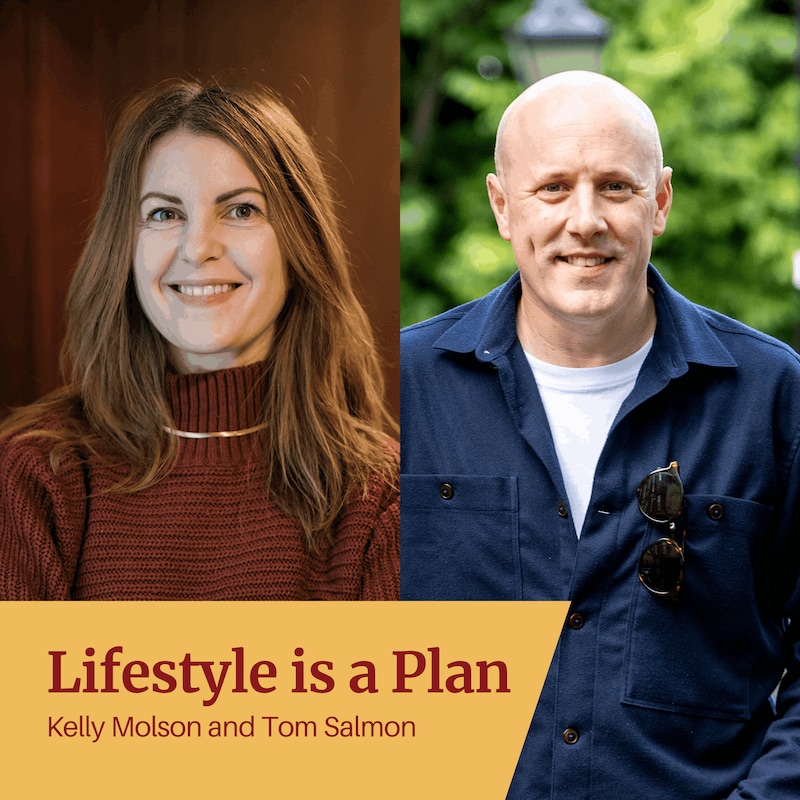
In this episode of Lifestyle is a Plan, Kelly Molson is joined by Tom Salmon, Co‑Founder of Agency by Agency, which provides data and intelligence to the UK’s marketing, advertising, creative and media agency sector.
Its mapping and insights on 25,500 UK agencies represents the only comprehensive dataset of its kind, helping agencies, investors, media owners, martech and adtech platforms, brands and procurement teams identify the right partners, accelerate growth and make better decisions.
Tom is a people‑centric business leader, strategist and marketer with extensive experience advising agencies, investors and brands. Previously Managing Director of award‑winning digital agency Epiphany, a £12m turnover agency with 190 staff across London, Leeds and Sydney. During his tenure, the agency was named Large Integrated Agency of the Year in 2018 and worked with major brands including Savills, First Direct, Waterstones, TK Maxx and Dixons Carphone.
You’ll discover:
- What the 25,495 agencies active in our sector look like
- Why we need more diverse industry representation in the media
- Why policymakers don't fully understand the makeup of the agency sector and what need to change
- That founders are now prioritising personal well-being and choice over aggressive growth
- A future where agencies specialise and partner, rather than building large, full-service teams
- If 2026 is the year of the independent agencies
Guest details
Website: https://agencybyagency.com/
Company LinkedIn :https://www.linkedin.com/company/agency-by-agency/
LinkedIn: https://www.linkedin.com/in/tomsalmonleeds/
Sprint 2025 Industry Report: https://agencybyagency.com/report/industry-report-spring-2025/
The WOW Company Benchpress report : https://www.thewowcompany.com/benchpress
Podcast recommendations:
The Immortal Life of Agencies with Robin Bonn and Zoe Scaman
https://www.codefinery.com/podcast_episode/episode-60-zoe-scaman/
Brought to you by:
Lifestyle is a Plan is brought to you by me, Kelly Molson - an agency advisor on a mission to support solo founders build the agency they want. I’m here to show the agency world that ‘lifestyle agency’ is not a cop out. It’s the future of our industry’s sustainable growth.
You can join my Lifestyle is a Plan newsletter at kellymolson.co.uk
Subscribe wherever you get your podcasts, leave a glowing review and share it with your founder friends.
Edited by Steve Folland. stevefolland.com
Transcripts
Hey, I'm Kelly. How are you doing? Welcome to Lifestyle Is A Plan, a podcast for founders who are done with the Growth Hustle. I'll be chatting to creative founders, agency advisors, and all kinds of brilliant people sharing real stories and practical tools to help you design an agency that supports your life, not takes it over. You'll learn about unconventional agency models, incredible lifestyle agencies, and the choices that you have to build your agency exactly on your terms. Intelligence platform Agency By Agency provides the only comprehensive data and insight into the UK's agency sector. One of their early 2025 reports was pretty transformational, not only for me, but for my clients too. So I'm really happy today that co-founder Tom Salmon could come on and share his story with us. Are you ready? So let's go. Tom, it is so good to have you on the podcast today. I'm thrilled that you've been able to come on, so thank you.
Tom Salmon:No, thanks for the invite.
Kelly Molson:It starts with some icebreakers though, so let's see how this goes. These aren't too challenging though. I'm gonna ask people the same thing 'cause it is in my best advantage, this one. So I want to know, what your last Netflix or streaming service of choice binge was.
Tom Salmon:That's... do you know what? We've recently gone back and done the whole of Breaking Bad again and really enjoyed It, it stands up. It's really good. so yeah, that, that was definitely the last one.
Kelly Molson:Okay, so I, this is my admission on the last podcast I recorded is that I've never watched a single episode of Breaking Bad.
Tom Salmon:You should do it. Yeah, you should do it. The other one, which is a Netflix one is Dark, which is a German... German sci-fi. You'd probably call it. I won't say too much more, but it's.. that's excellent.
Kelly Molson:I've never heard of that one. Okay. That's interesting.
Tom Salmon:Yeah, that's really, good.
Kelly Molson:So me and my husband have a window between nine and 10, where. That's the telly window. And obviously we have to watch something that we both are equally invested in. So normally like crime stuff works. So yeah, Breaking Bad would be a good fit. I dunno about the sci-fi though. Maybe I'd have to...
Tom Salmon:I think, do you know what, give Dark a go because it's definitely got like a kind of a, it's definitely like a mystery thing in terms of what's going on and it's quite a complex kinda web of different characters and stuff, so yeah give... definitely give Dark a go
Kelly Molson:Added to the list. Thank you. Okay. I wanna know, like when you were at school, what did you think would be your job when you were at school? What did you want your job to be?
Tom Salmon:That assumes that I've ever had a plan.
Kelly Molson:Okay. Noted.
Tom Salmon:I think I went when I was really little, I went through a stage of wanting to be a paleontologist. I think we maybe went to the Natural History Museum once and just saw all the big fossils and the bones and stuff, and that was cool. But I never did anything about it. And then, fell into music, fell into marketing, fell into agencies, fell into data.
Kelly Molson:It's quite a long way from bones, isn't it?
Tom Salmon:It is yeah, it's been some bouncing around.
Kelly Molson:Okay. I love this wiggly career though, so hang on a minute music? You started in the music industry?
Tom Salmon:Yeah, yeah. So I, my first job outta university. Basically 'cause I didn't have a plan then, was I finished my degree and then someone said, oh, we've got some funding to do a PhD. So I started in a PhD about, low demand council housing. And modeling supply and demand of council housing. Hated it. Promised myself I was gonna quit and I quit after the first year, but I needed to prove to myself that I wasn't quitting 'cause I couldn't do it, I was quitting 'cause I hated it. So I passed my first year and I quit. Total waste of time. And then I got a job. Yeah, building a venue, booking bands, creating club nights, and promoting gigs at the University of Leeds. And we ended up booking people like Amy Winehouse, the Arctic Monkeys. The Who, Sugababes, Girls Aloud. That, that was 2002 through to 2008. Kind of peak naughties.
Kelly Molson:Yes. Oh my God. What a time to be involved in the music scene.
Tom Salmon:It was cool. There's, do you know, there's still, it's one of my claims of to fame, there's still a club night at University of Leeds called Fruity every Friday night, still going, still getting about 2000 people through the door every Friday. it's now what? 25 years old. I've met people since then who's, they say, oh yeah, we met at University of Leeds. We, met, actually met a club night called Fruity. And I was like, no way. That was my night.
Kelly Molson:And that's your night? Ah!
Tom Salmon:Yeah. It's my Fruity is, me and the other people who created it, that our gift to the the world.
Kelly Molson:Fruity is your legacy. I love that. What an amazing thing though, for it's soon to be going for all of that time.
Tom Salmon:It's dead good. It's dead good. And clearly you can't celebrate it. if I go anywhere near that venue on a Friday night with a room full of 18 year olds, alarm bells go off and I get escorted off the premises quite rightly. It's not a legacy you can celebrate in real time.
Kelly Molson:No. Okay. That is, really impressive. And yeah. And so then. We went into marketing. You went into marketing.
Tom Salmon:Yeah.
Kelly Molson:And at some point you ended up deciding that you were gonna build an agency. So tell us about that.
Tom Salmon:Yeah, so so promoting bands, you're effectively choosing an act that you think you can market. You're promoting it, you're selling tickets, you're running the show, you're developing a product. So we did that and someone said to me one day, that's marketing. You just happen to be marketing bands. And then as part of that same kind of moment in time, we built an online box office. And the box office could also do like a venue management piece. So someone said, oh, that's, that's e-commerce and web development. And so suddenly said, oh, is it, and then I got into a marketing role and I got a phone call one day from somebody saying, there's this agency called Epiphany and they're looking for a, marketing director to join the board. The founders were looking to, to build a management team so they could exit. And I joined Epiphany, I think I was about 50th or 60th person through the door, so they were growing, and we grew it to 190 people.
Kelly Molson:Gosh.
Tom Salmon:It got sold to a PLC called Jaywing in 2014/15. I ended up becoming MD until 2020. Yeah, so that's how I got into marketing and agencies.
Kelly Molson:Ah, that's, I, didn't know about that. I didn't know that it was Jaywing that purchased it. 'cause Jaywing are in my mind. 'cause didn't... aren't they in, I feel like they were in the attraction space as well. Did they do something?
Tom Salmon:Yeah, they did bits, they did quite a lot with kind of, promo work for Madame Tusauds and
Kelly Molson:Ah, yes.
Tom Salmon:Lego Land and, people like that. Yeah.
Kelly Molson:Yeah. But that's why I've got them up in my head. 'cause my agency was attractions focused and I'm sure that they were. They were on the radar, but obviously clearly very much bigger than my agency.
Tom Salmon:We'll probably come on to this, there were pros and cons of working for boutique agencies, nano agencies, and bigger agencies.
Kelly Molson:We're definitely gonna talk about that. So agency, your agency kind of journey came to an end and then you made the decision not to start another agency.
Tom Salmon:Yeah, so when I left Jaywing, I made myself two promises. Promise number one was don't accidentally build an agency. The word accidentally was obviously a get out clause, obviously. And then the other promise was don't run a payroll. And you could argue that I've broken both. Yeah, this I've made to myself. I probably have. But then, I spent the last four years working with agencies and helping them figure out how to, how to structure their businesses, how to talk about the businesses, sometimes improving operations. But I'm, I wouldn't call myself an operations person. But a lot of the time it's helping them figure out, the founders what they wanna do with it and what they wanna point it at. So worked some great agencies in that time. And then throughout the whole of this kind of agency career, even when I was MD Epiphany, I've always felt that there was this kind of gap in the sector about, or even describing what the sector is. That there isn't like a membership body that everyone has to be accredited by or anything like that, so there probably doesn't need to be. But a consequence of that is that no one knows how many agencies there are, or which bits are growing or even who owns what agencies en masse and what the trends are. So at Epiphany, I'd find myself in board meetings with great people, everyone was really nice. And you'd be told, we really wanna go after 15 to 20% growth this year. And you'd just find yourself in a conversation going, yeah, awesome. Okay, but are other people doing that, is that 15 to 20% growth there and nobody, nobody knew the answer to that and we weren't alone as an agency in operating like that. And I think a lot of times agencies and agency founders find themselves making quite big meaty decisions, but often on relatively limited input. I think.
Kelly Molson:Yeah, I guess the only thing that has been a consistent but also very different from what you offer, which we'll talk about is the WOW Companies Bench Press report. Yeah. So it gave us some understanding of how agencies were operating, but obviously, that's only a very small segment of agency world as well. Not everybody takes part in that. So you still don't really have the, full picture. But what you created has completely changed that. So tell us about Agency By Agency.
Tom Salmon:Yeah, thank you. So the work that WOW have done through the bench press, I think over the last, the last years has been absolutely brilliant. I think it, like you said, in the absence of anything, it's been a really valuable contribution to, to the landscape. I guess what we are trying to do is something different. Which is not necessarily in competition with what they're doing at all, but, we, didn't want to create something that relies on agencies having to do anything. 'Cause God knows agencies have got enough to do, and filling in more, surveys and things. So we wanted to create a way of understanding the agency sector, the agency market in real time as well. So it's not like a one-off snapshot that happens every year or, however often. So we, we. came up with this idea that it must be possible to find and list and document and map and understand and interrogate. 'Interrogate'.. It's a bit strong, isn't it? But explore is probably a safer word, isn't it? Explore what agencies are doing and what the trends are and what makes the Bristol Agency community different to the Manchester Agency community or the, the Dorset Agency community different to the Glasgow Agency, whatever. So we start to kinda set about finding technology and data partners who could actually help us create this, this set, this picture and we met a company called The Data City based up in Leeds. And they're our major data partner and what we are using their technology for, they've built technology that's actually used by a lot of government departments, and investors and kind of business analysts to explore hidden parts of the UK economy so that there's a general issue, I won't get into this 'cause it's deeply boring, with how economic data's stored in the UK and actually it's a global problem. It's all to do with this thing called SIC code. So every time a company registers a company's house, you get.. You have to choose an SIC code. But these codes are fairly meaningless. So most agencies are actually choosing, I think 'Other' is the biggest SIC code. So you can't find agencies using official data sets. So we have to find a way of doing it. Okay. And what we've done is we've used their technology, The Data City's technology to, to map and find agencies, based on machine learning. So we will... we created our own kind of classification system. So we said, okay, there's all these different types of agencies. Let's train a piece of machine learning to go out and actually find good examples of all these different types of agencies. So we created 30 different types of agency. Everything from creative, advertising, through to digital transformation, media. Everything. That kind of in, in the mix. And we set about creating the data using the tech. We got funding from Innovate UK, the government's innovation arm for the first data tranche, that, that probably funded us for the first six months of what we did. And with that, we were able to create a database. I thought, cool, what should we point this at?
Kelly Molson:Now what?
Tom Salmon:And... and what became really apparent was that there are loads of people who are interested in what's going on in the agency space. Obviously agencies themselves. want to know what's going on. That's really valuable for their own strategic planning, their positioning, their sense of fit. I suppose sometimes the kind of reassurance that there are other agencies that look like me, I'm not, alone in, this universe. It's really interesting the data if you are in the agency M and A space. So we're working with lots of different people on finding very kind of niche agencies that fit an M and A, strategy, or a partnership strategy. We're also working with media owners, people selling SaaS, kinda MarTech, ad tech into agencies to help them find agencies to partner with. We think we have a responsibility though, in that. So if anyone's listening to this thinking, oh my God, they're just sending data to, people so they can blast us with advertising. We're not, we make sure that we only give people agencies who we think there's, a truly kind of value add to the agency by being contacted by, these people in terms of building out capabilities or new revenue streams or, or, what have you. So yeah, that's what we've been doing for the last 12 months.
Kelly Molson:I love that you didn't wanna grow or build another agency, but you have just completely immersed yourself in agency world still. It's quite, magnetic, isn't it? Once you're in it, you can't escape.
Tom Salmon:I think, it is, because I think it's just really interesting, isn't it? The people who work in the market, the kind of work that gets done, the diversity of the sector is huge. I think that's one thing we, I've been really pleased with being able to shine a light on, is that there. We use the word agency to... as a shortcut, and I think you say the word agency and by and large people have a view of, vision of what, we're talking about. But agencies are so, different. The, kind of people I know you, you are, working with, are very, different to a 300 person agency operating as part of a kind of a HoldCo, for example. And that's before you even get into the specialisms, the capabilities, the unique propositions, all these kind of things is, yeah, I think magnetics a good, word for it.
Kelly Molson:Something that you said earlier around, who looks like me? You know what other agencies out there are like us and how are they performing, I think is really relevant to this conversation. About, it's about a year ago actually. So Spring 2025, you, you came onto the scene and I was like, this is so interesting and it, we're all part of the agency eco system. And Tom would be popping up somewhere and I'd keep hearing Agency By Agency and I'd see the brand and I'd think, this all looks really slick. And it looked, I have to say it's, been beautifully designed. So credit to whoever did that work, but absolutely, the reports look beautiful. Everything is wonderful. But there was a report that you launched called The Agency By Agency Industry Report, and it was Spring 2025, and I had been... it was, I was just coming up to my first year of being an agency advisor, so having sold my agency, and again, being magnetic and stuck to the sector that I know, and this report came out and I guess I was trying still a year in figuring out like where I fitted in this ecosystem and what... I had some thoughts about the sector. Your report validated the thoughts that I'd got and it, actually blew my mind, I have to say. So I was, so it came out and I was so impressed by it and so validated and I just remember reading through it with this huge smile on my face thinking, oh my God, this is what I hoped would be in it, but it's not what I expected to be in it. So I just wanna read out the stats. So this report showcased that there were 25... Nearly 25 and a half thousand agencies active in the sector. But the two things that really stood out for me were agencies with one to two employees accounted for about 62% of the total number of those agencies. And agencies with 10 or less employees accounted for about 85% of the sector, and that for me was just such an eyeopener because it's not the narrative that I had heard for so long. And it just validated all of the clients that I was working with... felt suddenly so super proud to actually be the foundation of our very industry rather than, we haven't made it to 10, 20, 30 people. We don't feel like we've actually done what we set out to do. That changed everything for me and it was so inspiring. Yeah. Like how was it for you? Were you surprised?
Tom Salmon:So first of all, thank you. That's, that's wonderful to hear 'cause that's why we built it. So that's, it's really great. If you, I should say on the brand side, we owe, there's, a great agency in Lees called Pavement. They're awesome. They did all of the, the work making us look great. So yeah, kudos to them for that
Kelly Molson:Great work. Great work Pavement. Love it.
Tom Salmon:Yeah. How was it for us? I think it's been a proper learning process. Having to invent a way of classifying a whole part of the UK economy has been that's one thing. I think when we first published those reports last year, like you say, we were surprised by it. Because, you're right, it's not, necessarily the story that we see every day talked about in, in the marketing press, in, in the, in all, the kind of websites and, papers that we all read about the sector. And there's a reason for that, obviously. so the great titles out there and, the, I'm not knocking any of these, there are people doing brilliant work at The Drum and Campaign and, Performance Marketing World and the list goes on. They, obviously talk to a certain type of agency and and that makes sense. They talk to agencies that have got the bandwidth to talk to the media, who've probably got a marketing team that's probably got a budget to spend with that media owner as well.
Kelly Molson:Yes.
Tom Salmon:So there's no wonder that parts of the industry get more representation and there's nothing wrong with that. It's just, the way things work, isn't it? But it, it does mean that you've got part of the sector that nobody's really ever looked at and gone, hang on this, also exists. And you're right by the number of agencies, if you use that as a description of size. The micro agencies and nano agencies are by far the most numerous in the space. The big players, the HoldCos obviously employ more people and have a bigger kind of economic contribution if you like. So it depends on your view of the world. But yeah, you're right, as a foundation layer in terms of skills and talent and work being delivered for clients, the nano agency and the micro agencies are, yeah, they are the foundation layer and that was a surprise to me. I have to, admit, when we first got the data back, when we hadn't showed it to anyone, we hadn't presented it to anyone. No one knew that we were even doing this thing. We looked at it and went, is that right? We got a load of freelancers in the data, and we went back through it. But the, these nano agencies, they are agencies. They're not people talking about themselves as a freelancer. They are working in, with a small team, sometimes bringing other people in, but they, don't have a huge kind of fixed team, staff base or fixed costs. But they're agencies, they, and they're doing great work for clients and producing real value for clients.
Kelly Molson:And we are seeing, what we've seen in, we are recording this in 2026, early 2026 and 2025 was, again, another pretty challenging year for the agency world. We've seen what's happening with some of the, Hold Cos at the moment and the, collapse of, some of them and the challenges that they're seeing. Do you think that 2026 is the year of the independent agency? Because it feels to me that there's a huge opportunity now, maybe a very small window where they get to shine.
Tom Salmon:Yeah, I think so. I think the client side, marketing world is really attracted to what an independent can do for them. And I think independents are actually now looking at the Hold Cos thinking, okay, there, there is a space that we can actually move, move into. Again, with even with the term independent, that there's huge diversity within that, obviously from Big Vc backed, kind of independent groups, really heavy on M and A, all the way through to, the classic kind of indie operator, if, you like. But yeah, I, think any agency that's able to respond quickly to changing client demands and actually produce value for clients is definitely gonna be, gonna be a winner in the space. I think this year, and there's a future model here, where I think the successful agencies will be those ones that are probably are keeping their own fixed costs relatively tight or small teams, really, clear on how they produce value for their clients. And then highly networked. The model, when we were running Epiphany and growing Epiphany, the model was that you scaled by headcount. That's how that's how you grew the agency, 5, 10, 15 years ago. And I think this sector has probably grown up still using headcount as a proxy for success. And, let's, not dwell too much on AI and automation, 'cause God knows enough of that's around. But I think that does definitely challenge the definition of success. And I think the agencies that succeed will be those ones that define success by the value of the results they produce to their clients. And longevity of relationship. And I think part of that is actually making sure that as a small agency, working really closely with your clients, your strength I think is the... the depth of your understanding of your client's businesses, the real clarity on how you produce value for them and how they perceive that value. But then also being able to bring other experts in and those experts might not be working under your agency brand. And, I think there's strength within that.
Kelly Molson:There's definitely strength in it. I think that's, anyone listening to that, I think that's brilliant advice to be taken into 2026 as well. So thank you. I think it's more openly welcomed to be partnering now, I don't think there's an expectation that if you're working with a client, actually maybe you can tell me, you probably speak to brand side more, but I think it's more, they're more open to looking at a collaborative model now where you don't have to, and those experts that you bring in don't need to be retained by your agency. There's more flex, acceptable flex.
Tom Salmon:Yeah. I, think as long as the client knows who's got accountability. And who ultimately has got their back and who, they phone at, hopefully not on a Saturday afternoon when they...
Kelly Molson:I mean, we've all had that happen..
Tom Salmon:Yeah. But everyone's experienced it. But I think, the, client needs to know who's got their back and who ultimately is their person to turn to. But I, think you're right. I think the ability for an agency to say, no, we really understand your, your problem that we're trying to solve. And of course we are not gonna try and sell you a solution because we have that solution in house. We're gonna try and sell you the solution that's gonna work for your business, and that means bringing these external partners in. But we're gonna be super transparent about it. You'll get to meet them, get to talk to them. We are still the people you can call on that Saturday afternoon, but our job for you, as the client is to solve this business problem, whatever that business problem is.
Kelly Molson:Yeah. Yeah. And that shifts the model from a huge agency to smaller independents all working together for the greater good. Maybe eventually it will stop that question that we all get asked, used to get asked at networking events. How many's on your team now then?
Tom Salmon:Yeah, and it's, It always seemed to be a weird question, even when it was normal, but I think now you look at that and go, that's an outrageous question really, isn't it? And, I think it's a question that will date very, very, quickly. We are seeing... one of the things we look at really, regularly in the data is the difference between agencies that are being set up in the last two years to, the agencies have set up in 2022, 21, 20, 19, 18. And exactly on that point, we're seeing more and more agency founders saying to themselves a bit like the promise I made to myself, which I'm obviously in danger of not keeping, which is we, our model is not gonna be to scale through heads. Our model is gonna be to bake in efficiencies and automation and all these kind of things from day one to then release the human, to do the, relationship, the strategy, the thinking, the nuance, the creative. But actually in terms of the business operations, we are gonna have this. Yeah, running like clockwork in the background and we're seeing more and more agencies actually setting that up, almost like with a design principle to have.
Kelly Molson:I think that's a really valid point because that is ... It is something that is really important to the clients that I work with. The majority of the clients I work with are very small agencies between one person and maybe 10 person max. So it, it fits that kind of foundational bracket that we were talking about. And they, they work with me for a particular reason where I've positioned myself as the person to work with for those people. But it... they are very much driven by building something that is really successful for them, but on their terms. and their success criteria is different in terms of, they're not looking to grow something that's huge and potentially sell at some point actually, they're looking to build something that gives them a legacy or it gives them real fulfillment. And it does it in a way that it doesn't completely overwhelm them. They still get to go and do drop off or pick up if that's what's important for them, or they still have time outside or as part of their, week to go off and do an activity that they really enjoy as well. They're definitely thinking more about what's important for them, rather than building a huge entity that's gonna deliver something right at the end of their journey. They're gonna, they're gonna enjoy that as they build it.
Tom Salmon:Yeah, a hundred percent. And I think it's, it's really interesting now, we've been really careful when we've been talking about our data Agency By Agency to not fall into the trap of the, kind of cult of growth for that reason, because growth and headcount and scale isn't necessarily the only signal of success. And one of the things we want to be working on over the next kind of 12 months or so, how, we, actually celebrate agencies according to other criteria. 'Cause we've all seen league tables in terms of, the top 100 X agencies, and they've got their place and I'm not knocking them, but they're not the only way of actually measuring success. We are really interested in, so we get ESG data on agencies. We've got maybe we've got estimated carbon emission data for agencies. We've got, we can see the churn in head count. So, one example would be like a, an index of agencies who've got real stability and actually using stability as a measure of success.
Kelly Molson:Absolutely.
Tom Salmon:Revenues or profits aren't yo-yoing up and down every year. The team size isn't yo-yoing up and down every year. And actually to a client that indicates something really valuable, which is the team I'm working with today are gonna be the team I'm working with in six months time. Yeah. but then there's one on sustainability as well. So if a client's making, buying decisions on environmental commitments or kind of pro-social behavior. And B Corp obviously does some of that, but it doesn't do all of it. B Corp isn't for everybody. So we, we want to create indexes like that. And it does two things. I think it, it allows agencies to celebrate success through different lens than headcount and revenue. And it allows clients potentially to approach agency procurement and partnerships in a slightly different way too. And, exactly the thing we were talking about earlier, where there's parts of the market that are underrepresented. If we are all producing league tables off the basis of kind of headcount and turnover, of course there's a massive part of the market that will never feature in a top 50 or a top 100. So we, are really interested in how we play that... play that out too.
Kelly Molson:Yeah. That is music to my ears, Tom, talking about that sustainability and stability. I remember writing a blog post about that, probably about a year ago. That stability is a really successful success criteria. There's nothing wrong with actually looking for stability, especially when everything has been so volatile for the past year as well. We talked a little bit about needing better industry representation in the media, but I think, when we spoke prior to this recording, you said that you feel we might need at a governmental level as well. So I'm really interested to understand your take on that.
Tom Salmon:Yeah, so I think this is not a criticism of government. There's always loads of reasons to criticize a government, but I don't think this is one of them. I think in the absence of any data or any kinda mapping of the sector, no one's been able to, it, it makes us a very, difficult sector to actually engage with if you are government or even like a regional policy maker, if you are, working in the Greater Manchester Combined Authority or, or wherever trying to figure out how you support a creative community. That said though, there's a new industrial strategy that's just been well released a couple of months ago. That's identified the eight frontier economies that are gonna make the biggest difference in terms of the UK economy and the creative industries of which agencies are a part of in this plan is one of those frontier economies. So it's up there with, Net Zero and Defense. The government is seeing the creative industries and professional services aspect of it that agencies are in as one of the key areas to actually drive growth in the Uk. 'Cause we are fantastic at it. The respect that globally a UK agency has the quality of work, the quality of the thinking that comes out of the UK agency is, something that's really admired globally. So then the government's rights gonna choose it as a sector to support. Now, what that means though is that suddenly there's a load of attention that governments saying, we, we can see it, but we don't really understand it. 'Cause we've never been able to measure it. It's a bit like finding a, a mushroom in your back garden. You can see it, you know it's there,
Kelly Molson:But should you eat it?
Tom Salmon:Yeah, exactly, that. Do we go anywhere near it? Do we poke it? Do we tell the kids not to go out the back door? So, we find ourselves in a position where there's now a load of focus on the creative industries, on agencies, and particularly around clusters. So creative clusters. And what you tend to find with agencies is that agencies obviously cluster in and around cities. Not exclusively, tend to be urban entities because that's where the work is. That's where the talent is, obviously. But then you find cities specialize in different things. Bristol specialize in something very different to Manchester and the Leeds economy is very different to the Sheffield economy or the Newcastle economy. So actually understanding these kind of clusters of creative talent and agency talent starts to become a really, important thing. You can't do that unless you've got data on it. So I think we'll see over the coming months that there's already been some announcements in January 2026 about big packages of support to support clustering, creative clusters. Largely going through UK RI as the kind of the funding entity. And I think we will start to see support and packages of support and opportunities becoming available via this in time for agencies.
Kelly Molson:Gosh, that would be incredible, wouldn't it? Especially because, the last few, I think since COVID really, it's been, a rocky road for so many different agencies. To have that support at that level would make a huge difference right now.
Tom Salmon:Yeah, I think so. And, and we're in conversation with... with different people in government to help them map the sector and help overcome some of the stuff you talked about earlier actually about, they, they have access to the, marketing press and things, but that represents a certain part of the sector, but not all of it. So we want to make sure that the whole sector is represented in the conversation.
Kelly Molson:This leads lovely onto my next question, which is, what is next for Agency By Agency? So like some kind of government connection or link up for sure. What, what else is happening?
Tom Salmon:Yeah, so it's the... so we launched, we only launched in March 2025. So we, are not even a year old yet. And last year I think was a really good year for us to put our thoughts, the data, the insight into the world and kind of see which bits resonated the most with people. And we've got a really clear picture now of where people find the value in what we're doing. So for us, we're doing a couple of things that we've actually made all of the insights and intelligence. the reports, the articles free to agencies now.
Kelly Molson:Amazing.
Tom Salmon:Which is great. Obviously a terrible commercial model, but...
Kelly Molson:But very worthy, Tom, I'm just thinking about all those small agencies that would never been able to afford those membership fees.
Tom Salmon:Yeah. Again, this is why we built it, right? And then so for us, we, want to keep doing that. I'd really. I'd really encourage people to come to the website, have a browse of what we've already produced. We're producing another, our next big industry report will be out in March April 26. So that's gonna be built on the work we did last year. We're gonna go more in depth in some areas and, yeah, evolve the way we did it. So that's really exciting. We're also gonna be working with a load of new partners, so we've been helping some media owners to actually understand the agency environment a little bit more. We've been doing some really great work with independent agencies who want to go on like an M and A quest as well. So helping them to identify really kinda specialist agencies they want to bring into their group and, especially working with people who are really clear on how they create value for their clients and what capabilities they need to have in and around them to actually create that value. So we're doing more in that kind of M and A space. and I guess then the, final area, which we, haven't, we deliberately haven't got to yet, which is obviously using the data we've got on agencies to help brands find the right agency partners. Yeah. So we're exploring a number of different ways of, doing that. We are, we're only UK at the moment, but we are also starting to look overseas. So that, that, that's very much like a 12 months plus horizon. But already we're getting some interest from people to help them map the US market or the Middle Eastern market.
Kelly Molson:Oh gosh, it's so exciting. We are gonna link to everything in the show notes, but the, website's Agency By Agency.com. So please. I would highly recommend agencies of any size go over and have a look at the data and look at the reports that are available there. It is an absolute goldmine for any agency, anyone that works in our space whatsoever. So please do go and have a look at it. I'm very excited to see what that new report shows us in the coming spring. So when we've got access to that as well, we'll pop that in the show notes too.
Tom Salmon:We'll make sure you get a copy of it first, Kelly.
Kelly Molson:Oh, thank you. That's very kind. This is why I do these podcasts. It's for the merch. My last question though is have you got a podcast recommendation for us? So something that either keeps you creatively inspired that our audience would find really valuable?
Tom Salmon:Yeah. there's, one that I really enjoy, which is, Robin Bonn's podcast. So he... , it's really good.
Kelly Molson:He's, I've got his book. I've got it, I've got it right next to me, actually. Market Of One.
Tom Salmon:Do you know what I, that's, it's actually something I've only ordered this week. I've heard so many people talk about it. It's a bit like when Oppenheimer came out, you had to choose Barbie or Oppenheimer. I, I, chose Barbie at the time. Still haven't seen Oppenheimer. I think I, I'm regretting that. So I, bought Robin's book, so a FOMO about that one. But I think he had Zoe Scaman on. I think she's wonderful. So yeah, I hugely encourage people to listen to Robin's Co:definery podcast. and to check out Zoe's blog and writing too on Substack.
Kelly Molson:Brilliant. That's a really good recommendation. I do, you know what? I don't actually listen to his podcast. I have listened to a few like episodes that have dropped in, but not regularly. So I'll have to go and subscribe to that one. But the book is excellent. You, you will, yes, you were very much like that over Barbie, I'm sure.
Tom Salmon:Good.
Kelly Molson:Tom, thank you so much for coming on today. It's been an absolute treat to speak to you. I, will say it again, what you delivered last spring. It, it, had such a, an impact on me and I really felt like it transformed the way I saw the agency space and what I delivered to it as well. So thank you again. I look forward very much to seeing what the new one brings us. but it's been an absolute pleasure to talk to you today.
Tom Salmon:Thank you Kelly. Really appreciate what you said. And, thank you so much the invite. It's been cool.
Kelly Molson:Thanks for listening. I'd really love to know what you think. If you've enjoyed this episode, then there's a few ways that you can support it. Subscribe wherever you get your podcasts. Leave a glowing review and share it with your Founder friends. You can even sign up for my Lifestyle Is A Plan newsletter at kellymolson.co.uk. This podcast is hosted by me, Kelly Molson, and edited by the excellent Steve Folland. Have a brilliant week.
