Shownotes
00:00:29 Hello listeners
00:01:54 Stanford psychologist J. J. Gross
00:10:40 Another similar model is called the STOPP Method, created by Carol Vivyan.
00:00:29 Hello listeners
00:01:54 Stanford psychologist J. J. Gross
00:10:40 Another similar model is called the STOPP Method, created by Carol Vivyan.
15 Minute Checkpoint Due 15 Nov 2022 GMT-05:00
Hear it Here - https://bit.ly/CalmYourThoughts
https://www.amazon.com/dp/B0BLNDKQ6K
Emotion is not the enemy. We just need to decipher them and learn tools for regulation and resilience.
We all get knocked down and face hardships, but we always have the choice to get back up or not. What will your choice be?
Learn to train your emotions and tame your reactive brain.
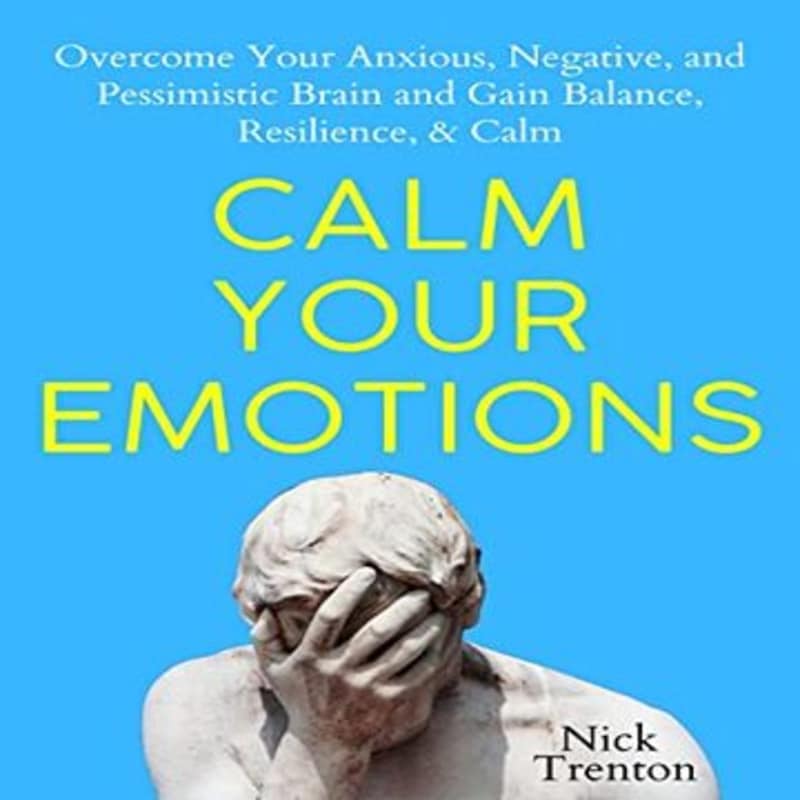
Calm Your Emotions is the rare book that understands where you’ve been, the obstacles you’ve overcome, and what you need to make sure you are in full control of your life at all times. This is a stunningly detailed and insightful guide into our emotions, our triggers, and why we act against our own interests so frequently. The key to our emotions is NOT to just “think calm and meditate” or “be mindful and grateful.” This book avoids unhelpful platitudes and gives you real advice, borrowing from all fields, such as psychology, counseling, behavior science, evolutionary biology, and even Buddhism and Stoicism.
This book gives you the tools for emotional success and the daily happiness and calm you seek.
Don’t let your emotions dictate your decisions and life.
Nick Trenton grew up in rural Illinois and is quite literally a farm boy. His best friend growing up was his trusty companion Leonard the dachshund. RIP Leonard. Eventually, he made it off the farm and obtained a BS in Economics, followed by an MA in Behavioral Psychology.
Discover your inner strength and calm.
•Understand the biological and psychological purposes of emotions.
•Find what triggers your deepest and strongest emotions.
•Learn how to properly express yourself for greater understanding.
•Tools to recognize and regulate in the heat of the moment.
•How to activate your “emotional immune system.”
This book is the blueprint for what to do when you inevitably get knocked down. The path to what we want is never easy; controlling your emotions gets you from Point A to Point B. .
Transcripts
Ever feel like certain situations push all your buttons?
Speaker:We've all been there.
Speaker:Maybe it's that crowded gym or a stressful work meeting.
Speaker:Today, we're exploring a five step method to take control of those emotional triggers and turn stress into strength.
Speaker:Hello listeners, and welcome to The Path to Calm.
Speaker:Stop overthinking.
Speaker:Become present.
Speaker:Find peace.
Speaker:Today is March 31, 2026.
Speaker:Today's featured book from Nick Trenton is Calm Your Emotions, a comprehensive guide that will help you understand your emotions, identify your triggers, and develop practical tools for regulating your responses to challenges Our episode today includes the five step stop method for stress and anxiety management.
Speaker:We're diving into the practical application of understanding our emotional triggers.
Speaker:We're going to look at a framework for regulation that empowers you to navigate those challenging moments with more clarity and control.
Speaker:So get ready to learn about strategies like avoiding triggers.
Speaker:modifying situations and even shifting your focus.
Speaker:We'll also uncover techniques for changing your thoughts and reactions to effectively manage the emotional intensity of triggers, leaving you equipped to build resilience and navigate life's ups and downs with greater ease.
Speaker:Stanford psychologist J. J.
Speaker:Gross came up with a five-step method for regulating emotion.
Speaker:The first step is to select the situation.
Speaker:It’s a question of prevention.
Speaker:This means that you should seek to avoid situations that trigger unwanted emotions in the first place whenever possible.
Speaker:If you have an allergy to peanuts, you can simply stay away from them.
Speaker:If you turn into a rage-monster when having to wait in line, find a way to go when there will be no line, or get someone else to go for you.
Speaker:Imagine that you have recently decided to partake in a marathon.
Speaker:You’ve been training hard, eating healthily, and increasing your endurance.
Speaker:However, maybe you find that you lose motivation when you see others at the gym and they seem to be running so much faster than you or lifting so much more than you.
Speaker:You notice yourself feeling less and less inclined to go to the gym, and start feeling doubtful of your own abilities.
Speaker:This is a perfect situation in which you can employ this step.
Speaker:Maybe instead you choose to go for more runs outside instead of in the gym.
Speaker:You avoid the situation that causes the feelings of self-doubt.
Speaker:It doesn’t mean that you are escaping your problems or denying how you feel.
Speaker:It simply means that to keep your motivation up, you chose not to surround yourself with things that might bring you negativity.
Speaker:Of course, if you had been avoiding the uncomfortable truth about your own poor health choices and felt bad every time you walked past the gym on your way home from work, you might want to think about the best response.
Speaker:You could choose an alternative route and simply not think about how out of shape you are.
Speaker:But in this case, avoiding a triggering situation is not exactly healthy, and what’s worse, it’s likely to be ineffective in the long run.
Speaker:Sometimes the best way to regulate a negative emotion is to never give yourself the chance to experience it in the first place.
Speaker:Remove yourself from triggering situations so you don’t have to regulate at all.
Speaker:You have more of a say than you think!
Speaker:The next step is to modify the situation.
Speaker:This is when you cannot employ step one.
Speaker:Let’s say that you work late and choose not to run outside because it’s cold and dark.
Speaker:You know that at the gym, you normally have feelings of inadequacy and you wish to reduce this.
Speaker:This is where you have to face the situation you have been trying to avoid, so you need to modify it to reduce its impact on you.
Speaker:In other words, go to the gym, but change what you can about the experience.
Speaker:You modify the situation to insulate your emotions by actively changing the terms for success.
Speaker:You alter your expectations to something that is more realistic and doesn’t set you up for failure.
Speaker:Perhaps you go to the gym but you find a quiet, comfortable corner somewhere you don’t have to continually watch others doing better than you.
Speaker:Maybe you go to the gym but during off-peak times.
Speaker:Or maybe you modify yourself in the situation.
Speaker:You tell yourself that just because you can’t go as fast as someone doesn’t mean you can’t run for as long, or that you can’t improve with time.
Speaker:If you adjust the rules and make it so you are competing only with yourself, then you are in a can’t-lose situation.
Speaker:You look at the other people there and don’t feel threatened—after all, they are “running a different race!” You are the one writing the rules for yourself—why do you need to be so strict and harsh?
Speaker:The third step is to shift your focus.
Speaker:When you can’t avoid or modify a situation, you can always change what you focus your attention on.
Speaker:If you’re upset by something, you fixate on it to your own detriment.
Speaker:Instead of being preoccupied by runners who are faster than you, shift your focus to the gym-goers who are much, much slower than you.
Speaker:You can also shift your focus to yourself and your own running—perhaps you aren’t running so fast because you’re always distracted and discouraged.
Speaker:Concentrate on improving yourself and reaching your own goals instead of beating someone else.
Speaker:Or watch TV.
Speaker:You don’t need to compete with anyone but yourself.
Speaker:Whatever negative thoughts seem to be taking your attention, switch to positive ones.
Speaker:See the brighter side and try to feel gratitude for what you still have and others don’t.
Speaker:It’s quite difficult to feel both gratitude and emotional turmoil simultaneously.
Speaker:Step four is to change your thoughts.
Speaker:At the core of our deepest emotions are the beliefs that drive them.
Speaker:By knowing this, you can change your emotions by changing the beliefs that sustain them.
Speaker:Your negative belief is that everyone at the gym is judging you for your failures—therefore, your emotions will reflect that.
Speaker:Remember the cognitive appraisal model of emotions?
Speaker:This is where you need to change your thoughts.
Speaker:To do this, think about how you view others at the gym.
Speaker:Think about the meaning you assign to neutral events.
Speaker:Most of the time, you don’t really care what they do, or you think their performance is better than yours.
Speaker:By that reasoning, what if they feel the same about you?
Speaker:Believe that people don’t judge and aren’t even paying attention to you, and your emotions will follow and relax.
Speaker:What is the evidence that your beliefs are true, and what is the evidence that they are not?
Speaker:If it helps, literally make a list and tally up the score.
Speaker:You may find that your negative emotion is a response to something that simply doesn’t exist.
Speaker:The fifth and final step of emotion regulation, when all else fails, is to change your response.
Speaker:This is pure regulation.
Speaker:This is the last resort when no other steps of this process work and you find yourself feeling without limits.
Speaker:Maybe you do go to the gym, and you fully experience all the emotions that triggers for you.
Speaker:Maybe you feel utterly destroyed, decide to give up, and are very close to tears or rage.
Speaker:Here is the point at which you most need to rein in your automatic response.
Speaker:Take a deep breath to gather yourself, close your eyes, and pause.
Speaker:Acknowledge the emotion, feel it, stare at it head-on, but surf it like a wave rather than letting it crash into you.
Speaker:Gather your inner reserve and force yourself at least to change your facial expression and choose not to act.
Speaker:Obviously, you won’t be able to all the time.
Speaker:I did mention that emotional suppression is unhealthy, but this is different because you are trying to make it to the point where you can respond instead of react.
Speaker:When we can reflect a bit more, often we will find perspective and a different and healthier way to respond.
Speaker:Your goal, then, is not to magically solve any problems in that moment, or strong-arm yourself into feeling differently.
Speaker:Your goal is only to ride out the emotion for long enough that you are in response mode and not react mode.
Speaker:By pausing in your tracks and taking a few moments to fully experience all your emotions, you will find that you can more actively regulate them.
Speaker:You might have noticed something: The earlier in the process that you step in and act, the easier it is.
Speaker:It’s not hard to avoid exposing yourself to triggers, but it’s very hard, sometimes impossible, to rein in a negative emotional spiral once it’s well underway.
Speaker:So, the logic is clear: As much as you possibly can, try to intervene sooner rather than later.
Speaker:Then, you don’t need force and willpower, but only a little planning and foresight.
Speaker:Another similar model is called the STOPP Method, created by Carol Vivyan.
Speaker:STOPP stands for:
Speaker:99 00:10:49,600 --> 00:10:50,000 • stop
Speaker:101 00:10:50,000 --> 00:10:55,120 ◦ simply pause and try not to let yourself be overcome by emotion
Speaker:103 00:10:55,120 --> 00:10:58,200 • take a breath
Speaker:105 00:10:58,200 --> 00:11:07,080 ◦ breathe deeply to keep your heart rate in check and notice your breathing in a conscious effort to keep it slow and measured
Speaker:107 00:11:09,160 --> 00:11:09,840 • observe
Speaker:109 00:11:11,400 --> 00:11:22,320 ◦ ask what is going through your mind, determine where your focus lies, discover what you are reacting to, and try to name the feelings that are swirling through your brain
Speaker:111 00:11:22,320 --> 00:11:25,920 • pull back for perspective
Speaker:113 00:11:25,920 --> 00:11:40,760 ◦ ask yourself what is really happening, try to incorporate different perspectives, understand how little it ultimately matters in your life, and remember to not instantly see disaster
Speaker:115 00:11:40,760 --> 00:11:43,840 • practice what works
Speaker:117 00:11:43,840 --> 00:11:57,360 ◦ proceed with the best action you can take for the time being, remember your values, make sure you are responding rather than reacting, and focus on your main goals for the situation at hand
Speaker:119 00:11:57,360 --> 00:12:06,960 Remember that inserting a delay between our intense emotions and our responses is always the end goal.
Speaker:None of the steps in these emotional regulation frameworks are easy.
Speaker:And at some point, simply increasing your tolerance to emotional discomfort and anxiety becomes a necessary step toward resilience and calm.
Speaker:The more you can take, the less you need to regulate.
Speaker:You’ll recognize some common elements from the regulation framework we’ve just discussed.
Speaker:And that wraps up today's episode.
Speaker:Remember, this is not about eradicating emotions, but rather understanding them and developing strategies to manage their impact, whether it's selecting situations wisely.
Speaker:modifying your environment, or even simply shifting your focus.
Speaker:There are tools at your disposal.
Speaker:And don't forget the power of changing your thoughts.
Speaker:Sometimes just reframing a situation can make all the difference.
Speaker:And lastly, remember to react less, respond more thoughtfully.
Speaker:As Nelson Mandela once said, it always seems impossible until it's done.
Speaker:So go forth, equip yourself with these tools, and start conquering those emotional challenges one step at a time.
