Shownotes
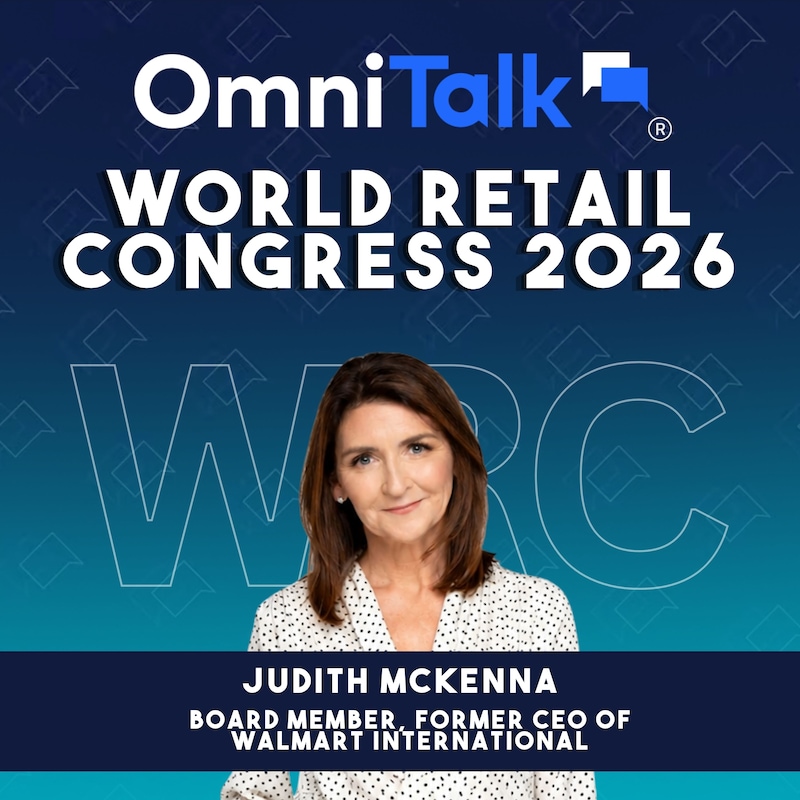
In this Omni Talk Retail interview, recorded live from World Retail Congress 2026 in Berlin, Chris Walton sits down with Judith McKenna, the former CEO of Walmart International and current Board Member at Delta Air Lines and Unilever, to discuss leadership, frontline retail culture, board governance, and how AI is beginning to reshape the retail industry.
Drawing from her experience overseeing Walmart’s global operations across dozens of markets, Judith explains why employee experience remains one of the most important drivers of customer experience, how strong store managers can transform frontline culture, and why great retail organizations still succeed by making people feel valued.
The conversation also explores what effective board leadership looks like after transitioning from executive roles, how companies should think about AI adoption beyond isolated use cases, and why retailers need a much clearer vision for how technology, operations, and customer experience ultimately connect together.
Key Topics Covered:
• Why frontline employee experience directly impacts customer experience
• How retail leadership changes at the board level
• Judith McKenna’s perspective serving on Delta and Unilever’s boards
• Why store managers remain critical to retail success
• The role mentorship plays at World Retail Congress
• How AI is changing retail, customer experience, and operations
• Why many retailers are still thinking too narrowly about AI
• The importance of solving real customer problems with technology
• Lessons from Walmart’s people-first leadership culture
• What retailers can learn from Delta’s customer service approach
Thank you to Vusion for supporting Omni Talk Retail’s live coverage from World Retail Congress 2026.
#WRC2026 #WorldRetailCongress #OmniTalkRetail #JudithMcKenna #Walmart #RetailLeadership #AI #RetailInnovation #CustomerExperience #FrontlineWorkers #RetailStrategy #BoardLeadership
This podcast uses the following third-party services for analysis:
Podcorn - https://podcorn.com/privacy
Transcripts
Hello, everyone.
Speaker A:This is omnitalk Retail.
Speaker A:I am Chris Walton, and I am coming to you live from the World Retail Congress in Berlin from the Vuzion podcast studio.
Speaker A:Now, joining me.
Speaker A:Oh, my gosh.
Speaker A:Omnitalk fans, this is someone that I've been working three years to get, and I feel like she finally said yes to the prom.
Speaker A:And I am Talking about Judith McKenna, the former Walmart International CEO and now board member at Unilever and Delta.
Speaker A:Judith, how are you?
Speaker A:It's so great to see you.
Speaker B:I am really well, and I'm glad we finally got to do this.
Speaker B:The stars alive.
Speaker A:I know, I know.
Speaker A:It's funny.
Speaker A:I was funny.
Speaker A:I was like.
Speaker A:I was like, I know I ask every year, but can you do it?
Speaker A:And you're like, yes.
Speaker A:And I was like, fantastic, Fantastic.
Speaker A:Anyway, it's great to see you at wrc.
Speaker A:Yep.
Speaker A:You've come here a lot.
Speaker A:Like, what brings you back to this conference year over year over year?
Speaker B:Yeah, I was just talking about this.
Speaker B:There's an energy at this conference, and it is so diverse in the types of businesses that are here.
Speaker B:I mean, it's truly global.
Speaker B:I think I've met people from all over the world, every kind of business that you can imagine, big businesses and small businesses.
Speaker B:And I think that's an environment, a where people can meet each other and have really meaningful conversations, because you can always find somebody like me with the same challenges that I've got.
Speaker B:And you can also just meet completely different people that you would have no chance of meeting otherwise and hear from some amazing people on stage.
Speaker B:Like today.
Speaker B:Bracken.
Speaker B:Today was fabulous.
Speaker A:I keep hearing that.
Speaker A:I didn't get a chance to see it because I was doing interviews, but I got to get a recap of that.
Speaker B:You are going to have to do that.
Speaker A:Oh, my God.
Speaker B:Worth seeing.
Speaker A:Yeah.
Speaker A:And then you were also telling me before we started, there's actually some.
Speaker A:The conference does a very good job of taking a mentoring approach for those that are up and coming in the industry.
Speaker A:Can you talk about that as well?
Speaker B:So there is a retail accelerator program, which is for folks that are coming through the industry.
Speaker B:They've maybe not got to C suite yet.
Speaker B:They're really thinking about their careers.
Speaker B:It brings them together.
Speaker B:Two brilliant things about it.
Speaker B:One is they get to meet each other and they create a cohort.
Speaker B:So many different businesses, I have to tell you, pure online businesses, physical businesses, global representatives.
Speaker B:And then we do this thing, which is.
Speaker B:They call it speed venturing.
Speaker B:So 10 minutes per table.
Speaker A:Okay.
Speaker B:And everybody has a question as A mentor they need to answer.
Speaker B:Mine was, how do you lead and develop global teams in an era of uncertainty?
Speaker B:Uncertainty.
Speaker B:Small question.
Speaker A:Okay, yeah, you got 10 minutes to answer that.
Speaker B:But we did that.
Speaker B:And I learn as much from them and their questions as you do doing that.
Speaker B:But it's a brilliant thing and it's one of the things that I think stands out from the world Retail Congress is.
Speaker B:It's not just about now.
Speaker B:It's about the people who are coming through as well.
Speaker A:Right?
Speaker A:Yeah, 100%.
Speaker B:Yeah.
Speaker A:All right, so I want to talk to you about your panel.
Speaker A:You spoke on a panel yesterday, Right?
Speaker A:Am I right?
Speaker A:And it was on elevating the frontline worker.
Speaker B:Yeah.
Speaker A:So what key messages did you share?
Speaker A:That's my first question around your panel.
Speaker A:What key messages did you share?
Speaker B:Yeah.
Speaker B:So there is something that is true in retail and lots of other businesses actually that are consumer facing, which is you should treat your employees, your customers, your colleagues, your colleagues and your associates the same way as you want them to treat your customer.
Speaker B:So how you make people feel is just as important as any of the things that you do.
Speaker B:There are hygiene factors around what you pay people, but actually how they feel about working for you, what you believe in as a company and how you treat them will have a multiplier effect on how they show up at the front line as well.
Speaker B:So we talked about lots of things.
Speaker B:We talked about having great store managers.
Speaker B:We talked about training programs.
Speaker B:We talked about how the job balance is changing because of technology taking away some of the really difficult stuff that people had to do, the repetitive tasks to free up, to serve and sell.
Speaker B:But me, the key message is, how do your folks feel on the front line?
Speaker A:Got it.
Speaker A:And so, because this was the first time I was interviewing you, I wanted to ask you a two part question on this for your panel.
Speaker A:And this is a question I've never asked anyone.
Speaker B:Okay.
Speaker A:Okay.
Speaker A:So I'm curious, what did you learn from your fellow panelists?
Speaker B:So it's a really great question, actually, because you learn as much as you listen to them.
Speaker A:You do.
Speaker B:So we had Andreas, who runs small.
Speaker A:Supermarkets, interviewed him this morning.
Speaker B:He's fantastic.
Speaker B:He talked about the way they are changing even the names that they give to the folks in their stores.
Speaker B:So they've gone from shelf stockers to customer assistance.
Speaker A:Oh, wow.
Speaker B:I thought that was.
Speaker A:Yeah, that's brilliant though.
Speaker B:Fantastic.
Speaker B:But back to how do I feel?
Speaker A:Yeah, wow.
Speaker B:You've made me feel that I have a job that has true value in it, even just by changing the name of it.
Speaker B:Yeah.
Speaker B:And then David, who is a retail veteran, I mean, has been many businesses, has his own podcast.
Speaker B:He was the one who was passionate about store managers being the linchpin to everything and how you kind of create a framework around store managers to help them be the best they can be every day.
Speaker A:Sometimes the store managers are the forgotten heroes in this whole retail transformation conversation.
Speaker B:It totally is.
Speaker A:Do you not have a podcast yet?
Speaker B:I'm surprised there's too many.
Speaker A:Everyone's got one.
Speaker B:Yours is so good.
Speaker B:How could I possibly spend too much.
Speaker A:Time listening to mine?
Speaker A:Right.
Speaker A:You would never have time to do your own.
Speaker A:All right, all right, let's shift to the board.
Speaker A:I've been very interested in talking to people about boards.
Speaker A:I talked to Archie Norman about it last week from M and S. I know Archie well.
Speaker B:I worked for him.
Speaker A:I bet you did.
Speaker A:Yes, you did.
Speaker A:Yeah.
Speaker A:He had some great things to say about how he runs a board.
Speaker A:And so with you being on two boards, two very important boards, I wanted to get your insights on it too.
Speaker A:So first, let's talk Unilever.
Speaker A:So you're on the corporate responsibility committee.
Speaker B:Yes.
Speaker A:What is your advice for how one should approach a board role such as that?
Speaker B:I think it's that, first of all, being a board member, once you've been an executive, being a board member, you have to have a completely different outlook to how you do this.
Speaker B:You are there to help make sure the strategy is the right one for the folks in the organization and for the shareholders, and that the team are the right team with the right plan in place and the right resources to be able to do that.
Speaker B:But you're there to ask good questions.
Speaker B:Like that is really what your job is.
Speaker B:And there's very rarely where you need to have a button that says timeout that should be.
Speaker B:And the chair, which Archie is a chair, plays an incredibly important role in doing that.
Speaker B:What I found, and it's a transition, by the way, to do that because you're so used to being hands on.
Speaker B:So somebody gave me this great piece of advice once, which is nose in, hands out.
Speaker A:Okay.
Speaker A:Okay.
Speaker A:That's interesting.
Speaker B:Which is an interesting way for it.
Speaker B:I'm not sure I just phrased it that way, but that's a good way to think about it.
Speaker A:Yeah.
Speaker A:Right.
Speaker B:But when you start to chair a committee, what you realize is you have a real responsibility for whatever it is that committee is there to do.
Speaker B:Mine is corporate responsibility.
Speaker B:So all of the risk of the organisation reputation, sustainability is are we doing the right things to give comfort to the board and to the shareholders that we have a process in place, warning systems in place, proactive things in place, and the right people in order to be able to deliver on it.
Speaker A:Judith, how do you build trust with the executive team?
Speaker A:I'm always curious about that because, like, it feels like a board that's functioning correctly.
Speaker A:There should be like this shared mutual trust and you should want to meet together and work through the problems together.
Speaker A:But at times it feels like, yo, I got my board meeting, you know, and how do you go about doing that?
Speaker B:We've all, all of us who've been in public companies that have got.
Speaker B:We've got a board meeting.
Speaker B:We know that.
Speaker B:And that's because it's deadlines and it's PowerPoints, which is really one of the boards.
Speaker B:I do don't use PowerPoints.
Speaker B:But it's.
Speaker B:Which is great.
Speaker A:Yeah.
Speaker B:But it's actually, you have to demonstrate that you trust the team.
Speaker B:You have to demonstrate that level of trust.
Speaker B:And then around a board table.
Speaker B:One of the reasons I love doing the boards is you have different specialisms and where you find you can be helpful with your specialism.
Speaker B:So I understand a retailer and a supplier partnership, so you can be helpful to some folks by leaning into that area because they want to know from you.
Speaker B:But at the board level, you're there very much more to ask the right questions, keep it high level, more helicopter in the way that you approach it.
Speaker A:Got it, Got it.
Speaker A:Okay.
Speaker A:So you're also on Delta's board, which is a company that's near and dear to us in Minneapolis, where I live.
Speaker A:I'm curious.
Speaker B:I hope you fly us.
Speaker A:Oh, yeah, I'm flying out tomorrow.
Speaker B:We appreciate your custom for sure.
Speaker A:Yeah.
Speaker A:Can you give me an upgrade too, while you're at it?
Speaker A:Yeah, let's see.
Speaker A:But what is a retail mindset breath bring to a board like Delta, you know, that, say, being somebody that's just solely in the.
Speaker A:In the aviation industry, maybe can't, you know, can't bring to the table.
Speaker B:Well, actually, do you know what?
Speaker B:They very much see themselves as a customer business.
Speaker A:Yeah.
Speaker B:And a people business.
Speaker A:It seems like they've got retail media wired in on the seats now.
Speaker B:Do you see on the back of the seats?
Speaker B:Yeah.
Speaker B:So the reason I joined Delta was a.
Speaker B:The airline industry is fascinating, but primarily because it was the closest I'd seen to the way Walmart thinks about values and people.
Speaker B:And what we talked about right at the very beginning, Chris, is how you take care of your people will matter hugely on how they Take care of customers and never is it more true in such a high service area as Delta.
Speaker B:So that is, you know, I have nothing to teach them other than to reinforce to them in that area that that is exactly the right thing to do.
Speaker B:And they run amazing things.
Speaker B:They run these things called velvet sessions where they bring teams around from all over yet the world really.
Speaker B:But they're primarily the US and their senior leadership team gets on stage, tells them what the strategy is, tells them what's happening, and they run 15 of those a year.
Speaker B:A Walmart equivalent would be the associate celebration meetings and do that.
Speaker B:So there's a lot of similarities actually between the businesses.
Speaker A:Yeah, that actually makes a ton of sense.
Speaker A:Actually helps me see why too, like for personally and I think a lot of people feel this way.
Speaker A:It's Delta and then everyone else in the airline industry in the US too.
Speaker A:And it's probably because of that customer first mentality.
Speaker A:All right, I'll get you out of here on this.
Speaker A:AI dominating the conversation.
Speaker B:We made it for 10 minutes before we got that.
Speaker A:Okay, I gotta, I gotta ask it though.
Speaker A:I lose my pundit card, Jude, if I don't ask this question.
Speaker A:AI, you, you've, you know, you've got the retail perspective, cpg, airline perspective.
Speaker A:How big is it in your mind and what are we getting right, what are we getting wrong?
Speaker B:I think we've heard a lot about that from this conference.
Speaker B:I mean, I don't think we've got 10 minutes in any session actually without it coming up.
Speaker B:And we're definitely on a curve for this.
Speaker B:There is no doubt it's here.
Speaker B:I heard a statistic, it was something like 49% of customers across Europe.
Speaker B:There is an agentic AI involved somewhere.
Speaker B:But it's not actually the full thing.
Speaker B:It's just that I'm looking it up, I'm researching on it and doing that, which is huge from a standing start.
Speaker B:So it's very real short time.
Speaker B:It really does matter.
Speaker B:There is lots of experiments going on how fast the adoption curve will be on pure agentic, which is there is no human involved other than setting up them and they will transact for you.
Speaker B:I think that is some way off.
Speaker B:But we confuse terms here.
Speaker B:Yeah, we do as well.
Speaker B:But what I do think is everybody should be thinking about what could it be for their retail business.
Speaker B:And I would say that not just because I come from there, I think Walmart, John Furna and the team there have done a really good job of painting a picture about how all of these different pieces of let's put it under a bucket of technology come together, whether it be in the supply chain for our associates, for customers, and what might that look like in the future?
Speaker B:And that's the one thing that I've probably seen that's missing here slightly is there's lots of.
Speaker B:We're doing these pieces I'm not yet seeing enough of.
Speaker B:What does it look like when it all ties together?
Speaker B:And it's hard, Chris, because we don't know.
Speaker B:But having some kind of vision for that, and some people articulated it really well.
Speaker A:Yeah.
Speaker A:I had that same question on my panel, actually, to reiterate your point, I said at these conferences we sometimes talk about technology and isolation.
Speaker A:We can do everything we want, but at the end of the day, the resources are finite and you have to decide where to invest.
Speaker A:That's going to make the most sense.
Speaker B:And what problem are you solving?
Speaker B:So.
Speaker A:Yeah.
Speaker A:And you know your process well enough to know what problem you're solving, too, right?
Speaker A:That's the other stump I've been on.
Speaker B:Never ending in retail.
Speaker A:That's the soapbox I've been on.
Speaker A:Well, thank you so much.
Speaker B:It's my pleasure.
Speaker B:It's been great.
Speaker A:I hope we can do this again.
Speaker A:I hope we can.
Speaker A:I won't hold you to it right now, but I hope we can.
Speaker A:Judith McKenna, former Walmart International CEO and now board member at Delta and Unilever.
Speaker A:And to all my fans out there, thank you to Fusion for supporting our coverage at the conference all week long.
Speaker A:And as always, be careful out there.
Speaker B:Thank you.