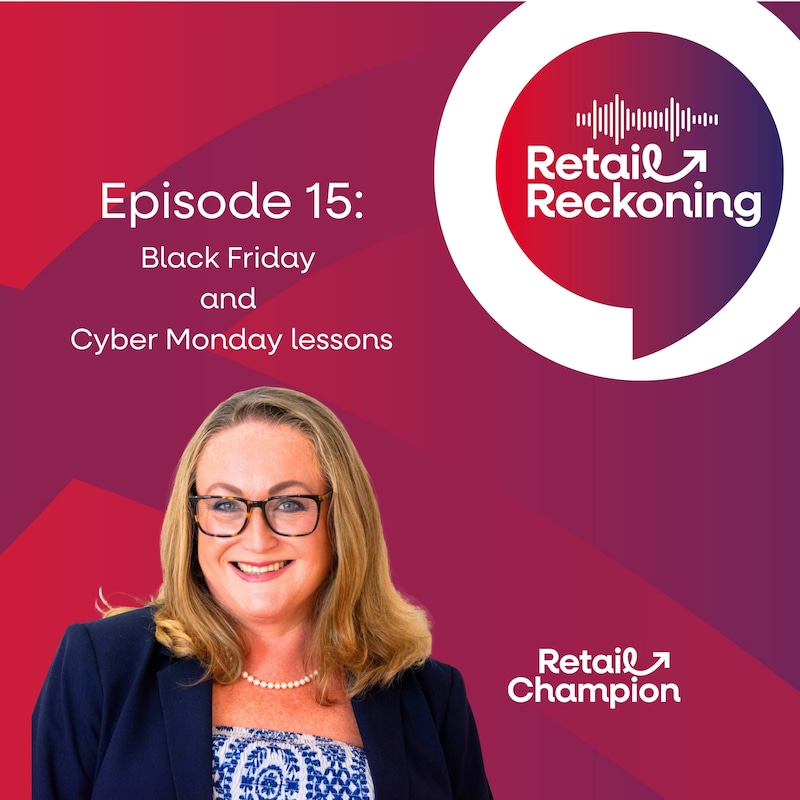
Shownotes
Black Friday and Cyber Monday might be over, but the real story is only just emerging.
Hi, I'm Clare Bailey, founder of Retail Champion.
In this episode, I'm reflecting back on Black Friday 2025 and Cyber Monday.
This year we saw shoppers spend £3.8B online, yet trust took a hit, margins suffered, and some of the UK’s most established retailers ended up in the headlines for the wrong reasons.
I dig into what Black Friday 2025 actually revealed about today’s shopper — from scepticism around fake discounts to the growing pressure on frontline staff and the operational cracks that show up every year.
If you want clarity on what really happened, how it affects the rest of peak season, and what retailers should change right now, this is the episode for you.
Subscribe to the Retail Reckoning Newsletter - https://retailreckoningpodcast.co.uk/newsletter
Mentioned in this episode:
Retail Reckoning Podcast Insights Newsletter
Get Retail Reckoning Podcast Insights and Goodies - https://retailreckoningpodcast.co.uk/newsletter
Transcripts
And it's that time of year again. It's retail's festive game of
Speaker:chicken. We've seen Black Friday and Cyber Monday sales,
Speaker:customer behavior, margin pressure, staff pressure
Speaker:and patterns that keep repeating every year. I'm going to look at what
Speaker:works, what doesn't and how to survive this festive frenzy
Speaker:without losing your brand or your sanity.
Speaker:So let's set the scene and have a look at some of the early insights.
Speaker:Black Friday and Cyber Monday are behind us. And the early signals
Speaker:are. Yeah, retail reckoning.
Speaker:Retail reckoning. No space for
Speaker:dusty shelves. Retail
Speaker:reckoning owns the floor. The
Speaker:early signals are as messy as expected and also as
Speaker:telling. Cutting to the chase, shoppers did spend
Speaker:big, but potentially not that wisely. And maybe
Speaker:the discounts weren't as good as promised. UK
Speaker:consumers poured 3.8 billion
Speaker:pounds in online spend over just the four day weekend.
Speaker:That's up 4 to 5% on last year. And the
Speaker:categories such as jewelry, electronics, clothing
Speaker:and cosmetics were the ones that did the best. Out in
Speaker:the high street, it was a bit of a different story because football was
Speaker:mixed. Some only saw a modest weekend
Speaker:uplift, but peak Black Friday itself
Speaker:dipped slightly. Year on year. Then we've got to add to that.
Speaker:As always, Consumer Watchdog Witch had flagged that
Speaker:many discounts weren't really that good at all. And
Speaker:shockingly, of the John Lewis products that they were
Speaker:tracking, 94% of those were the same price or
Speaker:cheaper at other times of the year. And the online
Speaker:retailer varied. They didn't do much better. Apparently.
Speaker:93% of their deals weren't any cheaper than they could have been
Speaker:before. This leads to some discomfort.
Speaker:Shoppers hunting out the bargains might have ended up paying more than if they
Speaker:perhaps planned ahead. And so this is the new
Speaker:reality, and this is why I call it Retailers Game of Chicken. Because an
Speaker:eye catching sale doesn't always equate to real value
Speaker:and that's what savvy customers are noticing. So what does this
Speaker:really tell us? Shoppers
Speaker:undoubtedly are more savvy, more cautious and
Speaker:more sceptical about what constitutes real value. And if a
Speaker:deal is a deal, whilst discounts do drive
Speaker:traffic, it does so whilst margins are pressurized.
Speaker:And also, if they're not as good as they could be, brand
Speaker:trust can take a real hit. The winners are those who understand
Speaker:both consumer behavior and context, not
Speaker:just those who can do the biggest discounts. I'm going to have a
Speaker:look into what these numbers really mean for UK retailers this Christmas to
Speaker:try to spot some early winners. And losers. And also,
Speaker:what can we learn from this chaos without losing your brand, your margin or your
Speaker:sanity? So the early
Speaker:take. Well, again, as mentioned, the winners were definitely
Speaker:jewelry, electronics, clothing and cosmetics. They were driving the
Speaker:online spend and they've performed strongest over the Black Friday and
Speaker:Cyber Monday weekend. Both have benefited from genuine deals
Speaker:and higher shopper interest. What we do have to remember though is it
Speaker:isn't just the weekend some retailers ran Black Month,
Speaker:Black Week and so they were spreading out the demand
Speaker:across a much longer period of time. And I can say I've been receiving
Speaker:emails from every man and his dog promoting the
Speaker:next best Black Friday deal and the next best when it's gone, it's gone off
Speaker:for ages. It seems the other winners,
Speaker:those with smart omnichannel strategies. But you can say that all year round
Speaker:if you've got a solid online click and collect and store experience.
Speaker:They're basically delivering the service that people want and they
Speaker:don't have to rely on deep discounts. It just makes it more convenient. But
Speaker:I'd say that all year round anyway. Nonetheless, they did see
Speaker:a solid increase in the Black Friday Cyber Monday period.
Speaker:There's a couple of I wouldn't go as far as to say losers, but
Speaker:red flags, caution flags, obviously. It's
Speaker:surprising. I really was shocked when John Lewis and Very were
Speaker:hitting the headlines for their questionable discounts. And it's a real reminder
Speaker:that price doesn't just build trust because shoppers spot
Speaker:things and those deals that aren't deals, especially when they're headline
Speaker:making, that damages brand credibility. And for a brand like John Lewis, that's
Speaker:really sad. Then we saw a lot of deep discounting in other sectors
Speaker:like fashion and electricals and that may have driven
Speaker:up number of transactions, but it's already
Speaker:eating into already eroded margins.
Speaker:And is it going to really benefit them in terms of
Speaker:what happens after Christmas and Boxing Day sales? Or will it have eaten
Speaker:up appetite for buying stuff in sale when they've already
Speaker:effectively had it? Footfall on the peak day was
Speaker:patchy. It really stood to show that even the big
Speaker:chains can't completely predict or control shopper
Speaker:behavior when customers are looking for value and they're timing
Speaker:their spending. So I guess the
Speaker:takeaway is it's not who cuts the deepest, it's about who's going
Speaker:to actually bring the a balance of value, experience
Speaker:and trust. Because it is so important when
Speaker:shoppers have got access to so much data and information to make sure
Speaker:that a deal is a deal. Because shoppers notice when it isn't real. And
Speaker:that lesson matters more than a single weekend spike in sales, because it may
Speaker:mean they don't come back. I mean, this sets the stage for a bit of
Speaker:a deeper look now, from consumer psychology to margin management
Speaker:staff and operations, so that you can spot the patterns that really matter for
Speaker:hopefully the rest of the season and beyond. So how did we get here?
Speaker:Well, we have to accept that we created this monster. Black
Speaker:Friday used to be a single day. Cyber Monday was just the digital
Speaker:extension, usually the first Monday in December after
Speaker:payday, when people had maybe been browsing for what they might like to buy
Speaker:for Christmas. And so they then shopped online and that was because as
Speaker:well, they did want to make sure that they got in within the delivery
Speaker:windows. Pre Covid Christmas promotions
Speaker:did kick off in late November, but last year
Speaker:data from the British Retail Consortium and MRI
Speaker:showed that promotions were starting potentially up to three weeks
Speaker:earlier and discounts were between 22 and 25%.
Speaker:My take is that customers are not being difficult when they wait for a deal.
Speaker:They're behaving exactly as an industry. We've trained them to
Speaker:behave. And the game of chicken again. Shoppers are holding out for deals,
Speaker:checking prices, and they're skeptical about value because the fact is,
Speaker:if you can sell something for such a large discount for X
Speaker:period of the year, they've got to ask you, well, why
Speaker:can't you give me a better price all year round? I mean, I completely can
Speaker:understand why that would be what people might think. So the game is getting
Speaker:tougher for retailers who do rely on deep discounting.
Speaker:The other thing to bear in mind is that spending at this time of year
Speaker:isn't really rational, it's emotional. And we see
Speaker:panic buying and some fairly questionable choices.
Speaker:MRI data shows that the footfall spikes and last minute buying
Speaker:aren't anomalies. It happens year in, year out, but we
Speaker:don't know exactly when. And there's also a layer of uncertainty
Speaker:and consumer confidence. This year we've had a tricky budget.
Speaker:Things are looking a little bit challenging for a lot of
Speaker:people. So we may see more cautious and more calculated buying
Speaker:alongside the usual panic driven frenzy. The which
Speaker:findings tie into this. So whilst customers are
Speaker:emotional, they're increasingly critical. They want
Speaker:reassurance that a deal is real. And if you don't provide that
Speaker:reassurance and the transparency, what
Speaker:would be an emotional spike in sales can turn into
Speaker:frustration and people becoming questioning of your
Speaker:brand. Then it hits your brand trust. Then
Speaker:we've got to remember that every early Discount eats into margin
Speaker:and brand authority. And margin is hard come
Speaker:by. The prices of things have gone up. Retailers are trying
Speaker:to absorb the cost of their own supply chain increases,
Speaker:not having to pass on the expense to their shopper.
Speaker:And it's difficult. BRC
Speaker:figures are showing that operating margins have halved from 6% in
Speaker:2018 to 3% in 2024. That's
Speaker:very low. And early Black Friday promotions, for example, I mean, it gives
Speaker:us a short term boost in sales, but it risks long term damage. And
Speaker:essentially if customers believe that waiting equals saving,
Speaker:then the sense of urgency and value just evaporates and they sit
Speaker:back and they wait. The other problem as we've touched on, flashy deals that
Speaker:aren't genuine are going to erode trust, push margins down
Speaker:and people will start to shop more selectively.
Speaker:We're also in a position where, you know, we're actually seeing a
Speaker:national campaign by the Retail Trust to encourage
Speaker:customers to respect retail employees. I mean, that's a stupid, sad fact.
Speaker:And there's a staff squeeze. People don't want to work for retail
Speaker:in the way that perhaps it might have been seen as a handy part time
Speaker:job with flexible hours in the past. And it's driven by the fact that the
Speaker:behavior towards people who work in retail has become very
Speaker:challenging. I don't know what has created this
Speaker:shift, but there is a lot more abuse and
Speaker:aggressive behavior from customers to retail staff. Hence
Speaker:it's really difficult to hire people. And seasonal hiring fell by
Speaker:nearly 15% year on year in 2024. So what
Speaker:you've got is a stretched, stressed out team on the shop floor,
Speaker:which leads the retailer to lost sales, poor customer
Speaker:experience and potentially lost trust. The difficulty
Speaker:is your people are your brand. They need to be empowered
Speaker:and the customers will feel it if they're happy and valued. But
Speaker:if they feel ignored, the retailer pays the price.
Speaker:Difficulty is they also need to feel safe and that is
Speaker:becoming an increasing concern. So even if a
Speaker:promotional activity like Black Friday does lift online spend, without
Speaker:the proper trained staff who feel safe and happy at work,
Speaker:able to deliver the experience, it's more or less a wasted opportunity.
Speaker:So what do we do to break the cycle? Well, I think the thing is
Speaker:we've got to stop playing chicken. It's not a we'll break into
Speaker:sale when we absolutely have to because the customers are sitting waiting
Speaker:for you to do that. We need to surprise our customers with value, not
Speaker:just markdowns. Creating moments of joy, Training the team
Speaker:to sell product by telling stories, not just by
Speaker:showing prices and you need to protect your brand with
Speaker:appropriate and time bound discounts. End of
Speaker:season, end of life, new product coming out that those kind of
Speaker:sensible and relatable discounts that hold
Speaker:integrity. If it's a discount for a discount's sake, it can
Speaker:make people cynical. And again, the witch findings are making this
Speaker:lesson clear. Authentic value is going to trump eye candy
Speaker:discounts. And that's where a clever pricing and promotional strategy
Speaker:beats just random markdowns for the sake of it.
Speaker:The other aspect is the operational reality
Speaker:whereby customers do expect things to be a lot more seamless
Speaker:and a lot more integrated. Click and collect. An online fulfillment.
Speaker:Great until it doesn't work. In 2023,
Speaker:40% of shoppers used click and collect, but a third reported they
Speaker:experienced delays. I think you'd be better off having one
Speaker:empowered colleague solving problems at the store.
Speaker:It's far more value adding to the business than 10 discount
Speaker:codes that drove the traffic in the first place. Early Black Friday
Speaker:25th, the reports are suggesting that operational failures are still
Speaker:an issue. This to me reinforces that service and reliability
Speaker:is going to always outperform pure discounting.
Speaker:So really, to sum up, Black Friday and Cyber Monday are entertaining,
Speaker:but I'm not convinced anybody really wins. Shoppers are getting a
Speaker:deal, but they're losing out on the joy, the
Speaker:experience. Retailers get the sale, but they're giving away margin
Speaker:and staff are faced with the fallout. People fighting over
Speaker:TVs was one of the things I remember from Black Friday several years ago
Speaker:and it hasn't really got any better. I mean,
Speaker:yes, the early insights say online spend hit 3.8 billion and
Speaker:we've seen that the categories that perform best are the sort of
Speaker:gifting and personal care type stuff. But with discounts
Speaker:at 16 to 17%, margins are squeezed foot
Speaker:for patchy. Shoppers are getting more and more savvy, more
Speaker:and more cautious and more and more skeptical about real
Speaker:value. And again, to see John Lewis
Speaker:hitting the headlines for questionable discounts, I mean that undermines
Speaker:probably one of the most trusted retail brands that we have in the country.
Speaker:So this Christmas price with purpose
Speaker:trained people to deliver excellent service and experience.
Speaker:And remember, these early insights are just to start. We're going to know a lot
Speaker:more as the season unfolds and what the budget's impact will have been on
Speaker:consumer confidence. I'm Claire Bailey, the retail champion and this
Speaker:has been retail reckoning. Yeah, retail
Speaker:reckoning. Retail reckoning.
Speaker:No space for dusty shelves. Cause
Speaker:retail reckoning owns the floor.
Speaker:Sam.


