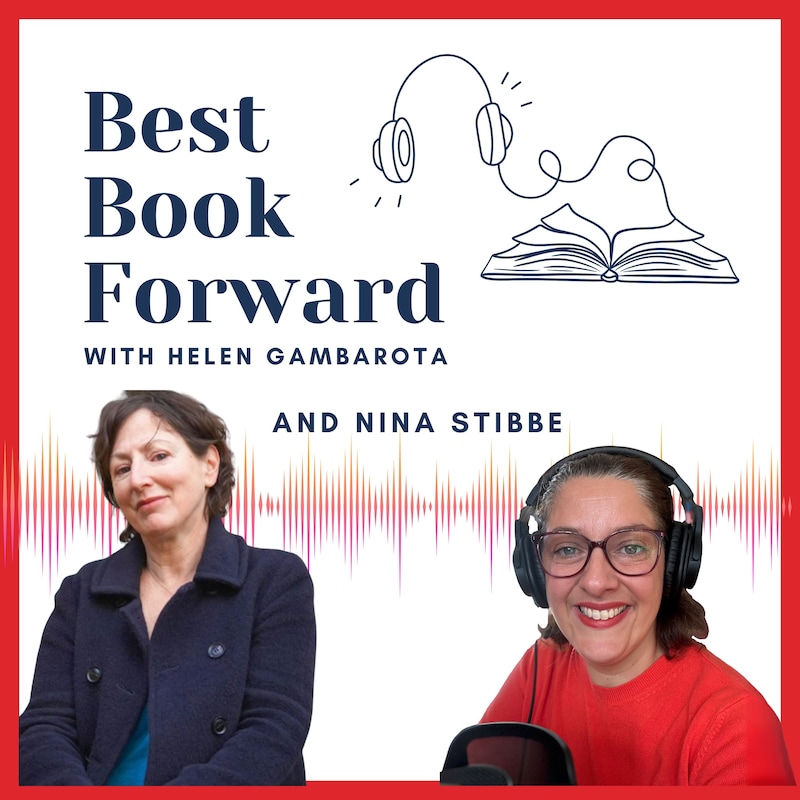
Shownotes
In this episode I was delighted to be joined by Nina Stibbe; who’s latest book Went to London, Took the Dog is out 2 November and is such a brilliant read.
I loved talking to Nina, and hearing her talk so patiently about her love of diaries has inspired me to try and keep my own diary.
Nina’s Desert Island Book choices are:
My Side of the Mountain by Jean George (currently out of print)
Secret Diary of Adrian Mole by Sue Townsend
Diary of a Nobody by G&W Grossmith
Throughout the discussion, various other books and authors were mentioned and these are all listed below.
Other Books Mentioned
One Day I Shall Astonish the World by Nina Stibbe
War Horse by Michael Morpurgo
Jill’s Gymkhana by Ruby Ferguson
The Snow & Works on the Northern Line by Ruth Thomas
The Adventures of Miss Barbara Pym by Paula Burn
A Very Private Eye by Julie Cooper
Authors mentioned
David Sedaris
Deborah McGogach
Alan Bennett
Claire Tomlyn
Michael Frayne
Jonathan Miller
Germaine Greer
If you enjoyed this episode and would like to hear more from Nina, do keep an eye out as we have recorded a bonus episode which will be coming soon.
For more content from me you can follow me on Instagram or visit my website www.bestbookforward.org
Best Book Forward is produced by Decibelle Creative
Transcripts
Welcome to Best Book Forward, the podcast where I talk to authors, publishers and.
Speaker B:Book lovers alike about the books that.
Speaker A:Have shaped their lives.
Speaker A:Think of it as like Desert Island Discs, but the bookish version.
Speaker A:My guest today is Nina Stibe and trust me, I am having a real pinch me moment about it.
Speaker A:Nina's first work of nonfiction love, Nina, catapulted her onto the scene 10 years ago and was subsequently made into a hit TV series written by Nick Hornby and starring Helena Bonham Carter.
Speaker A:Her latest book, Went to London and Took the Dog, is Nina's diary from the year she became a 60 year old runaway taking a sabbatical from her life.
Speaker A:It is of course a funny and yet touching and poignant look at friendships, motherhood and the menopause and about branching out and finding yourself.
Speaker A:Nina joins me today to talk about her new book, the Joy of Keeping a Diary, and of course, the five books that have shaped her life.
Speaker B:Nina, welcome and thank you so much for joining me on Best Foot Forward today.
Speaker C:Hi.
Speaker C:How lovely to be here.
Speaker B:Oh, thank you.
Speaker B:I'm delighted to be chatting to you.
Speaker B:Your new book, Went to London, Took the Dog comes out on the 2nd of November and I'd love if you could start off by telling our listeners what it's all about, please.
Speaker C: is a diary that I started in: Speaker C:I was living in Cornwall and had been living in Cornwall for many, many years.
Speaker C:My children had left and gone to university.
Speaker C:A couple of years before that, both of them went to London and I got the opportunity just sort of by chance really to go and lodge for a very cheap rent, which was quite significantly important, the rent aspect and also in a very unofficial kind of relaxed way.
Speaker C:So it was a no signing documents, no paying council tax in a different place, just a sabbatical lodging in a, in a house in London.
Speaker C:And it was a chance that just came out of the blue and I grabbed it and I started.
Speaker C:I write diaries anyway because I know how important they are.
Speaker C:It's lovely to look back.
Speaker C:I've learned that over the years, if you keep a diary, it will always delight you.
Speaker C:So always try and do it.
Speaker C:There's my top tip, starting off with top tip, always keep a diary.
Speaker C:Anyway, so I started keeping this diary.
Speaker C:It started it a couple of weeks even before I left.
Speaker C:So we have the sort of run up my mind juggling with this move I'm about to make and off I went to London in probably April.
Speaker C:And the diary got going and I started to do it every night.
Speaker C:You know, traditional nighttime in bed.
Speaker C:You know, what have I been doing today?
Speaker C:And I.
Speaker C:And I did it very thoroughly, actually, I'm pleased to say.
Speaker C:So when a few months later, I met with my editor and she said, how's it going?
Speaker C:And she was sort of agog at this move I'd suddenly made aged 60.
Speaker C:I could tell her some of the funny goings on in the house.
Speaker C:And she said, I hope you're writing all this down.
Speaker C:It would make a great book.
Speaker C:So a few months after that, and it looked very likely the book was going to be.
Speaker C:The diary was going to be published.
Speaker C:I was writing it with a different head on because I'd been writing it very authentically, just for me.
Speaker C:And then suddenly, halfway through the year, I had to be careful not to go all performative and fake.
Speaker C:That was hard.
Speaker C:Sorry, I sort of went off a bit of a tangent there.
Speaker C:And the book and the diary lasts a year until I've come to the end of my year at this lodgings.
Speaker B:That's so interesting, Nina, when you say that, because actually when you're reading the book, I'm just trying to think if I could, I wouldn't be able to pick out, because it feels like.
Speaker B:I mean, I was really torn between wanting to fly through it.
Speaker B:But then also I'd get.
Speaker B:As I got towards the end, I was like, oh, I don't want this to end because I'm really enjoying reading it all.
Speaker B:So I don't think that's really interesting that you had that sort of feeling of sort of, you know, changing it to.
Speaker B:Writing it into what would become a book.
Speaker C:It's interesting, the whole question of authenticity, because my first book was letters that I had written just to one person many years ago.
Speaker C:And when we were very lightly editing them for publication 10 years ago, this was.
Speaker C:I really wanted to get in there and edit.
Speaker C:Edit me.
Speaker C:I didn't want to be being so rude about Shakespeare and Chaucer and being critical of Thomas Hardy.
Speaker C:And I thought, oh, I don't sound very intelligent, I want to go in there and edit myself.
Speaker C:But I wasn't allowed to.
Speaker C:I had to leave it.
Speaker C:My editor was so thorough.
Speaker C:She knew the book inside out.
Speaker C:And she just said, I did actually make one change, a sneaky change.
Speaker C:And she.
Speaker C:She found it and said, what was this?
Speaker C:I don't remember this bit, you being really nice.
Speaker C:So that came out.
Speaker C:So.
Speaker C:So, yeah, no, it.
Speaker C:It was a concern and.
Speaker C:And my Editor and I both said, so the diary is very candid.
Speaker C:Do we stay like that or do we weed some of that out and go in a more sort of narrative, have more of a story?
Speaker C:And we.
Speaker C:Neither of us wanted to do that, so I just carried on, which is why it is so very, very candid and revealing about me and everyone.
Speaker B:I think that's what people want now.
Speaker B:We have that sort of Instagram life that we're sort of presented with.
Speaker B:Don't we have, like, the idea of people's life being perfect.
Speaker B:But it is.
Speaker B:I'm just thinking if you went back.
Speaker B:I'm reading, just finishing off Love Nina now, and I'm just thinking if that were edited more.
Speaker B:But it's like, it's perfect because it's so relatable and believable.
Speaker C:Yeah, I think it is.
Speaker C:For it.
Speaker B:I think.
Speaker C:Yeah, I think it is.
Speaker C:And I think with.
Speaker C:With the new book, my landlady and I did.
Speaker C:We did slightly stray into being performative a couple of times.
Speaker C:And I said to her, hey, let's go and get electric scooters.
Speaker C:Let's get drunk and get electric scooters and go down Primrose Hill.
Speaker C:And then we both said, well, no, we don't.
Speaker C:We're only doing it for the diary.
Speaker C:And I think she once put a cigarette out in my yogurt and I thought, she wants to get that in the diary.
Speaker C:And it's.
Speaker C:I'm not doing it.
Speaker C:So we.
Speaker C:So, yeah, there was a tiny bit of that, but that was.
Speaker C:It was very funny.
Speaker C:It was funny when people performed for the diary.
Speaker C:And I've.
Speaker C:I once, a few years ago, interviewed David Sedaris about diary writing and he said something along the lines of that people will perform to get into his diaries.
Speaker C:And he.
Speaker C:But he can sniff it out and he won't have it.
Speaker C:He won't.
Speaker C:You know, he doesn't let people sort of fake.
Speaker C:Get.
Speaker C:Get in there for fake reasons.
Speaker C:So, yes.
Speaker C:So we were, you know, I think I've been quite.
Speaker C:Yeah.
Speaker C:Quite conscientious about keeping it real and not.
Speaker C:Not overdoing it.
Speaker B:But you know what you've just done.
Speaker B:What may not be in the diary, but it's now here.
Speaker B:The cigarette and the yogurt is now here.
Speaker C:It'll get out.
Speaker B:It will, it will.
Speaker B:So I mentioned before we came on, I came quite late to your books, and it was only after my very good friend Claire, who is a fellow book blogger called Years of Reading, was horrified that I hadn't read any of your books.
Speaker C:She's so great.
Speaker C:She's so supportive to me.
Speaker B:She's brilliant, isn't she?
Speaker B:She sent me away and told me to go and read one Day I Shall Astonish the World, which I loved.
Speaker B:And as I said, I have been reading your books out of sequence since.
Speaker B:So I read went to London first and I'm just finishing, Love Nina.
Speaker B:And I've loved reading about the different experiences from the different times in your life and I wondered what it was like for you to now be sharing this stage of your life with the world.
Speaker C:Well, it's funny, the question you.
Speaker C:The very first question you asked me when you said, could I tell the listeners about my new book?
Speaker C:And I rambled on.
Speaker C:What I should have said is, for anyone that's read, Love Nina, which was a book about me leaving my village in Leicestershire age 20, having left school at 15 and with no O levels or A levels as we used to call them, and the only way I could leave home was by being a nanny.
Speaker C:So I went off to be a nanny in London and I ended up living with a literary lady in this sort of cluster of very accomplished, brilliant people, such as Alan Bennett and Deborah Mogarch, who lived across the road, although I didn't know her then, I have to say, say, and Claire Tomalin and Michael Frayne and Jonathan Miller and lots of people like that.
Speaker C:I ended up by accident living amongst those people and I was 20.
Speaker C:And then completely by accident, there I was, age 60.
Speaker C:So literally 40 years later, leaving my Cornish very quiet life to do exactly the same, to move, to move in with a literary lady that I didn't know and to sort of try and make sense of London all over again.
Speaker C:So it's sort of a return on the 40th anniversary and so, yeah, it's funny, it's interesting and it's made me appreciate the difference for me between being 20 and being 60 and the different levels of confidence and ambition and the things that you do and take in your stride and the other things that you're very anxious about.
Speaker C:And it's been absolutely fascinating.
Speaker B:The word that popped into my head you were saying that particularly you're saying about, you know, heading into London and sort of being surrounded by those people is like serendipity.
Speaker C:Yeah.
Speaker B:Like how.
Speaker B:How when you came back to London, that Deborah was there with the house and things.
Speaker B:I do think things happen for a reason.
Speaker C:Well, they just.
Speaker C:They certainly have fallen into place for me.
Speaker C:I ended up living opposite Alan Bennett and then somebody found my letters and I think because Alan Bennett was a regular feature.
Speaker C:I mean, he came to Supper Night for the four years that I was there.
Speaker C:That made those letters of great interest to a publisher.
Speaker C:So that started my career, my later life career.
Speaker C:I was published when I was 50, so it's.
Speaker C:So for 10 years I've had this sort of writing life that I wouldn't have had, I don't think, had I not accidentally ended up living opposite the national treasure.
Speaker B:Did you want to be a writer?
Speaker C:Did I want to be a writer?
Speaker C:I'd always written because people did in those days.
Speaker C:My family and friends all wrote and it was a thing that we did.
Speaker C:A bit like reading.
Speaker C:It was easier to read and write then because there wasn't so many distractions and other things to do.
Speaker C:So I had always written from about the age of about 16, I think.
Speaker C:But I don't know whether I thought I'd be, you know, be a writer.
Speaker C:I certainly sent things to agents and publishers over the years and I enjoyed doing that.
Speaker C:And I a couple of times got very nice responses and sort of.
Speaker C:It got very close to me being published.
Speaker C:But then I kind of didn't do it or didn't quite send the next chapter type thing.
Speaker C: e letters being discovered in: Speaker C:That got me published.
Speaker B:So, yeah, that's amazing.
Speaker B:So in Went to London, Took the Dog.
Speaker B:You have looked at some really important themes for women of friendship, motherhood, women's health and the menopause.
Speaker B:And I love the way you use humor throughout because some of it can feel pretty grim and overwhelming.
Speaker B:But something that really shines through is the importance of female friendships.
Speaker B:And I loved reading your diary entries where there's just so much openness and trust between your friends.
Speaker B:And I would love it if you could talk to us about how important your friends were, particularly at this time when you were sort of taking your sabbatical away from us all.
Speaker B:How important was that for you?
Speaker C:Very important.
Speaker C:And friendship, I think, is often relegated to being, you know, not seen as quite as important as romantic or sexual relationships or marriage.
Speaker C:But actually, for many of us, I think the loves of our lives are our friends because they're forever.
Speaker C:And, and it's in.
Speaker C:And the friendship, the friendships.
Speaker C:I don't know, I think men as well, but I'm talking about women, really, because I'm a woman.
Speaker C:They go with us.
Speaker C:They withstand all the knocks and they, they.
Speaker C:They last the journey in a way that you can't guarantee other kind of relationships will.
Speaker C:And I think Also, friendships are seen as secondary to sibling relationships as well.
Speaker C:And when I wrote my last novel, the book you read first, which is One day I shall astonish the world, I really wanted to write about female friendship in that book.
Speaker C:And I didn't want it to be saintly, where these two women were just so terribly kind and thoughtful and empathetic.
Speaker C:I wanted them to have a bit of rough and tumble because I think friendships can.
Speaker C:I think there can be gaps, and I think you can just snub each other for a while and then get back again.
Speaker C:So, yeah, friendship is very, very important to me.
Speaker C:And I was writing the diary for the first.
Speaker C:The first half of the diary was written candidly because it didn't occur to me that anybody would read it or certainly not read it all.
Speaker C:I thought I might publish bits of it.
Speaker C:But there are certain.
Speaker C:There are two or three, maybe three or four friends in there, maybe five female friends in there.
Speaker C:And I have been completely revealing of them, the way their minds work, their ups and downs, their Euro gyne.
Speaker C:I don't know how to say that.
Speaker C:The gynecological health.
Speaker C:And.
Speaker C:And that was the thing that when we realized we were going to publish it, I had to go back and say, okay, here's me getting my first ten lady panty liners.
Speaker C:Because I keep weighing myself, are we going to keep that in?
Speaker C:And then I think, well, actually, without me weighing myself, that I'm not doing a lot.
Speaker C:That's kind of what I did.
Speaker C:There's all sorts of people's mental health, physical health, sexual relations, divorces, and.
Speaker C:And a lot of dating and a lot of sex.
Speaker C:And, yeah, we decided to keep it in with the blessing of the people involved.
Speaker C:There's only been one or two tiny bits that have been changed.
Speaker C:We've.
Speaker C:One character had to be disguised because she's so mean to everyone.
Speaker C:So we've changed her name and sort of disguised her a bit.
Speaker B:And now everyone's gonna try and work out who she is.
Speaker C:Well, yeah, the people are very.
Speaker C:Already enough people have read the proof that they want to know who this woman is.
Speaker C:And in fact, a couple of things happened where not that character.
Speaker C:That character is called Rachel Dearborn, but that's not her real name.
Speaker C:But then a couple of my friend Stella might do a naughty thing, and then I'd say, oh, can I have that for the.
Speaker C:Can I put that in the diary?
Speaker C:And she'd say, oh, no, I don't want you to.
Speaker C:And I say, I'm gonna make Rachel do it.
Speaker C:Rachel is even Worse than she is in real life because I've dumped a few episodes on her.
Speaker B:So Rachel took one for the team.
Speaker C:Well, she did.
Speaker C:I mean, she's coming to my book launch and I can't believe she's coming.
Speaker C:But we'll see if anyone realizes who she is because she is quite.
Speaker C:She is.
Speaker C:I mean, I don't know whether you remember this character.
Speaker B:Yeah, I don't know who it is though.
Speaker C:Oh no, you don't know who it is.
Speaker C:But she is out there, isn't she?
Speaker C:With all her.
Speaker C:Yeah, her wank stuff.
Speaker B:And I love that.
Speaker B:Now that I know that you've given some of other people's stories to her.
Speaker B:I think that's really funny actually.
Speaker B:I'll go back a little.
Speaker C:There's two or three things.
Speaker C:It's.
Speaker C:There was one of my friends was a bit mean about women that push prams and smoke or look at their iPhone.
Speaker C:And it just seemed like such an anti woman thing to say.
Speaker C:I thought, well, I can't have my.
Speaker C:That friend saying that.
Speaker C:And I said, you know, I want that in.
Speaker C:And she was like, no.
Speaker C:And I was like, actually no, I don't want you to say that.
Speaker C:And so I said, enter Rachel, have Rachel say it.
Speaker C:But again, it was.
Speaker C:I.
Speaker C:The other thing is, I only met Rachel at the very beginning of the diary.
Speaker C:She was a friend of a friend.
Speaker C:So I was sort of getting to know her.
Speaker C:And that's why in the first six months of the diary, I was really.
Speaker C:I was saying, rachel's done this.
Speaker C:Rachel said that, my God, she's a nut job, etc.
Speaker C:Etc.
Speaker C:And then I thought, and I said to her, look, this is what I've written and I'm sorry.
Speaker C:And she was like, oh, wonderful, yes, no problem, but just give me a different name.
Speaker C:But everybody else has got their real names and some of them are quite famous people and they've been very game.
Speaker C:So have I been very game?
Speaker B:You have.
Speaker B:I really think you have.
Speaker B:It's.
Speaker B:It's very.
Speaker B:But that's what I love about it because it is that authenticity and it is that thing that sort of.
Speaker B:You're bringing conversations to the table that people might be sort of feeling awkward about having themselves.
Speaker B:Like, you know, once people are sort of out there and talking about the book, you know, there will be ladies who say, do you know what?
Speaker B:I'm having problems of weing myself too.
Speaker B:So I think it's really important that we share this.
Speaker C:I remember one day realizing that three of my closest.
Speaker C:I don't know whether it was friends.
Speaker C:It was family and friends.
Speaker C:Three of my closest women had atrophied vagina and I didn't know what that meant.
Speaker C:And I thought, I want to know what this is.
Speaker C:What is atrophied vagina and what can you do about it?
Speaker C:And, I mean, I'm going to say circle of trust, but hey, this is a podcast.
Speaker C:But my mum was one of them.
Speaker C:And I remember being on.
Speaker C:We went on a mini break and we were looking at these wonderful views in Norfolk and she looked a bit pained and I said, mum, isn't it wonderful?
Speaker C:Look?
Speaker C:And she said, yes, but I've got stabbing pains up my vagina.
Speaker C:And I just laughed.
Speaker C:I said, oh, well, great.
Speaker C:I'm glad because that's great for the diary.
Speaker C:Let's get you to a gp.
Speaker C:And actually, the whole gp, women's vaginas, menopause thing is probably the biggest theme in the book.
Speaker C:They're sort of not the biggest, but it's the.
Speaker C:There is a story arc there by accident, and it's not gloomy and it's not terribly medical, but there are a lot of people suffering minorly but frequently and regularly who get help.
Speaker C:And that.
Speaker C:That was great for me.
Speaker C:And I did too.
Speaker C:Having always said, oh, I'm going to tough it out, I don't need hrt, I'll be absolutely fine.
Speaker C:I, you know, got some expert help from women and not gps, actually, from women's health specialists.
Speaker C:And, you know, and it was great.
Speaker C:It was really helpful.
Speaker C:And so there is that theme running through it and I think, yeah, it could be helpful.
Speaker B:I really think it is really important to share those stories.
Speaker B:So for me, as I'm in my late 40s and perimenopause, my children are just in their last year of primary school, and I felt like it was quite a refreshing and honest insight into maybe what's coming ahead for me, because it's not talked about a lot.
Speaker B:And I also thought it would really help women find the courage to examine their lives and work out what they want next, which is, again, not something that I've really thought about before getting married, you know, I sort of didn't look that far ahead.
Speaker B:Was part of your inspiration behind the book to share your experiences in the hope that other women would relate and be inspired to take a closer look at their lives and, you know, realize it's okay to want more or start over?
Speaker C:I think you think I'm a better person than I really am.
Speaker C:Helen.
Speaker C:I wrote the diary selfishly for me, because I knew I'd want to look back.
Speaker C:And I'm just going to pause for a moment and repeat this thing about keeping a diary.
Speaker C:It is a present to yourself.
Speaker C:If you keep a diary, you will always look back, at least interested, probably delighted, possibly laughing, maybe crying.
Speaker C:But it's a big thing to record your life in this way.
Speaker C:You don't have to do a lot.
Speaker C:But.
Speaker C:So I was writing all that for me.
Speaker C:And I know it doesn't come naturally to everybody to self obsess.
Speaker C:I mean, it does come very naturally to me.
Speaker C:But do do it.
Speaker C:Because an example is that one of my friends, Stella, who's in this d during the year she'd taken early retirement from the university where she worked and she was going to the doctor because they'd lost her intrauterine device.
Speaker C:They were supposed to take it out, it was her marina coil.
Speaker C:They're supposed to remove it five years before, but they couldn't find it.
Speaker C:And it was her five years on medical checkup that I think they have in Scotland.
Speaker C:And again, they couldn't find it.
Speaker C:And they said, it must have dropped out of your vagina.
Speaker C:And she said, really?
Speaker C:I think I'd know if it dropped out of my vagina.
Speaker C:And she also had taken early retirement.
Speaker C:And then she realized that that was a mistake and she was feeling a bit sort of listless and fed up, so she was applying for jobs.
Speaker C:Okay, so this is a long ramble.
Speaker C:I'm sorry, you can edit this.
Speaker C:So I said to Stella, at the end of the diary, when I knew it was being published, I said, stella, please will you check this?
Speaker C:All this information about you, about your vagina, about the intrauterine device, about your job, about your interviews, I need a timeline to check I've been accurate.
Speaker C:Can you write me a timeline?
Speaker C:So she went, oh, yeah, okay.
Speaker C:So she wrote this timeline and sent it to me.
Speaker C:And I rang and said, thanks very much.
Speaker C:And she went, I had no idea how much fun it would be to write a timeline of my life.
Speaker C:It was only one page, but she just went through and she said when she read it back to herself, she was absolutely dying, laughing.
Speaker C:And that's what diary writing does.
Speaker C:It's like looking in a mirror, but I know it's not like looking in a mirror.
Speaker C:That's.
Speaker C:That's wrong.
Speaker C:It's not.
Speaker C:I don't know what it is, but it's.
Speaker C:It's validating in some kind of wonderful way.
Speaker C:And so, yeah, I just wanted to put that out there about diary writing.
Speaker C:It's brilliant.
Speaker C:Whether it's Published or not, it's always a joy.
Speaker B:I mean, I have got a diary from when I was probably about 7 and I wrote two entries.
Speaker C:Yeah, most people do.
Speaker C:January, you write January.
Speaker B:I think mine was actually in May.
Speaker B:It was around my birthday and I had little rants about not being allowed to buy a water pistol and that was it.
Speaker C:Isn't it lovely?
Speaker C:Imagine if you'd kept it up for the year.
Speaker C:You'd love it.
Speaker C:Yeah, no, it's a great thing to do.
Speaker C:It's a really great thing to do.
Speaker C:And actually, when I.
Speaker C:Shortly after I published Love Nina, I gave a talk in my son's English class because he was just started secondary school and the teacher there was wonderful and had read my book and said, will you come and talk to these kids about diaries?
Speaker C:And so we all had a chat in class and one kid had been on an amazing trip around the world and I had to say to the class, look, it's very tempting to write a diary when you've been around the world and you've seen turtles, but actually the diaries that will thrill you the most are about tiny little everyday details.
Speaker C:They're about eating a toffee crisp or being cross that you didn't get a water pistol.
Speaker C:It's the little thing.
Speaker C:So don't wait until you go to the Galapagos Island.
Speaker C:Do it now, do it in Leicester or, you know, Market Harborough.
Speaker B:I'm inspired.
Speaker B:I'm inspired.
Speaker B:As I said, the first book I read of yours, Nina, was One Day I Shall Astonish the World and whilst reading Went to London, Took a Dog.
Speaker B:I was thinking about Susan from that book, who is a woman who is questioning her life choices and her friends, her love life and her career.
Speaker B:I know with your other books there's a lot of you in the characters and I was curious as to whether when you were writing Susan, there was some of you and what was about to sort of happen with your sabbatical in her as well.
Speaker C:Yeah, that book was my.
Speaker C:My least autobiographical in that the other three books, novels of mine have been.
Speaker C:Have drawn very heavily on my.
Speaker C:My life story and my family.
Speaker C:So this was less autobiographical, except that I think Susan's bewilderment and her probably menopausal anxieties were.
Speaker C:Yeah, I think they were mine.
Speaker C:I think that.
Speaker C:I think it would be a bizarre coincidence if I was writing a character the same age as me who was waking up in the morning feeling sort of disoriented and 1.
Speaker C:And wondering who her friends were and that kind of thing, because I was like that.
Speaker C:I did, I did.
Speaker C:I was beginning to wonder what the heck's going on and.
Speaker C:Yeah, yeah, definitely.
Speaker B:I guess that shows how writing can sort of help you work through things.
Speaker B:Be it not a diary, but, you know, sort of working through creative.
Speaker B:Creatively as well.
Speaker B:Sort of straighten your mind.
Speaker C:When I have to do readings of that book, there's one chapter that I always read because it's a really neat, short chapter and it really sums Susan up.
Speaker C:It makes me feel really sad now, realizing that I probably felt like she did.
Speaker C:And I don't think I realized at the time, but I now looking back, I know that I did.
Speaker C:And it wasn't that everything was horrible or my life was horrible or my husband was horrible.
Speaker C:There was nothing.
Speaker C:It was coming from inside me.
Speaker C:It was a really unfamiliar sense of uncertainty.
Speaker C:And I think that menopause can do that.
Speaker C:It can adjust where you're looking from in a way that's bewildering.
Speaker C:And you wake up at night.
Speaker C:I don't know if you've done this waking up at night thing, but you sometimes.
Speaker C:I mean, a lot of women in menopause talk about waking up at night and just feeling, you know, really bleak and a bit frightened.
Speaker C:And that's, that's horrible.
Speaker C:And for Susan, it coincided with her husband's, you know, grabbing life and wanting to do this, all this sport and optimize his health.
Speaker C:And I think those two things can happen for a lot of couples if they're the same age.
Speaker C:Quite often the woman takes a bit of a dip and the man suddenly, you know, working less hours and generally wanting to grab life by the collar.
Speaker C:So, yes, well spotted.
Speaker B:I just thought it was a really beautiful read and actually she is.
Speaker B:You could see a lot of women in her.
Speaker B:I loved reading her story.
Speaker B:I thought she was just.
Speaker B:It is a very emotional read, I think, and some, you know, with her friendship.
Speaker C:It really is an emotional read.
Speaker C:I agree.
Speaker C:I find it sad myself.
Speaker C:I think it's, you know, I hope it's funny and light hearted in the way that the other books are, but I do think it has a sort of seriousness that the other books don't have.
Speaker C:And it's because of the central character being at this point in her life, this sort of mid-50s and.
Speaker C:Yeah.
Speaker B:Should I move it onto a lighter note then?
Speaker B:Nina, before.
Speaker B:Before we go on to talk about Desert island book.
Speaker B:Sorry, I'm like, I love your observations and in particular went to London.
Speaker B:There were many moments that just really made me laugh.
Speaker B:I will never be able to look at Tom Cruise again without seeing.
Speaker C:I wondered whether that was a bit mean, but it's not mean.
Speaker C:It's so true.
Speaker C:Yeah, yeah.
Speaker C:It's not me.
Speaker B:It's not me because I.
Speaker C:Because I love Sandy.
Speaker C:Toxic.
Speaker C:Let's leave it there, Helen.
Speaker B:I just had to go and Google it and be like, oh my gosh, you're obviously a really naturally funny person.
Speaker B:And I just wondered how important do you think it is for us to try and see the funny side?
Speaker B:Particularly, you know, when things are a bit tough.
Speaker C:Well, I don't know any other way.
Speaker C:And so when I encounter people who don't find life funny and ridiculous, I, I can't, I literally can't imagine what it must be like for them.
Speaker C:And there was somebody recently I had dealings with, can't remember who it was, I won't, obviously won't say who it was, but I had dealings with somebody who was, who was very serious and I thought, wow, is that, is that, do you think that's much easier to be like that?
Speaker C:Everything was very, just dealt with and sort of laughing and sniggering was a distraction and a waste of time, it seemed.
Speaker C:And I just kept wanting to elbow them and snigger and they didn't really want to and I don't know, I wouldn't know how to operate like that.
Speaker B:Doesn't seem very joyful, does that?
Speaker C:I don't know.
Speaker C:I mean, are we being critical?
Speaker C:Is this, you know, are we, is, are we being mean or just not able to imagine life as somebody else?
Speaker C:Is that what this is?
Speaker C:I don't know.
Speaker C:I don't know.
Speaker C:I mean, I do slightly have this thing where I used to hang out with my mother in law quite a lot.
Speaker C:She's.
Speaker C:She's dead now, but I really enjoyed having time with her and she was, she was quite, she was a laugh.
Speaker C:But when she was a laugh, when it was that sort of time.
Speaker C:But when we were out, say at a garden center buying some, you know, bedding plants, she'd go into serious mode.
Speaker C:And I remember once trying to talk to her when we were buying these plants that was a regular hangout for us garden centers.
Speaker C:And she turned to me and she went, nina, I'm trying to make a transaction.
Speaker C:And I took that on board.
Speaker C:I thought, this is brilliant.
Speaker C:What she's done is she's gone into serious mode because it involves her bank card and maths and money and she needs to check what it says on the reader and that she's done the right thing and she's not being ripped off or accidentally paying a thousand pounds for a 10 pound plant.
Speaker C:And it's really useful to try and be like that.
Speaker C:And I mean my own, my, that was my mother in law.
Speaker C:My mother on the other hand, I'd go to a garden center with her and frequently do and she wouldn't even be looking, she would be talking to me, oh, have you heard the new.
Speaker C:You know, someone's playing a Mozart concerto in the next town and blah blah, blah.
Speaker C:And I think so this is all a continuum.
Speaker C:I think, mum, just concentrate.
Speaker C:So I think I'm in the middle and I want to be like my mother in law.
Speaker C:I'm trying all the time to be, I'm trying to make a transaction, stop everything, stop all the noise and chaos while I do this serious thing.
Speaker C:And I'm trying to be like that.
Speaker C:My natural instinct is I am like my mum who literally will drive the car looking at you chatting and I have to go, mum, look at the road.
Speaker C:And that makes her a joyful, funny, delightful person to be with because she's always, you know, lolling.
Speaker C:But you might pay extra for your bedding plants or have a car crash.
Speaker B:It's the risk we take.
Speaker C:So, you know, joyful people can be very dangerous.
Speaker B:I mean I, I am somebody who, yeah, I could do with being a bit more like your mother in law.
Speaker B:I mean, I have many mishaps where it's just because I'm not.
Speaker C:You weren't concentrating.
Speaker B:I'm not concentrating.
Speaker B:Yeah.
Speaker C:From now on, whenever you're paying in Sainsbury's or whatever you're doing, can you say to yourself, I'm trying to make a transaction Just so you don't leave your bank card there or you drop your phone.
Speaker C:I've taught my son this.
Speaker C:My daughter didn't need teaching it, but.
Speaker B:I've taught my son I'm gonna try.
Speaker B:I'll let you know how I get on.
Speaker C:Please do.
Speaker B:So Went to London, Took the Dog is out on the 2nd of November.
Speaker B:It is a great read and I was torn between wanting to tear through the pages and never wanting it to end, which I think is the sign of a great book.
Speaker B:So please make sure you grab your copy.
Speaker B:Before we go on to discuss your desert island books, I just wanted to remind listeners that all of the books we're talking about will be linked in the show notes.
Speaker B:So don't worry about trying to note them down, they'll all be there.
Speaker B:So Nina, how did you find choosing your five books?
Speaker C:Well, it's, it's a horrible thing to have to do because, you know, I'm trying to anticipate who I'm going to be talking to because I've learned over the years of doing this kind of thing that the number one priority isn't that you look clever, that one looks clever or well ready, it's that you want to be interesting to the listener.
Speaker C:So I went all over the place with it, but I've decided I'm sticking to the remit, which I think is the books that could be said to have shaped my reading life.
Speaker C:Yeah.
Speaker C:And to a certain extent, my writing life.
Speaker C:And it could have been many, many books.
Speaker C:I was raised in a family who.
Speaker C:I was surrounded by books and people that read.
Speaker C:I mean, that's a huge privilege.
Speaker C:And so I was reading a lot.
Speaker C:And like I said earlier, it was.
Speaker C:It was.
Speaker C:It was easier to read.
Speaker C:I mean, you can't pat yourself on the back, age 60, saying, I read as a child, because children did read then, and I think they probably don't read as much now as easily because there's so much else to do.
Speaker C:And I think parents get a bit worried about that.
Speaker C:But we were reading and going to the library was also part of life, going borrowing books and so.
Speaker C:Yeah.
Speaker C:Yeah, but we'll see what you think of my choices.
Speaker B:Yeah.
Speaker B:I've got.
Speaker B:So I've got twins.
Speaker B:I've got my daughter, who is a massive reader, she is such a bookworm.
Speaker B:And my son who just.
Speaker B:Just hasn't found his book that will sort of get him there.
Speaker B:I'm hoping later on in life.
Speaker B:One of the things that's really dangerous about doing this podcast is the potential for me to buy every single book that people recommend.
Speaker B:And I found your list when it came through really interesting.
Speaker B:So there are two on here that brought back really lovely memories for me.
Speaker B:And there are two that I thought sounded so good, and I want to hear more about them that have made it into my basket, so.
Speaker C:Oh, good.
Speaker B:So, yeah.
Speaker B:So let's.
Speaker B:Let's get started.
Speaker B:Should we talk about your first book?
Speaker C: s published, I think first in: Speaker C:I wasn't a child then.
Speaker C:I'm not that old.
Speaker C:But like many people of certainly of my age, fictional animals were.
Speaker C:Were fundamental to my early reading.
Speaker C:And actually a book about an animal would make me want to read it.
Speaker C:You know, if someone said, this is a great adventure story about someone that goes to a treasure Island, I'm not that bothered.
Speaker C:But if it's a horse yeah, that's of interest to me.
Speaker C:And I think what I loved about Black Beauty, Black Beauty is the story of Black Beauty the horse.
Speaker C:I better just explain.
Speaker C:I don't know, I can't assume everybody will know.
Speaker C:And it was written by Anna Sewell and she actually wrote it for grown ups, not for kids.
Speaker C:It was really a cry for better welfare for working horses.
Speaker C: Because in: Speaker C:And in fact there are horse troughs around London that exist for horses to be able to have drinks because, because of Black Beauty.
Speaker C:Because she said these horses are thirsty, they're working hard.
Speaker C:I mean it's a huge thing.
Speaker C:Anyway, I didn't know that when I first started reading Black Beauty.
Speaker C:I think we probably got a picture book of it and I knew of it.
Speaker C:But then, then I came across the novel and read it.
Speaker C:And the first thing, the reason I pick it and I have picked it before in this kind of.
Speaker C:With these kind of questions is because it was the first time I thought about and was conscious of the storyteller.
Speaker C:Before, before as a child I'd read a book and there would be no know who's telling me this story and why.
Speaker C:It would just be, this is the adventure, I'm reading it.
Speaker C:Great, done.
Speaker C:But this was.
Speaker C:This is narrated by Black Beauty the horse.
Speaker C:And I remember struggling with that a bit thinking he, he, this six year old horse is telling the story.
Speaker C:And it just grabbed me.
Speaker C:I thought do I like that?
Speaker C:Is that right?
Speaker C:Could that be?
Speaker C:And then being able to suspend my disbelief and get into it, that was.
Speaker C:That's often why I talk about this book, because of that voice.
Speaker C:And then the second thing that I love about it is the, this sort of naughty friendship between Black Beauty the horse and his stable mate Ginger.
Speaker C:And they.
Speaker C:Ginger is.
Speaker C:Black Beauty is a lovely fellow.
Speaker C:He's really kind and nice.
Speaker C:But Ginger's a bit of a grump.
Speaker C:He's a bit of a.
Speaker C:What we call in Estrela Mardi ass.
Speaker C:She might even be a girl.
Speaker C:Ginger can't remember.
Speaker C:No, I think he's a boy.
Speaker C:Let's see.
Speaker C:So I made a note anyway, I read the novel and I remember thinking that Black Beauty really doesn't like people drinking alcohol.
Speaker C:I remember thinking that when I was probably about nine, I thought, oh yeah, I thought all the bad people.
Speaker C:Because there's, there's very obvious goodies and baddies because he moves from Home to home, he's sold.
Speaker C:He then has an injury, so he's not very good at doing that anymore.
Speaker C:So he has to go and do that and people lose.
Speaker C:Like, a drunkard loses their farm and so he has to move on to somebody else.
Speaker C:So you see him going from pillar to post and always the baddies drink alcohol and they ride him too hard, they thrash him and they go furiously through the lanes and the.
Speaker C:And the cart turns over and that kind of thing.
Speaker C:So alcohol and bad behavior is a huge thing.
Speaker C:And my mum was a bit of a drinker and I remember thinking, God, Black Beauty would hate Mum.
Speaker C:She had a car crash because she was a bit pissed.
Speaker C:Oh, it was great on so many levels.
Speaker C:And it's very.
Speaker C:And it's sad.
Speaker C:It's.
Speaker C:You go through the ringer and then it also.
Speaker C:It slightly, I think, anticipated my Michael Morpurgo's War Horse, which.
Speaker C:Which I also loved, of course.
Speaker C:It's just wonderful.
Speaker C:So that's Black Beauty.
Speaker C:I think it's a great read and I think reading about Anna Sewell writing it, you know, it's not relevant to make you want to read the book, but it is fascinating that this young woman, very young woman, was so concerned by the plight of working animals that she wrote this, this book.
Speaker C:Are you aware of it?
Speaker C:Have you read it?
Speaker B:Well, I went down this rabbit hole because I was like, I know.
Speaker B:I read it and then I found the COVID and it was a Ladybird book.
Speaker B:It's one of the Ladybird series.
Speaker B:And I was like, oh, yes.
Speaker B:I think for us we had the TV series and that's like, oh, my gosh.
Speaker B:Do you remember the theme tune?
Speaker B:As soon as you think of it, the theme tune just comes into your head.
Speaker B:Oh, I could cry.
Speaker C:It was great.
Speaker C:I loved it.
Speaker C:I'm so glad you reminded me of that.
Speaker B:So when I saw it on your list, as soon as I saw it, that the theme tune came into my head and I was like, I wonder if I read it.
Speaker B:And I was like, just googling, like, 80s black beauty covers.
Speaker B:And then it came up and I was like, yes, we did have that.
Speaker B:Yeah, brilliant.
Speaker B:So what's your next book on your list?
Speaker C:Next, I think, is My side of the Mountain.
Speaker C:Had you heard of this book?
Speaker B:No, Never heard of it.
Speaker C:No.
Speaker C:No.
Speaker C:And that's partly why I loved it.
Speaker C:I'm going to show it to you.
Speaker C:Look, there it is.
Speaker C:This isn't my original edition.
Speaker B:Oh, it's lovely.
Speaker C:I know that the listeners can't see it, but it's a Tiny little puffin book.
Speaker C:It's a diary and I love diaries very, very much.
Speaker C:And it's not a real diary, it's a fictional diary.
Speaker C:It's written by a woman called Jean George.
Speaker C: e wrote it or published it in: Speaker C:And this is the blurb on the back.
Speaker C:Tiny blurb.
Speaker C:I ran away to the Catskill Mountains in May.
Speaker C:I had a penknife, a ball of string, an axe and $40.
Speaker C:I knew how to fish and to make a fire and I thought that was all I needed.
Speaker C:So this book came into my life via my Canadian godmother.
Speaker C:And I was living, I was growing up in this very bookie family.
Speaker C:There were lots of books that were very dear to people and there were books that you should read, including Black Beauty and books that were sort of passed on that were Granny's favorite or, you know, your mum loved it when she was growing up.
Speaker C:This book was completely out of nowhere.
Speaker C:I'd never heard of it, nobody had.
Speaker C:It was huge in the States.
Speaker C:I don't think it ever really massively took off here.
Speaker C:But it's a fantastic read.
Speaker C:So this boy runs away from his very overcrowded flat in New York to the mountains and he lives in a hollowed out tree and he tames a hawk and he makes little fires and makes acorn pancakes and it's all quite fantastical and it's kind of, it's a little bit Beatrix pottery in that.
Speaker C:There's lots of animals and he anthropomorphizes them a little bit.
Speaker C:Like there's a raccoon that he's quite friendly with.
Speaker C:Although the raccoon does steal all his acorns at one point.
Speaker C:So the raccoon isn't entirely good.
Speaker C:It's great because it's a woman, a sort of a grown up, probably middle aged woman writing about a 12 year old boy.
Speaker C:So this boy isn't like a boy written by a man.
Speaker C:So he's not brave, he's not macho, he's really scared.
Speaker C:And he writes one of his diary entries in the snow and he thinks he's going to die and he's really scared.
Speaker C:And so what attracted me was the animals, of course, the running away, which was a staple of every kid's fantasy and reading.
Speaker C:Back in my day, we all fantasized about running away.
Speaker C:I mean, I would have run away but my mum wouldn't have minded, so there was no point.
Speaker C:So it was sort of my private book because nobody knew it.
Speaker C:It was very adventurous, but not in A macho way.
Speaker C:But it has also.
Speaker C:I mean, rereading it recently, I realized it's quite brutal.
Speaker C:In part, you know, he trains that.
Speaker C:The hawk.
Speaker C:He trains it from a baby.
Speaker C:He steals it from a nest, which nowadays you would never have in a children's book.
Speaker C:He goes and steals a baby hawk from a mountain ledge and he trains it because he realizes he needs help in finding food.
Speaker C:And then that hawk grows up and it goes and kills rabbits for him.
Speaker C:And again, in a kid's book, that's quite brutal.
Speaker C:And there are other kind of quite brutal things.
Speaker C:There's a bit where he makes.
Speaker C:His clothes have become very raggy and it's getting wintry and cold, and he makes himself a suit out of a deer skin.
Speaker C:And I. I don't remember reading that when I was a kid, but I read it recently and.
Speaker C:And I was shocked that he'd made himself this suit.
Speaker C:And then he finds that he's getting a bit.
Speaker C:I think he's getting a bit poorly.
Speaker C:I can't remember.
Speaker C:Something happens to him and he has to go down the mountain into the town to go to the library to read a book to help him with this health concern.
Speaker C:So, again, I think only a woman writing a boy would have the boy walk to the library and look up, try and find the solution.
Speaker C:If it were a man writing it, he'd probably go and find a wise man on the mountain or whatever, or he'd tough it out anyway.
Speaker C:But what I loved is he walks into town in his deerskin suit and he knows that he looks an idiot and he's embarrassed about it.
Speaker C:So it's kind of.
Speaker C:It's just this delightful, delightful adventure.
Speaker C:Yeah, it's a lovely little book.
Speaker C:And it was one of the first fictional diaries that I'd read.
Speaker C:And it made me love diaries.
Speaker C:And so quite often I would choose a book because it was a fictional diary or even a real diary.
Speaker C:It's really sparked my love of diaries.
Speaker B:That's so interesting.
Speaker B:I think, as you're saying it as well.
Speaker B:I think when I look at my kids now, to when we were, it's probably that sort of.
Speaker B:We had more freedom to sort of go out and play and be a bit more wild.
Speaker B:And things like it would have really appealed to me as I'd never heard of it.
Speaker B:I must ask my husband, actually, because he's American.
Speaker C:I bet he has.
Speaker C:She.
Speaker C:In this edition, she's called Jean George.
Speaker B:I noticed that it came up two names and I was like, I wonder.
Speaker B:She's.
Speaker C:I think.
Speaker C:I don't know, for some reason she suddenly.
Speaker C:Whether it's her maiden name or something.
Speaker C:But you know, it's really big in the States.
Speaker C:I would imagine your husband will have heard of it and you can even go and visit her house where she wrote it and you can go on sort of, I don't know what you'd call them, where you go in the woods and do what he did.
Speaker C:And the book's illustrated as well with plants that he had.
Speaker C:Oh yeah, yeah.
Speaker C:And I mean they're not the best illustrations as you can see.
Speaker C:Look, I mean what the heck is that?
Speaker B:Kind of charming though, isn't it?
Speaker B:Because it's going to capture your imagination.
Speaker C:Yeah, it's charming in every way.
Speaker C:And also for kids now they wouldn't imagine they could do anything like that.
Speaker C:It'd be very difficult to get your head around.
Speaker C:But for me and even for you, you could just about imagine going and tailing a hawk and living in a.
Speaker C:It'd be in a hollowed out tree.
Speaker B:It'd be a fantasy book for kids now wouldn't it?
Speaker B:They'd be like.
Speaker B:That would never happen.
Speaker C:Yeah.
Speaker B:Okay, should we move on to book number three?
Speaker B:Yeah, number three.
Speaker C:Book number three, I think.
Speaker C:I mean I'm so chaotic that I, I didn't say to myself I'm making a transaction when I did all this.
Speaker C:So I think I'm going to talk about the Secret Diary of Adrian Mole, age 13 and 3/4.
Speaker C:And the copy I've got is a 30th edition.
Speaker C:I have got my original copy somewhere but anyway, I obviously bought the, the 30th anniversary edition.
Speaker C:This book came out I think just as I was probably about 20 and I'd moved to London to be a nanny and everybody was reading.
Speaker C:It was a huge hit.
Speaker C:Nobody's going to not have heard of this.
Speaker C:And you'll read.
Speaker C:Your listeners are probably thinking, will probably be thinking, oh gosh, this is not very imaginative.
Speaker C:But it was so important to me.
Speaker C:Everybody was declaring it hilarious and satirical and so clever and political.
Speaker C:But for me as a girl from Leicester who hadn't really lived up to my potential academically and I just made a string of silly mistakes, it was a joy and a relief to read this boy.
Speaker C:And again, it's a diary obviously and so you get straight into it and there's no sort of exposition and worrying about explaining who's who, you.
Speaker C:The certain amount of work to do with the diary, you have to follow closely what's happening and work a bit, few things out for yourself.
Speaker C:But Anyway, here was this ordinary boy from Leicester, which is my hometown, and writing about his hopes and dreams, writing about his failures and his flaws and, and worrying about his dysfunctional family and, and that was all great that he, he was worrying because I'd always worried and, and.
Speaker C:But what was great about him worrying was he made it okay to worry.
Speaker C:So for me it wasn't, oh good, somebody's having the same miserable problems that I had.
Speaker C:I mean, not that I had a miserable life.
Speaker C:I didn't at all, but I did worry a lot.
Speaker C:But here he was making it okay to doubt yourself and be worried.
Speaker C:And, and everybody in the world, everybody in England, in, in the UK rather was reading this book.
Speaker C:I mean, across the board.
Speaker C:I was living with the literary editor of the London Review of Books.
Speaker C:Books and, or I should say the editor of the London Review of Books.
Speaker C:And she was reading it and we were all reading it.
Speaker C:And it was about this kid with worrying that his mum is promiscuous and might be having an affair with somebody and might be.
Speaker C:And is definitely too busy reading Germaine Greer to make a healthy dinner and therefore he's got spots.
Speaker C:So I just, yeah, it was vindicating and a huge relief.
Speaker C:Here's a tiny bit that I made a note.
Speaker C:Saturday, January 10th.
Speaker C:I think I'm turning into an intellectual.
Speaker C:It must be all the worry.
Speaker C:And I had these kind of thoughts.
Speaker C:I'd be thinking, what's happening to me?
Speaker C:Why am I thinking these bizarre thoughts?
Speaker C:Oh, I'm turning into a nerd, you know.
Speaker C:He's very worried about his friend's parents where one parent has, has gone over from voting labor to voting for this new party, the sdp.
Speaker C:And he says, oh no, the family are going to break up.
Speaker C:It's such a shame when this sort of thing happens.
Speaker C:And it's like it's exactly the kind of thing that would worry me.
Speaker C:I'd worry, oh no, so and so's parents are going to get divorced and what's it going to do to them?
Speaker C:And worrying about things that really weren't my concern and to see this boy doing this.
Speaker C:And so that was my first thoughts on reading it.
Speaker C:But also in its own right, you can open it anywhere and you can see, you know, you know, this book.
Speaker C:But look, these very lovely short diary entries.
Speaker C:You can pick it up.
Speaker C:Here he is on Saturday, March 21.
Speaker C:My parents are eating different things at different times.
Speaker C:So I usually have six meals a day because I don't want to hurt anyone's feelings.
Speaker C:And you know, I came From a divorced family.
Speaker C:I had a mum who was a bit unorthodox in her behavior and her parenting and I bloody loved it.
Speaker C:And it is wonderful and it stood the test of time.
Speaker C:And I just.
Speaker C:Sue Townsend was probably the single most inspirational writer I've ever read.
Speaker C:So clever.
Speaker C:Mixing the political with the humorous.
Speaker C:Constantly making points about the government.
Speaker C:I mean, the government in her.
Speaker C:This, at this time, it was Margaret Thatcher, so she had a lot, a lot to whinge about and she made her points brilliantly and hilariously and yeah, glorious.
Speaker B:This is one of the other ones that took me down memory lane as well, actually.
Speaker B:Okay, so we've got another diary.
Speaker B:Well, I say that, but maybe you've got a different order than I have, but number.
Speaker C:Well, let's go straight to this other diary, another fictional diary.
Speaker C:It's Diary of a Nobody, George and Weedon Grossmith, which I don't have a copy copy of because I've given my copy to my son.
Speaker C:But it's.
Speaker C:I think I always say this is the funniest book I've ever read.
Speaker C:It's.
Speaker C:It was, it's.
Speaker C:I can't remember the year it was written now.
Speaker C:I should have written it down, but, you know, a long, long time ago.
Speaker C:Do you know when it.
Speaker B:Was?
Speaker C:1890S, written by two brothers together.
Speaker C:And I actually wrote about this very briefly a few years ago for the Penguin website and somehow I got the name wrong of one of the brothers.
Speaker C:I said, Charles and Weedon Grossmith.
Speaker C:And it's one of the few times I've ever had hate on social media.
Speaker C:People were so upset and I just felt such an idiot that I'd done it, but people were like, oh, my God, how dare you write about.
Speaker C:And fair enough, I mean, I wouldn't come at somebody like that, but I would privately think, God, really.
Speaker C:So I do apologise.
Speaker C:If anyone saw that.
Speaker C:I do apologize.
Speaker C:I don't know how because to me the names George and Charles are slightly interchangeable, or they were.
Speaker C:Then they're just a kind of old posh blokes.
Speaker C:Names.
Speaker C:Both lovely.
Speaker C:Anyway, one of my favorite books ever.
Speaker C:I would always put this in a.
Speaker C:In a top five or top ten.
Speaker C:It's utter, utter joy.
Speaker C:As I said about diaries before, there isn't loads of exposition or explaining.
Speaker C:You don't get buried in someone trying to set up a plot.
Speaker C:It's Charles Pooter.
Speaker C:I hope it is Charles, not George.
Speaker C:And I think it's Charles Pooter.
Speaker C:And he and his wife Carrie have moved to a New house, obviously a Victorian house.
Speaker C:This is a Victorian novel in Holloway, Upper Holloway in.
Speaker C:In North London.
Speaker C:And he's a bank manager or maybe an assistant bank manager, I think he is.
Speaker C:And Carrie is his wife and his.
Speaker C:They've got a son called William who also is known as Lupin, who is away at the moment when the book starts.
Speaker C:He's away, I think up north, starting his job in a bank.
Speaker C:And I'm just.
Speaker C:I hope somebody out there hasn't read this book because.
Speaker C:And if there is, I'm jealous of you because it's joy.
Speaker C:It's joy to read, but also it's one of those books where there's an audio version of it.
Speaker C:There's two famous audio versions of it, one you'll be able to find on the BBC Radio 4 Sounds app and they've recently serialized it.
Speaker C:And it's a very old recording of Arthur Lowe reading the book and, and narrating Pooter.
Speaker C:Do you know who I mean by Arthur Lowe?
Speaker C:No.
Speaker C:Arthur Lowe was the actor who played.
Speaker C:Oh gosh, my mind's gone.
Speaker C:Come on, Dad's Army.
Speaker C:Oh, okay.
Speaker C:Captain Mannering.
Speaker C:Sorry, I don't know why.
Speaker C:Anyway, it's Captain Mannering and he's.
Speaker C:It is the most perfect, a great voice.
Speaker C:It's.
Speaker C:He, he is Pooter.
Speaker C:He's.
Speaker C:It's utterly, utterly brilliant.
Speaker C:And they've obviously, that's a very old recording and the BBC have cleaned it up a bit, but it is still a little bit crackly.
Speaker C:But it is so worth listening to.
Speaker C:It's so funny.
Speaker C:He really gets him.
Speaker C:But there's another recording, a slightly cleaner one, and it's Martin Jarvis, which is also very good.
Speaker C:And it's one of those books that actually listening to it well, well read is as good, if not better than reading it yourself.
Speaker C:It's wonderful.
Speaker C:Pooter is writing his diary and he says at the beginning, why shouldn't I write my diary?
Speaker C:I can't remember if I had a copy of the book I'd be quoting exactly.
Speaker C:But he says he's got this new life, he's moved house and he's really very excited and self satisfied and he says, why should I not write a diary?
Speaker C:Why should it always be the famous people?
Speaker C:And thank goodness he did because it's just brilliant.
Speaker C:He is.
Speaker C:He's.
Speaker C:We recognize ourselves in him and I recognize myself in him.
Speaker C:Not like I did with Adrian Mole, where, oh my goodness, he's this self deprecating, anxious, worrying young fellow.
Speaker C:Put is the opposite.
Speaker C:He.
Speaker C:If anything, he's got too, too high self esteem.
Speaker C:He's really, really rather too pleased with himself.
Speaker C:He's, he's, he's, he's got a sort of self regard bordering on delusion.
Speaker C:You know, he's, he's very much the center of his own universe and so he gets himself into funny scrapes where it's usually about him, someone sort of pricking his, his bubble and bringing him down to earth.
Speaker C:But very, very funny gorgeous relationship with his wife, which is really joyful and lovely and it's not, it could, they could easily have made it sort of difficult and bitchy and she could have been, could have slightly humiliated him because he is a bit of a pompous idiot.
Speaker C:But she doesn't, she's lovely, she's kind and they've got a lovely relationship and equally they've got this grown up son who is divine and he's a bit wayward and he's very modern and Puter himself is very old fashioned and wants to toe the party line and wants to, you know, do the right thing all the time.
Speaker C:He's very conscious of what people think of him.
Speaker C:Lupin or William.
Speaker C:The son is modern and he's always sort of, he sort of refers to the modern culture of the time, which is contemporary of the time, which is very funny.
Speaker C:And he'll sort of burst into song and he'll bring people round for dinner who are sort of actors from the local theatre and Pooter will be horrified and a bit shocked and a bit scandalized by them.
Speaker C:And it's just a total delight I.
Speaker B:Found on one of the descriptions.
Speaker B:And it's funny that you say about recognizing yourself, but I was like, this is what made me add to my basket was that if you don't recognize yourself at some point in the diary, you're probably less than human.
Speaker B:And if you can read it without laughing aloud, you have no sense of humor.
Speaker B:Challenge accepted.
Speaker C:Yeah, it's delightful.
Speaker B:I will definitely.
Speaker C:Tell me how you get on.
Speaker B:I will do, I will do.
Speaker B:So we're on to your final choice then, Nina?
Speaker C:Yeah, so I, my final choice is a book by Barbara Pym and I chose Jane and Prudence.
Speaker C:But I could have chosen one of four of Barbara Pym's books.
Speaker C:Barbara Pym was writing in the 50s and 60s, I think.
Speaker C:I mean, I'm just going to give a rough approximation.
Speaker C:I haven't.
Speaker C: from my memory in, in around: Speaker C:She handed in the sixth novel to her publisher, Jonathan Cape, and they dumped her.
Speaker C:They didn't want her anymore because tastes had changed and we were.
Speaker C:I mean, again, I wasn't alive then or I might have been alive.
Speaker C:I think I was at probably the year I was born.
Speaker C:This awful thing happened to Barbara Pym that her publisher dumped her, but I wasn't aware of it, but I am now.
Speaker C:Anyway, they dumped her because taste had changed and people were you know, really getting very excited about sort of gritty realism, things like Look Back in Anger and.
Speaker C:Or sort of thrillers like Day of the Jackal.
Speaker C:I think I read that in a review that those were two.
Speaker C:I think, in fact, I read those specifics in a.
Speaker C:In a biography that I read of her recently that I think somebody said this is the sort of stuff that was being published and she couldn't compete anymore because what she wrote, and I don't know who said this, whether this is her description or whether this is a reviewer, she said that.
Speaker C:That her books are built on the daily round of trivial things.
Speaker C:And she, she.
Speaker C:And that was sort of not in fashion anymore.
Speaker C:And.
Speaker C:But I like the daily round of trivial things.
Speaker C:I don't need a very intricately plotted book and someone trying to assassinate somebody, and I don't want miserable people in a flat.
Speaker C:I want Barbara Pym and her lovely trivial things.
Speaker C:I chose Jane and Prudence because it's a book about friendship.
Speaker C:It's two women.
Speaker C:Jane is a provincial vicar's wife living in a sort of countryside village, and she's living a very different life to her friend Prudence, who's single and probably about 10 years younger than her, and she's single and independent and living in London and she's in love with her married boss.
Speaker C:And so these two women are extremely different and they come together and you see their friendship playing out and you see the very different lives that Barbara Pym, the author, will have known were on offer to women at that time.
Speaker C:You could either be married to a vicar and going shopping in the village and cooking and being to every nice to the parishioners, or you could be living the lonely life in a flat in London and hoping to get married.
Speaker C:Barbara Pym herself never married, and her.
Speaker C:And that will have seemed probably like a failure to her back in those days, because I think not marrying was seen as not fulfilling your potential.
Speaker C:And I think she would have liked to get married and she had lots of affairs, but she.
Speaker C:She wrote a book called Sun Tame Gazelle.
Speaker C:This book, and in fact, this is a very old book.
Speaker C:I spent a lot of money on this book.
Speaker C:I never buy old antique books.
Speaker C:But because it's Barbara Pym I did.
Speaker C: Gazelle and she wrote this in: Speaker C:Oxford.
Speaker C:Oxford.
Speaker C:And she wrote it about her future self and her future sister.
Speaker C:Well, her sister and herself in the future.
Speaker C:And they were middle aged living together.
Speaker C:And that is how it ended up.
Speaker C:That did actually happen.
Speaker C:She ended up living with her sister, which I think sounds bloody fantastic actually.
Speaker B:Yeah.
Speaker C:But for her that would she looking forward.
Speaker C:That wouldn't have been what she wanted to.
Speaker C:To do.
Speaker C:And I'm going to give you a little reading from this book.
Speaker C:It's not the book I chose, I'm sorry.
Speaker B:No, that's okay.
Speaker C:But you know, I'm choosing Barbara Pym, her works in general.
Speaker C:And this is the sort of thing she writes about.
Speaker C:So this is Harriet and her sister Belinda, who live together.
Speaker C:They're middle aged and Belinda is.
Speaker C:She's just remembered that Mr. Dunn, the curate's coming for dinner that night and she says.
Speaker C:She says Mr. Dunn is coming again, isn't she?
Speaker C:Said Belinda.
Speaker C:And she began piling up plates.
Speaker C:Suddenly she stopped and an expression of horror came over her face.
Speaker C:But Harriet, she said, Ms.
Speaker C:Prior is coming today.
Speaker C:Had you forgotten that?
Speaker C:Yes, I had, said Harriet, but I don't see what difference it makes.
Speaker C:It's rather a good thing.
Speaker C:She'll be able to patch that chair cover that's getting so worn and perhaps start on my new velvet dress.
Speaker C:But Harriet, we can't give her only cauliflower cheese, went on Belinda with unusual persistence.
Speaker C:You know how she enjoys her meals.
Speaker C:And we always give her meat of some kind.
Speaker C:You surely aren't suggesting we should have the duck for lunch, are you?
Speaker C:Asked Harriet with a note of challenge in her voice.
Speaker C:Well, I don't know really.
Speaker C:Belinda hesitated.
Speaker C:She was a little afraid of her sister.
Speaker C:Would it matter if we gave Mr. Donne cauliflower cheese?
Speaker C:I'm sure he wouldn't mind.
Speaker C:We could have some soup and a fairly substantial sweet and with coffee afterwards.
Speaker C:It would be quite a nice little meal, I'm sure.
Speaker C:I would think it was.
Speaker C:So after all, when we had supper with Edith on Friday, we only had baked beans and no sweet as far as I can remember.
Speaker C:Just coffee and biscuits.
Speaker C:Poor Belinda floundered on, disconcerted by Harriet's stonely silence.
Speaker C:Ms. Pryor will just have to put up with cauliflower cheese, said Harriet firmly.
Speaker C:And if you expect Mr. Donne to, why shouldn't she?
Speaker C:Oh dear, I can't explain Exactly.
Speaker C:We always seem to have this argument every time she comes, said Belinda.
Speaker C:But one feels that perhaps Ms. Pryor's whole life is just putting up with second best all the time, and then she's so easily offended.
Speaker C:I suppose it's cowardly of me, but I just do hate any kind of atmosphere.
Speaker C:So that's from.
Speaker C:And that's what she writes about.
Speaker C:Should they give the sewing woman who comes around to sew their dresses for them cauliflower cheese, or should the curate put up with cauliflower cheese?
Speaker C:And that's the nub of it and that's.
Speaker C:And she spins this into pure gold and it's utterly wonderful and soothing and just.
Speaker C:I don't know why it works, but it.
Speaker C:It does.
Speaker C:Have you read her?
Speaker B:I haven't, no.
Speaker B:And I was thinking, as you're reading, it feels like a sort of really comforting read of something that he's sort of escaping into with Jane and Prudence.
Speaker B:I found.
Speaker B:I think it's one of the new editions.
Speaker B:Gilly Cooper wrote in it, from the umpteenth read this weekend was Pump.
Speaker B:It was punctuated with gasp of joy, laughter and wonder that this lovely book should remain so fresh, funny and true to life.
Speaker B:I was like, oh, that sounds so lovely.
Speaker C:Very, very funny.
Speaker C:Funny about the crazy, absurd details of life and no, you know, over the top plotting.
Speaker C:You know, there's no murders.
Speaker C:I don't think I often get compared to Barbara Pym and I'm sorry to show off, but I can't help it.
Speaker B:I'm.
Speaker C:I'm overjoyed when that happens.
Speaker C:I wanted to find some pieces I've written about Barbara Pym, so I just looked online yesterday.
Speaker C:I searched for my name and Barbara Pym to see what would come up, hoping that a couple of things I'd written about her would come up and I could remind myself of why I love her and sort of find clever things to say to you today.
Speaker C:And loads of things came up where reviewers have said, oh, you know, that Nina Stibby's a bit like Barbara Pym.
Speaker C:And it was.
Speaker C:Really made me happy to read that.
Speaker C: this, a book that came out in: Speaker C:And I can't remember who publishes it, but it came out maybe about two years ago and it really reminded me much more than I remind myself of, but it really reminded me of Barbara Pym in a very, very good way.
Speaker C:And I would suggest that as a.
Speaker C:If you fall in love with Barbara Pym, which I think you will, and anyone listening who already loves Barbara Pym and is looking for new reads, Ruth Thomas is marvellous.
Speaker C:There's two good books about Barbara Pym.
Speaker C:There's a biography that came out a couple of years ago called the Adventures of Miss Barbara Pym by Paula Byrne.
Speaker C:That's a great read and I mean, it's quite bleak in places because she really, you know, it's a cradle to grave biography and you, you get everything.
Speaker C:And a few times I felt quite sad and quite worried about Barbara Pym.
Speaker C:I mean, there were some men she was involved with, understandably, I mean, I wasn't surprised, but she was an undergraduate and hung around with boys and they were sometimes, you know, not entirely appropriate, but that's a great read.
Speaker C:And also there's a book called A Very Private Eye, which is an autobiography in diaries and letters with a foreword by Gilly Cooper.
Speaker C:I don't know who.
Speaker C:So it just is a collective.
Speaker C:I mean, it's obviously edited by someone and I can't find who it's edited by.
Speaker C:I ought to really name check them.
Speaker C:Edited by Hazel Holt and Hilary Pym, who I think is a niece.
Speaker C:And it's got loads of lovely pictures of Barbara Pym looking amazing.
Speaker C:So they're wonderful reads as well as the novels themselves.
Speaker B:I'll add those into the show notes so people can find them easily.
Speaker B:So normally I'm quite good at guessing which book I think people would pick if they could only read one of these again.
Speaker B:But I'm kind of not sure where you're gonna go on this one.
Speaker B:I feel like it's gonna be Jane and Prudence, but I'm not sure about Adrian Mole, but I might be completely wrong.
Speaker C:No, you're right, it's Pym.
Speaker B:Is it?
Speaker C:Yeah.
Speaker C:But what I would.
Speaker C:There's an edition of a Barbara Pym and it.
Speaker C:And it contains three novels.
Speaker C:It's Some Tame Gazelle, Jane and Prudence and another novel called Excellent Women and I would beg you for that edition.
Speaker C:And it's wonderful.
Speaker C:I mean, I don't like those great big chunky books that have three novels in one, but on this occasion I would take it so that I got all three.
Speaker B:I would happily give that to you.
Speaker C:I didn't say about Barbara Pym.
Speaker C:I just want to add.
Speaker C: I gave you the Sad moment in: Speaker C:So she had a few years in the desert, and then in the late, sort of in the mid-70s, I think it was, the Times Literary Supplement asked very famous writers of the day, could they nominate a writer that they felt had been underappreciated during the 20th century, something like that.
Speaker C:And two very famous writers, one of them was Philip Larkin, named Barbara Pym.
Speaker C:And from that she got a new deal.
Speaker C:She had Jonathan Cape, came back to her and she said, no, thank you, because you dumped me.
Speaker C:And Macmillan started publishing her again and she was nominated.
Speaker C:She was shortlisted or long listed for the Booker Prize.
Speaker B:Oh, wow.
Speaker C:So she came back in her lifetime.
Speaker B:Oh, that's amazing.
Speaker C:I think really happy.
Speaker C:So I would love if we could mention that on the podcast.
Speaker C:I think people will be really cheered by that.
Speaker B:Yeah, that's lovely.
Speaker B:That's a really lovely story.
Speaker C:Good old Philip Larkin.
Speaker B:Yeah.
Speaker B:Well, thank you for sharing that.
Speaker B:It's been so interesting.
Speaker B:It's been an absolute pleasure talking to you today, Nina, and thank you so much for being so generous with your time.
Speaker A:Nina, it's been an absolute pleasure to talk to you today.
Speaker A:Thank you so much again for taking the time to speak to me.
Speaker B:All of the books that we've talked.
Speaker A:About today, including Nina's, are linked in the show notes, as well as links to buy them as well.
Speaker B:I really hope that you've enjoyed this.
Speaker A:Episode as much as I have, and.
Speaker B:If you have, I would be so grateful if you could take the time.
Speaker A:To rate and review and, of course, tell your friends about it.
Speaker A:If you enjoyed listening to Nina, do keep an eye out, as she has very kindly agreed to record a bonus episode with me, which will be coming soon.
Speaker A:Thanks for listening and take care.



