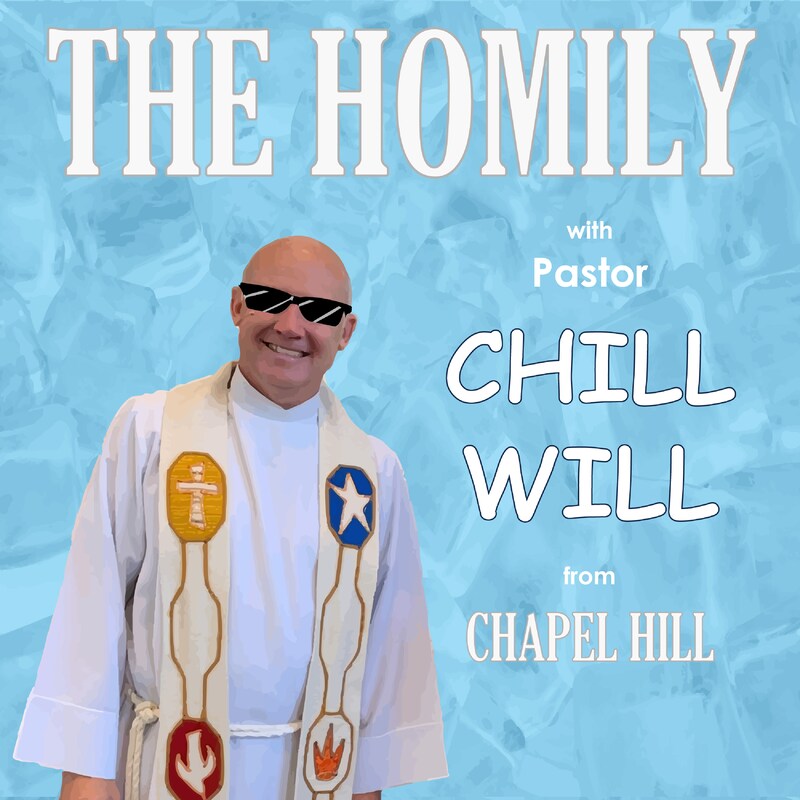
Shownotes
Pastor Will Rose's homily, delivered on Christmas Eve at Holy Trinity Lutheran Church, eloquently captures the essence of the Christmas narrative, emphasizing the profound significance of Christ's humble origins. The message elucidates how the birth of Jesus in a marginal setting serves as a poignant reminder of God's solidarity with the outcast and the marginalized. Through a careful examination of the nativity story, Pastor Will invites us to reflect on the transformative nature of divine love and grace that permeates our daily lives. He challenges us to consider our own spaces and the hospitality we extend to those in need, echoing the timeless call to love God and our neighbors. Ultimately, this homily serves as an invitation to deepen our faith and embrace the enduring message of hope that Christmas embodies.
The Christmas Eve homily delivered by Pastor Will Rose at Holy Trinity Lutheran Church encapsulates the essence of the nativity story, inviting the congregation to contemplate the rich theological implications of Jesus' birth as recounted in the Gospel of Luke. Pastor Will articulates the significance of Jesus’ humble beginnings, emphasizing that the Son of God was born in a manger, a symbol of vulnerability and accessibility. He highlights the divine choice to announce this momentous event to the shepherds, who represent the marginalized and the overlooked in society, thereby reinforcing the theme of God's radical inclusivity.
Throughout the sermon, Will engages with the congregation by drawing parallels between the ancient story and contemporary issues of social justice and community dynamics. He challenges listeners to reflect on their own lives, particularly in how they create space for Christ and for those in need. The homily serves as a poignant reminder that the Christmas narrative urges believers to embody the love, humility, and grace exemplified by Jesus, not only during the holiday season but throughout their daily lives.
As the message unfolds, Will connects the nativity to the broader theme of God's presence in the world, emphasizing that the Christmas story is not merely a tale of a birth but a prelude to the transformative journey of Jesus' life and ministry. He concludes with a call to action, encouraging the congregation to actively participate in the ongoing narrative of faith, reminding them that they are called to be agents of love and light in a world that desperately needs hope. This reflection on the Christmas story, with its profound implications for faith and action, resonates deeply with the congregation, making it a memorable and impactful message for all.
Takeaways:
- Pastor Will Rose emphasizes the significance of Jesus's birth in a humble setting, highlighting God's choice to embrace vulnerability and humility.
- The Christmas story serves as a prelude to understanding the divine nature of Jesus and the overarching narrative of God's love and solidarity with humanity.
- Through the humble beginnings of Christ's life, we are called to reflect on how we accommodate those on the margins of society and extend our love to others.
- The homily invites us to reconsider the traditional interpretations of the nativity scene, focusing instead on the context of Jesus's birth and its implications for our understanding of hospitality.
.
Check out merch for this podcast and discover other podcasts on the Anazao Podcast Network on our website:
Transcripts
Foreign.
Speaker B:Thank you for engaging with the homily by Pastor Chill Will from Chapel Hill.
Speaker B:I hope this message encourages you, challenges you and moves you to go deeper in your faith and enrich how you love God and love your neighbor in your day to day life.
Speaker B:Just a reminder.
Speaker B:Like the Scriptures and Gospels themselves, this homily was written for a particular community in a particular, particular context, time in history.
Speaker B:And yet, like our sacred texts, I hope that these words hold timeless truths about God's unconditional love and grace.
Speaker B:We hope these words speak to you in a meaningful way.
Speaker A:Merry Christmas.
Speaker A:Good to see all of you here at Holy Trinity Lutheran Church and Lutheran Campus Ministry on this holy night.
Speaker A:Here and those gathered online just I'm Pastor Will.
Speaker A:I wish you a very very Merry Christmas.
Speaker A:Gospel comes to us in our midst from the Gospel of St. Luke.
Speaker A:Glory to you O Lord.
Speaker A:In those days a decree went out from Caesar Augustus that all the world should be registered.
Speaker A:This was the first registration that was taken while Cornerius was governor of of Syria.
Speaker A:All went to their own towns to be registered.
Speaker A:Joseph also went from the town of Nazareth in Galilee to Judea to the city of David called Bethlehem because he was descended from the house and family of David.
Speaker A:He went to be registered with Mary, to whom he was engaged and who was expecting a child.
Speaker A:While they were there, the time came for her to deliver her child.
Speaker A:She gave birth to her firstborn son and wrapped him in bands of cloth and laid him in a manger because there was no place in the guest room.
Speaker A:Now in that same region there were shepherds living in the fields keeping watch over their flock by night.
Speaker A:Then the angel of the Lord stood before them and the glory of the Lord shone around them and they were terrified.
Speaker A:The angel said to them, do not be afraid.
Speaker A:See I am bringing you good news of great joy for all the people.
Speaker A:For you is born this day in the city of David a Savior who is the Messiah, the Lord.
Speaker A:This will be a sign for you that you will find a child wrapped in bands of cloth and lying in a manger.
Speaker A:And suddenly there with the angel, a multitude of the heavenly host praising God, saying glory to God in the highest heaven on on earth, peace among those who God favors.
Speaker A:When the angels had left them and gone into heaven, the shepherd said to one another, let us go now to Bethlehem and see this thing that has taken place which the Lord has made known to us.
Speaker A:So they went with haste and found Mary and Joseph and the child lying in the manger.
Speaker A:When they saw this, they made known what had been told them about this child.
Speaker A:And all who heard it were amazed what the shepherds told them.
Speaker A:Mary treasured all these words and pondered them in her heart.
Speaker A:The shepherds returned, glorifying and praising God for all they had heard and seen, just as it had been told them the gospel of the Lord, the name of the Father and the Son of the Holy Spirit.
Speaker A:The first message and proclamation from Christians was, christ is risen.
Speaker A:But before anyone would say back, christ is risen indeed.
Speaker A:Alleluia.
Speaker A:People, rightfully so, had questions.
Speaker A:Okay, slow up.
Speaker A:This is unbelievable news.
Speaker A:Who is this Christ you speak of?
Speaker A:And if he rose from the dead, how did he die?
Speaker A:Well, we're talking about a rabbi named Jesus of Nazareth, and he was killed by the authorities on a Roman cross.
Speaker A:Okay, we of course, have more questions.
Speaker A:What did he do to get himself killed?
Speaker A:Well, he taught that the kingdom of God has come near.
Speaker A:He spoke truth to power.
Speaker A:Not only did he preach and teach this, but he also lived it and revealed God's love for all people, not only with words, but with action and with miracles.
Speaker A:And he also hung out with a bunch of fishermen, tax collectors, the marginalized, and those perhaps who had contagious diseases.
Speaker A:And he literally fed those who were hungry.
Speaker A:When people and his followers started claiming him to be the Christ, those in power with authority felt threatened.
Speaker A:Ah, gotcha.
Speaker A:We're starting to see what kind of Christ this guy was and what got him into trouble.
Speaker A:But what about his family?
Speaker A:Where was he from?
Speaker A:What's his origin story?
Speaker A:Great question.
Speaker A:Let me tell you the story of Christmas.
Speaker A:All four gospels in the Bible, Matthew, Mark, Luke, and John share the story of Jesus, his life, what kind of ministry he did, and what happened to him and his followers the final week of his life, the week we call holy.
Speaker A:But Matthew and Luke are the only ones who share Jesus's origin story and what we have for our Christmas story.
Speaker A:Filling in our nativity set.
Speaker A:The Gospel of Matthew shares the Christmas story mainly from Joseph's point of view.
Speaker A:And Matthew is the only Gospel that shares the magi story.
Speaker A:The Gospel of Luke is the only Gospel that shares the Christmas story we heard read tonight.
Speaker A:It holds Mary's point of view, and it's the one with the shepherds in the field and the surprising, terrifying angelic messenger.
Speaker A:While all four gospels share the story of Holy Week, and only two share the Christmas stories.
Speaker A:With all the questions and curiosities and legitimate skepticism that surround Jesus, the Christmas stories are still important stories because they reveal who Jesus is and why he matters.
Speaker A:The very nature of the divine.
Speaker A:In all the stories I love and consume and geek out on, I love it when the creators and the authors plant clues or Easter eggs that point to the bigger picture of the story that they're trying to tell.
Speaker A:Luke's Christmas story for sure does just that, with the familiar images of a young family traveling to Bethlehem and shepherds in their field, along with the nostalgia that we bring to this night and to the story.
Speaker A:The Christmas story, like Jesus does in his own life and the way he lived it, subverts expectations and flips cultural norms of power and authority.
Speaker A:What we imagine when we talk about God with our complicated and unstable world, with the reality of the fragility of life and the complexity of political struggle and the human condition, this is the world that God chooses to be born into.
Speaker A:I love that in the Christmas Story we meet these unnamed shepherds who were minding their own business, doing their daily routine, who are already out on the margins of town and society.
Speaker A:It's there where God shows up and breaks it.
Speaker A:Does God announce the good news of Christ to the mighty and the powerful?
Speaker A:The rich or the influencer?
Speaker A:No, rather the divine messenger show up to those who are on the margins, the outcasts, and to those some consider unclean and unworthy.
Speaker A:Perhaps these shepherds have spent many nights looking up at the stars and many times marveled at the universe, perhaps asking deep existential questions that we all ask and wrestle with.
Speaker A:And without any pious action or secret prayer on their part.
Speaker A:This is where God shows up and gives us a snapshot and confirmation of God's solidarity and response to the world.
Speaker A:You is born this day in the city of David, a savior, the Messiah, the Lord.
Speaker A:This will be a sign for you.
Speaker A:You will find the baby wrapped in bands of clothes, lying in a manger.
Speaker A:In this baby, in this gift of Christmas, all of our fears and hopes meet.
Speaker A:Tonight at Christmas, heaven and earth collide the realms of the divine and all the earthly dimensions entangle with one another not as a supernova or an explosion or in a palace or a golden ballroom, but with the birth of a vulnerable baby who isn't even provided a guest room.
Speaker A:Now, did you notice the change in our Christmas story from Luke this evening?
Speaker A:Which reminds me of a little joke.
Speaker A:How many Lutherans does it take to change a light bulb?
Speaker A:Change?
Speaker A:Oh, no.
Speaker A:Not only for Lutherans, but for everyone, change is hard.
Speaker A:When I read the new Revised Standard Version, updated edition of the translation of the Bible with a Christmas story, and I read that they had changed the word no room in the inn to guest room.
Speaker A:I was like, oh gosh, here we go.
Speaker A:The message boards are going to blow up, the world's going to freak out, and yet I bring this change to light this evening.
Speaker A:Not to dismantle your nativity scene or ruin your childhoods, but perhaps this small change shift in clarification can help us look at this story in a fresh way.
Speaker A:Now, I'm not going to get in the weeds too much with this, but the new Revised Standard Version of the Bible that we use here at Holy Trinity and a part of the ELCA just published an updated edition.
Speaker A:So we now have the NRSVUE to help enhance readability and comprehension of the Bible while still remaining faithful to the original Greek manuscript.
Speaker A:Like all things and with life itself, modern language is in a constant state of evolution and how we translate the Bible would be the same.
Speaker A:The update edition looked at the Greek word for in which is nataluma and saw that a better translation would be guest room.
Speaker A:The word kataluma is only used three times in the New Testament.
Speaker A:In Luke when he's sharing that Mary and Joseph are looking for a place to have this baby.
Speaker A:And in Mark and Luke when Jesus and his disciples are trying to find a place to have his last supper, the Passover meal before he is crucified.
Speaker A:The place where Jesus takes bread and wine and says this is my body, this is my blood shed for you.
Speaker A:I love this Easter egg of a Christmas gift.
Speaker A:Luke connects the place of Jesus's birth and being placed in a manger to the meal.
Speaker A:We connect the Holy Communion in Mary and Joseph's day.
Speaker A:Each house and living quarters were not laid out like our homes with a living room and a separate master bedroom and other separate guest rooms.
Speaker A:Everyone slept in the same room.
Speaker A:There was not really any privacy.
Speaker A:Some homes had an upper room or a guest room carved out for guests or just to have as an extra room when Mary was about to give birth.
Speaker A:Our story shares that there was a census taking place.
Speaker A:Bethlehem had lots of people around and Joseph's relative's home was most likely full of people not making Mary climb a ladder or stairs to an upper room while she's pregnant.
Speaker A:Perhaps the most private place for a woman to give birth was off to the side near where the animals were kept.
Speaker A:So this part of the story may not be about a cold hearted innkeeper pushing a young pregnant woman away to be with animals, but rather Mary and Joseph found his relative's house filled with guests who were also there for the census and couldn't find private closed doors to give birth.
Speaker A:But what they were offered was the lower part of the house, the place that housed and fed the animals that needed to be brought indoors.
Speaker A:You the animal song from our children's musical Move back, move back, said the cows, said the sheep, said the cows and the sheep.
Speaker A:In a town named Bethlehem, a word that literally means house of bread, the Christ, the promised Messiah, was born in the lowest place of the house, off to the side in a place placed in a manger, an animal feeding trough.
Speaker A:Here we see God's nature and humility on full display.
Speaker A:We we who gather tonight and huddle around this story are called to keep our eyes open and to pay attention to how Jesus's nature and humility plays out in the rest of his story and how he postures himself the rest of his life and story.
Speaker A:In Bethlehem, this house of bread, we keep our eyes and hearts open and pay attention to the kind of bread and and meals Jesus served and who he invites to the table.
Speaker A:The common question around Christmas is often, will you find room for Jesus and his family in the inn?
Speaker A:But even with this small little language shift and change, the question doesn't change a whole lot.
Speaker A:What about our guest rooms or the guests that we invite to the table?
Speaker A:What space do we provide for Christ and for those that he sought after and aligned himself with?
Speaker A:In this very human story, Christ shows us how to be human.
Speaker A:You see, the story we huddle around tonight is just a prequel.
Speaker A:There's more story to be told, more story to be shared.
Speaker A:The Christmas story isn't the story, but a prelude and a foreshadowing of the rest of the story of who this Jesus is and where God directs the divine intention.
Speaker A:In the rest of the story, the story of God who stands in solidarity and takes to heart our vulnerability, fragility, fears and longing.
Speaker A:The story of God who continued to show up on the margins and the places we least expect.
Speaker A:A story of God who flips tables of injustice and challenges us that the first will be last and the last will be flirt.
Speaker A:The story of Jesus who illustrates the nearness of God, the heart of God, and the mystery of faith with lost sheep, small plants, small seeds.
Speaker A:The story of God who washes feet, dies on the cross, and who will not let death have the final word.
Speaker A:In our lives and in our world, Christ is risen.
Speaker A:Risen indeed.
Speaker A:All in the I personally don't know what the new year will bring.
Speaker A:Most likely there will still be ups and downs, twists and turns, joys and tragedies, similar routine and yes, indeed, change and I'm pretty sure there will be challenges not if but when and yet as a community of faith we have a pretty good record of meeting those challenges.
Speaker A:Taking our lead from Jesus who was born, who is risen and who continues to be with us wherever we are in life and faith.
Speaker A:When we leave here tonight our world will continue to be terrifying and uncertain and yet in all that uncertainty I am certain that this house of faith will continue to be a house of bread for all and we will continue to share with one another.
Speaker A:Do not be afraid for to you Christ was born.
Speaker A:Christ is risen, is risen indeed.
Speaker A:Foreign.
Speaker A:Thank you for listening.
Speaker B:If there is anything that stood out for you or if you have a question or you just want to have a conversation, you are always free to reach out and contact us and remember you are not alone and that you are loved with a love stronger than death.
Speaker A:Sam.

