Shownotes
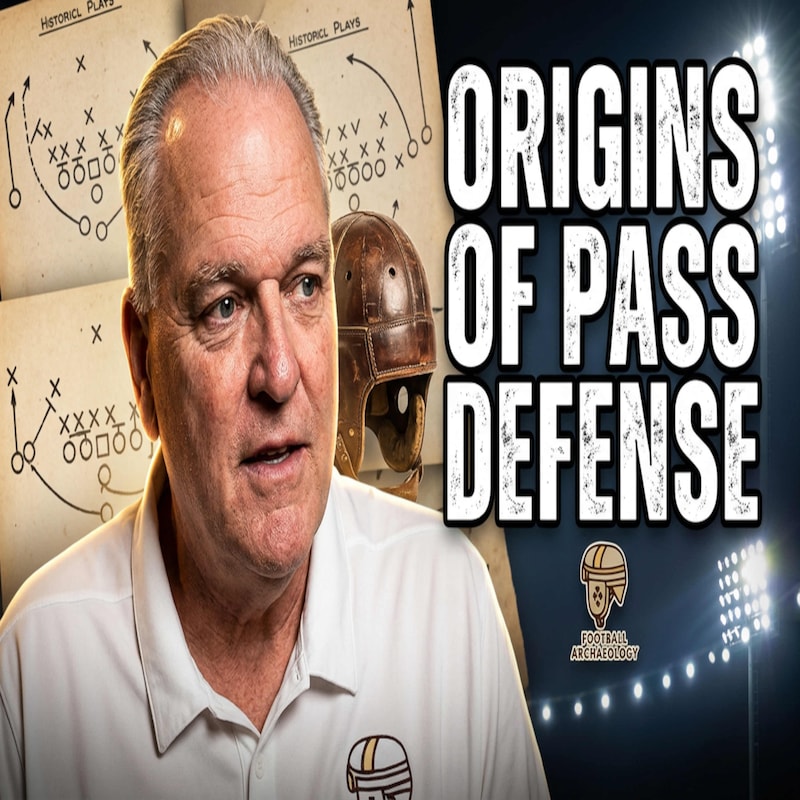
The primary focus of our discussion is the historical evolution of pass defense in football, specifically examining the chronological precedence of man-to-man versus zone pass defense. We delve into the intricate dynamics of the passing game, which has become a quintessential aspect of modern football, underscoring the necessity of effective pass defense strategies. Our esteemed guest, Timothy P. Brown, provides invaluable insights into this topic, illuminating the question of which defensive approach originated first. Through a meticulous exploration of historical contexts, we find that zone defense actually emerged before man-to-man coverage, contrary to common assumptions. This revelation not only enhances our understanding of football's tactical development but also prompts a reflection on the ongoing evolution of defensive strategies in the sport.
The conversation is based on Tim's recent Tidbit titled: Which Came First: Zone or Man-To-Man Pass Defense? - https://www.footballarchaeology.com/p/which-came-first-zone-or-man-to-man
Don't forget to check out and subscribe to the Pigskin Dispatch YouTube channel for additional content and the regular Football History Minute Shorts.
Miss our football by the day of the year podcasts, well, don't, because they can still be found at the Pigskin Dispatch website.
Do you want more football history? Test your Gridiron Knowledge, we feed you Daily with our new FREE activity, The Pigskin Trivia Drive.
Grab a copy of our latest book, "Marooned," on the 1925 Pottsville Maroons NFL franchise saga.
*OR* Grab a copy of our book on Western Pennsylvania football history, "World's Greatest Gridiron Team" on the 1903 Franklin All-Stars
Drop us a line at PigskinDispatch@gmail .com and check out and subscribe to the Pigskin Dispatch YouTube channel.
Contact us directly at [email protected]
Miss our football by the day of the year podcasts, well, don't because they can still be found at the Pigskin Dispatch website.
Transcripts
One of the great elements of modern football is the passing game. It makes it very interesting, makes the scoring happen.
But one thing you have to have when you have passing game is you have to know how to play pass defense. And our guest, Timothy B. Brown brings up a very good question. What came first, man to man or zone pass defense?
Tim's up with the answer here in just a moment.
Speaker B:All right.
Darin Hayes:And it's Tuesday and we'd like to welcome back our guest that shows up regularly on Tuesdays, Timothy p. Brown of footballarchaeology.com Tim, welcome back to the Pig Pen.
Timothy Brown:Hey there. Glad to be here. Looking forward to chatting and, but I do I have to apologize a little bit. I just can't defend the quality of my upcoming dad joke.
Darin Hayes:You can't defend it? Well, it sounds like you got a couple different choices on your defense.
Timothy Brown:I could do man to man or his own, but hey, either way I'm not going to defend.
Darin Hayes:Yeah, your, your umbrella defense is not working at all here.
Timothy Brown:So it's raining pretty hard.
Darin Hayes:Tim is alluding to and we're badly segueing into a recent tidbit that he wrote that he's going to discuss tonight, which was titled which Came first Zone or man to man Pass Defense. So Tim, give us the answer to this show. Show us your research and what you found out.
Timothy Brown:It's probably the opposite of what you think it's going to be.
Yeah, so I mean this arose because when, when somebody acquires a, an annual paid subscription on my substack site, I always, I send them a book, right. They get the, they can choose whatever, one of the books that I've written that and I'll send it to them.
But I also, in that correspondence I say, hey, is there anything you're looking to know about, you know, let me know if there's some topic you're interested in.
So I recently had a new paid subscriber and he, he said, yeah, you know, I've never really seen much about man to man versus zone, which came first and kind of how did they develop.
Darin Hayes:And so it's an awesome question. I never really thought about it.
Timothy Brown:You know, I, I had written about it a bit in how football Became football and also in Hut, Hut Hike. But I didn't really get into it that much. And anyway, so I dug into it again, I guess.
And so, you know, you kind of, in order to understand it, you know, you kind of have to go back before the forward pass. So pre forward pass defense is basically, you know, they could only run the ball and so, or offense could only run the ball.
So defenses, you know, the seven guys on the line of scrimmage lined up in close formation, had seven guys across from them. You know, the defenders just, they were just flipping sides of the ball.
And then behind the seven man front, they would have typically either a 1, 2, 1, which they often called a diamond formation, or they had a two, two in the backs, which they call the box formation. So pretty much it was one or the other. And the box, because they had two guys closer up, was supposed to be.
Darin Hayes:Better.
Timothy Brown:Against like teams that like to sweep or something, you know, whatever. So, so that was kind of, you know, that's the way defense played before, before the forward pass.
out the first few years from:And so defenses could get away with basically playing zone.
You know, whether you were in the two two or the one, two, one, you know, if a receiver came out into your area or if two receivers came into your area, you did your best to defend those guys, right? And a lot of the forward passing techniques just were terrible. I mean, they, they just weren't very accurate, they weren't very fast.
So it wasn't that difficult to defend them. Over time, of course, the, you know, overhand spiral became more popular. They're able to do some, some more things.
And then in:And when that happened, they could like snap the ball to the fullback, who often times was the passer, you know, who might be standing six yards deep or whatever. And so then that allowed them to throw to the right, to the left, or over the middle.
And so then, you know, kind of in conjunction with that team, started sending four receivers out into patterns. So instead of the one or two, all of a sudden, like four guys are going out now, you know, not on every play, but some people did.
And so, and they started flooding zones, you know, and so that became a bigger challenge for, for the defense.
And so by the 19 late teens, they, you know, teams were running zone, you know, flooding zones often enough, the Defense has figured out we can't do, we can't get away with just playing zone anymore. They often called it territories. And so then they started designating kind of man to man coverage. You know, the.
Whoever the outside guy was on the defense would take the end and somebody else would take the second receiver out. And if there was a third receiver, somebody else had to take them.
So, you know, kind of things that, you know, you might see in, you know, high school or grade school ball now, but, but anyways, so, you know, it's one of those things that it, it all then kind of, you know, coalesced as, as the passing attack got more sophisticated. They had to go to man instead of zone. And you know, on the surface you would have thought, no, it's the other way around.
Man's is the simplest, right? Yeah, you would think that came first, but actually zone came first. And so the.
One of the other things that they did that emerged at least by the mid-20s, was teams were playing what we now maybe call a spy, you know, so it was man to man and it was things like. It was a guy like Red Grange. They were good. You know, Ohio State actually had two guys on Red Grange.
right? And then, you know, in:1934, The ball gets smaller and just forward passing really, you know, kicks into gear in the 30s and then gets really more sophisticated, you know, once we've got, you know, two platoon football and full time assistant coaches in the 50s. And that's really when, you know, more sophisticated defenses, you know, came about.
Like you mentioned the umbrella, either this time or last week, the umbrella defense that the actually Landry and guys like that in New York, you know, pioneered. So anyways, you know, it was a slow evolution, but zone came first.
Darin Hayes:Yeah, that amazed me when I read that because I guess it just takes me back to, you know, you think about when you're playing a game like basketball, you know, in gym class, when you're a kid, you know, you're okay, I got him, you got him. You know, you're playing man, and that's just the natural element of defending a goal to us, you know, even when you're a youth.
Of course, my football, my youth football coaches, we never played man to man. We, they tried to teach us zone, which was usually a disaster. You know, how you're teaching, you know, 11, 12 year olds the how to cover Zones.
And there's gigantic holes in it. They're gigantic holes in the pro game and college game. When they play zone, I always wondered like, why, why don't they just let us play, man?
You know, it's not like the other team's like that much better athletes than usual. At least you can, can hang with people.
It's like quarterbacks can throw pinpoint passes, but they taught us zone and I guess we're better people for it.
Timothy Brown:But yeah, I mean, when you think about it, I mean, man is difficult.
Like, you know, so before the forward pass, you know, whoever was the farthest out defender, you know, whether it was in the two, two, either the box or the diamond, you know, he was responsible. Who for whoever came running out wide, right? Whoever was carrying the ball out wide, he was responsible to tackle that guy.
And in some ways it was no different than saying you're responsible for whoever comes your way, that's an eligible receiver. You know, I mean, that was a pretty easy step to take, you know, and they didn't, you know, in interior line, they kind of played zone.
You know, people were responsible for certain gaps or, you know, areas, but not in the backfield. It was much more. Well, I mean, yeah, they did that too, even in line, kind of misstating.
So anyways, I think it was an easy step to stay in that zone, kind of thinking. But then know once somebody figured out how to flood a zone, it was like, okay, we gotta figure out something else.
Darin Hayes:And that's. And back those same youth teams, you know, I think the other, other teams, whether they played man or zone, we, we.
Our biggest play was a flood pass and we did a three layer flood. And I was a fullback, so I.
Speaker B:Was a short guy.
Darin Hayes:I got most of the passes. This was an easy pass. And nobody was there to cover you because they all went with the long guys.
Timothy Brown:Yeah, well. And actually in the tidbit itself, I've got a, you know, know a line, I forget who it was, but somebody is saying, you know, how do you defend?
What do you do when the offense sends two receivers at, at the back, at the defensive back, One goes deep and the other cuts in or cuts out. You know, the guy's all, you know, he's on an island. He's got to choose one or the other. So you throw it to the other guy, right? Yeah.
Darin Hayes:And a short guy is only 2 yards. You either got to have a backer or DN to cover. And that's, that's, that's a mismatch.
You know, usually, maybe not junior football, I'm talking about, but you know, upper levels, you know, who wants a, a back, you know, a defensive end covering a back. That's usually not a good situation.
But yeah, I mean, interesting stuff and things, you know, again, once things that you, you know, are there and you. But you never really think about, you know, which came first. They're, they're just both exist, you know, it's the, the chicken and the egg.
You know, it's think they're both there. But I love how you do the history and you do the research on it and you do this quite often in your tidbits and in your book.
So maybe you could tell us how people can see some more of your work.
Timothy Brown:Sure. Just go to footballarchaeology.com you can subscribe and if you subscribe, you'll get.
Every time I publish something new, you'll get an email that contains that story. Otherwise, bookmark it. Just come and visit whenever you feel like it.
Darin Hayes:All right, Tim, we really appreciate you doing this research and educating us and coming here each week and educate us even more after your writings.
Timothy Brown:Always blessed, always blast.
Darin Hayes:We'll talk to you again next week.
Timothy Brown:Okay, thank you.
Speaker B:That's all the football history we have today, folks. Join us back tomorrow for more of your football history.
We invite you to check out our website, pigskindispatch.com maker, not only to see the daily football history, but to experience positive football with our many articles on.
Darin Hayes:The good people of the game, as.
Speaker B:Well as our own football comic strip, cleat marks comics, pigskindispatch.com is also on social media outlets, Facebook, Twitter, Instagram, and don't forget the Pigskin Dispatch YouTube channel to get all of your positive football news and history. Special thanks to the talents of Mike and Gene Monroe, as well as Jason Neff for letting us use their music during our podcast.
Speaker E:This podcast is part of the Sports History Network, your headquarters for the yesteryear of your favorite sport. You can learn more at sportshistorynetwork.
Timothy Brown:Com.




