Shownotes
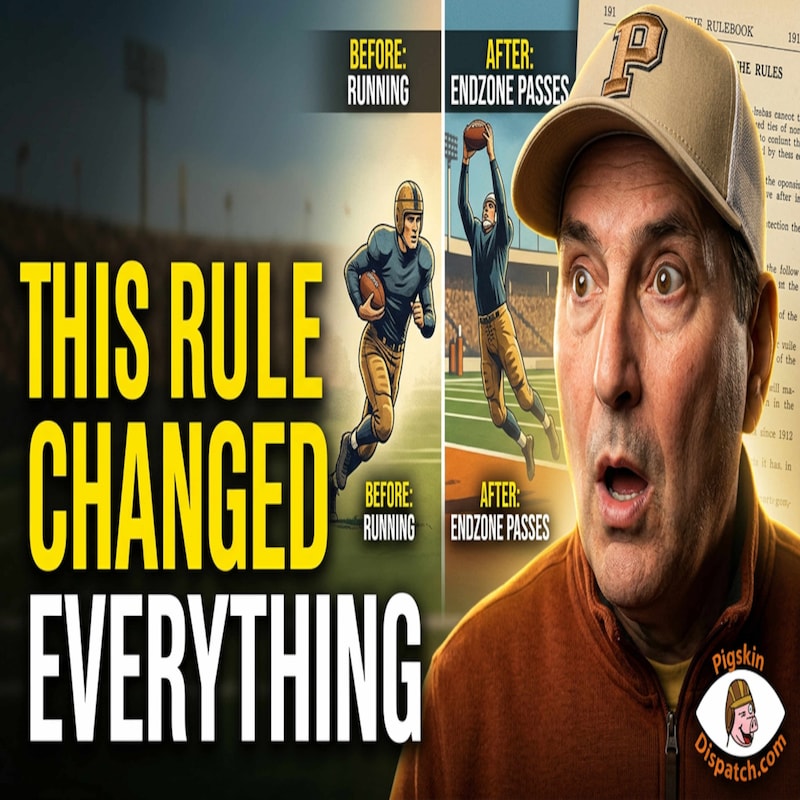
This episode elucidates the pivotal moment in football history when the first touchdown pass was caught in the end zone, a significant event that transpired in 1912 following crucial rule changes. The conversation delves into the implications of these changes, particularly the introduction of end zones and the allowance of forward passes exceeding twenty yards. We explore the fascinating narrative surrounding the first touchdown pass caught in the end zone, tracing its origins to a game where the play was executed under the newly established regulations. Our esteemed guest, Timothy P. Brown of footballarchaeology.com, provides rich insights into the historical context and significance of this momentous occasion. We invite our listeners to appreciate the intricate tapestry of football history, reinforcing the notion that an understanding of the past is essential to avoid the repetition of prior mistakes.
The conversation is based on Tim's recent Tidbit: The First Touchdown Pass Caught In The End Zone.
Join us at the Pigskin Dispatch website to see even more Positive football news!
Don't forget to check out and subscribe to the Pigskin Dispatch YouTube channel for additional content and the regular Football History Minute Shorts.
Miss our football by the day of the year podcasts, well don't, because they can still be found at the Pigskin Dispatch website.
Engaging with the historical dimensions of football unveils a rich narrative that is often overlooked in contemporary discourse. The conversation centers on the rule changes enacted in 1912, which fundamentally altered the landscape of the sport by allowing forward passes to traverse beyond the previously established twenty-yard limitation. This pivotal shift not only facilitated the introduction of end zones but also marked a significant evolution in offensive strategy, enabling players to catch passes within the confines of the end zone for the very first time. Timothy P. Brown, our esteemed guest, elaborates on the implications of these changes, recounting the momentous occasion of the first touchdown pass caught in an end zone—a milestone that exemplifies the dynamic interplay between regulation and gameplay. The episode also ventures into the narrative of the first forward pass caught in a regular season game, dispelling the notion that this event solely transpired in St. Louis. Brown's research reveals that the inaugural forward pass was, in fact, thrown at the University of New Hampshire, a revelation that not only challenges established myths but also highlights the importance of rigorous historical investigation. By unpacking these significant moments within football history, we gain insight into the tactical evolution of the game and the enduring impact of rule modifications on its development. The dialogue serves as a reminder that football is a living history, continuously shaped by the innovations and decisions of its players and officials. As the episode concludes, listeners are encouraged to delve deeper into the historical nuances of football through Brown's work, including his blog and published books. The conversation emphasizes the need for football enthusiasts to engage with the sport's rich history, fostering a greater appreciation for its evolution. By understanding the past, we can better comprehend the present and anticipate the future of football, ensuring that the legacy of this beloved sport remains vibrant and relevant. Through this exploration of football's history, we are invited to celebrate not only the game itself but also the myriad individuals and moments that have contributed to its enduring legacy. The episode ultimately champions the importance of historical awareness in cultivating a more profound connection to the sport we hold dear.
Transcripts
You know, it's been said if you don't know your history, you're doomed to repeat it.
Speaker A:And so studying the history is really important.
Speaker A:And you know, we'd love to study the gridiron history not only to try to prevent mistakes, but just because it's fascinating and exciting and sometimes a lot more fun than even the current modern day news in football.
Speaker A:And we have a gentleman who joins us each Tuesday, Timothy p. Brown of footballarchaeology.com that digs deep and dusts off the playbooks to find these exciting pieces of history.
Speaker A:And he's joining us again this week.
Speaker A:Tim, welcome back to the Pig Pen.
Speaker B:Hey there, look.
Speaker B:Glad to be here and hopefully we can take this episode over the line.
Speaker A:Over the line.
Speaker A:I think we go over the line quite a bit when we get together, that's for sure.
Speaker A:You know, you have a great story that I guess it's one of those things that probably maybe we think of in the back of our heads but never really comes to, to the front of our, you know, thoughts.
Speaker A:And that's the title of it is the first touchdown pass caught in the End Zone.
Speaker A:You know, this is a pretty big moment in football history.
Speaker A:And what can you tell us about it?
Speaker B: s a result of rule changes in: Speaker B:And they, they made a number of changes to lessen the restrictions on the forward pass.
Speaker B:So one of them was that they allowed passes to be thrown more than 20 yards downfield.
Speaker B:That had been a rule that was in place for about two or three years.
Speaker B:They also created end zones behind the goal lines.
Speaker B: Those didn't exist prior to: Speaker B:And in creating the end zones, they allowed passes to be thrown and caught across the goal line.
Speaker B: pass in the past or prior to: Speaker B: ll they created this thing in: Speaker B:So what was the first game where somebody threw forward pass and caught it on the, you know, in the end zone.
Speaker B:So then it's like, okay, well how do you find that?
Speaker B:Well, I had previously uncovered what I believe is the first forward pass caught in a regular season game.
Speaker B:So it wasn't the traditionally the story was it was St. Louis, you and Carol in Wisconsin where that pass occurred.
Speaker B:But I ended up finding that the first forward Pass actually occurred several days earlier and it was unh, University of New Hampshire throwing an incomplete pass against Maine, you know, at Maine.
Speaker B:So so basically I did the same thing.
Speaker B:You know, I, I basically went to like late August, early September to well not even August because they never played games then.
Speaker B: ed as early as I could in the: Speaker B:And so they try to, they, they start the football season a little bit earlier just like the Canadians, you know, just to avoid some bad weather at the end of the season or at least.
Speaker B:Yeah, that's my assumption because they, they did it for quite some time.
Speaker B:So anyways, I, you know, right away when I was, was looking I found this little thing that here's the five games this weekend.
Speaker B:And so, and it, and the score, the results.
Speaker B:So Norwich played unh, scoreless tie.
Speaker B:So no touchdown pass in that game.
Speaker B:Bates played Main Central Institute.
Speaker B:Bates blew him out.
Speaker B:Main Central Institute was actually like a prep school but it said, you know, Bates played straight football, meaning they didn't throw the ball and you know, walloped them.
Speaker B:Then Rhode Island UMass only one score.
Speaker B:Rhode island scored on a running play.
Speaker B:Carlisle Albright.
Speaker B:And again not a lot of information but the, you know, the game description said that Carla played straight or did not resort to trick plays.
Speaker B:You know, back then passing, you know, might have been considered a trick play.
Speaker B:So then we're left with Maine versus Fort McKinley.
Speaker B:And the story, the newspaper story said one touchdown was made under the new rules on a forward pass across the goal line comma Bernheisel to Donahue.
Speaker B:So when you look at the box score, turns out that Bernheisel was the right end and Donahue was the left end.
Speaker B:So the first touchdown pass caught in the end zone came on an end around pass play, you know, which wasn't uncommon then.
Speaker B:You know, I know Chicago had a left handed right end and so they, they do end around pass plays, you know, with the guy, you know, and that was a couple years earlier.
Speaker B:But anyways, so one of the other things, you know, I wrote the story and didn't really think anything anything further about it.
Speaker B:But James Gilbert who reads the blog and he, he and I have co written some things, he's got his own blog about, you know, feel the history of different fields and then also North Carolina because he's an alum there.
Speaker B:He pointed out that means that the first board pass and the first forward pass caught in the end zone both occurred at Maine.
Speaker B:So, you know, it's just one of those strange little coincidences.
Speaker B:But, you know, it's, it's really.
Speaker B:Maybe it's not as much coincidence because they started their season earlier than everybody else.
Speaker B:Right.
Speaker B:So they kind of had the opportunity.
Speaker B:But still, it's kind of, you know, just interesting that the same field is where both of those occurred.
Speaker B:Yeah.
Speaker A:Well, you got a forward thinking coach up, up there.
Speaker A:You know, it was the same coach that.
Speaker B:I don't know.
Speaker B:Yeah.
Speaker B:I don't know.
Speaker A:It might have been one of those innovators that doesn't get enough credit.
Speaker A:Maybe we'll have to.
Speaker B:Yeah.
Speaker A:Who that is, maybe someday.
Speaker B:Same coach.
Speaker A:Yeah.
Speaker B:My guess is the answer is no, but probably not.
Speaker A:But pretty progressive up up there in New England.
Speaker B:So.
Speaker A:Always thinkers.
Speaker A:That's, you know, the, the hotbed of where football started.
Speaker C:So maybe that's.
Speaker B:That's right.
Speaker A:That's part of the innovation.
Speaker B:Guys, like what's his name, you know, Brian Kelly, you know, he was up in that area, you know.
Speaker A:Right.
Speaker B:So, unh.
Speaker B:Tossing the P around.
Speaker A:Yeah, definitely.
Speaker A:Oh, good.
Speaker A:I mean, that's such a milestone moment that, you know, that we don't, don't recognize until you do things like this and you bring it back, back to life and, and give it some legs to be appreciated.
Speaker A:And, you know, we can't tell you enough, you know, how much we as football fans and historians appreciate hearing stories like this.
Speaker A:And you do this quite a bit in your tidbits and in your books and maybe you could tell folks where they can get a hold of some of this.
Speaker B:Sure.
Speaker B:So, you know, best thing to do is just find.
Speaker B:Go to footballarchaeology.com a substack site I publish a couple times a week, including, you know, linking, you know, our, our podcast.
Speaker B:And so, you know, if you, if you subscribe, you'll get an email sent to you.
Speaker B:Every time I publish a new story.
Speaker B:You can also just bookmark it or follow on the Substack app and, you know, it'll pop up in your little list of things to read.
Speaker B:You know, I've also got links to my Amazon pages and whatnot, you know, through there if you're interested in book form.
Speaker B:But, you know, just come and check it out whenever you want to.
Speaker B:Yeah.
Speaker A:You know, and I want to make sure we have a little bit of time here.
Speaker A:I want to mention something that, you know, People may not be aware of.
Speaker A:You have.
Speaker A:The first book that I really came of yours about was how football became football.
Speaker A:And I think this, and I still tell people this all the time.
Speaker A:I think this is the, the best written history of the game of football that I've ever seen.
Speaker A:I've wrote, read, you know, hundreds of books on football history, but it's so complete and in detail and maybe just tell folks a little bit about that and where they can get that.
Speaker B:Sure.
Speaker B:Well, thank you for the, for the compliment.
Speaker B:The.
Speaker B:Yeah, so I mean I basically sell it on, primarily on Amazon.
Speaker B:I'm going to start selling books on like ebay and probably, you know, some other other forms and people can reach out to me too directly to get a copy.
Speaker B:Yeah, I mean it's basically just kind of covers the.
Speaker B:I break the history of football into three different eras and kind of describe using kind of a consistent chapter organization, you know, kind of how the rules evolved, how kind of broader conditions evolve, you know, social issues, stadiums in the fields, how those of all, how the equipment evolved, you know, so, and just kind of marry up the.
Speaker B:What was happening in each era, you know, on each of those different, you know, those different aspects of the game.
Speaker B:So anyways, it's a fun read, you know, fairly light hearted, but there, there is a lot of information in there.
Speaker A:Yeah, it definitely, it's a, I mean if you really want to get the basics of how football evolved to what it is today, I, it's what I would recommend to do.
Speaker A:You get the, the full gamut and, and you know, you are, you're, you're not too conceited or too proud to, to know when, you know, you wrote that book but 10, 15 years ago, probably now, I don't remember, I don't know Exactly.
Speaker B: It was: Speaker B:So yeah, 25 years ago.
Speaker A:So you're constantly finding information, you know, just like you, you talked about earlier here about, you know, the forward pass.
Speaker A:You, you, you corrected that a couple times through the first world pass.
Speaker A:And you talk about that not only in your tidbits, you talk about it here on this program.
Speaker A:And I've heard you on other talks too of, you know, telling things because history is a dynamic thing.
Speaker A:As we learn more about it and you know, have more information out there in the computer age, we're learning new things and it's a great thing to always try to get the history right.
Speaker B:Yep.
Speaker B:Well, our episode two weeks from now will cover a similar issue.
Speaker B:I don't know if I need to update it or not, but we'll talk about it.
Speaker A:All right.
Speaker A:Well, there's our tease.
Speaker A:And you know, but we have an episode next Tuesday, too.
Speaker A:And stay tuned for two weeks from now when Tim will have this big reveal.
Speaker A:Tim, we appreciate you joining us today and we'll talk to you again next week.
Speaker B:Very good.
Speaker B:Thanks there.
Speaker C:That's all the football history we have today, folks.
Speaker C:Join us back tomorrow for more of your football history.
Speaker C:We invite you to check out our website, pigskindispatch.com not only to see the daily football history, but to experience positive football with our many articles on the
Speaker A:good people of the game, as well
Speaker C:as our own football comic strip, clete marks comics, pigskindispatch.com it's also on social media outlets, Facebook, Twitter, Instagram, and don't forget the Big Skin Dispatch YouTube channel to get all of your positive football news and history.
Speaker C:Special thanks to the talents of Mike and Gene Monroe, as well as Jason Neff for letting us use their music during our podcast.
Speaker D:This podcast is part of the Sports History Network, your headquarters for the yesteryear of your favorite sport.
Speaker D:You can learn [email protected].




