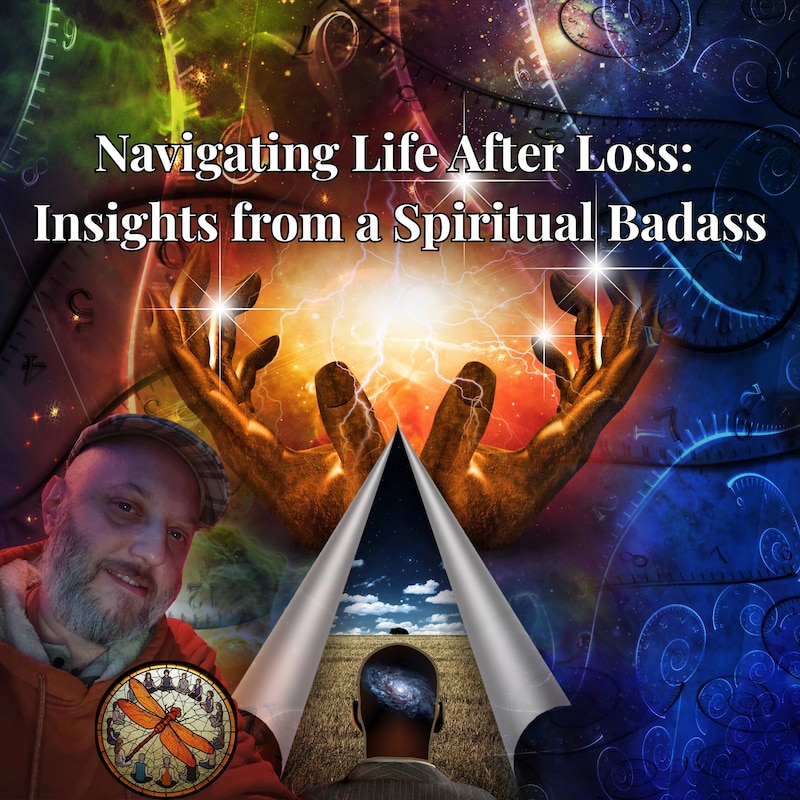
Shownotes
Jeff Perdue joins us today to explore the transformative journey of turning toxic cycles into pathways for radical freedom.
As the founder of the Orange Dragonfly Center and author of the *Freedom Systems Devotional*, Jeff emphasizes the importance of authenticity and self-discovery.
In our conversation, we dive deep into how individuals can break free from the constraints of societal expectations and reclaim their true selves. He shares personal experiences that highlight the challenges of navigating life's trials, including dealing with loss and the pressures of modern relationships.
By the end of this episode, we aim to inspire listeners to embrace their warrior spirit and take the first steps toward meaningful change in their lives.
You can connect with Jeff on his website at: orangedragonflycenter.com
And on his social platforms at:
FB: facebook.com/JeffPAdkins
Instagram: @trueawesomelife
YouTube: youtube.com/@Trueawesome
A Warrior’s Spirit can be found on all the major platforms at lnk.bio/daryl_praxis33 as well as on ROKU via the ProsperaTV Network app. Be sure to like or subscribe so you never miss an episode!
The music in this video is copyrighted and used with permission from Raquel & The Joshua 1:8 project © 2025 All Rights Reserved. All rights to the music are owned by Raquel & The Joshua 1:8 project © 2025 All Rights Reserved. You can contact Raquel at https://YourGPSForSuccess.Net
Transcripts
I've walked through fire with shadows on.
Speaker B:My heels Scars turn to stories that taught me to feel lost in the silence found in the flame now wear my battle cry without shame this, this.
Speaker A:Isn'T the end it's where I begin A soul that remembers the fire within.
Speaker A:Welcome back to another episode of A Warrior Spirit, brought to you by Praxis33.
Speaker A:I'm your host, Darrel Snow.
Speaker A:Let's dive in.
Speaker A:I've had the pleasure of interviewing my next guest one other time and he is such a fascinating individual that for the first time in the four years of my show, I actually brought a cocktail to the show because I know it's going to be a wild ride.
Speaker A:Jeff Pardue is the founder of Orange Dragonfly center and he's the author of Freedom Systems Devotional.
Speaker A:Jeff helps the fabulous and the divine turn toxic cycles into launch pads for radical freedom.
Speaker A:A spiritual badass dedicated to authenticity and liberation, he's on a mission to help people trade soul crushing jobs for unapologetic magic.
Speaker A:Freedom Jedi, New Detroit resident and guide for those tired of the drama and the bullshit.
Speaker A:Jeff, we welcome you back to the show.
Speaker B:My goodness, Darrell, thank you so much.
Speaker B:I am so excited to be here.
Speaker A:Just a little upgrade from the last time we were here, including the cocktail.
Speaker B:You know, I got iced tea.
Speaker B:I stopped drinking, so.
Speaker A:Well, that's good.
Speaker B:I had to use.
Speaker B:Yeah, I had to.
Speaker A:How long ago?
Speaker B:About a year ago, actually.
Speaker B:Almost exactly a year ago.
Speaker A:Nice.
Speaker B:Last year, my mom passed last Christmas.
Speaker B:Year ago Christmas, my mom passed away and I was out with my friends and got drunk and really wanted drugs and I haven't wanted drugs in 20 years.
Speaker B:And I was like, oh, I see what's happening.
Speaker B:I can't drink right now.
Speaker B:And then as I thought about it, I'm like, I really don't need to drink anyways.
Speaker B:I, I'm not a big drinker.
Speaker B:I was never a big drinker.
Speaker B:I would drink like maybe two cocktails at the bar and just be okay and.
Speaker B:But that gave me a headache anyways and I'm like, I don't need that.
Speaker B:Why bother at this point?
Speaker A:It's interesting.
Speaker A:You know, we have, it's been 11 years now since my wife got sick.
Speaker A:And so we really stopped drinking a lot in our household too.
Speaker A:But when you stop drinking.
Speaker A:I said this on a show with another guest earlier.
Speaker A:It's amazing how much of life revolves around drinking and going out to, like, socializing in general.
Speaker A:Hey, let's go out and grab a drink.
Speaker A:Hey, let's go to Happy hour.
Speaker A:Hey, let's go to the bar to just hang out and talk and enjoy the tea and the conversation.
Speaker A:It takes a lot of work to not drink.
Speaker B:Yeah.
Speaker B:And it's funny because I was talking to someone today.
Speaker B:I'm newly single, so it's kind of interesting.
Speaker B:I'm back in the dating scene again, and I'm doing it quite a bit differently than I used to.
Speaker B:And I'm talking to this guy, and he's really awesome.
Speaker B:And we were like, just, like, trying to make plans.
Speaker B:And he goes, well, why don't we finish this conversation over a bottle of wine?
Speaker B:And I was like, I'm not drinking.
Speaker B:And now, again, can I have the bottle of wine?
Speaker B:Sure, I can have a bottle of wine.
Speaker B:It's not gonna kill me.
Speaker B:But at the end of the day, I'm gonna get a headache.
Speaker B:Like, really?
Speaker B:That bottle of wine is just gonna give me a headache.
Speaker B:It's gonna make me tired.
Speaker B:And what's it really doing for me other than having it something in my hand?
Speaker B:Whereas I could say, no, can we do a coffee?
Speaker B:Or I'll have a ginger beer.
Speaker B:We can go to the bar.
Speaker B:I have no problem being in a bar.
Speaker B:I just don't necessarily need the drink.
Speaker B:Another instance, though.
Speaker B:There was this big event coming up that my friend's running, and it's a wine pairing.
Speaker B:And I was like, oh, oh, this would be really cool.
Speaker B:And then it's like, oh, it's a wine pairing.
Speaker B:Oh, no, I can't do that.
Speaker B:I don't want to.
Speaker B:I can do that.
Speaker B:I just don't want to do that.
Speaker A:Yeah.
Speaker A:And it's a conscious choice in your case.
Speaker A:In mine.
Speaker A:But it's always something that we feel like, oh, we got to explain why we're not drinking.
Speaker A:Why are we not?
Speaker A:And today I was just being whimsical because of your bio.
Speaker A:And, um, I put on my fun shirt.
Speaker A:And, you know, I. I've interviewed you before.
Speaker A:I know the.
Speaker A:I know the flamboyance.
Speaker A:And I'm like, oh, this is gonna just be fun.
Speaker A:So I'll.
Speaker A:For the first time ever, bring a cocktail.
Speaker A:Now I won't even drink the cocktail.
Speaker A:It'll be, like, sitting.
Speaker B:You can drink the cocktail.
Speaker B:The funny thing is, is that it doesn't.
Speaker B:It's not a.
Speaker B:It's not a judgment.
Speaker A:Yeah.
Speaker B:Like, even if.
Speaker B:Honestly, if I would have done the drugs, it would have been fine, too, because.
Speaker B:Because at the end of the day, I would have done the drugs.
Speaker B:It would have been a night or a week or a month.
Speaker B:Where I, you know, went down the rabbit hole.
Speaker B:Because that.
Speaker B:I would have went down a rabbit hole, probably.
Speaker B:Because what we do is we want these vacations.
Speaker B:We do these chemical vacations.
Speaker B:So we do this in a whole lot of different ways.
Speaker B:It's a numbing technique.
Speaker B:And it's a lot of what we talk about in the Freedom Systems Devotional is all the different ways we know.
Speaker B:One of my favorite ones is sex.
Speaker B:And so another one at times has been drugs and alcohol is definitely one of them.
Speaker B:Tv.
Speaker B:It could be me being a workaholic for a while.
Speaker B:Like, there are ones that you think are.
Speaker B:Wouldn't necessarily be bad going to the gym.
Speaker B:I know people that are gym buffs that, like, that's really how they numb.
Speaker A:Yeah, I know those people, too.
Speaker A:They like 24 7, when they're not working, they're at the gym.
Speaker A:And like you said, there's others that just pour themselves into work because they don't want to, you know.
Speaker A:Yeah, they're building something.
Speaker A:They're trying to do something.
Speaker A:But also some.
Speaker A:I don't want to paint with a big, broad brush.
Speaker A:But some are still trying to escape the rest of their life.
Speaker A:I remember when I was my first marriage, I hated going home so badly, I got a second job.
Speaker A:And I named it Trying to Support the Family.
Speaker A:When in reality it was is me trying to not have to go home.
Speaker A:So it comes in all ways.
Speaker A:And I'll tell you this.
Speaker A:It's been a couple years since we talked, or a little over a year and a half.
Speaker A:And you look different.
Speaker A:You look better.
Speaker A:It's noticeable when you stop doing the drugs and the alcohol.
Speaker A:And you mentioned that sex was your outlet.
Speaker A:And I remember us talking last time.
Speaker A:You were pretty out there.
Speaker A:So it's noticeable just in your physical appearance that you've changed something.
Speaker A:It's interesting that it was the drugs and alcohol.
Speaker B:Well, just the alcohol.
Speaker B:Drugs has been.
Speaker B:I haven't done drugs in 15 years, but.
Speaker B:And even the alcohol, again, I wasn't a big drinker.
Speaker B:Maybe two drinks a week, like, I might go to the bar, do karaoke that night, you know, maybe two nights if a wild week, you know.
Speaker B:So it wasn't like I'm this big, huge drinker that was drinking a lot anyways.
Speaker B:What really changed is peace.
Speaker B:You know, One of the great things about the program I'm doing, which I call the Freedom Systems Odyssey.
Speaker B:And each month has a different theme to it.
Speaker B:The devotional.
Speaker B:Thank you so much.
Speaker B:So what ends up happening is that we go over different themes and different things and different.
Speaker B:And noticing how we are to ourselves, and with the devotional especially, it really does help you keep us in line.
Speaker B:Because even me, you know, we fall into the default, that default thinking, the default life, the default stuff, you know, the default way of being.
Speaker B:And we have to actually think about it.
Speaker B:We have to actually think, hey, how am I in that space?
Speaker B:Am I going to operate in that space?
Speaker B:Am I going to operate and the world sucks and everything's going to hell in a handbasket, that we're all connected.
Speaker B:I had a conversation today with a really prominent preacher of mine, friend of mine, and he was like, we need to.
Speaker B:You know, I would.
Speaker B:I would disrespect somebody that's, you know, claiming that they want to kill you, blah, blah, blah, doing the whole thing.
Speaker B:And in theory, I get it.
Speaker B:But what that does is that is more us against them, and we need less us against them.
Speaker A:I like in your.
Speaker A:If I go back to the devotional, you titled it, you know, your daily odyssey to life without drama and bullshit.
Speaker A:And it's, you know, I've been in the people business for 45 years now.
Speaker A:It's amazing to me how many people love to live in drama and bullshit.
Speaker A:They are so immersed and comfortable in it that if their life is not full of chaotic or drama or bullshit, they'll create it because they don't feel comfortable in the peace and in the calm and in staying out of everyone else's effing business.
Speaker A:You know.
Speaker B:My mom was a really good example of that.
Speaker B:My mom was.
Speaker B:My mom would get bored, and I think it was because she was very upset with her life.
Speaker B:And the last 10 years probably wasn't great for my mom.
Speaker B:And I get it, right?
Speaker B:So she would cause drama to have something happening there because so much of her life wasn't being lived the way she wanted.
Speaker B:And that's what we do, is we have these lives that we don't love, we don't enjoy.
Speaker B:I mean, at the end of the day, it's like, how many times do you hear somebody say how much they hate their job and how they can't do it and they can't, well, get out of it.
Speaker A:It's funny to me because they say how much they hate it.
Speaker A:They say how much they don't want it yet you're right.
Speaker A:They won't take any steps to change it.
Speaker A:They'll find every excuse in the world, no time, no money, no open door whatever, to just stay where they are.
Speaker A:And it's so much easier to take the first step in fear and do the change, because then it gets easier.
Speaker A:You know, you mentioned gym rats.
Speaker A:The first time you go to the gym, you're not happy to be in the gym, but the more you go, the more your body goes and then follows suit.
Speaker A:You know, I remember I just started back at the gym in October, and so I go regularly now because at 61, I want to still, like, live a healthy life.
Speaker A:So I remember the first couple weeks in the gym, I was just trying to remember how the damn machines worked again.
Speaker A:You know, I wasn't worried about how much I was lifting or how much I was doing.
Speaker A:I was just like, am I getting the technique right?
Speaker A:And then the more you go now it's the same.
Speaker A:And that translates into our life.
Speaker A:Just try to get the technique right, and the more you do, it'll follow.
Speaker A:So I'm curious.
Speaker A:You.
Speaker A:You started.
Speaker A:This is from your orange dragonfly.
Speaker A:Sanctuary Sundays.
Speaker A:Explain what this is.
Speaker A:And I love the logo, by the way.
Speaker A:It's the dragonfly with the unity circle.
Speaker B:Yeah.
Speaker B:It's funny because how this all started was I was in.
Speaker B:I was in a unity church in the Spiritual Life center.
Speaker B:And I realized I needed to move forward, and so I started all these things.
Speaker B:I actually was ordained in Jediism for a while.
Speaker B:They changed their bylaws.
Speaker B:There were some things that happened.
Speaker B:I am no longer a licensed Jedi cleric.
Speaker B:It's sad.
Speaker B:I have other accreditations.
Speaker B:It's okay.
Speaker B:But sanctuary is really my Sunday service.
Speaker B:And how it works is there's a short message, and a lot of times it's about what's going on.
Speaker B:And it's very practical, hands on.
Speaker B:Like, my goal is to give you some way to deal with what's going on in life right now.
Speaker B:Right.
Speaker B:And then we have meditation, and then we do what's called the heart circle.
Speaker B:And if you've never been to a heart circle, it's just a place to express yourself without any judgment.
Speaker B:No, but there's no side talk, cross talk.
Speaker B:It's.
Speaker B:Everything's from I statements.
Speaker B:So.
Speaker B:So it's just allowing you to be heard without being judged, even if you are judging, because, let's face it, we do.
Speaker B:Sometimes you just can't tell us that.
Speaker B:Right.
Speaker A:Sometimes we're busy just judging ourselves.
Speaker A:Explain to me the symbolic orange dragonfly in this.
Speaker A:Because there's a reason you choose what you choose.
Speaker B:Yeah, yeah, definitely.
Speaker B:Dragonflies.
Speaker B:My.
Speaker B:About nine years ago, my brother passed away, and we were having the final conversation, you know, and it was about six months before he passed.
Speaker B:And what ended up happening is, in this conversation, we said all kinds of things.
Speaker B:And I have this.
Speaker B:The.
Speaker B:I told him I have this theory what happens when we die.
Speaker B:And what I want you to do is I kind of want you to prove this theory for me.
Speaker B:Can you come back to me as a dragonfly?
Speaker B:I never see dragonflies.
Speaker B:Never see dragonflies.
Speaker B:And my brother was a dragonfly.
Speaker B:He.
Speaker B:Like, if you saw him, you'd go, oh, that's the perfect insect for him.
Speaker B:So he passed two days later.
Speaker B:I was.
Speaker B:I had to work because I was the only one that could do this job at the time.
Speaker B:And I was delivering dry cleaning, and I was at a client's house, and all of a sudden, there was a flock of dragonflies.
Speaker B:Right after, like, the whole flock showed up, and I noticed, and I.
Speaker B:And one of them went and landed on a leaf right in front of me.
Speaker B:I mean, like, there is no coincidence.
Speaker B:This dragonfly is gonna land right here.
Speaker A:Cool.
Speaker B:And so, of course, I start bawling.
Speaker B:You know, it's two days after he passed.
Speaker B:I'm like, I'm a freaking mess.
Speaker B:Falling on the floor in front of this client's house.
Speaker B:This is pretty embarrassing, actually, when you think about it.
Speaker B:What they saw on the ring camera was probably really crazy.
Speaker B:Let me take pictures, like, all of these things.
Speaker B:So a dragonfly really, to me, is a symbol of my spirituality.
Speaker B:It's a.
Speaker B:It's a representation of the Force or the universe or source or God or.
Speaker B:Pick your name.
Speaker B:Right?
Speaker B:It took me a long time to say the Force.
Speaker B:I'll.
Speaker B:I'll tell you.
Speaker B:It took me a long time.
Speaker B:And now it's hard for me not to say it, but it is my representation.
Speaker B:Like, I'm not a lightsaber guy.
Speaker B:It's.
Speaker B:I'm not.
Speaker B:You know, that's not me.
Speaker B:I didn't see when I started studying Jedi ism.
Speaker B:I hadn't seen the original trilogy all the way through.
Speaker A:Interesting.
Speaker B:It was about philosophy behind it, and I thought that was fascinating.
Speaker B:Of course, now I've seen everything.
Speaker B:I'm pretty expert at this level more because I've had to go back, and, like, there's been times when some of the assignments for me was to go back and, like, look at this and what they said, right?
Speaker B:And how that.
Speaker B:How does that differ than something that Lao Tzu said or Buddha said or Christ said, you know?
Speaker B:And when we start looking at it in a comparative type of way, it's all the monomyth.
Speaker B:It's all.
Speaker B:It's all the myth.
Speaker B:If you've Wow, I totally forgot his name.
Speaker B:Joseph Campbell.
Speaker B:If you read him, you'll realize that a lot of the same things, a lot of the same themes are in every single religion.
Speaker B:They're all going to tell you the same thing.
Speaker B:You know, connect to others.
Speaker A:Treat.
Speaker A:Yeah, love.
Speaker A:Connect.
Speaker A:All that.
Speaker A:Yeah.
Speaker B:Love.
Speaker B:Be right.
Speaker A:It's, it's a, it's a side to your story that I want to explore a little bit deeper.
Speaker A:But I'm going to take this quick commercial break so we can come back and get right into that part of it, if you don't mind.
Speaker B:Awesome.
Speaker A:We'll be right back.
Speaker B:So when did you realize the noise in your head wasn't actually your voice?
Speaker B:When I noticed every thought sounded borrowed.
Speaker B:Fear, pressure, old scripts just running on repeat.
Speaker B:That's why I listened to Breakthrough Radio.
Speaker B:Scripture, truth conversations that actually reset the, the way you think.
Speaker B:Breakthrough Radio.
Speaker B:Because what you hear shapes who you become.
Speaker A:Listen daily.
Speaker A:Welcome back to the show.
Speaker A:We're with Jeff Purdue Atkins.
Speaker A:Famously from last, which I found out was a Jedi cleric, which I never had heard of, and now you're expressing the Jedi philosophy.
Speaker A:It's interesting to me because whether it be Jedi or Buddha or whatever, as you mentioned, they all say love, kindness, be nice.
Speaker A:Right.
Speaker A:And I was reading some more things about Buddhism because I do have a close connection with God, but I'm fascinated by other things.
Speaker A:And it said that Buddha was not.
Speaker A:Buddha is a way of life, not a person.
Speaker A:He never claimed to be a deity.
Speaker A:He never claimed to be a religion.
Speaker A:It claimed to be a way of life.
Speaker A:And I think so many people get religion and spirituality way mixed up because religion is a man made entity, whatever you want to call it.
Speaker A:And spirituality is your connection with God and spirit and universe and the force and all that stuff.
Speaker A:And so how did you discern Jedi Cleric was the spiritual way you were going to follow your version of creation or creator?
Speaker B:There isn't a lot of dogma in Jediism.
Speaker B:So there's Christian Jedi.
Speaker B:There's, it's a philosophy like Buddhism a lot.
Speaker B:What was different is there's no defined way that you have to practice.
Speaker B:For instance, right now I'm studying some Buddhism.
Speaker B:I am studying Buddhism.
Speaker B:I'm getting deeper into my practice.
Speaker B:And there's, there's defined ways, like if I don't act this way, if I don't do this thing this way, I'm not practicing correctly.
Speaker B:Whereas with Jedi ism, that's not there.
Speaker B:It's not.
Speaker B:I have to practice.
Speaker B:I have to love lightsabers and I Have to practice all this stuff and I have to be meditate for 10 days and all these, all these different pieces.
Speaker A:I was raised strict Catholic and I call myself a reformed Catholic.
Speaker A:And the reason I hated Catholicism was because it felt like an exercise class.
Speaker A:Up, down, Neal, pre and all of these rituals that you had to follow.
Speaker A:And there was very little room for connection to God.
Speaker A:You were so busy obeying all these rules.
Speaker A:And to me it was fear based rhetoric.
Speaker A:You know, it didn't allow that connection that most of us are seeking from our spirituality.
Speaker A:And I see that, you know, what you're studying is the same way.
Speaker A:But speaking of connections, Fancy segue.
Speaker A:But you mentioned earlier that you were single again, but I know, I know the last time we spoke you were, like I said, pretty easygoing.
Speaker A:Easy like Sunday morning if we want to quote some songs.
Speaker A:So how has, how has this version of Jeff evolved from that version of Jeff?
Speaker B:We.
Speaker B:So I started the odyssey a little more than a year ago.
Speaker B:And so we've done our full year plus, plus some at this point.
Speaker B:And I was dealing with October and November, which are very relationship based.
Speaker B:Like, what do you want sexually?
Speaker B:What do you want in a relationship?
Speaker B:What does it, what does it.
Speaker B:What are your triggers for doing some of the things that you do right?
Speaker B:So the apps, the porn, the, you know, just things.
Speaker B:And I started to realize, okay, I can't be on the apps anymore.
Speaker B:It's not authentic to me.
Speaker B:And I was talking to two people and one of those called me.
Speaker B:I gave him my number.
Speaker B:I said, hey, I'm getting off the apps.
Speaker B:Here you go, here's my number.
Speaker B:If you want, come and talk.
Speaker B:He called me weekday for eight months that just ended at New Year's, right around the new year, kind of did all kinds of fresh new stuff, fresh new start, including this apartment.
Speaker B:And so I get here and it's like, okay, how do I do this?
Speaker B:And I've been navigating it quite differently.
Speaker B:Like you would think that, you know, you can just hop on an app.
Speaker B:I'm a gay man, I can get on an app and I can probably find somebody to do something within 15 minutes.
Speaker B:I used to joke I could get, have somebody hearing it within 15 minutes.
Speaker B:Improved it a few times, but that's not what I want in my life.
Speaker B:And what ends up happening is we're trading the.
Speaker B:We're so transactional and we're forgetting that we are actually humans and we're trying to create connections.
Speaker B:And so that's why, you know, we've.
Speaker B:I've Been working on this stuff with the boy recovery circle.
Speaker B:It's our new call that we're doing.
Speaker B:It is.
Speaker B:Yeah, I know it sounds really graphic.
Speaker B:I'm sorry.
Speaker B:You know, but at the end of the day, that's what it is.
Speaker B:It's folklore, culture.
Speaker B:It's this idea of, let's hook up, you know, you're disposable.
Speaker B:I wrote something today that was amazing.
Speaker B:We treat people.
Speaker B:Instead of treating people like works of art, we treat them like the flyers on a telephone pole.
Speaker A:Listen, I'm a straight man, and I had my fuckboy days in my early days.
Speaker A:And if.
Speaker A:Let's see if this relates.
Speaker A:Let's see if.
Speaker A:Let's see if fuckboyism is universal to gay and straight.
Speaker A:Mine.
Speaker A:Mine was caused by immense internal pain that I was trying to prove myself to myself.
Speaker A:That in spite of my pain, in spite of my situation, somebody, anybody, would want to be with me, even if it's just for a limited amount of time.
Speaker A:Does that translate into what you experienced?
Speaker B:That could translate very well.
Speaker B:There were times when I definitely use sex as a drug.
Speaker B:We've kind of talked about that.
Speaker B:I think on the last one, there were.
Speaker B:I would have multiple guys at a night.
Speaker B:Like, it got crazy for a while, but I was dealing with my mom's.
Speaker B:What I was really dealing with is my mom's mortality.
Speaker B:The person that I, like, admired and was, like the biggest champion was going downhill, and I was taking care of her while dealing with the fact that I was in a relationship that failed.
Speaker B:And I was dealing with the fact that I wasn't where I wanted to be.
Speaker B:Where in my life, you know?
Speaker B:And how do I deal with all that?
Speaker B:Well, the easiest is.
Speaker B:And I didn't want to do drugs.
Speaker B:So, you know, because at this point, I. I had.
Speaker B:Was much closer to the drug binge.
Speaker B:So what does that actually look like?
Speaker B:What does it.
Speaker B:And so it was sex.
Speaker B:And often it comes from a place of being hurt and wounded and not understanding who you are and what you want.
Speaker B:And this isn't anything, guys.
Speaker B:If you don't know what you want, you're going to just take what's there.
Speaker B:And this happens in sex, this happens in relationships, this happens in work, this happens in apartments.
Speaker B:This happens in everything in your life.
Speaker B:And when you start defining who you are and what you want, everything changes.
Speaker A:I'm paraphrasing because I can't remember it correctly, but in Alice in Wonderland, when she asked what time it was and he said, well, where are you headed?
Speaker A:And she said, I don't know.
Speaker A:Then he said, well, what does it matter what time it is?
Speaker A:If you don't know where you're going and you don't know how you're going to get there, then nothing else really matters.
Speaker A:You have to do the internal thing to reset your compass.
Speaker A:So what?
Speaker A:I know that your mom passed and I know that several years ago your brother passed, but.
Speaker A:But what set your compass back to where now you're different than you were two years ago when we talked.
Speaker B:Really doing the work.
Speaker B:At the end of the day, you have to do the work.
Speaker B:And there's things that I knew, there's things that I, you know.
Speaker B:And it's a daily practice.
Speaker B:It really is.
Speaker B:Like, what are you doing daily?
Speaker B:What choices are you making daily?
Speaker B:What is it that.
Speaker B:Because as much as I've talked about need to know where you were going, what you know, having more your values and living by value, which is.
Speaker B:And it was all there and there's nothing again.
Speaker B:If you're out there doing what you're doing, go and do it.
Speaker B:It's not a problem.
Speaker B:If it's, if it's not a problem.
Speaker B:It's like me and drinking, right?
Speaker B:It wasn't a problem.
Speaker B:I wasn't an alcoholic.
Speaker B:I'm not somebody that had to quit drinking because I was.
Speaker B:I had to quit drinking, right?
Speaker B:I was now drug addict.
Speaker B:That's a whole nother conversation.
Speaker B:Well, we can have a conversation about that, but if it's not.
Speaker B:It just wasn't working for me at the end of the day.
Speaker B:And that's the problem is that we keep perpetuating cycles that aren't working for us because they might be normal, normalized in our culture.
Speaker B:And when I tell you how much it's normalized for the disposable culture we're in, that relationships are normalized, you're seeing that people aren't getting married, people aren't even dating at this point.
Speaker B:So what does that look like?
Speaker B:Not that there's anything wrong with any of it, just.
Speaker B:Is it working for you in this moment now?
Speaker B:Two years ago, this would not have worked for me.
Speaker B:I was still on the.
Speaker B:Technically, I was still on the road.
Speaker B:I was dealing with the.
Speaker B:That whole like being in transit and not necessarily knowing where I'm going to be.
Speaker B:Even with my ex boyfriend, I was supposed to leave.
Speaker B:We were supposed to be temporary.
Speaker B:And I think the problem was we were supposed to be temporary.
Speaker B:I was dealing with temporary.
Speaker B:Some of the things that were okay for temporary that weren't okay for someone that was going to be around.
Speaker A:And we do the work, though you do the work is everyone knows, oh, I should do the work.
Speaker A:But at some point somebody steps in to help us get back on the path to do the work.
Speaker A:And when we start to do the work, then some of the people we were not doing the work with fall away and change and our circles change.
Speaker A:Did you experience that?
Speaker A:And who helped and guided you into the work?
Speaker A:Or did you just say, nope, I'm done with that old life and I'm going to do it myself?
Speaker B:You know what?
Speaker B:I'm one of those weird people.
Speaker B:I had people around me.
Speaker B:I have one of the grade A support systems in the world.
Speaker B:And really there was just so much going on with my parents.
Speaker B:Both my parents died last year, so my mom died in, at Christmas, my dad died in July.
Speaker B:So we were dealing with that.
Speaker B:We were dealing with all of it and trying to.
Speaker B:I think part of it was I was trying to control what I can control.
Speaker B:And what I can control is what I was, how I.
Speaker B:How I do my work, how I do my systems.
Speaker B:Right.
Speaker B:That's why I call it a freedom system.
Speaker B:Right?
Speaker B:It is.
Speaker B:And it's going to be different.
Speaker B:My system is going to be different.
Speaker B:Daryl system, I can promise you, we're going to have similar things, we're going to have similar ideas.
Speaker B:They're going to kind of correlate.
Speaker B:You're not going to hear something, he's not going to say anything.
Speaker B:That's going to be like, oh, that's outrageous.
Speaker B:Why would you do that?
Speaker B:Right.
Speaker B:It comes down to actually doing what you said you would do, doing what you know to do, and doing it consistently.
Speaker A:So in your bio, you talk about turning toxic cycles into launch pads for radical freedom.
Speaker A:So when someone comes into your sphere and they're looking for that change, where do you start with them?
Speaker A:What is your process to say, okay, here's what we're going to do to help you make this radical?
Speaker A:Because you're not talking about just change, you're talking about radical change.
Speaker A:So that's something immensely different.
Speaker B:Yeah, and it is, it's a radical change because you have to change really the way you look at the world, your world view, you hear this all the time.
Speaker B:Your worldview is decisive.
Speaker B:You hear that whatever you focus on expands.
Speaker B:And what we don't do is we don't create that.
Speaker B:What we do is we start fixing problems.
Speaker B:And we're taught how to fix problems.
Speaker B:That's how we're taught.
Speaker B:We're taught you have a problem to fix.
Speaker B:How Are you going to fix it?
Speaker B:What they don't teach you is how to create what you want.
Speaker B:Now, you could be anywhere you want in the political cycle, I understand, wherever you are.
Speaker B:But one of the things you can't say is when Obama was actually campaigning, what he did well was he created a vision of what he wanted the world to look like, to step into.
Speaker B:This is what I think the world is.
Speaker B:When you can create that for yourself and start actually looking for evidence of that, everything changes.
Speaker B:We start talking about who you are, we start talking about what's working, what's not working.
Speaker B:I mean, at the end of the day, some of the stuff worked for me for a long time.
Speaker B:Like, I'm not.
Speaker B:I am not here saying the apps are bad.
Speaker B:I'm not saying.
Speaker B:I'm not here saying that drugs are bad.
Speaker B:It doesn't work for me in my place, where I am right now.
Speaker B:For you, it might be what you need in this moment.
Speaker B:You might need to have that, that break from reality, if that makes sense, sure.
Speaker B:So what does it?
Speaker B:What is it that you need?
Speaker B:What?
Speaker B:And we really do start changing the relationship with you, the world around you, and what it is that you want.
Speaker A:I have heard before, and I say it to some of my own clients and I just said it to my wife the other day, fear and faith both require you believe in something unseen and both take the same amount of effort to believe in that.
Speaker A:But you get to choose whether you believe in the fear or the faith.
Speaker A:And when people start to realize that their thought is what creates their reality, you know, our brain's only job is to make us right.
Speaker A:It doesn't discern whether you're talking bullshit, talking negativity, whether you're the smartest person in the room.
Speaker A:It does not care.
Speaker A:Its job is to make you right.
Speaker A:And so if all you're feeding it is the bullshit, all you're going to get is a bullshit life.
Speaker A:And if you're feeding.
Speaker A:And this is where I really, really, really hate.
Speaker A:I get really passionate about.
Speaker A:I hate toxic positivity.
Speaker A:I hate it with a passion, because toxic positivity.
Speaker A:And anyone who's listened to the show has heard me say this and are the people who think that everything is rainbow and sunshine and unicorn farts.
Speaker A:That is dangerous.
Speaker A:But being positive means that you know that there's a problem, but there's also a solution for that problem and you're willing to work and look for it.
Speaker A:There's a huge difference.
Speaker A:And I really despise the coaches and the mentors.
Speaker A:Out there that only preach the toxic positivity.
Speaker A:Because at the end of the day, in order for change to occur, you got to get in the shit, and you got to clear it out.
Speaker A:It's no different than mucking a stall for a horse.
Speaker A:If you want a beautiful ride, you have to clean the shit out of the stall.
Speaker B:Yep.
Speaker B:Can I.
Speaker B:Can I comment on part of that?
Speaker A:Oh, sure.
Speaker B:So, again, we're trained to look for problems, and even in that, it's the problem.
Speaker B:The problem is what we.
Speaker B:The issue becomes that we don't know what we actually want.
Speaker B:We don't know how to create that, and so we don't have a vision for that.
Speaker B:And now I had both my parents die.
Speaker B:My.
Speaker B:Both my parents were sick for years before this.
Speaker B:The last year and a half of my.
Speaker B:For the last two years, my father could have died at any moment.
Speaker B:My mom dying first was a mir.
Speaker B:Like, not a miracle, but, like.
Speaker A:I know what you mean.
Speaker B:Whoa, wait.
Speaker B:Like, not that she wasn't sick, and not that she wasn't just as sick, but she was.
Speaker B:She was not as outwardly physically looking like, you know, my dad was on a feeding tube.
Speaker B:Couldn't dress himself, couldn't change himself, you know, Whereas my mom was pretty independent.
Speaker B:Things suck.
Speaker B:Life can suck sometimes.
Speaker B:I mean, there is no doubting that, right?
Speaker B:But it doesn't suck all the time.
Speaker B:And not everything sucks.
Speaker B:So one of the things that really reminds me is my dad.
Speaker B:At my dad's funeral, I'm not okay.
Speaker B:No one was okay.
Speaker B:Like, no one is okay.
Speaker B:No one's ever okay at a funeral.
Speaker B:And my dad had.
Speaker B:My dad requested full military honors.
Speaker B:He had a full funeral.
Speaker B:He had the big funeral, and we were at the funeral home.
Speaker B:And they had birds at the funeral home in the.
Speaker B:Like, they had, like, this hallway with a bird cage, and it was beautiful.
Speaker B:And these birds were just sitting there singing away, and they were all colors, and it was all pretty.
Speaker B:And I thought to myself, that is the smartest thing in the world is to put this.
Speaker B:Just these songbirds sitting right here in this funeral home.
Speaker B:Because, yes, that's happening.
Speaker B:And yes, I'm upset, and yes, I am in grief.
Speaker B:I am in full breakdown.
Speaker B:I'm dealing with all that.
Speaker B:I'm dealing, like, I'm literally dealing with my whole life changing within, you know, the last month.
Speaker B:So it's been.
Speaker B:It's been.
Speaker B:It's been great.
Speaker B:It's been crazy.
Speaker B:It's been interesting.
Speaker B:You.
Speaker B:Obviously, there'll be art next time you see this.
Speaker B:There'll be Art somewhere.
Speaker A:It won't look like a award.
Speaker A:You remind me of our mutual friend Michelle Albers, who I love dearly, and Michelle always says yes.
Speaker A:And.
Speaker A:Because two things can be true, and you can choose which of those two truths you lean into.
Speaker A:So, yes, and is, I think, a good philosophy.
Speaker A:Yes.
Speaker A:And if we examine your life and where you're headed, what do you want people to say about Jeff?
Speaker A:What do you want your legacy to be when it's all said and done?
Speaker A:Because you're in the middle of a pivot?
Speaker A:So I think it's changed a little.
Speaker B:You know what?
Speaker B:Not really.
Speaker B:And the reason why is because at the end of the day, what I want people to say is, I'm better because he's there.
Speaker B:My life is better because he's.
Speaker B:He's there in whatever way that looks like.
Speaker B:So, again, for my nieces right now, I kind of took over the grandparent role.
Speaker B:It's kind of weird, but I'm the elder, my, you know, my brother.
Speaker B:I'm a lot like my mother.
Speaker B:I hate, you know, things that you hate to say, but I am a lot like my mother.
Speaker B:I have a lot of the same mentality.
Speaker B:We grew up together.
Speaker B:She had me very young.
Speaker B:I'm the firstborn of my mother's children, so I. I became that.
Speaker B:And as I move forward, I.
Speaker B:You know, I'm getting up to the age, you know, even in the.
Speaker B:In the gay community, I'm getting to an age that I'm not seeing in the community.
Speaker B:It's just after third.
Speaker B:They say that after 30, you die.
Speaker B:After 40, you're invisible.
Speaker B:And that's not completely true.
Speaker B:And that's not, you know, obviously you have to look at other things, but in a lot of ways, it is because you stop.
Speaker B:You've been out long enough that it's no longer the rainbows and the glitter and the, you know, shocking outfits.
Speaker B:And, you know, you've done all that.
Speaker B:You've been there, done that.
Speaker B:You've did the drag shows, you know, and so what's next?
Speaker B:And part of that is the legacy.
Speaker B:It is part of being able to have people value themselves again, seeing the toxic cycles that they might be going into.
Speaker B:And even if they're just seeing it, because it took me a long time when I started seeing it to actually change it.
Speaker B:You know, I went through October and November in my.
Speaker B:In my course.
Speaker B:And like I said, if you read the book or you come with me and work with me, you'll see those two really are like, what is it that you want what is triggering you and what is it that you want?
Speaker B:What's triggering your cycle and what do you want?
Speaker B:You can look at it as sex, you can look at it for drugs, you can look at it for alcohol, you can look at it for scrolling doom scrolling.
Speaker B:You can look at it for tv.
Speaker B:It doesn't freaking matter.
Speaker B:Pick your whatever that is.
Speaker B:And what is it that you want in your relationships?
Speaker B:What is it you want out of those interactions?
Speaker B:What is it you want when you're intimate?
Speaker B:And a lot of people don't actually know and can.
Speaker B:And if they do know, they can't express it.
Speaker B:So how do we do that again?
Speaker B:I did October, November and then didn't actually change anything on a serious level until January.
Speaker A:I think I asked you this the first time, but I'm going to ask you again because you've sparked some curiosity.
Speaker A:How old were you when you came out?
Speaker B:Fully 18.
Speaker A:And how old were you when you fully knew that you were gay?
Speaker B:17.
Speaker B:When I fully knew.
Speaker B:I started having sex when I was quite young.
Speaker B:I had had sex with a guy and a girl by the time I was 8.
Speaker B:So I had a pregnancy scare at 11.
Speaker B:So like there was some, there was definitely some trauma there, there was definitely some things that happened.
Speaker B:I, I would never say I was molested, so that's not the question.
Speaker B:But I was around people who were and I was.
Speaker B:So it was second generation where we were the same age.
Speaker B:Ish.
Speaker B:But someone else might have done something inappropriate that sparked it in someone else to do something and then sparked it in me to do something else.
Speaker B:Does that make sense?
Speaker A:Yeah.
Speaker A:So if you were fully, I mean I think people tend to be curious through part of their life, men or women, and then at some point they prefer something.
Speaker A:So for X amount of years, at least 15 or 20 years, you've been out.
Speaker A:How, how has life been for a gay man since coming out?
Speaker A:Was it easier early on?
Speaker A:Was it harder early on?
Speaker A:And you said, you know, that the as you get over 30 or plus years, that that's where my faux math came in.
Speaker A:But, but you said that, you said that, you know, in that community then suddenly there's an invisibility like how has that really shifted and changed since you've been fully out?
Speaker B:Well, since I've been fully out, I've, you know, went from the 18 year old.
Speaker B:By the way, thank you very much for the 20.
Speaker B:It's been 30 years.
Speaker B:I've been out this year.
Speaker B:It's been 30 years.
Speaker B:It still feels like when I think about that some of my greatest things that happened were more than 20 years ago now.
Speaker B:Like some of the things like the highlights that you talk about, my highlight reel, that was 20 years ago.
Speaker B:And I'm like, oh, wait a second.
Speaker B:Okay.
Speaker A:In our mind it still seems like yesterday.
Speaker B:Yeah, right.
Speaker B:Things that, like, I know that they have time and I'm sure you have the same thing.
Speaker B:There's space that, you know, there's space between you and there, but you're like, oh, it hasn't been that long, has it?
Speaker B:And then you're doing math and you're like, oh, yeah, I guess so.
Speaker B:But what's really changed?
Speaker B:I would love to say that it's so much easier to be out now, but it's not, especially in the climate that we have right now.
Speaker B:While I don't really worry when I'm in Detroit or the surrounding area or Michigan for in general, like I'm not sitting here in fear all the time by any means.
Speaker B:Although one of our local gay bars was.
Speaker B:They thwarted a terrorist plot.
Speaker B:So there is still that.
Speaker B:Right?
Speaker B:Children are still dealing with that otherness and there's always an otherness.
Speaker B:So gay is just one others.
Speaker B:Right.
Speaker B:So I'm not.
Speaker B:That's just an exclusive, an exclusive gay thing.
Speaker B:But what ends up happening is that they can't date, they can't do some of the normal development things that normally happen.
Speaker B:And because they don't do the normal development things, they don't have those relationships at 14, 15, 16, 17, 18, 30, you know, because they can't.
Speaker B:Because now again, I was very fortunate.
Speaker B:I came out at 18.
Speaker B:I didn't, I didn't go through that phase where I got married and had kids and had to deal with.
Speaker B:Because that's what I was supposed to do.
Speaker B:Although I dealt with the other side of that.
Speaker B:Right.
Speaker B:I dealt with the why aren't you having kids?
Speaker B:You're going to hell.
Speaker B:You're everything but a white boy.
Speaker B:And you see, I'm lily, lily white.
Speaker A:So I thought it was just the lighting.
Speaker B:No, no, I really am.
Speaker B:I really do feel like.
Speaker A:So as a, as a 61 year old heterosexual male, I look back at my childhood and my youth and the times we were in and it's interesting that you say that it's just as challenging now because in my side of the brain it seems like it's easier because it's more accepted and it's.
Speaker A:And it's more around than it was.
Speaker B:Predominantly there is a difference between pre will and grace and after will and grace.
Speaker B:So there's that is.
Speaker A:And I'm old enough to know what that reference is.
Speaker B:Right there is.
Speaker B:Ellen was great.
Speaker B:Ellen was amazing.
Speaker B:Don't.
Speaker B:I will never disqualify what she did.
Speaker B:But she didn't change culture.
Speaker B:She just opened the door for it.
Speaker B:Will and Grace change the culture?
Speaker B:Yes.
Speaker B:It's easier.
Speaker B:Yes.
Speaker B:There's still, you know, I can get married right now.
Speaker B:Technically.
Speaker B:There's a lot of acceptance in a lot of places.
Speaker B:Okay.
Speaker B:But not in every place.
Speaker B:I still was called a dirty faggot not even a month ago.
Speaker B:To my face.
Speaker A:Yeah.
Speaker A:And I see.
Speaker A:I think that ignorance has been around since Adam and Eve.
Speaker A:Cain and Abel killed each other with a rock.
Speaker A:I think hatred and the fear of the things we don't know and bigotry and all that crap has been around our entire lives.
Speaker A:And I don't think even in a utopian world it's ever going to change because people don't like what's not the same for them.
Speaker A:They want things.
Speaker A:Vanilla toast and something they can adapt to.
Speaker A: kind of sad that we still in: Speaker A:It doesn't matter.
Speaker A:And I'm not, trust me, I'm not putting this on that same scale.
Speaker A:But even being a heterosexual white man is now like, oh, you're so wrong.
Speaker A:Like, everyone just rails against it.
Speaker A:So I think the ignorance and the totality of that is going to be around forever.
Speaker A:But I think the fact that you have an easier path to acceptance because many people don't give a shit whether you're gay or straight.
Speaker A:And this marriage thing, it's like half of marriages fail anyway.
Speaker A:Why do you guys even want to be a part of that bullshit?
Speaker B:That's like.
Speaker B:So I was with someone for seven years right as it switched, right as we got it.
Speaker B:The cars had to be in my name because I had better insurance.
Speaker B:I got better insurance.
Speaker B:Okay.
Speaker B:We had to fill out all kinds of paperwork because.
Speaker B:So that we can actually go to the doctors with the other person.
Speaker B:We had to do all kinds of things so that one of our families, which both of our families were amazing and this would probably never be a problem, but inheritance is an issue.
Speaker B:There are, I think it's something like 387 laws.
Speaker B:387 different things that are taken care of by being married.
Speaker B:Just like things that you don't even think about.
Speaker B:My brother, his.
Speaker B:One of his lovers died.
Speaker B:My older brother was Also gay.
Speaker B:One of his lovers died and they wouldn't let him in the room.
Speaker A:See, that's insanity.
Speaker A:That's, that's, I, I again, I think that, you know, heterosexual couples have similar issues and marriage is a state bound institution for money.
Speaker A:It doesn't really, you know, all of that rest of that crap shouldn't be even a part of it.
Speaker A:And it's really sad that in this day and age that those type of laws exist to preclude anybody from any of it.
Speaker B:Who, and you have the.
Speaker B:So you have a lot of the same problems going on right now too.
Speaker B:You're a Christian.
Speaker B:Okay, I know that on the other side of this and why I talk about otherness, right.
Speaker B:And attacking the other and we have to stop doing the us against them.
Speaker B:It, it happens on the other side too.
Speaker B:Right?
Speaker B:This isn't just because, you know, I'm trying to protect myself because I'm gay.
Speaker B:No, this happens because I have, I have a fear.
Speaker B:I went to the men's retreat because I had a fear of being in a room full of straight men because straight Christian men and a couple of them have messages, although they've been amazing to me and have never like, personally have never said anything untoward towards me.
Speaker B:Right.
Speaker B:We've had really great conversations.
Speaker B:But on the other side of that is everything around their messaging is things of people who have.
Speaker B:So of course I'm gonna be afraid.
Speaker B:I had like told you I had someone come up and call me a, the other day like less than a month ago, so.
Speaker B:And he was just, you know, he had a red hat, so.
Speaker B:And I'm not trying to, Again, it's not trying to be other or right.
Speaker A:But the ignorance is the ignorance is the ignorance.
Speaker A:And I don't care what they cloak it in, it's still ignorance and humanity.
Speaker A:Like if I cut you, you're going to bleed red.
Speaker A:And if you cut me, I'm going to bleed red.
Speaker A:And even though I am part Native American Indian and have mixed race within me, I'm still going to bleed red.
Speaker A:Doesn't matter.
Speaker A:Your soul and my soul are the same.
Speaker A:Our humanity is our humanity.
Speaker A:The ignorance is the bullshit that everyone's trying to fight against.
Speaker A: 's irritating as Fuck to have: Speaker A:We're still battling these human issues, humanity.
Speaker A:And I'm not looking for Kumbaya.
Speaker A:I don't think anything's ever going to be Kumbaya.
Speaker A:But I do think that it's stupid that people cannot just see human.
Speaker A:Look, if you're an asshole you're an asshole.
Speaker A:I don't give a shit about the rest of it.
Speaker A:Same with me.
Speaker A:And I've been called an asshole for most of my life because I have been one.
Speaker A:It has nothing to do with being a straight white male.
Speaker A:It has to do with the fact that I was a prick because I wasn't healed and I was taking it out on everybody.
Speaker A:But if I can come to you and your humanity and you can come to me and my humanity, and I believe social media made us more antisocial than anything.
Speaker A:So the rest of this is all just bullshit.
Speaker B:I think that it's actually, it's important.
Speaker B:It's important to hear some of these things.
Speaker B:And like I said earlier, it's when we can start having the conversations and stop attacking each other and start attacking the viewpoints and not even attacking the viewpoints, but like, maybe like, hey, I don't agree with you and this is why.
Speaker A:Well, I've said that a long time.
Speaker A:Like, actual respect of ideation and agreeing to disagree doesn't have to devolve into you and I can no longer be friends because we sit on a different side of the fence.
Speaker A:No, we can sit across the fence and talk about those differences and maybe each of us can bring a level of understanding to the other that may or may not change their mind, but at least give some understanding.
Speaker A:And I think we've lost that as a society to where we can.
Speaker A:We used to be able to sit down and discuss ideas, and I could learn from you and you could learn from me.
Speaker A:And one of the things that I've held dear to my heart, I heard as a young child, don't believe everything you think.
Speaker B:Yeah.
Speaker A:Because that's dangerous.
Speaker B:You are not your thought.
Speaker B:So one of the big things that we talk about through the freedom systems is looking at what it is that you actually believe.
Speaker B:Because you pick up all this crap and you think you believe it.
Speaker B:And so you start, like, really looking at it.
Speaker B:And you're like, okay, well, I can't believe that if this is true.
Speaker B:Right.
Speaker B:Because you have conflicting beliefs.
Speaker B:And then you're like, yeah, I believe in this.
Speaker B:And I do, I believe this.
Speaker B:And no, you can't.
Speaker B:Those are opposed.
Speaker B:So how do you make those work together?
Speaker B:Right.
Speaker B:But one of the things that I've done in my life is I've lived very open.
Speaker B:I've been.
Speaker B:I've been out again since I was 18.
Speaker B:I said that because someone tried to blackmail me.
Speaker B:And I was like, you know what?
Speaker B:I'm just.
Speaker B:Once I come out I'm just gonna be out.
Speaker B:There's nothing that you can say to me.
Speaker B:I joke all the time.
Speaker B:There's still two videos out there.
Speaker B:I need to run for office because I need those videos.
Speaker B:Right?
Speaker B:I gotta own them all.
Speaker B:I'm gonna own it.
Speaker B:You want to see it?
Speaker B:There you go.
Speaker B:Here you go.
Speaker B:Here, I'll put them all together for you.
Speaker A:Yeah, my skeletons have skeletons.
Speaker A:I'm not doing that.
Speaker B:Right.
Speaker B:I'm okay with it.
Speaker B:Whatever.
Speaker A:Yeah.
Speaker B:Are you gonna say to me, you can't?
Speaker B:If I accept myself as myself, fully as myself, there's nothing that you can actually say to me now?
Speaker B:Is it going to hurt every once in a while?
Speaker B:Did that hurt me?
Speaker B:Was I angry when someone came up to me the other day?
Speaker B:Yeah, I was.
Speaker B:And it was anger because I'm like, are you.
Speaker B:Like, who are you?
Speaker B:What are you talking about?
Speaker B:I was walking my dogs, dude.
Speaker B:Like, what?
Speaker B:Why.
Speaker B:Why are we having this conversation in this space, in this time?
Speaker B:It doesn't make any sense, right?
Speaker B:And I blessed them.
Speaker B:Like, obviously, you need to be around more people or you.
Speaker B:You were traumatized somehow.
Speaker B:I am not that person.
Speaker B:Maybe someone hit on you and it, like, freaked you out.
Speaker B:Maybe you were molested.
Speaker B:Maybe you had some issues.
Speaker B:Because often that's what happens with men when they're homophobic.
Speaker B:It's typically.
Speaker B:Because not always.
Speaker B:Not everyone, but typically because they had something that happened to them, or they've had an experience and they freaked out and.
Speaker B:Or they've been so trained in dogma and so trained in hate that.
Speaker B:And they are not completely straight.
Speaker A:I used to be so vain.
Speaker A:I would think, what, I'm not good enough for a gay man to hit on me?
Speaker A:What the hell?
Speaker B:You know what?
Speaker B:And it's just, like, I joke all.
Speaker B:All the time, and I. I say, I have some friends that I'm pretty inappropriate with in general for, you know, that are straight, that, you know, and joke with their wives, you know, I'll bring them.
Speaker B:I'll send them back better.
Speaker A:I'll send them back better.
Speaker A:That might be the title of your.
Speaker A:That might be.
Speaker A:Might.
Speaker A:That might be what I title this.
Speaker A:This.
Speaker A:This interview.
Speaker A:I'll send them back better if I can.
Speaker B:That.
Speaker B:It's my mission, you know, really, to send you back better.
Speaker B:You come to me and I will send you back better at the end of the day.
Speaker B:But I got a friend that.
Speaker B:Go ahead.
Speaker A:No, I was gonna.
Speaker A:I was gonna ask you, what do you want?
Speaker A:I know what you want your legacy to be, but what do you want to be?
Speaker A:Known for today, not when you die, not what your legacy is, but what do you want to be known for today?
Speaker B:For bringing people more peace.
Speaker B:One of the.
Speaker B:One of my foundational beliefs for myself, who I construct myself into, is being an instrument of peace in the perceived chaos.
Speaker B:So when I talk about launch pads, one of the things that I actually do is have a launch pad every morning.
Speaker B:There is, there is.
Speaker B:I know I have a being statement, I have a purpose statement, I have my mission statement, basically my creed, how I'm actually going to do those things and what my worldview is.
Speaker B:Because when I can create those things for myself, when I can say those things out loud, even reading those things, they have that in my head before someone else tells me who they think my I am or who they think the world is, it changes things.
Speaker B:I can much.
Speaker B:I'm much better at understanding this, right?
Speaker B:And one of.
Speaker B:And that is one of my.
Speaker B:The ways I. I constitute myself.
Speaker B:Even when I'm not feeling peaceful, I try to be an instrument of peace.
Speaker B:And if I can do that for the rest of my days, I mean, what better life is that?
Speaker A:Since you've taken on this grandparented role for your nieces and you've been around family a little bit more, you're not as traveling as much.
Speaker A:What do you notice?
Speaker A:You've changed.
Speaker A:How you've changed?
Speaker A:Have you been more at peace?
Speaker A:Do you find more solace in the stability that hopefully was your dog?
Speaker B:Yeah, that was my dog.
Speaker B:Sorry.
Speaker B:There are two here.
Speaker A:Okay.
Speaker B:They're used to being in a high rise.
Speaker B:So there's people and there's things I am not quite in that space of.
Speaker B:I'm still unsettled, obviously.
Speaker B:There's a lot of things that are not where I want them.
Speaker B:I've had to change a lot of my identity because I'm not traveling anymore.
Speaker B:So what does that look like?
Speaker B:And what does that look like as I message things?
Speaker B:Because a lot of my messaging was around freedom and what does that look like?
Speaker B:And.
Speaker B:And although I still believe I'm living that, because trust me, there's a lot more to freedom than being on the road.
Speaker B:So.
Speaker B:But I still.
Speaker B:I'm still in.
Speaker B:Haven't quite got to the point where I'm here and here I still have things at the other place.
Speaker B:I still am getting furniture, but ultimately it's about making that decision to be here so that I can start moving in a different direction, start moving things this way.
Speaker B:I had said that I wasn't going to open the center for four years.
Speaker B:I Need to have some of the laws change.
Speaker B:I went to.
Speaker B:I was looking at property in Tennessee.
Speaker B:I was.
Speaker B:And I was supposed to look at those when we were in Nashville.
Speaker B:And that week they made it so that they can discriminate against you at the hospital.
Speaker B:Literally that week, there's just some random.
Speaker B:There's too much hatred at the moment to like, bring people to some of those places.
Speaker B:And whereas I would like to be the instrument piece to change it all right now, I think it's best for me to stay here and be with my family and be part of that unit and find a different way to serve, rather than open the center right up and keep digital stuff.
Speaker B:And, you know, we still have the digital side of things.
Speaker A:Sometimes a pause is for our own benefit so that we can be better after it picks up again.
Speaker A:It doesn't necessarily mean no for good.
Speaker A:It means pause for now and finding that next piece that helps you create what you're creating even better.
Speaker A:People like you and I, who have been go getters and doers our entire life, some of our toughest moments are when we're silenced.
Speaker A:And I don't mean our voice.
Speaker A:I just mean our body, our stillness, our mind.
Speaker A:And we have to really get comfortable being still because we always want to do.
Speaker A:We always want to build, we always want to create.
Speaker A:And in that stillness, at least in my own experience, when I allow myself to have that stillness, is when the next jump in my career or life or being happens.
Speaker A:Do you feel that?
Speaker B:Yeah, I. I definitely.
Speaker B:Definitely after my dad passed.
Speaker B:You know, my dad passed in July.
Speaker B:I was actually with the head of the Spirit of the Temple of Jedi Order.
Speaker B:I was with the head pastor when it happened.
Speaker B:Kind of funny.
Speaker B:I was at their house, and I came back here.
Speaker B:I was still, you know, technically going to be on the road.
Speaker B:We were going to, like, settle some things.
Speaker B:And, you know, we had already been through mom, and I'd stayed.
Speaker B:And then dad got really bad towards the summer, and I was going to go here, and that didn't work.
Speaker B:And everything was kind of like, in this space.
Speaker B:And after he passed, I had to make choices, like, big choices.
Speaker B:I was gonna go Delaware.
Speaker B:And as it was like, okay, I can't get out of here fast enough for that.
Speaker B:Okay, so where am I gonna go now?
Speaker B:I could go down south.
Speaker B:I. I have places to go, like, five or six different states.
Speaker B:And I kept saying, I don't want to deal with winter again.
Speaker B:Like, and this winter has been brutal.
Speaker B:So.
Speaker B:Yeah.
Speaker B:And then I realized, you know, my nieces Like I said, my nieces, two, three days a week, just, you know, hey, Uncle Jeff, do you want to go have coffee?
Speaker B:Hey, Uncle Jeff, do you want to go have lunch?
Speaker B:Hey, Uncle Jeff, I'm gonna come over for a little while and do my homework, okay?
Speaker B:Hey, Uncle Jeff.
Speaker B:And it got to this point, it was like, okay, yeah, I can leave.
Speaker B:And, yeah, they would understand, but it was.
Speaker B:They really needed the presence of somebody else they can talk to.
Speaker B:They've all been to this apartment.
Speaker B:I've been here for two weeks, a week, in two days.
Speaker B:They.
Speaker B:They've all been to this apartment more than once.
Speaker B:You know, so it's just a different.
Speaker B:You know, it's kind of in this different place.
Speaker B:And I hadn't been so integrated in my family in a while.
Speaker B:Yes, I took care of my mom.
Speaker B:Yes, I did some stuff.
Speaker B:But last six years, my.
Speaker B:We lived a little bit further away from my family, so I wasn't in the loop.
Speaker B:And now I'm kind of.
Speaker B:I was at my dad, so I was definitely in the loop.
Speaker B:And then now being like, just.
Speaker B:I'm like 5 miles, 10 miles from where everyone lives, so.
Speaker A:So, yeah, family becomes important the older we get, and especially with the losses that we.
Speaker A:You know, both my parents are passed, and, you know, it's my sister and a couple stepsisters, stepbrother.
Speaker A:But family, as we get older, becomes more valued to us.
Speaker A:And in my experience, and probably yours, too, it's not always even the family we were born into.
Speaker A:It was sometimes, most of it, the family we choose.
Speaker A:And I find myself really wanting to be around that more.
Speaker A:And so it sounds like you're doing the same.
Speaker A:And as we kind of wrap this up, I'm going to ask you the same question I asked you last time.
Speaker A:See if it changed in your present setting.
Speaker A:What does a warrior spirit mean to Jeff now?
Speaker B:Being so much themselves.
Speaker B:Being so much themselves.
Speaker B:And nothing else can touch you.
Speaker B:That sounds.
Speaker B:You are so authentic.
Speaker B:You are so you.
Speaker B:No matter what the world throws at you, you're.
Speaker B:You're you, and you can be at peace.
Speaker A:I find that to be a true warrior spirit because it is one of the hardest things to attain.
Speaker A:So I'm glad that you're on your way to finding that.
Speaker A:Thank you for your time tonight, and thank you for doing this.
Speaker A:I really appreciate you.
Speaker B:Thank you.
Speaker B:I still appreciate you.
Speaker A:I just appreciate your time and thank you for doing this.
Speaker A:And maybe we'll have to do it again.
Speaker B:Definitely.
Speaker A:Perfect.
Speaker B:Anytime.
Speaker A:And if you'd like to get a hold of Jeff, you can do so on his [email protected] and on his social media platforms, Facebook, Instagram and YouTube.
Speaker A:And as always, thank you for joining us on this edition of A Warrior Spirit.
Speaker A:Be sure to like or subscribe so you catch all the episodes.
Speaker A:You can tune in on all the major platforms as well as on Roku via the Prospera TV app.
Speaker A:And remember, the journey is sacred.
Speaker A:The warrior is you.
Speaker A:So be inspired, be empowered, and embrace the spirit of the warrior within.
Speaker A:It's not just about the fight, it's.
Speaker B:How we rise from it.





