Shownotes
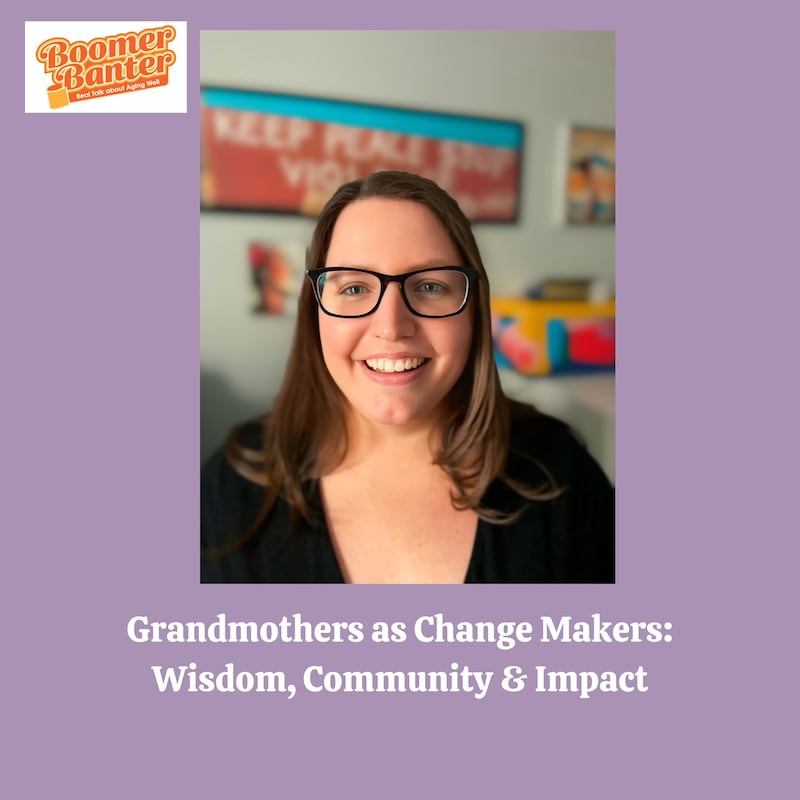
Let's talk about grandmas! Seriously, in this episode, we’re shaking things up and recognizing that grandmothers are not just sweet faces in family photos but powerhouse change-makers in our communities. I’m thrilled to have Lindsay Farrell on the show, who founded the Grandmother Collective. She’s spent years working with young people, but over time, she noticed something was missing—a crucial element that was holding communities together: the wisdom of grandmothers. It’s like, duh, right? Grandmas have been the unsung heroes of our neighborhoods, quietly making a difference, and now it’s time for us to shine a light on them. We chat about how grandmothers are stepping into their power, leading storytelling circles, and advocating for social change. They’re not just sitting back; they’re in the trenches, building intergenerational trust and healing their communities. This episode is all about how you can tap into your own grandmotherly influence, no matter your age or experience. So, whether you’re a grandma or just someone who appreciates the magic they bring, this convo is packed with inspiration and real-life stories of women who are changing the world one step at a time. Don’t miss it!
Takeaways:
- Grandmothers today are not just family figures; they're community leaders who inspire change.
- The Grandmother Collective highlights the power of older women in global movements for social justice.
- Empathy and compassion are key traits for effective leadership, especially in grandmotherly roles.
- Connecting across generations helps us all redefine aging and discover new opportunities.
This podcast uses the following third-party services for analysis:
OP3 - https://op3.dev/privacy
Transcripts
Hello. I. You know, I've been thinking of my grandmother lately, and I don't remember her having a job outside of the house.
Being a homemaker was her job and, you know, loving us grandkids. But that was a different time. Now, grandmothers aren't just loving family members. They can also be powerful community change makers.
So today's episode explores a movement that's reshaping how we see older women not as fading figures in the background, but but as vital forces for connection, wisdom, and lasting change. I'm joined today by Lindsay Farrell.
She's a cultural anthropologist and co founder and executive director of the Grandmother Collective, which is a global initiative that elevates the voice, power and leadership of grandmothers. Now, here's what's interesting. Lindsay didn't set out to create a grandmother movement. For over two decades, she worked closely with young people.
Young people in communities around the world, from Nairobi to Washington, D.C. focused on self help, leadership, and empowerment.
But over time, Lindsay noticed something that despite all the energy and innovation and youth programs, something essential was missing. The grounding, the wisdom, the steady hands that hold a community together. And who was already doing that quietly, consistently, and often invisibly.
Grandmothers.
That realization sparked the Grandmother Collective, which now supports older women around the world who are leading storytelling circles, raising awareness around social issues, building intergenerational trust, and healing their communities.
In today's conversation, we'll explore why grandmothers matter more than ever, how you can tap into your own grandmotherly influence, whether or not you have grandchildren, and learn about the impact that grandmothers are having around the world.
Lindsay's here to share the origin of this movement, stories of real women leading change, and like I said, how you can connect with your community and own the wisdom that comes with age. Hi, I'm Wendy Green, your host for Boomer Banter, where we have real talk about aging well. And I am so glad that you joined us today.
Just a quick reminder before we get started because I don't want you to miss anything. I want to have you go to the heyboomer Biz webpage and click on Age well with us. Why do I want you to do that?
Because if you're enjoying these episodes with my inspiring guests and you want a little extra inspiration each week, I'd love to have you join my email community. Every week.
You'll get a link to new episodes, helpful resources, and some thoughts to help you navigate this season of life with purpose and confidence. So again, go to heyboomer Biz. Click on Age well with Us. And I look forward to having you join us.
So let me bring Lindsay on and welcome Lindsay to Boomer Banter.
Lynsey Farrell:Thanks for having me.
Wendy Green:Oh, I'm very excited about this show. I've been looking at your website. There's just so much going on.
But before we get there, I want to get a little bit of history about you, your anthropological field work, and what made you realize that older women were a hidden force for change.
Lynsey Farrell:Yeah. So sometimes I go all the way back and tell people that.
I grew up in the suburbs of Phoenix, which I think kind of was to somebody who was really interested in diversity and somehow emerged in my young life, is really trying to understand how the human condition could be so different and how people everywhere had different belief systems and different symbols and different languages.
I think growing up in a relatively homogenous culture in the suburbs of Phoenix, kind of I could either have followed the status quo or have gone and done dramatically different things. And I sort of said, ended up taking that pathway. So I studied abroad in Zimbabwe when I was an undergraduate.
Wendy Green:Oh, wow.
Lynsey Farrell:Had an incredibly pivotal kind of experience. Transformational. Now, this is before we had Internet, but it was so slow. I mean, we call our parents like one. There are no cell phones.
And so, I mean, really, you were. We were as immersed as you could be. And I, at that point was, you know, living on a continent that has 65, 70% population below the age of 35.
I had myself been a product of a lot of youth development programming and understand how young, how youth life, especially in urban spaces in an emergent continent, was shaping what culture looked like and how, you know, the future looked like for. For people there. And so after I graduated, ended up in Kenya on a Fulbright scholarship.
Wendy Green:Oh, gosh.
Lynsey Farrell:A lot of time with young people who were politically engaged during this, like, really politically important time in Kenya when they were moving away from having a single leader who was authoritarian.
And nature, I mean, they still kind of have some problems with that, but, like, there was this emergent youth energy and a desire to bring a new kind of leadership. And then my dissertation research in cultural anthropology in Nairobi, Kenya, and a settlement called Kibera, which is the largest in the city.
Very low socioeconomic class, but really deep rooted history, but a very youth oriented population. Not a lot of older adults guiding and leading.
I kind of went on this pathway to understand that, you know, how the city became an education for youth. And that sort of led me down, you know, more to more nonprofit work.
But in:And she was talking about, she drew this like we were at a conference that I, that I had been leading this workshop and she was drawing out like the, the initiative that they were doing. And she was drawing between the different members of a community. Like, we have to, we have to address the elders, we have to address the young boys.
I mean, as towards the youth and towards girls empowerment, really trying to solve some of the kind of systemic things were happening for young girls in southern Senegal, like female genital mutilation, like early forced marriage, like, you know, being sent off at 14 or 16 to. To be a child bride. And she was drawing like, these are all the people we have to influence.
And all of this work that I've been doing on trying to find sort of the systemic way to support youth, she had discovered, I mean, really, I guess uncovered or you know, re remembered. I don't know what it is, but.
Wendy Green:What'S the right word?
Lynsey Farrell:Older women in that community who could stand up in front of a group of elder men and say no. And they were not going to be like, there's some kind of power that comes with older women they can shame in incredible ways.
We've, we have clear, there's clear examples in history where like a group of older women will like, stop things from happening or like, you know, they, they protest in a particular way and they're really powerful.
So she was like, let's tap into that, get those women on board as co leaders and really significantly shift the way that this community is supporting its girls or these communities. And so there's some statistic, it's really good.
Like prior to the intervention in the communities which, that they've operated in, grandmother projects operated in southern Senegal. And it's like 90% of mothers and grandmothers felt it was obligatory to take girls through circumcision or female genital mutilation.
Wendy Green:90% of the mothers thought that we're.
Lynsey Farrell:Like, yes, this is what we do. This is our culture, which is what we have to do.
And in, after interventions, it's in the single digits of who think it's obligatory because they are on the journey, they're being taken along and because they, they, they possess such a power in their culture that they're able to shift it.
Wendy Green:And so the older grandmothers are listened to not just by the women, the mothers, but also by the men, by everyone.
Lynsey Farrell:Everyone listens to a grandma and we know that's true. You can think of an older woman in your life that, like, when she speaks, everyone goes, oh, yeah, like, I get, like, I'm not gonna piss off grandma.
You know, and it, it sort of seems to hold. I mean, there's little, you know, things here and there about the mother in law being a problem or the this or that being a problem.
But for the most part, it holds pretty universally that as women age and they especially emerge out of menopause and become, you know, like, not seen so much as a potential partner, as a sexual being, maybe, that they gain a wisdom and power that people can't really touch anymore. And. And for the most part, you hear them say, yeah, I'm like in my 50s and I don't, I don't, I don't care anymore.
Like, I'm gonna do what I'm gonna do.
Wendy Green:There is a. There is a shift.
Lynsey Farrell:Yeah.
Wendy Green:Yes. There is a shift where you're not so influenced by the people around you and the cult.
You know, you, you are standing in your own strength and your own confidence of, you know, this is who I am. And if you're either going to like it or not, you know, y. So there is a shift that does happen. You're right.
Lynsey Farrell:Yeah. You're not worried about your reputation. You probably don't like, your livelihood's okay for the most part. And if it's not you, you'll figure it out.
Like, you're not. I have women tell me the day they retired, they put up a. A sign in their yard.
Wendy Green:A sign in their yard that said, what I'm sorry you went out for. That's.
Lynsey Farrell:That might be progress. Like, that might be like, very progressive. Like, I know a woman in Arkansas who joined Planned Parenthood of Arkansas the day she retired.
Wendy Green:Oh, yeah.
Lynsey Farrell:Because at that point she, like, no one was gonna fire her. And she could speak out for something she really, really believed in.
And prior to retirement, you know, there's always the fear that you're gonna affect your livelihood or affect your.
Wendy Green:That's right.
Lynsey Farrell:Your family or your children or what people think about everyone around you. And by the time you've grown older, you have independence from that too.
Wendy Green:So. So you get this insight from this amazing woman. Yeah. And. And then you go home and say, oh, you know what? I think I'll start something.
Lynsey Farrell:With grandmothers, it took a while now I joined her board. It joined her board. And there just. More. Year after year, it just, it was so clear that we needed to tell a story of grandmothers at a global scale.
And we started to meet other organizations that had grandmother as their center.
Like, there's an organization that gets a lot of press, so hopefully people have heard of it called the Friendship Bench, which is a organization that started in Zimbabwe.
And Dixon Chibondo is a psychologist, recognized that in order to deal with a really big crisis of mental health in his country, in a place that had a dearth of mental health workers, if he could train older women and Graham, like, or grandmothers to be the. That source. They're a trusted source. They did it on in public places. So, you know, there was no stigma attached to going to a therapist.
And it's made this dramatic shift. So we meet like a Dixon and we meet a Judy, and my co founder and I are both board members.
Really felt like there's got to be more out there and they're not talking to each other. We know that there's no like grandmother, older women, you know, unity.
And then it turns out as we start to explore and pull people in, there's grandmothers for reproductive rights, there's grandmothers for gun responsibility. There's grandmothers. Oh, there's so many grandmothers doing climate change work.
And what we know is that A, they're not seen and they're really invisible. So what could we do to raise some visibility? B, funding for grandmother work is basically non existent. Right.
Nobody's saying like, let's give them money. And they often need like a little bit of money, like very little to like make these big things in the world.
So we wanted to be a platform to raise some visibility around that and see if we could shift some things.
Wendy Green:So the collective then is bringing all of these various groups together and starting to share information and resources and communities and.
Lynsey Farrell:Yeah. And inspiring each other. We just really started to like, write. Write up the models so we would. We have a.
I think we're at 34 organizational members, and those organizational members have a lot of different ways in which they make change in the world. But we were really trying to understand like, what was unique to the grandmother or older woman approach. So we've written up some things.
We've done some research. We did a research project in the beginning of the year that really focused on the role that older women play in crisis.
And no one's really thought about it specifically as, like, grandmothers in refugee camps often get picked out as to help distribute food.
Wendy Green:Is that right?
Lynsey Farrell:They're like. They are a full. They. Yeah.
There was a research project that was done in Kakuma Refugee camp in Kenya a few years ago, where, like, they become the go to trusted resource in a place where everybody is not trusting. Right. You know, that you can bring a grandmother in. They do the same in crisis, in climate crises, they do the same.
And migrant crises, like, they're really playing this very invisible role. So we've just been trying to, like, collect and base. Create a base of evidence to be able to support this as well as bring people together.
Wendy Green:Yeah, it's fascinating. There's so many different ways that it can work. So talk to me about what this grandmotherly approach is beyond just age. What defines that for you?
Lynsey Farrell:Yeah, so I've been talking. I like to tell people that I want to teach a class one day at a business school called how to Lead. Badass. Some kind of grandma, right? Yeah.
How to lead like a grandmother. And it's this. It's some of the stuff that you would think they're effective because they approach things with empathy.
They are effective because they approach things with compassion.
But they're also effective because of those things that we were talking about, like having a recognition and realization that with age comes a particular freedom and independence.
And that is something, you know, as you're young and moving up in leadership, you're calculating, I think, a lot more than grandmothers seem to calculate. They're not really worried about power in the same way. And I think there's something incredibly.
I think if you talk to people in our community, they would agree. It is so cooperative and giving. Like, there's just so much in the approach that it's not. Like, there's not a lot of gatekeeping.
Like, everyone's just trying to make a change. Very few. No one's trying to get rich. No one's trying to, like, even build a livelihood.
And so you have these sort of authentic interactions and connections that I think are incredibly grandmotherly. I think there's also. Now this is. Like, we've. We've kind of explored this a little bit.
And the anthropologist in me something very sacred about older women. Right. Like you. You can see globally they can be goddesses and they can be witches. Like, there is something they can be. You know, they can. They're d.
They're sort of dangerous. And that has been reflected in folklore and all kinds of things around the world. And it's an intangible thing that's almost difficult to describe.
But, you know, we have. We have these archetypes of older women that actually lead to this power in their leadership.
Wendy Green:So I'm curious, you know, so Much of your work was done in Africa and in very impoverished areas.
Do you feel like the grandmother image there is different in the way they practice their power, let's say, as opposed to the grandmother image here in the Western world?
Lynsey Farrell:Well, I'll say two things on that. Yes, the respect for elders is higher. Right.
Like, we haven't, they haven't necessarily done as much damage to the idea of what it means to grow old as our individualist, youth oriented society.
Certainly every young person, like, you know, there's even in, like the language in Swahili in Tanzania and Swahili depends on where you are on the continent.
But in Tanzania and Swahili, when you greet a grandmother or a grandfather, you say, and you know, you sort of bow and that means like, I kiss your feet. Like there's this difference, right. That's like immediate. This is something you can see.
Like an older generation here in the US Will be like, why are the children not understanding? But like, we haven't really taught that same sort of level of deference and things. So that still exists for sure.
But urbanization has, is, is starting to kill some of that for sure on the continent and in other collective of societies that we know of. You know, they're growing up in youth saturated communities without the wisdom and experience and leadership of older people.
You know, when you have 75% of the population below the age of 35, that starts to do a number on the relationship and connection between generations. And so I think they are, they are at risk of kind of going down the same pathway as us, but we also have an opportunity to redefine aging.
And I think that's what we're really trying to focus on at the grandmother Collective.
And I know groups here in the United States, you've probably even connected with them that are really thinking about how do we reframe elderhood, how do we take back the responsibility?
Like, elderhood is not being an elder is not assumed like you should earn it, that you need to be responsible to your community and step up in particular ways in order to be considered an elderly. It like goes both ways.
It's not just teaching the young to respect the elders, but it's teaching our elders to re evaluate the role that they're supposed to be playing as community leaders.
Wendy Green:Right, right. Not to say, oh, well, I'm too old now. No, this is our opportunity to really have an impact.
And I mean, that's what I'm hoping to do through this show. Yeah, yeah. So tell me about some of the initiatives like I was reading about T. T for Change.
I was reading about the local learning circles in Philadelphia and then of course this global symposium. So tell me about those and how they cultivate change.
Lynsey Farrell:Well, we developed the T for Change and it's kind of evolved. We about.
We developed that as a kind of a tool for anyone who is trying to figure out how to start a conversation with their community or with their peers that starts to take them, you know, to think about grandmothers and, and think about their roles differently. And actually, I'll tell you, it evolved. If anyone has seen known as on Netflix.
Wendy Green:Oh yes. Watch Party.
Lynsey Farrell:Yeah. So we developed. And I think the T for Change is like better in the Watch Party version.
But we developed a what with our, with like this larger sort of coalition.
Developed a Watch Party discussion guide really using Nonna's, which is celebrating these Italian grandmothers and like the role that they can play in building like a very community centered restaurant in Staten island as a launch pad for saying what, what can you do? Like, do you see first off that you don't need to hide and be invisible anymore?
And what's the next step that you can take and to, to lead discussions and start to start small. Like, you know, some of our grandmothers are just standing out on street corners on Fridays, like raising awareness about something political.
Like, it's not, it's not, not everyone's like, you know, building nonprofits or starting new things, but really trying to find a new. A way to, to feel a contribution and have a purpose. Then you talked about the Learning circle.
So actually those Philadelphia learning circles evolved into an organization. Well, we're, we're fiscally sponsoring them for now. But a new initiative called Grandmas for Literacy, which got some funding this year.
So that's really great. And it's going to. In Philadelphia, where I live, we have a really pretty poor literacy rate.
I think something like 33%, 35% of kids are reading at grade level.
Wendy Green:Wow. Okay.
Lynsey Farrell:Public schools here. And we also have an adult literacy problem. So, you know, this is here. It's inherited.
Wendy Green:Sure.
Lynsey Farrell:And so the Grandmas for Literacy are working on a science based reading approach to enable older women to understand, like to, to really feel the power of, of using a science based approach to training on literacy.
And there's kind of two pathways that are emerging that the grandmas that want to like, go to the school board and yell like, and be very effective, like as grandmothers. And then those who want to like, get into schools and actually be big community, community grandmothers in These schools.
And for the most part, you know what, what the schools need more than anything is just more people and having grandmothers and older women kind of watching out, knowing the kids can make an incredibly huge difference.
And so they're really focusing on putting grandmothers into the local schools and where they live, like really, really matchmaking and seeing how to, how to, how to build those relationships better. So, so that started because I interviewed someone for my podcast and then she was like, I want to talk to more grandmas. And she's everywhere now.
She's spending the summer, senior centers and libraries and everything, just getting grandmas thinking about the ways in which they can.
Wendy Green:She's motivated. She's motivated.
Lynsey Farrell:She's so motivated. And then, let me tell you about the symposium. So last symposium last year, we were kind of reaching a tipping point, right?
We've collected all these amazing organizations, we've tested out a few different ways to engage the community, but we wanted to see what they would do if they were at this opportunity to say, let's build an institution focused on older women's leadership. And we held a two day symposium.
We brought 100 women together, we brought together academics, we've like scoured, you know, the scholarship to see who's writing specifically about grandmothers.
And it's not that many, but we've pulled, you know, pulled people together, we pulled in some funders, we pulled in all of these incredible grandmother change makers from around the country, the world. A lot of. We had a very global connection. And the first day was focused just on like, let's prove to you that this is a thing, right?
But there's an actual thing here that, that grandmothers are driving change. And we could see it in all of these very disparate ways. And then the second day we talked about how we're going to build this together.
And what emerged was that we needed a membership, that we needed individual grandmothers to find a way to connect and that we needed a base of evidence. And the final thing is we needed to change the narrative.
And, and so I have a whole group of older women now based off of that, who are really thinking a lot about how to support each other, to tell stories, to tell their stories, but also the story of older women. And so that's kind of, you know, that really has provided a great base for us for making this emergent, but also making it a collective.
Like people, you know, are so with.
Wendy Green:Individuals because it started out as a collective of organizations, right? Right now you're bringing individuals in. So tell me about that, like joined that story circle.
Lynsey Farrell:Yeah.
Wendy Green:Which was really fun.
Lynsey Farrell:It was awesome. Yeah.
Wendy Green:So tell me about some of the things you're doing with the individuals.
Lynsey Farrell:We do those monthly. Yeah. So there's a monthly storytelling circle that anyone can come and tell a story, but also just attending.
It's maybe my favorite night of the month. Like, just to hear. It's so diverse. Sometimes somebody. Somebody sings or tells like a folk story, but oftentimes it's personal. But there's really.
What we kept hearing from our community is that there was no space just to let older women speak to each other and talk about a variety of things. I think a lot of the work with older people tells them that they have to tell like a legacy story or a life lesson or some other kinds of thing. And.
And you know, sometimes you just want to be human and be who you are in the moment. Like, it's, you know, so that's what has really created that. And, and it's. It's creating like a little vibrant community. And off of that is a.
A group called the Wabi Sabi Writers. And that is a. That's a writers group. And Wabi Sabi, you know, it means like perfectly imperfect or whatever. Right. It's like the.
It's like this Japanese concept of impermanence. And so they're perfectly imperfect, the Wabi Sabi writers. And we're trying to shepherd them into publications and.
Wendy Green:Oh, wow.
Lynsey Farrell:Yeah. So that we're really shifting this narrative out in the world and.
But what we're hoping in the fall, so we're launching an individual membership in the fall, which is the. Like that. Where people can actually like, sign up and say, I'm a member. Right. They already call themselves a member, which is. Is awesome.
But we just have all these individual women who haven't started something yet, or they belong to four things, but they only want to, you know, they want to come to us to bandy around ideas or meet more people that are like, minded. Actually change making is incredibly lonely. So you often find that our. That the women that find us like, are in some community. They're.
They're not necessarily finding people that have the same values or ideas, you know, passions. Right. So it sort of becomes this. I mean, we have a woman join us from Singapore really regularly. And I just imagine she just feels such a kinship.
She gets up in the middle of the night to join stuff. Right. Like, yeah, it's amazing.
And so what we're gonna do is we're gonna offer a membership where people can Sign up to be a member of the Grandmother Collective for a really small fee or not at all. We're gonna do it on slightly scale. We don't want anyone to not feel that they can be part of it.
But we do have like some operating costs that would be nice to cover. And as part of that membership, they're going to be able to join workshops which we're developing. Things like how do you use AI for.
For movement building or Google Docs for collaboration, which is really helpful.
But a lot of our community, you can imagine, just they want to be in a space where they can ask the questions that they make them feel stupid when it comes to things like technology and things like that. So we're going to build out a series of workshops.
We have an opportunity to feature folks in webinars, which will be starting sometime this summer on various issue areas related to grandmothers. Like, there's going to be one on food traditions and food ways. We'll do one on grandmothers and education. We've done a few already.
Webinars members will also have access to a platform and membership directory so they can find each other. The number one thing that happens at every Grandmother Collective event. And we have these monthly coffee chats. There'll be one tomorrow.
Anyone can join.
Wendy Green:Okay.
Lynsey Farrell:And the number one thing that happens is the chat fills up with email me, email me, email me, email me. And so we are, we are. We've created a platform that people can. Can connect with each other. There's an email listserv.
There's a way to make subgroups for different issue areas.
Wendy Green:So. So let's share your website though, if they want to sign up for the coffee chat or coffee chat for a story circle.
Lynsey Farrell:Storytelling circle. Yeah. All of that's on the front page of the website.
Wendy Green:Grandmother collective.org. yeah. So check it out. There's so much on there.
Lynsey Farrell:Yeah, it needs a little. Some of that stuff is going to move behind the wall from membership, like our resources and stuff pretty soon. So.
But right now, everything, literally everything we've ever thought about exists on the website. Yeah.
Wendy Green:So, Lindsay, what has surprised you the most in your role with the Grandmother Collective and how has it reshaped your idea of what a grandmother means?
Lynsey Farrell:You know, this, this, this. The organization emerged as I became a mother. So I was.
I was already sort of having a lens on, like, the power of, like, my mother is a really kind of archetypal grandmother. Like, the kids all listen to her. She can get them to do anything. They'll eat food that they won't eat with, with me. Right.
And I think like, so I wasn't surprised, you know, that, that I was able to see sort of a personal connection with the idea of this power of grandmothers. But so this is actually really personal.
I think, I think the thing that has surprised me so much in doing this work is because I'm not a grandmother, I'm getting a view on aging that I didn't expect.
Wendy Green:I bet you are.
Lynsey Farrell:Yeah. And it's wonderful.
And I, I'm in a period of life where I'm still thinking about a career and what my future holds and there's, and I'm parenting and there's a modicum of stress with all of that that is like, seems to be totally accepted in our society and there's an urgency to get things done. And, and I think since starting this work with grandmothers, I have.
Wendy Green:I have.
Lynsey Farrell:Been able to give myself a lot more grace. I think recognize I inter, you know, I've interviewed enough women and they'll say I didn't hit my stride till I was 65.
Or like, yeah, I, I, I got a late start because of all this stuff that life has, has thrown at me. And then you meet a 96 year old woman who like still goes out in marches, you know.
Wendy Green:Yeah.
Lynsey Farrell:And I think it just reminds me, life is long. You can remake yourself many, many times.
Wendy Green:You sure can.
Lynsey Farrell:You do not have to judge yourself based on others. Like, you know, and all of us have a contribution to make at any age and at any, you know, skill level.
We don't, we, we all have something to give and, and contribute in society.
Wendy Green:You are very lucky to be getting all of that insight now, you know, because most people, when we're raising our kids, that's what we're doing. We're working, we're raising our kids, we're paying bills.
We're just like on this rat race, this hamster wheel that just keeps going until you finally take a break and take a breath and go, what do I really want? Who am I really? Who do I really want to be? You know, and so you're getting insight into that now, which is very cool.
Lynsey Farrell:I mean, ideally for me, the grandmother collective is a intergenerational movement. Right. That and I actually, I did this intergenerational course a couple years ago and we had some young ones, like 20 somethings.
And one of them messaged me the other day and said, I still keep thinking about all of the things, the insights that I got.
She had been paired up with this woman in her, probably in her 60s and the two of them have become friends and you know, we, we, we have so much insight to gain across the generations and I don't know, you know, cogenerate and the work.
Wendy Green:Yeah, sure, yeah.
Lynsey Farrell:And you know, they always talk about age segregation and how kind of terrible that's been for our society. It shouldn't cut, it shouldn't come as a surprise to me that I can live a long life and change my mind.
But also, you know, I think the generation, maybe the boomers have given us also a different lens to that, that you know, you can, you can try new things.
Wendy Green:You absolutely can try new things.
Lynsey Farrell:Yeah. And there's not just some like retirement home waiting for you at the end.
Wendy Green:Of all of this. Yeah, yeah. Which is awesome.
So tell me, I want to share how people can find you, but give me some ideas on what people can do if they want to start to get involved or learn more about what the Grandmother Collective is doing.
Lynsey Farrell:Well, we have a website, of course, grandmothercollective.org and on there are some really easy sort of entry spaces. So we talked about the storytelling circle. Anyone can join that.
You talked about the coffee chat, which is just for anyone looking to talk to other people who are making change in the world in a variety of different ways. It really can be anything from educate, you know, from tutoring in schools, even that.
I mean all of its matters to we have a woman working on nuclear proliferation, like trying to, okay, raise awareness about that. I mean it's like the scale and, and depth of, of the ways in which people, people contribute is amazing. So come to a coffee chat.
There's one to borrow. At noon eastern come to a storytelling circle. I think that'll be in a couple weeks. Join the Wabi Sabi writers.
And then you know, once, once we have this membership and you know, if you haven't signed, you sign up for the newsletter, which is at the bottom of the website.
You'll see when we are ready to officially formally launch the membership, which is it should be a real avenue to getting to a lot of women that are like minded.
Wendy Green:Well, I want to encourage people to do this too because we've been talking all month about friendships and connections and you know, I popped into that storytelling circle, I didn't know anybody there. I didn't tell a story. I just listened. And yet it, I could tell this was a group of women that were very connected, very supportive.
And you know, if, if you are feeling isolated or, and you feel like you, you just don't know how to contribute and start to give back again. And. And maybe even getting out of the house is difficult.
You know, this is a great way to get started with building a community that feels supportive and safe and empowered. So, yeah, I really appreciate what you're doing, Lindsay.
Lynsey Farrell:Thank you. Well, I'm glad you felt that because when I say generosity of. Of grandmother leadership, that is a big piece of it and it just shows up every time.
Wendy Green:Yeah.
If you have specific questions, you can email Lindsay directly at Lindsay, that's L Y N s e y grandmother collective.org so she's very graciously offered to share her email address to Lindsay. L Y N S e y@grandmothercollective.org I mean, we could talk for hours. There's so much to take to ask you, but, yeah, I. Maybe we'll have you back.
Lynsey Farrell:Oh, please have me back. Or. Or better yet, I'd send you someone from the collective.
Wendy Green:Oh, that would be fun.
Lynsey Farrell:Like, you know, a passionate thing that they're working on because.
Wendy Green:Yeah.
Lynsey Farrell:I could pluck so many.
Wendy Green:Oh, I bet you could. Yeah.
Lynsey Farrell:Yeah.
Wendy Green:And. And listeners, if this episode resonated with you, please be sure to share it. Share it with a friend.
Leave a comment, tell me what you're taking away from the conversation. Really, it. It just would make my day to hear from you.
And if you're not already on our email list, it's a great way to stay in the loop with what Boomer Banter is doing. So go to the website heyboomer Biz and click on age well with us and I will start to send you that weekly newsletter.
There's so much going on on our side, too. Okay, before you go, the show on July 7th. This should be interesting. This is about ancestry. Ancestry Travel.
So my guest, Jim Linehan is AARP's go to travel expert and many people, it's kind of become a real thing now to be researching your family history. And they've been doing this for years and they have lots of information, but they've never been to that country of origin.
So now they're ready to walk there where their ancestors walked and meet hopefully some relatives that they never even knew existed. So Jim's going to share some stories with us about people who have taken advantage of ancestry travel. So hope you will tune in next Monday for that.
Thank you, Lindsay, so much for this.
Lynsey Farrell:Thank you. Thanks for having me.
Wendy Green:It was my pleasure. My name is Wendy Green and thank you all for joining us on Boomer Banter. Her we'll see you soon.



