Shownotes
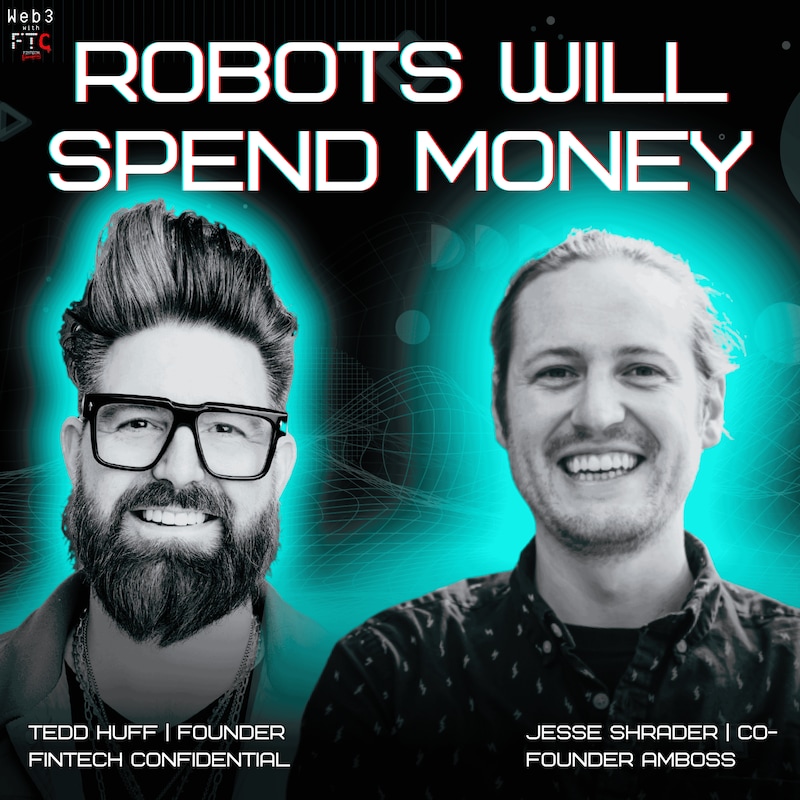
Bitcoin Lightning payments, self-custody yield, and stablecoin interoperability are converging on one infrastructure layer, and the companies building it are already seeing massive demand. Tedd Huff, CEO of fintech advisory firm Voalyre and founder of Fintech Confidential, sits down with Jesse Shrader, co-founder and CEO of Amboss Technologies, to break down how Lightning Network infrastructure is reshaping payment processing, treasury strategy, and compliance for fintech operators worldwide.
Card networks charge 2% to 5% per transaction. Lightning brings that to 0.29%. Square just announced zero Bitcoin processing fees for its entire retailer network. The Genius Act is flooding the market with stablecoins, but those assets live on blockchains that do not talk to each other. Jesse explains how Taproot Assets on Lightning can unify fragmented stablecoin systems through cross-asset, in-flight currency exchange. He also walks through how Rails, a self-custodial Bitcoin yield product with over 2,600 on its waitlist, lets companies earn yield from payment routing without giving up custody. The conversation includes real founder lessons on fundraising, board strategy, and preparing for a future where AI systems pay each other.
FIND OUT MORE
1️⃣ Lightning payment processing at 0.29% is a 10x reduction from card network fees; run the math on what your business saves annually.
2️⃣ Self-custody yield is now possible on Bitcoin without handing your asset to a third party; Rails automates the infrastructure so you do not need to be an expert.
3️⃣ Build your board with the smartest people you have ever met, and replace anyone who is not fully invested in your success.
4️⃣ Map your fiat compliance obligations into decentralized payment environments now, before a sanctions violation forces the conversation.
5️⃣ Start designing guardrails for AI agents with spending authority; machine-to-machine payments are expected within three to five years.
LINKS
Guest
Jesse Shrader on LinkedIn: https://www.linkedin.com/in/shraderjesse/
Company
Amboss Technologies: https://amboss.tech/
Amboss Space (Lightning Network Explorer): https://amboss.space/
Rails: https://www.amboss.tech/rails
Amboss on LinkedIn: https://www.linkedin.com/company/ambosstech
Fintech Confidential
Podcast: https://fintechconfidential.com/listen
Notifications: https://fintechconfidential.com/access
LinkedIn: https://www.linkedin.com/company/fintechconfidential
X: https://x.com/FTconfidential
Instagram: https://www.instagram.com/fintechconfidential
Facebook: https://www.facebook.com/fintechconfidential
Supporters
DFNS provides wallets as a service that is API first, multi-chain by design, and secured with MPC so you can launch across over 50 blockchains without managing private keys. Request a demo at fintechconfidential.com/dfns
Skyflow is a zero trust data privacy vault delivered as an API that lets you collect, secure, and tokenize personal information with built-in features for PCI, CCPA, GDPR, and SOC 2 compliance. Visit skyflowsecure.com
Hawk AI provides AI tools for real-time payment screening, ML transaction monitoring, and dynamic customer risk rating to make compliance more effective and help fight fraud and financial crime. Visit gethawkai.com
About
Jesse Shrader is the CEO and co-founder of Amboss Technologies. He holds a degree in Environmental Resources Engineering from Humboldt State University and previously worked in highway asset management at the Oregon Department of Transportation. His experience handling calls for class action lawsuits against banks exposed him to predatory overdraft practices and pushed him toward building decentralized payment infrastructure.
Amboss Technologies is a payment infrastructure and data analytics company built on Bitcoin's Lightning Network, founded in 2021. Its products include Magma (liquidity marketplace), Rails (self-custodial yield), Reflex (compliance automation), and Amboss Space (network explorer).
Tedd Huff, CEO of fintech advisory firm Voalyre and host of Fintech Confidential. Fintech Confidential is a production of DD3 Media, bringing you the people, tech, and companies that change how you pay and get paid.
Chapters
00:01:02 DFNS: Wallets as a Service (Sponsor)
00:02:20 Welcome to Web3 with FTC
00:02:51 Meet Jesse Shrader and Amboss
00:05:32 Rails Launch and Bitcoin Yield Demand
00:06:37 From Engineering to Bitcoin Infrastructure
00:09:18 Stablecoins, Genius Act, and Interoperability
00:12:39 Self-Custody Yield with Rails
00:16:40 Why Lightning Over Layer One
00:19:08 Amboss Product Suite
00:21:45 Compliance, Sanctions, and Reflex
00:24:15 Skyflow: Data Privacy Vault (Sponsor)
00:25:17 How Rails Generates Yield
00:29:31 Lower Fees and Merchant Adoption
00:35:24 Founder Lessons and Fundraising
00:39:30 Build Your Board Strategically
00:41:50 Crystal Ball: AI Paying AI
00:45:18 Voltage Partnership Announcement
00:47:12 Hawk AI: Fighting Financial Crime (Sponsor)
00:47:57 Disclaimer
Transcripts
This is where you get the insights to the shifts that matter,
Jesse Schrader:that the plumbing in the financial system is broken.
Tedd Huff:It's been over 15 years since Bitcoin came to market.
Jesse Schrader:Bitcoin transactions take a while to settle
Tedd Huff:and accessible to everyone global.
Jesse Schrader:And then there was a panic within the Bitcoin community.
Tedd Huff:And so everybody was freaking out like, how do we do this?
Jesse Schrader:Well, now we're decentralizing that
Tedd Huff:they, they want yield on their assets.
Jesse Schrader:Why are we paying so much instant payments?
Jesse Schrader:Is now El Salvador announced that Bitcoin was going to become,
Tedd Huff:boom.
Tedd Huff:It pops up and it's in there.
Tedd Huff:The one piece of advice, what would it be?
Tedd Huff:And in one sentence,
Jesse Schrader:if someone else is holding your Bitcoin, you're in trouble
Tedd Huff:looking to hear.
Tedd Huff:What do you see happening in the next three to five years?
Jesse Schrader:I'm seeing.
Jesse Schrader:In that crystal ball,
Tedd Huff:welcome to FinTech Confidential, bringing you the
Tedd Huff:people, tech and companies that change how you pay and get paid.
Tedd Huff:You're building a FinTech product.
Tedd Huff:You want to offer digital assets, but wallets, that's the hard part.
Tedd Huff:Security.
Tedd Huff:Compliance, key orchestration, blockchain integration.
Tedd Huff:That's why fintech's payment platforms and custodians choose defense.
Tedd Huff:They provide wallets as a service.
Tedd Huff:That's API first, multi chain by design and secured within NPC.
Tedd Huff:No single point of failure.
Tedd Huff:So you can launch across over 50 Blockchains, automate policy
Tedd Huff:controls and stay audit ready without managing private key.
Tedd Huff:Stripes.
Tedd Huff:Bridge powers crypto payments through defense.
Tedd Huff:Moon pay scales.
Tedd Huff:Wallets securely with defense.
Tedd Huff:Sphere grew without compromising on control or compliance.
Tedd Huff:Even major fis like Fidelity, AB B and Amro, as well as custodians like
Tedd Huff:Zoia and Tungsten trust defense to power their on chain infrastructure.
Tedd Huff:Developer ready, compliance approved production grade.
Tedd Huff:From day one, if you're building in payments exchanges, OTC desks, market
Tedd Huff:makers, or defi defense wallets, work the way you need them to request your
Tedd Huff:[email protected] slash dfs.
Tedd Huff:Defense secure wallets built right.
Tedd Huff:Welcome to Web3 with FTC.
Tedd Huff:If you're asking how blockchain, crypto ai, or even quantum
Tedd Huff:computing fits into your business strategy, this is built for you.
Tedd Huff:We talk with builders and decision makers who are actually doing the
Tedd Huff:work, and whether you're a founder exec, or just trying to stay
Tedd Huff:ahead, this is where you get the insights to the shifts that matter.
Tedd Huff:So let's go ahead.
Tedd Huff:Get started.
Tedd Huff:Hey, Jesse, I am super happy to have you on today, man,
Tedd Huff:it's been a long time coming.
Jesse Schrader:Uh, it's great to be here with you, Ted,
Jesse Schrader:and very excited to dive in.
Tedd Huff:For those of you who don't know Jesse already, let me
Tedd Huff:give you a little bit of background.
Tedd Huff:Jesse went from being an environmental engineer who was building physical
Tedd Huff:infrastructure and made the complete switch over to Bitcoin's
Tedd Huff:lightning network infrastructure.
Tedd Huff:Now, his background really gives him a broad view on a number of
Tedd Huff:different things, but one of his experiences was handling calls.
Tedd Huff:For class action lawsuits against banks and between the experiences of
Tedd Huff:the physical infrastructure and seeing what was going on with the banks,
Tedd Huff:these experiences exposed him to fundamental flaws in traditional banking.
Tedd Huff:Systems and pushed him to build an open, decentralized payment infrastructure.
Tedd Huff:Jesse decided in 2021 that he was going to co-found Ambos Technologies, and
Tedd Huff:this was done to fix the critical pain points, the Bitcoin Lightning Network.
Tedd Huff:They've done this by building an AI driven infrastructure.
Tedd Huff:They provide data analytics, liquidity solutions, compliance tools that
Tedd Huff:all make Bitcoin payments scalable.
Tedd Huff:Efficient and accessible to everyone globally to do this.
Tedd Huff:They didn't just launch one product.
Tedd Huff:They, they launched a handful, so they launched Magma, which is the largest
Tedd Huff:lightning liquidity marketplace.
Tedd Huff:They most recently launched Rails, a self custodial Bitcoin yield service,
Tedd Huff:and they also have Reflex, which is a compliance automation engine
Tedd Huff:for those types of needs that you have around compliance and bitcoin.
Tedd Huff:Now I got the opportunity, Jesse, to see you launch rails at Bitcoin 2025
Tedd Huff:here in Las Vegas earlier this year.
Tedd Huff:You're joining us today from Bitcoin, Amsterdam.
Tedd Huff:I am so jealous.
Tedd Huff:I really wish I was there.
Tedd Huff:Couldn't make it happen, but I'm so happy that you're there.
Tedd Huff:You know, one of the things that I thought was really interesting is within.
Tedd Huff:A short period of time of launching Rails, you guys ended up with over
Tedd Huff:2,600 already on the wait list and it really is a testament for how your
Tedd Huff:engineering mindset is able to turn these complex lightning network challenges
Tedd Huff:into practical, usable solutions.
Jesse Schrader:Yeah, thanks so much for like highlighting all of that,
Jesse Schrader:but basically since we launched it.
Jesse Schrader:We stumbled onto this incredible demands that people have for
Jesse Schrader:Bitcoin denominated yield.
Jesse Schrader:I think one of the biggest stories that we've had so far is the Bitcoin Treasury
Jesse Schrader:Company, so MicroStrategy, meta Planet.
Jesse Schrader:All of these companies, one after the other, are focused
Jesse Schrader:on accumulation strategies.
Jesse Schrader:How do they get Bitcoin and get more of it once they have some?
Jesse Schrader:And so that's really where our product end, where people could actually.
Jesse Schrader:Keep self custody of their Bitcoin, keep a low risk exposure, and then be able to
Jesse Schrader:deploy that and access yields on their Bitcoin, giving them a whole opportunity
Jesse Schrader:to expand what they have developed already as far as their treasury strategy.
Jesse Schrader:But really the magic happens when we link that with payments, where we
Jesse Schrader:get payment volume, because at the end of the day, that's what drives.
Jesse Schrader:Additional Bitcoin accumulation, which is what everybody is focused on this year.
Tedd Huff:So I have to ask, I'm gonna, I'm gonna bring us back just a little
Tedd Huff:bit, but I have to ask like, how do you go from looking at what it takes to
Tedd Huff:build road infrastructure, to building digital infrastructure for bitcoin?
Tedd Huff:How do you make that jump?
Tedd Huff:I mean, that isn't a jump that we hear taken very often.
Jesse Schrader:Yeah.
Jesse Schrader:Basically I studied environmental engineering, which a lot of
Jesse Schrader:people, that's basically, I studied wastewater treatment and I can tell
Jesse Schrader:you right now that the plumbing in the financial system is broken.
Jesse Schrader:So that's the way that I look at it, because I learned from a call center job
Jesse Schrader:that I had, you know, as a temp that.
Jesse Schrader:People were essentially getting robbed through overdraft fees.
Jesse Schrader:And now, and as you start diving into that, you see how broken
Jesse Schrader:the system is, where people with literally no money are being charged
Jesse Schrader:an additional $30 every time.
Jesse Schrader:And then the bank is reorganizing those transactions to take more
Jesse Schrader:money, to have more overdraft events.
Jesse Schrader:Essentially, that is highway robbery of people that literally have none.
Jesse Schrader:So that told me that the plumbing in the financial system was rotten.
Jesse Schrader:Now, going forward from that, how do we build solid infrastructure and moving
Jesse Schrader:on to my next job as an engineer?
Jesse Schrader:Literally, they will throw engineers anywhere to solve any type of problem.
Jesse Schrader:And so I started working in transportation highway asset
Jesse Schrader:management, building a highway network.
Jesse Schrader:And if you think about it, after I had experienced the
Jesse Schrader:financial plumbing being broken.
Jesse Schrader:Now I have a financial transportation layer.
Jesse Schrader:This is really what we're focused on.
Jesse Schrader:How do you maintain a highway system and how do you maintain a
Jesse Schrader:financial transportation system?
Jesse Schrader:And those two concepts combined kind of lead me to what the Lightning Network
Jesse Schrader:is right now, which is a financial transportation layer that is built on an
Jesse Schrader:honest system, which is all on Bitcoin, where it doesn't require trust at all.
Jesse Schrader:There's no backroom deals.
Jesse Schrader:There's no boardroom that is making decisions on how
Jesse Schrader:people's money should operate.
Jesse Schrader:It's regular people building infrastructure that sets us up well for
Jesse Schrader:the future, gets people moving their money faster, uh, through trustless systems.
Jesse Schrader:Have a, a safe highway experience of the financial transportation layer
Tedd Huff:as you talk about this.
Tedd Huff:I can't believe that it's been over 15 years since.
Tedd Huff:Bitcoin came to market.
Tedd Huff:But even though in the overarching piece that is a short period of time, if you
Tedd Huff:look at the use of money and currency, the speed in which it has transformed
Tedd Huff:the way that we think about things, there's a lot of perspectives that just
Tedd Huff:haven't kept up with that transformation.
Tedd Huff:There are still a lot of people that look at.
Tedd Huff:Bitcoin is being slow or expensive, especially when you are using it
Tedd Huff:for just moving money, AKA payments.
Tedd Huff:I know you've done a lot of work to solve that.
Tedd Huff:Help us understand what you're seeing right now in the market
Tedd Huff:around Bitcoin payments.
Jesse Schrader:Yeah.
Jesse Schrader:What we're seeing is everybody and their mother is launching their own stable coin.
Jesse Schrader:So basically we saw the Genius Act.
Jesse Schrader:Um, it basically opens up the floodgates, so everybody is creating
Jesse Schrader:their own stable coin, and it's all on these different blockchains and
Jesse Schrader:none of them talk to each other.
Jesse Schrader:We've seen tron, so Tether on Tron, most popular stablecoin that's out there.
Jesse Schrader:We're seeing transactions on Tron.
Jesse Schrader:A completely centralized blockchain actually costs
Jesse Schrader:three to $6 per transaction.
Jesse Schrader:So we're seeing all these new blockchains pop up that are thinking
Jesse Schrader:that they're gonna solve the exact same problem that Bitcoin already
Jesse Schrader:solved over its 15 year existence.
Jesse Schrader:And basically what Bitcoin figured out is we have to move to the next layer.
Jesse Schrader:So that means we have to move to the Lightning network because it's
Jesse Schrader:faster, it's cheaper, it still maintains the trust, the trustless
Jesse Schrader:nature, and the decentralization.
Jesse Schrader:It doesn't compromise on those things, and with everybody launching their
Jesse Schrader:own stable coin, we're gonna have a massive interoperability problem.
Jesse Schrader:These blockchains don't talk to each other and they can't govern one another.
Jesse Schrader:So basically what we need to do is actually bring these all into
Jesse Schrader:the same system and that's what Lightning Network is capable of doing.
Jesse Schrader:There was a recent update.
Jesse Schrader:Is called tap assets.
Jesse Schrader:So really a development over the last year and or and change is basically making
Jesse Schrader:it possible for cross asset payments.
Jesse Schrader:So in-flight currency exchange, that is what we have in the future for lightning,
Jesse Schrader:and that is the perfect answer to a major problem that we have where everybody's
Jesse Schrader:launching their own stable coin and it answers the interoperability problem.
Jesse Schrader:So instead of having a completely fractured ecosystem, we can actually
Jesse Schrader:unify on trustless technology that is fully decentralized and that's on Bitcoin.
Tedd Huff:Well, and you'd start off the conversation today by
Tedd Huff:mentioning these organizations.
Tedd Huff:Whether it be MicroStrategy, sorry, strategy, they drop the micro, they're
Tedd Huff:no longer micro, they macro now, I don't know, strategy and micro sailor are
Tedd Huff:trying to accumulate as much as they can.
Tedd Huff:You've got BlackRock that's trying to accumulate as much as they can.
Tedd Huff:You've got all these different things going on in that space.
Tedd Huff:One of the big topics around stable coins are yield AKA, they call them rewards.
Tedd Huff:That's a lot of the conversation that's going on today.
Tedd Huff:It sounds like everybody is just.
Tedd Huff:They want yield on their assets.
Tedd Huff:How do you see the tension behind the folks who are holding to generate
Tedd Huff:the yield versus those who are using for payment managing themselves?
Tedd Huff:And what have you seen change between those?
Tedd Huff:Since launching Rails,
Jesse Schrader:we're seeing the Bitcoin treasury companies, so strategy and others
Jesse Schrader:really explore the gamut of possibilities.
Jesse Schrader:How can they accumulate more Bitcoin?
Jesse Schrader:And we're seeing strategy come out with.
Jesse Schrader:Offering after offering, so from stretch down to these leveraged plays
Jesse Schrader:or actually reducing volatility.
Jesse Schrader:So we're seeing strategy explore all sorts of different opportunities
Jesse Schrader:that the Bitcoin ecosystem opens up.
Jesse Schrader:We're also seeing other Bitcoin treasury companies explore carry trade
Jesse Schrader:strategies to accumulate more Bitcoin.
Jesse Schrader:But the thing is, all of these exist on different parts of
Jesse Schrader:the risk and reward spectrum.
Jesse Schrader:What we launched with Rails is we're thinking, we know Bitcoin, we know that
Jesse Schrader:it is pristine collateral, and that if someone else is holding your Bitcoin,
Jesse Schrader:you're in trouble because you have to trust them and you have to rely on them.
Jesse Schrader:And we realize that there wasn't a system that allows you to maintain
Jesse Schrader:self custody, so not have to trust other people, but still get access
Jesse Schrader:to some yield opportunities.
Jesse Schrader:That's what we built with Rails.
Jesse Schrader:We built it so that these companies or individuals can maintain self custody,
Jesse Schrader:one of the core principles of Bitcoin, and still tap into yield opportunities.
Jesse Schrader:And those yield opportunities really come from payments activity.
Jesse Schrader:So since the Lightning Network has, you know, been invented, been created,
Jesse Schrader:been being built over these past five years that Ambos has existed.
Jesse Schrader:Really, it's becoming infrastructure.
Jesse Schrader:So you're taking your Bitcoin and you're turning it into basically
Jesse Schrader:pipes of the financial system.
Jesse Schrader:We're reinventing the financial plumbing in a more honest way,
Jesse Schrader:and once your Bitcoin is set up as that infrastructure, you get to
Jesse Schrader:basically run your own toll road.
Jesse Schrader:And so every time a payment passes through, you're getting to capture
Jesse Schrader:a small portion of that transaction.
Jesse Schrader:As a small fee instead of Visa and MasterCard, American Express, taking
Jesse Schrader:the lion's share of all the financial activity and all of the fees that
Jesse Schrader:are being generated from that, well now we're decentralizing that.
Jesse Schrader:So basically anybody can participate with a small amount of hardware
Jesse Schrader:or even use a cloud service.
Jesse Schrader:Just pay monthly, put your Bitcoin to work, and now you are part of this
Jesse Schrader:financial infrastructure of the future that's building a more honest system.
Tedd Huff:As you're talking about all this movement and the trustless
Tedd Huff:environments and all these different things, you know, like you and others
Tedd Huff:have said, Bitcoin has one of the highest security that's available because it
Tedd Huff:doesn't work on consensus and it isn't based upon a decision in a boardroom.
Tedd Huff:But at the same time, it's also incredibly complex.
Tedd Huff:We're talking about routing, you're talking about liquidity, you're
Tedd Huff:talking about channel management.
Tedd Huff:There's so many different things that come into play with this.
Tedd Huff:Why?
Tedd Huff:Why did you take on something so complex rather than building
Tedd Huff:something so much simpler?
Jesse Schrader:Have you ever sat at a table that rocks just a little bit?
Jesse Schrader:Basically, as an engineer, I'll never stop working to fix that and make a stable.
Jesse Schrader:Table.
Jesse Schrader:But basically the deal is that there's something that was fundamentally
Jesse Schrader:wrong with Bitcoin payments when I first started to use it.
Jesse Schrader:I see this beautiful system that just has a little something wrong with it, and
Jesse Schrader:that was that it wasn't ready to scale for the future, and it had slow payments.
Jesse Schrader:I knew that Bitcoin at the first layer, the layer one, can only
Jesse Schrader:do seven transactions per second.
Jesse Schrader:And does that prepare us for the future?
Jesse Schrader:In 2021, El Salvador announced that Bitcoin was going to become legal tender,
Jesse Schrader:and then there was a panic within the Bitcoin community because we're seeing
Jesse Schrader:Bitcoin transactions be over $3 and for the people of El Salvador death
Jesse Schrader:not a financial system that works.
Jesse Schrader:And we also know that Bitcoin transactions take a while to settle.
Jesse Schrader:Stand around for 60 minutes while you're buying your coffee.
Jesse Schrader:That doesn't make sense.
Jesse Schrader:So basically we knew that the path forward had to be lightning, where you
Jesse Schrader:have that instant settlement and that payments can actually be very low cost
Jesse Schrader:settle immediately, and it works globally.
Jesse Schrader:It doesn't compromise on Bitcoin's core principles.
Tedd Huff:I think it's interesting as you talk about that 16
Tedd Huff:minute timeframe just recently.
Tedd Huff:Someone paid me with Bitcoin and I gave 'em my wallet address sitting there
Tedd Huff:and they're like, okay, it's done.
Tedd Huff:And I looked and I kept hitting refresh and refresh and refresh.
Tedd Huff:Nothing, nothing, nothing, nothing, nothing.
Tedd Huff:Lo and behold, about 17 to 20 minutes later, boom, it pops up and it's in there.
Tedd Huff:And.
Tedd Huff:Which just made me think, well, obviously they're not using the Lightning
Tedd Huff:Network in order to make this happen.
Tedd Huff:I don't know what they were using or where it was coming from, what wallet
Tedd Huff:type it was coming from, or what exchange they were using, or if they had to do
Tedd Huff:a Fiat to Bitcoin conversion first.
Tedd Huff:I don't know what happened, but all I know is that that time period you
Tedd Huff:talked about really does happen when not using the Lightning Network.
Tedd Huff:But I wanna shift a little bit.
Tedd Huff:Really talk about where ambos plays.
Tedd Huff:I mean, you guys have built, as I mentioned in the intro, an
Tedd Huff:impressive suite of products.
Tedd Huff:You know, you have magma reflex most recently rails, and each
Tedd Huff:one tackles this specific problem within the infrastructure.
Tedd Huff:I would love if you could.
Tedd Huff:Break down what you've built and why it matters to have built all the
Tedd Huff:pieces and not just one or the other.
Jesse Schrader:Yeah.
Jesse Schrader:Lighting's all about coordination, so you're building a network.
Jesse Schrader:This is not interfacing with a protocol.
Jesse Schrader:I don't like staring at code.
Jesse Schrader:I like clicking buttons.
Jesse Schrader:So basically the first step was basically go from the command line
Jesse Schrader:interface to clicky buttons because that's something that I can work with.
Jesse Schrader:And that's how I found my co-founder.
Jesse Schrader:Uh, he was building Thunder Hub, which was the first node management
Jesse Schrader:software that was available that actually had a user interface.
Jesse Schrader:So that was something that I could use.
Jesse Schrader:Now, once you have that interface.
Jesse Schrader:You need to connect to other people.
Jesse Schrader:Basically what we built was the phone book for the Lightning Network.
Jesse Schrader:Ambos Space is a lighting network explorer, so you could
Jesse Schrader:think about it as a directory.
Jesse Schrader:So who else is using the Lightning Network and how do I connect to them?
Jesse Schrader:So basically think about it as the phone book of the Lightning Network.
Jesse Schrader:Now, once you get connected, there's a whole economy that pops up.
Jesse Schrader:You realize that you need other people to take action in
Jesse Schrader:order to solve your problems.
Jesse Schrader:So how do we solve that?
Jesse Schrader:Like in our daily lives?
Jesse Schrader:Well, we basically pay people to solve the problems that we encounter.
Jesse Schrader:I've got an issue.
Jesse Schrader:I need this thing paved.
Jesse Schrader:I need some concrete port.
Jesse Schrader:Basically dial up the phone book and then find out someone that can actually
Jesse Schrader:solve your problem and you pay them.
Jesse Schrader:So what we had to build next was the marketplace.
Jesse Schrader:How do you pay other people to solve the infrastructure problems that you have in
Jesse Schrader:your financial transportation network?
Jesse Schrader:Well, basically, you're paying other people to create a new financial
Jesse Schrader:connection, so get your financial home connected to the rest of the network,
Jesse Schrader:and that's what magma really is.
Jesse Schrader:But since we're dealing with money.
Jesse Schrader:There's this whole other layer that we have to deal with, which
Jesse Schrader:is this whole compliance thing.
Jesse Schrader:The internet is borderless and anyone can participate, but you're
Jesse Schrader:talking about money here, and that is a highly regulated space.
Jesse Schrader:We've got these things called sanctions, which cause massive
Jesse Schrader:problems all around the world.
Jesse Schrader:People that adhere to US laws well, basically that means that you're not
Jesse Schrader:going to be connecting to North Korea, you're not going to be connecting to Iran.
Jesse Schrader:You basically have to have some type of financial controls, but you're doing
Jesse Schrader:this in a completely permissionless way.
Jesse Schrader:So you need some software to take your existing fiat laws and put them into
Jesse Schrader:this internet based decentralized space.
Jesse Schrader:And that's what Reflex does.
Tedd Huff:So that's interesting you bring that up.
Tedd Huff:'cause it takes me back probably four months ago-ish.
Tedd Huff:When a company thought they were just paying an IT services company, which then
Tedd Huff:they found out that they were actually paying nation state actors out of North
Tedd Huff:Korea and it just spun everything up.
Tedd Huff:It was actually, I think either pre or just post Genius.
Tedd Huff:I can't remember exactly when, and so everybody was freaking out, like, how
Tedd Huff:do we make sure this doesn't happen?
Tedd Huff:How do we make sure that it doesn't go two, three, you know?
Tedd Huff:In traditional fi, they like to go two or three layers of KYC or know your
Tedd Huff:customer, and they're like, how do we do this in the digital asset space?
Tedd Huff:And.
Tedd Huff:So they scrambled around to that and you can see some of those effects and
Tedd Huff:some of the legislation that's gone on.
Tedd Huff:Also, some of the arguments that the financial institutions are having about
Tedd Huff:the uptick and the increasing demand of using Bitcoin and other digital
Tedd Huff:assets for payments has been really interesting to see all of that happen.
Tedd Huff:But the like, as you're thinking about, as I'm thinking about, that's kind of where.
Tedd Huff:My brain meant, but I know we need to talk about rails because that
Tedd Huff:one is really interesting to me.
Tedd Huff:And if you could get a little bit deep into how making a
Tedd Huff:payment actually is the catalyst.
Jesse Schrader:For generating the yield
Tedd Huff:support provided by Sky Flow.
Tedd Huff:What if you could build fast but not break privacy?
Tedd Huff:What if you could ensure data privacy, governance, and compliance
Tedd Huff:with just a few API calls?
Tedd Huff:What if you could worry less about PCI requirements while actually
Tedd Huff:improving privacy and security?
Tedd Huff:How much more time would your team have to truly innovate?
Tedd Huff:How much faster could you build and ship new features?
Tedd Huff:How much more powerful could your app be?
Tedd Huff:Sky Flow is a zero.
Tedd Huff:Trust data privacy vault delivered as an API.
Tedd Huff:Sky flow's radically simple design.
Tedd Huff:Let's use, collect, secure, and tokenize personal information like
Tedd Huff:card data and payment details.
Tedd Huff:And with built-in features like encrypted data analysis and sharing
Tedd Huff:anonymization and advanced governance, your days of choosing between data
Tedd Huff:security and data usability are over.
Tedd Huff:Whether you're just concerned with PCI Co. Or need to go further to
Tedd Huff:include CCPA, GDPR, SOC two and beyond.
Tedd Huff:Sky Flow has you covered.
Tedd Huff:What if you could build fast but not break privacy with Sky Flow?
Tedd Huff:You can visit sky flow secure.com today to learn how.
Jesse Schrader:So what do you have with Bitcoin is financial infrastructure, but
Jesse Schrader:it does take a lot of engineering to turn it into that financial infrastructure and
Jesse Schrader:that's what we're building with Rails.
Jesse Schrader:So basically.
Jesse Schrader:We've got all these companies that have started to accumulate Bitcoin
Jesse Schrader:and they wanna put it to work.
Jesse Schrader:You set up a lightning node, and we're doing this for you in the background.
Jesse Schrader:You don't have to be an expert in this because we built a lot of the automations.
Jesse Schrader:So basically you bring your money and now deposit into your own wallet that
Jesse Schrader:is now set up and it's ready to address the needs of people that wanna receive
Jesse Schrader:payments over the Lightning network.
Jesse Schrader:So you become the contractor that's building the driveways, that's
Jesse Schrader:laying the foundations for all this financial connectivity, and
Jesse Schrader:really that's what Rails does.
Jesse Schrader:It does automatic fulfillment because you don't have to be
Jesse Schrader:a concrete expert or anything.
Jesse Schrader:It's basically we're writing software and we're writing the automation
Jesse Schrader:scripts so that you're automatically fulfilling this with your Bitcoin
Jesse Schrader:and getting paid for doing that.
Jesse Schrader:With rails, we have very limited permissions.
Jesse Schrader:So with that, then we can go and take the actions on your behalf because
Jesse Schrader:that's what you sign up for Rails to do.
Tedd Huff:So how would you explain to somebody how this
Tedd Huff:is different than staking?
Jesse Schrader:Staking is completely different.
Jesse Schrader:So really it's about how a blockchain functions.
Jesse Schrader:Like that's what staking is.
Jesse Schrader:It's taking your money and voting with it.
Jesse Schrader:On how this system is processing transactions, and thankfully
Jesse Schrader:Bitcoin doesn't have that.
Jesse Schrader:It has proof of work.
Jesse Schrader:We're using energy and computing power, which is as neutral as it gets.
Jesse Schrader:So Bitcoin doesn't require any staking.
Jesse Schrader:When people look at staking systems, they know I'm putting in some
Jesse Schrader:money, I'm getting some reward.
Jesse Schrader:This is a little bit different because on the lighting network,
Jesse Schrader:we're building infrastructure.
Jesse Schrader:There's supply of, you know, Bitcoin that's ready to be
Jesse Schrader:infrastructure, and then there's demand for that infrastructure.
Jesse Schrader:Those two have to be balanced.
Jesse Schrader:So really Rails is focused on actually helping to price this new supply.
Jesse Schrader:And there's so much Bitcoin that is looking for yield.
Jesse Schrader:So what's the appropriate price to charge for this?
Jesse Schrader:Let's make sure that it is profitable to actually.
Jesse Schrader:Supply for that demand that is out there, and also how are we building the demand?
Jesse Schrader:And the demand is really coming from payments activity.
Jesse Schrader:So how do we get more people set up to receive lightning payments that is ready
Jesse Schrader:to pay a minor payment processing fee?
Jesse Schrader:Right now when you're doing payment processing, you know people are
Jesse Schrader:paying two to 5% to Visa, MasterCard, other payment processors, and.
Jesse Schrader:Like, why are we paying so much?
Jesse Schrader:At the end of the day, payments should be very low cost, and what we're doing
Jesse Schrader:with Rails is bringing all this Bitcoin to lower the cost of payment processing,
Jesse Schrader:and that means that the payment processing costs for instant payments is now 0.29%.
Jesse Schrader:So we've done a more than 10 x reduction in that payment processing fee.
Jesse Schrader:That's extremely meaningful to merchants.
Jesse Schrader:That means no more chargebacks.
Jesse Schrader:That means no more overdraft fees, but basically you're getting paid faster
Jesse Schrader:and answering the cash flow problems.
Jesse Schrader:And what we're positioning this for in the future, the varying near
Jesse Schrader:future, is that businesses can start to receive stable coin payments
Jesse Schrader:because the biggest objection to accepting Bitcoin and lightning
Jesse Schrader:payments has been Bitcoin's volatility.
Jesse Schrader:Because it introduces cashflow problems.
Jesse Schrader:And if we can deliver stable coins over these same rails that we're building,
Jesse Schrader:that answers the major objection that merchants have had to adopt a more
Jesse Schrader:efficient payment processing technology.
Tedd Huff:One of the super popular, I guess is the word that
Tedd Huff:I would use methods in which to.
Tedd Huff:Reduce the costs of payment acceptance from merchants that are accepting
Tedd Huff:Visa, MasterCard, DE card brands
Tedd Huff:has been to pass that on to the consumer in the form of dual pricing
Tedd Huff:or a surcharge or some means.
Tedd Huff:So they're just increasing their overall cost of their goods in a
Tedd Huff:way that separates their cost from.
Tedd Huff:The network cost.
Tedd Huff:Do you see
Tedd Huff:there being a similar dichotomy when you look at Bitcoin payments, or is it just
Tedd Huff:so inexpensive that it doesn't matter?
Jesse Schrader:This is introducing a massive change.
Jesse Schrader:What we saw just yesterday was Square introducing Bitcoin payments
Jesse Schrader:for all of their retailers.
Jesse Schrader:This is like.
Jesse Schrader:Accessing the biggest retailer network that is out there, which is the square
Jesse Schrader:network, and for all of them, all of the Bitcoin payments, those transactions,
Jesse Schrader:any of those payment processing fees are down to zero for the next year.
Jesse Schrader:And that's a clear indicator of just how much more efficient this actually
Jesse Schrader:is if we're driving forward this new decentralized payments economy.
Jesse Schrader:It is massively reducing the cost of these transactions.
Jesse Schrader:That means that, you know, retailers don't have to pay 4% for payment processing
Jesse Schrader:fees, and because retailers have been passing on those costs to consumers as
Jesse Schrader:a way to recover those costs, that means that consumers get to see lower prices.
Jesse Schrader:That's huge because what we understand as inflation, you know, as Bitcoiners
Jesse Schrader:is one thing, but for the rest of the world, when we think about inflation,
Jesse Schrader:it's about consumer price index.
Jesse Schrader:How are the costs of goods increasing or decreasing?
Jesse Schrader:And what we've seen for all of our lives is those costs of goods increasing.
Jesse Schrader:And partially it's being driven by the fact that payment processing has
Jesse Schrader:actually been increasing in costs using the traditional financial system.
Jesse Schrader:And what we're bringing to the table is a more efficient way to transact,
Jesse Schrader:which means that could translate into lower prices for consumers.
Jesse Schrader:So this is near and dear to my heart to actually be able to introduce a technology
Jesse Schrader:that improves things and lowers prices.
Tedd Huff:It's funny, as you mentioned, the cost has gone up as
Tedd Huff:the speed has increased as well.
Tedd Huff:Some of the traditional payment methods outside of cards, if you look
Tedd Huff:at a CH, you know, it's not unusual to see it at 10, maybe 25 cents.
Tedd Huff:Per a CH.
Tedd Huff:What I think has been really interesting is that how fast the amount increases
Tedd Huff:when you go from standard, which is two days to next day to same day.
Tedd Huff:So the jump from, let's just keep it super simple, 25 cents for
Tedd Huff:two days to $10 per same day.
Tedd Huff:All they're doing
Jesse Schrader:is marking
Tedd Huff:a flag on the file to say, fund this today, which
Tedd Huff:I think is very interesting, at least, and I'm oversimplifying to
Tedd Huff:everyone, just so you're aware.
Tedd Huff:There's a few other things that go on in there, but it's very much just a,
Tedd Huff:what kind of a CH, what's the flag?
Tedd Huff:Is this standard?
Tedd Huff:Same day, next day flag, and then the date in which it's supposed to post.
Tedd Huff:Those are really the only differences.
Tedd Huff:It gets delivered very similarly in the same bio format.
Tedd Huff:It hits the same cut times, like all of these things happen.
Tedd Huff:So I think that's interesting as you talk about the increase in cost and
Tedd Huff:the opportunity to get that speed.
Tedd Huff:At an even lower cost.
Jesse Schrader:Yeah.
Jesse Schrader:Children born today are not going to know what you mean by
Jesse Schrader:three to five business days.
Jesse Schrader:They're not gonna know what banking hours are.
Jesse Schrader:They're going to have an app to access this financial system in a fully
Jesse Schrader:decentralized way, and it's gonna be available 24 7, and it's not gonna
Jesse Schrader:rely on all the people that have to do these manual checks for every
Jesse Schrader:a CH that is actually happening.
Jesse Schrader:There's no reason why you would need to pay exorbitant amounts to settle money
Jesse Schrader:quickly in the internet age, when we have internet based money, it's a critical
Jesse Schrader:step to actually make this leap into a new financial infrastructure that
Jesse Schrader:actually has decentralized benefits.
Jesse Schrader:It's not just benefiting a few people on Wall Street, like this is regular people
Jesse Schrader:that are using their savings and putting it to work as financial infrastructure.
Jesse Schrader:It's delivering a better product to the end consumer
Jesse Schrader:because they have 24 7 access.
Jesse Schrader:They have very low cost transactions and very fast
Jesse Schrader:transactions anywhere in the world.
Tedd Huff:These are all big problems to solve, and driving
Tedd Huff:the cost down in payments is important, but it doesn't come free.
Tedd Huff:So I know you're in the thick of fundraising right now.
Tedd Huff:Building in this space.
Tedd Huff:It's complex.
Tedd Huff:Every founder that's watching today is really wondering
Tedd Huff:what have you learned so far?
Tedd Huff:And I would really like if you could talk about real challenges that
Tedd Huff:you've come up against and your advice on how to overcome similar
Jesse Schrader:challenges.
Jesse Schrader:Yeah.
Jesse Schrader:I think as a founder.
Jesse Schrader:Myself, I experienced tons of imposter syndrome.
Jesse Schrader:Am I really the right person to be tackling this?
Jesse Schrader:And you know, it might sound crazy to you, but each person has a unique set
Jesse Schrader:of experiences that uniquely equip them to solve problems for having an
Jesse Schrader:engineering background, I think kind of primes you to be problem solvers, but.
Jesse Schrader:Also being empathetic and being able to understand a problem deeply and
Jesse Schrader:being able to relate and say, yeah, I feel your pain and I want to be able to
Jesse Schrader:address that and solve a problem for you.
Jesse Schrader:And basically then your business sense has to kick in.
Jesse Schrader:How do I charge for this?
Jesse Schrader:Like, I would love to just, you know, help you out.
Jesse Schrader:Come on bro, help me.
Jesse Schrader:But basically you have to find.
Jesse Schrader:Some way to actually charge for this.
Jesse Schrader:And if I were to do it all over again, I think it would focus more on service
Jesse Schrader:industries, you know, just like actually providing a simple service.
Jesse Schrader:But you know, what I went after was really marketplaces and when
Jesse Schrader:you have a marketplace, you have two different sets of customers.
Jesse Schrader:You've that are completely different types.
Jesse Schrader:You've got the supply side and you've got the demand side.
Jesse Schrader:Those are completely different people.
Jesse Schrader:Now, that means you have two sets of messages that you need to deliver
Jesse Schrader:to two different sets of customers.
Jesse Schrader:You find them in different places and like they don't speak the same language,
Jesse Schrader:so that becomes way more complicated than simply providing a service.
Jesse Schrader:I understand the problem.
Jesse Schrader:I've advised a solution, and now I've got one type of customer
Jesse Schrader:that I can uniquely address.
Tedd Huff:So if you were to summarize thus far what the top three lessons
Tedd Huff:that you've learned in building ambos and you wish you would've known before
Tedd Huff:you even got started, especially as you mentioned around product market
Tedd Huff:fit in a decentralized ecosystem.
Tedd Huff:Where everybody's expecting something different.
Tedd Huff:What are the top three lessons that you've learned from that?
Jesse Schrader:I think it's up to you.
Jesse Schrader:So you get to decide who you're going to serve, and then secondly, if
Jesse Schrader:you're going to do a venture backed startup, always be fundraising.
Jesse Schrader:Basically, you're going to continue operating as long as you have
Jesse Schrader:money, and if you don't have money, then you have to stop operating.
Jesse Schrader:So that always be fundraising is probably going to be a mantra.
Jesse Schrader:And then the last piece is you have to be the bad guy at some point.
Jesse Schrader:My brother gave me the book, the Hard Things About Hard Things.
Jesse Schrader:It was a great book to understand deeply what you will have
Jesse Schrader:to experience as a founder.
Jesse Schrader:Um, some people relate it to staring into the abyss and chewing glass.
Jesse Schrader:Basically.
Jesse Schrader:It will be difficult.
Jesse Schrader:And there it's a very long haul and there is no exit unless
Jesse Schrader:you're going to do an IPO.
Jesse Schrader:And the average time to an IPO is 14 to 15 years.
Jesse Schrader:Basically, those are the three pieces of advice that I have,
Jesse Schrader:those three major lessons learned.
Jesse Schrader:I hope it can help people navigate those same problems that I experienced.
Tedd Huff:So I'm gonna ask you if you could summarize the one piece of advice.
Tedd Huff:You would give a FinTech founder or an executive, what would it be?
Tedd Huff:And in one sentence,
Jesse Schrader:build your board.
Jesse Schrader:Strategically,
Tedd Huff:what does that mean?
Tedd Huff:Your board?
Tedd Huff:Strategically
Jesse Schrader:as a founder, you are going to get access to some
Jesse Schrader:of the smartest people that you've ever encountered, and that is the
Jesse Schrader:privilege of being a founder Now.
Jesse Schrader:The people that are investing in your company and later to become
Jesse Schrader:the board of your company should be the smartest people that you've ever
Jesse Schrader:encountered, and you're going to need expertise in these different areas.
Jesse Schrader:You're tapping their network as well, so you are bringing the hardest problems
Jesse Schrader:that you've ever faced to the smartest people that you've ever met, and they
Jesse Schrader:are fully invested in your success.
Jesse Schrader:And if they're not fully invested in your success, then they
Jesse Schrader:don't belong on your board.
Jesse Schrader:So be selective.
Tedd Huff:That is some fabulous advice.
Tedd Huff:You know, I've always told a number of folks, even if you're not a founder,
Tedd Huff:you should have that advisory board that you have, that when you have
Tedd Huff:an idea or a problem or you want a different perspective, that you can
Tedd Huff:pick up the phone and reach out to them.
Tedd Huff:And also I recommend not just waiting until you need it to reach out to them.
Tedd Huff:Um, you know, I, I, as a founder also get really, really busy and a lot, two or
Tedd Huff:three months will go by before I realize that I haven't reached out to somebody.
Tedd Huff:And then, then I, I'm, I'm reached redoing it again.
Tedd Huff:So I think I would even expand on that, to have your own personal board of advisors
Tedd Huff:and to reach out to them frequently, even to share with them successes and.
Tedd Huff:If you're having the same problem over and over again and you find yourself three
Tedd Huff:calls later talking about the same problem to them, ask them, why do you think I'm
Tedd Huff:still having this same problem, and what would you suggest I do to eliminate it?
Tedd Huff:So that's some of the stuff that I like to offer as well.
Tedd Huff:Jesse, we have come to my favorite part of every episode, so I've gone ahead.
Tedd Huff:I've pulled out our crystal ball.
Tedd Huff:What I want you to do, I want you to look close, look ahead.
Tedd Huff:Lightning is evolving fast.
Tedd Huff:AI is creating new payment use cases.
Tedd Huff:The infrastructure you're building is doing everything to move it forward.
Tedd Huff:If you look into here, what do you see happening in the next three?
Tedd Huff:To five years.
Jesse Schrader:I'm seeing in that crystal ball, an explosion of AI systems, they're
Jesse Schrader:all going to start paying each other.
Jesse Schrader:Basically.
Jesse Schrader:That means that we're going to need not just any old blockchain, we're going
Jesse Schrader:to need these incredible connections that are ready to scale, that machines
Jesse Schrader:are going to be paying each other.
Jesse Schrader:I mean, we're seeing optimists and other robots pop up like in the home.
Tedd Huff:Mm-hmm.
Jesse Schrader:And.
Jesse Schrader:If we actually want to equip them to really solve problems for us,
Jesse Schrader:well, wouldn't you want to go send your optimist robot shopping?
Jesse Schrader:Wouldn't it be pulling something from the shelves?
Jesse Schrader:What kind of money are you going to be handing over to your
Jesse Schrader:robot to be able to be spent?
Jesse Schrader:Like, think about that a bit because we're going to wanna automate that
Jesse Schrader:process, create those guardrails for it, and kind of be able to take a step back.
Jesse Schrader:And be able to delegate far more than we've ever experienced.
Jesse Schrader:And I think this is happening in the next three to five years that we're going to.
Jesse Schrader:Stop doing so much of the work all the time.
Jesse Schrader:We're going to delegate things and we're going to be extremely efficient about that
Jesse Schrader:because we've invested in the financial infrastructure that makes it happen.
Tedd Huff:Well, Jesse, I want to thank you for taking the time out.
Tedd Huff:I know it's late over there in Amsterdam, so thank you for taking the
Tedd Huff:time out during a crazy conference.
Tedd Huff:You know, I wanna just hit on like three things that really stuck in
Tedd Huff:my mind from today's conversation.
Tedd Huff:One is that infrastructure is infrastructure.
Tedd Huff:Whether it's plumbing for water, or it's plumbing for Bitcoin,
Tedd Huff:they all need to flow smoothly.
Tedd Huff:They all need to work well, and any place that it gets clogged,
Tedd Huff:it's gonna cause some issues.
Tedd Huff:The second piece that I took away from today is that
Tedd Huff:hard problems need to be solved.
Tedd Huff:It doesn't always have to be hard to solve them.
Tedd Huff:It may take time, it may take effort, but it doesn't have to be hard to solve them.
Tedd Huff:And then lastly, I really love the approach to.
Tedd Huff:How you've handled your fundraising, your guidance, and especially talking
Tedd Huff:about how other FinTech founders and executives can move themselves forward.
Tedd Huff:So those things are what stuck with me today.
Tedd Huff:Hopefully everybody else got something just as good, if not
Tedd Huff:better from today's episode.
Tedd Huff:But Jesse, before we go, is there anything.
Tedd Huff:You want to share with us maybe that I left out?
Jesse Schrader:Ted, it's been an absolute pleasure to be joining you and I'm very
Jesse Schrader:excited for your listeners to see what's happening on the Lightning Network.
Jesse Schrader:And I think going forward we've got an upcoming announcement
Jesse Schrader:for Bitcoin Amsterdam that we've actually partnered with Voltage
Jesse Schrader:to actually have a payments API.
Jesse Schrader:That means that people can start accepting not only Bitcoin.
Jesse Schrader:With the lighting network with very little setup, but they could
Jesse Schrader:also start receiving stable coins.
Jesse Schrader:I think this is going to be massive because it solves
Jesse Schrader:the interoperability problem.
Jesse Schrader:It solves the payment processing fees.
Jesse Schrader:It solves the chargeback fees, basically.
Jesse Schrader:I'm very excited to get it in the hands of more people because these are
Jesse Schrader:huge problems that we need to address.
Jesse Schrader:To get ourselves set up for the future.
Tedd Huff:It's so exciting that you're making the announcement with Graham.
Tedd Huff:He's been on the show.
Tedd Huff:We had a great conversation about what Voltage is doing for the
Tedd Huff:Lightning Network, and it's awesome to see two amazing founders coming
Tedd Huff:together to continue to deliver more and more value to the networks.
Tedd Huff:So folks.
Tedd Huff:That does it for this episode of Web3 with FTC.
Tedd Huff:These conversations, they are designed to give you more than
Tedd Huff:just the service level sound bites.
Tedd Huff:We're here to show you how real operators think, lead, and make things happen, and
Tedd Huff:FinTech, and if you've got value from today's episode, make sure that you're
Tedd Huff:subscribed and don't miss the next one.
Tedd Huff:You can find us on YouTube, Spotify, apple Podcast, anywhere you listen.
Tedd Huff:If you want to go deeper into what we're tracking behind the scenes, sign
Tedd Huff:[email protected] today and be sure to share this with someone who's
Tedd Huff:serious about where FinTech is going.
Tedd Huff:And as always.
Tedd Huff:Keep moving forward as we wrap up today's episode.
Tedd Huff:I've got one last thing for you.
Tedd Huff:If you are in the trenches fighting fraud and financial crime, you
Tedd Huff:know it's a complex battlefield.
Tedd Huff:That's where Hawks AI tools for real-time payment screening
Tedd Huff:a ML transaction monitoring.
Tedd Huff:And dynamic customer risk rating come into play.
Tedd Huff:These aren't just buzzwords.
Tedd Huff:They're game changers.
Tedd Huff:Designed to make your compliance more effective and less of a headache.
Tedd Huff:Imagine slashing through false positives with precision and giving your
Tedd Huff:compliance strategy the edge it needs.
Tedd Huff:Head on over to get Hawk ai.com to sign up for a demo and discover how
Tedd Huff:their platform can revolutionize how you fight fraud and financial crime.
Disclaimer:This has been a production of DD three Media with all rights reserved.
Disclaimer:This is provided for informational purposes only.
Disclaimer:It is not offered or intended to be used as legal, tax, investment,
Disclaimer:financial, or other advice.
Disclaimer:We strive to provide accurate and up-to-date information, but will
Disclaimer:not be responsible for any missing facts or inaccurate information.
Disclaimer:You comply and understand that you should use any of this
Disclaimer:information at your own risk.
Disclaimer:Cryptocurrencies are highly volatile financial assets, so research and
Disclaimer:make your own financial decisions.






