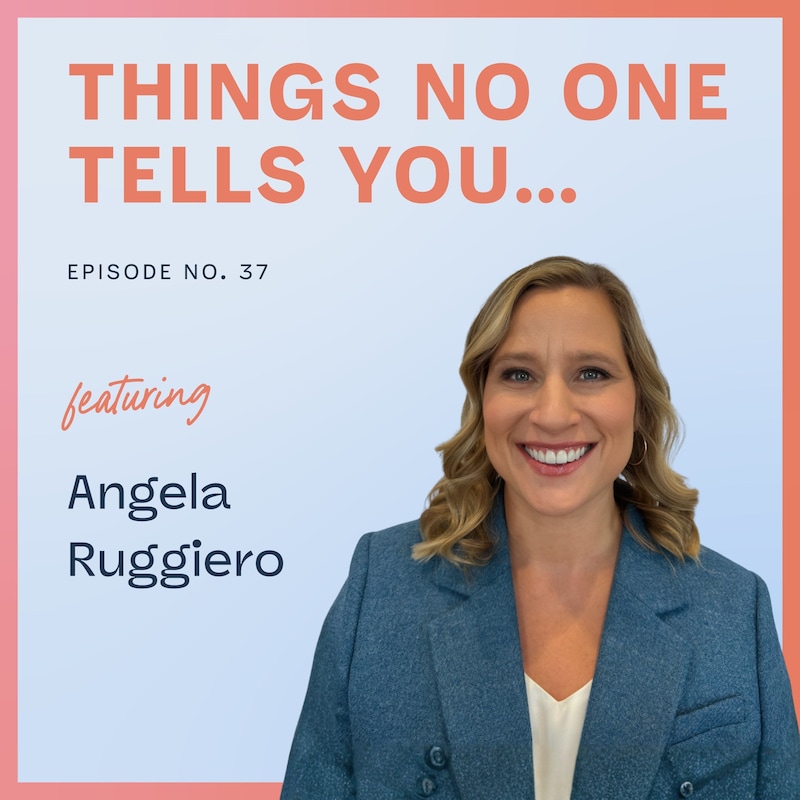
Shownotes
I’ve become increasingly curious about the actual “moments” when someone realizes a dream. In the case of an Olympian, from what I’ve been told, the moment you win gold is quickly followed by the realization of everything that got you there. In many cases, according to those who have been there, it’s like an actual floodgate opens… and the emotions just flow.
In this episode, I sit down with one of those Olympians - my friend Angela Ruggiero, four-time Olympic medalist (including gold in 1998) and Hockey Hall of Famer. We talk about what it really feels like when everything comes down to one final moment. We were together broadcasting women’s hockey during the winter Olympics, and being beside her as the United States women played Canada in the gold medal game was unforgettable. The biggest hockey rivalry and overtime? Forget it!
We talk about nerves that never fully go away, the weight of representing your country, and what it takes to help build a league and a future for the next generation. We also discuss how women’s hockey is entering its most powerful era yet - oh, and how Angela became the prolific athlete and leader she is today.
What You’ll Discover:
- Seeing the champions up close in Milan (03:18)
- Belief vs. self-defeat (16:29)
- Leaving home to chase a dream (24:28)
- From Olympian to entrepreneur (43:09)
- The inequities that still remain (53:23)
Angela’s story is about belief, not just in yourself, but in what’s possible when a community shows up around you. That’s what I love about these conversations. The part behind the highlight. The mindset inside the moment.
If this episode resonated with you, make sure you’re subscribed to Things No One Tells You so you don’t miss what’s next. And if you loved what you heard, share this episode with a friend.
You can watch this interview on YouTube: https://youtu.be/u19KyvZjfqY
For a full transcript and more, check out our blog post: https://www.lindsaycz.com/show-notes/angela-ruggiero-37
Check out more from Angela Ruggiero on Instagram:
https://www.instagram.com/angela.m.ruggiero/
Support this podcast:
Follow Things No One Tells You on Instagram: https://www.instagram.com/thingsnoonetellsyoupod/
Stay connected with Lindsay https://www.lindsaycz.com/ and follow her on Instagram https://www.instagram.com/lindsaycz/
Subscribe to my YouTube channel https://www.youtube.com/@lindsaycz
Transcripts
[00:00:32] Lindsay: Hey guys, welcome to this episode of Things No One Tells You. Alright, I am so excited for my guest today because she's one of my favorite people that I was working with during the Olympics. Angela Ruggiero is a four-time Olympic medalist. She won gold with the women's hockey team in 1998 in Nagano.
[:[00:01:16] But Angela Ruggier's story is just fascinating because. She grew up in California. How she got into hockey is just really cool. But more than that, like what she has done for this sport and just learning what it takes kind of to be an athlete, but also in any industry or any part of life, there's so much stuff that's relatable with the things that she sheds light on.
[:[00:01:55] Lindsay: Alright, Angela, I'm so glad to see you again. And so I wanna set the table on where we left off because we were in the studio in Stanford, Connecticut, and you know, the women had just won gold.
[:[00:02:14] Angela: So yeah, the adrenaline was rushing, as you know. We had so much fun calling in the studio together. And then I had to sprint back to my hotel, get my bag, get a red eye, and go to Italy that night, to be a part of the last three days of the Olympics.
[:[00:02:53] Lindsay: What was it like when you saw the women's team, members of that team, for the first time when you got there?
[:[00:03:18] They were still on a huge high, hadn't slept, you know, raspy voices from their celebration. But just so proud of them, honestly, at the end of the day, for what they had accomplished and the way that they did it. As you know, an Olympian myself, a member of that first gold medal team in 98 and several teams after, just to see the, almost like the next generation show up like that in the form that they did and the resilience that they displayed.
[:[00:04:06] So I was just really excited to be there, hug 'em and just say congratulations in person before the storm, you know, when they hit American soil, you know, it's like everyone wants a piece of 'em and wants to meet 'em and congratulate, which is what they deserve. So it was, you're almost in a bubble at the Olympics, like there's only so many places you can go.
[:[00:04:27] Lindsay: Which is right. You know what's funny about that is like when you say the bubble, that's how, on a very different level, because I'm not an athlete, I didn't compete or win anything, but like that's how I felt coming out of my bubble of coverage for that like two and a half weeks because it's, there's this interesting like reentry thing that happens where I feel like you're so, I was so excited to like come back to my family and just be back in the grind.
[:[00:05:10] Totally. And for me, it was just riding along with it. Yeah. You know what I mean?
[:[00:05:17] Lindsay: Yeah.
[:[00:05:26] And, and yeah, your point of adrenaline, I mean, my adrenaline was pumping. We're on live TV, andI'me like playing jazz together, making sure, you know, we're talking about these players and, in the right way. And, this is their moment. You want to nail it. You wanna make sure everyone knows who they are and what they did.
[:[00:05:56] Lindsay: yeah,
[:[00:06:12] So yeah, I felt the same way. I was like, okay, my kids, my family, I'm gonna like to sleep.
[:[00:06:43] Also, you have mentored, you know, more than one of those players played with more than one of those players. And so I was curious to see, like, I was assuming that you were maybe having just relived certain things like in. What was that like for you? What, now that you've had a little bit of time to like, process? Yeah.
[:[00:07:06] Angela: Yeah. So it's funny, I was closer to the team that won in Pyeongchang. I actually got to give them their medals.
[:[00:07:28] Right. So, Megan Keller pulls me aside and goes, who scored the game-winning goal?
[:[00:07:33] Angela: Should my dad pointed you out, Angela, when you were playing? And I was young and said, watch her. You want to play like her. And you are the first women's hockey player I ever watched, I ever paid attention to.
[:[00:07:46] Angela: God. I was like, I didn't know that. I met Megan Keller. I love her. I've, I, and I was like, I love your game. When I saw her play at Boston College, I was like, that kid is amazing. Right? There's KK Harvey, who you and I were like, oh my God. She got MVP. She was amazing. I wrote her a letter years ago. I think in the last Olympics, Beijing, they had all the alumni that wore the same number, write a letter, and she's like, I still have the letter you wrote me.
[:[00:08:32] not only like fangirling them because we covered them, and I was like, ah, this is the best hockey ever. Yeah. I was so impressed by them. But also, I'm emotional, like, oh yeah, I did play. You know, like, oh yeah, I was. A halfway decent hockey player, and my job back then to, to inspire that next generation.
[:[00:09:07] It was special, and you know, it's their torch now. Like they're the ones that are inspiring that next generation, that kids will write letters to them and pull them aside. And so that's like for me, the like, okay, Angela, you're, you know, you're an old alumnus now, which is fair. But you're still sort of tied to the current generation, and look at what they're doing.
[:[00:09:31] Lindsay: Yeah. And, but also wow, like it's really special that you get to see that. Moment of impact.'Because I think probably not everybody gets to see that. That's really powerful.
[:[00:09:42] Lindsay: That you're like.
[:[00:09:54] And again, remembering how it felt for me and my teammates and the relationships we have to this day. I'm like, you got, and I was always telling 'em, I said, you guys have made friends for life. You will see that WhatsApp chain I was telling you about, the 98 ERs, like the 20 eighteen, like, these teams stay together for life.
[:[00:10:30] So I, yeah, I got to see that and hear that and be a part of the, you know, USA hockey community.
[:[00:10:48] Yep. That's from Nagano. Correct. And she was texting with them during the gold medal game and sharing some of this stuff, which is awesome. And that's exactly what you were saying, like they're gonna see, they're gonna be friends for life, whatever. Really amazing. But really, it's like, so does that make you realize anything since you've had that really unique experience too, of that full circle moment of the giving back part of it too, like, 'cause that is so rare that you're able to really see how that has manifested a little bit.
[:[00:11:46] You almost forget. So that, like, I almost forgot what my impact had been in some weird way, or the feelings of being an athlete. And then when we're watching, when we're commentating, when we're there physically, when you're, you know, you see that when you're in the rink or when you hear the anthem, or like, there are these certain moments that, or you smell the air of an ice rink, like brings you right back.
[:[00:12:37] Like, I'm just so proud of these guys. Yeah. I'm excited for them. I'm nervous for them too. Like, I don't have control like I did when I was on the ice, so I'm like, oh God, please figure it out.
[:[00:13:04] Yeah. And I'm like, I strategically did not wanna bring up that moment until I had to. 'cause I'm like, I don't, you know? Yeah. And thank goodness.
[:[00:13:22] I wanted you to score. We had all these graphics. You're gonna break the record for goals. This, you know, you're gonna get the game winner, you're gonna be the hero. I was like, we couldn't have scripted it better. And I said right at the end, I got so nervous though. And of course she reminds me, like, inch, you think you're gonna win till like the buzzer?
[:[00:13:58] When are we gonna score? Who's gonna do it? You still have to have that belief, that positive mindset, and like that's what she said to me right away. We knew we were gonna score, Ang. Like we were just like, who's gonna do it? And it was like this confidence that I'm like, oh yeah, you're right.
[:[00:14:28] We were gonna, we were gonna win that game. And when they scored that tying goal, they all said we're definitely winning this game. Like, something switched in their head. And so it took a veteran like Hilary to be like, and of course we're gonna tie the game. Like this is, you know, meanwhile you and I are like, oh God, what do we do?
[:[00:14:57] Angela: I think you gain it along the way. I think you generally have a positive outlook. You have to believe in yourself.
[:[00:15:24] but the difference of like a silver and a gold or a medal or no medal is this like, it's what every elite olympian or pro athlete I think has to have in the back of their head that like, that they're gonna manifest it, they're gonna make it happen. it's, you have to stay po you have to internally believe, or else you self-defeat right in advance.
[:[00:16:06] But like, oh, you came back from five nothing, and you won that game. Like, oh, we can do this. And then you do it again and again, and then you realize at some point, like you have control. So yeah, I think it's something that's a little bit of both. Like you're born with that optimism, but you accumulate these reps on that, where you're like, no, we have to believe, or else we're gonna lose.
[:[00:16:47] I think those Olympians, like again, the very best, which this team proved they had. It's like, we're gonna win no matter what. Even if we're down by a goal. Two minutes to go.
[:[00:17:10] Like in the Super Bowl, like all these, you're right, it's like elite athletes across all sports too. That's a common thing.
[:[00:17:30] And Hilary Knight being on the bench, going, guys, who's gonna score? Who's gonna do that? She, I ended up doing it myself. But like, you have a whole team of kids, essentially, and some veterans. But like, and I've experienced that on my hockey teams, which is why, you know, like you learn this in sport in a safe way.
[:[00:17:59] Lindsay: Yes.
[:[00:18:01] Lindsay: Yeah. So how would you? Right. So, okay. Do you have an example of a law you could use in the real world?
[:[00:18:32] You're literally in control of your life. And that's, I think, the thing that sports to me is amazing. It's like, you can, or you could say, well, I can't afford the movies today. Right? I'm never gonna get in at school. Or like, I can't get that job, but it's not gonna happen. Anyway, that's been my experience at least.
[:[00:19:02] Which is like another Tom Brady type of parallel.
[:[00:19:29] And on the flip side, with the men, with like T.J. and Anson, who are the analysts, like, because you're all's insight, especially you, because you have been on this stage and you have won, you know, you've medaled four times, including the gold. Like, there was just. There's something that you can't describe about being able to watch a moment in time that is going to be a historic play out, but also sitting there with someone who has this inside knowledge of it.
[:[00:20:23] Yeah. So being in that moment, I think for me with you was like, oh my God, I have just realized what it is that I love so much about my job. It is the moment that it is having the luxury, like the truly crazy, what's the word I'm looking for? Just. Opportunity to watch this thing that is about to happen, that is going to change lives.
[:[00:21:01] Angela: Yeah.
[:[00:21:10] Angela: No.
[:[00:21:12] Angela: No, it's so fun. And again, having played and now covering it with you and you and I, loved working with you. It was so fun. yeah. Because you gotta figure out how to then express what you're feeling or you're seeing, which to me is just like. Of course, this is what's going on in the locker room.
[:[00:21:44] I've never, girls, boys sign up for hockey. We'll see registrations through the roof because of this.
[:[00:21:52] Angela: the, where I was when I won that medal, that, that Megan Keller goal or that Jack Hughes goal, like I know where I was type of feeling like that's that next generation and having been a player living in that little bubble.
[:[00:22:29] I loved it too. I had so much fun, 'cause yeah, I knew in some ways like this. After all, it turned out the right way too. You know, the right, you know, the amplification effect that it's gonna have. It was so fun.
[:[00:23:02] Yeah, I know that sounds weird, but I just, that was pretty, it's, it was a really cool, unique experience. And also before I dive in, 'cause I really, I want you to share a little bit how you got started in hockey, your experience, all that. When you're talking about, like the note that you wrote, one thing that I do think that I hope people take from this is, and from your perspective, is just the power of giving back, but also like that type of thing.
[:[00:23:47] And I know people do, but I think sometimes, especially in my line of work, you're doing interviews, dah, you don't typically take, you know, do that. But I think that there's such power in just taking the moment. To either tell someone like that, yes, you love their game, or write them a note. You know, that's one of the things that, it's like, those things matter, you know, and you don't always see it, you don't always know.
[:[00:24:28] Angela: Yeah. So I grew up in Los Angeles, and there's not a lot of hockey there.
[:[00:24:54] Just to give you a sense. We came out east, we played in a summer tournament in Connecticut, and I got seen, and I was 14 at the time, and they said, oh, she's pretty good. And she's got really good grades. And, yeah.
[:[00:25:11] Angela: I loved hockey.
[:[00:25:40] The locker room and the music and the stupid dancing. And it was just a very different vibe as a 14-year-old. But I loved hockey at that point. And so yeah, I got an opportunity to go to Choate Rosemary Hall, a prep school. My dad grew up in New Haven, Connecticut, so we knew of Choate. I never dreamed that I would get to go there, and from California, no, like kids don't go to prep school.
[:[00:26:19] And it really was to get an education and to be able to continue to play hockey. and hopefully get seen by College Scouts, which was sort of where my head was at that point in time. But, yeah, it was crazy. I was on my own at the age of 14.
[:[00:26:36] Angela: Oh my god. So nervous. So nervous. Will I fit in?
[:[00:27:02] but no, I think more socially when your parents aren't there, and you're on your own.
[:[00:27:08] Angela: You're having to figure it out. And this is before, you know, FaceTime. So I'm on a phone, a physical phone, talking to my family every night at seven 30 on the dot, to check in. I mean, that's all I had between then and, you know, Christmas when I got to go home, and summer.
[:[00:27:44] And, but again, it taught me a lot. Like you, you know, you're capable of more than you think. It's gonna be hard at first. And once you adjust, once I adjusted, I flourished. You know, once I've figured out how to, what do I do, and how do I act, and how do I manage my time? And at first it was a little rocky.
[:[00:28:23] Lindsay: Wait, what did those teachers that you stayed in touch with say after your Olympics, after your gold?
[:[00:28:42] So, you know, Alex Evoy, who lives up the road, you know, she's, I'm still close to her and her daughters, who are now grown up, who are little kids. You know, Ray Diffley, who was the admissions officer, wrote this really cute, and Hilary Knight went to Choate too, by the way. So he wrote this cute, you know, he's put these pictures of us with his daughters when we were that age, you know, and he put this cute little thing there.
[:[00:29:26] They took, they gave everyone the day off to watch the game.
[:[00:29:31] Angela: And then we had this huge assembly with, you know, I got to bring my medal and show everyone when I came back. So yeah, it was a great environment for sure.
[:[00:29:47] I know you said the hockey side was easy, but in terms of skill or on the ice, it seems like you can do it all. What would you say was one of the hardest things for you to maybe get used to or get good at?
[:[00:30:10] Lindsay: Really?
[:[00:30:26] So I had to; that was a big piece of the hockey itself that I had to adjust for. But I love the team. I love them, you know, I had to push myself in a lot of ways. versus being pushed. So that was another, okay. What are you doing when no one's looking? Are you still first on, last off? Like, you know, and this is what sport teaches you.
[:[00:31:04] Lindsay: At the same time?
[:[00:31:19] And then on Sundays, we had games. So I'm again, who can pick me up?
[:[00:31:25] Angela: No, not my parents. I had no ride. I didn't have a car, so I had a list of all the parents. And I'm like, can you pick? And I had no idea where they were coming from. I didn't, you know, I'm in high school geography, I'm clueless.
[:[00:31:52] and I relied on, you know, again, it takes a team. It wasn't me. It wasn't only me getting myself to that gold medal. It was all these parents, it was all these teachers. It was obviously my family back home. But like there, there are a lot of others that contribute to your success. Which is why, again, we're in, we're watching Milan, and you're seeing those players, and they flash to their families and the people back home, the watch parties back home, and all the, like, these athletes have so much support, and you know, some of it, maybe you don't realize it till like.
[:[00:32:33] Lindsay: And also really cool that, obviously, is like the athletes that continue at their craft or the ones that you know how to ask for help and you do it in the right way.
[:[00:32:49] Angela: Yeah. Lindsay, think about that first statement before, like, I wanna be an Olympian, and I'm by myself at a prep school. But I knew, okay, I gotta get on the ice, and like I'm, I don't feel guilt.
[:[00:33:07] Lindsay: Yeah.
[:[00:33:19] They were like back there. Everything I did was like, I'm gonna, I'm gonna play in the Olympics. One day, I had a little cocky card of the 19 men's, the 1980 men's hockey team,' cause there was no such thing as women's hockey at that point. But I had like, I was a hockey player for career day in the second grade, and everyone's like, who are you gonna be?
[:[00:33:37] Angela: Yeah. I was like, I don't know, I didn't wanna be Wayne Gretzky. Everyone's like, you should be Wayne Gretzky. I'm like, okay. Like, sure. I'm like, I just wanna be a hockey player one day. Like, I didn't see myself as a second grader because there was no women's hockey back then. But I was like, I want to play hockey one day as a, like, that's what I want my career to be like.
[:[00:34:06] Lindsay: I think it's also across, different, you know, genres of life. It's like I can remember being like, okay, I really wanted to do broadcasting.
[:[00:34:30] Angela: And you did it.
[:[00:34:43] Like, and obviously you weren't, and you're out of your comfort zone. Like, it's interesting how you perceive something after you're like, having this conversation makes me think about that. Or like, you're just putting in the extra hours, right? You're like, what do I need to do? And, you pay the price in other ways, like relationships suffer, whatever.
[:[00:35:07] Angela: I think it's the same. I don't think it's sports. Yeah, it's you.
[:[00:35:11] Angela: I think the biggest problem is kids, adults, even. Pick something they wanna do, that is, they don't actually want to do. They get pulled into whatever everyone else wants them to do.
[:[00:35:41] You're gonna self-select the environments you're gonna put yourself in uncomfortable situations and thrive in them. I wanted to see the figure skaters, I'm in these Olympics, I think she said she loved, she loves adversity. And I was like, oh, I love it. It's like if you're in the right kind of adversity. Yeah, which is like towards something you want to achieve, it's awesome.
[:[00:36:15] But like, you probably knew you wanted to be a broadcaster before anyone else. Like you self-selected that and like paved the way to get here and put yourself in those environments and didn't take no for an answer. Or you were, I don't know. You were in, you tell me like, I'm sure, it's a similar story.
[:[00:36:35] Lindsay: Yeah. I think it's a different environment. It's like you, right? I would say that the difference, or the thing that might be a common thread is like I was really wanting to do stuff that took my, like, once I found what that feeling was for me, which was when we did this college show, it was a practicum, it was a class at my college, so we had to be every different role that it took to put on a broadcast, you had to be for like these three weeks.
[:[00:37:24] It was like, it was this different creativity that I felt.
[:[00:37:27] Lindsay: Yes, I was right. Lit me up. And so that it was like, then it became chasing the feeling. And I thought for a long time it was for me, I was like news. I idolized Katie Couric. I wanted to do the Today Show. Which is ironic because the man I married is in that role, which is so random.
[:[00:37:53] Angela: What would Katie do?
[:[00:38:07] Sports world, and I, was a chance meeting on a weekend trip to Jacksonville that got me doing NASCAR stuff. That was the last thing I would've ever thought it was doing motor sports coverage. And that kind of led to the next opportunity within sports. But I ended up gambling on experiences.
[:[00:38:50] And I'm like, Hey, this is what I think I wanna do, but this feels really weird. And you know, that was my group that I leaned on, and I took the job. And then anything, yeah, everything happened after that. Like, anyway.
[:[00:39:14] Right. Like, like I knew, okay, I am gonna be a hockey player in an environment where I was the only girl playing in the whole state. I wanted to be a, you know, hockey player, like my whole childhood. But I couldn't see it. There was no, I could see it. You can be it. I just, but I didn't let that's wild.
[:[00:39:33] Angela: Right. And then you're like, oh, this Miami thing, part-time thing. But I light up when I do it, and I feel amazing, even though it's not what everyone else should be doing. And the people that you trust who know you enough to be like, oh, I see your eyes get big when you talk about it. Go do it.
[:[00:40:08] Oh, okay. Hell, okay. 'cause you need someone to shoot the puck from the blue line for her to do the tip. Right. We're talking about hockey here.
[:[00:40:23] Come on, I wanna practice my tip shot. She scored the time goal with the tip and shot. She's tried, she's practiced that a hundred thousand times. Easy. But that took someone to be like, well, I'm gonna score that goal one day. I'm gonna, you know, so it's all psychological to me.
[:[00:40:39] Angela: Right. Sports, it's, I think sports though, you can see an outcome.
[:[00:40:47] Lindsay: Yes. And I do think, so you went to Harvard, you, I think that's also a really interesting part of your story, like, and I love how you have said that it, you felt like it pushed you in ways that you were excited about, which also was related to a bold sport, and I love your sports innovation labs. That's the business that you began. So yeah, I'm with Harvard. Like, can you explain a little bit of what that experience taught you or what, you know, what the most, when you look back, like a meaningful part of that process was? Yeah.
[:[00:41:29] Lindsay: So let's go to Harvard.
[:[00:41:49] The people that were really good at bird calling or like National Merit Scholars or like, could speak 10 languages and like, surrounded by really interesting people that kind of got me outside of the hockey bubble. Honestly, when I was at, when I was at the rink, I was like a hockey player, but then when I crossed that bridge, I was a student and I got to absorb all these like, amazing lessons and teachers and courses and people and, that I think opened my aperture, especially when I graduated, even though I was still a hockey player.
[:[00:42:38] Lindsay: Yeah.
[:[00:42:54] I got lit up again when I went to one of those classes. I'm a big nerd, I think inside, but I was like, oh, cool. I get to learn about all the functions of running a company and what that would look like. And that gave me more confidence when I got through that, which was very hard.
[:[00:43:16] Lindsay: Yeah.
[:[00:43:36] So, there's, I think, again, a lot of parallels to being an athlete, ENT, and an entrepreneur. But it's all intimidating and scary and hard. But in some ways, I'm like, that's what I like. I like to be in those. I like to be pushed. I like to, you know, see what I see, what else is in the tank, right?
[:[00:44:14] Lindsay: Wow.
[:[00:44:15] Lindsay: And what had
[:[00:44:34] Because my expectations were like, oh my God, I'm just happy to be here. Like, how did I even get in? And then I was like, wait a second, I can do better than this. Angela Ruggiero . Like, and I wrote 'em down. I'm big on writing things down, like writing your goals down. I was like.
[:[00:44:50] Angela: No, like a little, yeah, like a little journal. And I'm like, you know, and I had it for hockey, but I'm like, I'm gonna start applying that same to academics. I'm gonna get B'S this year. And I like getting B'S and a couple A's. I'm like, oh my God, I'm self-defeating myself. So I'm like, I'm gonna get a's like my junior year.
[:[00:45:28] Like I. Limited myself because I didn't believe, and I, you know, and then when I, so that's my, again, a very real example outside of sports of like, why did I go for the gold in sports? But like, tell myself I'm not good enough in academics when I could be. I just, it was all in the mind. It has nothing to do with your capability.
[:[00:46:09] We leave the Olympics, and we're like, I can do it.
[:[00:46:33] Angela: But I don't think I am, Lindsay, I don't think I'm that special.
[:[00:46:54] But if you can get on the right that's like my kids, I'm like, find something you love and work your tail off like, and learn from those mistakes and get up and keep going. Like, but align yourself and then outwork everyone. Like control of the things you can control, and you can do anything, literally anything you want.
[:[00:47:30] Lindsay: Oh, I like reps on that.
[:[00:47:40] Lindsay: Yeah, it is. It is there. Well, yes, that is a different thing about the Olympics because it's also like you're jumping into sports that are, that you're not necessarily covering all the time.
[:[00:48:22] But what do you think? This experience has made for the game, and what are you seeing, and what should people be thinking about? Like, yeah, this audience is awesome. Yeah, because I feel like they are sports savvy, but they're also very big picture savvy, so it's just that they get the threads that we're talking about.
[:[00:48:45] Angela: Yeah, no, I think I said it before the Olympics. I think I told you that I said this was gonna be the biggest Olympics for women's hockey outside of the 98.
[:[00:48:53] Angela: Team, the introduction of women's hockey is due to a few things.
[:[00:49:21] You have the PWHL now. The Professional Women's Hockey League here, and there's been many pro leagues, but this is sort of the most professional one that's sort of come out. You have the NCAA that continues to churn out amazing athletes, and the athletes themselves are just elevating the game. We saw that, like, they're just, skill-wise, they just keep getting better and better.
[:[00:50:03] Like, I think it's the best sport in the world. I don't think it's gotten the same coverage and visibility, but what, like most, you see it live, or you play, you're like, oh, of course I'm addicted to this game. It is such a fun sport. Yeah. It is everything I want as a fan or as a player. You know.
[:[00:50:52] I've come home with a silver, a couple of times, and it's just not the same reception as winning a gold. When you win that gold, and you get to see the, you know, the gloves going up and everyone's jumping on each other and the flag being raised, it's just a different emotion. So I think this is kind of coming out for women's hockey, for hockey in general.
[:[00:51:23] Lindsay: What's it like in hockey in terms of the balance between men's and women's and the experience there? You know, you talked about it playing on a boys team, but also just as you've come up, like what, you know, what can you share about that experience?
[:[00:51:48] Angela: Yeah. I think that's why the aftermath of the locker room call had such an, you know, resonated with so many women. In hockey, it's a boys' sport. I mean, it's always been a boys' sport. Maybe it is in USA hockey, maybe 20% of registered athletes are girls or women.
[:[00:52:10] Lindsay: Wow.
[:[00:52:11] Lindsay: Oh my.
[:[00:52:21] Lindsay: Seriously.
[:[00:52:27] I mean, we all experienced discrimination. Today's athlete thankfully doesn't have the same, but there's still an underlying, you grew up, okay, the girls have maybe the worst practice time, or they don't have access to the same marketing to elevate their college hockey. Or there's like, there's these subtle forms of discrimination still in the sport, unfortunately, that don't, it's not treated equally with the boys or the men.
[:[00:53:23] Why can't women's hockey be in that prime time? Nothing else on the calendar. We would have exponentially more viewers because it'd be prime time. Like those are the subtle things. You're like, oh, why is women's hockey slated for a Thursday at one against figure skating? Which I also wanna watch. Like, why can't we just watch the women's game and put it on a pedestal on the final day?
[:[00:54:02] Lindsay: Right, right. It's like you've come far, they're still really far away to go. I think it's important to pay attention to those subtleties and to, you know, to voice them so that it is,
[:[00:54:15] Lindsay: There's an awareness.
[:[00:54:20] We want it right before the closing ceremony. Yep.
[:[00:54:33] Angela: I don't think there's ever balance is the right word.
[:[00:54:36] Angela: If you ebb and flow like this week, you know, I'm back now, I'm like, okay, everything for the kids, I'll make myself available.
[:[00:55:08] but I don't think there's ever a balance, I think, okay, well I just don't see my friends for the next month. Like you, you kind of pick and choose where, why and you're gonna prioritize and try to do your best in the process. But I'm big on like, if I'm exhausted 'cause I'm burning the candle in a million different ways, like you're just not good at all.
[:[00:55:32] Lindsay: Yeah.
[:[00:55:47] so like giving myself permission and not putting as much pressure on myself to say yes to everything that I. I get asked to do. It's been really hard, but I think I'm getting better at it. I don't know.
[:[00:56:04] What do you, what have you adopted as your strategy?
[:[00:56:25] Pain, you don't. Pain is like you're gonna break your leg, or it's like that, a dissident that you feel when you're doing something you shouldn't be doing. Discomfort is like, Ugh. I really don't wanna say yes to this thing, but it'd be really good for me and like, good exposure and help,p and I'm, but it's a lot of work and, oh God, I'm intimidated, or I gotta, you know.
[:[00:56:53] Lindsay: Yeah,
[:[00:57:05] I try, that's why I try to find more fun in my job and the people that I'm around, 'cause my twenties are very different. I dunno. What do you do? Yes. What, how do, what's your barter?
[:[00:57:26] So, Harvard advice
[:[00:57:42] And then professionally, it's, you're just expected to be on for everyone all the time. And I'm like, so I honestly, I just, I give myself permission to say no and be okay with that. No,w in a way that 10 years ago, I'd probably say yes and be exhausted and burn out, honestly.
[:[00:58:00] And my husband's actually really good at that too, he's mastered that, and I think because a lot of it is like the nature of his job and the demand of how wacky his hours are, it makes it pretty easy for him to see. I think it kind of comes back to, for me, a little bit of what we talked about as like expectations in the same type of thing, or like following what you know is like the thing that you wanna do.
[:[00:58:25] Angela: But maybe what if you permitted yourself to say no, because you're like, I'm gonna have more in the tank for tomorrow 'cause I have this really big show, and you can like
[:[00:58:33] Angela: Trick yourself into letting yourself off the hook.
[:[00:58:38] I'm gonna apply that and let you know how that goes.
[:[00:58:44] Lindsay: Right. I'm gonna just, yes. I'm gonna focus on some of my time. I went this whole time without asking you, what is something that no one tells you that you have experienced from the journey that you think would be helpful for people to know?
[:[00:59:10] Lindsay: So the thing no one tells you is the importance of having fun.
[:[00:59:25] It was the same thing. It was dreadful. Like when I'm with my kids, and they're being a pain in the butt. I remind myself, like when I'm having to go into it with more joy, and like, I don't know, like I, I have to remind myself, and I wish someone reminded me earlier, like, remember when you have fun, you're, you thrive, Ang.
[:[01:00:04] Like. Don't, you don't have to follow the hard, you know, even though it's hard, it's fun, if that makes sense. So
[:[01:00:15] Angela: For sure,
[:[01:00:22] Angela: Feel easy. Maybe that's not fun.
[:[01:00:24] Angela: Easy. Yeah.
[:[01:00:46] Everyone's working together. You've got the people in position. Yeah. You're, you know, that the thing can get done. There are hard parts along the way, but you work together as a group and figure it all out. Like, but it feels just fun. Like, I don't know. It's hard to describe. You're right.
[:[01:01:03] You're present, and you're letting the moment come in, like you're feeling the moment and you're then responding to the moment. And so it's like this light, like, it's not like the pressure of live TV and like the urgency of the thing. You're just like, you're like, oh yeah, this is fun. Like, let's go, let's do it.
[:[01:01:26] Lindsay: Yeah. And I think that presentness allows for connection. Yep. And that is something too that I think about a lot. It's like that personal connection, human connection that comes up. Yeah. TThat'slike. Right. For me, it feels like when we, when you and I are talking about a moment in hockey and you, and it feels like, oh, that was fun and easy when you're making this point, and you're like, yes, that makes so much sense because it's also relatable.
[:[01:01:58] Angela: Yeah. But
[:[01:02:00] Angela: Yeah. But you had to receive, you also had to receive that, like you had to be listening and open and present. Yeah. Which again, I've been in the same conversation with someone, and they're like stressed about what they're gonna say next, or they're not really there with you.
[:[01:02:32] So. Whwas was using the expression jazz. It's like, you gotta play jazz,
[:[01:02:40] Angela: That's my expression to say, like, jazz music is like, I love jazz. I don't love jazz, but I like the idea of jazz. Like, that's hockey. You're reading, reacting, you're responding in the moment.
[:[01:03:09] And when Megan Keller sprints, she wisely knows where she is without calling for it all the way, you know, all the way down the ice. She knows to send that puck, and you're like, you're there. That is the flow of life. Like, if you can get into the flow of life, and that's what I forget sometimes, I get, so I gotta get this next thing, and I gotta do this thing, and I'm in my head versus like present.
[:[01:03:36] Lindsay: Wow. The thing no one tells you is that part of the secret of enjoying life is being present and her and having fun. And that should feel easy and might,
[:[01:03:55] Right. And they were a little nervous and probably weren't like, settled into their bodies with each other. And the second they did, they played jazz together, and they scored that goal, and they won the Olympics. Right. They were there
[:[01:04:14] Or not manufacture, maybe that's the wrong word, but like you've gotta, if you're not the underdog and if you're so favored, you have to create that underdog feeling, which I think is so interesting as a concept in general too. flow. So it's so interesting that you say that because I have heard a few different sports stars, athletes, whatever, use the word in my flow.
[:[01:04:55] 'cause I've never played like just how much of a . Orchestra or jazz or flow. It really is. But you're right. That's super relatable and awesome.
[:[01:05:15] Where's the puck? Where are we? How are we gonna, how are we gonna, how are we gonna do this right now? And then you can, you could respond on a dime, or a split second. Like you're reading and reacting in the moment. , cause you're actually present, and you're in that, and you, and doing it with a team.
[:[01:05:50] We were like, let's go.
[:[01:05:57] Angela: So, fun, solve world peace.
[:[01:06:10] Angela: The whole thing was fun. Who doesn't love the Olympics?
[:[01:06:18] Angela: Well, I'll be covering the women's NCAAs this year for ESPN. So tune in this weekend. We'll do the selection show, and then the finals will be later this month. So yeah, the semis and finals, and then otherwise I'll, I'm around. I'm, I'll.
[:[01:06:41] Lindsay: Yes. Alright. I hope to see you in four years, my friend. But no, thank you so much for coming on, you're the best. I feel like we covered so much ground that I did not expect to cover in that conversation, but I just, Angela is obviously extremely smart.
[:[01:07:20] But it was such an incredible experience because of how close it was. And coming down to that final moment, it was just my elation and the way she described it. Was back to when she won gold. Just saying that it's just a moment when that happens, and you win the gold, where this floodgate of emotions opens, and you just can't control it.
[:[01:08:05] Where it is now. They would not be there if it weren't for some of her support and her leadership. So that is super cool. I hope that you will watch Angela Ruggiero as she's, you know, coming up in different hockey coverage, and we will put in our show notes all the things where to find her, and all the other things.
[:[01:08:42] Thanks so much for joining me. I can't wait to see you back here next week. Please don't forget, follow and subscribe to things no one tells you. And of course, if you're listening on Apple Podcasts, don't forget to leave a five-star review because that's really what helps people get more. Listeners, we would love to grow this community.
[:



