Shownotes
Key Takeaways from your host Phil Cole, CEO of KLASSOLUTIONS
- The podcast has officially rebranded from the Dental Education Podcast to the Dental Business Podcast to better align with its focus on business strategies for dental practice owners.
- The episode emphasizes the importance of partnerships in dentistry, highlighting how collaboration can lead to reduced workloads and improved work-life balance for practice owners.
- Listeners are encouraged to consider whether they are ready for a partnership by evaluating their current patient load and operational systems before taking that step.
- Critical elements for successful partnerships include shared core values, defined roles and expectations, and transparent compensation agreements to avoid future conflicts.
- Regular communication and monthly partner meetings are essential to maintaining healthy partnerships and avoiding silent resentments between partners in a dental practice.
- The podcast advises seeking professional help from dental attorneys and CPAs when forming partnerships to ensure that legal agreements are thorough and protect all parties involved.
Please reach out to us via klassolutions.com with any questions you may have.
Transcripts
Before we dive in to Today's episode I want to share some exciting news.
After 18 months of bringing you content on coaching, leadership, accounting, marketing, transitions and every aspect of running a successful dental practice, we realized something important. And that's our name didn't quite match what we actually do.
Dental Education Podcast Sounds like we covered some more clinical topics and CE credits, but that's never been what we're about.
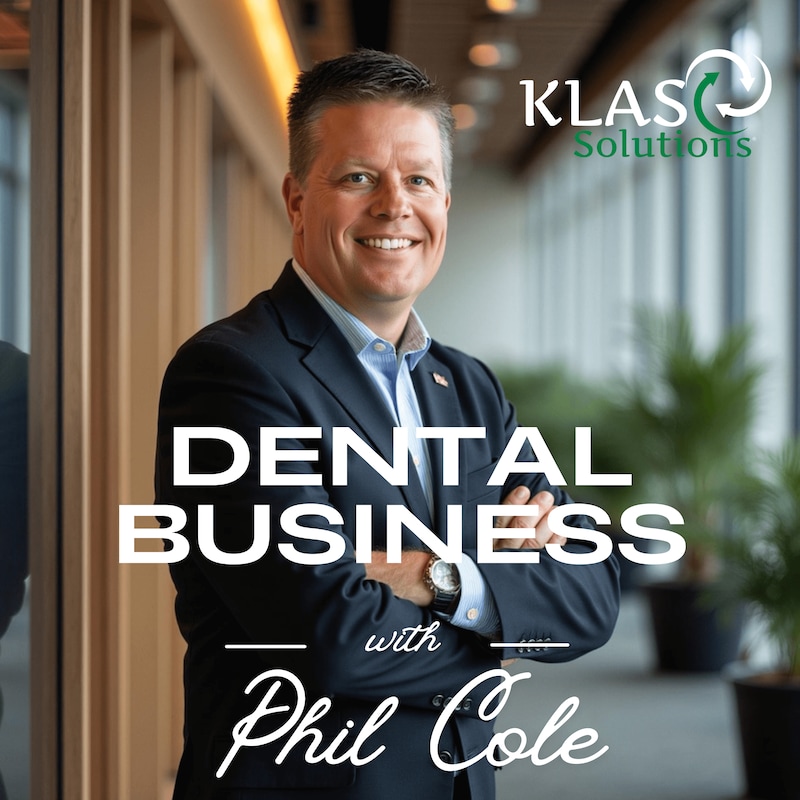
From day one, we've been 100% focused on the business side of dentistry, the strategies, the systems and solutions that practice owners need to build, lead and eventually transition their practice successfully. So today we officially becoming the Dental Business Podcast with Phil Cole. Now here's what's the most important Nothing changes for you.
Same feed, same episodes, same great guests and topics you've come to expect. You don't need to resubscribe or do anything different.
We're just updating our name and the artwork to better reflect who we are and and who we serve. Dental practice owners and leaders like you.
Now, if you've been getting value from this podcast, I'd love your help spreading the word about our new name. Share it with fellow practice owners, leave us a review and let's continue building better businesses together.
All right, so let's get in today's episode. So what happens when you stop doing it all alone?
We're talking about partnerships and group practices, why you might consider it and how it can help you scale and what pitfalls to avoid if you go this route.
Whether you're bringing in your first associate or dreaming about a multi location empire, I'll walk you through the steps and stories that make or break this transition. So let's get started. So why grow beyond solo? Well, let's start with the question, why are more dentists choosing partnerships and groups?
It's definitely becoming a bigger fad than in way previous years. So here's what I'm hearing. I'm tired of doing it all by myself. Or another thing is I want to reduce my hours and not be killed by production.
I'm ready to scale and build something bigger than myself. So here's some of the top benefits of growing beyond solo. You definitely get a shared workload so you can maybe have a better work life.
Balance built in coverage for time off. Two minds working together for growth. The ability to delegate leadership or clinical responsibilities. Stronger position for future sales.
Especially if you're doing the partnership because you want it for DSO interest. But I don't think that that's really what you should be getting into a partnership for.
You know Real story is we had a doctor that partnered with a young associate. He mentored him for two years and he went from five clinical days to working now three and a half days now.
For him it was great because he gets to travel more, has less stress and his collections actually went up thanks to having more shared energy and new ideas and using that partner to be able to revitalize himself. Now, what makes a partnership work? You know, not all partnerships are built to last. So what makes a good one actually work?
I think there's probably five critical elements. There could be a few more.
We at KLAS Solutions Transitions, we actually have, I have a 13 questionnaire worksheet that we give to, to both doctors wanting to look at being a partner with each other just to see. It's what I call kind of my match making worksheet. Let's see if we're all on the same page.
But here's just a few to consider and that is do you share the core values? It is so important. You don't have to be twins, but your vision and your philosophy of care need to match. It's, it's so simple.
I know it sounds that way at least, but it is so important to have that vision and philosophy and the care of how you want to take care of your patients match. If not, there's always going to be struggles. Second, clear roles and expectations.
You know, a lot of times you got to ask who's handling the business tasks, the clinical leadership, who's going to handle hr? I mean, don't assume it, you got to define it. Number three would be fair and transparent.
Compensations, production splits, profit sharing, ownership, equity. All of this should be mapped out before any signatures take place.
We've had a situation where a doctor wanted to get so picky with the production splits that they were pulling things he was trying to pull things down into, you know, the, the dollars, like under $5.
We have to understand that there's percentages and there's ways of doing it to make sure that everyone ends up getting the production splits that they need. Profit sharing takes place, distributions take place and all is good. Next, legal and financial agreements, they have to be professionally done.
Get a partnership agreement that covers buy ins, buyouts, you got to have divorce clauses in there. You have to have exit strategies. And I think this is the biggest thing, exit strategies.
Because there's so many times where we see where the partnership goes well and we've had specific cases in this where the partnership goes well for the first 20 or 30 years.
But now when it comes time to exiting out or wanting to start talking about the retirement, it starts to go haywire because once again, we assumed and then we didn't have it done. Or in this case of what I've had with other clients that weren't professionally done, they wrote up their contracts by their own.
And so there's nothing that's legally binding because of the way that they wrote it. Next in the fifth, I guess, is the regular communication. You have to have monthly partner meetings, honest conversations, and no silent resentments.
You know, I always recommend potential partners spend at least some, take some time and at least have three or four meetings working together, going over.
And that's why we developed the worksheet, our partnership worksheet, because we want to make sure that you go over all the things and think about it, have good conversations before making it a legal document and putting it into something that is not going to be hard or easy. Excuse me, but easy to get out of. So think of it like that dating period.
I guess it's a short dating period, but you want to make sure you do that before you go take on what, what I call the marriage. Now, how do you know if you're ready? Well, before you start googling how to add a partner, let's stop and ask, are you even ready?
So here are some signs that might that you might be ready for a partnership or a group. That one, you're consistently booked out four to five weeks or more. You're turning away new patients or cases.
You feel like your growth is hitting a ceiling. You want to create a legacy or sell in five to 10 years.
And you have systems in place but not the time to, you know, lead them, you know, or to, to nurture them. But you're not.
If you're in chaos mode and you don't have consistent numbers or reporting, you haven't defined your leadership sty, then adding a partner could add pressure and it won't relieve it. We work with solo docs and who brought on partners too early.
And majority of the time it's because there's no systems, there's no financial clarity, there's no agreement in writing. And within years, the partnership have fallen apart and it damaged the team in production. It's not something that you can rush.
Next, let's look at what the first steps are to building that partnership. So let's say that you are ready. What now? Well, here's a little step by step. If you're expanding into a partnership or group, assess your practice.
Are your systems scalable? Is your schedule full enough to support another doc? What does your P and L look like? This.
These three things are gigantic because I see too many times even bringing in associates where doctors feel the chaos that we mentioned before and they feel that they're ready. But the problem is is their systems are just not scalable or they don't have good systems in place to be able to bring on that associate.
And so the chaos makes it feel like you need one, but there's not enough in the schedule and there's not enough in that PNL to make you be able to bring that person in, especially as a partner. Step two, I would say is define the role. Are you looking once again for an associate, a partner, or just a future buyer?
What's the clinical scope, schedule and compensation? Have you even thought of those things? Step three is I would say, you know, recruit with the right intention.
I mean, use your network, dental schools, recruiters, or even social media, but be honest about the opportunity and screen for long term fit.
I think this is one of those things where I see so many times where doctors tend to put out an ad that sounds good, that makes it be attractive and you want to go work there, but when they get there, it's nothing. What they have what they expected. In fact, we just had this in Arizona where an associate reached out to us and it was the same thing.
Ad was great, but after two days of working there, nothing. What was described to them in the interview and through the ads that they reached out to go work there for.
So step four, another big one, get professional help.
Use a dental attorney and CPAs like KLAS Solutions, Accounting and Tax Services to structure the deal, build a solid partnership agreement, plan for growth. You got to have the leadership.
And even when there's disagreements, you have to have that understanding of how to handle those disagreements in place. If you want to open a second location, your first one has to be turnkey. That means systems leadership accountability in place.
Before you take on any other building or any other practice. That is something right now that we're dealing with.
Where a doctor wants to do a partnership so that they can build another practice or buy another practice and build it up again, make sure you're not confusing the two and make sure that you understand what that partnership and that and the person coming on to be that partner understands clearly what your vision is and what your expectations are as being partners. All right, so here's the bottom line. You don't have to grow alone. I mean, partnerships can give you time, freedom and profit.
But I'M going to tell you it can only happen when you do it right. So slow down, plan well and protect the relationship with clarity and contracts. So here's a quick action item for you for the week.
Ask yourself if I could reduce my hours or grow without working more, what would need to change? That should show you if a partner is the right step for you.
And if you're exploring partnerships or hiring associate or building out that second location. Hey, this is what we do at KLAS Solutions. We help Dentist's like you, build dream practices with people you can trust.
Visit klassolutions.com and let's talk. Thanks for tuning in to the new Dental Business Podcast.
And don't forget to subscribe to the Dental Business Podcast. And if you found value in today's discussion, please share it with colleagues who could benefit from it. These insights as well.
Until next time, build smart, grow with intention, and take care of your future self.