Shownotes
Is “getting back to normal” after trauma really the goal—or is it time to rethink what healing actually means?
In this episode, you’ll meet Adam Pearce, co-founder of LoveYourBrain, whose deeply personal story began when his brother sustained a traumatic brain injury just before the Olympics. What followed wasn’t just physical recovery—it was a profound exploration of acceptance, resilience, and the power of connection. Whether you're navigating recovery yourself or supporting someone who is, this conversation redefines what healing looks like.
- Discover why healing isn’t about going back—it's about who you're becoming.
- Learn why acceptance isn’t a one-time act but a lifelong mindset.
- Explore how community, mindfulness, and resilience practices can accelerate emotional and neurological recovery.
Take a deep breath and discover how Adam and the LoveYourBrain community are helping people heal with hope, connection, and strength—without doing it alone.
Receive my free text messages by texting Whole Again to 866-612-4604
Did you know that stickers are wonderful visual cues to help you create healthy habits? You can get one of my free Pause Breathe Reflect stickers by clicking sticker.
To discover more and sign up for My RIPPLE EFFECT newsletter by clicking Ripple Effect.
We can also connect on LinkedIn. or at [email protected]
Subscribe to be sure you don’t miss any of the micro-meditations, wellness tips, and guidance that I publish every Monday, Wednesday, and Friday at 7:11 am.
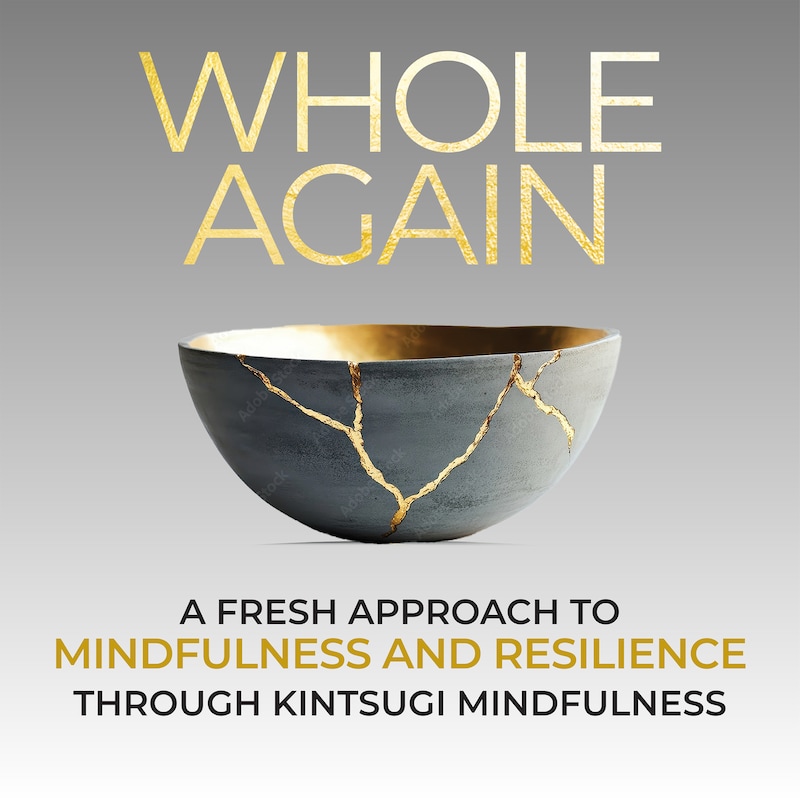
With Whole Again: A Fresh Approach to Healing, Growth & Resilience after Physical Trauma through Kintsugi Mindfulness, listeners explore resilience through personal stories of trauma, scars, and injury while learning to overcome PTSD, imposter syndrome, self-doubt, and perfectionism with self-compassion, self-love, and self-worth. Through insightful discussions on building resilience, resilience building, resilience and fitness, fitness and resilience, stress management, mindfulness practices, and digital wellness, the show offers practical tools like breathwork, micro-dose meditation, grounding techniques, visualization, and daily affirmations for anxiety relief and stress relief. Inspired by the art of kintsugi, the podcast embraces healing as a process of transformation, encouraging a shift in perspective from worry and being overwhelmed to gratitude and personal growth. By exploring the mind-body connection, micro-dosing strategies for emotional well-being, and holistic approaches to self-care, this podcast empowers listeners to cultivate emotional resilience and live with greater balance and intention.
Transcripts
In this episode, you'll discover two things essential for healing. Hey there, it's Michael. During the early days of my recovery, when I was still in the hospital, my wife would bring me lemonade with lunch. Besides being super delicious, it was a reminder that we can take lemons and make lemonade, and we are gonna do just that.
Over the next seven weeks on our Friday episodes, during this period, I'm going to be helping one of my family members recover to help them feel whole again. That's the lemon part of it. The lemonade is. It gives me an opportunity to reintroduce to you some of the amazing guests I had on the podcast when it was known as the Kintsugi Podcast.
And in this episode, I'm so happy to share one of them with you. But before we get to the episode, I first wanna say thank you for being here, and thank you for being a survivor. And as I've mentioned over the last couple weeks, if you wish to receive those great text messages that are just the right message at the right time, and they're all free, will text me whole again to 8 6 6 6 1 2 4 6 0 4.
I'll say that one more time. 8 6 6 6 1 2 4 6 0 4 and I'll set you up. Now let's dive into today's conversation. It's with Adam Pierce from Love Your Brain, which is a nonprofit helping survivors recover and heal from traumatic brain injury. I got connected to Adam and love your brain after airing my conversation with Amy Tetric, another episode from the Archives of the Kazuki podcast from last year.
Adam shares that healing isn't a return to normal, it's about who you're becoming, which. Is the message of Whole Again. He also shares, and you'll discover that acceptance is not a one time transactional thing. It's a lifelong practice, and this is what they do at Love Your Brain. It's all about community and connection.
Trying to help people become more resilient. Two key things for healing to occur. What Adam shares speaks perfectly to the messages we share here on whole. Again, I know you're gonna find great value from it. So if you're ready to meet Adam Pierce, take a healthy breath in and a slow releasing breath out and get to know Adam and his work.
Along with so many other like-hearted humans at Love Your Brain.
Hey Adam, great to see you, man. Thanks for having me. I think we're gonna be like brothers from another mother as we talk about healing and all the great work that you are doing and your community is doing. So I can't wait to get into it. So let's start here. Current day as we sit down, how is life treating you?
I feel very grateful. I have an incredible family. My own family. I have three little boys, an incredible wife, and yeah, my other family in terms of my parents and my brothers are all in good health and as a central aspect of my life. So I feel fortunate for there and then, yeah, drive a lot of meaning and purpose from this work we do with Love Your Brain.
Yeah, I can't wait to get into it. So one of the things that I love to ask, 'cause my wife and I love a good connection story, so I know you are married, you just mentioned it, got three boys. That's, that's a handful. Like I hope you have a well stocked refrigerator as they grow up. I'm a father of two girls and so what I've heard about boys, you can correct me if it's different, but when boys reach puberty.
Their, their body odor comes to life, and so I'm not sure if they've reached that age yet, but if they haven't, I am sending you a lot of strength and energy. But I would love to know how did you and your wife meet? What's your connection story?
Yeah. We've been dating since high school and uh Oh wow.
That's
so cool. Yeah, our meeting store is pretty funny actually. We, we were biking one late evening to, to get pizza actually with a good friend of mine. We were just biking up through town and we, we saw in the window that she was babysitting and I had this kind of crush on her at the time, and my friend knew her, so we went up and just scared the living life out of her by knocking on the window.
And that was the first point we met. And yeah, we've been dating for, or we. We've been together forever, 20 years.
Oh, that's terrific. That is so awesome. That reminds me of some of the stories from my youth. I'm not sure if this is cringe-worthy, but like when I had a crush on a girl, I would ride my bike past her house like all the time.
Like I would just do these like mile loops. It would, it feels as I share this right now with the public. With all of our listeners, it feels very stockish, but it was really innocent. I was just more puppy love and. I got a lot of miles in training on my bike that way. So
yeah, it's that's a great story. I love it.
That's funny. I remember the same thing with her locker in, in the high school. I would just be walking by the locker back and forth.
Yeah. Just I was, you just try to do it because you hope they'll notice you and they probably notice you, but they're like, what is that guy doing? Riding, riding his bike past my house all the time?
It's a bit weird. We never really connected. I got connected to the person I was meant to be connected with. And it sounds like you are as well, which is awesome. Yes, definitely. That is so cool. So I wanna get into the work that you do with Love Your Brain. I was hoping you could take us back though, to really the moment that's, I guess sparked this, it was life changing for your brother, life changing for yourself, and a lot of other people around you.
st,: er the year leading up to the:So there was this rivalry happening and obviously there was a lot of pressure and the media was building this story. And then he, yes, he sustained this kind of freak accident where he sustained a traumatic brain injury. Which left him in a coma and it's an ICU for a month, and then in, in inpatient for another three or four months.
Yeah. And it was, it's this journey I think you're familiar with, but I. Where there was a lot of uncertainty and was he gonna live for the first piece of this? And then what was the quality of life gonna look like? And that that led us into this world of brain injury that we had really no understanding of before this point.
And then we fast forward, he started to really make these incredible strides in his healing. And then that led us to doing an HBO documentary called The Crash Reel. And that moment with the film was really just us saying, look, we feel like. Kevin's made these incredible gains. There's a lot of inspiration and we feel like we can offer a lot of hope to people who might be going through a similar situation.
And what we didn't realize is that this film then started this, this kind of momentum where it started winning all these awards. It was shortlisted for an Oscar. And with that, the, the reality of the prevalence and complexity of TBI really was right in front of us and it was a really. Powerful moment because we felt like we were supporting people with this hope and inspiration.
But at the same time, there were people coming to us saying, Hey, it's amazing Kevin had a family to support him through this. And it's amazing when you do have resources to support you in that healing. And what we kept meeting was that's not the case for everyone. And, and the reality really was that there were not a lot of resources and support once you leave the hospital.
And how do you support someone in this journey?
That's incredible and such a great point that you're making is that sometimes we assume that people have exactly what we have right now. I remember when I went through my accident, I had a lot of support around me, starting with my wife and the rest of my family and just circles of friends that extended out.
in's brother, knowing that in: everything today. So back in:So can you share. More Adam with like how those early days were for you and the rest of the family. Just trying to figure out how to best care for Kevin.
Yeah, it's. In some ways I share that the very early days were almost easier than the year or two after because the fir, I come from a family of entrepreneurs.
So it's all about figuring out what are the solutions to the problems at hand. And we were lucky to be in an incredible hospital where the medical teams really, they could address at least the, to putting him in a stable place. And for us it was really just about. Moment to moment, how can we be here? And be here for him in a way that we feel like can just support whatever needs to happen to move forward.
And I remember those early days where it was like just waiting for the drips for of blood to go from dark red to clear. And it was days of just waiting for that progress. And then it was like these really small steps. But I think we were so fortunate to be in, in a place where those steps continued to make progress.
And I'll never forget being with a family whose son came in a similar time and they were, the story was different and he ended up not making it in that time. And just seeing a family also committed and connected where the outcome was different and just had so much compassion and for them, and just realizing how fortunate we were to be in a place where Kevin's progress continued, even though it was super slow, we could continuously, yeah, find some wins even in those kind of small moments.
Yeah, I love those small moments. Those small steps. It can be so trying, but that's how we get better small steps, hopefully every day, but not in a linear fashion. It's not consistently moving up into the right. If you're charting it out, there's ups and downs and sideways and twists and turns, and you have this moment, you have this breath.
That's all you have, and it reminds us of that. And that can be. Liberating in a way. 'cause we understand, okay, this is what we have. It can also be frustrating 'cause we, when we're ill or we're injured or we see someone who's hurting or suffering, we just want things to be better so quickly we wanna fast forward it.
In your work, you talk a lot about acceptance, so I know for me, when I went through my event. I was arguing with reality for a good while, like why did this happen? All part of the grieving process. 'cause I was grieving like the person I once was, and I would argue and argue like this was unfair and this was not supposed to happen and all that jazz.
It was only until I got to the point of accepting like what had happened. Where I was able to find a way to connect or heal. And I was hoping you could share a little bit more about how you view acceptance. Mm-hmm. Especially with when you're working with the people that you're working with in your community.
Like, uh, how important is acceptance in the healing, healing and reconnection process?
It's such a good question, and it has been a central. Practice still to this day, 15 years away, and something I look at and investigate on a daily basis. And I think that's why I'll back up and say the my, my big turning point.
So I basically. Quit my job. Spent a year by Kevin's side and worked with him day in and day out on his therapy. And then got to the your point and realized, look, he was at a place where he was starting to be more independent and really not need me as like a full-time caregiver parent in that role. And as brothers and best friends before this, we started to butt heads, as you can imagine, as competitive brothers were.
And I realized I just needed to create space between us and understand like. Really just, yeah, get, I spent every, I think I took a week off in a year of being by his side. So I just needed some space to even understand what I had just gone through and where I was and that whole thing. And I ended up finding my way to India and did a silent 10 day apostate meditation retreat.
And it, I share this because I had went into that retreat fully feeling like I had, I accepted who he was now and. I left that retreat understanding that I hadn't, I was nowhere close to what that needed to be. Oh, yes. Um, and when I went into that retreat, I, I wanted to investigate, like my, the story I had made up was, all of these challenges I was having with him was due to his brain injury.
When I left the retreat, I started to look at actually. The problems I have with him are actually my own issues. It's my own lack, it's my own expectations. It's my inability to accept this new version of Kevin Un unable to accept, I think some of the uncertainty that still was there and that that was a pivotal change point for me as a caregiver and in my dynamic with him and how I think about my relationship.
To any, anything that's changing and yeah, and really investigating what is acceptance, how does that look? And it's a really difficult thing. And you talk about grief, I didn't, I didn't realize the term ambiguous grief until probably five years ago. And for me, understanding of this idea of. Letting go.
Someone essentially died. I had to let go of that. But they're also a new person that's continuously changing. So not only accepting this loss of this relationship I had, but then having to really try to relate to this new relationship and a new dynamic that was forced upon me. And that process just takes a huge amount of work and yeah, and time in.
Working through those things, there is not a, there's not like a simple pill you take and all of a sudden your, your relationship is great again.
Yeah. Unfortunately there's no light switch.
Yeah. It just
can't make it better, like right away. And when we talk about acceptance, it doesn't mean that we're necessarily happy with the situation.
It means, at least from my perspective, it's like, Hey, it's like this, this is what happened. And. I can feel all the different emotions that come with the grieving process, but in here right now, this is what is. And from there I can take some thoughtful action. And again, as we mentioned, it's not linear, it's not easy.
It takes a lot, it burns a lot of calories, as I like to say, to get to this point of acceptance. And just the notion of the person, if we happen to go through. Something that Kevin went through, or you're acting as a caregiver, there isn't really going back to normal. You're going forward and you're creating something new as you go forward.
Did you get that question a lot when people when come to you like, Hey, does it like, are you, is Kevin back to normal or do you feel normal? How do you look at that question? 'cause that's something that I received a lot. People are like, Hey, are you back to your old self? Totally. And I would love for you to share if that was your experience too, as a family.
Absolutely. It and it still is to this day. And I think we live in a society though, where the word recovery. Means return to back to who you were. And I think that was a learning for us and we really work well. I can get more into the the work that Love Your Brain does, but it really revolves around resilience because resilience is not returning to who you were.
It's bouncing forward in a new dimension, in a new way. And the problem with recovery is that the thoughts that you're creating are all of ones of expectation of what was. So when those things don't happen, a emotion or the irregular, you know, you're. You're constantly confronting friction. There it is.
And a part of this work is educating people that brain injury is not always, actually, I've never seen someone be exactly the same version of they were. But I also try to help people say is like, that's a good thing. There's things that are not the same about Kevin that's, that are great and there's new parts about him that are better than the version he was.
So I think it's opening the mind from a fixed, it's like a fixed mindset to a growth mindset. It's really moving away from this idea that things need to be this way. And I'll tell you the other biggest takeaway I had from this retreat was that it was the first time I experientially understood impermanence and.
What I mean by that is, is my thoughts were so fixed on things being in this way that I thought should be, and when I could fully experientially see the nature of change, the true nature of change, things continuously arriving and moving, that I was able to start to. Dissect what thoughts, what I had, what thoughts were holding me back and what were limiting me to move forward.
And, and that was a huge turning point for me. And to this day, continuously creating that space to try to relate to, oh, why, like why am I holding this thought? Why do I need this thought to be true? What's below that? And then starting to work through those things. So it was, yeah, as a relationship tool, it was like critical in how I could relate to him as in this new way.
That's powerful. We sit here on the cusp of autumn in the northern hemisphere, so I think nature can teach us a lot about impermanence. Soon the trees will start to turn, the leaves will fall to the ground. The colors will be brilliant and people will flock up to your neck of the woods in Vermont because they realize that the beauty of the fall foliage is temporary.
It's not permanent, and its beauty is in its impermanence. Much like the cherry blossoms were like back in DC or in Japan. So that's the beauty of life. It's also the I, I think sometimes for a lot of people, the struggle of life, like we, we grasp on, we clinging to the beauty, we don't wanna let it go. And that holds us back, right?
So that actually restricts our space and restricts our thinking. And you mentioned going to this retreat, it creates some space. And I love your signature line in your email. Uh, the Vitor Frankl quote, I read Man's Search for Meaning and studied Victor Frankl's work. I didn't know about him prior to my accident, but I studied him since my accident and through my recovery and re-read Man's Search for Meaning as I rode my bike across the country two years ago.
And I would love for you to share more about that. Like why does that line or that quote from Victor speak to you?
Yeah, I think it's everything. When people talk about mindfulness, I just go back to this quote. Yeah. And it's between stimulus and response. There's a space. And in that space is our power to choose our response.
And our response lies our growth and our freedom. And what I've learned through meditation is that our minds are constantly creating thoughts and. Most of the time we're reacting to those thoughts. We're believing that those thoughts are true and we're following those, and either that's good or that's bad.
And through meditation, the practice is creating that space to, for wise discernment, for really deciding is this thought. Real and am I gonna react to that or can I respond to that? What's coming up to me and relate to that in a skillful way. And that's really this kind of the simple way of describing it.
Now, obviously living in that is what the practice is all about, but I think it's a, you know. I think to the experience of TBI, we talk a lot about having ants, automatic negative thoughts. There's always negative. And just even in the healing process, you're going into the hospital and they're telling you what's wrong with you.
They're telling you you're not the same as you were. So there's this constant reinforcement of negativity and I, and it comes from the family, right? We all haven't accepted or embraced this new reality, and we see that the challenges and the suffering that's happening. So we want it to change, but that sometimes can come out in a way that's very.
Negative towards the people we love and without this self-awareness, this space, that can be really damaging. So I think when we start to find these tools and these practices, we can start to have a relationship with them and ultimately the skill in deciphering them and then working towards the direction we want to go.
Absolutely. We love to create problems, you know, if we can create some problems, we might have a solution, and that definitely. Has a way of feeding the ego. So we definitely, in corporate life where I do a lot of my work, the leaders wanna create like the what's wrong. If there's something wrong, I can fix it.
If I can fix it, I can feel good. As opposed to what might be going right and trying to find some balance in what's working and what, if anything could be working better. And so we don't really have that type of harmony or balance in our thinking. I would love to now transition to the work that you guys are doing with Love Your Brain, and you start off, and you mentioned this just a minute ago, the power of resilience and the power of community.
So we can take them one at a time. You already mentioned resilience. Just the ability like when we fall down, we're gonna get back up again, but we'll be a different person. You cannot fall down and stay the same. I'd love for you to share more, Adam, how you see resilience and how you guys help people really find the resilience that's within them.
'cause I do believe like within us, each human we are, we're resilient creatures. We can find a way and thought. We could just start with the work that you guys are doing with speaking about resilience and how you see it.
Absolutely. Yeah. So the work, love your brain does. It all points to mental wellbeing.
And the two areas that we focus on are connection and resilience. And I actually heard someone frame resilience. Resilience is the journey, recovery is the outcome. And I love that because I think you hear these people who climb Mount Everest and they don't talk about the view of how incredible, like the view being the best part.
It's that journey. It's the overcoming the challenge. It's that process. So I think in like, we can understand that, but I think once we start to, to realize and start to frame things in that way, it just makes things, it, yeah, it can make, it can just lessen the suffering and make us feel like we're actually.
We're in a little bit more control or there's more milestones that we're creating that we're winning than we are losing. So it's been fundamentally, I always think back, Kevin and I were giving a talk one one time to all of these high level doctors and some, one of the doctors raised their hand and they said, Kevin, what makes you resilient?
And he looked at me and laughed, and he is, I have no freaking idea. It's just who I am. And that was the first time we started to really try to understand what makes people resilient and. I think as you said, we're all resilient. But I think there's certain ways in which we can, that we need to look at to understand what are the areas that could help make me more resilient, and what are the things that might not be, are limiting me.
Um, and the two areas that we look at are mental flexibility as one which revolves around the mindfulness component and then connection to others. So when I talk about connection, I talk a lot about, it's an internal connection that we have because I have a belief that, and. Until we're truly connected to ourselves is when we can really connect to other people in a way that
Ah, amen.
Into a deep way. Yeah, I totally agree. Yes.
And, and then also just the importance of having other people in our lives and who can support us and can be there to help us navigate these challenges and support us in this resilience way of being. I think that's like the primary area of. What we focus on and what our research looks at.
But I think it's, yeah, it's really trying to surround yourself with people who can see you for who you are, for who can understand who you are, but then also put the right conditions in place to help you navigate the unique challenges you're up against.
And when you guys release the documentary, and then you had that outpouring of S support and feedback, basically people coming to you saying, Hey Adam, great story.
Kevin's inspirational. You're inspirational, the whole community. It's remarkable of what kind of progress you've made. But hey, our situation here from a support structure isn't like what you guys had. So were people coming to you? And I think the answer is yes, but I would love for you to talk about this a little bit more in detail.
Coming to you to say, Hey, we're trying to find a way to become more resilient and we're trying to find our people that help, that can help us navigate this world that seems to be so uncertain with, was the genesis or the spark that created your nonprofit, was it solely built on the feedback you were receiving from people after the documentary?
Yeah, we didn't know at first like what people needed, what we could do to support what these gaps were. 'cause we were hearing like every story you can imagine from people in the most desperate situations to people who have Yeah, just unique challenges overall. So we, we had to actually spend, I think it was, yeah, about five years trying to really listen to what were like the common.
Things that we thought we could actually try to bring value to. And I had, I think, just observe. I grew up with a brother with Down Syndrome and I always like to bring David into this story because David was someone who I gained so much understanding from my parents around patience and acceptance. And I think as a family unit, the conditions that we grew up in were.
Quite a significant kind of piece of the kind of spaces we wanted to create to bring people into and. At first, we just were like, let's just do a retreat and bring all these people together and really focus on things like nutrition and rest and meditation and yoga, and let's just see what happens. And we had people come to these experiences and leave and they were truly like different people leaving.
And we were said, okay, what is actually happening here? So there were some subtle things, some bigger things, but as that process started to happen, it became very clear. Yeah. Yeah. Just in these kind of, in these processes and experiences, that connection is a fundamental aspect of our wellbeing. Sure. And connection is when your brain gets.
Like when you have a brain injury, you often lose that self-awareness, which as you, as which we know directly impacts our relationships. Uh, we felt like if we can focus on bringing these two aspects, which are not the whole, it's not the whole package are tools in the tool belt that people need, but these were two things that we felt we had.
Enough experience with that, we could start to try to create, yeah, the right conditions in helping people look at the, look at their challenges, move from a place of denial to acceptance, or at least starting to entertain, looking at the difficult aspects of what comes up.
I love the fact that you mentioned the toolbox.
Leads me to the next question for you, but to your point, when you have a TBI and you made this point earlier. You begin by losing a connection with yourself, like the noggin isn't working and you, you feel like almost disconnected. Through my accident, I had my own concussion, which they even really label.
. They were like, eh, back in:That leads you to come up with this retreat idea, this community idea that's based on mindfulness and yoga and rest, which no one could say those are eastern modalities, eastern ways of healing, and. I'm sure a lot of people are like, where's the Western science? Like where's the western medicine? Like we gotta get you to one of the thought centers, the leading institutions.
And what I hear you, you saying is that no, what we're offering is what we can offer, what, where we feel like we have expertise or knowledge, and that's with yoga and meditation informing like greater community to help people have that connection. And find the resilience that's within them. So it's not the be all, end all.
It's not going to bring someone back to health because we need other tools in our toolbox. I was hoping you could talk further about that, but how you see love your brain in relationship to maybe what people would consider Western medicine in treating TBI and concussions.
Yeah, and I like how you bridge the both because this is.
We need, the medical system serves an incredible purpose, and without it, Kevin wouldn't be here today. But at the same time, I think it's important to realize that the healing doesn't just happen within the medical walls. Healing happens for the rest of your life, and we have to create a bridge. From the medical, in the medical institutions to everyday life.
And that doesn't have to be so black and white. And I just think it's about how do we make this a more holistic experience. So the mindset isn't just we go in, we recover and we're back to the same and we leave. 'cause we realize that doesn't work. So it's more of how can we utilize the infrastructures that we have within the medical system, but just continuously add pathways to further.
Enhance that healing experience. So that's how I think about it. And I think it's, yeah, sometimes we get the woo yoga go sit on a mat. But I think the reality, yeah, that
test.
But another I, an important piece of our observation was the first time Kevin entered a yoga class, he went into that class and left a different human being.
And he talks about this again, it's being in a space where he can be completely present to the experience. And the healing that can come from that is very different than going into a physician's room and them telling you what you're not, where you are, what you're not good at, and having to get better.
And that's all he was getting. So when he could finally get into a place and just feel in his body, really become connected, more connected with the mind body in a way that wasn't feeling limiting to him, was actually a, it was like a psychological shift for him. He was like, he was clear, he had more energy.
He was just. He was like, he was so fired up and I remember it so clearly and he didn't have a teacher who was telling him what pose was wrong or whatever, but it truly allowed him just to connect to himself. And I think, yeah, and I think the research is starting to show that that can have a profound impact on, in your wellbeing.
So it's, it's exciting to feel like we can also. Part of our efforts are to do this research so we can start to just have a wider acceptance of that. The trajectory of healing can look different than maybe what it has.
Absolutely. And that's what I love about what you guys are doing is that it's research based.
You're validating the work you're doing through clinical studies. And I'm a byproduct of Western medicine, much like Kevin. I'm not here today without Western medicine. I've had plenty of surgeries over the years and. Plenty of medical interventions, but to the experience that you guys had. Yeah. When you go into a doctor's office or a hospital, the orientation is around, Hey, what's wrong?
And u usually it's like you see the nail sticking out of the wall, we take a hammer to it. What I found in my own recovery is that there was great progress when I tapped into. The beauty of yoga, the practice of yoga, the practice of gratitude and mindfulness, that really helped bring, to your point, Adam, a holistic approach to my health, a holistic approach to my recovery.
So I think having all the tools in your toolbox be something that you can access. Is helpful, not just be limited to one or two tools and not poo-pooing tho those other tools as woowoo or not as sharp. They're actually in some ways harder to do, harder to master than the easy fix that sometimes Western medicine provides to us.
And like getting to this whole spirit of community. I know as a meditation teacher, something remarkable happens. When we practice meditation together or we do yoga together, and I was hoping you can speak to that, especially if someone who might just do yoga by themselves in their home or meditate on their own, wherever it may be.
But you guys do GR groups, sometimes virtual, sometimes in person. Just that energy that comes from doing the practice together. How have you experienced that?
Yeah, I think it points to collective resilience. Yeah. There's the resilience that forms when we are connected to other people who understand us, who accept us, who believe in us.
There is inherently a resilience that comes from that. And I think I, I wish I had the study right now, but there are studies that show that social connection has more profound impacts than like, that is, is more, it offers more health benefits than. It like non-smoking or obesity, they're crazy. Everything.
Yeah. It's a, it's cri again, it's a critical to our wellbeing and one of the most common things we heard from people after TBI is that they felt isolated. Sure. It just felt like such a natural, yeah. Again, tool to have in the belt, but offering the spaces that allow people to really be vulnerable, to really connect to like the dark, the darkness that can come from this.
But when you can offer that in a place where. There is that common shared understanding, like the vulnerability becomes the superpower because it's instantly, oh, if you have that, and I have felt like I'm the only person in the world that has it now that we, now that I feel that connection, that I'm not like crazy, that instantly opens up possibility.
So it's a, yeah, I've just seen it like just from the simple practice of putting people in a space and saying, share your story vulnerably. Yeah. And then one person might touch into that and the next person that does. And by the time you're around, you're hearing like you're more connected to a group within an hour than you are with some of your best friends.
Absolutely. Yeah, absolutely. You talked about earlier the automatic negative. Thoughts that are automatic negative thinking, but we come up with this story that we're the only ones going through something like everyone else is like akay. And once we get to a point where we can start sharing, we're like, oh yeah, you too.
You're going through that. Or you went through that, oh my God, I thought I was the only one. And do I feel more human now? More normal. It's so fantastic when it happens. And to your earlier point, the studies. Have proven, and it's not just one study, it's multiple studies. I think one of the big ones, maybe the one you were trying to reference was the Harvard study, the longitudinal study from Harvard that's now, I think 88 years old, but they point to connection as like the portal towards happiness or Dan Buttner's work with Blue Zones around longevity.
It's about community and connection, and we know to this day the loneliness epidemic in our country, at least in the US and probably global. Globally, how it's impacting our health. I think we thirst for community and belonging and it's so great that you guys are offering that to people.
Thanks. Yeah, it's, it's really, it's a really amazing feeling to see people light up when they feel that sense of connection they haven't had, and even to themselves.
I think, yeah, just unlocking kind of our potential is exists within us, I think, and often we think that it has to come from someone or something else, so I, yeah, I think there's just a lot of power and potential within helping people direct towards inwards work.
Yeah. You're providing them a beautiful gift.
You're a humble guy. And last year you were given a pretty big award, a pretty big recognition of the CNN Hero award, and I was wondering if you can share more about what went through you when you were, when you were told that you were gonna receive this. 'cause it's pretty fantastic. But again, being the humble guy, you were, I wondered like how did it land?
How did it land with you?
It landed. I think firstly it was like a. It feels good to be seen. And I'm not, I do not like the spotlight. I don't like, like I'm an introvert. I'm happy to sit and be quiet. So I think there was a feeling of that, but I that by far and away, the biggest thing it pointed to for me was the, this community we have, because it's because of the people that show up and are willing to be in this work that, that this award represents.
It doesn't represent me. It, it may be a piece of that, but. I really feel like this was something that is honoring people who face really tremendous adversity and can hold that with possibility and with hope and continuously work in that space. 'cause it's much easier to just put it under the rug and pretend that nothing's there.
But I think over time, the only person that's really harmed by doing that is you.
Totally. Yeah.
So if, yeah, I, I think it's. Yeah. It's about the people that, yeah, have the courage to show up in this space.
Beautiful. You bring so many people along with you on your ride in your current day. We now talk about TBI concussions more frequently, especially as it relates to sports.
We see it happening in football. We see it happening in soccer, even volleyball. What would you like people to know today about TBI that you don't think they truly appreciate yet? We've made progress over the last decade, but from where I sit there still seems to be a long way for us to travel before we fully get it.
And I'm not sure if you share that perspective, but it, what are your thoughts around when you see someone today? Dealing with the TBI, especially in sports, it's profiled on ESPN and other places. And what would you like us to know that we might not know
about TB? About TBI or our brand or TBI
like when we see it, we see our sports heroes suffering from TBI and we still see some of them like shaking it off almost as I mentioned up front, like their bell was rung and they shake it off and they go back into the game.
And almost like a gladiator, a warrior, and it lands with me. Like I, I have great concern from the athlete and I, I wonder what are they doing? What are we doing to help protect people that are going through these injuries? And I didn't know if you had any thoughts in particular on that.
It's a great question.
I definitely don't have an answer, but I do feel like I've seen both sides in that I've seen what it feels like in terms of Kevin's. Success and what that does to our human spirit of wanting to continuously succeed and live. He was living his dream, and if you were to tell him to stop that, I would just never want it to do that.
But I think it's about educating people that what lies between our ears allows us to experience life. Do everything we do. And when you compromise that, you compromise every aspect of your wellbeing, social, physical, emotional, all aspects when you impact your brain. So I think it's, I think it's. Figuring out ways to give people a better relationship to what that actually looks like.
And it's hard because everyone's circumstances are different. Everyone's reasons for why they're doing what they're doing is different. And I don't think it's for any of us to say you should or shouldn't do that. But I think if we can help bring to light the realities of what it looks like to have a compromised neuro circuits, then I think that will hopefully help make.
Decisions. Just make more informed decisions. I know we talked, one of the most common things we heard after Kevin's story was, would you ever snowboard again? Would you let your kids snowboard? And we're like, of course you, we would. This isn't about snowboarding. This is about risk. This is about helping people look at what does calculated risk look like?
And, and I think when you start to. Use that lens in how you're relating to your life, then you can make smarter decisions in what you're willing to put yourself through And. There is risk in everything we do. The second we wake up to walking out the door to getting in a car, there is risk in every aspect of life.
So I, I don't wanna live a life that feels like I have to live in this bubble and can't take risk, but I want to be thinking about it and I want to make informed decisions of, so at least I'm putting myself in at least the best possible place I can.
I hear you. When I got to a point in my recovery where I could get back on the bike, a lot of folks went to my wife.
And told her like, I can't believe you're allowing him to get back on the bike again. It's so risky. And she said, listen, if I keep him off the bike, part of him dies. He doesn't get to experience life the same way. And to your point, it's a calculated risk, right? So I ride with a little bit more wisdom and hopefully a little bit safer than I did back then, but my accident was an accident.
But to your point, like, you know, life is risky and we wanna be smart about how we're living it, and. We're all living our own lives and hopefully through better education we can be more informed, so we can be smarter about the risks that we wish to take on and how we wanna live. I think it's definitely well said.
Adam,
what do, I'm really curious on what your perspective is on that.
So my feeling when I see, so part of when I look at an athlete today and I see them struggle. Because of a TBI take a football player, I feel for them. I can feel the pain, I can feel what they're experiencing 'cause I went through something similar.
But ultimately I know that it's their decision. And to your point, we all show up and do the things we wanna do with our own values in mind, with our own intentions, our own dreams and aspirations. And how I would live my life is not the same as how they would live their life. And who am I to say you should live your life.
Exactly how I would, so my feeling is be well informed, know the risk, but live life, be more scared of not living than dying. Mm-hmm. I personally, if someone told me you're gonna make it to 70 and every day is gonna be fully lived. You're gonna maximize your life, however you wanna look at that. Or the other choice is you can live to a hundred, but half your days will be good.
The other half you'll be more afraid of dying than living. Gimme 70 and fully living like I wanna live. And that's the attitude I had when I rode my bike across the country. A lot of people were worried about me. They were like, oh my God, you're gonna be out there. Uh, wherever there is. I wasn't gonna be riding around here in New Jersey where there's a whole bunch of traffic and it's probably more dangerous to ride here.
But no one sends me a message before my daily ride to say, be careful. But when I decided to ride my bike across the country, I had this outpouring of, are you sure it's really risky out there? The great unknown. And what I share with people is I'm doing this to celebrate life, to celebrate what I went through to celebrate the community because I'm only here because.
So many people came to my aid. I don't ride alone. I ride with everyone that helped me along the way. That shaped me into the person I am today. And I am going to live my life being more afraid of not living than dying. And that's my approach to life, current day.
I love it. Yeah, and I think you said informed, and I think one thing that.
I've become informed from all of this work in these decisions is that who is it also potentially putting at risk, right? Because I've seen family members have to take care 24 7 now of a particular person, and so I just think it's also being informed of how our decisions impact other people around us.
Sure. Yeah. Because often we can be very selfish in what our decisions are about, and I just think that what I also see in this experience is that. When you do damage your brain, it can often fall on the other people around you of who are taking care of you, and that can look different from it's a year.
Two, it's the rest of your life. And I think it's also just continuing to open your perspective around when you're making those decisions and looking at risk to really think about, yeah, that wider net.
I'm glad you added that. It's the ripple effect that I often talk about, like our decisions don't just stay with us, they ripple.
Out to the people that we're closest to, and then it ripples out to that next circle, if you will, and the next circle, much like a stone thrown in a pond, those ripples. So what we do, since I believe that we're all connected, and I'll take it a little bit further, we're all one. So what I do eventually ripples to you and what you do, ripples into me like we.
We don't live in just this little bubble, as you mentioned, where I can take my own actions and I can have freedom to do whatever I want or autonomy and the rest be damned. Like we, we live in a society, we live in a family structure. We live in community. So what I do matters because it ripples into everyone around me.
And yeah, that whole fact of being informed. So I take that into everything I do today. Every ride I go on, I wanna ride with wisdom, with awareness, be attentive because I know what could happen doesn't necessarily just happen to me. It happens to my whole family and my friends and a greater community.
I'm glad you added that. How do people get in contact with Love Your brain and join your cause? How would you commend it? It's,
um, love Your brain.com is the easiest place to get all the information. If you sign up for the newsletters, you're first to get Yeah. An understanding of when our programs start access to the, yeah.
Many different programs that we run online or in person. So that's really the central place to go and. Obviously social media is a place that information absolutely comes to, so I'd love your brain on social media as well.
Perfect. I'll put all that in the show notes 'cause it's a podcast. And a podcast must have show notes, so I'll put it all there so people can get in contact with you.
Is there anything that I didn't ask you, Adam, but should have?
That's a good question. I don't, nothing is jumping out at me. I feel, I think the only thing is I'm wanting to hear more of your perspective on some of these questions because Yeah, you have such wisdom in going through it personally and being where you are and how you're, yeah.
What your perspective is. I really value, so I'm glad you're doing this and sharing it with more people, because I just know every 11 seconds someone's having a brain injury. The world they're entering is so unknown. There's not a direct path, there's no linear way of what healing or recovery looks like.
And I think the more people who come to this conversation through a lens of experience and an openness, I think is where we're gonna gain the most, most progress to, to support people in it.
I appreciate the work that you and your whole staff and your community is doing. It's so needed. To help people see the resilience within them and different ways to build it, to enhance it, to strengthen it, whatever verb you want to use, but just the whole power of connection and community.
Like we, we don't travel alone. We need each other. We are creatures that need community. And so the fact that you're taking what, like in my language, was a. Last bad day moment. What happened with Kevin and, and everyone and turning into something that's helping people live and recover and heal is really amazing.
So I honor you and the whole team and all your work, and I feel really lucky to have sat down with you today to sh share the story and share the story with the larger community. And maybe one day I'll ride up to. Vermont, we'll get some pizza. We could talk further about like our backstories, but I promise I won't ride past your house multiple times, like a stalker weirdo.
So I'll just be like, legit, we can grab a slice of pizza or two.
I love it. Yeah, and I think I'll just end by saying, I think when you talk about you can come back and live, I think I actually think you can live more fully. I think adversity actually can be an incredible pathway for. Transformation and, and real meaning, and that doesn't necessarily come right away, but I think if you're open to the journey and to continuously putting effort towards it, I think it, it could, for me at least, it's been, I never would want that to have happened to Kevin or our family, but I will say I'm, I'm a more full human from it.
I agree with your perspective. I live today much more fully open to life, more wide awake, if you will. I probably was sleepwalking through life before my accident. Now I can open the door as Rumi writes in the poem, the guest house, so open the door and invite all the visitors in. It's a great way of living.
I so appreciate you, Adam. Thanks for joining.
Thanks, Michael.
I hope you enjoyed this conversation from the archives of our podcast back when Whole again was known as the Cons Sugi podcast. Adam is fantastic, and I had the opportunity earlier this year to join Love Your Brain in New York City, and we did. The bike NYC event, which takes us through the five boroughs of New York City all to raise money to support the survivors of Love Your Brain.
ait to join them next year in:It's an experience that you'll never forget. In our conversation, you discovered that healing isn't about going back to normal. Whatever that happens to look like, it's really about moving forward into the person you're becoming. He also shared the importance of acceptance as a lifelong practice, not as a transactional.
One thing you do, as you might know if you listen to the episodes in July when I covered my Grace framework, that A and Grace stands for awareness and acceptance, and that was our focus in July. He also shared that community and connection are critical to healing, and I completely agree with that. So again, I hope you enjoyed what Adam shared with you, and if you wanna get those really cool text messages, I keep talking about, you know, the ones where it's the perfect message, right at the perfect time.
Well, if you text me whole again to 8 6 6 6 1 2 4 6 0 4, again, 8 6 6 6 1 2 4 6 0 4, I'll set you up. And as always, thank you for being here. Being a member of our community here at Whole again, and as always, thank you for being a fellow survivor
and if you wish to further enhance your digital health, I'll invite you to take. My smartphone wellness check, and you can access it through the link in the show notes, or you can visit my website, which is Michael O'Brien shift.com, and it's absolutely free, and it'll help you scroll less and live more.
And of course, I hope you'll join us here on whole. Every Monday, Wednesday, and Friday, and discover how to heal, grow, and become more resilient and celebrate our scars as golden symbols of strength and resilience. Until then, remember, you can always come back to your breath. You've got this and we've got you.