Shownotes
Episode 64
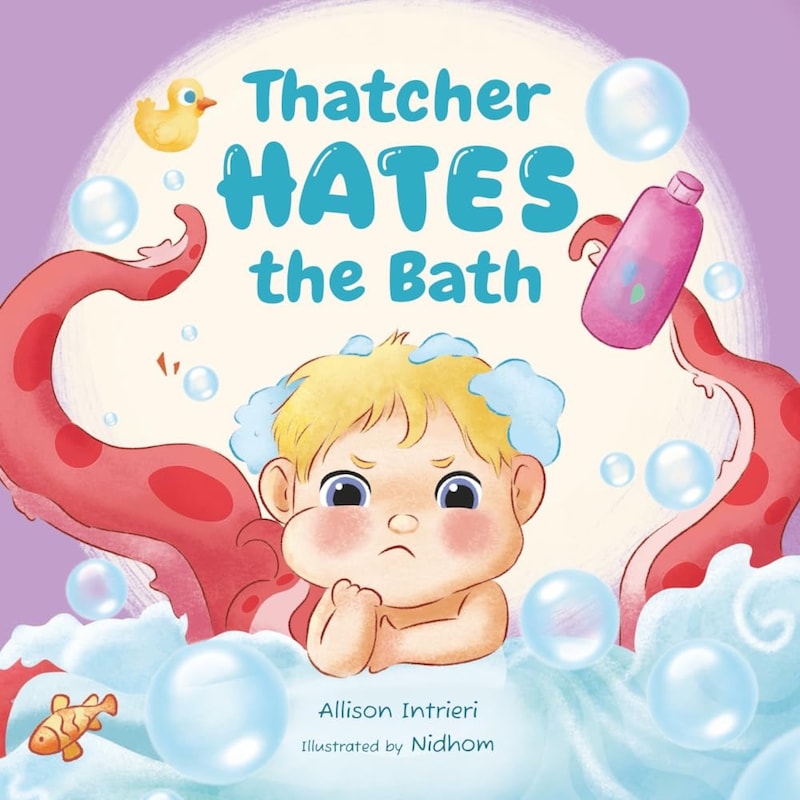
Allison Intrieri, the author of "Thatcher Hates the Bath," presents an insightful look at the trials and tribulations of parenting, particularly the struggles surrounding children's bathtime.
Drawing from her personal experiences as a mother, she delves into the unique challenges that arise when children resist necessary routines, emphasizing the importance of empathy and understanding in navigating these moments.
Throughout our discussion, we investigate the creative process behind her book, which employs humour and relatability to connect with both children and parents alike.
Allison reflects on the critical role of perspective in children's literature, advocating for narratives that depict the realities of parenting.
Allison explores the complexities of parenting, particularly the humorous challenges she faced when her son resisted bath time. This exploration serves as the backbone of her book, which seeks to resonate with both children and parents alike.
Allison emphasizes the importance of addressing real-life parenting scenarios in children's literature, noting that her book offers exaggerated yet relatable situations that reflect the chaos of family life.
The conversation also touches on the technical aspects of publishing as Allison navigates self-publishing, discussing her decisions on design and distribution.
She emphasizes the need to create a visually appealing product that stands out in a crowded marketplace.
As the episode unfolds, Allison's passion for storytelling and her desire to connect with readers become evident, illustrating how her journey is not merely about crafting a book but about fostering understanding and empathy among families.
The episode captures the essence of parenting through a creative lens, inviting listeners to reflect on their own experiences while encouraging aspiring authors to share their stories.
Takeaways:
- Allison, the author of 'Thatcher Hates the Bath', shares her journey into children's literature.
- The book was inspired by her experiences as a mother of a young child.
- Allison emphasizes the importance of illustrating the parent's perspective in children's books.
- She discusses the unique challenges and rewards of independent publishing in the modern market.
- The narrative incorporates both humor and relatable parenting struggles to engage both children and parents.
- Allison highlights the significance of creating a visually appealing book that resonates with young readers.
Links referenced in this episode:
Companies mentioned in this episode:
- Law and Order
- Bull East New York
- Starz
- Amazon
- Ingram Spark
- Target
- Walmart
- Baker
- Bookstop
Transcripts
Hi, I'm Allison and I am the author of Thatcher Hates the Bath.
Speaker B:Thanks, Allison, for appearing on the Adventures in the Heart, a children's book authors podcast.
Speaker B:Alison, as she mentioned, has written a book, Thatcher Hates the Bath, and I'm looking forward to that conversation.
Speaker B:And just so our audience knows, I do have a copy of Allison's book and it was a lot of fun to read.
Speaker B:Alison, normally I don't ask this question, but the reason I'm asking this question to you is because of your background in the entertainment business.
Speaker B:I'd like to give the listeners a little taste of your background.
Speaker B:Can you share a little insight into your professional background?
Speaker A:I'm a TV writer by trade.
Speaker A:I write episodic dramas.
Speaker A:Most of my work is in the procedural universe or like action thriller type shows I've written for.
Speaker A:The most popular one is still on today and it's been on, I think 27 seasons now.
Speaker A:Law and order, SVU.
Speaker A:I wrote for that two different times in my life in my early 30s and then again in my early 40s.
Speaker A:And I've also written for Bull East New York, one of the powered shows that's on Starz that's also very popular.
Speaker B:Thank you for sharing that.
Speaker B:Before we get into the details of your book, can you tell us what being a children's book author means to you?
Speaker A:That's a great question and it's a loaded question.
Speaker A:I think for me being author and also a mother of a children's book, the two things are connected.
Speaker A:Part of the reason why I went into writing this book is because I'm a mom of a four year old and I did rip this directly from a page in our lives and I just loved being able to speak to both the child and the parent that's reading this book.
Speaker A:And I think that reaching both of those people and knowing that I'm in their homes and maybe giving them a little bit of a laugh and making things a little bit easier at the end of the night is all you can ask for.
Speaker B:Terrific.
Speaker B:Let's jump into this.
Speaker B:I'm curious.
Speaker B:You talked, you have a four year old son.
Speaker B:So tell us about your inspiration, if he was the inspiration and your origin story because I really love the loved how you did the story and we'll jump more into that.
Speaker B:But tell us about the inspiration.
Speaker B:How did you get started?
Speaker A: I became a mom in: Speaker A:I adopted my son at birth and parenting is messy and it's, everyone will tell you it's amazing.
Speaker A:And your heart grows like three times as large and all of those things.
Speaker A:But what's funny about being a parent is you see movies on parenting and you read books on the love you feel as a mother and the comedic moments that come out of it.
Speaker A:But until you're really in it, you don't really know what it is because there's so much that happens that nobody tells you.
Speaker A:Like people tell you kids are picky eaters, so you think, okay, I didn't like beets when I was a kid, so I get it.
Speaker A:But no one tells you your kid's only going to want to eat pizza for an entire year, and that's all they're going to want to eat.
Speaker A:And how do you navigate that?
Speaker A:And how do you not lose your mind in the process?
Speaker A:And how do you not feel like you're failing?
Speaker A:And so I think that was the impetus for me writing the book and the origin of it.
Speaker A:My son hated taking a bath from birth all the way to, you know, I would say, two and a half, three years old.
Speaker A:And you try all of these things and none of them work.
Speaker A:And some of the suggestions you get are truly comical.
Speaker A:They're not as outrageous as this book.
Speaker A:But I'm being hyperbolic in it for a reason.
Speaker A:Appealing to children.
Speaker A:But I'm also showing how, as parents, when something doesn't work and someone offers us what seems like it's going to fix it, you'll spend thousands of dollars just.
Speaker A:And that's also being a little hyperbolic, but you'll buy everything, every gadget, to try to get your kid to do whatever it is that you're struggling with.
Speaker A:And so I really just wanted to poke fun at the chaos of that.
Speaker B:And I loved it because it's interesting.
Speaker B:I have five grandchildren, and so that's my freshest memory at that time.
Speaker B:And it was cool in reading your book because of how you set it up.
Speaker B:In our case, with all five of them, we never ran into that.
Speaker B:What we ran into was they never wanted to come out of the tub.
Speaker B:And that was.
Speaker B:So that kind of rang true for us in your story, because even though Thatcher hates the bath, in this case our grandchildren love the bathroom, and they didn't want to come out of the bath.
Speaker B:And that definitely set up some trying times as a grandparent.
Speaker A:Yeah, because they're kicking and they're kicking and screaming, and you're like, do I really want to do this?
Speaker A:Should I just leave them in the bath all night?
Speaker B:Exactly.
Speaker A:I do think that the one thing that I hope people take away from this book, though, is that it's more a book about meltdowns told through the bag.
Speaker A:But that's really what it's about.
Speaker A:It's about meltdowns and about all the crazy things we do.
Speaker A:And also just that.
Speaker B:And that's what I loved about it is that.
Speaker A:Yeah.
Speaker B:Whether it's a meltdown because of hating the bath or a meltdown because you love the bath and you didn't want to come out of it.
Speaker A:Yeah.
Speaker B:Great point.
Speaker B:Thank you.
Speaker B:I'm interested in as you develop this and I'm not sure if Thatcher is going to be in any more adventures, but did you think about building a children's book business plan?
Speaker B:What's your intention behind the book?
Speaker A:I would say that I definitely think Thatcher could be a series for sure on books.
Speaker A:Because there's something kids hate all the time and there's also things kids love.
Speaker A:And I just did a reading yesterday at a school and I asked the kids what should my next book be?
Speaker A:And one kid said, thatcher hates book books.
Speaker A:And I just thought, oh my gosh, that's hilarious.
Speaker A:There's something there.
Speaker A:Just because you're at a library and you look at a book and Thatcher hates books.
Speaker A:Okay.
Speaker B:The mouths of babes.
Speaker A:Yes, the mouths of babes.
Speaker A:You always want to find that specific thing in terms of it.
Speaker A:Like a kid hates broccoli.
Speaker A:Okay.
Speaker A:But you don't want to do Thatcher hates broccoli.
Speaker A:It's got to be something that's most kids love.
Speaker A:Like Thatcher hates Mac and cheese.
Speaker A:Cuz it's.
Speaker A:No, every kid loves Mac and cheese.
Speaker B:Maybe it should be video games.
Speaker A:Exactly.
Speaker A:That's video games.
Speaker A:That would be perfect.
Speaker A:As we move into the preteen.
Speaker A:The preteen years.
Speaker A:Thatcher hates zombies.
Speaker A:My kid went through a zombie stage where he was afraid of zombies.
Speaker A:I had no idea where it came from, but I became a detective like I would.
Speaker A:I went to his school and was like from curiosity.
Speaker A:Are you talking about zombies, my son?
Speaker A:My intention, I would say, say is this is my first time writing and I would also say producing because I self published this book under my imprint.
Speaker A:You really are producing the book when you self publish.
Speaker B:Yes.
Speaker B:And I noticed that you actually did it in a paperback and a hardcover and also an ebook.
Speaker A:Yeah.
Speaker B:Tell us a little bit about especially as an indie book publisher.
Speaker B:I'm always curious.
Speaker B:You jumped into all three formats at once.
Speaker B:A lot of indie publishers will do a paperback and an ebook or they'll do a hardcover in an ebook.
Speaker B:Tell us why you went with all three formats.
Speaker A:I feel.
Speaker A:And this is Gonna, this may sound, it's just like a preference.
Speaker A:I, I like the hardback books better when I'm reading them to my son.
Speaker A:I like the thickness of them.
Speaker B:Yes.
Speaker A:And I really wanted my book to be in, in a hardcover.
Speaker A:So when I was starting to get into the self publishing world, everyone kind of says when you.
Speaker A:I wrote a memoir and I haven't, I haven't published, but I wrote a memoir.
Speaker A:And people were saying, have you considered self publishing?
Speaker A:And they make it sound like it's very easy.
Speaker A:Oh, just throw it up on Amazon.
Speaker A:And so that's where I started with this.
Speaker A:When I found out Amazon didn't do paperback, that's when I went, oh, you meant hardcover.
Speaker A:Yeah, they didn't, sorry.
Speaker A:When I found on Amazon didn't do hardcover.
Speaker A:Thank you for catching that.
Speaker A:That's when I went with Ingram Spark.
Speaker A:And part of the other thing is, and this is just me, this is what I found out, that I'm not an authoritarian on this.
Speaker A:But I did really do a lot of research in what makes a children's book, you know, thrive versus fail.
Speaker A:And a lot of it when you're self publishing is how it looks.
Speaker A:And a lot of times I think people, we all do what we can with the money that we have and it's not cheap.
Speaker A:I think paperback works for some people for the fact that they aren't going to spend a lot of money on maybe the illustrations and everything like that.
Speaker A:But you really want to make sure if you want your book to do well and it's already going to have a struggle being a self published book.
Speaker A:So if you want it to do well, I think you want it to look as legitimate as possible.
Speaker A:And most books that are done by traditional publishers aren't paperback, they are hardcover.
Speaker A:Paperback and then ebook is something new.
Speaker A:But everybody does it now cause we read on our Kindles and everything like that.
Speaker A:So I just wanted to make it as successful as it possibly could be, give it the best chance.
Speaker B:I wouldn't do it.
Speaker B: th of this year,: Speaker B:And I was blown away because most of the guests that I talked to and I'm up Talking to over 65 children's book authors, it takes them a couple of years to get even into that kind of number and for you to do it in such a short period of time.
Speaker B:Fantastic.
Speaker B:Just fantastic.
Speaker A:Thank you.
Speaker B:I'm curious, can you share what was your strategy behind getting 45 star reviews so quickly?
Speaker A:I'm a dreamer, a hundred percent.
Speaker A:Everybody says you're not going to make money in publishing.
Speaker A:I'm like, I'm going to make money in publishing.
Speaker A:My book's going to be successful.
Speaker A:Whether it is or not.
Speaker A:That's my mindset going into it.
Speaker A:And I think this probably comes from being a TV writer.
Speaker A:Like, it's such a hard business to break into.
Speaker A:You really have to learn as much as you can and be willing to hear notes and feedback and just get everything you can.
Speaker A:You have to hit it from all sides.
Speaker A:You can't just hit it from one side.
Speaker A:You have to hit it from all sides.
Speaker A:So with that knowledge in mind, interviewed a bunch of PR people.
Speaker A:Now, PR is very expensive and, and I think if you're launching a movie or something or a TV show, like it makes sense to pay for a PR person.
Speaker A:And I'm not saying PR people don't deserve the money that they get from authors, but when you're self publishing and you're putting the money in yourself, you have to choose where you're going to spend it.
Speaker A:But I did interview people and I did get a lot of knowledge.
Speaker A:And then I also did a ton of research online.
Speaker A:One of the things that I did was I started emailing and doing my marketing campaign myself early.
Speaker A:And I didn't even do it early enough to be honest with you.
Speaker A:They say you should.
Speaker B:So when you say early, what phase were you in terms of your book?
Speaker A:So my book, the minute I had a PDF of it, which was July, I started sending it to people and asking them to either do a brand partnership.
Speaker A:I mean, I wrote everyone.
Speaker A:I wrote Target, I wrote Walmart, I wrote everyone.
Speaker A:I wrote the little companies that you don't really know about that have like bank products, Lovery, like all those places.
Speaker A:And then I wrote a ton of newspapers and some people got back to me and some people didn't.
Speaker A:I emailed celebrities and these aren't even people I know.
Speaker A:I just got an email of their assistant or somebody and said, hey, any chance they get me a shout out and all of that.
Speaker A:And then I did the same thing with like my contact list and Instagram and TikTok and Facebook and all of those things.
Speaker A:A lot of people in my business that bought the book know that book reviews are important.
Speaker A:So I got a lot of people that just did it naturally.
Speaker A:And then I also just hustled for it.
Speaker A:So maybe that's why I've gotten 40.
Speaker A:I feel like 40 is low.
Speaker A:I'm like, I need more.
Speaker B:But it's interesting should say that because I always ask people that question.
Speaker B:I recently had a guest on episode 48.
Speaker B:Her name is Lori Orlinski and she's out of Chicago and she works for Yorkshire Publishing.
Speaker B:And she's also a children's book author.
Speaker B:She has four or five children's books.
Speaker B:And I said to her, when did you start noticing that you had more traction from the reviews?
Speaker B:Because it seemed to me she could probably give us a number.
Speaker B:And she said, rick, I started noticing when I hit around 50 five star reviews on Amazon.
Speaker B:That's when I noticed I started getting some traction.
Speaker B:I've been trying to share that whenever I get a chance so that at least people are.
Speaker B:Rather than trying to guess and come up with the number, I thought I'd talk to someone who's an experienced children's book author and find out.
Speaker B:Because like she said to me, she doesn't have 50 five star reviews in all her books, but the ones that she does, she gets more traction.
Speaker B:Close.
Speaker A:I'm close.
Speaker A:I'm close.
Speaker A:Yeah.
Speaker A:And they tell you 50 is where they start advertising you more.
Speaker A:Like a lot of people say you don't need Amazon ads, you need reviews.
Speaker A:And so that's really.
Speaker A:But if you look at some.
Speaker A: like Chris Van dusen, he has: Speaker B:Yes.
Speaker A:But yeah, no, for self publishers, it's great.
Speaker A:You have to get those reviews.
Speaker A:But you also.
Speaker A:Marketing is such a big thing.
Speaker A:And I just want to stay on this for one quick second because I do think it's interesting.
Speaker A:My mother published a children's book when I was a kid.
Speaker A:And her illustrator was Mr. Rogers, original illustrator.
Speaker A:We lived in Pittsburgh.
Speaker A:Mr. Rogers is from Pittsburgh.
Speaker A:And I spoke with the illustrator when I was doing this book.
Speaker A:And she said, even with traditional publishing, you have to market your own book.
Speaker A:So even if you have one of the big five, they'll get the book made.
Speaker A:But you really are the one that has to do the marketing.
Speaker A:And my mother, I remember going to a book signing with her and just assume because we were at this bookstore in Pittsburgh that this was something her publisher set up.
Speaker A:And she said, oh, no, we did it ourselves.
Speaker A:We were school teachers and we invited the entire school district and that's how we were even able to get our book.
Speaker A:So really, people that they're gonna self publish, you put your book up and.
Speaker A:But then you've gotta be the one Pushing it, that's really big thing.
Speaker B:Absolutely.
Speaker B:I'm glad you mentioned that because I want to talk a little bit about publishing and it's interesting.
Speaker B:And when I talk about publishing, one thing I found is I always thought I was self published because I did the same as you.
Speaker B:I set up our own publishing company and away we went.
Speaker B:And I went through the trials and tribulations just like you did.
Speaker B:But then I found out, oh, I was actually an indy book publisher and not a self publisher.
Speaker B:And you say, what's the difference?
Speaker B:Self publishing tends to use a hybrid publisher, so they use a third party to help them bring their book to market.
Speaker B:I've been trying to keep it separate.
Speaker B:Just for anyone who's aspiring book author is that being truly an independent book author means that you're the publisher.
Speaker B:Self publishing, from what I've seen, generally means that you have, you've hired a third party company to do your book and then as you mentioned earlier, having it traditionally published, where there's a publisher that takes virtually all your rights, but you still have to do all the work to hustle your own book, which is quite interesting.
Speaker B:So let's talk about.
Speaker B:And I loved it because I, I noticed your, the name of your dog is Potato.
Speaker B:So first of all, I love that.
Speaker B:That's a great name for a dog.
Speaker B:I've never heard a dog named after a vegetable before but.
Speaker B:Or is a potato a vegetable?
Speaker B:I don't know.
Speaker A:So anyways, we can debate that.
Speaker B:Absolutely.
Speaker B:I noticed you call yours Roaring Potato Press.
Speaker B:Tell us about who is Roaring Potato Press.
Speaker B:And how did you come up with the whole idea that you had to be an independent children's book author?
Speaker A:I hired a book designer when I did this book.
Speaker A:And that's another thing where another learning experience that I had because I had another children's book that I was working on and I worked with this editor to help me fine tune it.
Speaker A:And she said you need to have a really good book designer.
Speaker A:That was the one piece of information she gave me.
Speaker A:And I didn't really understand the importance of it because I thought the illustrations were the most important thing.
Speaker A:But the book designer was the one that puts it all together and makes the template.
Speaker A:And the template is so much more important than you gotta get the illustrator and have a great illustrator, but you need the template first.
Speaker A:Correct.
Speaker A:And that was a big learning thing for me.
Speaker A:Cause I actually did hire an illustrator first and he was working on it and it, I learned the error of my ways and it was a little bit of a costly Error.
Speaker A:And also time timely.
Speaker A:But I found a great book designer.
Speaker B:Formatted the book also.
Speaker B:Right.
Speaker A:She formatted it.
Speaker A:She did everything.
Speaker A:And she just would say to me, do you have the Library of Congress number?
Speaker A:Yeah.
Speaker A:The copyright.
Speaker A:What size do you want to be in it?
Speaker A:Yeah, all of it.
Speaker A:So it was her that said, what's your imprint?
Speaker A:And that's when I was like, oh.
Speaker A:So I did a research on that and I came up with Roaring Potato Press.
Speaker A:As you said, that's my dog's name.
Speaker A:I would say by the end of the process, that probably was the thing that made me happiest more than anything else.
Speaker A:Just because I loved being able to give him for the rest of his life, he will be on a book whether I end up doing more or not.
Speaker A:I just.
Speaker A:I love being able to give that to my dog, who's 12.
Speaker B:That's so cool.
Speaker B:I love it.
Speaker A:Yeah.
Speaker A:And it has a very.
Speaker A:I really went for a very kid like name and.
Speaker B:Yeah.
Speaker B:Cause the name of our first book is called the Adventures of Caboose the Rocky Mountain Bear.
Speaker B:And then what I did is we named our publishing company Caboose the Rocky Mountain Bear Publishing Den.
Speaker B:So I love it.
Speaker B:Yeah, we can all have fun.
Speaker B:And so I just love the name that you use.
Speaker B:It's terrific.
Speaker B:And I'm curious now that we know that you did all three formats, which is fantastic.
Speaker B:When it came to the hardcover, I know you're using IngramSpark.
Speaker B:Did you look at maybe doing your hardcover printing offshore or anything and purchasing multiple copies?
Speaker B:Or how are you handling your hard copy when you go to sell it at.
Speaker B:I'm not sure if you've done a book events yet where you've actually taken your paperback and your hardcover and sold them.
Speaker B:So tell us about that.
Speaker A:Yeah, I've done it twice thus far.
Speaker A:I research, but I went with Ingram because I wanted to get into libraries and I wanted to get.
Speaker A:Have a really big reach.
Speaker A:And that was mainly and bookstores.
Speaker A:When you go to Barnes and Noble, for example, and say, look, I'm an indie author.
Speaker A:I have a book.
Speaker A:Here's my ISBN and everything like that, the first thing they'll ask you is, are you on Amazon?
Speaker A:And you're like, no, I'm on IngramSpark.
Speaker A:And they're like, okay, then we can order your book.
Speaker A:So you're not going to get your book into libraries and bookstores when you do it through Amazon.
Speaker A:I don't know about other services.
Speaker A:I just know that Ingram gets you on Baker, it gets you on Bookstop, dot Org, I think it's called.
Speaker A:And these are all places that the bookstores and the libraries order from.
Speaker A:So it's really.
Speaker A:That was really why I need that decision.
Speaker B:Okay.
Speaker B:Yeah.
Speaker B:It's just for wider distribution.
Speaker A:Wider distribution?
Speaker A:Yeah.
Speaker A:A hundred percent.
Speaker B:Yeah.
Speaker B:And it's interesting too, because it varies.
Speaker B:We're in.
Speaker B:In different bookstores and what we found is we've only had this happen to us once.
Speaker B:We had a independent bookstore who actually puts right on their website.
Speaker B:If you're on Amazon, we will not take your book into consideration.
Speaker B:And so that's quite interesting.
Speaker B:But you know that it's their business and they, they're the gatekeepers.
Speaker B:But on, for the most part, what.
Speaker A:I forgot to mention is IngramSpark Baker, they all offer wholesale.
Speaker A:So that's what it is.
Speaker A:It's wholesale and buyback, like return.
Speaker A:So bookstores, all of them, want to be able to return the book if it doesn't do well.
Speaker A:And publishers, big publishers, they let them return the book.
Speaker A:And the same thing is with Ingram, you get a wholesale price.
Speaker A:So if you're going to sell to, let's say I have a couple books at a place called Skylight Books in Los Feliz.
Speaker A:If you're going to sell to them, they want the wholesale price.
Speaker A:You have to be able to offer that to them.
Speaker A:And that's really what it is.
Speaker A:I.
Speaker A:It's not so much that they are turning their nose up to a book that's only on Amazon.
Speaker A:It's that they can't justify it with their.
Speaker A:With what they're.
Speaker A:What they're.
Speaker A:Versus.
Speaker A:Yeah.
Speaker A:Yeah.
Speaker B:So for sure.
Speaker B:Okay.
Speaker B:So you haven't printed any large copies through an offset print printing or anything like that?
Speaker A:No.
Speaker B:Okay, I know.
Speaker B:I just, I just like to ask that question because I, I had a gal out of Oklahoma and she was instrumental.
Speaker B:If you look in the background now, we had a plush made of our caboose character.
Speaker A:So cute.
Speaker A:Thank you.
Speaker B:When I was talking to the guest about her printing, she had a hardcover.
Speaker B:And I said to her, where did you get your hardcover?
Speaker B:And she said, I actually went to a website called madeinchina.com and I researched it and found a couple of different printers.
Speaker B:And then I got them to send me samples and I decided on one.
Speaker B:And she said, and then I ordered, I ordered my copies from China and I said, oh.
Speaker B:I said, what about the quality?
Speaker B:She said, when I got them, the quality was fantastic and the pricing was beyond anything I ever thought was possible.
Speaker A:Wow.
Speaker B:And she, I think she told me she ordered Four or five hundred copies.
Speaker B:And that.
Speaker B:That.
Speaker B:Yeah.
Speaker B:So there's amazing.
Speaker A:I would check that out for sure.
Speaker A:Just because on Ingram I get a discount and it's just a fairly, like, substantial discount.
Speaker A:Same thing with Amazon and the paperback.
Speaker A:The only thing is the shipping is so expensive and unless you do a rush, you're waiting a really long time to get.
Speaker A:I think I did 40 or 50 copies at one point, and that was that hard.
Speaker B:Talking through Ingram, that's the difficulty is, like you said, the cost of freight to get them to yourself.
Speaker B:So you get a pretty good price on the printing side of it.
Speaker B:But then when the.
Speaker B:When you have to add in the price per book on getting it shipped to you, that takes the price up even further.
Speaker A:Yeah.
Speaker A:And it makes sense.
Speaker A:The what's nice, though, that I learned, I gave.
Speaker A:Did a Goodreads giveaway and I gave away paperback copies of my book, like 10.
Speaker B:Okay.
Speaker A:I was able.
Speaker A:I went to like, UPS send them and I was able to get.
Speaker A:I spent $16, let's say, per book or something.
Speaker A:Thought, oh, let me go to the post office and see what that's about.
Speaker A:And I went to the post office and they actually have the book rate.
Speaker A:So it only cost me like $4 to send the book.
Speaker A:So from that point on, I started doing it that way.
Speaker A:But, yeah, you gotta.
Speaker A:You gotta find your bargains where you can because you don't want to.
Speaker A:As an indie publisher, the nice thing about being able to do it on your own is you're not waiting for anybody.
Speaker A:Traditional publishing takes forever.
Speaker B:Right.
Speaker A:And you have total control and you get much higher percentage in royalties.
Speaker A:But it's such an expensive endeavor if you want it to remotely, you know, rise above the ashes.
Speaker A:So you just want to be careful where you're spending your money.
Speaker A:That's all.
Speaker A:I would say.
Speaker B:I couldn't agree with you more.
Speaker A:Absolutely.
Speaker B:And that's the beautiful thing about having someone like Amazon for your paperback.
Speaker B:Because it was interesting.
Speaker B:I had a guest on.
Speaker B:We were swapping books back and forth and I thought, oh, my goodness, I couldn't believe the cost of courier just to get someone a book.
Speaker B:It was actually cheaper for me to buy it on Amazon and send it to them.
Speaker A:I have the same situation.
Speaker A:I recently had a YouTube.
Speaker A:I don't know if you know about these read alouds where they have people have YouTube channels where all they do is read children's books.
Speaker A:And so one of them offered to read my book.
Speaker A:And I was like, it's just easier for me to just go to Amazon and just send it to them really.
Speaker B:Quick and versus so before we move on from that, because I've heard of these read alouds, but I didn't realize was it a person was looking for, was for you to provide them with a copy of your book?
Speaker A:Yes.
Speaker A:So this is another one of the PR things that was recommended to me and I have reached out along with doing podcasts and I don't know if I told you this or not, but you were one of the top 10 that was recommended.
Speaker B:Oh, thanks.
Speaker A:To reach out to.
Speaker A:Yeah.
Speaker A:I'm always surprised when I hear back because you have a lot of people that probably are reaching out to you.
Speaker A:But yeah, so it's the same thing.
Speaker A:I sent them a digital PDF of the book.
Speaker A:I told them a little bit about me and my background and just said I'd love for you to read it.
Speaker A:And they got back to me and they said, send us the book.
Speaker A:And in August.
Speaker A:And it just came out like a couple weeks ago.
Speaker A:So there's.
Speaker A:I understand why they say you want to do a PR campaign like stuff six months ahead of time.
Speaker A:That seemed crazy to me because I'm like, who wants to hear about my book for six months before they.
Speaker A:They do anything with it?
Speaker B:But it's interesting you should say that too because I recently had a guest on Stanetta ANTHONY and episode 60 coming up shortly.
Speaker B:But she wrote a book called Ella Learns to Dance and it's about a dancing elephant.
Speaker B:And I was talking to her about her website and, and I noticed she had read aloud on her website.
Speaker B:And I said, oh, tell us about that.
Speaker B:And she said, yeah, she said, actually I did my own read aloud.
Speaker B:I posted it on my website.
Speaker B:And she said I couldn't believe the response I got and the number of purchases.
Speaker B:And I thought, oh well, because I'm always looking to share.
Speaker B:I was telling you about Lori Orlinski out of Chicago, and she was the one that turned me onto this phrase called earned media, where it's free but you got to go out and hustle it like you are.
Speaker A:Yeah.
Speaker B:And that's in essence what Sonetta did was she actually created her own little earned media on these read alouds on her website.
Speaker B:Just another way to market your book.
Speaker B:And yeah, it's.
Speaker A:That's highly recommended as well.
Speaker A:And I had two different YouTube people that said they would read my book out loud.
Speaker A:So I'm like, I'm going to wait until they do it because I know they're going to do it better.
Speaker A:I do want to also make that's a great idea.
Speaker B:See how they do it and learn a little bit about that.
Speaker B:Terrific.
Speaker A:Yeah.
Speaker B:I noticed your illustrator has one name, so I was just a little confused.
Speaker B:Is it a share type thing or is it a.
Speaker B:Or Lady Gaga, whatever you want to say.
Speaker B:Or is it a illustrating service or a person?
Speaker A:It's a person, but they are through a service called Indo Studios.
Speaker A:Yeah, I. I asked how did you want me to put your name on the book?
Speaker A:And that's what he wanted.
Speaker A:He just goes by by one name.
Speaker B:I want to share that with people because there's.
Speaker B:Yeah, that's the second time I've heard that where the actual person wants their company name used to be used to indicate that they're the illustrator.
Speaker B:Okay.
Speaker A:Yeah, perfect.
Speaker B:So your website.
Speaker B:So I looked at your website and did your illustrator design your website or how did you do your website?
Speaker A:Did my website a little bit me and a little bit my brother in law.
Speaker A:My brother in law is a.
Speaker A:He does that for a living.
Speaker A:His job is a little.
Speaker A:He's not so much a web designer.
Speaker A:He works with different companies.
Speaker A:He did the computers for Carnival Cruises and all those kinds of places.
Speaker A:He's a software engineer.
Speaker A:I did a lot and then I said, can you help me with it?
Speaker A:And he really, I think elevated it quite a bit.
Speaker A:But.
Speaker B:Right.
Speaker A:Websites is one of the big things that's.
Speaker A:I did not have a website before I became a children's book author as a TV writer.
Speaker A:It's just not something that a lot of us do until maybe we get to JJ Abrams level kind of thing.
Speaker A:And then you have a one person that does it for a living doing it for you.
Speaker A:So I was told there's one of the things I needed to do.
Speaker A:There was a couple different formats that were recommended and I think one was square and square one.
Speaker A:And I think that's the one that I used.
Speaker B:Did you have your website before you launched your book or after you launched your book?
Speaker A:I started it right before I launched.
Speaker A:The minute I had something that I could put on it in terms of.
Speaker A:I think I got it set up and did like a TBD thing.
Speaker A:And then once I was able to get some illustrations, I put the illustrations up and then I went from there.
Speaker A:It was first.
Speaker A:Yeah.
Speaker B:Like I said to you before, I love how You've already gotten 45 star reviews with Amazon.
Speaker B:So I'm curious, how do you see yourself using your website?
Speaker B:Because like you said prior to this you didn't have a website.
Speaker B:So how do you see it developing for yourself?
Speaker A:I would say for people that want to book me to come and do a reading at their school.
Speaker A:I've done a few readings at schools or an event, they want to book me for an event.
Speaker A:I also offer script consultation on that because as I said, I'm a writer and a producer and.
Speaker A:And then also there's a blog and you can purchase my book there as well.
Speaker A:But there's also a blog and I think that every once in a while I'll write a little something just either about being a mom or a writer.
Speaker A:Just sharing my inspiration.
Speaker B:Terrific.
Speaker B:I'm thinking about, we talked about your four year old son.
Speaker B:I'm curious about the motivation because.
Speaker B:And the reason that that's why I wanted to have people know your background.
Speaker B:You're not doing children's TV shows, you're writing for adult TV shows.
Speaker B:Now here you are going and doing a children's book, which is cool.
Speaker B:And was there a specific person beyond your son or an event that kind of motivated you to say, you know what, I'm going to do this, I'm going to be a children's book author.
Speaker B:What was the motivation?
Speaker A:Let's say the motivation probably came before I had my son, but not in the way that you would think.
Speaker A:When I was young, my father died when I was like 2 and I was born into everybody grieving.
Speaker A:And I think that at that age, when you're so young and people are one trying to like impart his memory on you, but also so raw, maybe they're not so aware of the messaging that's coming at you and what you need to say and what you need to do in as a child, like what you need to do with the grief that you have.
Speaker A:Even though people would say, and it's true, I didn't remember my father at all, but I definitely saw grief.
Speaker A:So I had.
Speaker A:This was the original children's book that I wanted to write.
Speaker A:I wanted to write about grief from a child's perspective.
Speaker A:And the book that I wrote, which I haven't been published yet because I wanted to lead with this, I felt like it was a little bit more commercial.
Speaker A:Grief books aren't, I've been told, aren't that sellable.
Speaker A:And not that it matters because it's just such a personal story to me, but absolutely.
Speaker A:I grew up not far from where my father was buried.
Speaker A:Like you could walk out of my house, walk across the street and then there was the cemetery.
Speaker A:And funnily enough, that was the best hill in all of my neighborhood to go sled riding.
Speaker A:So Everyone went sled riding, and the plates were flat.
Speaker A:It wasn't tombstones.
Speaker A:I asked my mother once, does he care that we're sled riding on the cemetery?
Speaker A:And he just was like, wow, that's not a question I expected to get asked today while I'm in the middle of doing laundry.
Speaker A:She answered, and she said, no, I think it makes him happy.
Speaker A:And I was like, okay.
Speaker A:And that was it.
Speaker A:But I fell in love with this idea of a child getting lost on his sled and finding his way through his grief.
Speaker A:That was just it.
Speaker A:I've wanted to write that book since, I don't know, maybe college, maybe after college.
Speaker B:I think you should.
Speaker A:Thank you.
Speaker A:Thank you.
Speaker A:And I have it written.
Speaker A:I just haven't gotten to the point where I'm doing this.
Speaker A:So right then, when I became a mom and was having all these experiences, and I'm a writer already, and so you write what you know, and the writer strike happened, it was a perfect opportunity for me to do it finally, because I just had time.
Speaker A:And honestly, I tend to leap first a lot.
Speaker A:And I think once you don't really know what you're getting into as you're starting it, like, you're like, oh, I can do this.
Speaker A:I read children's books all the time.
Speaker A:I look at them, I see the story.
Speaker A:I can do this.
Speaker A:And then you start doing it, and you're like, oh, there's a lot more to learn here than I realized.
Speaker A:And so that's why I say to people a lot by the end.
Speaker A:I feel like I became a creative director overnight, because I always say it's.
Speaker B:Like a general manager.
Speaker A:Yeah.
Speaker B:Because at the end of the day, I try and encourage as many people as possible to be an independent children's book author.
Speaker B:Because as long as you realize there's only five to seven major roles to put the book together, and if you can pick up the phone or send an email or whatever, or do a Zoom call, it's incredible that you can hire these people and put your children's book together.
Speaker B:You have to do as you did your research.
Speaker B:But ultimately we can all find these people out there that are very creative and can help you put together a.
Speaker A:Beautiful book, I gotta say.
Speaker A:It's gotta be easier now, as you say, we have zoom email.
Speaker A:There's so many different ways to find people now, whether it's Facebook or Instagram.
Speaker B:Yes.
Speaker A:And I didn't really.
Speaker A:I think pretty much everything that I did was through email and text with this book.
Speaker A:I didn't do a lot of Zoom.
Speaker A:I think I did one Zoom with my book designer and maybe we had the phone call, but most of it was through email and text, which made it very fast.
Speaker A:And my illustrator was all through email, which is shocking, but it speaks to how good they were.
Speaker B:And this interesting should say that because our illustrator is in the UK and launched a second book in our book series.
Speaker B:And I have never met that illustrator.
Speaker B:They've never been to the Rocky Mountains.
Speaker B:And yet I've been able to.
Speaker B:We because it's with my grandchildren, we've been able to publish two beautiful illustrated books and it's all been through email and not one, not one Zoom call, not one phone call.
Speaker B:It's all been email.
Speaker B:So it's amazing what you can do nowadays.
Speaker A:Yeah, I know, it really is.
Speaker A:And just also just as you say, with the Indian self publishing world, you just can be your own publisher for sure.
Speaker B:So tell us about Thatcher.
Speaker B:So I want to talk a little bit about your character development.
Speaker B:Talked about your four year old son.
Speaker B:Is he Thatcher or is his name Thatcher?
Speaker A:His name is not Thatcher.
Speaker B:Okay.
Speaker A:But Thatcher is one of the names that was on the list when I was deciding what to name him.
Speaker B:Okay.
Speaker A:And so it was something that I have used before and I thought this is the name.
Speaker A:I think this is the fun name.
Speaker B:I don't hear it that often, but it is definitely a fun name.
Speaker A:Yeah.
Speaker A:Yes, I agree.
Speaker A:I think it lends itself to the title, but just really do.
Speaker A:He is the inspiration 100%.
Speaker A:But I'd also say I'm the inspiration too.
Speaker A:And only because what I think is unique about this book is it's told from the parents perspective.
Speaker A:And you don't have a lot of children's books that are told from the parents perspective.
Speaker A:Usually if there's a mom in the book, she's a bear or a llama or a deer.
Speaker A:And I understand that.
Speaker A:But I also think having your child seeing you in the book, we're the ones that raise them, that we're the ones that they look to for guidance.
Speaker A:We set the example.
Speaker A:So when they see us fall down and struggle and get back up, I think it teaches them resilience and empathy.
Speaker A:And I think that those are two really important lessons to teach a child because they're also going to need that in their own life when they fall down and get back up.
Speaker A:I would say both myself just being a parent and parenting was the inspiration.
Speaker A:And also my son and I would also say his pediatricians or his therapist or whatever or other parents were also the inspiration because the suggestions with everybody showing up.
Speaker A:Once when Thatcher's.
Speaker A:For people who haven't read the book, he screams so loud at bath time, he wakes up the entire neighborhood.
Speaker A:And when you're out and your child's having a meltdown, everybody stops and stares.
Speaker A:And even if people smile.
Speaker B:Yeah.
Speaker B:Being there, done that.
Speaker A:Yeah.
Speaker A:Or I just want to see what you're going to do.
Speaker A:Like, how are you going to handle this?
Speaker A:And then you also get the unsolicited advice, of course, nobody likes to hear a baby cry.
Speaker A:And I remember when my mom and her husband came to visit when my son was really young, he was crying, and I was picking him up and balancing him, and they said, why is he crying?
Speaker A:And before they said, why is he crying?
Speaker A:They said they would say, I think he's hungry.
Speaker A:Well, he just ate.
Speaker A:I think he's tired.
Speaker A:He just woke up.
Speaker A:So that kind of thing.
Speaker A:And people cannot handle babies crying.
Speaker A:And there's a great book by the guy that invented the snoo called the Happiest Baby on the Block.
Speaker A:And he used to be an ER doctor.
Speaker A:And he talks about how Navy SEALs are forced to listen to baby crying for eight hours as a form of being able to stand up to withstand torture.
Speaker A:Eight hours.
Speaker A:It's like, nobody want nobody.
Speaker A:It stresses everybody out.
Speaker B:And they said, it's interesting.
Speaker B:Even though your book is not a Christmas book, there was a unique.
Speaker B:Because you talked about waking up the whole neighborhood and stuff like that.
Speaker B:And there was a unique technique you used.
Speaker B:I want to talk a bit about that.
Speaker B:And so it's almost like the twelve Days of Christmas.
Speaker B:And what I'm talking about is you use numbers in this as the whole thing is coming to a head.
Speaker B:And I don't want to give the book away, but talk to us about how did you come up with that whole idea when it's culminating to this point?
Speaker B:Talk to us about that idea and the technique.
Speaker B:Share that with us.
Speaker A:I had it in my head a little bit.
Speaker A:This is a hostage situation, Right.
Speaker A:This kid is screaming, and the mom is, like, trying to figure it out.
Speaker A:And the police show up and they're like, what's going on in there?
Speaker A:And it's almost like it's a crime scene.
Speaker A:Everybody has shown up and trying to figure out, like, what's going on.
Speaker B:Yeah.
Speaker B:I love how you did it.
Speaker A:Yeah.
Speaker A:So I was really, like, going for volume.
Speaker A:But I also very much love the book.
Speaker A:I don't know if you know it.
Speaker A:I'm going to butcher her last name.
Speaker A:I think it's Sandra Boynton, and she has a book called Hippos Go Berserk.
Speaker A:It's just a numbers book.
Speaker A:It's all about the hippos that show up and it's counting.
Speaker A:It's one of my favorite books to read to my son.
Speaker A:That was a little bit of an inspiration in that sense.
Speaker A:But I also.
Speaker A:I just really wanted to poke fun at the volume of people that were being woken up because this baby is crying so loud.
Speaker A:And that's how I did it and, and, and why I did it.
Speaker A:Yeah.
Speaker B:And so carry us on to the theme from that whole thing.
Speaker B:You talked a little bit about it earlier, so talk to us where you took the story.
Speaker A:When my son was having trouble taking a bath, I would talk to people about it and they would say, have you tried toys and.
Speaker A:Or have you tried bubbles?
Speaker A:And what was so challenging for me was to have to sit there and listen to them tell me this amazing light bulb moment of a suggestion that they really were like, oh, I know how to help her solve this problem.
Speaker A:I'm going to tell her about Amazon and how they have these great toys that you can buy.
Speaker A:And I just have to sit there and let them tell me this because they were so like, oh, I'm going to help you.
Speaker A:And they wanted to help.
Speaker A:And.
Speaker B:But I'm sitting there in all sincerity, too.
Speaker A:In all sincerity.
Speaker A:In all sincerity.
Speaker A:And so it was that.
Speaker A:And then it was like, okay, I've tried toys.
Speaker A:So what else?
Speaker A:I remember one person said, take a cup of water.
Speaker A:Get into the bathtub with him, take a cup of water and pour water on your head and laugh really hard.
Speaker A:And he'll know that the bath is fun and safe.
Speaker A:And I'm like, I.
Speaker A:A child that is in white or white, full rigor, soaking wet, that is too young to be able to keep his head up on his own.
Speaker A:You're telling me to hold him in one wet, soapy hand while I'm screaming and pour a thing off.
Speaker A:But I didn't, because I'm like, I don't know, maybe this is going to work.
Speaker A:And then it doesn't work.
Speaker A:And you feel like you're failing.
Speaker A:And that's the hardest part about being a parent.
Speaker A:You are, for me at least, you feel like I'm not able to give my child a bath and have him be calm.
Speaker A:It's me.
Speaker A:It's not him.
Speaker A:It's not anybody else.
Speaker A:It's me.
Speaker A:Through all of the different suggestions that I tried, I finally stopped trying.
Speaker A:And I didn't give him a traditional bath anymore.
Speaker A:I just put him in a, like, little mesh thing, put a washcloth, wet it with soap, and cleaned him.
Speaker A:And I just did that for months before I finally said, okay, let's revisit it and see if he'll get more into the bath.
Speaker A:And eventually he did.
Speaker A:And there's certain things he still doesn't like.
Speaker A:He doesn't like getting his hair washed, but he enjoys the bath more.
Speaker A:And so that was the impetus for the book.
Speaker A:I wanted to poke fun at what it feels like when your child's screaming their head off.
Speaker A:You feel like everybody's eyes are on you and your.
Speaker A:Your own eyes are on yourself.
Speaker A:And then also just the crazy suggestions that you get and how you try them, and nothing works.
Speaker A:And that was really the impetus for the book.
Speaker A:And I wanted to do it in a very fun, childlike way.
Speaker A:And that's why the suggestions get more and more ludicrous, because that's what makes it fun for kids and then for parents.
Speaker A:The message is what I think, and I love.
Speaker B:I don't want to give away the ending message, but I love how you closed it, because you know what?
Speaker A:Thank you.
Speaker B:At the end of the day, we've all been there.
Speaker A:Yeah.
Speaker B:And all you have to do is raise a child or have grandchildren come into your life.
Speaker A:Yes.
Speaker A:Yes.
Speaker B:I want to talk a little bit more now because you've done this for a living.
Speaker B:Talk to us about your writing process in that now that you've got Thatcher Hates the Bath, and you've also told us that you did write another book.
Speaker B:Are you actively writing children's stories now, or do you just.
Speaker B:What have you pivoted back to?
Speaker B:Just TV scriptwriter?
Speaker B:Tell us what's going on with the whole writing thing in your life now.
Speaker A:I'm definitely a television writer and producer, and I'm constantly developing shows and writing pilots and pitching shows and trying to staff on a show and all of those things.
Speaker A:I don't.
Speaker A:Unless they kick me out, I don't think I'll ever leave that.
Speaker B:Okay.
Speaker A:That said, this isn't an inexpensive endeavor, as we know.
Speaker A:So I would say where my head is at right now, it's really promoting this book, getting as many eyeballs on it as possible.
Speaker A:And then I would say I'm 100% going to continue to write children's books, but I want to wait a little bit until I see how this book does and just give it as much love and attention as I can before I populate the market with another book.
Speaker A:I don't want to Take my eyes off of this one yet, but that is.
Speaker A:That is my goal.
Speaker B:Let's talk a little bit about how you envision success prior to your launch of your book.
Speaker B:And now you've got reality, so you've been into it for a couple of months now.
Speaker B:So talk to us about how did you envision success when you first started this and what's it look like to you now?
Speaker A:I would say I had envisioned success.
Speaker A:I'm a dreamer as being a New York Times bestseller and being on the View, like, that's how I envision success.
Speaker A:And doing a lot of book readings and a lot of book signings and doing a book tour.
Speaker A:And none of that is out of the possibilities.
Speaker A:Let's put the New York Times bestseller in the View over here and just focus on a book tour.
Speaker A:Like, I'd love to do that.
Speaker A:My son's in school right now, so until he's out of school, I can't really travel.
Speaker A:But that'd be a really fun thing to do.
Speaker A:But I would say popularity, obviously, is how I would envision success.
Speaker A:But I would also say that this has been a learning experience.
Speaker A:And so one of the things that I think I've learned is there are days where you can feel very disheartened.
Speaker A:There's an independent bookstore up the street for me that I love.
Speaker A:And when I went to them about my book, even though I said, I'm on Ingram Mark, they still were like, no, we're not going to buy your book.
Speaker A:We're an independent bookstore.
Speaker A:We.
Speaker A:They can't do.
Speaker A:They can't do the wholesale and everything like that.
Speaker A:And so that was disheartening to me.
Speaker A:And I felt a little, you're an independent bookstore.
Speaker A:You want me to come to you instead of like Barnes and Noble?
Speaker A:You're not helping out the fellow indie writer.
Speaker A:But then I went to Barnes and Noble and I gave the manager my little note card with the picture of the book and the ISBN and everything on the back.
Speaker A:And he bought three copies.
Speaker A:And I went in and I signed them and did a little photo op and everything like that.
Speaker A:And they're on the shelves next to all the big authors and terrific.
Speaker A:And so I, yeah, I think it's really who you ask.
Speaker A:I reached out to celebrities and said, hey, would you read my book aloud?
Speaker A:Would you do a read aloud?
Speaker A:And I have heard nothing or I've heard no.
Speaker A:But one thing that I think is important with this kind of thing is you want it to be a sprint, but it's truly a marathon Absolutely, Yeah.
Speaker B:And that's what I always say to people is that, you know what the most important renewable resource we have is our children.
Speaker B:And the thing about children is they come and they go into our genre.
Speaker B:If you write for 4 to 10 year olds, every year you get a new group of four year olds coming into your world and you have a whole.
Speaker B:And then you have your.
Speaker B:The 10 year olds leaving and going to be 11.
Speaker B:And so they leave.
Speaker B:But it's a constant rotation.
Speaker B:I keep saying to people, just remember, your book is evergreen.
Speaker B:It'll last forever.
Speaker B:If you have a timeless story like yours, children having baths is going to go on for.
Speaker A:Yeah.
Speaker B:So your book will last forever.
Speaker A:That's a really great thing to tell any author because it's so true.
Speaker A:Like you are thinking, we all think narrowly, right?
Speaker A:And so you think, oh, I'm thinking about the market that I'm hitting right now.
Speaker A:You're not thinking about the next four year old, the next five year old, the next six year old.
Speaker A:One thing that a PR person said to me was, you can always market your book when you're an indie author.
Speaker A:You can always, you can keep it out there like a traditional publish.
Speaker A:They make a certain amount of copies.
Speaker A:If it doesn't sell, that's it, you're done.
Speaker A:That also is something that I think it makes it attractive.
Speaker A:You're not gonna, we all hope we'd make money, a lot of money doing this, but you're not gonna make a lot of money doing it either way.
Speaker A:So why not have the control?
Speaker A:The thing you just need to have is to make sure that you have more eyeballs on it than like your mom.
Speaker A:Like, you have to get the feedback, get the knowledge and you know what you know from Alison, to your point.
Speaker B:It'S a slow build.
Speaker B:Whether you're a children's book author and you're trying to get your book in front of more and more people or even I know with our podcast show, it's built over time and that's how you have to look at it, and I'm glad you said that, is that it's not a sprint, it's a marathon.
Speaker B:And it can last as long as you want to put the effort into having it last.
Speaker B:So good for you to have that.
Speaker A:Very true.
Speaker B:Advice for aspiring authors.
Speaker B:What advice would you give someone now that you've been through this whole indie book publishing process?
Speaker B:What would you say to aspiring children's book authors?
Speaker A:I'd say, if you want, this is writing in general, right?
Speaker A:You can write something and it can just be for you, and that's totally fine.
Speaker A:But the minute you want it to be for other people, you have to look at what makes a children's book a successful children's book, right?
Speaker B:Yes.
Speaker A:So a lot of people have come to me since, like, just on Facebook, who saw that I did a children's book, and they wanted to pick my brain about it.
Speaker A:And I said to them, you need to have a book designer first.
Speaker A:That's the first stop you need to get that template.
Speaker A:It's so important.
Speaker A:It affects, like, bleed your margins.
Speaker A:Where do you leave white space in the book?
Speaker A:Things that you never even think of when you look at a children's book.
Speaker A:When you look at a children's book, you're looking at the story and the illustrations.
Speaker A:You're not looking at how the book came together, but font that's picked, like, all of it.
Speaker A:So find yourself a great book designer.
Speaker A:A lot of times my book designer gave me my illustrator, and so that helped because I did have an illustrator who was also great at sketching.
Speaker A:Great.
Speaker A:And a great person.
Speaker A:And I've known him for a long time, but he wasn't really a children's book illustrator.
Speaker A:And we were doing it together because we knew each other.
Speaker A:I realized that sketching and illustrating a children's book are two different things.
Speaker B:It's usually takes four or five looking at four or five different illustrators before you can settle on one.
Speaker B:Once you see the style that you're looking for, that's why it's almost like a aha moment.
Speaker B:In a way.
Speaker A:Yeah.
Speaker A:No, it really is, because I reached out to so many different illustrators, and I remember I asked them, can you do a sample?
Speaker A:Just one sketch, just one page, like one illustration, so I can see what I'm getting?
Speaker A:If you're able to do what's in my head, yes.
Speaker A:And a lot of the illustrators under illustrated, I.
Speaker A:They maybe gave me a baby and nothing else.
Speaker A:And this illustrator, I said, this is how I see the book.
Speaker A:You have the suggestion and then you have the bathtub with the suggestion in process.
Speaker A:You see it in real life, in real time.
Speaker A:And so that was Nitam, my illustrator, was the one who gave me the bathtub illustration with the mom on the surfboard and the clown fish and the kid grabbing the edge and everything like that.
Speaker A:And it was like, oh, what's in my head is possible?
Speaker A:That was the other thing.
Speaker A:It was like I have this vision in my head, but I work in television.
Speaker A:You're putting the dialogue in the action.
Speaker A:On the page, but then actors are moving and doing it, and this is frozen.
Speaker A:So I'm like, maybe I'm too much a TV writer and not a children's book author.
Speaker A:And so when I saw that, I really went, this is who I'm going with.
Speaker A:And I'm sure you experienced this with your books.
Speaker A:And this was helpful to me that I had a friend who was a children's book author and illustrator.
Speaker A:She said to me, you don't want someone who just draws the text on the page.
Speaker A:You need them to tell the part of the story that the text doesn't thing.
Speaker B:Illustrations have people, like, they say, a picture tells a thousand words.
Speaker A:Yes.
Speaker B:Because it's then open to interpretation.
Speaker B:Besides your words, people think outside of the book.
Speaker A:Yeah.
Speaker A:And this book was a challenge, I think too, for any illustrator, because there are so many people in it giving the suggestions.
Speaker A:And originally, when Nidham did his first pass, he would have the police officer in the bathroom with the mom and the kid giving the suggestion.
Speaker A:And I remember looking at it and being like, this is too busy.
Speaker A:The story is getting lost.
Speaker A:And I know the story.
Speaker A:And so that's when I decided, let's just have it be whatever the suggestion is.
Speaker A:And the hands holding it.
Speaker A:So that way it was very clear and very kid like.
Speaker A:So that's.
Speaker A:That's what I would say when you.
Speaker A:One of the pieces of advice is when you get the illustrations, don't just be like, okay, this is what the illustrator did.
Speaker A:And I have to take this and this is the illustration.
Speaker B:Because that's the beautiful thing about it is I was fortunate because our illustrator was just as you're describing, was happy to jump in and listen to what we had to say.
Speaker B:And that was very important encouragement for readers.
Speaker B:So talk to us about why should people purchase your book?
Speaker A:I think people should purchase it because for two reasons.
Speaker A:I think that the book is unique and then it speaks to parents and kids at the same time.
Speaker A:It has a lot of fun, exaggerated, hyperbolic, wild and crazy illustrations that make it very appealing to a child.
Speaker A:It also has the counting that is like very much learning.
Speaker A:I think it also has a very sweet and relatable message to it.
Speaker A:And I'm going to sound like a broken record because I said it earlier, there's not very many books out there that are from the parents perspective and that have an actual human being as the parent.
Speaker A:And when your kids read a book where they see the parents struggle and fall down and get back up, it teaches them empathy and resilience and I think it for parents.
Speaker A:It's not about.
Speaker A:My book is not about teaching parents patience, telling them you need to have patience.
Speaker A:It's not.
Speaker A:It's about, I see you and you see yourself in the pages of this book, and hopefully the realize that you're not doing anything wrong.
Speaker A:These are little human beings, and their brains aren't fully developed yet.
Speaker A:There's not going to be a quick fix all the time for when they're melting down.
Speaker B:I couldn't agree with him more.
Speaker B:Final thoughts.
Speaker B:Allison, is there something that you're thinking to yourself?
Speaker B:Oh, I wish Rick would have asked me that question.
Speaker B:Is there anything you'd like to share?
Speaker A:Oh, that's a.
Speaker A:There's always one question that you're like, wow, that.
Speaker A:That's a good question.
Speaker A:And it's a little bit of a challenging question, I guess I would say that's a question that I would think, oh, a question that I get asked sometimes is just the difference between writing dark crime procedures and transitioning to something much lighter and comedic.
Speaker A:And I think there's this misconception sometimes with writers that you can only write one kind of story.
Speaker A:And we have so many stories in us.
Speaker A:We have stories being a wife, a mother, a girlfriend, a teacher, a nurse, a doctor.
Speaker A:We have so many stories in us that we're not just one dimension.
Speaker A:If you have an idea for a silly children's book, sit down and write it.
Speaker A:You're never gonna regret doing something that you feel passionately about.
Speaker A:And so I think sometimes the thought is, oh, if you do dark procedurals, like, how do you make this transition?
Speaker A:And it's kind of funny, too.
Speaker A:Just because I write a dark show doesn't mean I don't have light moments in my life.
Speaker B:I agree with you more, because you know what?
Speaker B:I co authored our first two books.
Speaker B:I've co authored with my oldest granddaughter, and then I co authored with my middle and oldest granddaughter, and we've written 38 stories.
Speaker B:Now, of course, like we were talking about before, the cost to get them produced into a print copy is quite expensive at some point, but we have turned about half of them into audiobooks, and all my grandchildren have all helped write one or two stories.
Speaker B:And so they come up from their own perspective.
Speaker B:So you hit it right on the button.
Speaker B:All of us have all these stories.
Speaker B:So, Alison, I want to thank you so much for being a guest on the Adventures in the Heart of Children's Book Authors podcast.
Speaker B:Your generosity of time, your insights will significantly benefit other aspiring children's book authors.
Speaker B:And we promise to provide the audience with Alison's website and social media links.
Speaker B:And if you've enjoyed this episode, please hit the subscribe button and listen to our future episodes.
Speaker B:And feel free to share this episode with anyone you feel will be inspired by or who enjoys hearing about Allison and her children's book, Thatcher Hates the Bath.
Speaker B:So thank you, Allison.


