Shownotes
Nico Torteli
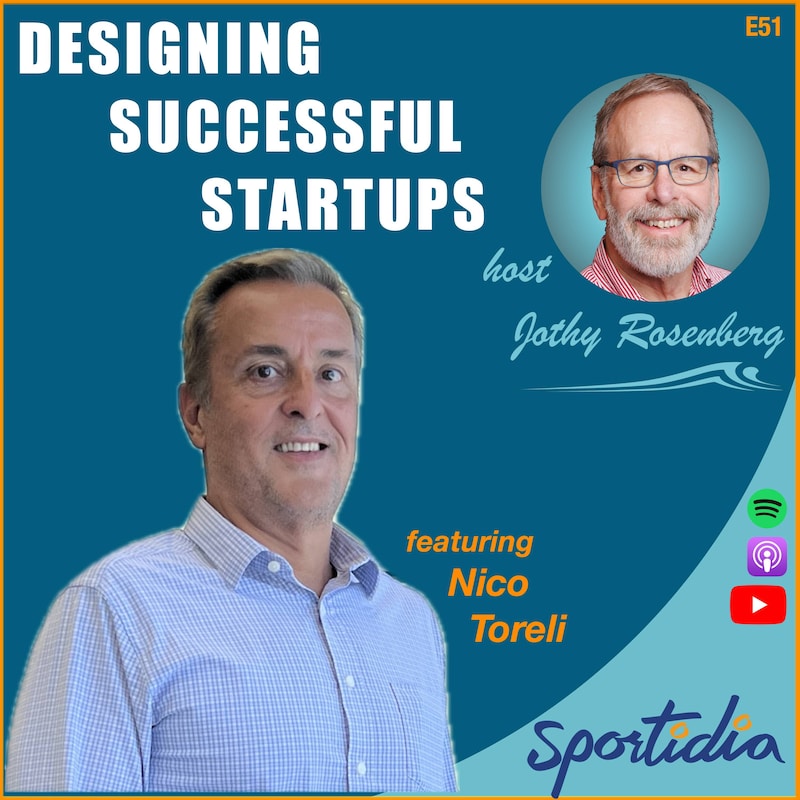
Nico Torteli, a former Olympic swimmer and successful fintech entrepreneur, shares his inspiring journey from the competitive swimming world to the realm of startups. After a notable athletic career, which included breaking records and competing in the 1988 Seoul Olympics, Nico transitioned into finance, co-founding multiple fintech companies in Brazil. His passion for sports and technology culminated in the creation of Sportidia, a social media platform designed to foster community and encourage physical activity among athletes and fitness enthusiasts. Throughout the conversation, Nico emphasizes the resilience and grit required both in sports and entrepreneurship, illustrating how the lessons learned in the pool translate to navigating the challenges of startup life. With insights into the importance of community and support in achieving fitness goals, this episode is a valuable resource for anyone interested in the intersections of athletics and entrepreneurship.
Story
Nico Torteli's journey from the competitive swimming world to the entrepreneurial realm is a testament to resilience and adaptability. As a former Olympic swimmer representing Brazil, Nico shares insights into his early life in Rio and the pivotal moments that shaped his athletic career. His transition from the pool to the boardroom began with a degree in Industrial Systems Engineering from the University of Florida, where he not only honed his academic prowess but also navigated the pressures of collegiate athletics. Nico's unique perspective as an athlete informs his approach to business, particularly in the high-stakes world of fintech, where he co-founded multiple companies in Brazil before returning to the US. His experience as an athlete prepared him for the challenges of entrepreneurship, where the stress of competition mirrors the pressures of startup life. Throughout this conversation, Nico emphasizes the importance of community and social connections in sports and business, ultimately leading him to create Sportidia, a social media platform designed to foster physical activity and connect athletes globally. The discussion draws parallels between the discipline required in sports and the grit needed in the startup landscape, showcasing how Nico leverages his athletic background to inspire others and drive innovation.
Takeaways:
- Nico Torteli's journey from Olympic swimmer to fintech entrepreneur showcases resilience and adaptability in diverse fields.
- His experience as an Olympic athlete deeply influenced his approach to handling stress and competition in business.
- The pandemic inspired Nico to create Sportidia, a social media platform focused on connecting athletes and fitness enthusiasts.
- Nico emphasizes the importance of community in sports, helping individuals feel supported and motivated to participate.
- The transition from athlete to entrepreneur mirrors the challenges faced in high-level competition and requires similar grit.
- Nico's perspective on aging in sports highlights the importance of continuous growth and embracing new challenges.
Chapters
- 00:10 - Nico Torteli's Olympic Journey
- 04:48 - The Road to the Olympics: A Journey Begins
- 13:48 - Transitioning from Athlete to Entrepreneur
- 21:09 - The Birth of Sportidia
Links
Sportidia: https://sportidia.com/
Please leave us a review: https://podchaser.com/DesigningSuccessfulStartups
Tech Startup Toolkit (book): https://www.amazon.com/Tech-Startup-Toolkit-launch-strong/dp/1633438422/
Site with all podcasts: https://jothyrosenberg.com/podcast
Jothy’s non-profit: https://whosaysicant.org
Jothy’s TEDx talk: https://www.youtube.com/watch?v=PNtOawXAx5A
Transcripts
Hello, I'm Jafi Rosenberg, the host of Designing Successful Startups, where today's guest is Nico Tortelli.
Nico Tortelli:I was living in Brazil and then I was invited to roam with the Olympic torch.
Nico Tortelli:So I was part of the really.
Nico Tortelli:They invited athletes that went to the Olympics, any Olympics, you know, to participate.
Jafi Rosenberg:Nico Tortelle is a former Olympic swimmer and a graduate of the University of Florida.
Jafi Rosenberg:Following his athletic career, he began his professional journey at an investment bank in Brazil.
Jafi Rosenberg: tech companies in Brazil from: Jafi Rosenberg:After returning to the United States, he leveraged his expertise in sports and technology to co found Sportidia, a social media platform dedicated to inspiring physical activity and fostering a global community of athletes and fitness enthusiasts.
Jafi Rosenberg:And here is Nico.
Jafi Rosenberg:Well, hello, Nico.
Nico Tortelli:Hello.
Nico Tortelli:It actually comes from Antonio.
Nico Tortelli:That's my middle name in Portuguese.
Nico Tortelli:Little Antonio is Antonico.
Nico Tortelli:It's like, you know, the little in Portuguese, it's got the Miko.
Nico Tortelli:So I became Miko forever.
Jafi Rosenberg:Well, that actually is a nice segue to my very first question, which is, where are you originally from and where do you live now?
Nico Tortelli:Okay, so I was born and raised, raised in Rio, Brazil.
Nico Tortelli:When I was 17 to 18, I came to swim at Mission Diego in California.
Nico Tortelli:It was, it was right when I got accepted into college in Brazil and my swimming career wasn't going so good.
Nico Tortelli:So I kind of convinced my parents, you know, let me take a year off and I'll just swim, which is awesome, although really hard, and see if I change my status.
Nico Tortelli:So I left Brazil.
Nico Tortelli:I was probably the fifth, sixth swimmer in the country, stayed about 10 months in Mission Viejo and went back and then broke the Brazilian record.
Nico Tortelli:So that when my career jumped and then I qualified for the World Championship, uh, and then my parents said, no, you gotta go back and work out, you know, six more months through the World Championship.
Nico Tortelli:So, you know, you don't ruin, you know, like the very end.
Nico Tortelli:So I got an extra six months.
Nico Tortelli:Six months.
Nico Tortelli:And then a friend of mine came with me and we swam.
Nico Tortelli:You know, it was like a life of a swimmer.
Nico Tortelli:So you just like practice, you eat right, you rest and then competitions like every weekend.
Nico Tortelli:That's why, you know, it does change a lot.
Nico Tortelli: World championship, that was: Nico Tortelli:It was the best ever qualification.
Nico Tortelli:I was 14th of the world that year.
Nico Tortelli:Two years later, I swam the Olympics in 88 in Seoul.
Nico Tortelli:And then while in Seoul, I was already attending college in Rio in Brazil.
Nico Tortelli:And Then I realized that my swimming career was going to go, you know, ah, you're trying to study, get a degree, blah, blah, blah.
Nico Tortelli:I said, maybe I should have stayed in US and get a degree while swimming because, you know, college and sports here run much better than anywhere else in the world.
Nico Tortelli:Then talking to people at the Olympics, I was recruited by the University of Florida.
Nico Tortelli:So I came here in 89 and started my degree or my schooling in US so I have a degree of industrial Systems Engineering at the University of Florida while swimming.
Nico Tortelli:So then I got the whole second part, which is like going to NCAA and SCCS and all the college experience, which I didn't have in Brazil.
Nico Tortelli:I had all the club experience.
Nico Tortelli:That's, you know, more likely.
Nico Tortelli:And then after I graduated, I was at University of Florida as an engineer and like, kind of switching, you know, from swimmer to engineer and realized I could get scholarship to get a master's.
Nico Tortelli:So I decided to stay and then got my master's at the University of Florida.
Nico Tortelli:Helped with the, you know, schools like that, which I didn't know, but they had big athletic departments where if you kind of get the degree that normally an athlete doesn't get, you get to go back and tutor, like math and physics and things like that for football players.
Nico Tortelli:So, you know, I tutor people like Emmett Smith and other UF football players and basketball players, which was pretty cool.
Nico Tortelli:Then I went back home and that's how my professional career started.
Nico Tortelli:I was back in Brazil, but then got a job to move to Sao Paulo, not Rio anymore.
Jafi Rosenberg:But then when the Rio Olympics happened, you were already living in Brazil, right?
Nico Tortelli:Yes, I was living in Brazil.
Nico Tortelli:And then I was invited to run with the Olympic torch.
Nico Tortelli:So I was part of the.
Nico Tortelli:Really?
Nico Tortelli:They invited athletes that went to the Olympics, any Olympics, you know, to participate.
Nico Tortelli:Of course, you know, there's the.
Nico Tortelli:The ones that actually lit up the fire.
Nico Tortelli:But I was in before that, running.
Nico Tortelli:Funny coincidences.
Nico Tortelli:I was invited by Coca Cola to.
Nico Tortelli:To run this.
Nico Tortelli:It was actually my wife knew somebody in Coca Cola.
Nico Tortelli:They were looking for athletes.
Nico Tortelli:My husband went to the Olympics, and that's how I got in.
Nico Tortelli:But it's funny how you become famous again, you know, for a little while you just run 300 meters, so it's pretty short.
Nico Tortelli:But, you know, once you get the torch, you're in the middle of the streets and there's a ton of people getting selfies and things.
Nico Tortelli:And then somebody in a truck with the organization, they start announcing, oh, this is Nico, he went to the Olympics.
Nico Tortelli:And blah, blah, blah, and People didn't know, but you know, this guy's holding the torch, he must be famous.
Nico Tortelli:So I have a, you know, I had a lot of people surrounding me.
Nico Tortelli:Let me get a selfie.
Nico Tortelli:Let me get a selfie.
Nico Tortelli:It was pretty, pretty cool.
Jafi Rosenberg:Yeah, but see they don't, they didn't know you could run because you're a swimmer.
Jafi Rosenberg:Who's this?
Nico Tortelli:I tell you, they only gave me 300 meters.
Jafi Rosenberg:One more swimming question.
Jafi Rosenberg:All that time when you were, you know, first getting excited about swimming as a, as a kid and swimming competitively all the way through the, the Olympics, was it always breaststroke or was that the only thing you competed in or.
Nico Tortelli:Yeah, this is also a funny story.
Nico Tortelli:When I started I was a good backstroker and, but that was way, way when I was a kid, like 8 year old, 9 year old kid.
Nico Tortelli:I don't know what happened exactly, but I started to get better breaststroke.
Nico Tortelli:And if I am to tell you the one stroke I can't swim is backstroke.
Nico Tortelli:So I have very old, you know, like programs in my bum cap that show that I won a backstroke event then never again.
Nico Tortelli:So my IM was really bad because of my backstroke, but I was a sprinter, so.
Nico Tortelli:And, and it's funny, you know, when I look at a swimmer I can tell if they're long distance swimmer, if they're freestylers, backstrokers, they all have different kind of bodies.
Nico Tortelli:So I'm, I am short, bulky and so I was typical sprint breaststroker, even the 200 for me it was like, ah, it's too long.
Nico Tortelli:I would love if they had the 50 breaststroke at my time, but they didn't.
Nico Tortelli: freestyle was my Olympics in: Nico Tortelli:That was the first time ever the 50 freestyle was in the Olympics.
Nico Tortelli:And they never made it that they added the 50 butterfly, breaststroke, backstroke, they say it's because it's going to add, you know, too many metals to one sport.
Nico Tortelli:So they never did.
Nico Tortelli:But it was my dream to have the 50 breasts.
Nico Tortelli:I probably would have swum like 10 more years, you know, if they had the 50 breasts.
Nico Tortelli:So.
Nico Tortelli:But you, you do train, you know, more freestyle than everything.
Nico Tortelli:So you know, when you're, when you're working out like everything from your distance, your endurance or your, there's a lot of freestyle in it.
Nico Tortelli:So yeah, I did get to swim 53 because I was a sprinter and I did swim the im, you know, but it was, I was dead last on the backstroke and then picked up everybody on the breaststroke and then it was like no more air to come back for the freestyle.
Nico Tortelli:So normally I would be like top three going from last to first.
Jafi Rosenberg:So all the wheel class freestyle swimmers are very tall with very long arms.
Jafi Rosenberg:So.
Jafi Rosenberg:So you're telling me you're not tall?
Jafi Rosenberg:You know, you can't tell on a, on a video call.
Jafi Rosenberg:How tall are you?
Nico Tortelli:I'm five nine.
Nico Tortelli:I'm, I'm a short breast joker.
Nico Tortelli:But when I go to big events up to today, they've got stronger than what we used to be.
Nico Tortelli:And they said nowadays they do a lot more weight training than what we used to.
Nico Tortelli:So you see them like very bodybuilding style, but most of the times the breast strokers are short and you're right, the freestylers are long and tall.
Nico Tortelli:Seven feet tall is like, you know, your top eight.
Nico Tortelli:Probably everybody's over seven feet tall.
Jafi Rosenberg:They say that Michael Phelps, like the normal measurement is that fingertip to fingertip is like within a half an inch of your height in most people.
Jafi Rosenberg:In his case, he's like 4 inches longer.
Jafi Rosenberg:This width.
Nico Tortelli:Yeah.
Nico Tortelli:It started with a guy, a German guy, I don't know if you remember, but he saw him in my Olympics name was Michael Gross, from, from Germany.
Nico Tortelli:He was the albatrix.
Nico Tortelli:And it was sad because he, when he swung the butterfly, it seemed like he was going to touch both lanes, you know, because his arms wouldn't fit.
Nico Tortelli:So some of the swimmers, especially the butterflyers are, you know, they have a long wingspan.
Nico Tortelli:The other thing about Michael Phelps is that his legs are short compared to his torso, which again, there is a, there is a proportionality where, you know, they're normally 20% higher, but he's the other way around.
Nico Tortelli:And I've had friends that swam, I am, that are like that.
Nico Tortelli:And I think it's because once your legs get shorter, you spend less oxygen with your kick.
Nico Tortelli:It's all, you know, swimming to me is fun or funny because even the ones, their body are not made for anything else.
Nico Tortelli:There will be good in one of the strokes that we swing.
Nico Tortelli:So if it's everybody.
Jafi Rosenberg:Well, let me ask you a.
Jafi Rosenberg:It's a, it still involves the Olympics in your background, but, but not, not directly about, you know, the competition.
Jafi Rosenberg:But how did the experience of being an Olympic athlete shape your perspective on the rest of your life, both personally and professionally?
Nico Tortelli:For everything when, when you're an athlete and sometimes you work just as hard, but you don't make it all the way or you're there and you know, it changes from discipline to go seeking.
Nico Tortelli:So, you know, normally when athletes say you know, I'm going to do this.
Nico Tortelli:And they will die trying.
Nico Tortelli:They will keep doing it.
Nico Tortelli:And that sort of permeated into when I graduated, went back home.
Nico Tortelli:I didn't know.
Nico Tortelli:I had no idea what I was going to do.
Nico Tortelli:I was an engineer.
Nico Tortelli:And then a friend of mine working in investment bank, a very aggressive investment bank, and he said, you know, you should give me your resume and let's see if they interview you.
Nico Tortelli:And it was funny because, you know, all these people making a ton of money in the, in the financial market, and, you know, they sat with me.
Nico Tortelli:He's like, oh, yeah, you didn't go to the top 10 schools in U.S.
Nico Tortelli:i said, yeah, I did.
Nico Tortelli:No, you didn't.
Nico Tortelli:You didn't go to an Ivy League.
Nico Tortelli:I said, no, I went to a top 10 school in swimming.
Nico Tortelli:That's who would give me a scholarship.
Nico Tortelli:And not, you know, Harvard would not give me a scholarship, but UF would, because, you know, we were second at ncaa, and all of a sudden the whole room starts to go, you know, we're way better than you professionally.
Nico Tortelli:But, you know, you're just not losing your cool because you're.
Nico Tortelli:You're discussing.
Nico Tortelli:And then the other question that came right after is like, yeah, yeah.
Nico Tortelli:Were you ever at a situation of stress?
Nico Tortelli:And I said, what do you mean?
Nico Tortelli:It's like, yeah, I imagine the whole market is going down.
Nico Tortelli:Everybody's yelling on the trade desk, and, you know, we got the wrong position and clients are calling and blah, blah, blah.
Nico Tortelli:I said, have you ever walked into a room with eight people in the finals and they're all going to swim and they have a minute to prove who is best?
Nico Tortelli:You can smell the adrenaline.
Nico Tortelli:You can see that even the world record holder is nervous.
Nico Tortelli:That, to me, is stress.
Nico Tortelli:What you say has got enough time to fix it.
Nico Tortelli:And I got the job.
Nico Tortelli:So it was like, you know, you've been trying to create things that athletes have lived, not because, you know, they're trying to be badass or anything, but you just, you know, you see tennis player, they're 18 years old, they're going through more stress to play a final in Wimbledon than anybody else in the professional world would ever go through their lives.
Nico Tortelli:So it did help me a lot to get, you know, a job.
Nico Tortelli:And then when I decided to become an entrepreneur, I tend to say that startups is just like athletic career.
Nico Tortelli:You, you have an idea, you think you're going to get there.
Nico Tortelli:Nobody has a recipe, and it's all on your.
Nico Tortelli:Plus, whoever you put on the team just you know, keep shooting.
Jafi Rosenberg:Well, the one thing that for sure brings the athlete, the world's best athlete down and brings everyone down is aging.
Jafi Rosenberg:And so there was a point somewhere along the way when you realized, okay, I'm getting older and I'm not going to be able to, you know, keep this up and compete with these guys.
Jafi Rosenberg:And then how did you, how did this transition from being top, you know, top small percent of athletes in swimming in the world and go into this new, you know, career in finance?
Nico Tortelli:This is actually a cool, funny question because I went through that a lot.
Nico Tortelli:Not only in the career, but also you get old, but you don't want to be enacted, so you keep trying other sports.
Nico Tortelli:So, you know, I went there to learn snowboarding.
Nico Tortelli:And the third day I was like, why am I not in a pool?
Nico Tortelli:You know, I know everything there and I'm falling on my butt for three days here, and everybody's laughing at me.
Nico Tortelli:My kids are making fun of me because they're doing it already.
Nico Tortelli:So also, when you try something else, you're, you're.
Nico Tortelli:And, and the better you are, the worse it is.
Nico Tortelli:I, we had a guy that was maybe two, four years older than me.
Nico Tortelli:He was a world record holder from Brazil on the 400 IM.
Nico Tortelli:He came to Texas for school.
Nico Tortelli:I was in the team with him.
Nico Tortelli:And I remember he started a little bit before me in the financial market.
Nico Tortelli:And, you know, he would be harassed like, oh, yeah, you think you're not the world record holder.
Nico Tortelli:You're just a trainee at the firm.
Nico Tortelli:And it's right at.
Nico Tortelli:For 10 more years, 15 more years, that every pool he walked in, he was still somebody that, you know, people would go, oh my God, it's you.
Nico Tortelli:But in the financial market, he was a nobody.
Nico Tortelli:Well, he didn't continue.
Nico Tortelli: he worked for the Olympics in: Nico Tortelli:So some, it's really hard to switch, but it, you're right.
Nico Tortelli:It starts with age.
Nico Tortelli:And I, I have a thing that I say, and people get mad at me because I say all the good athletes are dumb.
Nico Tortelli:And I, they say, oh, you think, but you smart.
Nico Tortelli:It's.
Nico Tortelli:No, no, no.
Nico Tortelli:When you start questioning, why am I doing this?
Nico Tortelli:You know, should I get a career?
Nico Tortelli:That's when your career in swimming gets sort of derailed because you don't believe everything anymore.
Nico Tortelli:And while you're believing everything, like you believe your coach, you believe your, you believe your program.
Nico Tortelli:That's when you succeed.
Nico Tortelli:So there's a, I say it, you know, kind of, in a funny way, they're not stupid, but it's like they're, they're believers.
Nico Tortelli:And there's a point in life where you start questioning, I can't live off that, you know, my whole life, I gotta do something else.
Nico Tortelli:And, and that's when you start balancing, balancing four sports.
Nico Tortelli:It doesn't fit.
Nico Tortelli:If you start balancing, that means your career is not 100% of your focus.
Nico Tortelli:So things kind of start.
Nico Tortelli:Somebody else is focusing a hundred percent at the same event that you swear and they're going to come stronger than you because, you know, I went like my last year in college, it had been like three years, it was 92.
Nico Tortelli:So it was four years after the Olympics.
Nico Tortelli:So I was an older side, but I remember going to some, I think it was SEC conference and the professor here in school, you know, if you have an exam, the professor would give it to the coach and the coach would apply the exam to you in the, in the hotel room.
Nico Tortelli:So I remember I was like me and another two taking exams and the other swimmers were just like sleeping because all they cared about was swimming.
Nico Tortelli:You know, their grades could, you know, suffer.
Nico Tortelli:So that's when you realize, oh my God, you know, they're racing at the afternoon, we're going to swim against each other.
Nico Tortelli:I've been three hours, you know, thinking on an exam and they've been sleeping.
Nico Tortelli:So something changed.
Nico Tortelli:Hi.
Jafi Rosenberg:The podcast you are listening to is a companion to my recent book, Tech Startup Toolkit, how to Launch Strong and Exit Big.
Jafi Rosenberg:This is the book I wish I'd had as I was founding and running eight startups over 35 years.
Jafi Rosenberg:It's like a memoir of my entrepreneurial journey.
Jafi Rosenberg:I tell the unvarnished truth about what went right and especially about what went wrong.
Jafi Rosenberg:Wrong.
Jafi Rosenberg:It's for the founder, the CEO and wannabe founders of tech and non tech startups.
Jafi Rosenberg:You could get it from all the usual booksellers and also from the publisher@banning.com.
Jafi Rosenberg:i hope you like it.
Jafi Rosenberg:It's a true labor of love.
Jafi Rosenberg:Now back to the show.
Jafi Rosenberg:And now we get to talk about your shirt.
Jafi Rosenberg:And yep, yep.
Jafi Rosenberg:Make sure everybody can see it.
Jafi Rosenberg:Just flex that breaststroker chest for a second.
Nico Tortelli:Where's my whole life shirt?
Jafi Rosenberg:Yeah, yeah.
Jafi Rosenberg:That's why you became a swimmer.
Jafi Rosenberg:So the shirts look good, right?
Jafi Rosenberg:So, so it's a, it's a startup that, that you created called Sportidia.
Nico Tortelli:Yes.
Jafi Rosenberg:And so, so what, what was it about or what was happening in, in life that led you to start this?
Jafi Rosenberg:And while you're at it.
Jafi Rosenberg:Tell us what it is.
Nico Tortelli:Okay.
Nico Tortelli:So very quickly the investment bank got sold to a big bank and then the whole entrepreneurship that you normally have in a smaller investment bank went away.
Nico Tortelli:And I realized that's what I liked, you know, But I was in the financial market so I was invited to be a co founder in a fintech.
Nico Tortelli:From that I opened another fintech, another fintech.
Nico Tortelli:So I had three fintechs in Brazil.
Nico Tortelli:The last one I did well on the first two, very badly on the third one.
Nico Tortelli:Just like a normal athletic career, not all the swim meets you do well.
Nico Tortelli: d to move back to us that was: Nico Tortelli:I went to California.
Nico Tortelli:Both of my kids wanted to go to school there, so they attended ucsd.
Nico Tortelli:We moved as a family.
Nico Tortelli:I still worked with fintechs.
Nico Tortelli:And then came the pandemic.
Nico Tortelli:In the pandemic, what I realized was most of my friends that were some in some way shape or form physical activity participants, people that would like from running, triathlon or just like, you know, going to the gym.
Nico Tortelli:Everybody was locked up.
Nico Tortelli:So you're locked in, you can't do anything.
Nico Tortelli:Everybody was going to social media.
Nico Tortelli:And then it came like the idea, you know, why don't do I use my technology expertise and build an app where I get the social aspect of the sports into the app.
Nico Tortelli:So it's like a social media for sports.
Nico Tortelli:It's something that when you're there, there's nothing about war, politics, religion, it's all about, you know, we became friends because you swim and I swim.
Nico Tortelli:I met you in a call but then it just clicked because you talk about a workout.
Nico Tortelli:Then I went to the pool here and did the workout.
Nico Tortelli:You told me.
Nico Tortelli:So you know, people start to get connected because of the app.
Nico Tortelli: So it was around: Nico Tortelli:I have had the idea before, but then I said maybe I should take it serious.
Nico Tortelli:And that's what Sportidia is all about.
Nico Tortelli:It's a mix of the word sports in English with social media in Portuguese.
Nico Tortelli:And I became Sportidia.
Nico Tortelli:And the idea is what if your feed has activities that instead of just saying that you like, maybe you can just click and say I'm going to that one.
Nico Tortelli:So yeah, you know, let's go swimming on Saturday.
Nico Tortelli:I post on the feed and you just say I'm going.
Nico Tortelli:And somebody else says go, go, go.
Nico Tortelli:And somebody that's out of town is visiting and they see, oh, this guy's a whole crazy, they're swimming at the ocean, you know, Saturday morning, maybe I should join.
Nico Tortelli:And then what, what I did in Scorchedia is like one of the basics idea of startups.
Nico Tortelli:Don't create anything, just copy what's out there.
Nico Tortelli:So we just picked up a bunch of features and ideas from different social medias and platforms.
Nico Tortelli:So once you see that I posted something about swimming in the ocean, then you go into my profile and it's a little bit like a LinkedIn of sports.
Nico Tortelli:You will see that, you know, in swimming, I'm pretty good, but, you know, in, in CrossFit, I'm about average.
Nico Tortelli:In snowboarding, I'm still, you know, suffering.
Nico Tortelli:But, and I make a joke like that we're the only social platform that you can actually say in your profile that you are a beginner because you're not afraid of saying, you know, I'd love to learn fencing, but I'm, I'm a zero.
Nico Tortelli:You know, I.
Nico Tortelli:In any other platforms, you got to create something that your profile becomes attractive.
Nico Tortelli:So even if it's not real, you can't go to LinkedIn and say, you know, I am an accountant, but I know nothing.
Nico Tortelli:I just want to learn.
Nico Tortelli:So sports allows you to do that.
Nico Tortelli:It just.
Nico Tortelli:Other people will come.
Nico Tortelli:And this is the interesting part about sports is if you say you don't know and you come to a workout with me or you, and they don't know as much or they will help.
Nico Tortelli:You know, it's, it's in most of the places I went, it's in their nature, the community aspect of it.
Nico Tortelli:Every time you register for any of these sports or physical activities, you will see that somebody's out there as crazy as you trying to do the same thing.
Nico Tortelli:But, you know, they may be better or, or in a different level and they all stop to help.
Nico Tortelli:It's, it's really harder to go somewhere that nobody will even talk to you.
Nico Tortelli:From, from young to masters, there's always coming.
Nico Tortelli:And then most of my friends, you know, from life, from professional life or from early ages or college, there were athletes somehow, I mean, they've done something.
Nico Tortelli:So that's when things clicked.
Nico Tortelli:So in 21, we raised the first round and then 22, we launched the app and now we are kind of like on a third version.
Nico Tortelli:So we've learned a lot, made a few mistakes here and there, and now we're just going through a full launch of what we think it's going to become the biggest hub of sports.
Nico Tortelli:Not really in my.
Nico Tortelli:There's, there's, there's users that do that.
Nico Tortelli:They, they talk about sports, their fans, but it's more about, you know, doing sweat.
Nico Tortelli:Yeah.
Nico Tortelli:And then come here and I, I tell this to every time I pitch to investors or I'm telling a story.
Nico Tortelli:Nowadays, every time you're going to do something like if you have a swimming workout or a bunch of buddies want to go hiking, it starts on a messaging app, iMessage or WhatsApp, then you do it and it ends in Instagram.
Nico Tortelli:Somebody posts pictures or videos about it.
Nico Tortelli:So normally it's got those connections.
Nico Tortelli:We just add it all up into Sportiga and trying to, you know, make it a one stop shop for you to find people do it and then create content.
Jafi Rosenberg:I would think that a closer comparison, although not the same but closer, would be something like Strava.
Nico Tortelli:Maybe we consider Strava is a good comparison.
Nico Tortelli:Their DNA or the reason they were created was actually to help you while, you know, performing your activity.
Nico Tortelli:So they, they do track a bunch of metrics and now they're trying to move into, become a social app where you know, you kind of will go for a bike ride and you know, it gets your distance, your attitude and all the things that happen while you're biking and that might become a content that somebody is interested.
Nico Tortelli:We were, we come from a different angle.
Nico Tortelli:We bring the social aspect and maybe we'll improve that into getting metrics.
Nico Tortelli:But if you look at, we have currently 110 sports that actually have some kind of poster content.
Nico Tortelli:So if you get like, you know, base jumping or beach volleyball or we have, we have pillow fight that's in our app.
Nico Tortelli:And none of those have metrics that would fit an app like Strava.
Nico Tortelli:None of those have an app.
Nico Tortelli:Some of them may have an app to rent a place.
Nico Tortelli:So like you get tennis paddle those, those have an app for you to rent a court.
Nico Tortelli:Some like basketball, football, you might find an app for a pickup game that you might find people organizing it.
Nico Tortelli:The idea of Sportida is kind of bringing features from all of those and in our mind we're like the slack of all those other apps.
Nico Tortelli:So my view is that one day maybe you do something in Strava and that creates a content in Sportidia, you know, because they're integrated and then you have a whole community of friends that would be interested that you biked a hundred miles, although none of them are bikers or cyclists and none of them are in Strava.
Nico Tortelli:But they are, they met you because they swim with you or you know, they do yoga with you or something.
Nico Tortelli:And, and that's what Sportida is trying.
Jafi Rosenberg:To catch I, I'm a very narrow user of, of Strava, so I don't even know all the other things it can do.
Jafi Rosenberg:The only thing I care about is other people recommending a specific bike route for a workout.
Jafi Rosenberg:That's the only thing I, and so it's, it seems like it's pretty limited.
Jafi Rosenberg:And I, and I, and I like your comparison to messaging to create an event that's social.
Jafi Rosenberg:You know, here's my friends and then Instagram to sort of show the fun aspects maybe of what it was, you know, or what it was like because.
Nico Tortelli:I recruit more friends to come next time.
Jafi Rosenberg:You know, I don't know if I told you this in our first discussion, but I have this foundation for kids who've become disabled and we get them whatever equipment they need to get into a sport.
Jafi Rosenberg:So there's a, there's, there's a sport.
Jafi Rosenberg:You know, at the root of it is a sport that is going to help them rebuild their self esteem.
Jafi Rosenberg:I'm thinking about trying to bring them in.
Jafi Rosenberg:And then, you know, there would be this other category.
Jafi Rosenberg:It would be like, you know, I don't know, running, amputee running, you know.
Nico Tortelli:Yeah, I'd love that.
Nico Tortelli:And, and, and this is how we differentiate from everybody else.
Nico Tortelli:It becomes a community.
Nico Tortelli:And now, you know, let's say, you know, we run ads for free for your foundation and sporty.
Nico Tortelli:Then other people that didn't know about this, this work might get interested because they know somebody that's going through the same thing or they just want to help because they, they are into the sport or some sport, you know, just as, as, as much.
Nico Tortelli:So, you know, why not provide this to kids?
Nico Tortelli:And yes, those are, I normally say, people say, oh, you should talk to a very famous, you know, athlete to become your ambassador.
Nico Tortelli:I know the ambassador in Sportilla might be a person that's an amputee and run or a single mom that just had a baby and now she wants to get back in shape and you know, she thinks she's not fit to go to a gym or studios or she wants to try something at home.
Nico Tortelli:Those are the people that will say, you know, Sportivia changed my life.
Nico Tortelli:I became more physically active.
Nico Tortelli:Some of them might go all the way in the career of sports and you know, turn into something.
Nico Tortelli:And of course I'm not saying, you know, the best athletes are not welcome, but normally it's when I say, when I see other more people participating, that's what kind of drives my, my energy to keep building Sportiga.
Jafi Rosenberg:And we'll put it in the show notes, but just say what the, where they go to find the app and to sign up, just if you have.
Nico Tortelli:An Android, Google Play or app store for the iPhones and download Sportidia and that's it, you register and then you start posting.
Nico Tortelli:The one trait about the whole thing is that every post you have to say you know, the location and the sport that you're participating.
Nico Tortelli:You can post things that we call content posts.
Nico Tortelli:It's just like a tip or something that you know.
Nico Tortelli:Or you can actually post a workout that you did or will do.
Nico Tortelli:And then when you post an activity, the future is coming and what we're going to have is like, you know, charts and then telling you, oh, look how good you did.
Nico Tortelli:You know, last month you did five activities, this month you did six.
Nico Tortelli:So it's like trying to get people better.
Nico Tortelli:We are also launching a medals program, which is not a medal because you won or you broke a record or you're just a better.
Nico Tortelli:It's just medals for what you've done in the app.
Nico Tortelli:So maybe you create an activity in five people confirmed and went play with you or train with you, that gives you a medal, or you brought three friends to become a sportiti that gives you a medal.
Nico Tortelli:And so the idea is, how do we motivate or use the same tools that social media has to keep you glued to the screen, but we use the tools to keep you out of your house, go somewhere and get fit.
Nico Tortelli:I wouldn't say fit too much.
Nico Tortelli:I've, I've seen a lot of people say it's too much suffering.
Nico Tortelli:I like the social of it.
Nico Tortelli:I go to the gym to talk more than to lift with.
Nico Tortelli:That's fine.
Nico Tortelli:You went, you know, it's good for the brain, it's good for the, for your health because you participating in something and you always get moving.
Nico Tortelli:So, you know, even if you talk more at the gym than lift weights, you still lift something.
Nico Tortelli:You could have been home, you know, just zapping the remote control and that, right?
Jafi Rosenberg:Oh, I think it's, I think it's fun.
Jafi Rosenberg:So hey, when you, when you think back, because this, you know, now we're just going to sort of link the Sportidia to all the other things that you've done.
Jafi Rosenberg:But to do what you did and swim the way you did had to take a lot of grit.
Jafi Rosenberg:And to do a startup after you were very successful in financial services and fintech, a lot of grit clearly exhibited.
Jafi Rosenberg:But where do you think it came from?
Nico Tortelli:Oh, that's a Very.
Nico Tortelli:That's a very hard question.
Nico Tortelli:I have a history at home.
Nico Tortelli:My.
Nico Tortelli:My father was a basketball player.
Nico Tortelli: st us in the finals in Rio in: Jafi Rosenberg:Now, wait, he can't have been five, nine.
Nico Tortelli:No, no.
Nico Tortelli:He married a very short mom that I have, and she's the one that I blame.
Nico Tortelli:I said, because he tried to make me a basketball player.
Nico Tortelli:And again, same thing about career decision.
Nico Tortelli:But at 12 years old, you're like, I'm not growing like this.
Nico Tortelli:I better do something else.
Nico Tortelli:So I became a swimmer.
Nico Tortelli:But I was.
Nico Tortelli:A few years ago, I was talking to a friend, and he was like, you know, I gotta get my kid to do what you did.
Nico Tortelli:I gotta get my kid to go to the Olympics.
Nico Tortelli:And I've got him into playing tennis and running into one of these things.
Nico Tortelli:And then it got me thinking.
Nico Tortelli:It comes with a person.
Nico Tortelli:It's not really something you enforce.
Nico Tortelli:Most of the athletes, I've seen parents who say, I don't know why, but this kid would never let his ball go.
Nico Tortelli:Or, you know, it'd be 10 at night and he would be shooting hoops at the garage at that, you know, bad basketball board that they had it.
Nico Tortelli:And I really don't know if it's from example or genetic.
Nico Tortelli:What I know is most of us, we're determined, but I think resilient would be a better description.
Nico Tortelli:It's.
Nico Tortelli:It's normally people that if they win or lose, and it's true, if they win or lose the second after, they're thinking about the next race.
Nico Tortelli:So I.
Nico Tortelli:I've seen many of us, many people, there's not much celebration when you win.
Nico Tortelli:You're like, oh, shit, there's another race.
Nico Tortelli:There's.
Nico Tortelli:When is there other race?
Nico Tortelli:So it's like, you can, you know, I've seen guys say, at the next Olympics, dude, that's four years down the road.
Nico Tortelli:You're talking about this already?
Nico Tortelli:Yes.
Nico Tortelli:You're.
Nico Tortelli:You're normally.
Nico Tortelli:These people are.
Nico Tortelli:And I think that, you know, if you want to make a link.
Nico Tortelli:I seen that a lot in founders and startup.
Nico Tortelli:They're, you know, it's like everything that you accomplish.
Nico Tortelli:Yes, but you wanted to accomplish that.
Nico Tortelli:So what's the next.
Nico Tortelli:What's the next.
Nico Tortelli:And not next startup, but next goal, the next, you know, the next hurdle, the next benchmark, the next KPI.
Nico Tortelli:It's like, okay, I got to a thousand users.
Nico Tortelli:How do I get to 3,000?
Nico Tortelli:Go celebrate that.
Nico Tortelli:You got a thousand users.
Nico Tortelli:No, no, no.
Nico Tortelli:You always said 3,000 mark.
Jafi Rosenberg:Well, the same thing is true when, when a startup ends, whether it ends well or ends poorly.
Jafi Rosenberg:The.
Jafi Rosenberg:A lot of founders, myself included, because I'm on number nine, said, oh, okay, well, I want to do another one.
Jafi Rosenberg:And here's the market I want to be in.
Jafi Rosenberg:And I don't want to make these mistakes or, well, that was great.
Jafi Rosenberg:We, you know, we had a good outcome, but, you know, now I want to use some of what I earned and, and do another one again.
Jafi Rosenberg:It's kind of the same.
Jafi Rosenberg:It's kind of the same as the.
Jafi Rosenberg:That's me.
Nico Tortelli:And not a whole lot of people around you gets it.
Nico Tortelli:There's like, why other day I went to an event with where my kids worked and his boss's boss.
Nico Tortelli:I don't understand you people.
Nico Tortelli:Why do you keep creating startups?
Nico Tortelli:And it's like, I don't understand why you become an executive when you grow up.
Nico Tortelli:And the fun for us is, what's the next one?
Nico Tortelli:What's the next one?
Nico Tortelli:But that's why I normally compare, you know, and it's not only an athletic or a sports career.
Nico Tortelli:You know, if you're a singer or an actor or anything that you're always trying to get better at what you do, that's the same thing as a founder, there's not much difference.
Jafi Rosenberg:I agree.
Jafi Rosenberg:Well, this is.
Jafi Rosenberg:This was a wonderful conversation, Nico.
Jafi Rosenberg:Thank you.
Nico Tortelli:Great.
Nico Tortelli:Thank you so much.
Nico Tortelli:And I hope I see you in a pool or the ocean.
Nico Tortelli:So I'm not going Alcatraz.
Nico Tortelli:That's too cold for me.
Nico Tortelli:And I know that's your preferred event, but if you ever hit South Florida, this one, a long event, you know, let me know and I'll go swim.
Nico Tortelli:I'll break my sprinting habits and I will swim along this swim slower.
Jafi Rosenberg:That's a wrap.
Jafi Rosenberg:Thanks for tuning into this week's episode of the Designing Successful Startups podcast.
Jafi Rosenberg:Check out the show notes for resources and links.
Jafi Rosenberg:Please follow and rate us@podchaser.com designing successful startups.
Jafi Rosenberg:And also please share and like us on your social media channels.
Jafi Rosenberg:This is Jothy Rosenberg saying ttfn ta ta for now.

