Shownotes
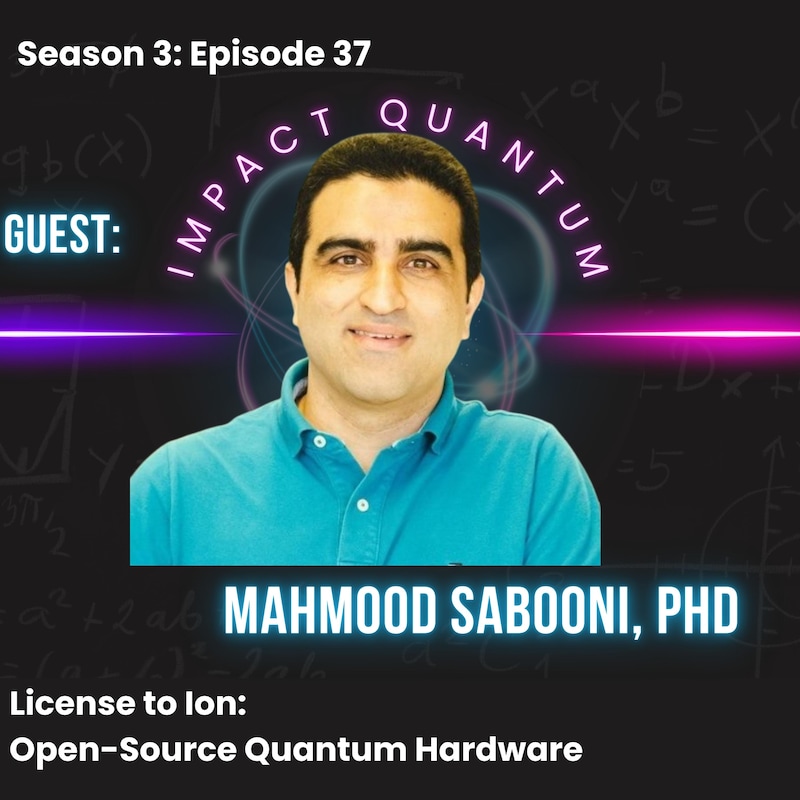
In this episode, Frank La Vigne and Candace Gillhoolley are joined by Mahmoud Sabooni, lead quantum processor engineer at Open Quantum Design (OQD). Today’s conversation takes us to the snowy landscapes of Canada and deep into the heart of quantum hardware—specifically, the fascinating world of trapped ion systems.
Mahmoud Sabooni shares insights from his experience in both academia and industry, explaining how OQD is pioneering open-source quantum hardware and what “full stack quantum computing” really means. The episode covers the differences between trapped ions and other quantum computing platforms, the challenges of scaling these systems, and how open hardware might accelerate innovation by bringing transparency and collaboration to quantum research.
Whether you’re just beginning to explore quantum technology or already knee-deep in atomic physics, this discussion breaks down complex concepts and reveals the practical sides of building and maintaining quantum computers. Get ready for a deep dive into cutting-edge hardware, workforce development in quantum, and visions of how quantum technologies will impact our everyday lives.
Time Stamps
00:00 Quantum Hardware to Computing Journey
03:49 Open-Source Quantum Computing Initiative
07:28 Open-Access Benchmark for Machines
13:31 Collaborative Scientific Resource Sharing
15:31 "Quantum Computing Full Stack Layers"
18:20 Quantum Computing Challenges Explained
21:31 Ionized Atom Trapping Explained
25:55 Scaling Quantum Computing Challenges
27:51 Quantum Benchmarking Across Platforms
33:12 Physics and Engineering in Optics
35:34 "Builders vs. Users Explained"
38:53 "Optimizing OQD Stability and Efficiency"
43:29 "Quantum Technology in Daily Life"
46:42 "Atom Precision Mind-Boggler"
48:40 "Industry vs Academia Mindset"
51:45 "Highest Paid Person's Opinion"
Transcripts
Well, hello and welcome back to Impact Quantum, the podcast for the quantum
Speaker:curious. We. We firmly
Speaker:believe you don't need to be a PhD, although it certainly helps
Speaker:to participate in this emerging field. And with me is the most quantum
Speaker:curious person I know, Candice Gahooley. How's it going, Candice?
Speaker:It's great. Thank you so much, Frank. You know, today
Speaker:it's crazy. This week actually we got a massive, massive snowstorm.
Speaker:And although where I am in Montreal, Quebec, we always see the
Speaker:first flakes for Halloween, we normally don't have such
Speaker:a deluge. I probably have nine inches outside.
Speaker:It's, it's just crazy. So I'm all looking at the beautiful
Speaker:snow, but I'm getting my, my head all in gear to have a great conversation
Speaker:today. I'm really excited about our guest. Yeah, awesome.
Speaker:It is chilly down here. We didn't get any snow, although I think in Western
Speaker:Maryland they did get some snow, but it is chilly here
Speaker:and I may have to fire up the GGX to do some fine tuning
Speaker:to heat up my office as well as turn on some of these monitors.
Speaker:So who do we have talking to us today? Candace. Right, so today we're talking
Speaker:to Mahmoud Sabuni. He is the lead
Speaker:quantum processor engineer at
Speaker:oqd. Very cool. Hi, how are you today?
Speaker:Okay. Yeah, thanks for having me here.
Speaker:Yeah. Here also we have a little bit of snow, like last couple
Speaker:of days still like leaves on the trees, but you could
Speaker:see the snow and then snow and then after that you see the
Speaker:leaves on top of the snow. That's kind of interesting feature that
Speaker:you could see. So you're also in Canada, right? Yeah, yeah, in
Speaker:Waterloo, Canada. Okay, very cool. For the people who know, don't know,
Speaker:like Waterloo, where is it? Like close to the Toronto, like 70 or 80
Speaker:kilometers south. Yes, that's.
Speaker:I'm here from probably almost like 10 years.
Speaker:Start by like some postdoc and some other activity at
Speaker:Google as the optical engineer and then back
Speaker:to this open quantum design startup
Speaker:in Waterloo. Oh, very cool, very cool. Your
Speaker:LinkedIn is very impressive. So I have plenty of questions around
Speaker:that. Open quantum design.
Speaker:Tell me about that. That's an interesting.
Speaker:What does open quantum design do? Or. Yes, that's.
Speaker:Yeah, that's probably the core of the Discussion that we can go through.
Speaker:First of all I'm more like a hardware person. Like I worked more on the
Speaker:hardware side on like quantum information since my
Speaker:PhD which was in in Sweden in Europe
Speaker:and also my master there around the quantum
Speaker:information technology and like storage
Speaker:basically quantum memory during my PhD and after after
Speaker:that I came to the like quantum computing parts
Speaker:and as a postdoc here at iqc.
Speaker:And yeah I just put some gap for the
Speaker:Google time which was more classical optics and hardware. But later
Speaker:like there is some three PI here in Waterloo.
Speaker:Two of them Crystal Senko and Raj Wolselm working on the
Speaker:Ion Trap machine and one Roger Molko
Speaker:working more on on more AI and software side.
Speaker:They decided to start making like an
Speaker:iron trap based full stack quantum computer.
Speaker:This company start from like a February 24th and
Speaker:I joined them at the at the same time then we
Speaker:the idea is to have a full stack quantum
Speaker:computer based on iron trap available for anyone who
Speaker:wants to rebuild it. Like the
Speaker:way that we do is that we have like some software team
Speaker:and some hardware team. I'm more on the hardware side and we are
Speaker:developing like some prototype and at the same time we
Speaker:put all our designs on GitHub available
Speaker:for like anyone who wants to rebuild or use
Speaker:that kind of module for for his setup in future.
Speaker:And the the big picture is to like do the same thing
Speaker:that happens for either software or some even hardware
Speaker:in the classical computers in the quantum
Speaker:computers. Like there are some like you can explain more details like
Speaker:what kind of reasonings is behind this will be successful or not
Speaker:that. Yeah we don't know but we're pushing that. And during
Speaker:last year we could reach to some good milestones.
Speaker:We could get some collaborators like
Speaker:partners. We have like five different companies already
Speaker:putting money or full time employee on this open source
Speaker:activity and we are pushing towards
Speaker:getting our first aspect of the machine out soon.
Speaker:Hope like January 26th that shows okay this machine
Speaker:is already live and available and yeah
Speaker:looking for more people to come and contribute to see
Speaker:how we can push it forward. That's the more like
Speaker:a central activity of the open quantum design.
Speaker:So in practice
Speaker:what does open quantum hardware design mean
Speaker:in practice and how is it different from traditional
Speaker:closed or proprietary approaches in physics
Speaker:research? Yes like
Speaker:if we want to make very similar example in the
Speaker:classical world I could bring example of the
Speaker:RISC V company that's a company
Speaker:that actually we have some people from there also like
Speaker:with the same idea came to the one quantum design as a board member
Speaker:to Push the idea here also in 80s and
Speaker:90s there was like discussion about the
Speaker:designing of the CPUs. Like different
Speaker:companies like closed or open just start
Speaker:to work on that kind of architectures. And then
Speaker:at some point RISC V as an open source company
Speaker:start building the standards or
Speaker:designing chips. And these days like that
Speaker:the RISC V it has already
Speaker:70 plus members. And then most
Speaker:of the CPU design in Intel AMD anywhere else
Speaker:it's using those standards that's built on the open
Speaker:source activities. The same idea
Speaker:here also could be in principle
Speaker:implemented. Like for example
Speaker:benchmarking of the quantum computer is something
Speaker:which is very tricky. Like different company. Like
Speaker:+10 different companies already announcing different
Speaker:like machine. And then we don't have still
Speaker:fully standard benchmark system to do
Speaker:the benchmarking on different machine. And
Speaker:one of the reason is that those machines are closed and that
Speaker:no one have access to those machines to test and
Speaker:benchmark them. Then if they have some machine at
Speaker:least in some of the architectures like Ion Trap
Speaker:or in future could be other others also you
Speaker:can run your algorithm on that machine and
Speaker:tested machine and then test your standards and then write the standards
Speaker:based on those open access machine for anyone around the world.
Speaker:And then the rest of the people can also use that. This
Speaker:is not against any like a
Speaker:IP based company also like they could also get benefit of this
Speaker:open source and build the standard around that.
Speaker:Because around this like a point people can come
Speaker:and exchange idea and also develop
Speaker:whatever that they have done so far. And then
Speaker:integration of those like multi
Speaker:idea people can
Speaker:in principle maybe outperform
Speaker:the flow system.
Speaker:That's the idea behind this. But there is some other
Speaker:feature also would be interesting from hardware point of view. Because from
Speaker:software point of view you can see a lot of comparison
Speaker:around the board. For example Linux versus Windows
Speaker:like maybe the top
Speaker:like the most important project around the world
Speaker:running Linux, not Windows like Linux is the open source
Speaker:that's in the software. It's very clear that
Speaker:that's a path that can be very successful
Speaker:in the hardware regime. Especially in
Speaker:quantum computation.
Speaker:Very expensive hardware you need to develop. And then the open
Speaker:source community will have difficulty to
Speaker:gather those together and then test whatever they
Speaker:want to do on that hardware. The idea on OQD
Speaker:is to make that kind of test beds for
Speaker:anyone who want to work to single
Speaker:details of the machine. Like
Speaker:other machine that is available already mainly is cloud based.
Speaker:You can run some algorithm on those but
Speaker:you don't have access to full ingredient of that
Speaker:machine. Yeah, that's simply because of the IP reason.
Speaker:But here everything is transparent. You can see
Speaker:each single module.
Speaker:For that reason it will be easier to
Speaker:first benchmark it second also learn it
Speaker:from this hardware available. A lot of
Speaker:people like a software oriented that they are interested
Speaker:to run some calibration on some real quantum machine.
Speaker:They can do that and
Speaker:that's a big benefit on the learning curve.
Speaker:Like build some better workforce development.
Speaker:Or even for closed system they can use this kind of people
Speaker:who know it's capable of doing
Speaker:something which was not possible without access to the hardware.
Speaker:That's one big plus. And also
Speaker:like for example colleges that they
Speaker:want to train some quantum engineer at the bachelor level that
Speaker:they want to handle quantum machine.
Speaker:They can use this kind of system. Like they cannot
Speaker:go and buy some quantum computer from like big IP based
Speaker:company and then have access to all full details because
Speaker:it's IP based. But here they can have
Speaker:machine and then run it and learn it
Speaker:and improve it for whatever
Speaker:purpose that they have. This machine is not necessary to be the top best
Speaker:machine in the world. It's just need to run some simple
Speaker:functionality. And
Speaker:because of the reason that I mentioned like benchmarking, you can do it on a
Speaker:simple machine learning, you can do it on the simple machine. And
Speaker:also workforce development also you can. Do
Speaker:on this machine with the open design
Speaker:transparency, open source. Do you find that this
Speaker:accelerates innovation? That sharing
Speaker:these designs actually helps solve complex engineering
Speaker:problems, perhaps faster? Yeah, that's the idea.
Speaker:If you want to compare it in physics person. And then I
Speaker:was comparing to some phenomena in. In nature, like
Speaker:comparing the light bulb to the laser. Like the laser
Speaker:happened whenever that you have phase coherences of the
Speaker:photons on top of each other and they will
Speaker:amplify the the final result here also
Speaker:that could be a. Yeah, it's. It's difficult to prove
Speaker:it, but there are some example as I mentioned, like
Speaker:software developmentally and also hardware like this
Speaker:RISC V versus ARM or Intel
Speaker:that shows that was successful here also there's a good
Speaker:chance that can be successful and this comes
Speaker:from like University of
Speaker:Waterloo. Anyway they spend time on
Speaker:development different sections and different modules.
Speaker:And that would be good to share it with the academia first for
Speaker:sure. And then why not share it with everyone
Speaker:and then try to. Also we
Speaker:also could benefit a lot. Like for example we have
Speaker:some locking mechanism under our laser
Speaker:that we don't have much and bandwidth of the people
Speaker:to develop that. But someone else could come and say
Speaker:oh, I did this with all single details. Not
Speaker:just a paper, not the published paper or archive version, just with the
Speaker:details of the electronics, mechanics, optics,
Speaker:diagrams and share those information and then
Speaker:we can build that system in here. On the other hand,
Speaker:the other partner also can benefit from our whatever
Speaker:for example our optical circuit board design which is
Speaker:transparent, everything available and use that as
Speaker:like resources to build its own system
Speaker:in different country completely.
Speaker:Yeah, we have some collaborators like from India,
Speaker:from like Brazil, from a lot of countries
Speaker:in the south hemisphere like coming
Speaker:for this kind of options.
Speaker:And of course there will be also some difficulty in terms
Speaker:of politics that will be challenging to
Speaker:how, when and where you want to distinguish between
Speaker:these open and close and IP base. That's. That's the
Speaker:still open question that yeah, there is some resistance
Speaker:sometimes. So there's a lot to unpack
Speaker:there. But one of the things I saw on
Speaker:your website for OQD was
Speaker:you referenced the term full stack quantum computer. Yes.
Speaker:What is a full stack quantum computer?
Speaker:Full stack means like you can.
Speaker:The whole quantum computer is several
Speaker:layer of different information
Speaker:from your classical computer code
Speaker:and then that will convert to some mid layer and
Speaker:then the mid layer to very low level in the. We call it like a
Speaker:meta layer that you want to talk to the. In our case to
Speaker:atoms and there will be a lot of like exchange
Speaker:in between. In at open quantum
Speaker:design we have some partner that works on the
Speaker:software like for example Xanadu as a IP
Speaker:based company they provide some agreement to
Speaker:OQD and provide some full time employee they can
Speaker:adopt their like a software which is open source
Speaker:to our hardware which also is open source.
Speaker:Like we are working on OQD Aintrap using
Speaker:the Arctic software which is the open source hardware
Speaker:developed by. I think
Speaker:it's from Maryland actually. And
Speaker:these two combination could be as a full stack.
Speaker:Like you can run your code high level and then it will convert everything
Speaker:down to the. To the pulse level. Talking to atoms. Take the
Speaker:data and then plot the data, extract the information
Speaker:and use it. That's the meaning of the full stack. Like
Speaker:from high level to bare metal layer
Speaker:and vice versa,
Speaker:open to everyone. The software
Speaker:in most cases are available
Speaker:like in superconducting qubit in
Speaker:photonics and ion trap. It's a
Speaker:little bit lagging. Like we need some software at the high
Speaker:level. That's this kind of project trying to fill out that
Speaker:gap. And
Speaker:yeah, that's the meaning of the full stack.
Speaker:Interesting. Full stack is one of those terms you hear a lot in technology
Speaker:and it means different things to different people and
Speaker:it Means different things in different contexts too. So that's why when I saw that
Speaker:usually my reaction to the the term full stack it triggers me to
Speaker:flashbacks of conversations I had with recruiters throughout the years.
Speaker:So I'm like no, so
Speaker:so. So I like your definition better. So okay. Yeah, it is here is
Speaker:like a. Like a simpler version that.
Speaker:Yes, that's more reasonable. Version two.
Speaker:Yeah, yeah. Of course for like using the
Speaker:quantum computer you cannot directly go to the
Speaker:bare metal. You need some middle layer which is very
Speaker:crucial and still needs a lot of development
Speaker:connecting those hardware in terms of. Because one of
Speaker:the enemies here that we have in like. Okay. Whatever
Speaker:properties that it will make a lot of difficulty for
Speaker:us is the phase. Phase means
Speaker:like whenever that you have a wave you need to
Speaker:predict exactly at. In future time what is
Speaker:your amplitude. And this could jitter a little bit.
Speaker:And in our hardware side
Speaker:this will be crucial to control this phase.
Speaker:And in the radio frequency
Speaker:hardware that's It's a challenging.
Speaker:That's not in our expertise like
Speaker:a bandwidth in open quantum design. And we are trying to
Speaker:get help from like some expert in the rf.
Speaker:There is nothing available I could say
Speaker:reliable for special
Speaker:for ion trap that you can use it
Speaker:easily and control your. Your ions or your atoms.
Speaker:And even the. In
Speaker:the. In the closed system also which is very expensive.
Speaker:It's not fully functional to control the ions yet.
Speaker:And yeah we have some gap there that we need to
Speaker:fill out. Controlling the phase reliably
Speaker:and in. In an open source community which is as I said is
Speaker:based on the Arctic and Cyanura
Speaker:blocks. It's a company for ion trap. The same like a
Speaker:company like other names coming to the superconducting
Speaker:qubits. Also they're a little bit ahead than
Speaker:ion traps if you want to compare it in that area.
Speaker:Okay. Ion traps you don't really hear.
Speaker:I haven't heard a lot about that lately. What exactly is is an
Speaker:ion trap versus.
Speaker:Superconducting for superconducting? Like what. How does that relate. I
Speaker:know it's one of the hardware kind of families. Yes. Like
Speaker:for any quantum computation you need some
Speaker:species. Some people using photon
Speaker:which is like a photonic based quantum computing like a
Speaker:Xanadu or Psi quantum. They are using photons.
Speaker:Some people using a atom
Speaker:directly single atoms. That's like a neutral atoms
Speaker:like a Q era for example. Using this kind of
Speaker:species to encode the information.
Speaker:And another type of
Speaker:quantum computer that using species of ion
Speaker:means like you have atoms and then you
Speaker:shoot out one of the electrons ionized.
Speaker:Why you make it ionized? Because it will
Speaker:be easier and deeper to trap it.
Speaker:What the trap means like you need to have like
Speaker:atoms and these atoms, single
Speaker:atoms, no interaction with the environment and then
Speaker:levitate in whatever area that you have. We have a
Speaker:vacuum system. We push atoms inside like
Speaker:evaporate atoms to the vacuum system and
Speaker:then shoot the laser to the atom. A bunch of Atom 10
Speaker:to 2010 to power 20 like and then ionize
Speaker:atoms send electron out will be ion. And the
Speaker:ion, because it has a charge, you
Speaker:can trap it with the DC and RF voltage. And
Speaker:then that trap is very deep. Compared to the neutral
Speaker:atoms. Neutral atoms is shallower. Like if
Speaker:you some other hydrogen atom inside your vacuum
Speaker:system come and hit the atom can kick
Speaker:it out. But in ion trap is deeper. Like you
Speaker:need more energy to kick it out than if you trap
Speaker:like one ion in your vacuum system. You can have it
Speaker:quite long for a day or two and then do the experiment with it.
Speaker:Compared to neutral atom which is like quickly will
Speaker:escape and you need to trap it again and again. But
Speaker:in terms of the physics they are quite similar. Like the way that we
Speaker:trap is different. But in terms of physics you can find a lot of
Speaker:similarity. Yeah. Compared to the
Speaker:superconducting cube. Superconducting qubits are circuits.
Speaker:Like in principles are electronic circuits
Speaker:in the quantum level. Like they have some non linear component.
Speaker:Like in the normal electric circuit we have
Speaker:rcl. But they have some component which is
Speaker:non linear. And they can work as the source of
Speaker:making the energy differences and make a qubit. They
Speaker:are handmade compared to the atoms which is
Speaker:natural. Like it's very
Speaker:difficult to make 10 quantum bit in
Speaker:superconducting qubits similar. Exactly. Because
Speaker:it's handling. But in in atomic word they
Speaker:are similar in nature. In. In that sense it's easier
Speaker:to to start with. But the
Speaker:difficulty will come afterwards when the engineering comes. Like
Speaker:the electronics supports a lot the
Speaker:superconducting cubits back in AD 19. Then
Speaker:there's a huge engineer development there which is
Speaker:missing in atoms and ion community.
Speaker:If we could fill that gap, they could
Speaker:outperform the superconducting qubit because
Speaker:naturally their properties are better.
Speaker:That's the differences between these two. Like a
Speaker:way of or three photons, superconducting
Speaker:qubits and atom or ion base.
Speaker:Okay. So there's a lot of precision that goes behind
Speaker:the ion traps. It's very exciting. You get lasers,
Speaker:vacuum chambers, electromagnetic fields,
Speaker:all these mind blowing ideas all working
Speaker:in Harmony. What's the most challenging part
Speaker:of building or maintaining an ion trap system
Speaker:at the moment? Scalability. That's the,
Speaker:that's the, that's the challenging part. The
Speaker:rest is already is manageable. Like you can have
Speaker:recently Quantinium published like a 98 qubit.
Speaker:And with the benchmarking, when I say
Speaker:there is some spec of your machine that will define
Speaker:how it's working in terms
Speaker:of the element level and in terms of system level.
Speaker:There's a huge people that working on this benchmarking
Speaker:different machine. And
Speaker:what was, what was the question? I forgot I was saying what was the most
Speaker:difficult. The difficult like the scalability. Then you want to increase
Speaker:this like a 98 qubit to 500 or thousand
Speaker:or 10,000 or 30,000. How you want to do that?
Speaker:That's challenging. Like different
Speaker:architectures already like is
Speaker:under investigation to see how we can do that.
Speaker:Yeah, two main way to do for the ion trap
Speaker:is either do it like a
Speaker:node base, like have 100 qubit here,
Speaker:100 qubit somewhere else like within like
Speaker:acceptable range and then connect them with photons. Then that
Speaker:way you can extend and escape.
Speaker:That's one approach that IonQ and IX or
Speaker:Linux recently starting that kind of approach. And
Speaker:also another approach is it's called qccd.
Speaker:You have core center and then you transfer
Speaker:physically or ion to somewhere else and do something and bring it
Speaker:back like transferring between different nodes
Speaker:that you have. That's also another approach that
Speaker:some company is using that approach to
Speaker:reach to scalability. But still it's very difficult challenge
Speaker:to overcome. And like a company put
Speaker:like a 32,000, 2030 or
Speaker:2035 to reach to some level of 30K
Speaker:level of scalability like number
Speaker:of the qubit that you have plus the rate of error that you
Speaker:have each single qubit. So do you think the
Speaker:trapped ion systems will eventually power
Speaker:commercial quantum computers or are they more likely to
Speaker:remain like the gold standard for scientific
Speaker:precision and benchmarking? Yeah, it's a
Speaker:difficult question, but the paper publication that
Speaker:you could already see in
Speaker:terms of system benchmarking.
Speaker:Like system benchmarking means that you have some specific
Speaker:algorithm and you give it to me, I will run it on
Speaker:ion trap machine. You give it to the second ion trap
Speaker:machine, you give it to the neutral atoms machine, you give it to the
Speaker:photonics machine, superconducting machine and compare the result
Speaker:in terms of accuracy and the time that it takes
Speaker:to get back the data.
Speaker:Like iron trap, it's top now like with the
Speaker:error rate and Even with the lower number of the
Speaker:qubit compared to, for example, superconducting. But
Speaker:in terms of the overall, like a benchmarking is still. Yeah, it's
Speaker:better than superconducting.
Speaker:But this question. Yeah, it's very difficult to
Speaker:answer. There's like some other competitor, like a photonic base.
Speaker:They're claiming for a million qubit, but it's not out there
Speaker:yet. Right, but it could come, like, who knows?
Speaker:Yeah, so. So are sheer number of
Speaker:qubits going to matter or is it logical qubits and there's physical qubits.
Speaker:Like is. Is there? I think what I really want to know is like, what
Speaker:trapped ions, you know, the dealing is good for one type of problem
Speaker:photonics are good for. Where does trapped ion really, like,
Speaker:shine? Like, the original question that
Speaker:you mentioned was about the logical and physical qubit. Well, yeah, I know.
Speaker:I. Sorry, I had way too much coffee, so I dumped a couple of questions
Speaker:on you. Sorry about that.
Speaker:But the first question I want to ask,
Speaker:let's hit the undo button on that.
Speaker:Trapped ions, where. What problems are
Speaker:they really perfect for? Is really the question I want to know. Like,
Speaker:where. You know, if I'm looking at a whole suite of problems,
Speaker:kneeling is good for one type of thing, photonics. And where does.
Speaker:Where does trapped ion really excel? Because, yeah, I think the target
Speaker:for trap ion is the universal quantum computation. It's not just
Speaker:any gotcha. Okay. It's like, yeah, in any
Speaker:algorithm that you can give it and get the answer, it's a matter
Speaker:of like quantum volume, like a number of a qubit, error
Speaker:rate, those kind of things. But the target is to solve
Speaker:like a hard problem that the classical computer cannot. That. That's the
Speaker:target. Gotcha.
Speaker:Yeah. Because I can easily see like, you know, kind of. I'm old enough to
Speaker:remember the, the early, like WINTEL days where like this is 100
Speaker:megahertz, this is 150 megahertz, this is 166 megahertz.
Speaker:Right. You know, like that, like that became like a marketing scheme.
Speaker:Like, and I know that there was a hard. There was a speed boost attached
Speaker:to that, but yeah, beyond a certain point, it was not really a
Speaker:meaningful measure of how fast the machine is.
Speaker:And it seems to me that quantum, like number of qubits and all the.
Speaker:That's even more complicated. And number of qubits does not
Speaker:necessarily mean number of logical qubits.
Speaker:So it seems like how you know, at some
Speaker:point when this becomes real, real, real and not that it's
Speaker:not real. Today. But when it becomes something that you know you'll see ads for,
Speaker:how are they going to be measured? Like how do you compare one quantum computer
Speaker:to another? Like you know, that was, that was the question. Actually Kendence
Speaker:mentioned that benchmarking has a several different
Speaker:like layer, right? Benchmark different like
Speaker:component level and say okay, I do one
Speaker:gate, two gate and the spam detection with this much
Speaker:error. That's very good. But it's not the whole
Speaker:story. The whole story is that you give me a like
Speaker:a sample algorithm, that it's a standard algorithm and then
Speaker:you can run it on classical machine and see, okay, takes 10 to
Speaker:25 years to be solved and then run it on like a quantum
Speaker:computer and then see how long it takes
Speaker:and how accurate the result is and then compared
Speaker:with the other machine. Like this type of benchmarking is already
Speaker:is ongoing. Like a lot of
Speaker:quantum machine that is out there. They are
Speaker:publishing based on that kind of like they're trying to
Speaker:publish several algorithms. 1, 2, 3 and the paper and saying okay,
Speaker:we did this on this machine and then this is the result.
Speaker:And then even they compare it with some other machine back to back then
Speaker:show the result how like how much
Speaker:error with how much uncertainty you can give this
Speaker:answer those kind of measure is a more
Speaker:system level benchmarking. That's more important
Speaker:at the end of story. I gotcha. All right, that makes
Speaker:sense. So for students or engineers who are
Speaker:fascinated by trapped ions,
Speaker:what skills or areas of study would you
Speaker:recommend they start exploring now?
Speaker:Definitely start with physics background and AML physics,
Speaker:atomic and molecular physics. That's the
Speaker:core for
Speaker:understanding the single ingredient
Speaker:inside. But at the moment we need a lot of
Speaker:other skills need to be developed also like optical
Speaker:engineer. Like we need to
Speaker:take the data from atoms or ions to
Speaker:our detector and then we need some collection
Speaker:system and imaging system for example. That's very important.
Speaker:Understanding laser, how we can use the laser,
Speaker:how like we can control the different spec of the light.
Speaker:That's very important. And either
Speaker:mechanical engineer comes with the game because you need
Speaker:to make like here at oqd
Speaker:every time we hire several co op students that we have
Speaker:in here in Canada that the students in the bachelor level in
Speaker:mechanical engineer should come to some company and learn for
Speaker:something for for like a four months and they have to be
Speaker:paid also they come to this machine and then they helps us
Speaker:to build some optomechanical modules
Speaker:that we need to make it with specific spec
Speaker:to build our whole machine. That's also
Speaker:important. It's not to the core of the like iron
Speaker:trap, but it's very super critical
Speaker:to, to, to show the criticality of this
Speaker:like making mechanical stable system. Like we
Speaker:have 30 ions sitting 4 micrometer
Speaker:beside each other, like 120 micron. And
Speaker:then this is the, like a line of the ions that we start
Speaker:working and, and doing quantum computation with them.
Speaker:Like the thickness of the hair, human hair, is 100 micron.
Speaker:Like this, like a string is sitting at the cut of the human
Speaker:hair. And then you need to control each
Speaker:individual atoms with lasers.
Speaker:And then the laser that you're talking with atom number one
Speaker:shouldn't talk to, with atom number two. You shouldn't have crosstalk
Speaker:like four micrometer away and
Speaker:four micrometer away. And then you can imagine
Speaker:how stable your mechanical system needs to be
Speaker:to not make these two mixing each other.
Speaker:And it become very important indirectly to
Speaker:the main problem. But for people who are interested
Speaker:as a builder or as a user, two different categories.
Speaker:Builders are the people who should know about the
Speaker:atomic physics, this laser, optical engineering,
Speaker:mechanical electrical users.
Speaker:They should know more about the software because like whenever that
Speaker:you use your classical computer, you don't ask about like how the CPU
Speaker:is built. The software level,
Speaker:like more theoretical physics will be the user. Like
Speaker:the comparison will be builder of telescope and user of the
Speaker:telescope. Like there's like a two different category and we are in the builder
Speaker:side of open quantum design. We are building the,
Speaker:the machine. And then some people coming from
Speaker:theoretical physics can come and use it afterwards.
Speaker:That makes sense.
Speaker:That makes sense.
Speaker:What's the most surprising or beautiful thing
Speaker:you've ever seen happen when working in a quantum
Speaker:experiment?
Speaker:Yeah, like you see some unexpected effect
Speaker:and you see that kind of noise and then after some
Speaker:investigation you see that, oh, that's another phenomena that it's
Speaker:kind of coming to your game and showing and it,
Speaker:yeah. Then go to the theory and see, oh, that's, that's kind of interesting things
Speaker:to develop. Even sometimes you will be
Speaker:sidetracked to that kind of problem and see some
Speaker:achievement happen at that kind of noise that you saw in the system.
Speaker:I've seen several of these examples on my
Speaker:own research. It's kind of very super
Speaker:interesting and exciting. Yeah, I also wonder too,
Speaker:like, you know, how much, how much of it is you get this, like, is
Speaker:that, wait, is my equipment like messed up or is my seeing a new
Speaker:undocumented phenomena? Right. Like, you know. Yeah, yeah, yeah. There's probably a bit of
Speaker:excitement, a little bit of skepticism and a little bit of like you know,
Speaker:not sure which it is. Yeah, that's very important in
Speaker:the AMO physics lab. One of the differences that I would
Speaker:I should highlight here is that in. If
Speaker:have you ever been in like a experimental lab, like AMO
Speaker:lab? I have not, no. No, it's. It's kind
Speaker:of very super messy. Everything like the
Speaker:cables coming, lasers and the mechanics. And then
Speaker:in principle that system works just once and then paper
Speaker:published and then second time you don't know that it's working or not. You need
Speaker:to spend a little time to like in principle students
Speaker:spend like a 90% of the time to fix the problems
Speaker:ongoing and then probably 10% doing a real
Speaker:experiment on a normal like
Speaker:AMLABS. One of the goal of the OQD
Speaker:is that change this ratio to lower value.
Speaker:Try to make the system more stable and more modular
Speaker:in the way that we can monitor different sections
Speaker:and also make it stable
Speaker:overall working for a long time. More
Speaker:work as a commercial product compared to the R and D product.
Speaker:The comparison will be like a breadboard in electronics and then the
Speaker:PCB version, like breadboard is the time that you do
Speaker:testing and then PCB is like a solid.
Speaker:And yeah, in OQD we try to go from
Speaker:like a breadboard version, messy version to more solid and
Speaker:PCB type version and try to change its
Speaker:balance. Like spend less time on fixing problems, spend more time
Speaker:on doing the experiment. Actually that's
Speaker:one of the main goal here. And we could see like we have another lab
Speaker:design, the OQD that is R and D based in
Speaker:the grandpa of our lab. And we could see
Speaker:the thing that they spend like a year to achieve. We
Speaker:could do it in like two weeks.
Speaker:That's very, very distinct value that
Speaker:you could see. We have a lot of camera photodiode in our system, probably plus
Speaker:hundred that monitor different level of the system
Speaker:and report the errors. And that will
Speaker:help you to maintain the system commercially.
Speaker:Not. Not as a physicist, it's a more engineer.
Speaker:Okay, interesting. So there's a
Speaker:lot of kind of interdisciplinary collaboration that's
Speaker:happening exactly in quantum development. Right. You've got your physicists,
Speaker:you've got your engineers, computer scientists. So how
Speaker:do you, how do you find the shared
Speaker:language so that you're able to kind of bridge those
Speaker:disciplines effectively? Yeah, Someone
Speaker:who has like a little bit of each one of those needs
Speaker:should be on top of the project. Like should lead everything.
Speaker:Like a person who knows a little bit software, mechanical
Speaker:optics should be on top of that too.
Speaker:Whenever that you hire someone from a Specific vision
Speaker:can get benefit of his experts knowledge out.
Speaker:Yeah, that's very crucial to have someone who has
Speaker:done a little bit on some of those kind of activities.
Speaker:Okay.
Speaker:Yeah. For people who probably trust that you can later
Speaker:put like open Quantum design Link and also GitHub
Speaker:to the people who are interested to see what kind
Speaker:of things already it's on public level that everyone can
Speaker:see on hardware and software. We have also some
Speaker:simulation level which is very important also from aim of physics
Speaker:simulation that anyone who want to run
Speaker:anything can use that from our GitHub and this
Speaker:GitHub will be more and more published in future
Speaker:whenever that we get some spec of our prototype
Speaker:and then they could have more information of each
Speaker:individual module that we have here.
Speaker:Interesting. Yeah, I think there's a lot, there's a lot to say.
Speaker:Like you know, it seems like quantum computing
Speaker:is going to need a lot of multidisciplinary and
Speaker:people. So I think would that be good advice for people like if you're really
Speaker:good at one thing, learn a little bit of something else. Yeah, yeah. And
Speaker:actually I think from the report in the
Speaker:North America I've heard some, I've seen some like a
Speaker:publication that there is shortage on the workforce
Speaker:for quantum development.
Speaker:That's interesting. And that coming, that's coming from
Speaker:different kind of principles. As I mentioned
Speaker:it could be completely not relevant to
Speaker:the. To the quantum word, but it's directly
Speaker:relevant to building the quantum computer. Right.
Speaker:So how close are we really to seeing
Speaker:quantum technologies like quantum memory
Speaker:or quantum Internet change our everyday
Speaker:lives? Yeah,
Speaker:I think we like a quantum related phenomena
Speaker:is already affect our life. Like whenever that
Speaker:you are using gps, you're using atomic clock.
Speaker:That's definitely direct use of
Speaker:the quantum word in daily application. If it
Speaker:comes to the quantum memory also
Speaker:my PhD was on the quantum memory based. There are already some
Speaker:companies that building quantum memory and quantum
Speaker:repeaters across the world testing across
Speaker:like a hundred fiber, 100 kilometer fiber and.
Speaker:And that will be crucial also for future
Speaker:quantum like a cryptography or for quantum
Speaker:computing even like some, some company already doing
Speaker:that. And for quantum computing it's a little
Speaker:bit further out. Like
Speaker:quantum memory, quantum communication, quantum sensor is closer
Speaker:and you have some product already. But quantum computing it's a little
Speaker:bit back and still we're not there to say
Speaker:this is directly used on our daily lives. But
Speaker:some problems like finding the proper drug
Speaker:for example, that's one of the things that
Speaker:the quantum computer can affect.
Speaker:If you have a quantum computer easily can break
Speaker:your cryptography that you have for
Speaker:bank account these days. That's a thread to
Speaker:a daily life if it comes to the reality.
Speaker:And that's already has a lot of people on it.
Speaker:Yeah, yeah. That also could be something that
Speaker:yeah. Will affect.
Speaker:Yeah. But yeah, it's a very tough question to say
Speaker:exactly what, what will be there? Who knows?
Speaker:That's fair. That's fair. I always like to, I ask this question in every
Speaker:single interview and I always love the answers.
Speaker:How would you explain what you do
Speaker:on a daily basis to a non technical person who's not in
Speaker:your field, like just completely non technical. How can you explain
Speaker:it and break it down?
Speaker:You mean what in terms of what. In terms of like
Speaker:in terms of what, what you're doing in quantum computing. In terms of what
Speaker:you're, what problems you're trying to solve. Is this the
Speaker:cocktail question? Kind of, yes. Things like, you know,
Speaker:like if you're at a cocktail party or whatever and what do you do? Well.
Speaker:How do you break it down? How do you unpack it a little bit.
Speaker:For like explain. Like I didn't fully get probably the
Speaker:question that explaining the, the problem that I'm working
Speaker:with in or in general, like a quantum computation.
Speaker:Which one? I would say in general. Yeah, you get the question
Speaker:what do you do? Right. And you have to assume they're a civilian,
Speaker:right? Like they're not. Yeah, yeah,
Speaker:yeah. I could go like, I could say like for example, if
Speaker:you go to the, to the beach and get one of those
Speaker:tiny sand on the beach that
Speaker:has 10 to the power of 20 atoms inside
Speaker:one of those tiny sands and here
Speaker:we are working with one single atoms.
Speaker:Wow.
Speaker:That probably can bring you
Speaker:in the scale size. How
Speaker:difficult is to work with this guy
Speaker:in terms of the scale of your system control? For
Speaker:example, if you consider Toronto to London, for
Speaker:example, you want to report the distance
Speaker:between these two cities by nanometer scale.
Speaker:That's also in terms of scaling factor
Speaker:for controlling your laser light, whatever that you do that you want to control this
Speaker:single atoms, you need to have that kind of control. And we have
Speaker:that kind of control that we can report the distance between
Speaker:New York, London with nanometer scale.
Speaker:Then you can go to your cocktail party and think about this kind of
Speaker:things.
Speaker:We have a lot of folks who are, you know, who are
Speaker:currently, they're, they're physicists, they're really in academia
Speaker:and they want to grow over the bridge into industry
Speaker:where you are now. And they don't necessarily know how to navigate
Speaker:that transition. Is there anything that you
Speaker:could talk about in relation to that, the transition you took.
Speaker:Yeah, the industry is. Yeah. As you know, it's
Speaker:completely different world compared to the academia
Speaker:or going towards that direction, like improving the
Speaker:skill set of like a
Speaker:daily activity and close some small like
Speaker:task that's very crucial for, for
Speaker:industrial level activity compared to the academia. The
Speaker:academia is more like a long term plan working on something for
Speaker:very long term. But in industry you need to deliver
Speaker:something on some specific day and that
Speaker:makes you like decide differently.
Speaker:Probably your system that you want to close, it is not perfect, but it can
Speaker:do the job that you want to do for that specific task.
Speaker:That kind of, in terms of the mind level, you
Speaker:need to change your mind from like very
Speaker:optimized for the best system that you want to make
Speaker:it to the system that it worked for that specific task.
Speaker:And whenever that task finished, then the second
Speaker:task can like improve that third task can improve
Speaker:that and then you, you will reach to the final goal but in different
Speaker:way. In industry. Yeah. You have some
Speaker:commitment to deliver some result in, in a team,
Speaker:in a big team, like a 40, 50 people, hundred people,
Speaker:they want to accomplish some, some goal
Speaker:and that's, that's very important to do your task
Speaker:on some specific tool like task
Speaker:at deadline.
Speaker:Interesting.
Speaker:Any other further questions? I know we're getting close to the top of the hour
Speaker:and. Well, I've asked my favorite cocktail question. I know, I
Speaker:know. That is my favorite one. I love doing that.
Speaker:But it does force somebody to kind of explain. Right. Like, and I
Speaker:think that's also going to be an important skill going forward for anyone in
Speaker:academia. Like you can't assume that people even know. Like
Speaker:you said 10 to the 20th power of. You can't
Speaker:assume that anyone would know. What that even means. Right. Like,
Speaker:you know, but no, I
Speaker:mean that's important. Right. Because you know, at some point if you do want to
Speaker:make that bridge, you do, you're going to have to stand in front of an
Speaker:investor in some of the, in front of a customer. You kind of have to
Speaker:explain like what this is. Right. And you know,
Speaker:that's, that's. I think that's a challenge. Every technologist, regardless
Speaker:whether it's quantum physics, whether it's AI, whether it's, you know. Yeah.
Speaker:You know, has to come across. Right. The, the person, the hippo, which I don't
Speaker:know if you've heard that acronym before. Yeah. Have I used that acronym in front
Speaker:of you, Candace? Yes, I've heard it. It's one of, it's one of Your favorite
Speaker:ones. Also NIMBY is your other one that you. Yes,
Speaker:yes. So hippo. Not my bad. Backyard. I've learned that one.
Speaker:Tell them the hippo. You know, have you heard the Hippo? The hippo acronym?
Speaker:Yeah. Highest paid person's opinion. Yeah, I, I first
Speaker:heard it at Microsoft and somebody was like, well, you know, doesn't really
Speaker:not going to name who that hippo was, but that was, that was pretty interesting.
Speaker:You know, it was like hippo, like. And my, my mind went immediately
Speaker:to hungry, hungry Hippos. And then it was like, no, no, no. This means like
Speaker:highest paid persons. But you mean the highest paid person in any
Speaker:given enterprise is probably not going to have a
Speaker:background in quantum physics, right? Yeah, I think that's a safe
Speaker:assumption. Could be wrong. But again, you know,
Speaker:but yes, you have to. The people cutting the checks or, you know, you have
Speaker:to, you have to convince them that you're a startup, the value of
Speaker:it before they write that check. Um, and I
Speaker:think that this is something that, you know, this is
Speaker:what separates kind of like the famous entrepreneurs in
Speaker:tech from the ones who are not. Right. Like, you know, Steve Jobs,
Speaker:you know, was he the most
Speaker:proficient software engineer or computer builder? Probably not.
Speaker:That was probably Woz. Steve Wozniak. But what he could
Speaker:do is sell vision, sell the end result. Yeah, I think that's really,
Speaker:that's where the magic is, right? Yeah, this is the same like in
Speaker:academia world you have some Prof. Which
Speaker:is very, very knowledgeable, but they're not good at teaching
Speaker:and vice versa. This is the same thing in industry,
Speaker:like presenting idea and compared
Speaker:to the knowing knowledge deep of that kind of area.
Speaker:The same thing we have in academic also, like. Yeah.
Speaker:Well, I think that's, I think that's a good, a good point to, to
Speaker:leave us off on. I think that we've asked some really good questions
Speaker:today. I've loved everything we've been talking about. We really haven't
Speaker:had someone who's been able to focus on trapped ion for us before.
Speaker:So that is very exciting for us. Yeah,
Speaker:that really is. Because like, I know that's one of the core. That's one of
Speaker:the oldest, like, so like it's, it's something that like it's can't be
Speaker:ignored and we've kind of ignored it up till now. So.
Speaker:Yeah, great. That, I mean, that was a good
Speaker:opportunity to talk to you. And
Speaker:also I heard about the other podcast during the last
Speaker:couple of days. That was also interesting too. Thank you. Yep.
Speaker:Thank you. Thank you. Thanks for joining us. On impact Quantum
Speaker:Today's deep dive into. Trapped ion hardware showed just how precise. And
Speaker:powerful this technology can be. If you enjoyed this episode,
Speaker:subscribe and stay curious. More conversations at the
Speaker:cutting edge of. Quantum tech are on the way.