Shownotes
- Authenticity & Vulnerability Matter: Steve credits his success to embracing vulnerability about his background and challenges, which allows for real, human connections—especially in the digital era where authenticity stands out.
- Serve First, Ask Second: The best way to build a meaningful network is to focus on helping others without expecting anything in return. Offering value, introductions, or support with no hidden agenda leads to stronger, more genuine relationships.
- Break Out of Your Comfort Zone: Growth happens outside the comfort zone. Steve encourages stepping into new social situations, even when it feels awkward, because the rewards in terms of connection and confidence are tremendous.
- Networking is a Follow-Up Game: The magic of networking happens after the initial introduction. Collect contact information and make a strong, positive impression, but focus on following up to build the relationship.
- Find Your Why and Your Who: Rather than obsessing over “how” to do something new, get clear on your “why” (purpose) and look for the right people (“who”) who can help you on your journey—mentors, connectors, or new friends.
Transcripts
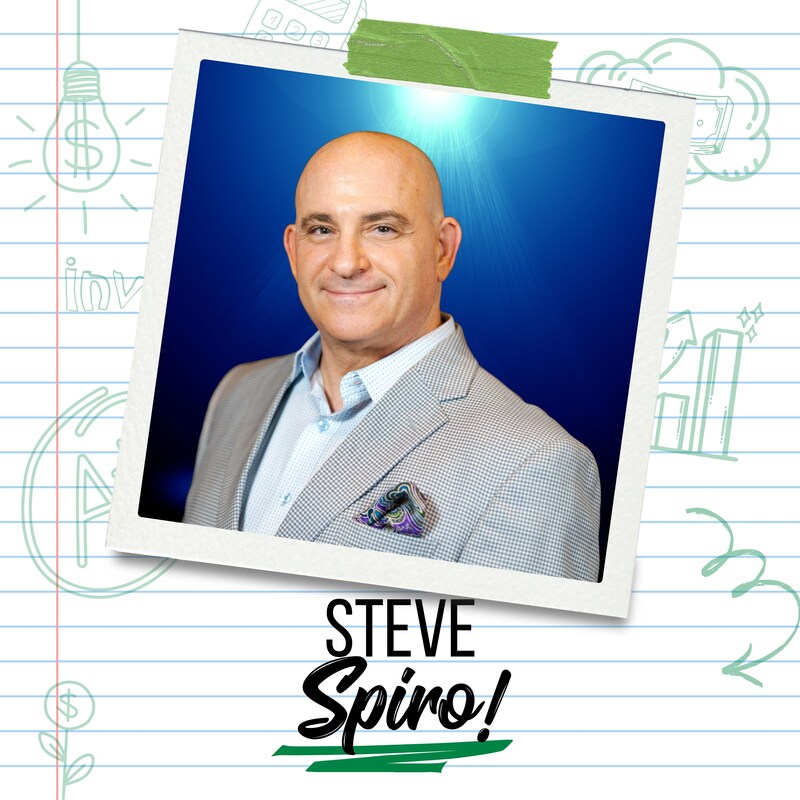
Welcome to Don't Retire Graduate, the podcast that asks you what you want to be when you grow up so you can graduate into retirement with purpose and with passion. I'm your host and valedictorian, Eric Brotman, and this is the sixth season of our show. Every other Thursday, we'll be bringing you interviews with amazing guests. And on alternating weeks, we're hosting our Diary of a Financial Advisor segment where we interview financial advisors about their professional journeys and their passion for helping others succeed. Please take a moment to subscribe so you never miss an episode. Today I'm pleased to be joined by Steve Spiro. Steve launched his first company in advertising right after college. A 4th degree black belt in karate and a 1st degree black belt in jiu jitsu, Steve also owned his own karate studio.
Eric Brotman [:He attributes much of his success to the discipline, work ethic, integrity and resilience he developed through martial arts. When the economy shifted, Steve transitioned from advertising into sales, a surprising path for an introvert with an art school background. Despite his challenges, he mastered the art of connection, becoming a top sales performer now known as the Master connector. With over 30,000 LinkedIn connections, Steve hosts the Master Connector Show, a LinkedIn Live broadcast. As a published author and an inspirational speaker, Steve empowers introverts to break barriers, connect authentically, and lead with selflessness. Steve, welcome to Don't Retire Graduate.
Steve Spiro [:Well, I appreciate that and yeah, it's a mouthful. I appreciate the introduction.
Eric Brotman [:I mean, that was, that was one of the tougher introductions I've ever, I've ever had to do. So I appreciate you making this extrovert work as hard as you did. Steve, you and I had a very cool conversation some time ago and I knew you had to be on this show because one of the things I think that, that we talk about is how folks, when they look at retirement, need to reinvent themselves. And you've gone through a couple of cycles of reinvention and have been wildly out of your shell. So why don't you share your story with our audience and then we'll talk about how, how folks can take some of that into their own lives now.
Steve Spiro [:I appreciate it. What's going on, everyone? Steve Spiel the Master Connector coming at you live. Redirect. And I just see that as a sort of a signature. But yeah, it's crazy. I mean, you know, introvert grew up, picked on, bullied, learning disabled, dyslexic. My, my parents were good hard working folks. My dad owned a liquor store.
Steve Spiro [:Dissuaded me from going into that. So End up going into, as you, you mentioned, into advertising. Marketing also has a parallel to that. So I trained the martial arts, so have a couple black belts. I was taught hard work is the key to success and, and, and certainly did that. I was working a lot of hours and eventually and, and did very well in the advertising world. But eventually I met a gentleman who challenged me. He's a very successful entrepreneur and he said, Steve, I understand, you know, you're an introvert, but you need to meet three strangers every day.
Steve Spiro [:And that, you know, for an introvert that's ridiculous. But I did it, still do it to this day. It stretches me and eventually started amassing a network and eventually I was able to, you know, when the economy tanked, I was ready to pivot into the, like you said, the sales world. I did many years of hardcore door to door type sales and eventually grew a massive network. I've been asked to speak and now an inspirational speaker and a live broadcaster and also a unpublished author mom could be proud of me now, you know. So it's been a while. It's been a wild journey for sure.
Eric Brotman [:Well, I'm a wild extrovert and I still don't want anything to do with door to door sales. I stopped doing that as a teenager when I was selling greeting cards in our neighborhood. Truly great. That's a dreadful, dreadful gig, at least for me. Yeah. Now when we talk about connections, there's lots of different kinds of connections between people. Some more natural than others, some more professional, some more personal. You know, I think the master connector before you, if there was one before you was Dale Carnegie, you know, when he wrote how to Win Friends and Influence People.
Eric Brotman [:And he was really a master, I think, at and how people communicate and how people get together. But his world was not a digital one. And to translate some of the things that he espoused to a digital world, they actually tried to publish a digital edition of his book. And I don't know how well it actually translated because it is a different world. How are you creating real connections in a world that is so often sound bites and screen time rather than shaking hands and breaking bread?
Steve Spiro [:Yeah, it's very true. And you know that that's a big part of what I speak about on stages, which is breaking barriers to create real human connection in this digital era? Because to your point, the screen has created a barrier, it's disconnected us. So how do you break that barrier? And so some of the things I speak about is, is being authentic, being others focused, having grit and building community. Grown connections and we could break each one of those down, but, but a big one. You know, what happened for me was especially in the thick of COVID different in different, you know, for different people around the country. But in the Northeast, it was lockdown time and again I was challenged to meet strangers out and about in the real community. And that was hard enough as it was, but now you put a mask on. It was impossible.
Steve Spiro [:So I was like, okay, I'm going to shift. And I had already been starting to do some networking through LinkedIn and so forth. And so I started to get on. I did, I think it was averaging about seven zoom calls a day, especially during the week on, on LinkedIn, you know, through LinkedIn, you know, connections. And I, I start to craft my story. And in that story I started to become vulnerable. I shared about being dyslexic, being bullied and, and some of those challenges and shortcomings and learned how to make fun of myself. And, and as I became authentic and vulnerable, the wall started to come down.
Steve Spiro [:I also saw that being others focused, right? Because as we've now gone past Covet, thank God, you know, the people are, there's so much and this is clean, but there's a lot of pitch slapping that's with a P. Pitch slapping going on out, you know, out there. And people think that every time you get on a call, you're about to be pitched. And so I'm others focused. I speak on how to be others focused. And, and, and you know, great, great author is Bob Berg and John David Mann, the book the Go Giver and, and actually had Bob Berg. I was blessed to have Bob Berg on, on our show and you know, he speaks on how to be a go giver and being others focused and, and just, and that's refreshing. And at the end of every conversation, I'm always offering, you know, three or four or five things that I could do with no agenda.
Steve Spiro [:It's not quid pro quo. It's like, okay, here's some things I could offer you just, just because of the goodness of my heart. And, and so through doing those few things, I found that the, the walls came down, the connection became powerful. Some other things, and I speak about this in my book, but when you, when you do, you know, looking people in the eye on screen, right. I know there's some people that have multiple screens and you know, maybe their screen is here and so they're seeing my face here, but the camera's here. Big mistake. Make sure your camera is where you're looking so that you, the person feels like you're not distracted. You know, try to avoid looking down and texting.
Steve Spiro [:You may be taking notes. If you are going to take notes, make sure you tell the person, hey, just, you know, make. I'm taking notes. I'm not trying. I'm not answering emails or texting. I'm taking notes. And I've done that in calls. So just little things like that, mentioning their name.
Steve Spiro [:These are clues that Dale Carnegie spoke about, right. As a story in the book. He talked about, there was a guy at a, at a cocktail party, was speaking to some high society lady and he said a couple words and she just went on and on and on. And later a mutual friend, acquaintance had said to him, hey, you know, she said that you were the best conversationalist she's ever come across. And it was because he basically let her talk. He did a lot of listening. You know, God gave us one ear, sorry, two ears, unless you're a little off, but two ears and one mouth, right. To listen twice as much as you speak.
Steve Spiro [:So just a lot of what Dale talked about in his book is a, is applicable, but it's just queuing it in with the, on the digital world and listening and, and, and asking questions and, and again, it's a, it's not a technique thing, it's a heart thing, you know, and making sure you really genuinely care about somebody. And when they, and they answer your question, go another level, go another level after that and go another after that. You know, be genuinely interested, lean forward. Right. I mean, different things that you can do in the real world, but it's, it's much more exaggerated in the, in the digital world. Right. What's your background on your, you know, what's your lighting like on your, you know, if you're going to do digital calls, right. All those things that matter, right.
Steve Spiro [:If you look like you're in the witness protection program and you're, you're, you know, because everything is, is bright behind you and your face is dark. Okay, you gotta look at that. So just all those things are big things that help.
Eric Brotman [:Well, you did say you're in the Northeast, so that is much more common there than it is in the rest of the country. Yeah, no, I understand that. So when people are exploring the next chapter in their lives at any age, and I'm going through this right now, Steve, so I'm enthusiastically stepping down as CEO of our firm January 1st. And I'm taking on some new challenges. And I'm not retiring. I'M never retiring, I'm graduating for sure. But I'm going to use this opportunity to learn some stuff from you, as I know I would. And trying to figure out how to get that next act, how to do that next thing, how to find your next passion, while at the same time being about other people.
Eric Brotman [:You talked about the go giver. I mean, ultimately, how often do we hear what can I do for you? And by the way, most of the time that's full of nonsense. Like, people say that, like, and what can I do for you today? Like, like, there's nothing authentic about that, obviously. But how do you, how do you create your own story, your own narrative, your own opportunity by serving other people in that way? What, what would you, what would you tell someone like me to do? I guess, in that situation, since I'm, I'm sitting right here for free advice.
Steve Spiro [:Well, I don't say what can I do for you per se, Matt, being a contradictory person, but I say, how can they be a blessing? What can it do to add value? Right. Because what can I do for you? Kind of almost still sounds a little salesy. Right? Yeah. You know, that's why I said it. Yeah, yeah. So I would say those other things and be ready. You know, I built a very massive network. 300,000.
Steve Spiro [:300,000. That'd be nice. 30,000 LinkedIn connections. And the followers are at the same number and growing. And I think the reason is number one, because I've had this mentality. But I also like to leverage my network as a value. Like, and I don't mean in a manipulative way. It's like I, I offer up, you know, often if I speak with you and I feel good about you and you feel good about me, I'll say, hey, put, put a list of six names together where I can make some introductions because I've curated this incredible community and I feel like it's a blessing.
Steve Spiro [:And it's funny because when I, when I do make intros, often I'll hear from the person, even if I've never. Because I know if you, you're thinking to yourself, well, has he spoken to all 30,000 people? I know, I know that there's people that are out there. I only going to connect with people I know. Okay, you could believe that, and that's fine. But I was in the advertising industry, and the larger the network, the larger the exposure, the better off you had of maybe connecting with the right person or getting your message to the right person. So if you're going to use LinkedIn as a, as a, you know, kind of a resume holder. Sure, that, that applies maybe, but to me, I've used it as an asset. And so when I, when I make these introductions, here's what happens often.
Steve Spiro [:And I, and maybe I've introduced somebody that they, that I have never had a chance to speak very often, more than usual, more than you think. I get a message back, you know, when they answer. Hey, Steve, thanks so much for the message. It's nice to meet you, Joe. Hey, Steve, by the way, you and I have never connected. We should jump on a call. I really appreciate you doing this. And those are the kind of things that happen.
Steve Spiro [:So, so that's number one, is, is you have an asset, be ready to share some of those things that you have. I, I belong in a networking group. I'm often inviting people to my networking group with no hidden agenda just because I think it's an incredible group. And I, I feel like it's a great gift that can offer up people. I feel like it's the gift that keeps on giving. Right. So just making sure you have things in your toolbox. And I think it's also back to being a heart thing, you know, if you're really legitimately looking to give and serve.
Steve Spiro [:And that's truly the nature people feel that I think they feel in the upfront, they feel at the end, and fall through with that.
Eric Brotman [:So shifting, shifting to that two ears, you know, concept other than Van Gogh, I guess, shifting to the two ears and listening more than you talk at networking events. At networking events, that can be challenging because everyone's trying to have the, maybe the loudest voice in the room or to talk to the most people in the room. And, and I'm not suggesting that that was ever my strategy back when I was doing a whole lot of that. But ultimately, ultimately I think it's about asking the right questions, the right ways and getting people to be comfortable. And that requires authenticity. I mean, ultimately, if, if you ask somebody a question and you're not even remotely interested in the answer, you might as well have walked past them because you're going to do more damage than anything else. Right. You have to be legitimately interested in the answer and ready to be active, responsive, and hopefully additive to whatever it is that they say.
Eric Brotman [:What is, what's a good way to learn how to do that? Is this trial and error?
Steve Spiro [:Well, yeah, definitely. Get out there. The more you get out there, the better. I just, I'll say this, you know, I have a slightly different school of thought than some other, other folks. I am the guy that goes out to networking groups in the real world often, as often as I can. And I do look to grab as many cards as I can. Now I'm not trying to give out as much cards as I can. I'm looking to grab cards.
Steve Spiro [:And I'm not trying to spend, you know, the whole night getting to know one person. I think some people look at that as a kind of a crutch or a cop out to be honest with you. You know, you're there to network and I know there's no way I'm going to create a relationship in a five minute conversation. It's not possible. But I can create a mini relationship and here's what I'll do when I get, you know, get in front of somebody, whether it's in a networking group or, or listen, I'm meeting three strangers every day. The world is my networking group, okay? My networking community, right? And so I'm out there and so I'll ask a question, you know, some kind of icebreaker. This is my formula for meeting strangers. I'm giving it to you no charge, okay.
Steve Spiro [:Because I'm a go giver, right? But here it is. So you break the ice. And again, that could apply at a networking events. Easier because people there to meet people. But hey, nice suit or whatever. Hey, you know, what's your connection to this group here or whatever it is. Icebreaker, where you from? What do you do? And we should stay in touch. That's my.
Steve Spiro [:And by the way, the icebreaker could lead six or eight or ten levels deep. Also, how do you know them? And you know, how did you, you know, you can go over and over and over again. Again it's asking questions. Second is where you're from and you know, that could go layers and layers deep, right? In north car, I was just on a zoom call with just a person just before this. You. He told me he moved from Jersey to Virginia and now he's in the Carolinas, he's in Charleston. You know, like, why did you move down? You know, you know, you can go, you know, was it a, was it a, was it a lady? You know, like, you know, you move for taxes, that's why taxes. Yeah, it's exactly right.
Eric Brotman [:Yeah. Yes.
Steve Spiro [:But yeah, and, and multiple directions. And then, you know, what do you do? And that can go again on many, many layers. And then we should stay in touch and if, you know, be ready if they do ask you a question like, what do you do? Okay. Be ready. But it's interesting. I was, I like to go and when I can, as, you know, partner to networking events because I think I learned this years ago. It's really cool because you can actually, when you're there, I could talk. You need to meet my buddy Bill, because he's a great, you know, I could talk highly about Bill and Bill could talk highly about me.
Steve Spiro [:So I went with a guy, a guy named Tyler. Great guy, great young man. So we, we actually went to a networking event that had a speakers in the front of it. So we went to speak to one of the speakers and introduce ourselves. Well, Tyler proceeded to introduce himself and he, they asked him what he did, and 20 minutes later he was still talking. And later on the next day, I told him, hey, I don't recommend that, you know, so be ready with like literally 20 seconds. But bring the focus back on them. Don't make it your opportunity to pitch them, you know? You know, I, I just say something intriguing about myself and then I'm like, you know, hey.
Steve Spiro [:And when, when I feel like the conversation is sort of winding down, I might say, hey, yeah, we should stay in touch. I, I need to go grab something at the bar or I need to go. Something at the, at the, at the food or I got to use the bathroom or whatever. I got to meet somebody over there. Whatever it is, be polite. But you should stay in touch and, and get, get their contact information and be ready for that. And to me, the secret, I've learned in networking, the secret is in the follow up. You're not going to create relationships there.
Steve Spiro [:You just want to make enough of a good impression that they'll, they'll want to get on a call with you later. They're like, I really need to meet that guy. There's something special about that guy.
Eric Brotman [:So for, for some people, the idea of small talk, which, you know, ultimately meeting strangers and having small talk is right up there with public speaking and a root canal in terms of what some people want to do. And it sounds like you were one of those guys at some point. You know, for people who want to start a new business or a new service or a new entity or just they move to a new neighborhood and they want to ingratiate themselves in the community or whatever it is, particularly for folks who have been doing it a certain way for a long time. I mean, one of the things that scares folks about retirement this, this concept of retirement is, well, I, you know, I had my group because I, I showed up every day and I Knew everybody at work, and we were friendly and we hung out afterwards. And I'm losing my adult communication and my networking and all these things. What is it that. What is it that you could share with someone who maybe has an aversion to that or feels uncomfortable with it, about breaking into a new crowd, a new neighborhood, a new town, a new industry? Any of these things? We're talking about reinvention and people. People do that a lot of times in retirement, and if they're not comfortable with it, instead they retreat and they don't live very long.
Eric Brotman [:It's actually incredibly sad. So how do we get folks to feel more comfortable, more confident, and maybe more proactive in creating something new for themselves instead of disappearing?
Steve Spiro [:There's a lot in what you just said, but I'm going to take what. Hopefully this will help answer some of the questions and add value to your community. So, number one, it's. It's important to. I've learned that danger. My motto is dangerous. There's danger in the comfort zone. So I've learned that, you know, I could sit, you know, I've been.
Steve Spiro [:I'm in the gym four or five times a week. Do I like going to the gym? I like the results. I like when I feel afterwards. But I have to push myself every day. I'd rather sit in front of my TV and eat Chunky Monkey ice cream, you know, and eat a whole pint of. Of ice cream. Actually, it's Haagen dust. Butterbecan is my favorite flavor.
Steve Spiro [:Right. I could eat a whole pint. Although I don't know if it's a pint anymore. It seems smaller. Maybe it's a pint, I don't know, but it's. But anyway, I'll eat a whole thing of that. But. And it feels good while I'm doing it, but it feels so bad afterwards.
Steve Spiro [:And so to me, meeting people, stepping out of comfort zone, same thing, right? It's like, it feels comfortable when you're not doing it, but afterwards I'm like, I feel like, kind of crappy. Like when I'm. When I've been isolated to my house for a day or more, I'm like, I feel funny. So just get out there. So the good news is, if you're in a new community, there's a great opportunity, you know. Hey, you know, I'm thinking about a gym. You have a good. You could break the ice with things like that.
Steve Spiro [:I just moved to the area, you know, of a good restaurant, you know, of a good gym.
Eric Brotman [:You.
Steve Spiro [:You Know, like that kind of thing. Right. I mean, there's so many opportunities. Way easier when you're not from the area to make new friends. You know, find some networking groups and go meet people. And, you know, maybe prior to that, if there's virtual networking groups that are regionally based, you can go to those networking groups in advance to moving and start making connections with people that are local of the where you're moving to start making those connections. So, I mean, I think it's a lot easier. I'll say this one thing, I love books.
Steve Spiro [:I'm dyslexic, so thank God for Audible. But one of the great books that I've recently come across is the Introvert's Edge to Networking. I think his name is Pollard, Matthew Pollard. He's from Australia. Super, super interesting book. And he says that introverts have an actual edge to networking. So if you're not comfortable, you're in a good advantage. And here's why.
Steve Spiro [:Because introverts like to observe, like to listen. They don't like to talk. You're in a great place because that's not the. Success is not who's the loudest in the room, who's working there. No, it's. It's just, you know, being there now you got to break the ice, but ask questions. And I've learned a lot by asking questions. So you like pickleball? Well, so tell me what you like about.
Steve Spiro [:And I'm thinking about pickleball. Like what, what, you know, do I need a special alpha? Do I need a, you know, like, you get asked all sorts of questions to get them talking and about something they're passionate about. And by the way, the. The more they talk, the more they like you, like we spoke about. So I think it's easier if you're in a position where you're a little bit uncomfortable to do this.
Eric Brotman [:So my challenge is now I'm, you know, we're doing this interview midday, I haven't had lunch yet, and I'm thinking about Haagen Dazs Butter pecan, you know.
Steve Spiro [:For better or for worse.
Eric Brotman [:And I am going to the gym this afternoon, and I'd rather be on my couch. Butter pecan. So that makes. That makes perfect sense. I completely get it. So, so let's talk about folks who are maybe starting a new business. Entrepreneurs are just getting started, new industry. You know, these are folks who, they worked for the state or municipality or they worked as an engineer or a lawyer or whatever they did, and now they want to open a Cafe or start a business, a travel business or a dog walking service or whatever the heck it is at a later point in life.
Eric Brotman [:How, how do you suggest that those folks get started? And I, you know, obviously you have an advertising and marketing background and I don't mean how do you set up a website, I mean how do you create out of the ether, how do you create a new sort of a new aura for yourself, a new Persona?
Steve Spiro [:So you may or may not like this answer, but I'm going to tell it to you anyway. And I've talked to this about people that are not only in the retirement age, maybe in their 50s, 60s or whatnot. I've talked to people that are 20s and 30s. It's the same answer. There's such a focus today on the what and the how, and instead we should be focused on the who and the why. And what I mean by that is there's two great books. One is Start with why by Simon Sinek, and the other one is the who not how by I think it's Sullivan. Great books.
Steve Spiro [:And here's the thing, you know, I'll say this right, if you're listening to this, I'm going to ask you this. What would be an incredible place, someplace out of the country that you like to go to? So we're here in the States, let's say it's Italy. And I'd say, here's the question, another question, what car do you like? And you might say to me a Ferrari. And that's awesome. And just so happens Ferrari is Italian. But will the Ferrari take you to Italy? The answer is no. So you need a vehicle, but you need it. You need the right vehicle to get you where you want to go.
Steve Spiro [:You need a plane. Now I just got back from Bali in Singapore, I am not, I was not passionate about the. Although I did enjoy the Singapore Airlines, I wasn't passionate about the plane that took me there. I was passionate about getting to Bali and Singapore. Make your focus on where, the why, the, the why where you're going. And then who do you have in your life to help you accomplish that, to help you get there? Do you have somebody in there? For me, I was fortunate to have a mentor in my life that helped be that sort of GPS for me. But again, the focus is on the vehicle. The focus is on the road path.
Steve Spiro [:You need, you don't, you know, you can get into a great vehicle and start going on incredible road, but if you don't where you're going, you're not going to like where you end up. Okay. So you got to figure out how you want to. Where you want to go, what's the end result? For me, I wrote a life's mission statement, and that really helped me steer how and what and, you know, the what and how in terms of what I wanted to do, which is ultimately travel the world, speak and inspire, and be a beacon of light. That's my ultimate mission on this planet. And so that's why I chose what I'm doing, because I know how it's going to help me accomplish that overall arching goal.
Eric Brotman [:When did you write that?
Steve Spiro [:The. The mission statement? Yeah.
Eric Brotman [:When did you write that? When did you.
Steve Spiro [:It was three months before COVID hit. Believe it or not, it was. It was kind of fortuitous. Yeah.
Eric Brotman [:That's when you decided you wanted to fly around the world. Right. When you couldn't leave your house.
Steve Spiro [:Well, I've always liked this. I've always liked this travel, but I always. But I realized I wanted to be. To me, you know, I. For so long, it was always about the things, the material, the wealth and all that. And I'm not going to give it back. We've done well. But when it's all said and done, what I've learned is true success is now not how many things, how many pieces of property, you have any cars, it's how many people are better off because you're here.
Steve Spiro [:So my mission, I've realized, is really, truly impacting people. And that's really. And I started to understand that just before. Before COVID hit.
Eric Brotman [:Somehow, I. I love that it's actually understanding our why is one of the reasons why we do what we do for a living. And. And it's an important message. Now you're looking to do some speaking gigs around the. Not just the country, but around the world. How are you. How are you approaching that? How are you landing those opportunities? What can our audience, who hears you and says, oh, my gosh, I got to hear more from this guy? How do they get in touch with you? How do they.
Eric Brotman [:What could. What could our audience do to be a blessing for you, sir?
Steve Spiro [:Well, I appreciate that, and I'm not on here for that, but I appreciate it. So, yeah, I mean, I'm on. I'm on. You know, I'm really shouting from the rooftop. My message, which is, you know, we should all be the light. And so that's really my message for people is, you know, in fact, when I. When I end my Master Connector show, I have. I usually have a little story and I tell and I say, hey guys, we need to be the light, right? And so that's really it.
Steve Spiro [:So if you're, if you're behind me in my cause, I hope you are. Number one, you should be the light. Number two, if you know anyone, two areas that seem to be a strong place for me to get hired for speaking. Number one is directors of sales companies that are looking to, to put on large sales conferences looking for a keynote. I've got, as we talked about, a very extensive background in traditional hardcore sales. So I can help in that realm as an introvert. And then the other group is people that are typically introverted that like the engineer types that would rather sit, you know, stand in front of a computer than talk to other people. But they know they need to be able to learn how to connect better.
Steve Spiro [:So, so, so that would be a great. Another group, but also event planners that are putting on conferences and events and they're looking for speakers. Those are great people for me. And yeah, you can go to the master connector.master-connector.com website or stevespiro.com is another place you can go. Or master hyphen connector.com so, so spiroglobal.com spiro hyphen global.com master hyphen connector.com and then Steve sparrow.com and then also if you're interested in seeing our show, you go to the Master connector dot show.
Eric Brotman [:I'm, I'm looking forward to being a guest on that show you were nice enough to invite you on. That's going to be a lot of fun because it's always fun to be in the hot seat and today you've been in the hot seat for me and I appreciate that. I have to ask you one very fundamental question. You're not allowed to get off my show without telling us what you want to be when you, you grow up.
Steve Spiro [:Superman.
Eric Brotman [:Really? Tell me more. Why, why Superman?
Steve Spiro [:No, I, it's funny because my wife, she calls me her Spiro hero. So I'm like a superhero. So. But it, but it hasn't ever manifested. Right. I think there was a part of me as a kid, I always wanted to be Superman. And I think it's all about again, you know, Superman was all about good changing the world. You know, he had superpowers.
Steve Spiro [:I have different kind of superpowers. But it's about really making an impact. And we all have our kryptonite, so no one's perfect. But I would love to be Superman so we can be a do gooder around the world in a strong and powerful way. So that's it. I love that.
Eric Brotman [:I'm picturing you with an S on your chest and a cape right now and no mask. Keep what you got. No, that's really good stuff. Thank you for coming on the show. Thank you for sharing some wisdom, some stories, some authenticity. You know, hopefully some folks who listen to this will not only check out your other content, but will follow back with you and look at your network because it really is extraordinary and you're better than Kevin bacon. People are 1 or 2 degrees of separation, not 6. So I would say that's a total win.
Eric Brotman [:So thanks for being on the show. I appreciate it.
Steve Spiro [:I appreciate your big time. Thank you again, Eric.
Eric Brotman [:I'd like to thank everyone for listening and watching today. If you enjoy our show, please be sure to share it with friends and family so they can join you on your journey to financial freedom. And please take a moment to leave a review and a rating on your favorite podcast platform. Those are priceless to us. We'll be back next week with another entry in our diary of Financial Advisor and in two weeks with another engaging guest. For now, this is your host, Eric Brotman, reminding you don't retire. Graduate.
Voiceover [:Securities offered through Kestrel Investment Services, llc. Kestra is member finra, sipc Investment advisory services offered through Kestra Advisory Services, llc. Kestra as an affiliate of Kestra is Kestra is or Kestra as are not affiliated with Brotman Financial or any other entity discussed.

