Shownotes
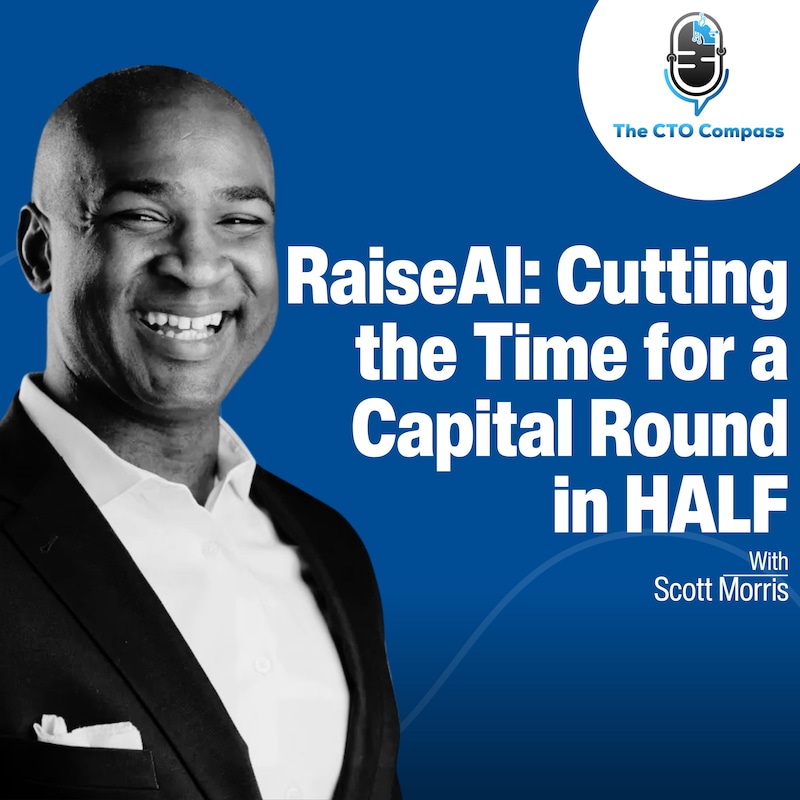
Hollis discusses the intricacies of raising capital, emphasizing the importance of multiple interactions with potential investors. He highlights the average of 32 touchpoints required to secure a significant investment and explores how AI can streamline this process without compromising the quality of engagement.
Chapters
00:00 Beginnings with Technology and Career
06:20 When to use Tech and People
08:08 Implementing Tech into Real Estate (Raise AI)
12:45 Streamlining "32 Touch points" with AI
19:31 Building a Team and AI Adoption
24:06 AI Future-proofing and Relationships
28:36 Why Real Estate AI and Building Culture
33:02 The Future of Raise AI
About Hollis
William Hollis, known as “Hollis,” is the Founder & CEO of Raise AI, where he helps real estate capital raisers and fund managers use AI-powered automation to streamline investor communication, increase deal visibility, and raise capital faster. A self-taught software engineer turned real estate investor, Hollis specializes in bridging cutting-edge AI technology with the real-world challenges of capital raising.
Born and raised in Hollis, Queens, NY, he has built his career at the intersection of AI, automation, and real estate. Before founding Raise AI, Hollis developed AI solutions for global brands like Disney and Nike, then applied those same efficiencies to real estate by launching 24 Capital Group in 2022 and 24 Tech Systems in 2024. Today, through Raise AI, he empowers dealmakers with scalable, intelligent systems that replace manual follow-ups and outdated workflows—helping them move from hustling for capital to raising it effortlessly.
Where to find Hollis
• RaiseAI: https://theraiseai.com/
• Website: https://williamhollis.com/
• LinkedIn: https://www.linkedin.com/in/rei-hollis/
Transcripts
In one week, we booked 70 calls. And he's like, there's no way I could possibly handle all of these interactions, right?
So that just goes to show how effective it is and how that really compressed the timeline.
Mark:Welcome to the CTO Compass Podcast. I'm your host, Mark Wormgoor, tech strategist and executive coach. In every episode, we meet tech leaders, from startup CTOs to enterprise CIOs, to explore what it means to lead in tech today. They share their stories and their lessons so that you can navigate your own journey in tech. Let's dive into today's episode. Hello everyone, today's guest is William Hollis or simply Hollis. He's the founder and CEO of Raise AI and that's a platform where they help real estate fund managers and capital raisers use AI automation to streamline their investment investor communication, sorry, boost deal visibility and raise money faster.
So he's a self-taught software engineer, which will be interesting. He's from Hollis, Queens, and he's built AI systems for giants like Disney, Verizon, JP Morgan, before going as a real estate himself and then shifting into AI.
So he's bringing all those worlds together and that's really what we're going to talk about today. Very interesting. All this before we get into it. You're a self-taught engineer. Tell us about how you got into IT and the software engineering.
Hollis:Yeah, thanks for having me, Mark. It starts when I was about five years old, honestly. Maybe I was seven. We got our first computer, Windows 95, the big CPU and the giant monitor. People don't even remember that those existed, right? But I've always been a very curious person. I remember playing like, you know, Sega Genesis games and wondering how are these characters on the screen? I have the remote in my hand and these things are moving around the screen. And so we got our computer The first thing that I did was take the whole thing apart.
Yeah. Yeah. I got into big trouble for that, but of course I did manage to put it back together. But That was really where the curiosity kind of began. That was my first opportunity to start getting into things.
And then from there, I said, okay, let me learn, you know, how this all works. How does computation work? How do, how does programming work? How do you create things to make them appear on the screen? Right.
So I started with games. I don't know if you remember, ActionScript. From way back in the day, it was like flash, the coding language when everything was on the internet was in flash.
So I started there, then got into HTML, CSS, built, you know, freelance websites for a little while, but I kind of always continued to develop developing games. That was kind of where my real passion was. I loved video games as a kid.
So, developed a lot of games on their unity 3d when that came out, the unreal engine and all that sort of stuff. I mean, then smartphones came out.
So then there were apps to Google Android G1, the first Google Android cell phone. I developed some apps for that app store way back in the early, the Play Store, sorry, the early back in the day in the Java editor. So that's kind of, you know, where it started and I've always just kind of built things on, you know, onto that skillset slowly over time. Most of it from YouTube university, to be honest with you, lots of YouTube, Coursera, the different resources to just always learn new programming languages, new frameworks and things like that and the different applications for them.
Mark:So cool. So starting young and just learning by yourself, right? I think ActionScript is a nice way to start, but I mean, it's not sort of programming, but like building games with Unreal Engine for me is like the real thing.
So that sounds like you've done some very serious programming back in the day. And how did you go from there to a I'd say almost a corporate, but a more formal IT career? How did you end up in corporate IT?
Hollis:So that's a pretty funny story. I was all of my, tech project, my software development were always like tools for myself that I would build or like I said, some small apps on the Play Store, but it wasn't really something I tried to make a career out of. It was really a hobby, a passion. And so I had a job which is a total opposite. I was a high rise window cleaner.
So I live in the Northeast, you know, all the tall buildings. I was up there And... The last day of the season, so it's seasonal work. The last day of the season, I actually fell off of a roof, a very low roof, only two stories. I fell off of a roof and I landed on the ground and I'm laying there on the ground looking up at the sky. I said, I have to go work inside.
Yeah. So by that point, I had a pretty solid relationship. Presence on in my personal GitHub repository. I had tons of projects in there. I had lots of evidence of my skill set. And I just started applying to jobs. I went on to Craigslist, which was a legitimate job market at the time. And I responded to an ad that said, make computers talk. On Craigslist. And it turns out it was a local company. I was living in Connecticut at the time where I live now, a local company here in Connecticut. I was able to go in for an interview there. And that was kind of my entry. I got an entry level position as a knowledge-based manager for their proprietary AI system.
So that company called Creative Virtual built AI systems for these large companies. That's how I have been able to consult for those large companies, the Disney's, Verizon's, all those kinds of companies that I have started out at an entry level position. Natural language programming, very boring. If you can think of like manually writing a large language model. That's basically what it was. And the rest is history from there.
Mark:Yeah, and I was gonna ask, so when sort of was this that you joined Creative Virtual? Because this was way before ChatGPT came out. -.
Hollis:Yeah. Yeah, this is, I mean... Maybe 15, almost 20 years ago now, Yeah, so... This was, I mean, neural nets were just. Kind of gaining some momentum and open AI existed, believe it or not. They existed, but they were not what they are now.
Mark:Okay so you've actually been working on ai a lot longer than most of us here who all talk about ai it's been almost 20 years that's impressive and still you said you started in entry-level jobs but in the end you did end up working for all these really big companies right i mean you have amazing clients like Disney, JP Morgan and some others what were like the big lessons that you learned there from i mean you started coding yourself, but then working for these big corporates gives you a very different perspective. What did you learn there that you're still using today?
Hollis:Absolutely. So this is something pretty interesting, in particular with AI. And I guess it applies to all areas of business, but understand when to use technology and when to use a person.
So when it came to So we focused on customer service solutions, right? So kind of when you went to the Chase website or whatever. And you know, you got the, chat bot that would pop up back in the day. That was one of our AI tools more often than not. And these companies are very strategic about when they lead with an AI system or a tech tool versus when they say, hey, just call us instead. And that's really served me well, especially transitioning now where we're dealing with real estate investors and large quantities of money. And there's a lot of trust that needs to be built and that sort of stuff where there's certain times where, hey, it's cool. People don't mind interfacing with an AI or a chatbot to accomplish certain things. But then There are other situations where they don't want to speak to anything automated or AI. They want to get in front of a person and Understanding proactively when those situations are and when they'll occur has been really a big lesson.
Mark:And I really want to get into that more. Another question first, how did you end up in real estate then? Because from Creative Virtual and building this AI system, your first move was into real estate. How did that happen?
Hollis:Yeah. So while I was still at Creative Virtual, I mean, real estate was something I'd always been interested in from when I was a kid, watching my landlord collect rent every month and, you know, back in the 90s and... It was all in cash.
So it's a fat wallet full of everybody's money in his wallet. And that was, I used to look at that and think, man, I need to figure out how to do what he's doing. He's figured something out. Right.
So, it's always been something I was kind of interested in off to the side and, A buddy of mine one day invited me to go to a local real estate meetup, just kind of mixer at a bar, a restaurant, I believe it was. And I got an opportunity to learn about some different kind of strategies, real estate strategies. And that really whet my appetite to where I started to dive into it myself and pursue some different opportunities.
And then I tried to buy some really big buildings all on my own and I fell flat on my face and did not have any success at all. So I started looking at how to partner with people and bring things together. And as I did that, I saw, wow, there's a real lack of technology in this space.
So real estate moves at a glacial rate. A glacial pace.
I mean, all the financial markets are not early adapters at all. So that's kind of where I saw the opportunity and was able to start bridging that gap.
Mark:Yeah, so then the next step for you was Raise AI. At your own company, Tell us, where did that start? And I think you already told us a bit. But when did you start that? And what was the idea? What was the problem you were going to fix?
Hollis:So it actually is a pretty natural progression. So I, for anybody who's not familiar with the concept of real estate syndication, basically if you see, for example, an apartment building, you know, large 200 apartments, one person doesn't own that. A group of people own that, own that building. And there's a small group of people who are kind of the operators, right? They run the, they run it and make sure everything's being paid on time and they get the loans and they'll do all the kind of legwork. Right.
So, as a part of forming this group of people, you need to find the investors, find the people who are interested in buying an apartment building alongside you. And so, That's raising capital. You have to go out and raise money. Basically, I'm sure everybody in the tech space is really familiar with that concept of trying to raise private capital. And That's why I failed on my first attempt at buying that building. I had no idea about raising money. I had no clue about raising money, really.
So... As I came into the space, I joined a mastermind that was just focused on how to raise capital for real estate syndication. And in that mastermind, I saw how people were going about it.
You know, they had these huge Excel files with names of people and they're kind of manually texting and calling through the list and email and they have, you know, 27 tabs open on their desktop at all times. And I came in kind of with my experience and I was just said, hey, guys, you know, you can automate all of this stuff. This is, really basic the way you guys are doing it.
Like it's not simple to say it's not difficult to set up. And so I began doing that, building these, automated kind of investor outreach systems for people in that mastermind for free. Just kind of giving back to the community.
You know, they were sharing their knowledge with me. I was sharing my knowledge with them, a real interchange. And so one day, I'm doing this for a guy. And I still have my job at Creative Virtual at the time.
So I'm, you know, doing it in my in-between time. And he goes to me, hey, Hollis, you're taking a while to set this up for me. Would you go faster if I paid you? And I said, Yeah, I probably would go faster if you paid me. And so really in that moment, I'm still friends with him to this day, really in that moment was the birth of Raise AI. Very early was... Going from doing these things, setting up systems for free for people.
And then, you know, he was my first paid clients and he brought me other paid clients as well. And it kind of, they kind of grew and grew from there.
Mark:Incredible. I like how you started from just doing this for free, helping a mastermind.
So not just like a lot of tech startups start, like I have this bold idea. I have no idea where my clients, but I just have a bold idea. I'm going to build this. It's like the opposite. I have the clients. I just need to really build something first time for free, actually. I like that.
And then until you get to the point where you can change money. But still, right, this is very much an outreach and it's real estate and these are big amounts, right? We're not talking about small investments. I guess real estate is big money, so big investments. And it sounds very much relationship driven, right? You need to trust the people that are going to take your money and invest it in a building, right? And the returns on that. And it's not small money. How do you do that with AI? Isn't that a lot harder?
I mean, if you speak to somebody on the phone, meet them in person, have dinner at a restaurant, I don't know, you get to know them and build a relationship. How do you use AI to build those or start those relationships?
Hollis:Great question. Yeah. And really, the way we position our AI system is more as your co-pilot, right? It's in sales, particularly in raising capital on average from our data and from the data of some of our competitors' It takes around 32 interactions. With a complete stranger. Before they will send you $100,000, right?
So that's kind of a average investment size. It's $100,000. 32 interactions. Now, that doesn't mean you need to speak to them 32 times, but they need to, you know, see you on LinkedIn or get an email or a text message, maybe at an event, you know, Zoom call. All of those things are touches.
So the idea you say, wow, 32 is a lot, right? That's a lot of interaction. And so typically you're looking at you know, six months, maybe a year to have 32 touch points.
So the thought with Raise AI is how do we use AI to take that and compress it into two months, three months, without being a total creep. And being annoying. A part of that is... On the front end using AI to find the highest intent or investors, but you know, buyers for lack of a better term. And that comes down to what AI is best at data, right? Analyzing large amounts of data, And because the reason for that is those high intent individuals don't mind more touches because they're interested in what you have. Right.
So that's really kind of the, When you boil it down, that's the goal of Raise AI is to shorten your that relationship building time to enable the operators to raise that capital faster.
Mark:That's so cool. Give me a story, right?
Somebody like a fund manager, maybe your first client, somebody that's actually using that solution. What are sort of the successes that they've now achieved with that?
Hollis:So here's an interesting one I like to share because, *laughs* I'll give you two. I'll give you two. One, we had a guy who, you know, he been in real estate I don't know, maybe 25 years. He's a little bit, probably 10 or 15 years older than me. He's been in real estate for basically his whole career, both in the private and public markets. And so he's got a pretty significant database of valid investors.
So he's got over a thousand, which A thousand doesn't sound like a lot, but a thousand active accredited investors, that's a pretty substantial database, right? And so he's got an opportunity. He wants to raise some money for not a lot. He only needs to raise, I think he was raising maybe 2 million, two and a half million, And he says, you know, I've got this database. He's trying to work through it himself. He's texting, you know, like I said, he had the spreadsheet and he's doing his thing. And so, He was in the mastermind. And I told him, I said, hey, What if I could get all these people, you know, contact all these people for you in just a few days as opposed to you doing it, you know, yourself manually. And he says, yeah, well, but I can't, I can only have so many conversations at a time. I can't, you know, how much can I possibly handle?
So I said, hey. You know, our AI tool, We'll do it for you. And I'll have all the conversations. All you need to do is show up on the zoom call when the AI books a call with somebody for you.
So we did that for him. And in just a few weeks, he raised, a one and a half million Just from... A few phone calls and then he was able to, you know, bring in the rest, through some commitments he had, He had personally.
So that was... Literally, we put his list into our AI tool, enriched the data, understood who the leads were. The AI had the conversations with the leads via email and text message. Scheduled the calls directly on his calendar with them, and he was able to close the capital on the other end. The other story I'll give you is... One guy we did the same thing for. He's more active on social media. He's kind of a more of a personality, you know, very outgoing kind of guy.
So his Leeds. Are very interactive with him as well because he's so personable.
So we put his leads through the AI system. And he asked us to turn it off because in one week we booked 70 calls. And he's like, there's no way I could possibly handle all of these interactions. Right.
So that just goes to show how. Effective it is and how That really compressed the timeline. If you think, you know, how long would it take you to have a thousand conversations or even to send a thousand text messages and handle the positive and negative replies, right? Not everyone's going to reply People who reply may not actually be interested, but you still if it's you still have to kind of manually, you know, get back to them, whereas the AI system can just sort those, prioritize those and move through them very quickly.
Mark:And I like that it's not cold outreach. You said at the beginning, right, you approach people that already have strong intent. I think the two examples you gave, they actually have their own List of people, the first one out of thousands. Interested or actually vetted investors. The second one, big social media following.
So you have these groups already and it makes the outreach a little easier. And I think you said then, right, the goal is to just book a call, right? Get them, if they're interested, get them on a call with the investor and take the conversation from there.
So it's not... Creepy you're not expecting them to talk to an AI and invest 100k which I think would be interesting but I think that's probably far more in the future.
Hollis:Yeah. It's interesting there because we do... The goal is really to get the human involved as soon as possible. Right. And the cool thing is for people when you, when they have their own, kind of social media following on their own list already, we can help them to build on that list, right?
So if you know, hey, I have these customers. These are my buyers. I know for sure. We can say, okay, cool. We can go out and use AI tools and software tools to find more people who look like that.
And then we can reach out to those people separately. But again, It's good to start with a list of known And.
Mark:I think that really makes sense. So you've built this company yourself, What does the team look like now? Did you actually go and build a tech team? Are you still doing a lot of the work yourself? What does Raise AI actually behind the scenes look like?
Hollis:Yeah, so... Kind of by myself, I built a team up to four or five at one point.
And then we actually merged earlier this year, Excuse me, with a... Marketing firm.
So we had a lot of tech skills. I don't, I know some marketing, but I'm certainly not like a marketing expert when it comes to media buying and all that sort of stuff.
So we actually merged with a firm that specializes in marketing, for accredited investors and high net worth individuals and all those people that are kind of fit our user box. So now our team is up to nine.
So we have two developers, we've got operations, we've got sales, we've got the marketing team from the creative down to the copy and all that sort of stuff. So yeah, the team has grown quite a bit.
Mark:That's interesting. I love that merger. And indeed, I think a lot of us in tech aren't too good at marketing ourselves. And I sympathize with you as well there on that front. I want to get a bit more into the technology side of that as well, right? Or the AI side, and that's part of your old experience and then part of your new experience. A lot of people in tech, they're trying to just implement AI internally or they're trying to build something new, but they really struggle with the adoption. You've done this for like a complete non-tech audience.
So what's the advice that you give people on AI adoption.
Hollis:.. One, make it deadly simple. The big mistake we made, a big mistake we made early on was showing people a little bit too much of what was behind the curtain.
Like, hey, we built this awesome system. It does this thing. It does that thing. It does this. It does this. It does this. And to your point, for a very non-tech audience, their kind of eyes just glaze over and they're just like, I just want to send some emails, you know?
So, It's really important for adoption to say, hey, Here's a hammer. Hit nails with it.
Like this. Right. Even if, A hammer can do other things. A tool can do other things. Just tell them, give them a very specific use case.
So a part of what I do is I consult for companies to help them adopt AI internally. The number two or the two biggest problems things I see are people kind of, I don't understand what it can actually do.
Like, it's cool that to chat, but I don't know what it can actually do. And the other one that I see is that people think it's too difficult or it's going to be very complicated. Right.
So, yeah, Again, keeping it simple, saying, hey, here's a Give me a specific problem. Here's a specific AI solution. For that problem. Even if it can do other things, let's just focus on one thing at a time. We're going to solve this problem. Okay, next month, we're going to take another problem and we're going to solve that problem using AI and so on and so forth.
Mark:Cool.
So I wanted to know that, I love that. So keeping it very simple for them, especially I think for real estate people who have no tech backgrounds and coming from Excel sheets, just giving them the hammer and showing them the nail. I love that example.
So what I like, do you give them any metrics or signals or how do you prove to them that AI is really adding that much value or is it just that obvious to them?
Hollis:Well, both. They can see it in real time.
So all of our clients kind of have a dashboard where they can see, you know, how many leads came into the system, how many contacts went into the system, how they can see actively the conversations AI is having. They can open up their CRM and see the AI reply to people and people go back and forth, et cetera.
And then they can see when calls get scheduled and when capital gets raised or capital accounts are created. They can always go back and see what was the source of that call? What was the source of that capital, et cetera?
So was it something that AI did? Was it the personal contact of their own that they just kind of brought in?
So we do pretty transparent reporting so they can always see where the value is being added.
Mark:So then the CRM, they can see like every single message the AI sent, every response that came in, every call that was made, the entire process.
Hollis:Entire life cycle. Yes, sir. They can see it in real time.
Sometimes I get it on my phone too. I can see everybody's account.
So I just watch the AI have conversations.
Mark:So, and how do you then, I mean, I guess that it's, I mean, AI is improving rapidly as well. How do you make sure that it just keeps getting better and better? I can imagine three years ago, maybe 3.5, it was sometimes sending messages where you thought, Not quite sure. And maybe now with, I don't know, it's using Gemknight, or chativity 5.1, I mean, these things advance so fast. How do you keep and how do you make sure those messages keep getting better and better?
Hollis:That's probably the hardest part is the keeping up part. Right, every time you turn around, there's a new And, you know, there's now kind of the big three or four models and they're They don't all come out at the same time.
So every... Every two weeks, another guy dropped another model and you kind of want to go check it out. But we try to keep it pretty stable.
Honestly, like we have one or two that we like to work with most and we kind of you know focus on those and then we've implemented a little bit of machine learning as well, where the AI can improve upon itself. In a limited way because the industry we're in is just so sensitive that we can't just kind of let it run wild. But that's kind of how we try to keep it up to date best.
Mark:Yeah, makes sense. And you now have this current process? Where do you think this is going?
Like in three or five years? I mean, now it's just doing that, I'd say pre-sales almost, right? Getting the person on the call. How much more do you think AI will actually be able to do in like three or five years in your business?
Hollis:I mean, I think it's going to take over a lot. The interesting thing is that it will always, this will always be a relationship business when you're dealing with large amounts of capital. I don't think, I think we're pretty far away from the time where, you know, my AI avatar is going to show up on the zoom call and have a conversation with Mark.
And then Mark's going to send me half a million dollars. I don't think that's going to happen too soon. Not within the next, you know, two to three years, but I think more so helping our leads and we're already doing this now, but improving on that in other aspects of the real estate deal lifecycle, right?
So the investor relations is one part of it, but then you have to look at finding properties, underwriting properties, the property sourcing the debt, right? So we're helping source a lot of equity, but you have to source debt, which means interacting with banks. Banks, the bank is probably a little bit more comfortable interacting with an automated tool because that's what they do on their side, right? You go through their automated system as well.
So those are the areas where I think we'll see a lot more expansion in particular in the underwriting side, right? Because that's what where there's the most friction is finding deals and underwriting them in a timely fashion when there's so much competition. The person who can underwrite find the deal and underwrite it the fastest and get their offer in is the most likely to get the deal in the end.
Mark:So getting to speed, right? The sooner that you can actually collect all the money, whether it's debt or equity and actually make an offer. The person is going to win.
So speed is actually, and that makes sense why bringing it from six to two months is so important. So bringing that down helps you put in the first bid on a property. Okay, makes sense.
So what is the role of a fund manager or capital raiser then going to look like? When more and more gets automated.
Hollis:More and more relationships, being able to spend more time in the relationship side of the business because that's where the money is really raised, right? All the other things you have to do. But that's their income producing activity. And so they get more time to focus there. And, , , , the two highest priority activities for any real estate fund manager, and they'll have more time for that.
Mark:And then, I mean, obvious question, you're now Raise AI, right? And that's the. First part of the process, any lands on expanding into that second part, the operations part as well?
Hollis:Maybe.
Mark:Sounds like an interesting opportunity. Yeah.
Hollis:Exactly. Exactly. We're working on some more relationships there potentially. But the interesting thing with that side of it is it will almost certainly be a .
Mark:Makes sense, okay. So you've had so many different roles, right? You started as a cleaning windows, going into Creative Virtual, you're now building Raise AI. What motivates you to really keep building in this space, right? And real estate AI.
Hollis:One, I tell everybody, like, my biggest... Passion is I like to build cool stuff. That's what I love. That's what makes me excited when I get to like sit down and spend five hours coding something and have a product in the end that I can, you know, put out into the world and watch people interact with and use.
So that's kind of what keeps me motivated to stay in the AI space and in the real estate space. Real estate has always been kind of a secondary passionate about.
Like I said, that was the other thing I remember from my childhood was just trying to figure out how to get into the world of real estate. And the fact that I've been able to marry these two things together is really, what's exciting for me.
Mark:You're the perfect place between those two. Sounds like a Ideal place. One last question that I think on leadership as well. You've been all over the place from Creative Virtual where you were more in a consulting for big company space and now leading this company or co-leading this company probably after the merger. What has it all told you about building culture? You now actually running a team. What makes you successful as a leader of that team?
Hollis:That's a really good question. So when I was at Creative Virtual, the COO, he became the CEO eventually... Was kind of a mentor of mine. And that company, Creative Virtual, I think they're still in business, but they didn't sell when they should have, and you kind of... Spiral downhill. But as it was spiraling, a lot of people stayed on A sinking ship. Because of that CEO. Getting buy-in from people. And that's something I've tried to copy. And I think one of the ways he did it was one, He really... Cared about the employees.
Like he wanted you to buy into the company. And so he bought into us as employees.
I mean, silly things like, Taco Tuesdays and, you know, pizza Fridays and all that sort of stuff where, you know, it's not just, here's the thing. We'd sit down, have lunch together, you know, really, and internal culture, there was a lot of, you know, having accountability, but keeping your atmosphere lighthearted as well. Which is obviously a fine line. And so that's kind of something I've tried to emulate as well, where getting buy-in from the team Helping everyone to really understand, hey, this is what we're building together. I need you guys as much as you need me. I want to invest in you.
Something I really appreciate is that I came in to create a virtual at that entry level a position. And in my interview, He was one of the interviewees. And, or interviewers rather. And I told him very early on, I said, hey, I have these other skills. I'd really love to explore that. In this company. That was day one in the interview. And probably a year later, Out of nowhere, one day he comes to me. He says, hey, I remember you told me you want to get into these other projects. We have this opportunity. Do you want it? And so giving... The team members room for growth. And even investing into them when, you know, financially when needed, like, hey, if you need to get this education or the certification or whatever the case may be. We want you to do that. I want you to advance, That's kind of what I've tried to imitate to the extent possible is just bringing others up with me and not instead of, you know, building on their backs, right? Building on each other and going together.
Mark:And I love that. I mean, yes, I mean that investment part, but a year later, he actually remembered what you had said during the interview. And I think that shows the genuine caring that he can actually remember what you said a year later when you were just, I would say just an entry candidate coming in for an entry job a year before. That's incredible. I think that's a very good example of leadership.
So what's the future for you? What's the future going to bring for you and Raise AI?
Hollis:So the biggest thing in the future is we're moving... Onward and upward. We're looking at growing into . . . . .. Paying us upfront or out of pocket, we can align with them and kind of be paid on the back end when they get paid and or when we perform. In the real estate and financial industry, there's some legality around that, which is why we're not structured that way now.
You know, there's some licensing and things like that we have to go through and compliance and stuff like that. So that's kind of where we're working towards to always align better with our clients and in the end to help them raise more money. Of.
Mark:Course, makes sense. Thank you so much. Incredible. If people want to find you, learn more about Raise AI or about you, where can they actually go and find you?
Hollis:Yep. Hit me on LinkedIn. William Hollis on LinkedIn or REI Hollis. If you search that, it'll pop up as well. Pretty active there. And I try to get back to all the messages.
So yeah, shoot me a DM.
Mark:Cool. We'll put all the links in the show notes as well below. Wallace, it's been incredible having you on. Thank you so much. Thanks for having me, Mark. As we wrap up another episode of the CTO Compass, thank you for taking the time to invest in you. The speed at which tech and AI develop is increasing, demanding a new era of leaders in tech. Leaders that can juggle team and culture, code and infra, cyber and compliance. All whilst working closely with board members and stakeholders. We're here to help you learn from others, set your own goals and navigate your own journey. And until next time. Keep learning, keep pushing and never stop growing.


