Shownotes
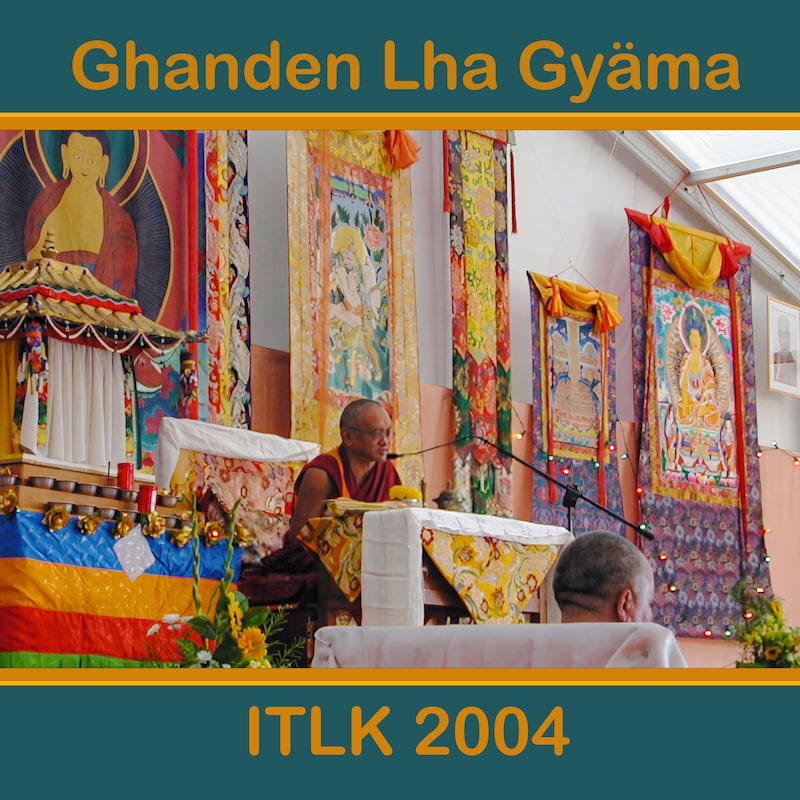
This teaching was given by Lama Zopa Rinpoche at Lama Tsonkhapa Institute in Italy as part of the Ganden Lha Gyama retreat between September 3-30, 2004.
00:00:00 kar ma rab rib mar me dang...di tar ta stanza is a very powerful Buddhist teaching and meditation to practice awareness, cut negative emotions like anger, desire and ignorance, and realize impermanence.
00:11:00 We believe we will live a long time, even on the day of our death. But Buddha advises not to trust this thought of permanence as it cheats us.
00:35:00 We can't predict who among us here will die first, even by this time next year. Death could happen to oneself at any time.
01:07:00 The main mistake is always thinking worldly concerns are more important than Dharma practice. Because of that, nothing has happened in our minds, no realizations.
01:25:00 Until one lets go of desire and clinging to this life, even if one tries to practice Dharma, it does not become holy Dharma. The motivation is stained by attachment.
01:54:22 Rinpoche gives a commentary on Heart Sutra.
02:25:50 Rinpoche leads the practice of Lama Tsongkhapa Guru Yoga.
Find out more about Lama Zopa Rinpoche, his teachings and projects at https://fpmt.org/
Transcripts
So this stanza, this kar ma rab rib mar me dang...di tar ta, this is a great Buddha’s instruction, the very powerful teaching, and it’s very powerful meditation to practice awareness and to realize, to cut, immediately to cut the negative emotional, the disturbing obscuring negative emotional thoughts, anger or desire, as well as ignorance, the concept of permanence towards the impermanent phenomena. Then, immediately cuts these disturbing negative emotional thoughts, obscuring disturbing negative emotional thoughts, including jealous mind, pride, many things, all these and then it immediately gives you satisfaction, gives you inner peace and happiness. Then immediately it keeps, your life that which is distracted, going the wrong way, towards suffering, then immediately it brings back to, in the right track, path to happiness, to the future lives, path to liberation, path to enlightenment. So that means naturally also right away bring your mind in peace now, this life, now, this moment.
So, du je cho nam di tar ta, look at the causative phenomena, so, including one’s own life, that we believe I’m going to live for a long time. Every morning when we get up, I’m going to live for a long time, believing like that. Even you’re going to die that day, even this is the day that your death happens, but still in that morning, you think the same thing as usual, I’m going to live for a long time, for many years. That, even the minute before the car accident, the belief is there that I’m going to live for many years. So in the Buddha’s teaching, Buddha advises that we can’t trust to that thought, thought of permanence, it cheats us. So it has been cheating, it cheated in the past lives, not only this life it cheated in, from beginningless rebirth in the past lives, born a human being and then didn’t allow to practice Dharma, cheated, thinking that I’m going to live a very long time. Then cheated since from birthtime until now, it’s cheated, believing, we live life believing on that, concept of permanence. And then instead of first practicing Dharma, instead of the first thing, practicing Dharma, then delay that, do that later, first do the, what the attachment wants, attachment clinging to this life, even the attachment, there’s attachment as I told you, mentioned last night, the attachment seeking happiness of future lives, but particularly the attachment of clinging to this life, what this particular attachment, this nonvirtuous thought, what this wants.
So first do that, what the attachment, the worldly concern, thought of the eight worldly dharmas wants, so first accomplish that, do that, and practice Dharma later. So even one knows the practice, but delay, to do later. So, to do later or then, when I do, I will do it when everything’s okay, when I have everything, when I have everything, when I have no problems. When I have everything then I will do it, when I have everything, everything’s okay. So that time having everything, not sure when, if one waits for that. Time not having any problem or time one has everything, so that, maybe not even in future lives, maybe not even future lives, so anyway, so then before waiting, before happening that, while one is waiting for that, everything that comes together, everything’s okay, then I will practice, then I will do retreat, then I will do that. However, then death came. All of a sudden, then death came. Before, yeah, before the Dharma practice and then death came. Then missed out the opportunity to practice.
So, so far, up to now, so far, the death itself didn’t happen, miraculously death didn’t happen yet somehow, to us, to oneself, didn’t happen yet, miraculously. Even though already happened to many of one’s own friends, already, yeah, like that.
That, so last time when I was here, there was Andrea, yeah. I’m sure there are many Andreas, but this Andrea, when I was here last, what’s the last part of name? Huh? Andrea Antonetti. So, he become monk again and then, I think maybe I have suggested him. Anyway, so he was here last time when I came, when His Holiness came here to give teaching. I went there, I think, where there’s a, in the room, his room where he was staying. He was here last time, but now this time he’s not here. If he was, I mean, if he’s here by now probably he would here at the teaching, in this retreat.
And there’s Stefano, whom, one person that everybody, everybody tease him, make fun of him, the close friends make fun of him or tease him all the time, joke, however, so now he’s not here, with that human body.
And then the Claudio’s brother, Claudio, what’s his name? Claudio what?
Claudio Cipulli’s brother? Marco! Marco. He, he’s, surprisingly he was found beneficial by the Tibetan government at Dharamsala. I was very surprised. He was helping the Tibetan government at Dharamsala for administration, administration, how to run. He was giving talk to all the government people there at Dharamsala. And somehow, yeah, somebody [Buffina the dog barks loudly], so anyway, somebody must have, they need somebody to help at the administration, how to run the government, so I think somebody must have introduced, somebody who knew about what he studied in Italy, the administration running government, somebody must have introduced to the Tibetan government, I think. So he was invited, he was invited, so he had a little bit busy life at Dharamsala, that running up and down, on a motorcycle, coming to Tushita and down.
So he was, so he had to interview all the many government people there, had to interview and then report to His Holiness, how that person doing job. Things like that. So he told me that he went to interview this person, that person, this person, that person. I think one difficult one that he had was, I think, one, he said, one of His Holiness’s brother that the working for the medical center or something like that.
And then those monks or lamas, those who are doing the security, working for security for His Holiness, so he interviewed them, things like that. I think how, and he asked questions how they are strong, or how they are, I think, checking how they are strong, keep stability, keeping secret or, I’m not sure what he says, so then he said wasn’t good, he said, I think because probably that he asked questions and then maybe they were, maybe unable to keep stability, I’m not sure what it is. So then reported to His Holiness, all these people how they’re doing.
So then he’s supposed to come, yeah, he was going to go to Lawudo to do Tara Chittamani long retreat. That was one idea, plan that he had. But he told His Holiness and His Holiness said actually helping the government at Dharamsala, helping them is more important, much more important than going to Lawudo to do Tara Chittamani retreat. And yeah he told me that and so he went back. I might have told to not get involved with the usual things, in Italy don’t get involved, the usual habits. But anyway, he went back to Italy. Then he’s supposed to come back to help, continue government, but then I think, probably, I don’t know, got involved usual things in the city life, so I think, then unable to come back to offer service to, otherwise, if he continued would have been very good. So I was very surprised that the government found Mar-, what’s his name, Michael? Marco, Marco beneficial to the government, for administration.
So anyway, back, then didn’t happen to come back, then found dead, I think he was found dead in the water? I think in the, I think ocean or somewhere, beach or somewhere. Huh? On the beach. Yeah, that’s right. On the beach found dead. So I think there was difficulties to find a long time, what had been lost.
So, these ones that, sort of, the ones that I have more close connection, that I don’t know any others, there maybe could be other students who passed away in these past years. This old nun? Who lived in Rome? She’s still alive? Huh? Oh, many years ago, okay. Huh? So, in the past, when there was courses, I remember she used to come, this old nun from Rome.
So anyway, so like that, so we can’t really tell, here in this, us here who are in this tent tonight, who’ll be the first person, taking their turn, like those, like the, already those students, friends, that used to tease each other, practice together, tease each other, joke each other, however, already impermanence-death happened, already left this world. Separated, the human body, their precious human body, which gives all the opportunity to practice Dharma. So, definitely, as it happened to them, definitely it’s going to happen on us, each individual, sooner or later, sooner or later, but can’t say, can’t really predict when it will happen, can’t predict that it won’t happen even tomorrow or even tonight, can’t really predict that it won’t happen on me, can’t really predict, can’t really say a hundred percent.
So, can’t really tell, us who are here today in the tent, who will go first. Somebody will be going first, there’s somebody, leaving this world but can’t say who. Between, even between, from today, by the time next year, this time, can’t really tell who. Possible, can be possible that might, one’s own turn, turn on oneself, this time the turn of death is on oneself, possible. So far we have hearing of others dying, so this year, this month or week, so could, yeah, even today could be one’s own turn, like that.
I used to think that, I remember a long time ago, at Kopan, when there was nothing, no monastery, nothing built, we were staying in the very old house, there was nothing built that time. For many years nothing built. We stayed a long time this Nepalese king’s astrology house, on the hill, built many years ago, maybe during British time, I’m not sure, on the hill, surrounded by trees, so from outside you don’t see. Only if you climb the hill then from there you can see there’s a house down there, and if you’re close by, otherwise you don’t see because it’s covered by tree around. Very quiet, very beautiful place, because it’s on the hill so all the pollutions from Kathmandu, in the morning around eight o’clock, all the dirty ground, peepee, kaka and all the, then all the dirty, the vapor from the ground, when the sun comes, all the vapor from the ground comes up, become fogginess, I mean cover the whole Kathmandu, it’s like looking from the airplane, so like that. So it doesn’t happen, doesn’t cover Kopan, the hill, kind of fresh, those air is more fresh, kind of like that. So then nine o’clock or something round those times then it disappears, it goes away, then you see the airport and the stupa and the down the Baudhanath, this town.
So, times when we’re having dinner, so Lama Yeshe, then there was Zina, the very first student, the Russian lady, her family’s from Russia, so I think father’s had the name of the king and then there was a revolution happened in Russia and then they escaped from France, lived in, escaped from Russia, lived in France. I think, I don’t think she was born in Russia. I think she may have been born in France, I think, then grew up in America and then many other places. Then lived all sorts of life, rich and poor, all kinds of life lived in the world, different countries. She had almost, I think, she didn’t become president or anything, but otherwise she had all kinds of life, almost everything, then later she become nun. But I think, at the end very good life. Become nun and then, ordained by, requested to His Holiness the Dalai Lama, but reason didn’t have time so His Holiness asked Lati Rinpoche to, His Holiness advised to take the ordination from Lati Rinpoche, so Lati Rinpoche ordained at Tushita. That time there was nobody staying at Tushita. Tushita was like haunted house, like haunted house with mouse, no, mice! Not mouse, mice, rats, haunted house, nobody staying here. Maybe Namgyal monks come to make tormas or maybe sometimes, but it’s empty. So that time, yeah, how the, my root guru, His Holiness Trijang Rinpoche, moved, he was there, lived there seven years and moved down lower Dharamsala, so it’s kind of become like that.
So ordination was taken, was arranged at Tushita. She was taking ordination in the big room and I think the Lama’s big room there, then at the same time the chief spy from Delhi, the chief, the top, chief spy from Delhi. His name is Mr. Tsering or something like that, he has beards like that. So when you come to Delhi train station he’s there, so to receive or, kind of surprise. Anyway, so he was following us, so not us, but her, because that time, in the government Russia didn’t have good relationship, so they think she was a spy, Russian spy. So anyway, so the spy, this chief spy from Delhi was walking, not at Tushita, around the house, but a little bit down below, when there was a road, so walking back and forth. Until the ordination ceremony finishes, until we come down, then waiting down there.
Anyway, so, at Kopan in our small room, I think Lama, the first room where, you come through the gate and then the first door, first room, if you come in this way, in the front, main door of the house, where the steps are, that goes to kitchen and that goes to the main house, so if you come this way then first room there’s Lama and myself, room, that’s where Lama and myself lived there for many years, one small room. So we used to have dinner, so eat dinner with Zina and Lama and myself. So, I remember I used to think that, among us, who will go first? Who will go first? Used to think like that, who, like that, but I didn’t, yeah, not so much, I think, I should have used more on myself, but who will leave first, like that, I used to think like this.
So however, but in, as far as her case, I think she has a lot of, she must have a lot of merit, not only that life, but from other, I think, from past lives, maybe done a lot of prayers. Sometimes there’s bad temper happened, but I think maybe purified, because, of course, any negative karma, negative karma means you can purify, suffering means it can be eliminated, it can be ceased, because it’s causative phenomenon, it’s not permanent, it’s not independent, how to say, it’s not truly existent, it’s not permanent, so it is causative phenomena, depend on cause and conditions, so suffering means always it’s something that you can change or that you can eliminate. Same thing, negative karma means, always it means that it can be purified. It’s not inherently, uncausative phenomena, inherently existent or the permanent, it’s not like that. So same, any suffering, any problem that one has in the life, same with all the rest, no matter how heavy it is, how it is, no matter how it is unbearable, so like that, that is can be ended. That you can be free from that.
So, Lama sent, she took care of us for quite, many years, I don’t know how many, but, then after that Mummy Max, maybe here old students, some who lived in Nepal might, would know, but many may not know.
She’s a teacher of the Lin-, American school, she had been teacher of, I think, for many, teacher, that’s her special skill or the qualification. She’s been very good teacher, I think, different, did teacher for different schools, I think, American schools. So in Kathmandu there’s American Lincoln school so she has been teacher there when we were in Kathmandu, so maybe perhaps to do with the, through Zina then because she has connections, various kinds of people, various class of people, some very rich, some very poor and all sorts of people that she had connection. Then that’s how we meet many, all kinds of people. So then maybe through her connection.
Anyway, so we met her and anyway, she took teaching from Lama, not as complete teaching of text, not that, but I guess advices and meditations and things here and there. So then she had been benefactor looking after us, Lama and myself, so she already started helping the monastery, to build Lawudo Monastery, I was building there, then Lama was building at the same time Kopan Monastery, so then, so become involved, benefactor, like that. Basically taking care of us, Lama and myself, so took care for many years.
So Lama sent Zina to Trulshik Rinpoche’s, one very high Nyingma lama, one of the top Nyingma tradition lamas. He’s also His Holiness the Dalai Lama’s guru, took initiations, Nyingma, deity’s initiations from Trulshik Rinpoche. So, at Rinpoche’s monastery in Solu Khumbu, the lower part of Solu Khumbu, sent up there, Lama sent her up there. And gave, I think it was Yamantaka retreat, Yamantaka retreat, gave a huge number of mantras, I think, I don’t know how many million, but a huge number of mantras Lama gave. She did everything, she finished all that. So she did that for a few years, she lived there a few years.
And then, one time I spent a whole summer, six months at Lawudo, building the monastery, so then, she did not have really good translator at Rinpoche’s monastery, she was living in nunnery, there’s a monastery and nunnery there, so one nun who spoke some English, I think it’s not much, I think. So anyway, she also does paintings, art, so normally does Vajrayogini painting, she does that quite often, time to time.
And, I think, I don’t remember from whom she has received Vajrayogini initiation, I don’t remember. I think might be, maybe from Kyabje Trulshik Rinpoche maybe, but I don’t remember from any of the lamas. Anyway, she did retreat of Vajrayogini.
So, in the middle of summer when there’s so much rain, so I didn’t make it to go down, so she sent a few pages of letter, talking about her experiences, that she had some incredible experiences, but she can’t communicate, can’t talk to, she doesn’t speak, know the Tibetan language, so can’t talk to Trulshik Rinpoche, so she sent a few pages’ letter, but I didn’t get to go down. Seems she had very strong karma with the Vajrayogini, I think. I think she might have also some health, maybe, problems. So when we, Lama and myself, when we, I came down to Kathmandu then we went to Dharamsala. There we started to do retreat, Kalarupa or something like that. Then we received a letter from her, but, received a letter from her, but there’s no signature, so that’s the only, normally she would put a signature, but that’s the only letter, letter was written but there’s no signature, her name. Then, I think, yeah, so maybe the letter came after she passed away, I don’t remember, maybe she passed away, maybe the letter took time, I’m not sure. Maybe she died in meditation state. Before that she had some, I think some health, something to do with the stomach, some time before, before she passed away.
So I think that time Trulshik Rinpoche was not there, so the monk who did all the, doing puja, the burning the body and all the monks expressed that everything went well and very good weather. So, I mean, usually there’s some signs, good rebirth, depending on what kind of color of smoke comes from the, when you burn the body, depending on what color of smoke comes, things like that, the feeling, the environment, weather, things like that, it tells the person’s rebirth, whether good rebirth or not. So, the monk told Losang Nyima, Losang Nyima went up there to, during that time, the time of burning the body, things like that. Losang Nyima’s Lama’s student, our, one attendant in those early times at Kopan, when I was building monastery at Lawudo, Lama’s student from Tibet. So, a monk told him that everything went well, good signs, like that.
So later he asked to Trulshik Rinpoche, then Rinpoche said that she went in Vajrayogini pure land. Then also, I went to, when I was down at Sera, there is a great lama there, not in Sera but in the camp, Tibetan camp, who is highly admired by His Holiness Zong Rinpoche, one great lama from whom I took many initiations and teachings. The, I think, first lama that invited in the West to, by us, by the, to give initiation and the commentary on tantric path, the deity’s. Also during that time, Rinpoche might have come here different times but, I think, the first time, so we invited Rinpoche then we traveled together, so we were here also at the Lama Tzong Khapa Institute. That time teaching was done outside, put tent, there I think where the prayer wheel, I think there was a tent and then teaching was given there. So that time, Luca translated into Italian and I tried to translate into English, but I was a Mickey Mouse translator, Mickey Mouse. But every time something that I did not explain correctly or something, missed out, then Rinpoche always will bring, repeat.
So anyway, yeah, then when I was at Sera, one of those times, so this Rinpoche that His Holiness Zong Rinpoche used to very highly respect, this Rinpoche regarded Kadampa Geshe Potowa, so the style, way of living, everything, totally like the stories that you hear Kadampa geshes, like that.
I’ve forgotten the name. Something starts with a tak, from Sera Me, not Sera Je, starts with a tak, but, oh, Takyab Rinpoche, that’s right. Takyab Rinpoche. Yeah. Takyab Rinpoche. He’s very clean, pure, old age aspect but very, nature, very compassionate nature. So in his room if there’s spiders, many insects living there, so the manager comes to clean, he never wants to disturb those insects, just leave there, spider or anything. Mouse, spider or anything, then won’t disturb, doesn’t want to clean. Then there are some other stories, but I don’t remember. Very compassionate nature, exactly the Kadampa geshe.
So, I went to, received teachings, to make Dharma connection, to receive the Eight Verses of Thought Transformation from this lama, but I didn’t have, I somehow thought the one hundred thought transformation texts, to receive this lung, to make connection with, but didn’t have the, didn’t find the bigger scripture that, bigger letter, which has bigger letter that Rinpoche can see, easy to read, so didn’t find, so then didn’t happen. Because down there difficult to, nowadays different, I think, but before the monastery’s library is only debating subject, only their own college.
Maybe there’s, of course there will be Lama Tsongkhapa, I’m sure the collection of teachings and ?Gyaltsab Rinpoche, but those times their own, the monastery’s author, the lama who wrote philosophical teaching, so only that, didn’t have collections of many other great lamas’ teachings. That, however, maybe didn’t have, so anyway so I didn’t make, so unfortunately didn’t get to make Dharma, didn’t get to receive teachings. But I went to ask, to see and Rinpoche did accept to give teaching but didn’t happen.
So I asked where Zina is born, where she is now, so Rinpoche did divination and Rinpoche said in the Tharpa Kachö, pure land of Vajrayogini, Rinpoche said that. So that means, if you are born there, that means hundred percent, hundred percent you become enlightened in that life. You become enlightened in that life. Same. So, same in Heruka or Vajrayogini pure land, you definitely become, the pure land definitely you become enlightened there. So, I think she had great success, yeah. I mean did have sometimes some bad, heavy tempers, but I think purified, get purified, then must be a lot of merit from also, from past lives maybe connection so I think maybe. I remember she makes the Vajrayogini paintings, the painting did some buddha, then she makes Vajrayogini then always she does like this, different from other artists, at the secret place always she put the vajra, the ornaments, then always, there’s ornaments then she always put the vajra, draw a vajra there. That’s how she does.
Anyway, so, became long, the story or the, Zina’s story become long. But after a few years, I don’t know, two, three, four years, His Holiness Sakya Trizin, the head of the Sakya sect, from whom I have taken the, quite a number of students, because kind of requested, so during the past Dharma Celebration, I think something like that, I’m not sure, in Bodhgaya, so requested to grant the Thirteen Golden Dharmas, the initiation, so Rinpoche gave most, but two didn’t give, two controlling deities, Kurukulla and Ganapati didn’t give, that’s kept very, very secret, so rest Rinpoche gave, including Vajrayogini initiation, like that. Because the reason was Lama, before Lama passed away he had, he didn’t decide, but there was a plan maybe to take to these initiations, Thirteen Golden Dharmas from, request His Holiness Sakya Trizin. So I checked with His Holiness then, His Holiness the Dalai Lama and then, yeah, because Lama had the plan, even though he wasn’t decided completely but anyway so requested and received, from Thirteen Golden Dharmas except two. So Rinpoche’s also my guru.
So it seems Rinpoche in France, after two or three, I think three or four years, I think, after Zina passed away, so Rinpoche, I don’t know how it happened, there’s some story must have happened, I think, the people, I don’t remember now, some dreams or something must have happened there, some, the reason how it happened Rinpoche to check, whether it’s incarnation or not, this child is incarnation of Zina or not. So Rinpoche said definitely proved this child is Zina’s incarnation. But I didn’t hear directly from, so some of the students there told me that His Holiness Sakya Trizin proved that this child is Zina’s incarnation, but I didn’t hear directly from Rinpoche, so I, we made request to Rinpoche whether it’s, we heard this and how it is, so Rinpoche sent a letter saying he checked again and this is definitely Zina’s incarnation, so that was Rinpoche’s letter saying this, a hundred percent, yeah, something like that.
But anyway, met the parents, they brought the child to Kopan, brought, the small child, but then somehow didn’t have a connection, I think must be very afraid sending to monastery, then this comes next, going to the monastery. So I think must be, so that might be one thing, but I’m not sure what it is, didn’t have connection at the moment to the parents.
So anyway, that become long story, but coming back. So if there will be another teaching here at Lama Tzong Khapa center after some time, after some years, after some time, if it did happen, then there will be some of us here, there will, somebody won’t be there, already left, among us here, by that time, so some other realm. So, can’t really tell, any one of us, can’t really tell.
Yeah, so, to go back. So like this, recent in the Holland, during the meeting, one day we asked the geshe, resident teacher, geshe there, Geshe Sonam Gyaltsen, to give a talk, to give advice, because he’s been teaching there, teaching in the organization and in Holland, Maitreya Institute, for a long time, so definitely he would have some idea or some mistakes or what should be done, regards study or regards organization side. So one of the things that what he said was, during the talk, during his talk, because the worldly activity and Dharma, so always, he said, always the first thing, first thing what we do is, first thing what we think important, first thing what we do is always the worldly activity. First the worldly activity, we regard important. Among Dharma and worldly activity, so means works for this life, this life’s happiness, it’s same thing what I mentioned before. So he said, because of that, in our mind, Dharma and worldly activity, so we always think more important first worldly activity. So he said, because always thinking this is more important than Dharma, so because of that, that’s why so far nothing happened in our mind, nothing happened. Nothing happened, no success, nothing happened. Now, no success in Dharma practice with, what he means, didn’t get to practice, didn’t get to really practice or didn’t get to achieve any realization of lam- rim. So he didn’t say words exactly like that, but he said, that’s why so far nothing happened, up to now nothing happened. So it’s very true. It’s exactly true. It’s exactly true, what he said. So that’s the main mistake, that’s the basic, that’s the main mistake, in our life, in our heart, everyday life, worldly activity of this life is most important than Dharma, Dharma is secondary, left out. So that’s exactly true, that’s, so that’s why, due to that mistake we did, so therefore, nothing happened up to now, didn’t get to really practice well or didn’t achieve any realization of lamrim and even didn’t get to practice well up to now, so like that, no success happened.
When The Practice Becomes Dharma
So, as I mentioned yesterday, last night, even one try to practice Dharma, try to do something, but did not become holy Dharma, did not become holy Dharma. So that’s why Kadampa geshes they say that, they often say, anybody can do visualizing deity, anybody can recite, anybody can do recitation of mantra, anybody can do that; the problem is not having practiced Dharma. Anybody can do that, so same as doing retreat on deity, just reciting mantra, the number of mantras, things like that. So same, even three-year retreat, counting a certain number of mantras, counting, finishing a certain number of mantra in three years, easy to do. So, the mistake, problem, is, but not easy to practice Dharma. Not easy, all the three-year retreat become holy Dharma. Visualizing deity, doing recitation of all those many hundred thousand or millions of those mantras of the deity, so until one didn’t let go desire clinging to this life, the grasping mind to this life, until one, the pleasure of this life, grasping at it, until one didn’t let go, Dharma, even one is trying to practice Dharma but that does not become Dharma, the holy Dharma, become worldly dharma, not holy Dharma. Even it become Dharma, but not pure Dharma. There are two things. Even it become, even one trying to practice Dharma, it didn’t become holy Dharma. Even it become holy Dharma, the action become even cause of happiness, even it become cause of happiness, virtue, cause of happiness, but it’s stained by the attachment clinging to this life. Even some of the actions which can become virtue, which can become Dharma, result happiness, due to the power of the holy objects, but the motivation is stained, motivation, the act, is stained by the attachment clinging to this life, so it did not become pure Dharma.
Making charity to others, so forth, many of these activities, sort of trying to practice, trying to be a spiritual person or trying to practice, but motivation is stained by the attachment clinging to this life. Did not become even Dharma, it did not become even virtue, that action of giving, that action of charity. It appeared Dharma, but not, it appeared, looking Dharma, but not real, the holy Dharma. So, meditating, reciting prayers, looking Dharma, but if it’s stained, if it’s done with the attachment clinging to this life, it’s looking Dharma, same thing studying Dharma, meditating, so even the subject is Dharma, but the person’s action of studying did not become Dharma. So all these things, meditating, reciting mantra or prayer, if it is done with the attachment clinging to this life, so therefore, it is looking spiritual action, it is looking practicing Dharma, but actually in the reality did not become even virtue, did not become even virtue. Did not become holy Dharma.
So that’s what Kadampa geshes they are saying, anybody can do visualizing deity, anybody has, I mean, many people have this, reciting mantra, all these things, the problem, mistake, why there’s no development is because, or nothing happening is because unable to get to practice Dharma, so means didn’t get to let go the confused mind or the mental sicknesses or the desire clinging to this life’s pleasure.
So we must analyze that even you are meditating, even you are meditating on the nature of the mind, but not the ultimate nature of the mind, but the conventional nature of the mind, mind looking at the mind, mind watching at the mind, mind meditating on the mind, but not the ultimate nature. Of course if you reflect, if you think, if you meditate on ultimate nature, emptiness, of the mind, clear light of the mind, of course that is antidote to the root of samsara, ignorance, ignorance, the self- grasping of the person and self-grasping of the phenomena, so here self-grasping of the phenomena, the, yeah, antidote to that, if we’re meditating the unmistaken, the right view of the mind, the ultimate nature of the mind, that which is emptiness, so of course that is not only antidote to all other delusions, even the very root, ignorance, so that’s no question, of course becomes Dharma.
But in the attitude of doing meditation, even the meditation is ?one mind looking at the mind, mind concentrating on the mind. But if the attitude of doing that meditation doesn’t have renunciation to this life, letting go desire clinging to this life, doesn’t have that. Besides renunciation of future life samsara and bodhichitta and the right view, nothing of those, not even the very first Dharma in the motivation of doing this meditation, doesn’t have even the very first Dharma, letting go desire, the clinging to this life, this life’s pleasure. So, didn’t have even the very first Dharma, that one, letting go desire clinging to this life’s pleasure, so then, so that means if the motivation is seeking pleasure of this life, seeking for power, becoming, to achieve reputation, that one become famous meditator, famous meditator, to be known to others in the world, like that, or however, seeking pleasure of this life.
So the attitude doing this meditation is stained by the attachment clinging to this life, nonvirtue, which is nonvirtue, so even that meditation, even such a meditation, which is regarded very profound meditation in some traditions, meditating dharmakaya, meditating on dharmakaya or emptiness, meditating ultimate nature, label it, meditating on, mind looking at the mind, so that is taken as meditating on the ultimate nature or something like that. However, if possible, maybe possible some meditators also labeling it dzogchen, possible, maybe some meditators, not all, but some meditators possible labeling that dzogchen meditation, however, so with that kind of attitude, not even the first Dharma, letting go the desire clinging, grasping the pleasures of this life. So that action, meditating, did not become Dharma at all.
That become nonvirtue, that completely become nonvirtue. Completely become nonvirtue, even that. Of course if you are meditating on the ultimate nature, emptiness, that’s different, but, that become antidote. But, so like this, I mean that the, of course, that of course, that the wisdom realizing emptiness is the only direct, is the one that can directly cease the ignorance, cut the root of samsara, the foundation for all the delusions and karma. So even this, so like that.
This is just to, something to specify, to really come to know what means practicing Dharma, even as a meditation, by bringing up a few of those examples, to clarify what is Dharma, what is not Dharma. Yeah, like that, Dharma in the sense protecting yourself from the suffering. Not just you chant mantra and stop, do prayer and then stop a headache or stop diarrhea or toothache or , I mean they protect from, it does protect from suffering, but it’s not, so not talking in that sense. Protecting from negative karma. Protect from the lower realm sufferings, and sufferings also that you experience later in the human realms, so forth, like that. In the future, when you reincarnate again human realm, those problems that one experience.
I mentioned in Holland but also I want to mention here also that, since it came to this point, that the charity, so forth, giving food or medicine, shelter and so forth to those who don’t have shelter, those who are dying of starvation, so forth, even though it stops other sentient beings’ sicknesses or pain, whatever, or it cause long life, stops starvation or things like that, but your action of giving, as I mentioned before, if it’s attachment, either done out of anger or done out of attachment, the particular one is the attachment clinging the pleasure of this life, pleasure of oneself but this life, then that motivation is nonvirtue then the action become nonvirtue, that action of giving become nonvirtue, even though it does, even though even it saves the other being from dying of starvation, all that, or stops pain, sicknesses, all that, then if all this become, if all this become Dharma, because it helps to others, stops pain or saves from dying of starvation, things like that, then every food, every day when we eat food everything should become Dharma, without depending on motivation, without depending on first the motivation become Dharma, because your eating food stops your hunger, it helps you to survive, so there’s benefit, so same, you’re dying of starvation then eat food, you find food, eat food, so without depending on the motivation becoming virtue first, then all these actions would become virtue, because there’s benefit, it saves you from dying of starvation and stops pain and hunger. Like that.
Same, when you take medicine, when you have so much pain, you take medicine, but motivation attachment clinging to this life, seeking only pleasure of this life. Then here everything should become Dharma, virtue, holy Dharma, then in all our life, whenever we have sicknesses or pain, the medicine which helps that, then that is, taking medicine, eating food and taking medicine, that which stops pain and sickness, the shelter, wearing clothes, shelter, that which stops from being cold or harm to the body, so all this that is done all the time in our daily life with attachment clinging the, seeking the pleasure or clinging, grasping the pleasure of this life, so all these activities does, that actually does help, protect from harm getting cold or danger for life, stop pain, all that, there’s all these benefits, but then all these actions would become Dharma, so if it doesn’t depend on motivation becoming virtue first, everything become then Dharma, virtue, pure. So that doesn’t become pure because the motivation is not pure. Those actions in order to become pure, virtue, Dharma, holy Dharma, not worldly dharma but holy Dharma, then, which means virtue, cause of happiness, so that’s the same meaning, then the first, the motivation of act has to become virtue, the very, very basic, the very first or the very basic that Dharma or the pure motivation that is unstained by the attachment clinging, grasping the pleasure of this life, so the very, very foundation, even it’s bodhichitta but it’s all based on this, the very first thing, making the mind pure, letting go the desire clinging to this life’s pleasure. The first, it’s based on the first renunciation. Then the next renunciation, letting go desire to the, cutting seeking the future life samsaric pleasure, perfections, then after that generating compassion to others, seeing others how they are suffering, by using oneself, knowing one’s own samsara, how it is suffering, then from that bodhichitta.
So why those other actions, even though it helps others why it is not virtue, so, negate that it become virtue because by using these examples, when you do, in our daily life normally, in our life always we do that, like myself, many of us, like that, we do that, so with this motivation, live the life with this motivation even eating medicine or food or whatever, it does help, it stops harm, it stops harm to the life, protection, saves from death, protects from life danger, all these they are there, but because there’s benefit doesn’t mean that all those actions become Dharma, virtue. So that’s why we have to practice mindfulness all the time and then whenever, like this, the third stanza from the eight worldly, sorry, eight worldly dharmas. Sorry. Third stanza from the what? What? Third stanza from Eight Verses of Thought Transformation. I think my lips are habituated so much talking about the eight worldly dharmas, so then not that I don’t practice, but the, eight worldly dharmas, but the lips got so used of it, habituated. So, Eight Verses, even I’m labeling eight worldly dharmas to the Eight Verses.
So the third stanza, so the minute, [Tibetan] In all the actions, then examine one’s own mental continuum, [Tibetan] the minute, the second delusion rises, [Tibetan] it endangers oneself and others, makes evil oneself and others, for example, anger rises within you then causes others to get angry, it causes, then that has negative effect towards others then makes others to get angry to you, angry to you or others, then it endangers, then made oneself evil, then made others also evil, then engage in negative karma. Then, not only destroy the peace now, not only that, then obscures one’s own mind, disturbs one’s own mental continuum, if it’s anger then destroys the merits then obscures one’s own mind, then becomes obstacle to have realization, like that, and to develop the mind in the path and then those long-term sufferings, that which are so unbearable, that one has to experience no matter how much you don’t, no matter, when the problem is experienced, suffering is experienced, whether it’s human realm or those lower realms, no matter how much you hate, you don’t like, no matter how much one do not like, but no choice one has to experience until the karma finishes.
So, then [Tibetan] because it endangers, makes evil oneself and others, so therefore, [Tibetan] so to diligently or forcefully, forcefully, so immediately, forcefully and immediately I will practice to, how to say, what’s the word? To dispel or [Ven Sarah: To avert. Avert.] What? [Ven. Sarah: It says avert, Rinpoche.] Pervert? [Ven. Sarah: A-vert.] What? [Ven. Sarah: Avert, means avoid.] Avert? Avert.
Oh, that’s right. Not pervert, avert. Avert, yes.
So then, what I was going to, the reason why I brought this third stanza is, then we don’t need to practice this, because then, because the action benefited, there’s some benefit to the life, protect from death or long life or pain, whatever it is, there’s some benefit, because that means virtue then you don’t need to do the practice of this, if it’s all become virtue, cause of happiness, then why you put so much effort this mindfulness, the watching the mind and, the purpose of watching the mind, so that you can, so that you are ready any time when delusion rises, you can pervert, avert, you can avert. You can avert, like, exactly like the armies, how they do.
So they have all those fences, the sack filled with the sand inside, pile it up, those important, how to say, spot, place, they put this, then where the enemy, from where the enemy would come, then they wait there with the guns, then they hide there and wait with guns, yeah, by holding guns, ready to shoot. Exactly facing towards where the enemy comes, so ready any time to shoot, so exactly like that, so you’re watching, constantly watch the mind then whenever this enemy, the real enemy, delusion, rises then avert, avert, how to say, for example, the enemy, if you become late then enemy will kill you. If you become late shooting, then enemy will shoot you first then you are dead. So, then you’re dead. Collapsed, dead. Then, so here, so why constantly watch your mind? So that enemy, delusion, the real enemy, the inner enemy, the delusion, as soon as it rises you can avert, without delay, without delay even a second. Without delay even a second. Or even when you find out it’s about to rise, hasn’t risen yet but you are in the condition, but you are in the situation about to rise, you are with that person, you are with the object of delusion, there, and about to happen this, whether it’s desire, whether it’s anger, about to rise, you are in the situation about to rise, then able to avert before it actually rises and takes over you, defeat you. So then you defeat, so yeah, so you stop rising even that. So all this effort then you don’t need, if then, whatever action, all this whatever, many of these activities what we do there’s some, there’s benefit to you, anyway, then because there’s some benefit if it’s become virtue, then like that, so I just thought to clarify this one.
So, the reciting deity’s mantra, like White Tara mantra, of course it eliminates life obstacles, you have a long life. So then by reciting mantra for healing, it can stop cancer or it can stop pains of other sicknesses, because of the power of the mantra, because the mantra has that power. But then the motivation, your objective, motivation or your objective is only to achieve this life’s pleasure, just to be healthy or have long life, whatever it is, to have wealth, power or something like that, then your action of reciting these mantras, even though it has power to help these things in this life, but doesn’t mean your action of reciting become, doesn’t mean it becomes virtue, result happiness in the future lives, good rebirth and so forth, result happiness of future lives, it doesn’t mean that. Even though because it has power so definitely it can help this life things, but your action not necessarily become virtue, cause of happiness of all those coming future lives. Then, if it become virtue, cause of happiness of future lives, then it should also become, then these actions should become cause to achieve liberation from samsara and these actions, chanting mantra with such a motivation, with that motivation, with a nonvirtuous motivation should become cause to achieve enlightenment. Then, why, before listening to a teaching, why there’s so much motivation is emphasized? You don’t need that. Before listening to a teaching why is motivation so much emphasized, pure motivation?
You don’t need that. Because subject what you listen is Dharma, so that’s enough, your action of listening to Dharma become Dharma by that, because the subject is Dharma, then why so much emphasis to clean the mind, cleaning the mind, the lamrim motivation cleaning the mind and making pure and especially bodhichitta, to listen to the teaching, otherwise doesn’t become cause to achieve enlightenment. Subject is Mahayana teaching, but your action does not become cause to achieve enlightenment, it doesn’t become Mahayana Dharma.
So the same, what Kadampa geshes they say, the Dharma that you, the action or the Dharma what one does to become Mahayana Dharma, then first the person has to become Mahayanist. [Tibetan] So like that, as mentioned in the text, like that. So has, by having Mahayana attitude, the person has to be, the activity or the Dharma what one does to become Mahayana Dharma then the person has to be a Mahayanist. For that, that means the person’s attitude has to be Mahayana, attitude the Mahayana Dharma or the attitude bodhichitta, to actually become Mahayanist of course then you have to have bodhichitta realization. However, then, however, at least the effortful bodhichitta, the motivation.
Yeah, so I’m not going to go over this verse. I was going to go over this stanza, kar ma rab rib mar me dang, I meant to go over this, this stanza, which we, I think you have just finished before, I thought to go over that, but I think then my talk went somewhere, went around, so maybe to not go through that tonight, then again it will take time, so we just recite the Heart Sutra, then, as I requested you a few days ago, so the Ribur Rinpoche, Kyabje Ribur Rinpoche to have perfect health and long life, to show, pacify all the obstacles, that which is in the view of the sentient beings, us sentient beings, then purify those, then the same, then, His Holiness the Chenrezig, His Holiness the Dalai Lama, then all the other virtuous, all other virtuous friends, similar, to, for their stable life, like that, and holy wishes to be succeed.
Then, as I mentioned the other night, then pacify all the obstacles, all the wrong concepts, delusions, that interfere oneself to achieve liberation, enlightenment, and to be able to enlighten all sentient beings, so, all these obstacles to be pacified, that to be able to do perfect work towards all the sentient beings, the obstacles to be pacified.
Yeah. [Group recites the Heart Sutra in English up to “no sound,” with Rinpoche reciting “no form etc” very slowly.]
Heart Sutra Commentary
It is good to meditate, when we recite the Heart Sutra, to recite slowly is good, because usually you recite rushed, rushed, just enough to recite the words, I mean just rushed. Of course, sometimes have to rush. If you have to run in the toilet or something like that. Anyway, of course sometimes have to do very, sometimes rushed but I mean generally then it’s good to recite slowly, to do some meditation, to do some meditation, to get done some meditation is very good, then it becomes, your reciting Heart Sutra become very rich, then it becomes nyam-nyam, yum yum, what? Nyam nyam? Yum, yum. What’s it called? You know, like the apple pie, hot apple pie, then cream on the top. Then nyum nyum, nyum yum. Hot apple pie, cream on the top. Nyum nyum. So only if you meditate, very effectively, very precisely, to the point, then nyum nyum. Then it’s very tasty.
So like that, okay. More nyum nyums.
So I got the differences, na wa me, na me, so one ear and nose, because the other day I couldn’t, didn’t make clear, it was like na me, na me, na wa me, na me.
Okay, yeah. So zug me, we start with zug me. No, just zug me, dra me, from there, not from the beginning. Zug me, dra me. So the repeating again, so the, even I have mentioned already before many times, but that still might help for somebody, repeating again it might help somebody, that even though some people are very familiar, but there’s some who are not familiar, so it might help.
So, zug me, so there’s no form, that either thinking that all these forms that you see right now here, thangkas, all these water bowls there, flowers and all this, the floor and the tent and all the offerings, the banners, all the lights and all these, in reality they exist, what they are is what is merely imputed by mind, so thinking that way, so when you think, when you come to this point, when you think this, then that helps, the way they appear to you, all these things the way they appear and the other people’s body, like that, all those forms, all these that is appearing to you now something real, something real one in the sense existing from its own side, all these are false, all these are totally empty, all these are totally nonexistent, empty, so it brings that conclusion, so form, there’s no form. So that real form in the sense existing from its own side doesn’t exist, so like that.
Or the, all these forms when you look at, so it is good that when you recite the Heart Sutra you open your eyes, look at things. While you’re reciting this, look at things. Then you check, if you check your perception, the appearance of the phenomena, whether they appear to you merely labeled by mind or whether they appear to you not merely labeled by mind, so if they appear to you merely labeled by mind, that’s correct, that’s the correct view. But if they appear to you not merely labeled by mind, how do they appear to you. If they appear to you not merely labeled by mind, that is the Prasangika’s school view, extremely subtle object to be refuted. So if it’s appearing to you everything like that, that’s the, and believed by your mind, then that is, all these are gak-cha, all these are hallucination, they don’t exist. They don’t exist. Totally empty. So, no form, so like that.
So look at, open the eye and look at things, how they appear to you, look at your, analyze your perception, your appearance. And usually there’s this appearance, appearing not merely labeled by mind, then your ignorance, hallucinated mind holding on that it’s true, hundred percent. So, yeah, so no form means that, that what is believed by ignorance, what is believed your hallucinated mind, all this.
There’s no such thing. So it’s empty. So comes to the point, nothing of this exists; it’s all empty. All these phenomena are empty, these forms are empty. The forms, all these forms are there, but they’re empty. They exist, but they’re empty.
Or if you are able to recognize the gak-cha, object to be refuted, if you are able to recognize the part that which is the hallucination, not the phenomenon existing in mere name, merely imputed by, not that, but the extra thing which is not there, the extra exaggeration, projection which is not there. Truly existent or existing from its own side or by nature, however, this, so however, essence, not merely labeled by mind, so looking at it hallucination, that which is hallucination, which I often say, put it this way, looking at it hallucination that which is hallucination. So, when you do this practice, then again idea what comes in your heart is all these are empty, all these forms are empty, there’s no such form, there’s no such this form, totally nonexistent. So, there’s no form, the meditation. Then you’re able to get to the point, meaning of that, no form. No, no, there’s no not merely labeled form or existing from its own side. There’s no form, there’s no form existing from its own side. So, like that.
It has to be totally, it has to be totally against, opposite to the way that things appear to you, the way the things, how to say, the way the things appear to you and your mind holding on to it, hallucinated mind, the ignorance. So it should be something totally against to that. Otherwise, it’s not meditating on emptiness, if there’s no total change, opposite, while it is existing. Yeah, so same thing, with all the rest, the same.
Not that I have great understanding of emptiness or realization, nothing like that. These are just words, these are just, some introduction to help how to meditate, like that. Different ways to meditate.
Dra me, dri me...reg ja me. Reg ja? [Ven. Sarah: I just did that one, I think.] Reg ja, then remember here, how you feel, when you’re sitting on the chair or sitting on the cushion how you feel, to the body, reg ja, something hard from its own side, something soft from its own side, something hard from its own side. How you feel, the body, sense of the body, how you feel the contact of your dress, how you feel.
Particularly then sitting on the cushion, the chair or whatever, how do you feel? Something hard from its own side, not merely labeled by mind. So that’s gak-cha, all these are hallucination, empty, so look at all these totally empty there, then it’s correct.
This cloth or the seat, contact of the sense of the body, how does it appear? So if it is appearing to you soft or hard, soft, hard or rough, whatever, but not merely labeled by mind, appearing from its own side, so that is, so we put “no,” so that doesn’t exist, so we put “no” on that, on reg ja, tangible object, which doesn’t exist. So even holding a mala, so holding a mala, when you hold a mala, the tangible object, mala, so does the mala appear from its own, so here, tangible object, mala, does it appear to you not merely labeled by mind, merely labeled by mind or not merely labeled by mind? So it appears not merely labeled by mind, so that is the gak-cha, that is hallucination, that’s totally nonexistent, it’s empty, like that. So similar like that one should see empty like that.
[Rinpoche and group complete recitation of the Heart Sutra, with a long pause after “kun jung wa dang.”]
Read. [Group recites Extensive Dispelling of Hindrances and Prayer to the Lion- Face Dakini]
Sang gyä chhö dang tshog kyi chhog nam la
Jang chhub bar du dag ni kyab su chhi
Dag gi chhö nyen gyi päi sö nam kyi
Dro la phän chhir sang gyä drub par shog
I take refuge until I am enlightened
In the Buddha, the Dharma, and the Supreme Assembly.
By my merits of listening to the Dharma,
May I become a buddha to benefit transmigratory beings. (3x)
How wonderful it would be if all the sentient beings were to abide in equanimity, free from discriminating thoughts of anger and attachment, discriminating some as far and others as close. May they abide in equanimity. I will cause them to abide in equanimity. Please, guru-buddhas, grant me blessings to be able to do this.
How wonderful it would be if all the sentient beings had happiness and the causes of happiness. May they have happiness. I will cause them to have happiness. Please, guru-buddhas, grant me blessings to be able to do this.
How wonderful it would be if all the sentient beings were free from all suffering and its causes. May they be free from all suffering and its causes. I will cause them to be free from all suffering and its causes. Please, guru-buddhas, grant me blessings to be able to do this.
How wonderful it would be if the sentient beings were not separated from the happiness of the upper realms and ultimate happiness. May they not be separated from this happiness. I will cause them to not be separated from this happiness.
Please, guru-buddhas, grant me blessings to be able to do this.
For the benefit of all the sentient beings, who cover the limits of the sky, I must achieve quicker and quicker the state of the guru-deity, the great bliss primordial savior. Therefore, I’m going to meditate on the profound guru yoga.
Like big piles of clouds [disappear] in the sky, all the merit field absorbs to the Buddha and Buddha absorbs through the point between the eyebrows. Think, “I have received all the blessings.” Everything becomes empty, then your wisdom realizing emptiness manifests in the deity.
Bless the offerings, like in Guru Puja.
[The group recites LC 7-8, accompanied by music.]
[The group then chants Lama Tsongkhapa Guru Yoga in Tibetan to the end of the Confession verse.]
In short, confess all the negative karmas. You have committed the ten nonvirtuous actions in this life and numberless times during beginningless rebirths. You have not finished experiencing the result of all these; there are all these left to be experienced. On top of that, you have broken the pratimoksha vows, not just today but for so long, so many years, in this life and during beginningless rebirths. Then, a hundred thousand times heavier than this is your breaking of the bodhisattva root vows.
Think of all those you have collected in this life and numberless times during beginningless rebirths. On top of that, you have broken tantric vows, which is a hundred thousand times heavier than having broken a bodhisattva root vow. You have done this so many times in this life and numberless times in past lives. On top of that, you have collected the heaviest negative karma in relation to the guru. You have done this so many times in this life and numberless times in past lives. You can’t stand it. Therefore, think, “I must purify all these right away, without even a second’s delay.” So, confess all these.
Guru Tsongkhapa, the father, and the two heart disciples, in essence, are all the buddhas’ wisdom (or understanding), compassion and power. That means they are all the buddhas, so you are confessing in their presence.
[The group chants the Rejoicing verse in Tibetan.]
Rejoice that in such a degenerate time, when there are so many obstacles and it’s so difficult to practice, Lama Tsongkhapa practiced Dharma unstained by the three types of worldly dharmas (black, mixed and white), completed the path and brought extensive benefit to sentient beings and the teaching of Buddha. He made the clearest explanations of the most difficult parts of Buddha’s teachings, where many meditators make mistakes. So, he made it so easy for us sentient beings to practice and to have realization. He made is so easy for us to achieve enlightenment. So, rejoice.
May I also be able to offer skies of benefit to sentient beings and teaching of Buddha in all times, in every second, by having the same qualities within me as Lama Tsongkhapa has, from now on in all my future lifetimes.
[The group completes the chanting through to the end of Dedication, followed by a short mandala offering and the request for the three great purposes]
IDAM GURU RATNA....
Mig me tse wai (3x)
We will just recite two malas. Those who are able to remember it can do the secret visualization; or you can just do the purification, particularly purifying the negative karmas collected with the guru. Then during the next mala you can do the wisdoms.
[The group recites migtsemas for about eight minutes.]
Here is the second visualization with the migtsema. You don’t recite the third line Dü pung ma lü jom dzä sang wäi dag. The practice is the same as with the first visualization up to the end of zhab la. The difference with the second round is that when you say söl wa you make the following request: Please purify all the general negative karmas and defilements collected by me during beginningless rebirths, and, in particular, all the negative karmas and defilements, collected with the body.
Please grant me the blessings of the vajra holy body.
It might not be too bad for those who haven’t received a great initiation of Highest Yoga Tantra to hear this part, but you cannot do these visualizations. The main secret part was mentioned before, so it might not be quite so bad to hear this part, which is just talking about purification.
After you have made that request with söl wa, you then say deb. When you say deb, the Je Lama, Tsongkhapa, immediately shows the aspect of affectionate love. [The Tibetan term tse wa usually means compassion, but “affectionate love” might sound better.). The holy mind of the Je Lama, Tsongkhapa, immediately shows the aspect of feeing compassion for you and of being pleased with you. Then, from the OM at his crown, white nectar-beams are emitted and strike your forehead. The whole inside of your body is completely filled with the white nectar-beams. The general negative karmas and defilements collected during beginningless rebirths, and, in particular, the negative karmas and defilements of the body, as well as their imprints, were completely purified. The blessings of the vajra holy body enter your body and the potential is left to achieve the vajra holy body. This is what you think.
So, this is the visualization that goes with the second migtsema.
The next migtsema visualization will be next year, and the next migtsema after that will be the following year…. So, maybe it will take four years to do.
Yeah, there is lamrim prayer left out or not? [Ven. Sarah: Yes.] Finished? Okay. Yeah, do that. [Ven. Sarah: Shall we do palden tsa wai first?] Huh? [Ven. Sarah:
Shall we do palden tsa wai first, or after?] Doesn’t matter. Use as object of, like Lama Chöpa merit field, here, alle, oh, yeah, okay, so there’s still like Lama Chöpa merit field from this morning, so then this one can be absorbed, this one can be absorbed.
[pal den tsa wai... (3x)]
[Ven. Sarah: So, page 77 in the Combined Jorcho Lama Chopa book, page 77.] [Group recites the lamrim prayer in English]
[Maitreya Buddha mantra (7x0}
Yeah, the Four-Arm Mahakala prayer.
[Ven. Sarah: Does Rinpoche want to do the torma offering?] Oh, I see. Yes. Yeah, I don’t have text.
[Ven. Sarah: So page 195 in the prayer book.]
[Group chants Nagarjuna’s Praise in English; requesting prayer to Palden Lhamo] After the, do the torma offering. [LTKGY torma offering in English]
[Tea offering in Tibetan; LC: Dedication of Merits, LC118-122; dedication at the bottom of p103: meeting perfectly qualified Mahayana virtuous friends]
Due to all the past, present, future merits collected by oneself, three-time merits collected by all others, may the bodhichitta be generated within one’s own heart, one’s own family members, all of us here and in the hearts of all the students and benefactors in this organization, those who give up their life to the organization doing service to sentient beings, teaching of Buddha and in all the rest of the sentient beings, in particular, the second one, may the bodhichitta be generated in the hearts of everyone in this world and third one, may the bodhichitta be generated particularly in the hearts of all the leaders of the world, then also as well as the terrorists, all those people who are giving a lot of harm to others, in all their hearts, without delay even a second. The bodhichitta that, in whose mind the bodhichitta is generated, may it be increased.
Jang chhub sem chhog rin po chhe
Ma kye pa nam kye gyur chig
Kye pa nyam pa me pa yi
Gong nä gong du phel war shog
May the precious supreme bodhichitta
Not yet born arise.
May that arisen not decline,
But increase more and more. (3x)
Gang rii ra wä kor wäi zhing kham dir
Phän dang de wa ma lü jung wäi nä
Chän rä zig wang tän dzin gya tsho yi
Zhab pä si thäi bar du tän gyur chig
In the land encircled by snow mountains,
You are the source of all happiness and good.
All-powerful Chenrezig, Tenzin Gyatso,
Please remain until samsara ends.
Päl dän la mäi ku tshe tän pa dang
Kha nyam yong la de kyi jung wa dang
Dag zhän ma lü tshog sag drib jang nä
Nyur du sang gyä thob par jin gyi lob
May the glorious gurus’ lives be long and stable.
May all beings equaling the extent of space have happiness.
May I and others without exception accumulate merit and purify negativities,
And may we be blessed to quickly attain buddhahood.
Due to the three-time merits collected by me, collected by oneself, by others, may oneself, one’s own family members, all of us here and then all the students, benefactors in this organization, and as well as all the rest of sentient beings, may we be guided by Lama Tsongkhapa being direct guru in all the lifetimes, in all the future lifetimes and never to be separated away from the path that which is highly admired by all the buddhas.
Due to all the three-time merits collected by me and by others, to never rise heresy in the action of the virtuous friend and whatever is done may I be able to see pure and with this guru devotion may I receive the blessing of the guru in our heart.
Due to all the past, present, future merits collected by me, three-time merits collected by others, that even though it appears existing from above the base, but which is totally empty or unfoundable on the base, may the I, who appears existing from above the base, aggregates, but in reality it doesn’t exist or unfoundable on the base, achieve Lama Tsongkhapa’s enlightenment, which appeared existing from above the base, but the reality doesn’t exist or unfoundable on the base, to bring to Lama Tsongkhapa’s enlightenment, which appears that it’s existing from above the base, but in reality it is not there, it’s unfoundable, by myself alone, who also appears existing from above the base, the aggregates, but in reality, which is not, which is totally nonexistent there, which is unfoundable on there.
I dedicate all the merits to be able to follow holy extensive deeds of the bodhisattvas Samantabhadra, Manjugosha as they realized.
I dedicate all the merits in the same way the three-time buddhas dedicate their merits.
And due to all the three-time merits collected by me, by others, may all the projects to fulfill His Holiness’s wishes be actualized, be succeed immediately by receiving all the needs, all the fundings, as well as the 500-feet Maitreya statue, may it constructed, completed as quick as possible and cause all sentient beings to achieve enlightenment as quick as possible and bring so much perfect peace and happiness in this world, stop all the war, famine, disease, torture, poverty, sickness, dangers of fire, water, air, earth, all the undesirable things in the world and then may this receive all the needs, all the fundings then without delay even a second, then all the building various holy objects in various parts of the world, in this world. Then, as well as supporting Sangha, building monasteries, nunneries, and then all the education, food and so forth, the Tibet, India, Nepal, then in the West, the Mongolia and all the different parts of the world, offering service to Sangha, who preserve Dharma, spread Dharma, then as well as building various holy objects, so then, in the various parts of the world and then, Tibet and India, Mongolia and in the West, in various parts of the world, in the United States, at LMB, the 100,000 stupas, temple of Medicine Buddha, 100,000 Medicine Buddha statues, temples and so forth, all the holy objects, all the different, all the plans in places, where there’s already planned and where will be planned and all that, then all those social services, all the fundings, the various social services, universal education, hospice, all the many social services in the different parts of the world, all those, and to be received without delay even a second, as well as all the fundings, all the Centers, their projects and to pay all the debts and to be received without delay even a second, that and then may all the Centers be most beneficial to all sentient beings, able to cause to generate faith to Buddha, Dharma, Sangha, generate bodhichitta in the hearts of all the sentient beings and to spread Lama Tsongkhapa teaching in the hearts of all sentient beings, able to do that, and then all the projects, whatever there are, to be succeed immediately, to succeed [a few words inaudible].
The general teaching, particularly Lama Tsongkhapa’s teaching, may it be spread in all the directions in this world and may it flourish forever in this world, by completely actualizing within one’s own heart, one’s own family members, all of us here, in the hearts of all the sentient beings, all the students and benefactors in this organization, in the hearts of all the people, everyone in this world.
Chhö kyi gyäl po tsong kha päi
Chhö tshül nam par phel wa la
Geg kyi tshän ma zhi wa dang
Thün kyen ma lü tshang war shog
For the Dharma king Tsongkhapa’s
Way of Dharma to flourish,
May all signs of obstacles be pacified
And all conducive conditions be complete.
Dag dang zhän gyi dü sum dang
Drel wäi tshog nyi la ten nä
Gyäl wa lo zang drag pa yi
Tän pa yün ring bar gyur chig
Due to the two types of merits
Of the three times of myself and others,
May the teachings of the victorious one, Losang Dragpa,
Shine resplendent forever.
[Recitation of first multiplying mantra]
This name and mantra, which multiplies each merit we collected today, increased 100,000 times, and the last Buddha’s name, not only increasing each merit 100,000 times but which makes, whatever prayer we did, that we do get actualized.
[Recitation of multiplying mantras]
Due to the blessings of the eminent buddhas, bodhisattvas, and due to unbetrayable dependent arising, and due to my special attitude, may all my pure prayers succeed immediately. [In Tibetan]
[short mandala, short LZR long-life prayer (3x)]
As the time for the retreat is running out, we need to also make the break-times from the sitting session beneficial. We need to practice Dharma in the break-times. We need to make our life highly meaningful even in the break-time. We need to continuously make our life most beneficial for all sentient beings.
In whatever break-times there are tomorrow, we should practice mindfulness of bodhichitta. With any people we see and any insects, as far as possible, we should remember that they’re the most kind, most precious ones. Think: They are wish- fulfilling for me: they give me all my past, present and future happiness, all the realizations of the path, including liberation and enlightenment—everything. They give me every single quality, up to the infinite qualities of a buddha’s holy body, holy speech and holy mind. They enable me to achieve all that, and that I can enlighten all sentient beings. They are the ones who make me capable of enlightening all sentient beings, of freeing them from the oceans of samsaric suffering and bringing them to enlightenment. Practice this mindfulness with any sentient being that you see, even a bird or and insect, such as an ant.
With everyone you meet, think: “This is the one from whom I receive all my numberless past, present and future happiness, including enlightenment. This is the source of all my happiness of the three times.” Do this especially when you meet somebody you don’t like or you don’t talk. You must meditate on their extensive kindness. You should practice this mindfulness of bodhichitta. Think of how others are so precious, so kind; of how they are wish-fulfilling, fulfilling all your wishes for happiness.
The result will be that you will feel that every person, every insect, is the most precious one in your life. You will get that feeling. You will feel that they really are the most precious one, more precious than the Buddha, than the Triple Gem. As I mentioned at the beginning, sentient beings are more precious than the Triple Gem, because the Triple Gem came from the kindness of sentient beings; that is how Buddha happened, then Dharma happened, then Sangha happened. So, sentient beings are more precious than even Buddha. So, it would be extremely good if everybody could practice that mindfulness and have that feeling.
Those who have received a Highest Yoga Tantra initiation and done the meditation on the guru entering the heart should make sure to do the guru yoga practice of offering, guru puja, all food and drink to your heart guru, Tsongkhapa. Or when you see a beautiful flower, make offering of it to your heart Tsongkhapa. You can think that even the trees in the forest are wish-granting trees, like those in pure lands that grant whatever wish you generate. Think that all the trees are wish- granting trees and make offering of them to your heart guru, Lama Tsongkhapa. If you hear music, also offer it. With this mindfulness, even in the break-times, everything becomes guru yoga practice. As in a deity’s retreat, you can also visualize anyone you see as Lama Tsongkhapa; you can relate everything to the retreat. But with any beautiful object, always make offering of it to your heart guru, Lama Tsongkhapa.
If the great lama Je Drubkangpa saw a beautiful flower, he would recite
sa zhi pö kyi jug zhing me tog tram
Ri rab ling zhi nyi dä gyän pa di
Sang gyä zhing du mig te ül wa yi
offering it to the merit field; and then recite
Dro kün nam dag zhing la
May all the transmigratory beings enjoy the pure land.
So, he would make offering, then dedicate for all sentient beings to enjoy the pure land; to be born in and enjoy the pure land. Je Drubkangpa would do this with a beautiful flower or garden or any other beautiful object he saw. He would make offering, then dedicate to bodhichitta being actualized in his own heart and in the hearts of other sentient beings. This lama always made offering of anything beautiful he saw, then dedicated the merits to actualize bodhichitta.
So, you should at least make offering to your heart guru, Lama Tsongkhapa. This instruction about the break-times is explained at the end of Lama Tsongkhapa Guru Yoga. If somebody makes prostration to you, you think they are prostrating to your guru, Lama Tsongkhapa, If you are giving blessings, you don’t think you are doing it, but think that your guru, who is in your heart, is giving the blessing and doing all those activities for others. When you give blessing strings, give a blessing with your hands or do any other activity for others and when others offer respect or offerings or prostrations to you, from your side you think that it’s for the guru. This way it doesn’t bring problems of pride or attachment; those things don’t then become causes of samsara.
So, as far as enjoyments, make offering of them. Or if you have visualized yourself as Lama Tsongkhapa, Yamantaka or some other deity, think that it’s also the guru and make offering to yourself as the guru-deity.
Tomorrow, with the sentient beings, practice mindfulness of bodhichitta in the break-times. I didn’t get to tell you about this from the beginning of the retreat, but at least we can do this during the remaining days that we have. So, tomorrow, try to do that as much as possible.
Keep your concentration on this. If you do a lot of gossiping, a lot of talking, you then won’t get done the meditation. You will miss out doing the practice. Those who have to work will have to talk. But if it’s nothing urgent or important, I think not talking gives you more chance to practice this mindfulness. Otherwise, if you’re just talking, you will be distracted and forget.
If I talk too much there won’t be much break tomorrow. If I talk too much there won’t be any breaks left tomorrow. There won’t be any practice tomorrow.
So, I think that’s all. Good night. Thank you.