Shownotes
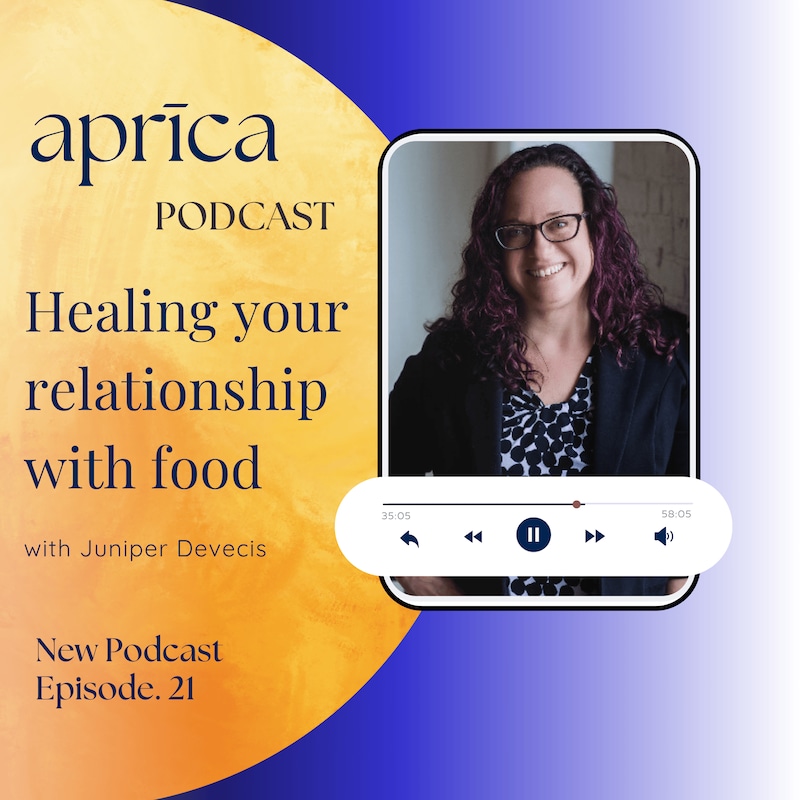
Join my guest Juniper Devecis as we discuss how to heal your relationship with food, from identifying emotional cravings to recognising your internal dialogues that are affecting your food choices and much more.
If you feel as if you're battling with food and body image rather than being at peace with your choices and consumption, do give this a listen and share with anyone who may find it helpful.
With Juniper Devecis - Juniper Devecis struggled with weight for most of her life, leading her to a degree in nutritional biochemistry and 20-year career as a dietitian involved in research, teaching, and designing supplements. It also led her to many diets, feeling hopeless, and evening food binges. Through a personal journey that started with divorce, she discovered the key to her emotional eating struggles, eased the inflammation, lost weight, and found a whole new life. - Juniper's Website - @craving_alchemy on Instagram - Juniper's Facebook group
And your host:
Eleanor Marker - Therapist and life coach - eleanormarker.com
Transcripts
Welcome to the Aprica podcast, because a little advice goes a long way.
Speaker A:Hello and welcome to the Aprica Podcast, where every week we will set you on your way with a little bit of life advice from our guests.
Speaker A:And today's podcast is all about our relationship with food and how sometimes it can become a bit tortured and emotionally laden, even toxic maybe, I don't know.
Speaker A:And I'm joined by a dietitian and a nutritional biochemist, Juniper Devasis, to give us some solid advice on restoring balance and calm to our relationship with food.
Speaker A:Welcome to the podcast, Juniper.
Speaker A:Very lovely to have you on the show with us.
Speaker B:Thank you.
Speaker B:Lovely to be here.
Speaker A:So first off, why do you think so many of us struggle with our relationship with food?
Speaker A:And I have to say here, I think it is primarily women.
Speaker A:It's not only women, but it does seem to be a kind of women thing because when I talk to guys, they're just like, yeah, whatever, I just eat whatever I want.
Speaker A:Whereas a woman is always.
Speaker A:I feel like we grow up really from quite an early age with this slightly tortured relationship with food.
Speaker A:What do you think's going on there?
Speaker B:I mean, I think there's a lot more pressure around how we look for women, right, and that we have to look a certain way.
Speaker B:And so we, we take that on.
Speaker B:We also take on all the pressure that the world comes at us with is like, okay, I must carry all of this, right?
Speaker B:So we have a lot of self worth issues going into it.
Speaker B:But I mean, in terms of our relationship with food and why it's so particularly strained right now, I mean, a lot of it comes down to our biology.
Speaker B: So pretty much since the: Speaker B:The whole environment and world that our bodies were designed for for thousands or millions of years is completely different.
Speaker B:We're designed to survive famine, right?
Speaker B:There was famine every winter, if not more frequently.
Speaker B:And so our bodies were designed to crave high calories, crave sugar and fat and so that we could store that food, store those calories to make it through famine.
Speaker B:And now with like, we've got food manufacturers designing our food, preying on those animals, innate wired cravings to make us buy food, to make it light.
Speaker B:So lights up our brain, we're like, oh, oh, more, more.
Speaker B:Because we were wired for a whole different world and now we're trying to navigate it and everything's changed.
Speaker B:The food's less nutritious, you know, it's, it's designed with all of those trigger sugar and fat that makes our dopamine escalate.
Speaker B:We're not really taught to deal with feelings, so.
Speaker B:So we have these generational ways of dealing with life that's turning to food for comfort.
Speaker B:So we're not necessarily eating because we're hungry.
Speaker B:We're eating to satisfy our emotional needs, and we're not given a lot of tools to handle those emotional needs.
Speaker B:So I mean, just the deck is stacked against us and we have to, like, tease all that apart.
Speaker B:So for me, I was a nutrition expert.
Speaker B:So I started gaining weight in my teens.
Speaker B:I went on various diets in my teens and you know, weight went up and down and I developed a lot of like, food issues, not necessarily an eating disorder, but certainly always struggling with a.
Speaker B:Always sort of searching for like, okay, is there some magic food?
Speaker B:Is there some magic diet that can just make this all go away?
Speaker B:You know, did a degree in nutritional biochemistry, a graduate degree in nutritional biochemistry, became a dietitian.
Speaker B:Like, still searching for answers and still, you know, so at my peak, a hundred pounds overweight, no answers.
Speaker B:Like, was the high, high level nutrition researcher developing dietary supplements?
Speaker B:No answers.
Speaker B:And so it wasn't until it was sort of this perfect storm.
Speaker B:I went to my cousin's wedding and there was this horrible picture of me and I'm like, oh, wow, okay.
Speaker B:And so I did this really intense hypnosis and it, and so it put me on a really limited diet.
Speaker B:So basically animal protein and vegetables.
Speaker B:And first of all, that was actually incredibly refreshing because it got rid of all those food triggers.
Speaker B:And it turns out I have a lot of inflammation from grains and chronic stress and like, probably a leaky gut.
Speaker B:But anyway, it turns out I have a lot of physical inflammatory symptoms from a lot of those foods.
Speaker B:So being on a simple diet and then at the same time, my, I got divorced.
Speaker B:And so I had to, for the first time, learn how to handle emotions without food.
Speaker B:And so I, I did like, it was, you know, you talk about like this, this transformation journey, and that's exactly what I did.
Speaker B:And I lost the weight and I just gained so much.
Speaker B:Right?
Speaker B:I, I remember talking to my friend and she was like, you know, what, what struggle?
Speaker B:And I'm like, well, I can't give up food.
Speaker B:That's like my main joy.
Speaker B:If I gave it up, I wouldn't have any joy.
Speaker B:Like, that's it.
Speaker B:And I look back and I'm just so sad for that person because there's so many joys that, like, life is so joyous.
Speaker B:How could food have been my main joy right?
Speaker B:There's so there.
Speaker B:And so on the other side of learning to actually feel our emotions, which is part of this whole journey, life just gets better.
Speaker B:It's so much better.
Speaker B:We're so scared of fear and feeling bad.
Speaker B:But when you actually learn how to do that, it opens up a whole new world.
Speaker B:So much more of all the good emotions, too.
Speaker A:I think you're spot on in as much as we aren't taught how to process our emotions.
Speaker A:And so many of us, in fact, I think I would even go so far as to say maybe all of us from a very young age, associate food with good times.
Speaker A:Or if we graze our knee when we're a child, somebody will give us something sweet, something nice, something to distract us will be food.
Speaker A:Something to make us feel better will be food.
Speaker A:Something to give us energy will be food.
Speaker A:Something.
Speaker A:When people come to visit is food.
Speaker A:If it's a birthday, if it's Christmas, if it's Easter, it's.
Speaker A:Food is so intrinsically linked into our human experience.
Speaker A:Experience.
Speaker A:And alongside that, we don't extricate our emotions.
Speaker A:So talk to us about then how our listeners would know if they're an emotional eater, because not all of us link our emotions with food, although we are brought up like that, but we maybe just, you know, haven't kind of imbibed it.
Speaker A:And a lot of men don't seem to have that link.
Speaker A:Right.
Speaker A:So how do we know if we've got this issue with our emotions linking in too heavily with our food?
Speaker A:Like.
Speaker A:Like you talked about.
Speaker B:Yeah, I mean, I didn't know that was my issue.
Speaker A:I.
Speaker B:It wasn't until I started actually learning to feel my emotion.
Speaker B:And I'm seeing similar breakthroughs with my clients, like, because I. I described to them my issues with emotional eating, and I'll describe it in a second, but they're like, no, I don't really have that.
Speaker B:And then I'll guide them through something, and all of a sudden they'll be like, oh, wait, I don't.
Speaker B:I thought I was supposed to feel good all the time, but actually I don't.
Speaker B:So what it feels like is uncontrollable eating.
Speaker B:Right?
Speaker B:So real hunger is kind of slow.
Speaker B:It creeps up on you.
Speaker B:It, like, nags you a little bit from your belly, but you're like, I'm actually busy.
Speaker B:Let me.
Speaker B:I'll come back to you in an hour or two.
Speaker B:And you can go without satisfying it.
Speaker B:And that kind of emotional eating hits you like a tsunami.
Speaker B:Like, I.
Speaker B:It's like this ear.
Speaker B:I Must eat right now.
Speaker B:And that's emotional eating.
Speaker B:That has nothing to do with hunger.
Speaker B:That is you trying to either make yourself.
Speaker B:Make yourself feel better in some way, whether that's avoid negative emotion or add positive emotion.
Speaker B:Because there's different kinds of emotional eating.
Speaker A:When you describe it like that, it makes a lot of sense to me because there are some times when I'm hungry and I will want something to eat, and I'll go into the kitchen, I'll kind of mooch around.
Speaker A:I'll think, okay, what am I going to have?
Speaker A:Shall I have this?
Speaker A:Shall I have that?
Speaker A:And then I make myself some food.
Speaker A:But then there are other times when suddenly I'm like, I want a cheese sandwich.
Speaker A:I will have a sudden, like, I want to have three haribos.
Speaker A:I want to eat a cheese sandwich.
Speaker A:And is that maybe what the emotional eating looks like when it's almost like instantly you want a particular thing?
Speaker B:So there.
Speaker B:So there's two kinds.
Speaker B:So what?
Speaker B:That one that you're describing is more that.
Speaker B:So the two kinds.
Speaker B:There's like the comfort eating and what you're describing.
Speaker B:Like, we had a positive association with a particular food at some point in our life.
Speaker B:And so what we're craving is that.
Speaker B:That joy from that experience in childhood or wherever it is, but usually early in life.
Speaker B:So that's.
Speaker B:That's that one for me, I actually used emotional eating more to escape from discomfort.
Speaker B:And that is like an insatiable eating.
Speaker B:Like, I could eat 12 bowls of kale.
Speaker B:I just needed to, like, fill the hole in me and make all my feelings go away.
Speaker B:Those are.
Speaker B:Those are two different things.
Speaker B:But, yeah, that coming on suddenly is.
Speaker B:Is the.
Speaker B:The cue that it's emotional eating.
Speaker A:Interesting.
Speaker A:And what do you then do about it?
Speaker A:So say you've thought to yourself, ha, okay, this is probably not hunger.
Speaker A:This is probably emotional eating.
Speaker A:Then what do you do?
Speaker A:Then, like, what you've identified it.
Speaker B:You get to play around with, like, okay, and so what it has become for me.
Speaker B:And I'll go through a whole bunch of things that someone could try, but what it becomes for me, like, I'll still get the craving, not nearly as much.
Speaker B:But instead of me saying, oh, I must eat, I actually say, oh, I must have an emotion that I don't know what it is.
Speaker B:And then I can go use some of the tools.
Speaker B:And there's all different kinds of things you can do.
Speaker B:So I love journaling.
Speaker B:That's mostly what I did in the beginning, was a lot of journaling, and I journaled every single day.
Speaker B:Whether I knew I had emotions or not and slowly learned to recognize them.
Speaker B:But it's still not completely intuitive for me.
Speaker B:Like, I will actually when, when things are bad, it's that urge for a late night snack that says it's actually snack number two.
Speaker B:Late night snack number two is like, you have an emotion right now.
Speaker B:Go and process that.
Speaker B:Stop.
Speaker B:You're not eating snack two.
Speaker B:But like, so there's many.
Speaker B:Like you can breathe through it.
Speaker B:So for me, I like the journaling because it processes out, but there's so many different things.
Speaker B:Like getting out in nature, moving your body, like letting that emotion kind of move through you.
Speaker B:Actually crying, totally fine.
Speaker B:And you don't get stuck forever.
Speaker B:Right.
Speaker B:You're like, wow, I can't actually cry and let this emotion go through me.
Speaker B:Except it's like two or three minutes and then you feel so much better.
Speaker B:Right.
Speaker B:It's not something that you necessarily need to run away from tapping.
Speaker B:So that's like, it's like a system of eight acupressure points.
Speaker B:Havening.
Speaker B:Yeah, I mean, getting out, get moving.
Speaker B:I do find that I have to move every day.
Speaker B:Like, I didn't used to make that a priority, but now I know, like, I have to get my, my neighborhood walk or I actually do a jog walk every day.
Speaker B:Because if I miss, if I skip two days, like this huge churning anxiety will come back.
Speaker B:And if, as long as I get a little movement every day, I don't have that churning anxiety.
Speaker A:So what about the link between our food consumption and our perspective about ourselves, our perception of ourselves?
Speaker A:So for example, I know that I have clients who have sort of really warped idea of how they look.
Speaker A:You know, they have a real negative inner voice that is like, oh, you're ugly or you're fat or things like that.
Speaker A:How do these play out when it comes to our relationship with food?
Speaker B:Yeah, I mean that, that just sort of sets you up to like, instead of having this empowered way, like, oh, I must have an emotion.
Speaker B:It's almost like you become hopeless to it.
Speaker B:Right.
Speaker B:The more that you were.
Speaker B:Your viewpoint is focused on being really, really critical.
Speaker B:It means you're less.
Speaker B:You're less able to break out.
Speaker B:So for my, for my.
Speaker B:And I described the whole journey in my book.
Speaker B:That very first step of the process is finding self worth.
Speaker B:And, and I didn't have it because I.
Speaker B:Even though, you know, I was really accomplished, all of it.
Speaker B:And you look through my marriage, through my job, it was always like proving myself.
Speaker B:Like, let me show you all that I can do.
Speaker B:And how perfect I can be and manage all of these things.
Speaker B:And that left me really exhausted without any bandwidth to be looking at emotions or getting movement or, you know, like, basically at the end of the day I would collapse and I had the cortisol, which meant I wouldn't metabolize food, right?
Speaker B:So by, by starting to really.
Speaker B:It's a choice, right?
Speaker B:When we look at ourselves and we're like, wow, I don't love the way that, say, my belly looks.
Speaker B:That's a choice to look there.
Speaker B:But what if we looked instead and we're like, I love my big curly hair, right?
Speaker B:With.
Speaker B:That's.
Speaker B:That's an equally valid choice.
Speaker B:So, you know, practicing gratitude and self appreciation, that's one of the very first steps that I think, because you want to make sure, like, you have to recognize that you are worth being on that to do list, that you are worth working on your health, working on having feelings and, and getting to experience more joy to.
Speaker B:To almost to buy into the whole experience.
Speaker B:And, and the way that you do that is learning to shift that lens from all the things you don't like about yourself to all the things that you do like about yourself.
Speaker B:Because I promise, once you start actually looking at all the things you do like about yourself, you will just keep finding them and that it's a stretch goal, right?
Speaker B:Can you find a hundred things that you love about yourself one by one, and by the time you get to the end of that list, you will have changed how you feel about yourself?
Speaker A:That's a lovely practice.
Speaker A:A hundred things that you love about yourself.
Speaker A:That's a nice idea.
Speaker A:I'd like to pause the podcast for a moment to thank you for listening.
Speaker A:I'd love to hear from you.
Speaker A:So please send me a comment under this podcast or on our Instagram channel, Aprica Podcast, like subscribe, download and share with family and friends.
Speaker A:And thank you for taking the time to listen to the show.
Speaker A:How much of our relationship with food and balancing that often making, making friends with our relationship with food.
Speaker A:How much of it is this internal work that you describe?
Speaker A:Where we're reframing it, we're shifting, we're flipping to positives, things like that.
Speaker A:And how much of it is external work where we actually control what we eat, think about what we make, better choices, eat at different times of day, have a fasting window, whatever it is.
Speaker A:How much of it is that kind of external stuff?
Speaker A:Do you think that that helps us feel balanced with our food?
Speaker A:And how much of it is internal work?
Speaker B:I mean, I will Say so.
Speaker B:I mean, I knew everything there was to know about nutrition.
Speaker B:I was binging on the multiple bowls of kale, not, not like cookies.
Speaker B:And I was 100 pounds overweight.
Speaker B:So honestly, my whole journey had to do with all the internal stuff.
Speaker B:But that being said, so I was hypnotized with 75 other people, and almost all of them gained their weight back.
Speaker B:So I think that it was the fact that I knew how to eat less and give my body the nutrients that it needed so that I didn't have hunger and cravings.
Speaker B:Because our food is also worse, right?
Speaker B:We're having.
Speaker B:There's less minerals, and there's numerous studies that show when we eat less minerals, we have more cravings.
Speaker B:There's studies that show when people take a multivitamin, they're more able to stick to healthy eating programs.
Speaker B:So we do need the nutrition component, but I, so I call it sort of three arms.
Speaker B:We need to do.
Speaker B:We need to.
Speaker B:We need to get those nutrients our body needs, and we need to work at the subconscious so that.
Speaker B:That's like saying to our body, hey, you're safe.
Speaker B:Saying to your mind, and that's all that childhood, like wiring that happened in our subconscious that you're safe, you don't need to, like, it is okay to feel emotions.
Speaker B:And this is why, right?
Speaker B:There's more joy on the other side.
Speaker B:And then all that, that personal development piece.
Speaker B:So the three, the three components all work together to be much stronger than either any of them standing alone.
Speaker A:So what you're describing, there is a lot of internal work.
Speaker A:Would you say then that in order to make peace with food or just to feel that we have a healthier, more controlled relationship with our food, would you say that we need to let go of all of the externals and just do the internal work?
Speaker A:I mean, are you suggesting that maybe things like diets, fasting, a million kind of fads, food choices, that actually they make it worse because we're always thinking about food and we're super controlled?
Speaker A:Or actually, are these the route towards letting it go because we feel in control?
Speaker A:Because it's actually quite freeing, being in control.
Speaker A:But then it can also be a.
Speaker A:Almost like a trap, can't it?
Speaker B:Yeah.
Speaker B:So, I mean, what I, I do think they play a role.
Speaker B:I think It's.
Speaker B:It's probably 80%, maybe inner work and 20% food.
Speaker B:But like I said, that food is sabotaging us, right?
Speaker B:So the sugar and the refined carbs, those processed, processed grains, they light up your dopamine and that makes it Much harder to adhere on the.
Speaker B:So, so I think getting rid of those, those things that, that's almost sabotage your brain puts you back in control.
Speaker B:But I also think when people like we do a lot of food tracking and counting calories and that makes you really hyper, focus on the food, which is the opposite of what we want, right?
Speaker B:We want the mental freedom.
Speaker B:So I actually more practice like let's get rid of the things that cause you physical and emotional pain and then we can focus on a more whole type diet and you can eat whatever you want.
Speaker B:Just make sure like dealing with the emotional.
Speaker B:Right.
Speaker B:You're not going to be eating because of emotional eating and you're just going to enjoy the food because you're hungry and then stop when you're full.
Speaker B:But for me, I had to do all the inner work before I could do something like intuitive eating because I remember trying it and I just was so off the rails in terms of using food for emotional coping that I wasn't ready to do intuitive eating until I healed a lot of the other stuff.
Speaker A:This is a bit of a controversial question, so feel free to tell me to my own business.
Speaker A:But do you feel that our society's expectations on body image, do you think that they are forcing us to make choices, food choices, decisions around our lifestyle that actually are negative for us?
Speaker A:Or do you think realistically as a species we are geared up to work better and to be healthier at a lower weight?
Speaker B:I do think that we are healthier at a lower weight.
Speaker B:However, that weight is not sort of that really thin, do you know what I mean?
Speaker B:That there's some middle ground, I think.
Speaker B:And, and we're all different, right?
Speaker B:We're all different genetically.
Speaker B:Like the minute when the weight started coming off, I had so much more energy and all my inflammation went away.
Speaker B:Right.
Speaker B:For the first time I used to wake up and my, my ankles would be so stiff and I'd like have to wiggle them before I could start walking and all that went away.
Speaker B:And I, it just like the amount of energy.
Speaker B:I remember that, like that the first few weeks of giving up those triggering foods, like I just, I wanted to run in the middle of the night.
Speaker B:I had like all this excess energy that I never felt before.
Speaker A:Do you think that that was your better food choices?
Speaker A:So the better fuel that you were putting in your body or the fact that you were losing weight, what do you think?
Speaker B:I think it was getting rid of the inflammation.
Speaker B:And in the hindsight, it turns out I have a lot of foods give me inflammation And I'm not saying this is the case for your listeners, but for me, I think that I have some, like a little bit of a hyper reactive immune system and I develop inflammation to, to foods that other people might be able to tolerate.
Speaker B:So I actually can't tolerate grains.
Speaker B:But that's not where everyone else is.
Speaker B:And that's what, what I do with, with clients is guide them through an elimination.
Speaker B:So we get rid of all that stuff for a few weeks and then we add them back one by one and you watch for symptoms.
Speaker B:Right?
Speaker B:Okay.
Speaker B:How do I have emotional issues?
Speaker B:So for me, gluten causes so much inflammation that in my brain, like I actually get really irritable because brain, like the same inflammation in our body is causing inflammation in your brain and it causes things like depression and anxiety.
Speaker B:So I, I like, will have a noticeably.
Speaker B:I'll become irritable.
Speaker B:If I get inadvertently exposed to gluten, I will see a difference in, in my mood.
Speaker B:Like white rice, I can eat brown rice, no problem, but white rice, like, I will eat, I will eat with my serving and then I'll be like, let me just have more.
Speaker B:And then I'll be like, maybe I should just make another pot.
Speaker B:Like, what am I doing?
Speaker B:So for like.
Speaker B:But I mean, right?
Speaker B:What works for one person is not the same.
Speaker B:So, so that's.
Speaker B:I like to make it individual because people don't have to be, you know, there's not.
Speaker B:We're not all the same.
Speaker A:I have this image of you.
Speaker A:I have this image of you eating rice and kale, making like 12 pots.
Speaker B:Of rice and eating in the corner.
Speaker A:With your own rice cooker always bubbling away in the corner.
Speaker A:But what, what are the symptoms?
Speaker A:Should we be looking for then for foods that may not be settling with us or foods that maybe we don't want to make friends with?
Speaker A:We actually want to kind of frenemy, you know, toss them aside.
Speaker B:I mean, I think most people have issues with sugar and processed food, but not all.
Speaker B:Like, I dated someone and he didn't have any food issues.
Speaker B:I was so jealous.
Speaker B:He didn't.
Speaker B:Like, I was like, no, come on, sugar, no.
Speaker B:And I did that with muscle testing.
Speaker B:And so anyway, so you won't know until you try.
Speaker B:But I think probably most people can't handle sugar and processed food.
Speaker B:And the rest is.
Speaker B:We'll see.
Speaker B:Now in terms of what kinds of symptoms would they cause?
Speaker B:I mean, some insatiable eating or mood changes.
Speaker B:But for me, I have a lot of stiffness in my ankles and wrists.
Speaker B:You could have bloating you could have diarrhea or constipation.
Speaker B:I mean, the symptoms of inflammation are pretty extreme.
Speaker B:So, you know, I mean, I don't mean extreme in terms of like very wide ranging.
Speaker B:Oh, in the early days.
Speaker B:Here's a good one.
Speaker B:When I first discovered I couldn't tolerate gluten, I was in my 20s and I would, I ate it, I did an elimination diet and I had like bone tired exhaustion for 20 minutes.
Speaker B:Like so tired I could barely keep my eyes open for 20 minutes.
Speaker B:And then it was gone.
Speaker B:And so for a long time in my 20s and 30s, I'd be like, okay, is this piece of pizza worth 20 minutes of bone tired exhaustion?
Speaker B:And sometimes it was and then.
Speaker B:But it got progressively worse to the like, then it became the joint pain.
Speaker B:And now it's like five days of joint pain that's so bad I can't sleep.
Speaker B:Like, it's almost like a restless leg.
Speaker B:So now it's not.
Speaker B:There's nothing that would make five days without sleep worth it, I think, I.
Speaker A:Think that is so key because I think that quite often if we get a symptom from a food, if the symptom is bad enough, then you, then you weigh it up in your head, right?
Speaker A:You're like, oh God, is it really worth it?
Speaker A:And I know that I had a really similar thing.
Speaker A:I hit the menopause, hot flushes started.
Speaker A:If I drank alcohol, I just was hot for about five hours, off and on, off and on.
Speaker A:And I've been drinking alcohol, not like loads, but I've been happily have a happy relationship with alcohol since I was about 18.
Speaker A:And suddenly I know you drink later in the US, but in, in the UK actually that was quite late for alcohol.
Speaker A:And, but, and, and now I, I actually just don't want it because I know what it does.
Speaker A:And I, and I think to myself, do I want a glass of wine or like, and, and to be hot for the next five hours?
Speaker A:No, I don't.
Speaker A:Now, what about people that don't have symptoms but still think, actually, do you know what, this is probably a food that I don't want to be having, like processed foods, for example.
Speaker A:Maybe they don't.
Speaker A:Maybe they don't even know.
Speaker A:Maybe they don't even know that they have a bad reaction to it.
Speaker A:Maybe they don't have an external reaction to it.
Speaker B:Yeah, well, I mean, so I didn't know I had an issue with gluten.
Speaker B:It was only until I took them out for.
Speaker B:And you want to do it for like three weeks.
Speaker B:So Your body is very clean.
Speaker B:And then you add the foods back.
Speaker B:And when you add them back, that's when you discover, oh, wait, I had no idea.
Speaker B:But say in my example, gluten makes me so incredibly tired.
Speaker B:And it was part.
Speaker B:And putting that together and not in my 20s because I really was like 20 minutes of tired.
Speaker B:It's fine.
Speaker B:But when you think about it, I had so much energy in that first elimination diet, and it was because you.
Speaker B:I had taken away that bone tired exhaustion, and I didn't have any idea that I had been living like that.
Speaker B:Right.
Speaker B:So it's almost more this, this self explore, exploratory journey that you would want to do.
Speaker B:Hey, I mean, you could do something like just get rid of processed foods and sugar, and that is a path.
Speaker B:But if you want to go deeper and be like, okay, are there specific foods that are really affecting how I feel?
Speaker B:Could I have more energy?
Speaker B:Could I feel, you know, more, like, less achy?
Speaker B:Then that might be something to explore.
Speaker A:And perfectly on cue, I think, because I was talking about alcohol, I'm now having a hot flush.
Speaker A:Talking about mine makes me hot.
Speaker A:What is that about it?
Speaker A:I did a podcast.
Speaker A:Oh.
Speaker A:A couple of months ago about hormones and about balancing hormones.
Speaker A:And towards the end of the podcast, I said to the endocrine lady who was on, I said, okay, we're going to talk about the big one now.
Speaker A:We're going to talk about hrt.
Speaker A:And I feel like you and I have an equivalent elephant in the room that we're going to talk about.
Speaker A:Before we talk about the very final thing which I want to ask you your advice, you know, key bits of advice for us when it comes to food.
Speaker A:But there is an elephant in the room and it has a really annoying acronym.
Speaker A:So it's, It's.
Speaker A:It's not even an acronym.
Speaker A:GLP1S.
Speaker A:Right.
Speaker A:So GLP antagonists, I think they call GLP1S a zempic, WeGovy mounjaro.
Speaker A:So let's talk about those.
Speaker A:Like, this must be fascinating for you as a dietitian biochemist.
Speaker A:It must be really interesting to see what's happening there.
Speaker A:What's your take on that?
Speaker B:Yeah, I mean, I think of them as another tool.
Speaker B:So, I mean, I think I had somewhat similar with the hypnosis.
Speaker B:It took away the food noise.
Speaker B:Right.
Speaker B:That kind of that hunger, that, like, obsession.
Speaker B:I must.
Speaker B:I want to eat.
Speaker B:Which is great.
Speaker B:As long as at the same time you're putting in tools.
Speaker B:Right.
Speaker B:Okay.
Speaker B:I now know how to prioritize.
Speaker B:So I Don't have quite so much stress so that my cortisol isn't high and I'm not and I'm able to metabolize food.
Speaker B:I want to put in place ways that I can cope with having emotion because otherwise the minute you get off, all that's still there and the weight comes right back on.
Speaker B:So you want to work through at the whole reason that food and weight are a struggle to begin with.
Speaker B:But it's a great tool as part of a program.
Speaker B:It's just not the end all, be all and who knows what will come out later.
Speaker B:I mean the main, the main concern that I know of now is that you lose equal parts fat and muscle really.
Speaker B:So you want to make sure that you are getting a lot of protein, that you're getting a lot of muscle building exercise to maintain that muscle as much as you can.
Speaker B:Because maintaining muscle is really important down the road so that you maintain all your functionality like as you age.
Speaker B:You want to make sure.
Speaker B:Because we already lose a lot of muscle.
Speaker B:So how can I keep that muscle as much as I possibly can can.
Speaker B:But I mean, I think GLP1 meds are a great tool as long as you're doing all of the other piece too.
Speaker A:I read a very interesting book called the Magic Pill by Johan Hari in He actually talked about linking back to what you're saying about joy and food.
Speaker A:He actually said that there's a link between taking Ozempic or taking GLP ones and depression.
Speaker A:But what they think it actually is is actually just that we link so much of our pleasure to food that when we then are no longer able to eat because it kind of takes away that desire, we find ourselves becoming a little bit sad.
Speaker A:Is there, is there anything that we can do internally to help with that, to kind of clear that.
Speaker A:That blockage?
Speaker B:Well, so I mean it's just as I said, so it's, you know, learning to what's on what's underneath there.
Speaker B:Right.
Speaker B:So exploring your emotions because on the other side of holding that fear for two or three minutes is like such peace, such joy.
Speaker B:So right, it's, it's all of that.
Speaker B:Okay.
Speaker B:We don't need to lean on food so hard for our emotional comfort.
Speaker B:Can you brainstorm 10 or 20 other things that might feel good and then start doing them?
Speaker B:Because that habit groove with food is so deep.
Speaker B:But if you can start creating other ways that feel good, then food becomes just one choice out of, you know, 20 things and you'll just be less like that won't be the Only go to.
Speaker B:You'll have other ways of making yourself feel good.
Speaker A:And I, I really love your advice there about when you feel that almost compulsive need to eat, that, that may then have an emotional contingent.
Speaker A:And so then that's a time to stop, explore what's going on for you emotionally.
Speaker A:And I think that that's really good advice.
Speaker A:And I think that understanding that link between emotions and food, as well as this idea of playing around elimination diets, see what works, maybe charting your energy levels, your mood, some of the other symptoms that you're mentioning.
Speaker A:What about just to finish off?
Speaker A:Are there any top bits of advice you would give when it comes to maybe food choices or balancing your food or just sort of like healing, kind of having a healing journey when it comes to food?
Speaker B:I mean, I think learning to really slow down and be mindful, right?
Speaker B:So at least in the US we eat a lot.
Speaker B:Rushing, going, you know, from here to there, we're just like shoving food in and it means we're not finding a lot of satisfaction.
Speaker B:We don't even remember we're eating.
Speaker B:So when we, you know, sit at a table and like, give a moment to like, hey, where did this food come from?
Speaker B:This grew in the ground like someone, someone raised this.
Speaker B:And then it came to us.
Speaker B:And so someone prepared it.
Speaker B:And really just recognizing all of that.
Speaker B:And then when you put the, like seeing the colors and textures, putting that food in your body and paying attention, how does it taste, how does it smell?
Speaker B:How does your body feel about that food?
Speaker B:So when you make the experience, all of that, we just, we slow down and, and have a whole different relationship with food.
Speaker B:We're satisfied with a lot less food.
Speaker B:We don't have to worry quite so much about what we aren't going to eat because we're going to focus on what we are and how delicious, you know, the, the more simple whole foods are and more satisfying too.
Speaker A:It is, it is so true.
Speaker A:And I think that you're right that if we just stop and pay attention, we really know intuitively the foods we like food.
Speaker A:When you find the one that really resonates with you or find a kind of a dish that resonates with you, it is the, it is a beautiful thing.
Speaker A:And I think mindful eating, where we just really pay attention to how we're feeling as we're eating it and how it makes us feel afterwards, I think that is, that is wonderful advice.
Speaker A:And slowing down, I mean, that's what everybody says as well, right?
Speaker A:We should all slow down.
Speaker B:Well, I just.
Speaker B:I'm playing around.
Speaker B:I just recorded a hypnosis.
Speaker B:Almost more of a meditation, because normally you would listen to them before you go to bed.
Speaker B:But I recorded one where I'm basically cueing you to pay attention to all those sensory cues in the food.
Speaker B:Right.
Speaker B:Well, let's appreciate the farmer.
Speaker B:And how does the food look?
Speaker B:And, like, put your fork down and, like, just how does that food feel in your body?
Speaker B:Are you enjoying it?
Speaker B:And I'm.
Speaker B:I'm really excited.
Speaker B:So I just recorded this.
Speaker B:I haven't.
Speaker B:I haven't given it to clients yet.
Speaker B:I'm creating a hypnosis library, but I think, like, that cueing right as we can start to remember.
Speaker B:Oh, right.
Speaker B:I'm supposed to be mindful, right?
Speaker B:Because we're in this, like, again, this habit groove of, like, I'm just gonna get the calories in and move on.
Speaker B:But.
Speaker B:But food is.
Speaker B:Is joyous.
Speaker B:This.
Speaker B:This beautiful connection to the earth and to self.
Speaker B:It's.
Speaker B:It's meant to be, this celebration.
Speaker A:It is.
Speaker A:You're absolutely right.
Speaker A:And it's lovely that we.
Speaker A:We sort of started out talking about joy and food and how that isn't always a great thing, and now we've come back to actually how it can be a really great thing.
Speaker A:So, Juniper, thank you so much.
Speaker A:It's really been lovely having you on the podcast.
Speaker A:Thank you today.
Speaker A:Thank you so much.
Speaker B:Thank you so much for having me.
Speaker A:Let's go for it.
Speaker A:Power to the people.
Speaker A:I can start every podcast with that.


