Shownotes
Season 25, Episode 97 - Shaun Boyce, Bobby Schindler
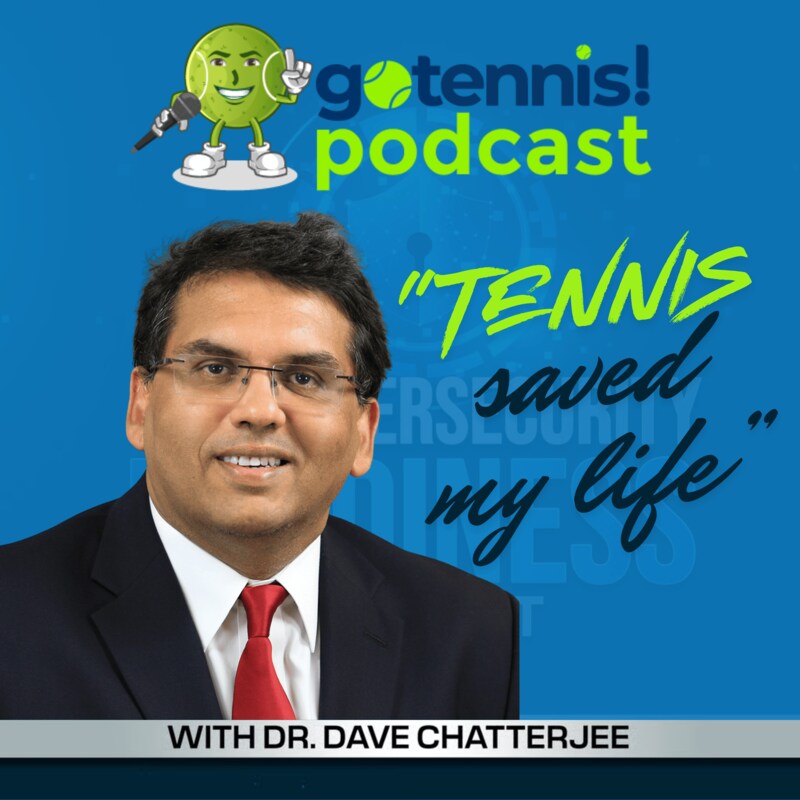
Join hosts Shaun Boyce and Bobby Schindler on the GoTennis! Podcast for an inspiring and heartfelt conversation with Dave Chatterjee, a renowned cybersecurity thought leader, former University of Georgia professor, and adjunct at Duke University. Beyond his professional accolades as an author, podcaster, and speaker, Dave reveals his deep-rooted passion for tennis—a sport that's been a constant in his life since childhood in India.
In this episode, Dave shares how he balanced academia with immersing himself in tennis, from traveling with his junior national player son, Victor, to driving hours for training sessions and offering "unsolicited advice" to pro coaches. He opens up about the emotional pull of the game, including tearful moments during Grand Slam ceremonies, and reflects on why tennis resonates so profoundly with him despite not being a top player himself.
The heart of the discussion is Dave's gripping personal story: how a intense league match uncovered a life-threatening 90% blockage in his "Widowmaker" artery, leading to a double bypass surgery that saved his life. He credits tennis for both revealing the issue through physical exertion and aiding his recovery, emphasizing the importance of proactive health checks, listening to your body, and not ignoring symptoms—advice that's especially relevant for tennis enthusiasts and coaches.
Dave also weighs in as "King of Tennis," advocating for player welfare with suggestions like switching to best-of-three sets and easing grueling schedules to prevent burnout and injuries. Plus, enjoy fun anecdotes about over-involved parents (including Dave's self-deprecating tales), family dynamics in sports, and shoutouts to Atlanta's tennis scene.
Whether you're a cybersecurity pro, tennis parent, recreational player, or health-conscious listener, this episode blends humor, vulnerability, and wisdom. Tune in for motivation to hit the courts—and maybe schedule that checkup! Available now on your favorite podcast platforms. #GoTennisPodcast #TennisSavedMyLife #CybersecurityAndTennis
Check out Dave's latest novel: https://amzn.to/46W0Xkm
Full YouTube Video: https://youtu.be/bKXNF2tOcQM
King of Tennis Answer:https://youtu.be/Fk0djcjWd0A
Contact Our Hosts
- Shaun Boyce, RSPA: shaun@americanracketsportsassociation.com | https://americanracketsportsassociation.com/
- Bobby Schindler, RSPA: schindlerb@comcast.net | https://letsgotennis.com/windermere
- Geovanna Boyce: geovy@regeovinate.com | https://regeovinate.com/
- GoTennis Website: https://letsgotennis.com/
More about Dave
https://www.linkedin.com/in/dchatte/
Check out Dave's Cyber Security Podcast
https://www.cybersecurityreadinesspodcast.com/
Join Our Community
Check out the GoTennis! Atlanta Facebook page for deals, updates, events, podcasts, news, stories, coach profiles, club information, and more.
Support the Show
- Donate Directly: https://gotennispodcast.captivate.fm/support
- Crypto Donations: Get into crypto with https://coinbase.com/join/PEWRLWK?src=referral-link
Start Your Own Podcast
Considering your own podcast? We recommend Captivate: This podcast is hosted by Captivate, try it yourself for free.
Transcripts
(upbeat music)
Speaker:Welcome to the GoTennis! Podcast.
Speaker:Our conversations are uniquely engaging
Speaker:and our tips will help you to win more matches.
Speaker:Our mission is to keep you well informed,
Speaker:give you what you need to improve your game
Speaker:and help you save money.
Speaker:We invite you to become a GoTennis! Premium member
Speaker:and join our community today.
Speaker:(upbeat music)
Speaker:- Hey, this is Shaun with the GoTennis! Podcast,
Speaker:powered by signature tennis.
Speaker:Check out our calendar of tennis events
Speaker:at LetsGoTennis.com.
Speaker:And while you're there, be sure to register
Speaker:for the Fall Festival.
Speaker:Tennis drills, pickleball clinics,
Speaker:the best coaches, vendors, sponsors, food, and more.
Speaker:You don't wanna miss it.
Speaker:And now let's get into our recent conversation
Speaker:with Dave Chatterjee.
Speaker:Dave is a cybersecurity expert
Speaker:and has a compelling story that you need to hear.
Speaker:Dave believes tennis saved his life.
Speaker:Have a listen and let us know what you think.
Speaker:(upbeat music)
Speaker:- Who are you and why do we care?
Speaker:(laughing)
Speaker:- You know, it's a great question.
Speaker:Who am I?
Speaker:Well, professionally, I'm considered a cybersecurity
Speaker:thought leader and subject matter expert.
Speaker:I was a professor at the University of Georgia
Speaker:for 23 years.
Speaker:I was a tenured professor there.
Speaker:And, you know, currently I'm affiliated
Speaker:with Duke University as an adjunct associate professor.
Speaker:And, you know, just like you all, I do podcasting.
Speaker:I have a book, published book.
Speaker:I have another book coming out.
Speaker:I author papers.
Speaker:I'm an also an editor of a journal.
Speaker:I teach classes.
Speaker:I get invited to deliver talks, moderate discussions.
Speaker:So I have a whole slew of thought leadership
Speaker:and consulting activities associated with cybersecurity.
Speaker:But if you would be talking to my family, my wife, my kids,
Speaker:and if you would ask them, "What is your dad's passion?"
Speaker:You wouldn't even finish the word they'd say tennis.
Speaker:In every room in this house, the tennis channel is on.
Speaker:I don't recollect missing a single Grand Slam final
Speaker:from my age of 10 when I was in India.
Speaker:I am still on top of pretty much every major match.
Speaker:I don't miss it.
Speaker:And my, one of my dreams was some professional player
Speaker:would hire me as a traveling coach.
Speaker:Despite not having a formal tennis pedigree,
Speaker:because my son, Victor Chatterjee,
Speaker:who was well known in the Georgia circuit,
Speaker:he was a junior national junior player.
Speaker:I traveled with him, you know, when he was doing his tennis.
Speaker:I took him out of a regular school.
Speaker:We were based in Athens.
Speaker:Both of them, both my kids went to Athens Academy.
Speaker:But my son was showing great promise.
Speaker:And so I was bringing him from Athens
Speaker:to Robbie Jean-Frizz Academy,
Speaker:where he was training under Jason.
Speaker:And I would drive from Athens to Johnson Ferry
Speaker:with him three days a week.
Speaker:And then we would travel to tournaments as well.
Speaker:So I've been tennised out or I've been into tennis since 2009.
Speaker:And I would be their coach.
Speaker:And then of course, when they grew up,
Speaker:they had their own coaches.
Speaker:But I would love to watch professional coaching.
Speaker:I know several of the coaches in the area.
Speaker:I also happen to know a couple of professional coaches.
Speaker:So when I'm watching matches, I will text them,
Speaker:telling them what so and so players should be doing.
Speaker:Not that they care.
Speaker:But I still offer my unsolicited advice.
Speaker:So I'm like all in when it comes to tennis.
Speaker:It's been, and I've often wondered, you know?
Speaker:That Dave, you're not that good a player.
Speaker:You're a decent player.
Speaker:I play four, maybe at some point I played four point five.
Speaker:But why do you care so much?
Speaker:Because I was a much better ping pong player,
Speaker:a much better badminton player.
Speaker:But I don't know there's something about the sport
Speaker:that has stuck with me.
Speaker:And I love the ceremonies when they declare the champions.
Speaker:And I'll stand up and I'll watch them getting crowned.
Speaker:And tears will start rolling down my eyes.
Speaker:And I'm still trying to figure out,
Speaker:why do I get so emotionally involved in a sport
Speaker:in which I was reasonable at, not great at it.
Speaker:But there is some connection that I'm still trying to figure out.
Speaker:So when this, you know, go daddy tennis or go tennis
Speaker:what cast opportunity came up, I'd said, you know,
Speaker:let's talk about it.
Speaker:And then of course, I had that incident.
Speaker:I'll let you tell me when I should share.
Speaker:But that's not in a brief, but in a lot of details
Speaker:on my background and who I am.
Speaker:That is fantastic.
Speaker:I've got a couple of connections as well.
Speaker:You said you're Professor UGA.
Speaker:You were a professor when my brother was there
Speaker:getting his masters.
Speaker:I believe you remember him.
Speaker:Yes.
Speaker:Yes, yes.
Speaker:But he was in my class.
Speaker:Oh, that's fantastic.
Speaker:I love it because I texted me the other day.
Speaker:Do you know Dave Chatterche?
Speaker:Yeah.
Speaker:And he responded that he remembers you.
Speaker:So that's fantastic.
Speaker:You said you're connected to Duke now.
Speaker:Yes.
Speaker:My stepdaughter, Collette, graduated from Duke in '22.
Speaker:I think it was.
Speaker:OK.
Speaker:So yeah, I've got connections there as well.
Speaker:And Bobby, can you imagine the drive from Athens
Speaker:to Jean-Eparie's Club on Johnson's Ferry?
Speaker:We say people will drive for a high level academy.
Speaker:That's dedication.
Speaker:I'm not going that far to C.J.
Speaker:He's a parker.
Speaker:I'm sorry.
Speaker:I would love Jason, but that's a drive.
Speaker:And you know what?
Speaker:We used to get there at 5.45 in the morning.
Speaker:So Jason would climb over the wall to hit with Victor at 6 a.m.
Speaker:I would go to Starbucks or whatever there was to get some coffee.
Speaker:And I would get one for Jason, one for myself.
Speaker:And I would watch them trade.
Speaker:And I tell you what, that was the best part of my day.
Speaker:Means I would enjoy this coaching, the squat.
Speaker:And people are learning.
Speaker:And I would say, wow, this is so nice.
Speaker:So yeah, there is something about the sport, about that training.
Speaker:And in fact, my son now has his own--
Speaker:he trains at the Bitsy Grand Academy.
Speaker:He works for Truace Bank.
Speaker:He graduated from Emory.
Speaker:And our daughter's played high school tennis.
Speaker:And she's, of course, a marathoner.
Speaker:So both of them were very-- are accomplished sports people
Speaker:over and above being very strong academically.
Speaker:So we achieved the dual goals of being scholar athletes.
Speaker:That's what we wanted for them.
Speaker:And what my wife and I was very supportive.
Speaker:Victor went online when online was
Speaker:and the cool thing to do.
Speaker:This was a free pandemic.
Speaker:And we took it on.
Speaker:And we had to provide a lot of support.
Speaker:My wife wasn't happy about it to start with.
Speaker:But I wanted to support him because he
Speaker:wanted to do something different.
Speaker:And it was quite the experience.
Speaker:Because when your kid is going through high school online,
Speaker:you have to make a lot of arrangements
Speaker:from tutors to making sure he can get a seat to take all his SAT exams.
Speaker:It was quite the commitment.
Speaker:It was quite the change management that we had to endure.
Speaker:And this is-- that is not a path.
Speaker:Either my wife or I had traveled.
Speaker:Because we were not collegiate athletes.
Speaker:However, we wanted to help him realize his dream.
Speaker:But at the same time, you thought
Speaker:that we were compromising on his academics.
Speaker:He was a good student.
Speaker:So we didn't know what we were doing.
Speaker:But there was such drive and desire.
Speaker:I said, Victor, do it.
Speaker:Do the best you can.
Speaker:We'll support you.
Speaker:So we went against the grain.
Speaker:And he almost maxed out the SAT score.
Speaker:Went on to go to memory.
Speaker:So it was a successful venture.
Speaker:But while we were going through it,
Speaker:it was rough.
Speaker:In fact, his college essay was titled Drive.
Speaker:Because we were driving everywhere.
Speaker:Plus, we had that drive to do something off the charts,
Speaker:which wasn't in our comfort zone and see how far we can go.
Speaker:So that's a story that is very close to my heart,
Speaker:because it kind of defined us as a family as well.
Speaker:And Dennis once again, cleared a huge role.
Speaker:But so that's--
Speaker:Bobby.
Speaker:So I get that, David.
Speaker:And Bobby is an expert in dealing with the parent.
Speaker:And sometimes the over-involved parent,
Speaker:I like the fact that you were willing to admit you
Speaker:knew I didn't know what you were doing.
Speaker:But you were figuring it out.
Speaker:You decided, hey, we're going to take this seriously.
Speaker:So we're going to be at home.
Speaker:And we're going to help.
Speaker:And I'm sure you were a pain in the ass, Jason,
Speaker:to tell him what to do and be in that parent.
Speaker:And Bobby's used to that.
Speaker:So that's-- I like Bobby.
Speaker:Does this sound familiar?
Speaker:Yes, yes it does.
Speaker:Let me share one more anecdote.
Speaker:So Genevary.
Speaker:Bobby Genevary was training the kids.
Speaker:And he was making the kids stand in front of the baseline
Speaker:and take the ball early.
Speaker:So I was watching the drill.
Speaker:And I walked up to Bobby and I said, Bobby, why shouldn't Victor
Speaker:stay back a little bit?
Speaker:So he has a little more time to hit the ball.
Speaker:But Bobby was so respectful.
Speaker:He says, yes, that's a good thing.
Speaker:But then he explained to me why he was doing it.
Speaker:Later on, I felt very ashamed.
Speaker:I said, why the hell am I trying to tell Bobby Genevary?
Speaker:Robby Genevary.
Speaker:What to do?
Speaker:But I can't help it.
Speaker:I'm also a professor.
Speaker:And sometimes they say little knowledge is a dangerous thing.
Speaker:So I thought I knew enough.
Speaker:And when your kid is involved, you feel that you have the right to.
Speaker:So my son, he was a coach and now he comes back and says, Dad, now I deal with parents.
Speaker:Now I think I can relate to what they were thinking when you were giving them feedback.
Speaker:Yes, absolutely.
Speaker:And that's like that of Bobby.
Speaker:That's got to be day in and day out.
Speaker:It's trying to manage the parent as well.
Speaker:Well, Bobby Genevary is a lot more patient than I am.
Speaker:Because I would have acquired the key.
Speaker:I can say that.
Speaker:I mean, you ought to be a degree of trust.
Speaker:If you're sending somebody, let them teach.
Speaker:Yeah.
Speaker:It's a drill.
Speaker:There's a purpose to everything.
Speaker:And again, if you knew the way Robby played, Robby was very much a bass slider.
Speaker:So he was obviously trying to instill something that maybe he wanted a little bit more in his
Speaker:games.
Speaker:Yes.
Speaker:Yes.
Speaker:But you know, I have a lot of respect for because I'm an educator myself.
Speaker:So when I see people training coaching, and I know a lot of coaches in this area and a lot
Speaker:of respect for them, I'm even now I take some lessons from time to time.
Speaker:So I'm absolutely loved it.
Speaker:It's a phenomenal sport.
Speaker:And then of course, the story comes at some point, but it's been a very interesting relationship
Speaker:I've had with the sport.
Speaker:Yeah, it sounds like it.
Speaker:And this is the second time you've mentioned the story.
Speaker:So I won't make you say it again.
Speaker:Tell us the way I remembered in my head is tennis saved your life in some way.
Speaker:So please tell us tell us what happened to you.
Speaker:Absolutely.
Speaker:So, you know, I was playing in one of the leagues.
Speaker:It's a new league that has come up where you get to challenge and you have these matches.
Speaker:So I was in the quarter finals and I was playing a probably a 3035 or old, much younger
Speaker:man in great shape.
Speaker:And my style of play is I try to push you to the third set and then I wear you down.
Speaker:That's the way I like to play.
Speaker:But then he was a lot stronger than me physically.
Speaker:So he turned the tables on me and he started not taking enough of the time that we get during
Speaker:the change over.
Speaker:So to keep up with him, I was getting a little winded.
Speaker:So we were once at all, third set, we were one one.
Speaker:And at that point, I would never quit.
Speaker:But then I felt a certain heaviness right on my chest on the left side, which I've never
Speaker:felt before.
Speaker:And I would normally not quit because I knew that I had a chance if I stayed on.
Speaker:But then something told me that they've stopped.
Speaker:You got to stop.
Speaker:So I stopped.
Speaker:I walked up to him, shook his hands and I said, my friend, I think I need to just take it
Speaker:easy and maybe get some help.
Speaker:Fortunately, nothing severe or dramatic happened on the court.
Speaker:I got some rest.
Speaker:Then I drove back to my home, came in, told my wife about it.
Speaker:I was feeling a little uncomfortable, but nothing severe.
Speaker:Had my dinner, went upstairs to lie down, I laid down on the side and that discomfort
Speaker:kind of increased a little bit.
Speaker:And I almost felt like I was, you know, there was some numbness happening as well.
Speaker:I don't know if it was anxiety or what, but I just came down the stairs and I don't know
Speaker:where I said, look, I think you need to drive me to the hospital.
Speaker:And normally I've never taken aspirin in my life.
Speaker:I checked the medical closet and there was aspirin, I just took two.
Speaker:I didn't know why I took it, I just took it.
Speaker:And then I walked up to the car and I was leaning against the car door and I was feeling
Speaker:very uncomfortable.
Speaker:And I kept telling her, can you please come quick, this is not good.
Speaker:And so I got in the car and I almost was convinced something bad was about to happen.
Speaker:And then she was driving me out of the subdivision and I'm like, whoa, what is this?
Speaker:I've never experienced anything like that.
Speaker:It wasn't severe, but it was uncomfortable.
Speaker:I was breathing just fine.
Speaker:I wasn't sweating or anything.
Speaker:So anyhow, but fortunately, as soon as she left the subdivision, maybe the meds had kicked
Speaker:in, I started feeling a lot better.
Speaker:And so, and I had been to ER twice for different reasons.
Speaker:I didn't want to go back to ER again.
Speaker:So I said, let's drive, I'll get some fresh air.
Speaker:And maybe I'll be fine.
Speaker:The aspirin has kicked in.
Speaker:It must have been something, but I wouldn't worry about it too much.
Speaker:So we came back home, went off to bed the next day I was fine, but then I decided to take
Speaker:that one aspirin every day.
Speaker:However, we had a trip, international trip coming up in about 10 days.
Speaker:So I thought maybe I should just go to my cardiologist and just get this checked because it happened.
Speaker:But there was no, but then it didn't happen again.
Speaker:And I, in fact, went back to the tennis court to see if I could, if this would again, re-acquire.
Speaker:And I was just playing some light tennis, nothing happened.
Speaker:I even walked, walked up and down the slopes to see if those activities would trigger it.
Speaker:I was fine, but still I went to the doctor.
Speaker:And then he asked me and I told him about what had happened.
Speaker:He says, you know, why don't you go to North East Georgia Medical Center?
Speaker:You'll get a CT scan done and I will take a look and let you know.
Speaker:The CT scan showed major clogging.
Speaker:And supposedly the artery which is referred to as the Widowmaker artery was clogged about 90%.
Speaker:And he was so concerned he wouldn't even let me out of the hospital there.
Speaker:He got me registered next day.
Speaker:I had catheterization and they found out that I couldn't get stents that wouldn't be possible
Speaker:because of the location of the clogging.
Speaker:It was a, it would have been a very high risk surgery.
Speaker:So they decided to do a double bypass.
Speaker:And the doctor clearly told me my cardiologist that if you had traveled abroad and if you hadn't
Speaker:come to me, if you had traveled abroad and you thought that you'll be taking up an aspirin
Speaker:day and you'll be fine, you were this close to getting a heart attack.
Speaker:And if you had the heart attack, it would have been fatal.
Speaker:You wouldn't have survived it.
Speaker:So and if you didn't tell me that you were feeling that you felt that stiffness while playing,
Speaker:I may not even have ordered the CT scan test.
Speaker:And again, I don't want to put words in the doctor's mouth.
Speaker:This is my recollection because the podcast, it's going to be out there.
Speaker:So this is my recollection of our conversation.
Speaker:But definitely if I wasn't at the tennis court playing intensely, I wouldn't have known
Speaker:that the clogging was that severe.
Speaker:So that was the, that was one connection with tennis.
Speaker:And then after surgery, my surgeon comes to me and says, they're, I'm glad you've been
Speaker:playing tennis.
Speaker:I've been trying to lead a healthy life because you did very well with your surgery.
Speaker:My wife was with me and she just gets a little concerned with my overdose of tennis.
Speaker:So tennis is not necessarily a good thing in her life.
Speaker:She calls herself a tennis widow.
Speaker:So I was almost dreading the fact that the doctor will tell her that he needs to stop.
Speaker:But the reverse.
Speaker:He said, no, you, glad you play, you should play.
Speaker:tennis actually saved your life.
Speaker:I said, well, that's used to me because I thought I was messing things up because many of my friends
Speaker:will say, they, you've turned 60, 61, you're playing singles with 30, 35 year olds.
Speaker:Are you okay?
Speaker:I said, I enjoyed the competition and that keeps me going.
Speaker:So I want to push myself and see how well I do.
Speaker:So I thought my doctor will say, you've got to stop that.
Speaker:Just keep playing casual doubles, but he didn't say that he said, keep doing what you're doing.
Speaker:And actually, you feel a lot better now after the surgery.
Speaker:The good news was my heart wasn't damaged because it didn't have a heart attack.
Speaker:That would have been really bad.
Speaker:And according to the doctor, both my lungs and heart checked out great.
Speaker:So now my surgery happened on the 20th of June.
Speaker:Today is the 12th of September.
Speaker:I feel amazing.
Speaker:Absolutely amazing.
Speaker:I haven't gone back to tennis full, full flow yet.
Speaker:I've been cautious.
Speaker:But one of these days, I'll get back on the court and resume what I absolutely enjoy.
Speaker:We will get you on court on November 1st at our Fall Festival, for sure.
Speaker:I'll be there.
Speaker:The story has one thing that I have a question about, which is what about on court?
Speaker:What about being on court was the catalyst for your doctor to order the CT scan?
Speaker:Why was that important?
Speaker:So if I understand your question, let's say if I hadn't played tennis, right?
Speaker:If I didn't play that match, because see, I've not had any symptoms and I've not had that
Speaker:feeling ever.
Speaker:You know, I do my share of going to the gym, working out, I do Pilates, I do yoga.
Speaker:I've never had that heaviness in my chest feeling.
Speaker:When I had my initial healthcare checkup, I went through all the nuclear tests and all
Speaker:that stuff.
Speaker:The doctor had found some evidence of black formation.
Speaker:This was, say, in October of 24.
Speaker:And he had said, come back to me in three months, but nothing severe, severe enough to lead
Speaker:to what happened ultimately, the surgery.
Speaker:So I assume that I was doing all the right things, so that little clogging that was there,
Speaker:was, you know, that they found will probably go away or, but in six months time, there was
Speaker:such an increase.
Speaker:Even the doctor was surprised.
Speaker:And I probably hindsight, I should have gone back to the doctor within three months and
Speaker:had myself checked again, but I didn't.
Speaker:I waited till this happened.
Speaker:And you know what, if it didn't, if I hadn't played that tennis match, and if I didn't experience
Speaker:that, I would have thought I was just fine, and I would have just gone to Europe because
Speaker:we were all packed.
Speaker:So it was a blessing.
Speaker:And initially I thought, I wish I hadn't played that match because it triggered something
Speaker:that didn't need to happen.
Speaker:But hindsight, I'm glad I played that match.
Speaker:I'm glad it was intense.
Speaker:I'm glad the gentleman pushed me so I was not sitting long enough to take a break.
Speaker:I was just getting back up because you know how it is when the person is soon after the
Speaker:changeover, he goes, stands on the court.
Speaker:You look at him, you're like, okay, I need to get back on court as well.
Speaker:Maybe it's Sasha's variant.
Speaker:Yeah.
Speaker:You guys just over there just waiting for you to come out.
Speaker:There you go.
Speaker:Yeah.
Speaker:And I'm like, you know what?
Speaker:You know what?
Speaker:You know what?
Speaker:You know what?
Speaker:It's a good test of my endurance.
Speaker:Let me see if I can keep up with that young man.
Speaker:So, you know what?
Speaker:Whatever happens, I believe happens for the right reasons.
Speaker:And I get emotional at times when I think about it when I shared the story because I've
Speaker:always wondered what is this tennis connection, Dave?
Speaker:You're no great player.
Speaker:You know, you just play for fun.
Speaker:Yes, your kids went a little bit of a distance.
Speaker:You enjoyed that journey with them.
Speaker:But what's the big deal about tennis?
Speaker:You know, there are so many other sports.
Speaker:But you know, there's something.
Speaker:There's something.
Speaker:And maybe that's one of the reasons why God said, you know what, Dave, you love tennis so
Speaker:much, tennis will save your life.
Speaker:Right.
Speaker:So Bobby, we now know what to look for, right?
Speaker:And I'm not age-ranged, too.
Speaker:So I'm like, okay, yeah, I'm going to stop and you know, it doesn't hurt really.
Speaker:Well, and that's, that was part of the question, Dave, is trying to figure out was it because
Speaker:you were on court if you'd had the same feeling sitting on the couch, would the doctor have
Speaker:reacted differently?
Speaker:Or was the assumption that if you weren't on court, you wouldn't have had the feeling
Speaker:until you had the heart attack and it was too late.
Speaker:Yeah.
Speaker:Yeah.
Speaker:So that's a good question.
Speaker:So if I had that feeling sitting on the couch, the way I felt I would have definitely gotten
Speaker:gotten held.
Speaker:And interestingly enough, normally I'm a proactive kind of guy and I reach out, I call 911 when
Speaker:I have issues.
Speaker:I've had issues.
Speaker:I've called them.
Speaker:I checked out okay.
Speaker:But in this particular occasion, because I had been to the ER a couple of times, I didn't
Speaker:want to go again.
Speaker:And this is when my doctor says, Dave, that day when you told your wife not to go to ER,
Speaker:to drive you back home because you were feeling better, you should have gone to ER.
Speaker:So I want to take this opportunity of sharing with the listeners.
Speaker:I'm not a doctor for sure.
Speaker:But when the body is giving you signals, don't discount it.
Speaker:Don't ignore it.
Speaker:Get help.
Speaker:And one more thing I want to share, you know, I've been around coaches.
Speaker:I've seen intense dreams and there's something that the coaches like to emphasize that
Speaker:you know, push through it, push through it.
Speaker:I feel you've got to be cautious about that.
Speaker:Everybody's body is different.
Speaker:It acts differently.
Speaker:When your body tells you stop, you stop.
Speaker:And no, there is no ego here, nothing.
Speaker:Because you don't want a situation where they'll be hard for the medical professionals to
Speaker:bring you back.
Speaker:And you know, even what I went through the recovery was very painful because they kind
Speaker:of cut open my rib cage and my poor wife, she was doing all the care I was looking at her
Speaker:and I said, you know what, from now on, whatever she tells me is exactly what I'm going to do.
Speaker:So finally, and I said, you need that, can I get back on the tennis court?
Speaker:She looked at me.
Speaker:She says, I will introduce you back on the court.
Speaker:You'll play with me.
Speaker:And I will see what you can handle.
Speaker:So that was quite funny because we went on the court by son who the tennis court she wasn't
Speaker:around.
Speaker:My wife was feeding me balls and I was putting the balls and I'm like, how I look here.
Speaker:You know, what an interesting turnaround.
Speaker:The lady who despised the sport because we were so into it and we spent a lot of time on
Speaker:tennis and not do other things.
Speaker:Today she feels bad for me and she's trying to get me back in the sport.
Speaker:And she, but she wants to be careful.
Speaker:She doesn't want me to hit with another friend or somebody else because they might go intense
Speaker:and I like to compete and that might be a problem.
Speaker:So she said, I will introduce the right amount of intensity and let's see how you do.
Speaker:So these are little stories about life.
Speaker:You know, I'm nobody there, but I'm a human being.
Speaker:It happened to me.
Speaker:I put it out on LinkedIn.
Speaker:This was a great opportunity to share with you all because I think all of us and you know
Speaker:what?
Speaker:This is not age specific.
Speaker:And even the best of athletes can have these issues because there is genetics involved.
Speaker:So you could be very fit.
Speaker:You could be eating very healthy, but that doesn't mean that you are free from these risks.
Speaker:So it's very important to do your annual checkups, get everything checked out.
Speaker:Stay on top of it because health is well, as we all know.
Speaker:And as I said, you know, I thought I was doing all the right things, but maybe not enough.
Speaker:And so that's kind of the message I have for everybody that playing is very healthy.
Speaker:Having a good diet is very important, but do not ignore the symptoms.
Speaker:You know, just go and get checked.
Speaker:What's the worst that's going to happen?
Speaker:They'll tell you it's fine.
Speaker:You're good.
Speaker:But just in case they felt that something was wrong, you know, and all health care professionals
Speaker:are extremely good.
Speaker:They won't take any chances.
Speaker:They will admit you right away if they feel that it's a life-threatening situation.
Speaker:So trust in our medical community, I had a great experience being treated at Northeast Georgia,
Speaker:health facility, the nurses, the doctors, the technicians.
Speaker:I can't say enough good things about them.
Speaker:So I have, I've always had a high element of respect for health care professionals.
Speaker:Now I experienced this.
Speaker:And you know what?
Speaker:In my 60 years, I had never had a surgery.
Speaker:I had never had general anesthesia.
Speaker:This was the first experience.
Speaker:I was really patterned on it.
Speaker:Oh my God, what is this general anesthesia?
Speaker:And now I'm talking about a bypass.
Speaker:It's a three and a half hour.
Speaker:So I didn't even know how I would wake up in what form and shape.
Speaker:So a lot of things went through my mind.
Speaker:But then I didn't have a choice.
Speaker:I just did what the doctors told me, but I think I came out okay.
Speaker:And the care I received was amazing.
Speaker:So I just felt that the least I can do is spread the word that it is okay to trust the professionals
Speaker:go there and get checked and be proactive about it.
Speaker:Don't delay.
Speaker:And Bobby, I'm going to send you, we're going to call Northeast Georgia Medical because
Speaker:they're the sponsor of this episode.
Speaker:Yeah.
Speaker:I'm the worst offender.
Speaker:I'm the anti-Dave.
Speaker:Dave, I'd saved thousands of dollars by waiting because my appendix was so bad that the surgeon
Speaker:told me I didn't need to see a pathologist because it was such a reason that there was no
Speaker:question.
Speaker:So I took that right off my belt.
Speaker:Didn't have to pay the pathologist because I waited so long.
Speaker:So yeah, that's finances with me.
Speaker:I don't know if we were talking about this, but I've never, I'm just joined the 60 club
Speaker:day this week.
Speaker:So I'm kind of taking this as is this somebody speaking to me.
Speaker:I never had the early colonoscopy.
Speaker:And I'm like, I'm 60 now.
Speaker:It's no longer early.
Speaker:So there's no need for a colonoscopy.
Speaker:That's a 40 year old.
Speaker:I made it to 60.
Speaker:I'm still here.
Speaker:But I will say I had a double hernia that probably could have only been one if I would have
Speaker:went earlier.
Speaker:So yeah, there was some, did learn the hard way in that one.
Speaker:So I'm going to get my physical for the first time in a few years.
Speaker:I'll keep everybody posted.
Speaker:Well, and then I think I like the way you put that, obviously.
Speaker:Somebody's speaking to me.
Speaker:And that's one of the reasons I wanted that we invited Dave on today is like you said,
Speaker:he doesn't have the specific connection to the industry except he liked to bother the
Speaker:coaches when his kids were playing.
Speaker:So we're all familiar with that parent.
Speaker:And he also gives some pretty good relationship advice as well, which is guys.
Speaker:It's usually males that don't want to go to the doctor and we feel the tightness.
Speaker:And we said, no, it'll be fine.
Speaker:Don't worry about it, honey.
Speaker:But also the favorite relationship line is guys just do what your wife tells you to do.
Speaker:It's not that hard and it might actually save your life one day.
Speaker:And you know, there's also a responsibility factor.
Speaker:Fortunately, in my case, my kids are a dollar is there doing wealth of themselves.
Speaker:But even if I moved on, I don't think my family would have been affected financially.
Speaker:However, everybody is in a different boat.
Speaker:So you have to act responsibly and make sure that you do the right thing because if there
Speaker:are people who are depending on you, you have to think about them as well.
Speaker:So it's a responsible thing to do.
Speaker:So yeah, and I know how Bobby you felt it.
Speaker:I still haven't gotten my colonoscopy done because I'm just scared.
Speaker:I don't want to go through any kind of anesthesia.
Speaker:So God said, you know, don't want to colonoscopy.
Speaker:You just get a double bypass.
Speaker:That's right.
Speaker:Okay.
Speaker:Okay.
Speaker:But, you know, yeah, we are humans.
Speaker:We operate based on what we feel.
Speaker:And then when things get really rough, then we rush.
Speaker:You know, I'm in the cyber security world.
Speaker:So I preach out.
Speaker:I preach there about being proactive.
Speaker:And I have this framework that I apply.
Speaker:It's called the commitment preparedness and discipline framework, which can pretty much
Speaker:apply to any profession at the higher the level of commitment, the higher the level of
Speaker:preparedness, the higher the level of discipline, the more likely that an organization's cyber security
Speaker:posture is pretty robust.
Speaker:And that to some extent minimized the probability of getting attacked.
Speaker:Nobody is immune from attacks, just like humans are not immune from health issues.
Speaker:Something or the other is going to happen at any point in life.
Speaker:But that doesn't mean that we will just, you know, you know, let things happen and not
Speaker:have that commitment, have that preparedness, have that discipline.
Speaker:So that our journey, the quality of life that we live is a good one.
Speaker:So that's all we are talking about.
Speaker:We're not trying to suggest that if you did all these things, you'll be perfect.
Speaker:Nobody can guarantee that.
Speaker:Not even the doctors.
Speaker:So that's the connection I drew from the work I do in cyber security, where I tell companies
Speaker:that don't wait for the attack to happen and react to it.
Speaker:Because that's how we humans like to behave.
Speaker:When something bad happens, we wake up and say, okay, let's do this, this, this.
Speaker:But we never thought of doing that before because we said, what's the likelihood of this
Speaker:attack happening?
Speaker:What's the likelihood that my house will burn down from fire?
Speaker:So we really need that security alarm system.
Speaker:So that's the thinking that, and I'm not trying to, you know, be, I'm not the face for insurance
Speaker:companies here.
Speaker:But I'm just saying that, you know, you have to be a little more, like take risks, but take
Speaker:informed risks.
Speaker:Yeah.
Speaker:Well, I believe that I resist to defend myself on this one day.
Speaker:I did have to go under anesthesia quite a few times.
Speaker:So I had, so you always have to get an EKG.
Speaker:So I always thought my heart was getting checked prior to the surgery.
Speaker:So every three years I had a surgery.
Speaker:Oh, it's good.
Speaker:I can keep going because I had another surgery, but it's been a while since my last surgery.
Speaker:So I probably should go.
Speaker:It's been more than three years.
Speaker:I guess because it's very different from our typical podcast conversation, but I'm glad
Speaker:you brought up because yes, your birthday was September 10th.
Speaker:I also mentioned that we, I found out that Andrew Manelli's birthday was September 10th
Speaker:as well.
Speaker:So you guys share a birthday.
Speaker:Mine's coming up just in case anybody's shopping for gifts.
Speaker:But it's a reminder.
Speaker:And I like that, Bob, because we just, let's say the three of us that are having this conversation,
Speaker:we're getting older and as is everybody technically.
Speaker:But we've got to pay attention to these things.
Speaker:And tennis coaches are notorious because as Dave said, there is a lot of push through with
Speaker:us.
Speaker:And we're out in the elements.
Speaker:We're not, I wouldn't say safely in an office, but even in an office, you're sitting all
Speaker:day and that's not overly healthy.
Speaker:Yep.
Speaker:So we all have the things that we deal with skin cancer.
Speaker:Bobby and I are going to have our noses cut off at some point in the future and replaced
Speaker:with some robotic nose.
Speaker:I'm sure it's coming.
Speaker:But we really need to think about these things as the longevity and Dave, we appreciate it
Speaker:because you get to add to the tennis as the healthiest sport demographic, or not the demographic.
Speaker:The statistics, right?
Speaker:So say, because we would have lost you at 61.
Speaker:And that would have lowered the tennis as the healthiest sport statistics.
Speaker:So we definitely wouldn't want that.
Speaker:So we're glad you're still with us.
Speaker:Bobby, did you have anything specific for day where you wanted to hit it with King of
Speaker:Tennis?
Speaker:I'm sure everybody wants to be, I know he's going to have something.
Speaker:So I want to hit it now.
Speaker:Yeah, I'm sure he's put some thought into it.
Speaker:So the last question, Dave, we always go with is my favorite because we get to find out
Speaker:somebody.
Speaker:And from you, it'll be a lot of fun because you're outside the industry of racket sports
Speaker:as we typically have this conversation.
Speaker:But as a player, as a parent, a part-time coach, obnoxious parent coach, we finally get
Speaker:to ask that question, right?
Speaker:So in this case, if you were King of Tennis, be it the whole world, just Atlanta, professional,
Speaker:junior, any concept within tennis, if you were King of Tennis, is there anything you would
Speaker:do or change?
Speaker:So when you say King of Tennis, are you saying that if I was like, "Rod your federal?"
Speaker:No.
Speaker:Is that what you're saying?
Speaker:No.
Speaker:No.
Speaker:I'm saying snap your fingers and make a change.
Speaker:God.
Speaker:God.
Speaker:What was dark overlord, I think, was want Jim Harp needed to be dark overlord.
Speaker:I'm not talking greatest tennis player on the planet.
Speaker:OK.
Speaker:I see you're King of Tennis.
Speaker:You can make changes with the snap of a finger.
Speaker:Well, a couple of things.
Speaker:First is, I somehow don't feel that a best of five is good for athletes' health, the
Speaker:long run.
Speaker:I feel that we should revert to best of three.
Speaker:And the schedule needs to ease up because these athletes are, they have to play way too
Speaker:much and the body just can't take it as much as we, the spectators like them, like them
Speaker:to compete, but they are human beings.
Speaker:So for a player to win say an ATP 1000 tournament and then expect to again compete in the next
Speaker:tournament because of ranking points or other reasons, I think it really damages that
Speaker:person's health.
Speaker:And we have to look at the sport as yes, the sport is there for enjoyment, for entertainment,
Speaker:for making money.
Speaker:But to me, most important are the players for, you know, it's because of them, the sport
Speaker:is what it is.
Speaker:And we have to their, their health, their physicality comes first.
Speaker:And I think the industry or the, the organizers, whatever, whoever are the decision makers, they
Speaker:need to be more sensitive to that.
Speaker:And read just the schedule, you know, I, I'm not intimately involved in how the schedules
Speaker:are made, what the expectations are.
Speaker:But I think we, the players are having to overplay and to that extent, you know what, they're
Speaker:not being able to compete like this, this, the city, the, the one, the tournament and
Speaker:Ohio where, Alkaraz and Sinner were supposed to play.
Speaker:And this crazy man was planning to leave early in the morning to take in that match.
Speaker:And, and my, I was scared of my wife, so I didn't go.
Speaker:I'm glad I didn't go because I would have spent all that money and the match wouldn't
Speaker:have happened because Sinner couldn't play, it felt sick, right?
Speaker:And so people, some of the players not being able to complete their matches, falling sick
Speaker:is because of the schedule.
Speaker:So that's what I would do if I was king of tennis, make sure that each player has a good quality
Speaker:of life throughout their career.
Speaker:And they're not machines that we just, we just make them push, go, go, go, go, go, because
Speaker:that machine will break down and we shouldn't treat them like, okay, that's not going to make
Speaker:it like a damage good.
Speaker:Now we have a new player.
Speaker:No, that's not how you operate.
Speaker:These are human beings.
Speaker:They are playing for the judges, sport, they have reached a certain level of excellence.
Speaker:Let's give them an environment, let's nurture them so they can offer the best, they have
Speaker:the best experience and they share that best experience.
Speaker:You know, there's a reason why Andre Agacian, Stéphic Graf said, we're not going to suggest
Speaker:tennis to our kids.
Speaker:I don't know the exact reason, but because I think it's because of the demanding schedule.
Speaker:So we want an environment which is attractive to players who want to compete at the highest
Speaker:level and even at the recreational level, I've seen a lot.
Speaker:I actually wasn't a very demanding parent, Bobby, though I'm being framed as one.
Speaker:It's okay.
Speaker:But, but I'll say I've been an involved parent, but I'm not a small Jason.
Speaker:Don't worry, I'm going to get to the top.
Speaker:I think you'll get me to get Jesus perspective, but I have been involved and I was emotionally
Speaker:engaged.
Speaker:However, I see you, if I could do it all over again, I dropped that kid at the training center
Speaker:and walk away and let the kid play and do whatever he or she wants and be happy with wherever.
Speaker:But this trying to stay plugged in and making sure they get to a certain level, I don't think
Speaker:it's a good thing.
Speaker:So to summarize, it's all about the players.
Speaker:Let's allow them to operate in a healthy environment.
Speaker:So they have a happy experience.
Speaker:Bobby, it sounds like a similar goal with a different point of view.
Speaker:Yeah, I mean, I think it's a schedule.
Speaker:Completely agree with you.
Speaker:I mean, I think it's ridiculous what they asked the players to do.
Speaker:But the other side of it is we're having this conversation about tennis.
Speaker:How does, and I love football, don't get me wrong and I'm glad I didn't have a son so
Speaker:I didn't have to address that issue, but how do you allow your son to play football?
Speaker:I just saw, I'm watching a Netflix documentary on the Dallas Cowboys and they interviewed Jim
Speaker:Kelly, the ex Buffalo Bills quarterback and Bill Romanowski who played linebacker for the
Speaker:Oakland Raiders and the San Francisco 49ers Denver Broncos.
Speaker:Both of these gentlemen probably just short of 60 or early 60s have serious cognitive
Speaker:issues when they're speaking.
Speaker:Serious.
Speaker:And you can't ignore it and we can lie to ourselves and say that Jim Kelly had a lot of health
Speaker:issues on top of it, but there's cognitive decline there.
Speaker:And it's business, but it's horrifying that we allow this to happen to people that are
Speaker:doing something for our enjoyment.
Speaker:So it is scary.
Speaker:It's all about the adversaries and it's all about money at that point.
Speaker:I agree.
Speaker:And the hard part is for the kids, you know, because I see Stephie or both kindred spirits in
Speaker:that capacity, they both came from very overbearing parents.
Speaker:Parents who almost drove Andre out of the game altogether and you know, Stephie had to
Speaker:put up with having to explain her father's pad choices as a youngster.
Speaker:So that's it.
Speaker:The responsibility for the father is supposed to be the, you know, make it easy for the daughter.
Speaker:That certainly did not happen in that situation.
Speaker:But I also, you know, with a kid, it's hard.
Speaker:And if a kid's going to get to that level because I think here's the great part about your
Speaker:balance, Dave, and you can speak to it, your son played at the highest level.
Speaker:What we've found is that 75, the number is 75 to 80% of that level tennis player.
Speaker:Once they get through with college, never picks up a racket again.
Speaker:And that's unfortunate.
Speaker:So you know, it's encouraging to see there must have been the right balance there that he's
Speaker:still not only still plays that he's even coaching.
Speaker:He's taking it on that side of it because he enjoy, you know, wants to share his experience
Speaker:or maybe massage the experience a little bit.
Speaker:But it's good that he's still active.
Speaker:If you were to ask him, you would say that his, some of his most memorable experiences were
Speaker:during those years when you'd be driving to different tournaments and the routine we had,
Speaker:it has, and it has definitely been mine.
Speaker:It's somebody says what has been some of the most exciting times of your years.
Speaker:I would say seeing the kids grow up and compete, watching them play matches, traveling with
Speaker:them, getting ready for, you know, waking up early in the morning, getting something to
Speaker:eat and then going on the court, practicing you.
Speaker:And I would get excited as if I'm playing a match.
Speaker:So those are, there are lots of great things.
Speaker:By the way, I also want to commend USDA for all that it does for tennis.
Speaker:Atlanta is a mecca or a hub of tennis.
Speaker:I mean, it's, it's phenomenal.
Speaker:So it means the mecca, that connection here somewhere.
Speaker:Hang on.
Speaker:Hang on.
Speaker:Did somebody, did somebody just compliment the USDA?
Speaker:I was surprised.
Speaker:Turn it up.
Speaker:So, so yeah, we have to appreciate what we have because in many, many other cities, especially
Speaker:when I grew up in India, you had to be a member of an expensive club to be able to play tennis.
Speaker:It wasn't easily available.
Speaker:So all that I'm saying is, here the sport is a lot more accessible and a lot of good things
Speaker:are happening.
Speaker:But if you can make it even better, why not?
Speaker:You know, you all are great coaches yourselves.
Speaker:And I love talking to coaches.
Speaker:Every one of these days, you might hire me as your sidekick or something.
Speaker:You know, because he was a great, because I would love to get Jason.
Speaker:Jason is an incredible player.
Speaker:Yes.
Speaker:For example, player.
Speaker:I mean, he can hit with anybody.
Speaker:That was always his thing.
Speaker:Yes.
Speaker:Yes.
Speaker:So, you know, there's, and he's coached at the highest level.
Speaker:I mean, he was worked with a Georgia Tech girl that made it to the top 15, you know, a few
Speaker:years ago.
Speaker:But Jason's, his dad was a little intense, but Jason is pretty mellow.
Speaker:You know, in a fun guy to be around.
Speaker:So it'd be interesting to get his perspective on the whole situation, because he can hit the
Speaker:ball.
Speaker:He's one of the cleanest hitters around, you know, he had land on.
Speaker:So we love to get his perspective on the whole thing.
Speaker:In fact, about a year back, I was hitting with Jason.
Speaker:I actually went to, I said, Jason, Jason, will you train me just like you trained victory?
Speaker:He said, yeah, come on over.
Speaker:So he gave me a good deal.
Speaker:So I was hitting with him and he paid me the best compliment.
Speaker:He said, they've how old are you?
Speaker:I said, then I wasn't 60 yet.
Speaker:I said, I'll be turning 16 a year.
Speaker:He said, you should try to compete at the national level for 60 in the world.
Speaker:And I felt so good.
Speaker:I came back home and I was all over the place telling everybody that Jason Parker told me
Speaker:I could compete nationally at 60 plus.
Speaker:But anyhow, but I have a lot of respect for Jason, for all that he does and for many,
Speaker:many other coaches.
Speaker:So yeah.
Speaker:So this is something that I'm doing out of pure fun and joy.
Speaker:Normally, I'm always talking cyber security.
Speaker:So if I put it up on my network, they're like, what happened today?
Speaker:Because nobody knows this side of me.
Speaker:But this is a huge side of me that has kind of stayed undercover.
Speaker:But it's glad that, you know, there was something had to happen for this to come out this way.
Speaker:I saw Sean's email and I'm like, hey, let me ride back.
Speaker:But no, I look forward to connecting with you guys.
Speaker:And if I can do anything to help help you all realize your goals, it'll be a pleasure.
Speaker:Well, you are literally up the street from me.
Speaker:So come see me.
Speaker:I love to.
Speaker:We will take you up on that for sure.
Speaker:And I appreciate you supporting that email.
Speaker:We will definitely see it at the Fall Festival.
Speaker:That's one of the things we're promoting.
Speaker:The Do tennis Fall Festival, tennis and pickleball at James Crete, tennis center.
Speaker:And we'll be there November 1st and hopefully day will be there as well.
Speaker:So if you're listening to this, come see us.
Speaker:Love to have us be able to see you there.
Speaker:But Dave, I really appreciate your time.
Speaker:I appreciate your story.
Speaker:We're a light of fire under Bobby to get him to get himself checked out.
Speaker:And maybe a few less McDonald's runs on the way home.
Speaker:And hopefully everybody listening as well.
Speaker:So Dave, thank you so much.
Speaker:I appreciate your time.
Speaker:Bobby is always.
Speaker:Thank you so much.
Speaker:Thank you so much guys.
Speaker:Thank you, John.
Speaker:Well, there you have it.
Speaker:We want to thank reGeovinate.com for use of the studio and signature tennis for their support.
Speaker:And be sure to hit that follow button.
Speaker:For more Racket Sports content, you can go to LetsGoTennis.com.
Speaker:And while you're there, check out our calendar of events, great deals on Racket Sports products,
Speaker:apparel and more.
Speaker:If you're a coach, director of any Racket Sports, or just someone who wants to utilize
Speaker:our online shop, contact us about setting up your own shop collection to offer your branded
Speaker:merchandise to the Racket Sports world.
Speaker:And with that, we're out.
Speaker:See you next time.
Speaker:Bye.
Speaker:(upbeat music)
Speaker:[Music]






