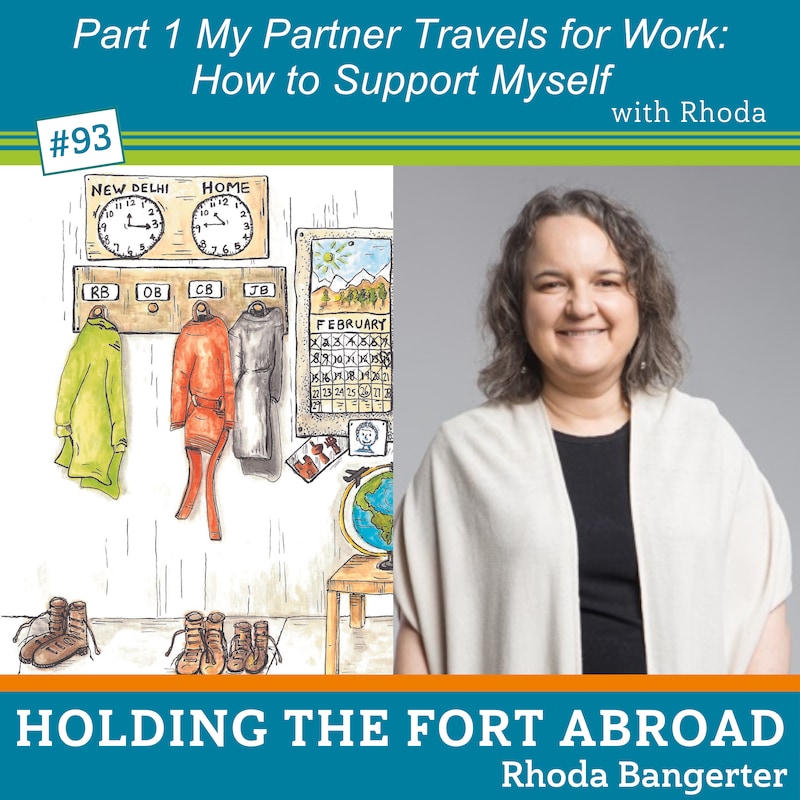
This episode is Part 1 of a new series based on my book 'Holding the Fort Abroad' (HTFA). It is mainly for the partner managing life at home while their spouse/partner travels for work.
If you are the one away or anyone supporting families where one parent works away, this episode is a must listen to understand what a holding the fort parent is going through. .
When one parent travels for work, the holding the fort parent often carries a heavy physical and emotional load. It can lead to decision fatigue, burnout or feeling alone in your relationship. Each episode in this series shares a short reading from my book Holding the Fort Abroad, some behind the scenes, and practical ways to feel more supported and less alone.
A workshop coming up!
If you are the Holding the Fort Parent, join me for the Physical and Emotional Reset Workshop on 8 May 2026.
Sign up here. Take 90 minutes to create a plan to get more peace, find your purpose, reduce overwhelm, include your husband/partner in parenting.
Episode introduction
Book Excerpt: Introduction, ppv-vii
Back story: when I wrote HTFA, I wanted to capture the rawness of my experience. Interviews opened up new discoveries of what I was experiencing. I also realised that so many people lived it. And across so many professions: humanitarian, diplomatic, rotation workers in energy sector, mining, oil and gas, entertaining. The common thread is the absence from home and the potential for overload for both parents.
Chapter 1 of the book I cover this and how common it is in expat life. Moving abroad and then partner absence. Adds a layer to challenges of expat life, loss of identity, loss of social network, loneliness, challenges for professional life.
What I have learned since: it is not only for expats, it is about connection when in multiple locations
Episode 1 — Navigating feelings when your spouse/partner travels for work
The emotional side of frequent business travel and work away from home for the home based parent
Book Excerpt: Chapter 2, pp17-20
Emotional intensity
The type of life that we lead when one parent is absent for work is one of the biggest challenges and also opportunities to increase capacity to regulate big feelings: disappointment, uncertainty, resentment (read excerpt). This is not a failure of coping — it is a normal response to carrying increased responsibility while missing your partner in daily life. One or more of these comes up pretty regularly in my interviews and in my conversations with home based parents (those who have finished with it and those who are still in the middle of it)
Behind the scenes
"Recognising when I have big feelings and what to do with them is something that I continue to work on. It is connected to our nervous systems and stress levels. I would say that finding ways to express and regulate our big emotions is going to be the biggest win for this kind of life. It will help communication in our relationships, it brings peace to our lives, we will be able to respond instead of react, I literally had this a few weeks ago in my own life and I used all the tools at my disposal to regulate without suppressing." [15:25]
Practical Insight:
Step 1 — Notice the signals
Common signs of emotional overload:
- clenched jaw
- tight shoulders
- shallow breathing
- irritability
- feeling mentally overloaded
- stomach tension
- feeling unappreciated or unseen
Awareness is the first step toward regulation.
Step 2 — Try one regulation tool
One tool that some listeners find helpful is Emotional Freedom Technique (tapping).
I explored this in Episode 43: How to Calm Intense Emotions with Eleni Vardaki.
Tapping #43 How to calm intense emotions with tapping – with Eleni Vardaki - Rhoda Bangerter
Step 3 — Build your emotional toolbox
I have a physical and emotional toolkit
- I have a Physical toolkit i.e. calm intense emotions with heat among other things (I am not talking about increasing the temperatures in my home. Physical activity for some. (Chris Moyer’s episode for men and their emotions)
- I have an Emotional toolkit: Space for sadness, Space for stillness and silence, Call it out and name it (often in a journal)
Reinforces agency.
The goal is not to eliminate difficult emotions.
The goal is to develop enough support tools so the emotions do not run the household.
Resource Centre link
How to Find Peace When Your Husband Travels for Work - Rhoda Bangerter
If you want to go deeper and find out more, you will find top tip sheets on dealing with intense emotions Guide on resentment, an evaluation of your Life balance and Life Satisfaction (helps identify areas that irritate us) You will find this one at the back of the book as well.
Access the Resource Centre here: www.rhodabangerter.com/individuals
In Chapter 2, I explore the importance of taking responsibility for your own needs, asking for support, knowing what is important for you, celebrating your successes. You will find resources to help you with each of these five elements in the resource centre too.
Reflection prompts
- Which emotion shows up most often when your partner travels?
- How easily do you notice when you are experiencing a strong emotion? 1-5
- What physical signs tell you you are reaching capacity?
- clenched jaw
- tight shoulders
- shallow breathing
- irritability
- feeling mentally overloaded
- stomach tension
- feeling unappreciated or unseen
What already helps you regulate stress?
What is currently in your emotional toolbox?
What might you add to your emotional toolbox this season?
- hot water bottle
- cream on my feet, or hands,
- spiky ball,
- orangeblute tea,
- self havening,
- bare feet on grass or ground (grounding),
- tapping
- journaling
- space for sadness
- silence and solitude
In the next episode
In the next episode I will cover another aspect of personal wellbeing and development when you are the home based parent: and that is your professional life, your personal growth and pursuing your passions. This is something that is affected by a partner who travels.
Contact Rhoda: [email protected]
Receive news regularly on new episodes of HTFA Podcast and on new events and resources. Subscribe to my newsletter.
Buy the book: Holding the Fort Abroad
Your partner's job opportunity in another country seemed like an exciting idea, but lengthy work assignments mean you're holding down the family fort - alone.
OR Your partner is working and living in another country, and you feel like you are shouldering all the home responsibilities alone.
You may be wondering:
- How can we be a family when we're miles apart?
- Can I cope, alone, when troubles arise?
I believe there are answers to the above questions, and the answers start with you. In this context, it's more important than ever to invest in yourself, to care for yourself, to set your own goals and to watch yourself grow. Equally important is to nurture your relationship with your partner and learn to parent together.