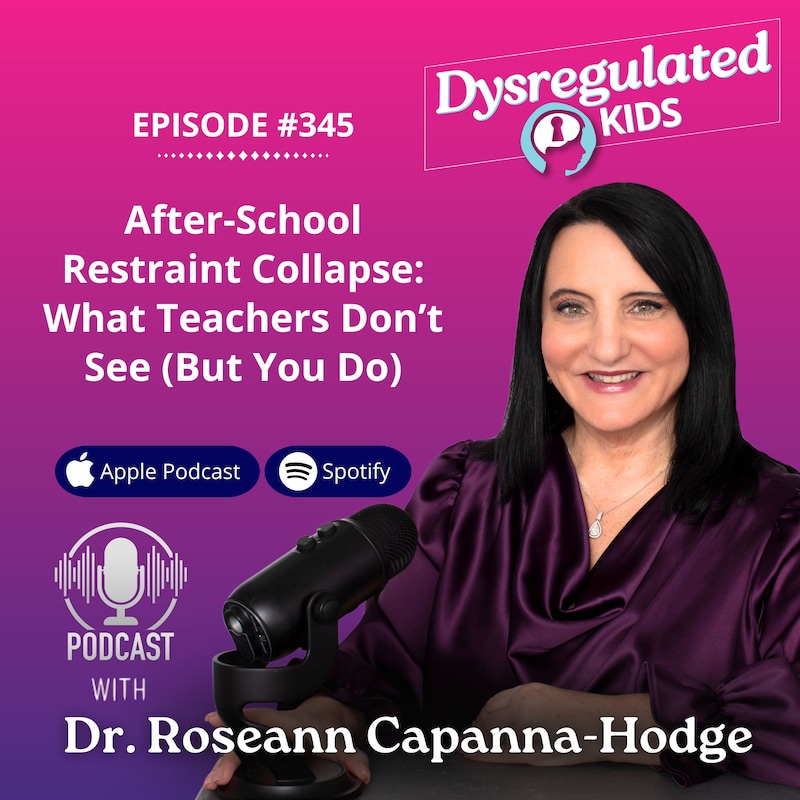
After-school restraint collapse happens when children spend the entire school day holding it together, only to fall apart when they finally get home. In this episode, I explain why after-school restraint collapse happens, what it means about your child’s nervous system, and how you can help them regulate, reset, and reconnect after school.
Many parents feel confused when teachers report a great day, but home feels like a meltdown zone. The truth is that after-school restraint collapse is often a sign that your child has been working hard to manage stress, emotions, sensory input, social demands, and academic expectations all day long.
In this episode, you'll learn:
• Why after-school restraint collapse happens
• What triggers after-school meltdowns
• How emotional dysregulation affects behavior after school
• How to create effective after-school regulation routines
• When additional support may be needed
Why does my child melt down after school?
Children often mask stress throughout the school day. By the time they get home, their nervous system is exhausted.
Common triggers include:
• Sensory overload
• Social pressure and masking
• Academic stress
• Hunger and fatigue
• Difficult transitions
• Emotional dysregulation
Behavior is communication.
It's not bad behavior—it's a dysregulated brain.
What looks like defiance is often a nervous system asking for recovery and support.
How can I help with after-school restraint collapse?
Before homework, chores, or questions, focus on regulation.
Helpful strategies include:
• Creating a calm landing zone
• Offering a healthy snack
• Building in movement and decompression time
• Using co-regulation before correction
• Reducing demands immediately after school
Many children need time to reset before they can manage additional responsibilities.
What routines reduce after-school restraint collapse?
• Predictable after-school schedules
• Movement and outdoor play
• Quiet connection without pressure
• Simple choices that reduce overwhelm
• Limiting screens before regulation needs are met
Consistent after-school routines help reduce after-school meltdowns and improve emotional regulation.
When should parents seek additional support?
If after-school restraint collapse is severe, persistent, or interfering with daily life, it may be helpful to explore underlying contributors such as:
• ADHD
• Anxiety
• Autism
• Learning differences
• Sensory processing challenges
The most important shift is reframing the behavior.
Your child isn't trying to make life difficult. Their nervous system is overwhelmed and needs support.
Lead with calm, not consequences.
Want step-by-step tools to help your child reset faster after school? Check out Quick CALM.
Get the FREE Regulation Rescue Kit at www.drroseann.com/newsletter
Need personalized next steps? Use the free Solution Matcher:
www.drroseann.com/help
Dr. Roseann Capanna-Hodge helps parents understand emotional dysregulation in children and teaches practical nervous system regulation and co-regulation strategies through her Regulation First Parenting™ approach.