Shownotes
Gordon Meyer is a dynamic force in the entertainment industry, and his journey from a 12-year-old voice actor to the mastermind behind Hollywood's Master Storytellers is nothing short of inspiring. He started his career early, voicing Buster Brown for a commercial, and quickly transitioned into interviewing big names in Hollywood. One of the highlights of his career was creating and hosting Hollywood's Master Storytellers, a series where he engaged with film luminaries ranging from writers to directors and actors.
Gordon's passion for storytelling shines through as he recounts his experiences interviewing Hal Holbrook and reflecting on the depth and artistry in performances. Throughout the episode, he shares anecdotes about his time in the industry, including his collaborations with the Criterion Collection and his excitement over reviving his iconic series after a pause during the pandemic. His journey is a testament to the power of creativity and the importance of building relationships in the world of entertainment. We look into his insights on the current state of the film industry, the challenges posed by streaming platforms, and the changing landscape of production. Gordon's humor and camaraderie with the hosts create an engaging atmosphere, making it a delightful listen for anyone interested in the behind-the-scenes magic of Hollywood.
[00:00] Introduction to Gordon Meyer
[00:39] Welcome to St. Louis in Tune
[00:54] Reflecting on Nine Seasons
[01:29] Thought to Ponder for the New Year
[02:09] New Year's Resolutions and Chair Yoga
[02:53] Introducing Gordon Meyer
[03:21] Hollywood's Master Storytellers
[04:23] Impact of COVID and Future Plans
[04:58] Criterion Collection Collaboration
[07:08] Interview with Paul Reubens
[12:11] Origins of Hollywood's Master Storytellers
[15:31] Memorable Guests and Events
[22:11] Favorite Interviews: Drew Barrymore and George Clooney
[23:39] George Clooney and The Blues Brothers
[25:07] Debbie Reynolds at The Muny
[26:58] Unexpected Singing Lessons
[27:23] Clooney's Classy Move
[28:10] Early Career in Entertainment
[29:32] Voice of Buster Brown
[30:49] High School Celebrity Interview
[32:57] University of Georgia Days
[35:56] Auditioning for the American Academy of Dramatic Arts
[41:50] Advice for Aspiring Actors and Writers
[46:22] Challenges in the Modern Film Industry
[49:25] Conclusion and Final Thoughts
Takeaways:
- Gordon Meyer kicked off his entertainment career at a mere 12 years old, diving into a world of creativity and storytelling that would shape his life forever.
- His first celebrity interview was a high school dream come true, conducted at the prestigious USC's World Famous School of Cinematic Arts, where he met the legendary Hal Holbrook.
- Over the years, Gordon produced Hollywood's Master Storytellers, a series that showcased the talents and stories of writers, directors, and actors, making Hollywood magic accessible to fans.
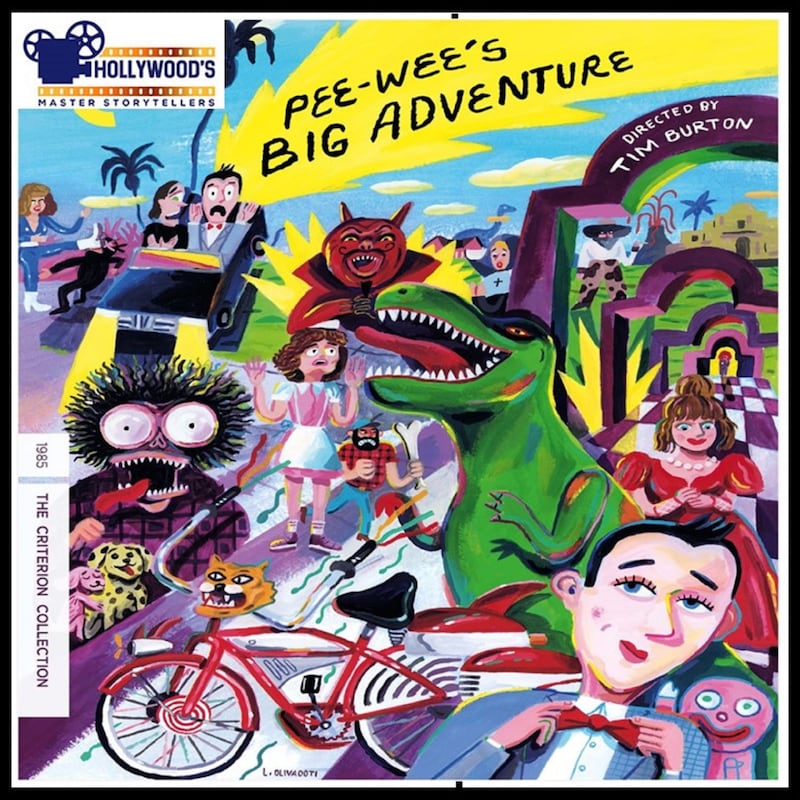
- He shared a hilarious tale of how he once interviewed Paul Reubens, aka Pee-wee Herman, and ended up licensing that taped gold for a Criterion Collection documentary.
- In the ever-evolving film industry, Gordon highlighted how streaming has drastically changed production, with fewer opportunities and shorter seasons making it a tough landscape for creatives.
- He wrapped up with solid advice for aspiring artists: immerse yourself in your craft, build connections, and never stop learning, because every experience counts in the journey.
This is Season 9! For more episodes, go to stlintune.com
#hollywoodsmasterstorytellers #peeweeherman #peeweesbigadventure #gordonmeyer #hollywood #storytelling
Transcripts
He began in the entertainment industry at the age of 12. His first celebrity interview took place in high school at the USC's World Famous School of Cinematic Arts.
ers of Hollywood stars and in:And thank you for joining us for fresh perspectives on issues and events with experts, community leaders and everyday people who make a difference in shaping our society and world. I'm Arnold Stricker along with co host Mark Langston. Mark, this is our. The beginning of our ninth season.
Mark:Holy smokes. As Harry Carey would say. Oh, no. Holy cow.
Arnold:Holy cow.
Mark:That's amazing. Ninth season.
Arnold:Ninth season.
Mark:Now a season is a year, correct? Yeah. Cause some places are like they'll put two seasons in one year. But not us.
Arnold:Not us. No.
Mark:This is nine years.
Arnold:Nine years.
Gordon:Wow.
Mark:I think you had hair when we started.
Arnold:I may have nine years ago. I have less now, if any. Yeah, exactly, exactly. Oh, welcome, folks. We're going to do our.
ar. This is our first show of: Mark:Okay.
Arnold:The solution for a lot of the world's problems may be to turn around and take a forward step, which means take a step back and look around, think about what's going on. I thought that was a good one for this year.
Mark:It is. I didn't think we were going to get political, but. Yeah, that's good.
Arnold:I wasn't thinking politics.
Mark:Mark, maybe you should. I'll tell you what.
Arnold:Oh, my.
Mark:Yeah. You have any New Year's resolutions?
Arnold:I don't make New Year's resolutions.
Mark:Oh, is that right?
Arnold:No.
Mark:Okay.
Arnold:I try to just not just wing it or go with the flow. I just try to get a little bit sharper. That's good in what I do.
Mark:Last year I did a chair yoga. Lasted about 30 days.
Arnold:How did the chair last?
Mark:It broke, but.
Gordon:No.
Mark:But this year I'm going back after it again. Just a little more aggressive. As we get older, we need to exercise.
Arnold:I've seen the chair yoga stuff.
Gordon:Yeah.
Arnold:Was also thinking about the other. About tai chi.
Mark:Tai chi.
Arnold:There you go. I'm thinking about that.
Mark:Okay.
Arnold:But right now I'm just thinking about it.
Mark:You're just thinking. I know. You have to put it into action. That's where you get the benefit.
Arnold:That's correct. We've put into action a great show today.
Gordon Meyer is the creator, executive producer, partner, editor in chief of Hollywood's Master Storytellers. And he's a classmate of Mark and myself and Gordon meyer. Welcome to St. Louis in Tune.
Gordon:My pleasure.
Arnold:All right, I've got gazillion questions here, Gordon. And Gordon was in the band. He was a trumpet player, by the way.
Mark:Oh, no.
Arnold:Yeah, so we're bandmates also.
Mark:Okay, that explains.
Arnold:So what is Hollywood Master Storytellers?
Gordon:Hollywood Master Storytellers was a series that I created, produced and hosted for over seven years where we ran a mix of recent and classic movies at a theater in the heart of Hollywood. Arc Light Hollywood on Sunset and vine, right next to the Cinerama Dome. And I would then interview key members of the creative team.
Usually a mix of writers, directors and producers, but sometimes stars, sometimes people like Oscar winning visual effects artist Stan Winston. Sometimes composers, editors, at Quite the Gamut. And we had a lot of fun during our initial seven year run.
Arnold:And are you still doing that, Gordon?
Gordon:We're looking at doing a reboot of it, but right now are just dealing with our YouTube channel and our website, which I've sadly neglected for way too long.
Arnold:I think you kind of shut down a little bit because of COVID right?
Gordon:The pandemic we did, we were again when. When we were in active production. Of course, this was long before COVID hit. When we ended our initial run, we were in a movie theater.
It was actually a 14 screen complex where the screen size was between 200 and 400. 400 seats. Wow.
Mark:That's a big one.
Arnold:That's crazy.
Gordon:We're working on a number of different ways of reviving the brand. One of the most exciting things was our new relationship with the Criterion Collection.
For your listeners who aren't familiar with that brand for over 40 years, the criterion Collection pioneered the concept of collector's editions of great movies. They were one of the first companies to do letterboxd films. If you do, are you familiar with what?
Arnold:I'm not familiar with that. No.
Mark:Neither am I.
Gordon:Okay. So up until the widescreen era of TVs, when movies were transferred to videos, they changed the aspect ratio.
In other words, the ratio of an image's height to width so that it fit more or less the more or less square aspect ratio of old school TVs. In film terms, it was 1.33 to 1. In other words, 1.33 times as wide as it is high.
That was the aspect ratio that movies used up until the widescreen era began in the 50s and what TVs had been up until 25, 30 years ago. So they would do what was called a pan and scan, where they would use an optical printer to shift around the image.
So they just fit that square image and it basically cut off the sides of the picture.
Criterion did what's called letterboxing, where they put a black bar at the top and bottom of the image so that you got the entire width of the original image from the film. And they were one of the first companies that focused on doing that. So you're basically seeing the movie the way the filmmakers intended to be seen.
They're also one of the first companies to offer commentary tracks on movies and bonus content. And now everybody's doing it. But Criterion was the first one to actually do that. And there's still market leaders and it's very prestigious label.
e of the shows that we did in:And a couple of years ago I saw in the trade that there was a company developing a documentary series for HBO about Paul Rubens. And I contacted the producers and said, hey, I've got this interview with Paul.
Would you be interested in licensing that to include in your documentary series? And Paul was very hands on with that documentary because he was extremely protective of his Pee Wee character.
So he had to approve anything and everything that was related to Pee Wee.
And I sent them, I gave them permission to borrow our master tape so that they could review the content and decide whether or not they wanted to include it in their documentary. They never did license it, but.
And in the middle of the production of this series, which is available on HBO right now, it's like a two or three part series about Paul. Paul sadly passed away, but apparently his estate maintained the copies of our content that we provided to the producers.
is interview that Paul did in:And so I got a call from the disc producer from the Criterion Collection and we worked everything out and they ended up using 37 of the 51 minutes of my interview with Paul. Wow.
And it's in the bonus content section of the Criterion collections 40th anniversary restoration of Pee Wee's Big Adventure, which came out in on December 16th of last year.
Mark:That's fantastic.
Gordon:It is.
Arnold:That's crazy.
Gordon:Yeah, that's.
Arnold:Congratulations, Gordon.
Mark:Yeah, good for you.
Arnold:And I was surprised, I didn't know this, that Tim Burton actually produced that or directed that film.
Mark:Oh, is that right? One of my favorite movies is A Young Lad Growing up was Pee Wee's Big Adventure.
Arnold:Yeah, I'm right on that, Gordon. Like you're the expert on this film stuff. I think Tim Burton was the director of Peewee's Big Adventure. Is that correct? You're the film industry.
Gordon:That was one of his. I think it was like his second or third feature. What Paul had said in our interview was. And Paul was the.
Was an uncredited producer on the film as well as being the star and the co writer. But he was instrumental in getting Tim Burton. He had just done Frankenweenie, I think that was his first feature.
And they connected through mutual friends because Tim was really hot at the time after Frankenweenie. And again, that was one of Tim's very first features as a director.
Arnold:I know Paul Rubens. He liked to keep his Persona very private. And he was really promoting the Pee Wee Herman character.
What was he like in person when you were talking to him? I've seen that interview. Matter of fact, folks, we're going to post that interview that Gordon did with him. I'll give you. We'll share that link.
And we'll also share the link of the criterion collection 40th anniversary with you on the podcast page stlintune.com so what was he like in that interview, Gordon?
Gordon:He could not have been nicer. And you got that sense from watching the interview yourself. He was charming, he was friendly. One of the things that we always did with our guests.
But the movie was running for the audience. We took them to dinner because the theater that we were running out of, Arc Light Hollywood, had an in house restaurant.
So we would take him to dinner at the restaurant, at the theater while the movie was running. And we had a very nice conversation. Paul was very fond of Cuban food and suggested a Cuban restaurant in Hollywood.
Mark:Wow.
Gordon:As a place. As his go to place to get those Cuban sandwiches that are so famous, the Cubanos. Oh, yes.
Arnold:Okay. All Right now, did this all of a sudden just come out of the blue, you wanting to do this? Hollywood master storytellers.
You were like, wow, it'd be great to sit down with these directors and actors and screenplay writers and composers and talk to them before the movie. Where did this.
Gordon:All the origins of the series were. I was involved in a networking organization for budding scre writers. And I had organ Arclight. Hollywood was brand new at the time.
And I had organized an event in their restaurant. It was a networking event for the organization I was part of. So I developed a relationship with Arc Light Management, and they were looking for.
They wanted to start a series, a film series where people could talk to screenwriters, where screenwriters would come to talk about the movies that they had written. And they said, hey, do you know anybody that can produce such a series? And I said, yes, me. And I started a show with them called Meet the Writer.
And again, we. We actually kicked off that show with Ray Bradbury. Oh, wow. Talking about his adaptation of Moby Dick for producer director John Houston.
And we built from there. And as an aside, Ray was one of the biggest kids that I ever met. He just had this wonderful childlike passion and enthusiasm.
And this was not the first time I'd interacted with Ray, by the way.
While I was in film school, I produced a tribute to the Disney Studios, and Ray was one of our speakers because he and Walt were friends, close friends, and he was a consultant on the parks.
And Ray had actually arranged for my team and I to get a tour of what was then called WED Enterprises, now Disney Imagineering, partly because that was his association with the studio, but also because one of our honorees was the late Mark Davis, who started out as an animator. Among the. Among the characters that he animated was Cruella de villa, the original 101 Dalmatians.
And Walt had shifted him over to imagineering, where he was one of the key designers of attractions like the Haunted Mansion and Pirates of the Car. So we. Ray had arranged for us to get the tour of Imagineering and to meet with Mark in his office. And so there's a.
There was a sign over the door and Mark's office that said, toto, I have a feeling we're not in Kansas anymore.
Arnold:Yeah, exactly. Exactly.
Mark:Wow.
Gordon:And then help myself to a chair near the door. And he said, oh, by the way, that's the chair Walt used to sit in when he came to visit me.
But anyway, so we started Meet the Writer with Ray Bradbury, and we had a fair amount of success. And then I ended my relationship with the writers organization.
And because I had already developed a good relationship with ArcLight Management, I started at Hollywood Master Storytellers where our guest, our guest roster expanded beyond writers to also include directors and producers and very often actors, hyphenates, visual effects artists. And during our initial seven year run we had some really great guests, including Oscar winners.
Arnold:What are some of those guests that you really recall and you remember and why do you remember those conversations you had with them?
Gordon:One of the things we did a number of DVD launch events for the studios, which were primarily live local, other publicity events for the studios.
One of the, one of the highlights was the director's cut of Alexander with Oliver Stone and Warner Brothers actually struck a 35 millimeter print for our screening.
Arnold:Wow.
Gordon:To talk about that.
The, the most high profile event that we did was the 25th anniversary of the Blues Brothers which we broadcast live from the Chinese theater to almost 100 screens around the country.
Arnold:So who was in that interview group? Was Belushi in that or Ackroyd or.
Gordon:So here's who we had on stage with us. We had Tom Mount, who was the president of the studio when the movie was made. So he was like the uncredited executive producer Steve.
The late Steve Cropper from the Blues Brothers band. The late Henry Gibson, who played the head of the Illinois Nazi party. Now I knew Henry and you do also from his years on Laugh In.
And Henry was just such a nice man and he and I later became Facebook friends. He was very nice. We had the Godfather of Soul himself, James Brown.
Mark:Wow, don't do that.
Gordon:And the film's director, John Landis. And we beamed in Dan Aykroyd from a studio in Toronto.
Arnold:That's cool.
Gordon:And then. And since that. And they told some great stories.
dated back to the, what, late:And Landis talked about working with him because he had just done his trademark song with Minnie the Moocher and he had just done God help us, a disco version of Minnie the Moocher that he wanted to use in the movie. And Ackroyd and Landis said, no, if we have Cab Calloway, we've got to do the classic Minnie the Moocher.
So they go into the recording studio to pre record it and they do a take. And Calloway says to Landis, how is that? Landon says, it was good, but no offense, you're Cat Callaway. I expected great. What is that?
Calloway says, you didn't ask for great. Oh, can we do it again? And this time do it great. So they do another take. Calloway says, how is that? Elan says, now that was great.
Says you have to ask for great.
Mark:Wow.
Arnold:Wow, that's interesting.
Mark:Yeah.
Gordon:And then Freud told the story about the night that they shot the mall sequence.
Now, for anyone who has not seen the movie, the Blues Brothers, there's a sequence where Jake and Elwood Blues are driving their blues mobile car through the inside of a shopping mall, wreaking havoc. And they shot it in an actual mall that was plated for demolition.
So it's two in the morning and they're setting up for the next shot and Belushi has disappeared. Where's Belushi? They look around, they see a house about a quarter of a mile away with the light still on.
So Ackroyd and a crew member go to the house, they ring the bell, guy answers the door. Ackert says, sorry to disturb you, we're shooting a movie down the street. One of our cast members has disappeared.
We're wondering if you'd possibly seen him. Oh, you mean John Belushi? Yeah, he raided my fridge. Now he's sat down on my couch. Oh gosh.
Arnold:Those are the kinds of things people never know unless you do something like you've done with in Hollywood, master storytellers.
Gordon:Exactly. That was the whole point.
And that was one of the reasons we were able to attract so many really great artists again, including Oscar winners, because one of the traditional publicity strategies that studios have been using for years is a thing called a press junket where they would fly in TV reporters from all over the country, put them up in a hotel, usually in the LA area, and they'd give like five minutes or six minutes of FaceTime with a star so that they could get their 30 second sound bites for the 11 o' clock news.
The artists don't know for sure what questions are going to be asked, but they know from experience what questions they're likely to be asked and they have pretty much canned answers to fit into that 30 second sound bite. We gave our guests the space to really let down their hair and tell their stories.
My whole as the, as the host was to create the space and then let the guests shine and tell their stories.
And as a result we got great stories, we had great guests and we had developed a really good reputation, which is why we were able to get people Like Oliver Stone and the late Sidney Sheldon, who most people these days know Sheldon as the best selling novelist. But before that he created and produced I Dream of Jeannie in the Patty Duke show and wrote most of the episodes for that.
And before that he was an Oscar winning screenwriter. If I remember correctly. The. He wrote, I think he wrote Easter Parade and the Bachelor in the Bobby Stocker. The Bachelor of the Bobby Soccer Sorry.
With a teenage Shirley Kempel and I think Cary Grant. He was one of the. He was one of our guests. We had some really great guests over the years and I know you're going to ask.
All right, who's your favorite? Right?
Mark:Yeah. Who is your favorite?
Arnold:I have that down on one of my questions. That's great.
Mark:And who's your worst?
Arnold:I had that one down too, but I thought maybe I shouldn't ask that question.
Gordon:I'm happy to say that all of our guests were good. Some were great, others were just good. But I never had a bad experience with any of them.
There was one exception, but I'm not going to out of respect for that particular artist because he's passed away. I'm not going to go into it, but I don't know my two favorites. It was a toss up between Drew Barrymore and George Clooney. Now we had.
Mark:That's fascinating.
Gordon:We had Drew Barrymore and her producing partner Nancy Jubonen Talk about 50 first dates, which was the. One of the first movies that her production company Flower Films made.
And it was a co production with Adam Sandler's company and the second romantic comedy that she made with Adam. And she was just. She and Clooney were both really down to earth. Articulate, funny and a little bit self deprecating.
And I don't remember the answer to this question, but she got a kick out of the question that I gave her. Did Adam improve as a kisser between 51st stage and the other rom com that the. That she did. She got a kick out of that question.
And then we had Clooney with Confessions of a Dangerous Mind which was his directorial debut that was based on the quote, unauthorized autobiography of Chuck Barris.
Mark:Oh, I love that.
Gordon:Who is the creator and producer of shows like the Gong show and the Dating Game.
Mark:Yep.
Gordon:And we ended up talking about a lot of things in addition to Confessions. And again, George was just really down to earth and a lot of fun to talk to. And we talked about.
They kept ragging on himself for destroying the Batman franchise.
Mark:He did, he did. I believe that at least they recovered. But yeah, it was tough that then. Yeah.
Gordon:And then he got serious and admitted that it was actually a really big career break for him because he was still making that transition from TV star to movie star.
Mark:I had a brush with greatness with George Clooney. Yeah, I did.
Arnold:They.
Mark:Yeah, they did up in the Air. Part of it was recorded actually right down the street from me at. In a church.
The church scene was in Maplewood, and it was on the corner of Sutton and Flora in Maplewood. And they made it look. It was in the middle of the summer and they made it look like snow. They had all that blow in snow stuff that they do.
And he was. He was there and he was doing his thing, but he came out and we had. Fan fans were everywhere watching the movie being made, of course.
And he took time to stop and talk to all the people that were standing out there. And there were other stars that were there that turned their nose up and went back and went to their work. I guess they were focused, whatever.
Gordon:But George, the big ones were like that. When I was a senior in high school, between the summer. Between my junior and senior year, I had a summer job at the new number.
I was working the concession stand. It paid squat, but it was fun and it was easy.
Mark:Right.
Gordon:And you are one of the.
Mark:You are from St. Louis, by the way. You are from University City.
Gordon: lds, which was a revival of a:And at the time it was the hottest show on Broadway. And they actually shut the show down in New York and brought the entire cast to St. Louis for a week at the Muny.
Mark:Wonderful.
Gordon:Wow. And the Muny, of course, obviously being an outdoor theater, they're subject to weather.
And in the middle of one of the performances, it started to rain. They had to stop the performance. They couldn't have the performance running around on a wet stage. It was a safety issue.
And Debbie Reynolds, old school trooper that she was, said, these people paid to be entertained. I'm gonna entertain him. And she proceeded to do songs from her old movies until the rain let up. Wow.
Mark:Love it. That's great.
Gordon:And then after each performance, for anyone that was patient enough to hang out by the stage door, and she was very gracious about signing autographs.
Mark:That's great. That's really wonderful.
Gordon:That's old school trooper.
Mark:It is. I admire people like that.
Arnold:That's correct.
Mark:I know.
Gordon:And then, of course, with Clooney, one of the things we talked about was working on oh Brother, Where Art Thou? Written and directed by the Coen brothers. And he loved working with the Coen brothers. And I screwed up on my research.
I was under the impression that he had done his own screen, his own singing. So I asked him about it and he said, no. I have this aunt who's a famous singer. His aunt was the late Rosemary Clooney. Oh, huge musical star.
Arnold:Right.
Gordon:And recording star. She was Bing Crosby's romantic interest in White Christmas.
Arnold:Right.
Gordon:So I have this aunt who's a famous singer. And so T Bone Burnett, the music coordinat on. On oh Brother, assumed that I could sing and I assumed that I could sing.
I. I rehearsed the song man of Constant Sorrow. We go into the recording studio and record a take. I said, all right, wasn't. He says nobody in the control room would look him in the eye.
And they played it back for him. He said, all right, get your guy. And then. Now this is again an example of what a classy guy Clooney is.
Tim Blake Nelson, who co starred with him in the movie and made a lot less than Clooney did as an actor, ultimately made more money than Clooney did because he did do his own singing. And the soundtrack album went platinum.
Arnold:Wow.
Gordon:And Clooney was genuinely happy for him about that. And he said that, Tommy, I'm gonna go get singing lessons. We're gonna do a musical remake of Revenge of the Killer Tomatoes.
Which was this cheesy, low budget science fiction movie he made very early in his career.
Arnold:Gordon, we're going to take a quick break here and want to come back and talk with you about your early entertainment industry and the shoes and the relationship there. So we'll be right back. This is Arnold Stricker with Mark Langston of St. Lisin Tune. Don't go away.
As strange as it may sound, at better rate mortgage. We love talking to people about mortgages. Everyone in St. Louis promises a better mortgage rate.
But what you really need to turn that perfect house into your dream home is a better mortgage. At better rate mortgage, we open the door to so much more. So where are you in the home buying process?
Researching, maybe wondering how much you can afford. House hunting. Get a pre approval from better rate mortgage Ready to buy. Our team is ready to make your mortgage process fast and easy.
Whether you're purchasing your first home or taking cash out to make your dream home even dreamier. Our door is open. Come on in and get started. Today we'll show you how.
-:We're talking to Gordon Meyer, creator, executive producer, partner, editor in chief of Hollywood's master storytellers.
Ann Gordon, at the front end of the show I talked about that you began in the industry, the entertainment industry when you were 12 and you were hired to provide the voice of whom?
Gordon:Buster Brown.
Arnold:Oh, Brown Shoe Company.
Gordon:Oh, no, Brown Shoe Company.
Mark:That was in St. Louis.
Gordon:Was that in Clayton?
Mark:Was that the Brown Shoe Company?
Gordon:I believe their corporate headquarters were in Clayton.
Arnold:Yes.
Gordon:And there was a company called Condor Films.
I would at the time I was in an acting school at the age of 12 called Junior Theater and they needed a kit to provide the voice of Buster Brown for an animated TV commercial that I never even saw. But based on the recommendation of the woman who ran that school, I got the gig, got paid a whole $25 with no residuals.
Arnold:That's a lot of money.
Gordon: Back then in the late: Arnold:That's right.
Gordon:And I spent the day in the recording studio saying over and over again, that's my dog Ty. He lives in a shoe. I'm Buster Brown. Look for me in there too. I was going to ask you if.
Mark:You remember the lines.
Gordon:I don't remember the rest of the copy, but I remember that because that was really the tagline.
Arnold:And then in high school you had your first celebrity interview with a great actor, Hal Holbrook.
Gordon:I was a huge fan of his one man show, Mark Twain Tonight. And in fact, as an actor, as a teenager, I actually did my own 45 minute version of that show and performed a lot of school assemblies around town.
I don't know if you remember that or not.
Arnold:I don't remember that.
Gordon:But I was the arts and review editor for the school newspaper at U City High.
Arnold:I remember that.
Gordon:And it was called the Time. Now I forget what it's called now because it's no longer politically correct to use Native American terms like that.
Arnold:Abby went. The mascot went from the Indians to the lions.
Gordon:Holbrooke was coming to town to do Mark Twain tonight live at Keel Auditorium. And we had career day, as so many schools do. And the entertainment editor for the St. Louis Globe Democrat was one of the guests.
And I went to meet with him, and I mentioned that Holbrook was coming, and I'd love to review the show and interview him, but I. I'm just a high school kid that can't have. He said, I don't see why not. And he had me give him a call at his office the next day. He contacted the local promoter, who could not have been nicer.
Promoter. So I can definitely give you a couple of comps for the show, no problem.
As far as interviewing him, he's going to be in town a day or two before the show. I'll ask him when he gets in town. Now. And then he called the day before the show. Mr. Holbrooke will see you after the performance.
Now, I would have gone to his hotel. I would have happily skipped school with the blessing of my teachers and my parents.
But at Holbrook's suggestion or request, I interviewed him in his dressing room after the show. Wow. And spent about 45 minutes with him. Fortunately, I had the foresight to bring a tape recorder with me.
Arnold:Yeah, no kidding.
Gordon:I could record the whole thing, all 45 minutes. And then transcribed parts of the interview for my article, the Tom.
And then a couple years later, I was an undergrad at the University of Georgia, and he was coming to do Twain in Atlanta at the fabulous Fox Theater. And I contacted the promoter.
I said, I contacted the editor of the Red and Black, which was the school paper at the University of Georgia, by the way, University of Georgia has one of the most prestigious journalism schools in the country. They're the ones that issue the Peabody Awards.
Arnold:Huh.
Gordon:And so I contacted there as I have this interview with Hal Holbrook. Would you be interested? Oh, yes, of course they would. And I contacted the local promoter.
I said, I can get this article placed in the University of Georgia. Red and black. That were the couple of comps to you. And like, oh, yeah. Like, I was available for cheap. So, yeah.
Oh, and by the way, the day before the show, Mr. Holbrooke will be doing a press conference for members of college and high school newspapers. Would you like to come today? And that was the day that my article came out. So I brought copies of it so I could give it to him.
And he looked at me like, you look familiar. Do I know you?
Mark:Wow.
Gordon:And I reminded. And I've seen the show live, oh, at least 10 times, I think, since then, over the years, every time he came to Southern California, go to see it.
And I discovered through research on online that he had this practice that after each performance, anybody who wanted to meet him could do so as long as you knew to ask, what a great guy. Oh, yeah. So he always had these informal receptions after each performance. And once I knew about that, obviously I had to go and sit in on those.
And every performance was different. He had so much material in his head and he was constantly tweaking and adding new material over the years.
So no two performances had the same mix of material that really speaks to.
Arnold:Someone who understands their craft and their art and is able to accumulate the knowledge of trying to portray the character and then chooses based upon the audience or the moment that they are feeling to portray what they need to convey.
Gordon:Yeah. And he kept the log of what segments that he did at each performance.
So he knew beforehand, before each performance, if he had been in that city before or what he had done before. But he would still decide on the fly what he would do based on audience reaction. He continued to tour as Twain until he was in his early 90s. Oh, wow.
Arnold:Now this is a stretch. This is a stretch. Gordon, do you still have that audio tape that you made of that interview with Hal Holbrook in high school?
Gordon:If I do, it buried somewhere in my storage, but sadly I don't think I do. But I'll tell you another, another Twain story. I used to do performance Twain.
And the American Academy of Dramatic Arts held regional auditions in St. Louis. Now the American Academy of Dramatic Arts again, very prestigious school for actors based in New York.
And then they, up until recently, they had a branch here in Hollywood. And their alumni is a who's who of Hollywood and Broadway.
And the New York branch, especially a lot of their alumni became very prominent on Broadway. And I scheduled an interview slash audition when they were in town. And I remember the.
The session was held in a large suite at the Chase Park Plaza Hotel and there were only three of us in the room. It was myself, a reporter from the Post Dispatch, the executive director of the American Academy of Dramatic Arts.
So the first part of the session was really more of an interview and an orientation where he talked about how the school operated. They offered a two year associate of arts degree and it was very competitive.
They only allowed about a third of their first year students to stay for the second year. And then it was time for the audition. And there were three monologues.
One was a cold reading from a monologue from the Glass Menagerie, which I learned later on. Tennessee Williams, the playwright who wrote Glass Menagerie and other classic Broadway dramas, was actually an alumnus of youf City High.
Arnold:That's correct.
Gordon:Who? And I did not know that at the time. I did a cold reading from that.
And then I was supposed to have two prepared monologues, one humorous and one dramatic, and I threw him for a loop. Instead, I did two contrasting excerpts from the Adventures of Huckleberry Finn.
This 18 year old kid as 70 year old Mark Twain, 70 year old Mark Twain as 15 year old Huck, and 15 year old Huck as all the other characters in the narrative.
Mark:Wow, that's crazy.
Gordon:And now, at the time, especially because of how competitive the school was, I felt like I didn't have the level of commitment necessary to make that session really to make that viable. And even then, at the time, I was really interested in going to film school with the idea of going to either UCLA or usc.
Ucla, we were now referred to as that large state supported institution across town. Its initial stand for you Clowns Lost again.
Mark:You Clowns like.
Gordon:And of course the Bruins refer to us as either the University of Spoiled Children or the University of Second Choice.
Mark:Does that fit?
Gordon:I think that those are great acronyms. Not really the friendly crosstown rivalry, but anyway, I decided not to pursue it.
But that summer I got a letter from the American Academy of Dramatic Arts saying, hey, are you still interested in our September session? And I'm thinking to myself, they want me. And I wrote back and I explained why I decided to pass, but said, would I have been admitted?
We couldn't tell you for sure because you never completed the application process. Translation. We never got an application fee or a statement of financial responsibility.
Mark:Gotcha.
Gordon:They. But then they wrote, but on the basis of your audition. Yes. You would have been more than welcome.
Arnold:There you go. That explains it.
Mark:Just had to show me the money.
Arnold:That's right.
Gordon:It was very flattering. Or the lack of.
Mark:Or the lack of money.
Arnold:That is great. That is great.
Mark:Hey, this seems like a calling for you.
Arnold:Absolutely.
Mark:It really does. Even since you're 12 years old, it looks like you were headed for LA, headed for Hollywood. It's just amazing how your life has taken the course.
Gordon:I've worn a lot of hats over the years and I've had some really wonderful experiences. And the irony, of course, I, as a teenager, I played Twain at 70 and now I'm almost 70. I'll be 70 in a few weeks.
Mark:Yeah.
Gordon:And I still remember some of the Twain material. And I'm toying with the idea of reinventing myself.
And I've got a lot of friends in the industry, obviously, and one of them is a very prestigious acting coach. Noah Wiley is one of his clients.
Arnold:Oh, wow. Yeah.
Mark:Okay.
Gordon:And I'm looking at possibly going back into acting and maybe doing some voiceover.
Arnold:Work, doing school assemblies as Mark Twain. Yeah, that's a great thing for the history portion. Yeah, history in the literary art portion.
Gordon:And now I just found out that Richard Thomas, who one of the stars of the Waltons, has licensed the right to do Mark Twain tonight from the Holbrook estate, and he is now touring as Twain.
Arnold:Oh, wow.
Gordon:I have no idea how his performance is or if he does the same kind of thing that Holbrooke did of varying his performance and material from performance to performance.
Mark:We have the all scoops in Hollywood.
Arnold:That's right.
Mark:All the scoop things, you know, and.
Gordon:Reportedly he does a much shorter version. When Holbrooke. In all the times that I've seen Holbrooke, it was. The running time was a little over two hours plus intermission.
He did it in two acts. Thomas apparently does just a straight 90 minutes without intermission. And again, I have not really seen any footage of him as Twain.
I don't know what his performance is like compared to Holbrooke, but Holbrooke is the gold standard as far as Mark Twain goes.
Arnold:Yes. Gordon, what advice do you give to potential actors, producer, directors, writers who may be thinking about that as a career?
What advice do you give to them?
Gordon:Of course, depending on which craft that you're talking about. Actors, first of all, with anybody, practice your craft.
Actors act, take lessons, work with an acting coach, do community theater, do student films, get footage of yourself and build a reel and build a reputation and develop relationships with budding filmmakers. Here in la, for example, you've got a number of prominent film schools.
You've got USC, you've got UCLA, CalArts, just to name a few, of the LA Film School in a lot of film school. And these students, these student filmmakers, they need actors.
And generally speaking, you will get paid minimum, minimally, if anything, to do these student films. But it's experience, it's footage.
And you're developing a relationship with someone that could possibly open doors for you later on in your career as their careers develop.
Mark:I always think it's a good idea to do your craft, no matter what, right? If that's what you want to do, you should just do it.
Arnold:Right?
Mark:Just keep doing it. Do what you love.
Gordon:And for writers, again, practice your craft. Study screenplays. There are a lot of screenplays available online that you can download in many cases for free.
In fact, because we're in awards season right now, a lot of the movies that are being promoted for Oscar nominations, the studios have put their screenplays online so that they can basically to promote Best Original and Best Adapted Screenplay nominations.
Arnold:It's interesting.
Gordon:And you can download these screenplays. I've got probably over a hundred screenplays PDF files of over 100 screenplays on my computer that I've downloaded over the years.
So study screenplays, see how they're written, see how they're crafted, see how the writers describe what on the screen and learn from that and then enter contests.
Mark:Oh, there you go.
Gordon:There are places out there where you can pay to get coverage and feedback on your script. And feedback is always valuable, having other people read what you've done.
One of the things that I learned a tremendous amount from many years ago, I took a writing class through UCLA Extension, which is UCLA Extension, even though I'm a Trojan, UCLA Extension has great writing classes taught by working professionals. And I think some of them, maybe even some of these classes may even be available online, so you don't have to be in LA to take them.
But in this particular case, the teacher was a writer by the name of Lionel Chetwynd, who had written, among others movies, the Apprenticeship of Betty Kravitz, which was one of Richard Dreyfus's early starring roles, and Hanoi Hilton, which was the Vietnam theme thing.
And in one of his sessions, he had us bring in a three page scene and he brought an actor friend of his to do a cold reading of these scenes so that we could hear how our dialogue sounded and then we could get feedback from the actors as to what it felt like to actually say those words.
Arnold:That's great advice.
Gordon:And that was a really valuable experience.
Arnold:Yeah.
Gordon:And if I remember correctly, one of the actors he brought in, two of them were David Soule and James Coburn for that session, two friends of his. So it's like I had some pretty good people reading my dialogue.
Arnold:Starskin, Hutch and In Flint.
Gordon:Exactly.
Mark:All wrapped up in one. Wow.
Gordon:Those are some of the kinds of things, obviously, educational opportunities. If you're at a place that has, for example, a good drama school, if you're acting, or a good film school to help master your craft.
Because it is a craft and there's a. It's not just raw talent. There's skill sets that need to be developed.
Mark:Gordon, you're out there in Hollywood. What does the film industry look like these days? Doesn't seem like they're cranking out the movies like they used to.
It just seems like there's a bit of a shift in how movies are being made.
Gordon:It's tough right now. Again, I've got a lot of friends in the industry, including many of my classmates, and it's tough. Streaming has really affected production.
So much production moving to other parts of the world, Vancouver, Atlanta, other countries. So there's not as much production here in LA as there used to be.
If you get on a TV series because of streaming seasons instead of being 22 or 24 episodes are down to 8 to 12 episodes per season. Notice that getting a right position on a series is harder. There's more competition and there's not as much work available.
Mark:It's like an Amazon prime. They're going to like Bosch and Reacher and all those kind of things. They seem to be taking off quite a bit as a, as a platform for entertainment.
Gordon:Yeah, they are.
And again, it's a double edged sword because on the one hand there's more and more content, but more and more of that content is being produced outside of LA county. And because of shorter seasons, like for example, for writers, there's.
The opportunities are not as many because they don't have as many episodes that need to be written. And it's harder to get staff writing jobs. One of my friends started out as an actor and she shifted over to writing.
She'd gotten some writing gigs but she hasn't been able to work in some time because the gigs just aren't there. Yeah, one of my friends is a successful director. He's directed a number of studio projects.
More recently he's only been able to do independent films that don't pay nearly as much. And it's been a real challenge for him to get new, new gigs. It's tough.
And another friend of mine is an actor, she's a character actor and she's seen her face in a lot of things and she just got sticker shock because she's a member of sag, AFTRA and like so many, like the other trade unions in the industry, if you qualify, if you make enough money working in the, in your craft, their health insurance is outstanding. But to qualify for them you have to make X amount of dollars per year.
And she found out the hard way that although she made a fair amount of money last year, most of it was from residuals from some TV commercials that she made. And those don't count as qualifying income to meet the insurance requisite.
Arnold:Naturally it's always something like that, a little bit the fine print or whatever we'll have to come back and revisit some more things with you.
We are coming to the end of the show, and I really want to thank you for you taking time out of your schedule to talk to us about what you're doing out in Hollywood. Master storytellers. And again, we're going to post the.
On the podcast page, all of the links that we talked about, especially the Pee Wee Herman information, that's the criterion collection, etc. Like that.
Gordon:And by the way, for those who splurge on the Criterion release, if you get the 4k version, there are two discs on it. I got to give a plug for my friends at Criterion. You've got the 4K disk and then the Blu Ray.
The bonus content, including my interview, is only on the Blu Ray disc.
Arnold:Gotcha.
Mark:Okay, good to know.
Gordon:And as of a couple of months ago, if you ordered it directly from criterion.com you got a discount. But otherwise, you can order it through Criterion, you can order it through Amazon.
You may be able to get it through your local video store if they're still stocking DVDs and Blu Rays. And of course, Criterion has a lot of great content. They even have their own streaming channel, the Criterion Collection.
Arnold:That would be something to look at.
Gordon:Folks, which has some great content. Now, Pee Wee's Big Adventure is not going to be on the Criterion channel.
They did not have that license from Warner Brothers, but they have a lot of really great classic and foreign films.
Arnold:Gordon Meyer, thanks for coming on the show today. We appreciate it. You take care out there in California.
Gordon:Been my pleasure.
Mark:All the best in Tinseltown.
Gordon:Okay, take care, Gordon.
Mark:All right.
Arnold:Bye.
Gordon:Bye.
Mark:Great to hear from him.
Arnold:Yes, yes. Very knowledgeable about the industry and his contacts and what he's learned out there. And he's a wealth of information.
Mark:He really is. He's plugged in out there, which is, I would think, nowadays is hard to do.
Gordon:Yes, yes.
Arnold:Here's a mental floss from Alexander Hamilton. Mark.
Mark:Oh, okay, let's hear this.
Arnold:Embrace adversity. Okay, there's actually 11 of them, but I gave you one of them.
Mark:I like that.
Arnold:Embrace adversity.
Mark:I like that.
Arnold:I can give you another one. He said, mary Rich.
Gordon:I tried that, but.
Mark:It didn't work.
Arnold:Oh, and here's our. We'll just do one. Funny.
Mark:All right.
Arnold:This gentleman was seen shopping with his wife. He says, I don't need chat GPT pt. My wife knows everything.
Mark:See there? That's all you need to know.
Arnold:That's all for this hour. Thank you for listening folks.
If you've enjoyed this episode, you can listen to additional [email protected] consider leaving a review on our website, Apple Podcasts, Podchaser, or your preferred podcast platform. Your feedback helps us reach more listeners and continue to grow.
Want to thank Bob Bertha Self, our theme music, our sponsor, Better Rate Mortgage, our guests Gordon Meyer and co host Mark Langston and we thank you for being a part of our community of curious minds. St. Louis in tune is a production of Motif Media Group and the US Radio Network.
Remember to keep seeking, keep learning, walk worthy, and let your light shine. For St. Louis in tune, I'm Arnold Stricker.
Gordon:Sam.






