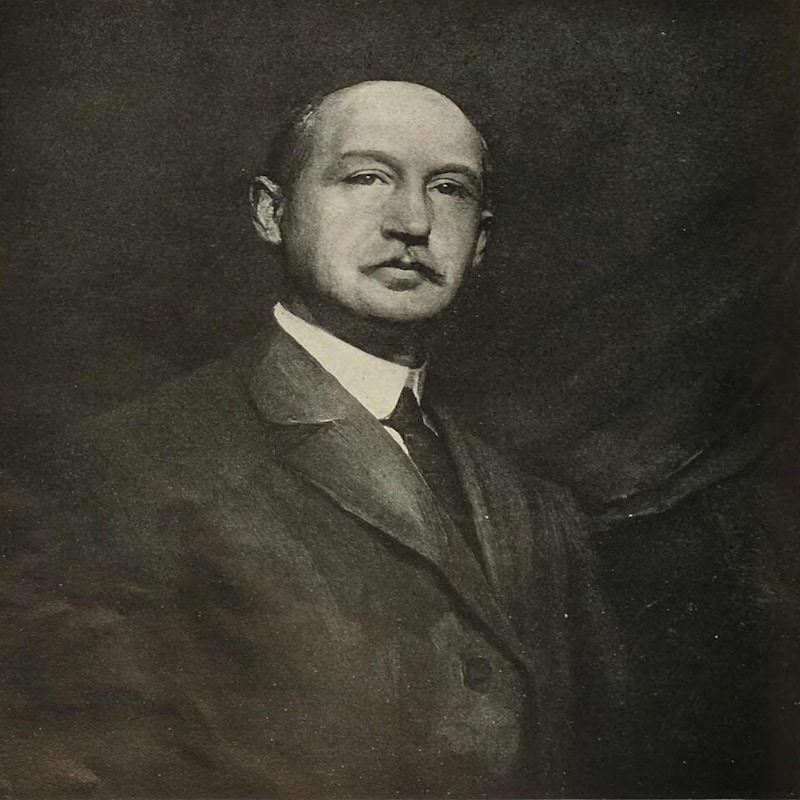
On October 12, 1880, a 21-year-old Yale student named Walter Camp walked into a Massachusetts hotel meeting and killed the rugby scrum. Discover how Camp drew the line of scrimmage, created the quarterback position, and transformed continuous British chaos into the strategic, play-by-play game we know today.
In the late 19th century, "American college football" was virtually indistinguishable from English rugby. It was a chaotic, 15-man sport governed by brute strength, invisible balls, and bloody "scrummages."
Everything changed on October 12, 1880. Walter Camp—a young student-athlete at Yale—leveraged a voting majority to push through a radical new rule: the line of scrimmage.
In this episode, we explore how one man systematically redesigned a sport, invented the modern football positions, saved the game with the creation of "downs," and laid the groundwork for American gridiron culture.
Timestamps:
- **** Intro: The Cold Open – October 12, 1880
- **** Act I: The 15-Man Rugby Chaos – How the 1876 Massasoit Convention adopted British rules, and why early football was pure violence and chance.
- **** Act II: The Obsessive – Meet Walter Camp, the "spirit and whipcord" Yale player obsessed with scientific strategy.
- **** Act III: The Convention – The vote in Springfield, killing the scrum, and the birth of the line of scrimmage.
- **** Act IV: The Line – Guaranteed possession, the creation of the T-formation, and how modern football positions got their names.
- **** Act V: The Near-Death Experience – The "Block Game" disaster of 1881 and the 1882 creation of the system of downs.
- **** Act VI: The Legacy – Clock salesman, father of All-America, and the enduring gridiron legacy of Walter Camp.
How 1880 Changed Football: The Story of Walter Camp and the Line of Scrummage
On October 12, 1880, the Intercollegiate Football Association gathered at a meeting in Springfield, Massachusetts. At the time, American college football was, in every meaningful sense, still English rugby. It was a game defined by 15-man teams, bloody scrums, and an invisible ball buried beneath a pile of crushing bodies.
Then, a 21-year-old Yale student named Walter Camp stood up and proposed something radical.
He wanted to kill the scrum. He wanted to draw a clean line in the dirt and separate offense from defense. The room pushed back, but Camp had the votes. When the meeting adjourned, the scrum was dead, the line of scrimmage was born, and American football had officially split from its British parent.
Here is the story of how Walter Camp transformed a game of continuous chaos into the strategic, play-by-play sport we watch today.
Act I: The 15-Man Rugby Chaos (1876–1880)
In 1876, representatives from Harvard, Yale, Princeton, and Columbia met at the Massasoit House in Springfield to agree on a unified rulebook. Of the 61 rules adopted, 56 were copied verbatim from the British Rugby Union code.
+-----------------------------------------------------------------------+
| 1876 American Football (Rugby Code) |
+-----------------------------------------------------------------------+
| • 15 players per side |
| • Continuous play via a "scrummage" (contested ball on the ground) |
| • No guaranteed possession |
| • No line of scrimmage, no downs, and no designated play calls |
+-----------------------------------------------------------------------+
Without possession guarantees, strategy was virtually impossible. It was a game of pure chance and raw physical force. Players choked each other in piles, fists flew, and spectators routinely witnessed brutal injuries. Camp looked at this violent churn and saw a system that was fundamentally broken and unscientific.
Act II: The Obsessive—Who Was Walter Camp?
Walter Camp entered Yale in 1876 at just 17 years old. Weighing only 156 pounds, he transformed himself through an obsessive, self-invented conditioning routine:
- Running cross-country alone through New Haven.
- Performing secret morning calisthenics.
- Carrying a football to class to build muscle memory and prevent fumbles.
Camp wasn't just physical—he was a multi-sport star, class poet, and top academic student. Yet his true passion was analyzing rulebooks. Attending rules conventions as a young delegate in 1878 and 1879, Camp realized that rugby rewarded brute force over intellect. He envisioned a sport driven by set formations, clear possession, and sequential plays.
To make it happen, he needed a concrete proposal and the political backing to pass it.
Act III: The 1880 Convention & The Scrimmage Rule
By October 1880, Yale’s committee delegation had grown, giving Camp the voting leverage he needed. At the Springfield convention, he introduced a series of revolutionary reforms:
- Replace the Scrum: Establish a "line of scrimmage" giving one team exclusive, un-contested possession of the ball.
- Reduce Roster Size: Lower team size from 15 to 11 players to open up the field for speed and dynamic plays.
- Formalize the Snap: Require a designated player to snap the ball backward with his foot to initiate a play.
Traditionalists argued that removing the unpredictability of the scrum would destroy the essence of the game. Camp didn't argue—he simply cast his votes. The rules passed.
"In one afternoon, a 21-year-old severed American football from its rugby parent. The sport would never look back."
Act IV: How the Line Created Modern Football
The introduction of the line of scrimmage created the distinct rhythm of American gridiron action: a play, a tackle, a pause, and a reset.
It also directly birthed every position name on the field today:
This alignment (the early T-formation) allowed teams to execute planned running plays, misdirection, and structured offenses for the first time in history.
Act V: The 1881 Crisis and the System of Downs
The new scrimmage rule had one glaring loophole: there was no rule requiring a team to advance the ball.
During the 1881 Yale-Princeton championship game, Yale took advantage of this flaw. Securing the ball under the line of scrimmage, they held possession for an entire half without attempting to score. Princeton couldn't touch the ball, resulting in a agonizing 0–0 draw known as the "Block Game."
Realizing the game was at risk of becoming unwatchable, Camp devised his second landmark reform in 1882: the system of downs.
The 1882 Rule: An offense had to gain 5 yards in 3 attempts (downs) or surrender possession of the ball.
While the yardage and attempts were later modified to 10 yards in 4 downs, this fundamental mechanism forced teams to attack, saving American football from endless stalling.
Conclusion: The Legacy of Gridiron's Architect
Walter Camp spent the next four decades serving as the primary steward of college football. He chaired rules committees, authored the first official book on the sport, and selected the inaugural All-America teams.
While Camp was an amateur who made his living selling clocks, his influence on American culture remains massive. The snap, the quarterback, the line of scrimmage, and the system of downs were all forged in a two-year burst of brilliant innovation by a young student who looked at chaos and chose to draw a line.
Don't forget to check out and subscribe to the Pigskin Dispatch YouTube channel for additional content and the regular Football History Minute Shorts.
Miss our football by the day of the year podcasts, well, don't, because they can still be found at the Pigskin Dispatch website.
Do you want more football history? Test your Gridiron Knowledge, we feed you Daily with our new FREE activity, The Pigskin Trivia Drive.
Grab a copy of our latest book, "Marooned," on the 1925 Pottsville Maroons NFL franchise saga.
*OR* Grab a copy of our book on Western Pennsylvania football history, "World's Greatest Gridiron Team" on the 1903 Franklin All-Stars
Drop us a line at PigskinDispatch@gmail .com and check out and subscribe to the Pigskin Dispatch YouTube channel.
Contact us directly at [email protected]
Miss our football by the day of the year podcasts, well, don't because they can still be found at the Pigskin Dispatch website.