Shownotes
What if jury duty became the perfect test of whether your mindfulness practice actually works in real life?
It’s one thing to meditate in the quiet of the morning and another to stay grounded when uncertainty, stress, and worst-case thinking take over by midday. Whether you’re facing a summons, a difficult conversation, or any moment that threatens to spiral into a bad day, this episode shows how mindfulness can help you return to the present and respond with more calm, clarity, and control.
In this episode, you’ll discover:
- Why mindfulness is not just about meditation routines, retreats, or streaks—but about how you meet real-life uncertainty
- How to recognize when your mind has been hijacked by fear, future-tripping, or worst-case thinking and gently bring it back
- A practical example of how mindfulness can stop a bad moment from turning into a bad day
Press play now to learn how a simple mindfulness practice can help you stay steady, present, and resilient when life refuses to give you certainty.
You can now download my Pause Breathe Reflect App with Microdose EQ for FREE on Apple’s App Store or Google Play. Discover how to spend less time on your phone and more time on things that bring you joy. Also, find the support you need to navigate today’s uncertainty with more calm and grace.
Receive a FREE copy of my book: “My Last Bad Day Shift.”
We can also connect on LinkedIn.
Subscribe to be sure you don’t miss any of the micro-meditations, wellness tips, and guidance that I publish every Monday, Wednesday, and Friday at 7:11 am.
Transcripts
Hey there, it's Michael. Welcome to Whole again, the show that can help you navigate today's uncertainty with more mindfulness, resilience, and grace. And today I wanna share a few words with you about mindfulness and jury duty. Yeah, I know that's an interesting combination, so stay with me. The thing is, I'm two days in right now as this episode is released into a federal court jury duty summons.
So I don't know if I've been selected for a jury or not, but before we get too far deep in this episode's topic, let's take a step back. Let's talk about why we even have a mindfulness practice, I believe. Having a practice like Pause, breather flag isn't about going off on a silent retreat as I did to start the year or going down to Costa Rica and doing the Pura Vida lifestyle.
I also don't think it's about sitting under a tree primarily like Buddha did. No. It's about whether or not we can take our practice off our cushion and weave it into our lives. If you're a yogi, you might have heard someone say, take your practice off the mat and weave it into your life. And for a yogi who practices meditation, we have the cushion.
How do we take what we do on the cushion or on a walkie meditation and make it part of our lives so we can approach life with some level of equanimity? As well as the other four immeasurable qualities of loving, kindness, compassion, and joy. It's not about how many days in a row you can meditate, so I think it's great if you have a streak of X number of days where you've meditated for five minutes or 10 minutes or 20 minutes.
tiful morning routine, but by:I've had to tap into this as I approach jury duty in New Jersey where I live. Federal court and jury duty works differently than say, county court. With a county, you're selected to come for a day. You might get put on a jury, you might not, but it's only a day with federal court. You're on call basically for 10 days.
So there's a higher degree of uncertainty when you approach jury duty and the summons for federal court, at least in this state, and most people who've heard that I've gotten this summons will say, oh my God, I'm so sorry. Oh, I hope you get out of it. But my overall belief is that this is a civic duty. If you get called and you can serve, you should serve.
Will it be. Problematic. Will it create some tension? Yes, but through a mindfulness practice, we can meet the moment and we can really have some wisdom as to what we have control over and what we don't. One poem, in addition to Rumi's Guest House that I keep near my desk, is the Serenity Prayer. You know, the one God grant me the courage.
It's all about knowing what we can control and what we can't control. I thought I was doing pretty good. We'll see how this all unfolds. That was until I was going back and forth via text with a friend and he said, my neighbor is a Fed Court clerk there where I'm going in Newark. I'm actually reading from his text right now.
He's had cases go over a year. They actually still meet him and the other jury members for lunch yearly, since they're all friends now. And I looked at that message and I gulped a year, like if I get selected, all right. I thought a case might last a few days, maybe a week, but a year, I could feel the stress bubbling up inside of me.
So when we think about mindfulness, we start with. Mindfulness of the body and the sensations that we feel within the body. They could be pleasant, unpleasant, or neutral. And, and after reading his texts, I had, well, a lot of unpleasant feelings. I started to get worried. I had a little anxiety like a year.
What? What am I gonna do a whole year? You gotta be kidding me. Oh my God, what am I gonna do? And I was already catapulted into the future, a future that I don't have control over. So when we have these moments where we're not in a good relationship to what we sense, and that's not to say that we should emotionally bypass what we're feeling, we should recognize it.
We can name it, right, name it to claim it, if you will, as cliche as that sounds. But it does. It does help. And so through my mindfulness practice, I was able to come back. So when we think about the structure of a meditation of a sit, if you will, our minds are always moving all over the place. Sometimes they go back to yesterday.
Sometimes they're in the present moment. Sometimes they're worried about the future, and we take usually a fixed object. Often we talk about placing our attention on the breath. We can also place our attention on say, the soundscape around us. Of course, there is a practice called open awareness. Basically sit in relationship with all the different things that come up.
We can see those like clouds traveling across the horizon, but generally speaking, current day. Most people when they talk about meditation, it's about fixed awareness and a fixed awareness on our breath. So we focus in on the breath, but then that pesky mind of ours will wander. The mind will wander into the past, into the future, and once we notice that our mind has wandered, we bring it back to the breath.
Almost like doing a bicep curl in the gym. Our mind wanders, we bring it back, it wanders again. We bring it back. We might have to do that a thousand times. 10,000 times each time our mind wanders, we bring it back. It's developing this muscle knowing that we will have moments when we're not truly present.
So as this muscle gets stronger, when we have a moment where we feel like we're in the past or worried about the future, we can come back to the present moment because in the present moment, we have some say. We can't change what's been done and we can't change what will come. Certainly we can plan for it, and I can take steps to plan or have a contingency plan.
If I do get called into a jury that's longer than I anticipate, like one year, we'll figure it out. We can do hard things here at Whole. Again, the moment and the exchange I had with my friend happens all the time. Millions or billions of times a day. It's also the type of moment that can be labeled as a bad moment.
And then if you give fuel to it, it can turn into a bad day or longer. I could have easily gotten hijacked by what he said a year, oh my God, a year. What am I gonna do? And then the rest of my day will be. Consumed by this worry or anxiety about what am I gonna do if I get called into a jury that's gonna last that long and then the rest of my day is shot.
All my different interactions, heck, even recording this, it wouldn't be the same 'cause my mind would be preoccupied. And the thing is, it's something I can't control right now. I just have to wait to get to the courthouse and see what unfolds. So my practice allows me to come back to remember, to come back and understand that all I have right now, all that's within my control right now is this moment.
I get to choose how I wish to show up for this moment, which then can preserve the rest of the moments of the day. And. As I record this into tomorrow and into the weekend. So this is the power of a mindfulness practice and I will say, unlike a whole bunch of influencers out there and grifters, how they say one particular thing works for everyone.
I will be quick to say that mindfulness and the practice of meditation. Can work for many more people than are currently doing it, but it might not work for everyone because we all have our own recipe. We all have our own Tollhouse cookie recipe for how we wish to create a meaningful life. But this situation right here that I'm facing.
I wanted to share it with you because it's a practical way to see how mindfulness and meditation can benefit a number of people. Without it, we can easily lose our way, and when we do, it really makes it hard to show up the way we wish to show up. And if you haven't practiced. Meditation with me yet, I'll encourage you to join me over on Substack over there.
I host practices throughout the week so you can learn how to practice in community and really pick up on the collective energy when we're in SGA or community together as opposed to just meditating on your own. If you wanna do that. My pause, breathe, reflect app, which is free in Apple's App Store and Google Play may be the perfect ticket for you because I have over 700 meditations for you over there to help you navigate life with more Grace.
Plus, there's a future on the app that will allow you to spend less time on your phone and more time doing things that bring you more joy. So it's one part. Digital detox or digital health. Another part is all about mindfulness and meditation, so you can have more calm and more grace in your life. So I hope you'll check it out.
But I wanted to share this story with you because it's such a real world example on how meditation and the practice of mindfulness can be beneficial to so many people.
As always, thank you for listening. If this episode resonated with you and you think one of your friends might like it as well, I hope you'll share it with them and I'll keep you posted on jury duty. You might be seeing some episodes from the archive because I might not be able to record with the same cadence as I normally do, but we'll see.
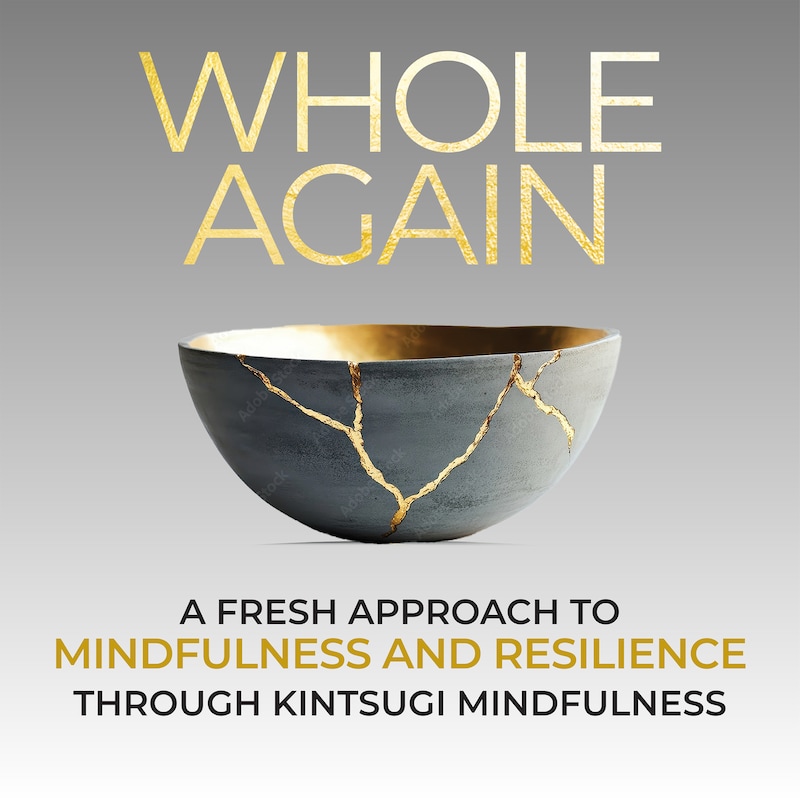
We'll let life unfold. Unfold, we can leverage our courage to know what we can and cannot control and have the wisdom to know the difference. And until next week. Let's have fun storming the castle and remember to celebrate your scars as golden symbols of strength and resilience.
And if you wish to learn more about creating beautiful ripples and how to prevent a bad moment from turning into a bad day, please visit my website, Michael O'Brien schiff.com. And sign up for my newsletter called The Ripple Effect, and join us each Monday, Wednesday, and Friday here at Whole Again, and discover how you can heal, grow, and become more resilient and celebrate our scars as golden symbols of strength and resilience.
Until then, remember, you can always come back to your breath. You've got this. And. We've got you.