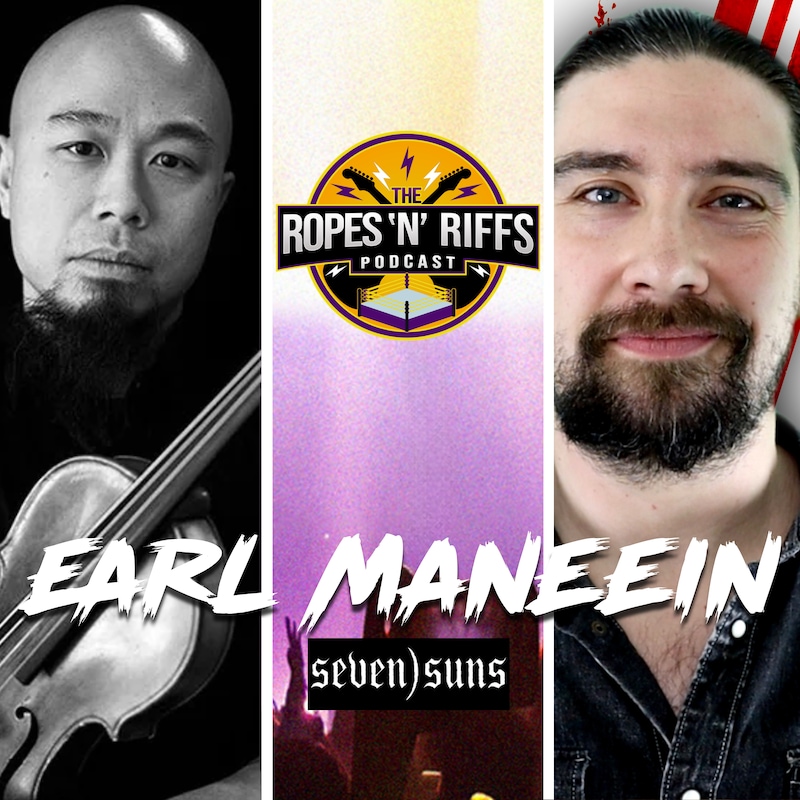
Shownotes
Shinsuke Nakamura's theme, The Rising Sun. One of wrestling's most iconic modern themes in WWE. In 2016, I recorded a cover of The Rising Sun on guitar (before I ever got into writing entrance themes) and it connected me with wrestling fans and other composers and musicians in the industry like It Lives, It Breathes and many more. The Rising Sun means a lot to me for what it meant to me as a fan of Shinsuke, as a musician working on covers, and as hearing longtime WWE composers CFO$ crush another entrance theme.
Today's guest is none other than the violinist who recorded The Rising Sun, Earl Maneein of Seven Suns, frequent of
We also play our favorite game on the show, Music City Rumble, where Earl Maneein names the musicians he'd book in a wrestling match: one men's match, one women's match, and one tag team match!
Enjoy!
-
🔔Subscribe To The Show! https://www.youtube.com/@ropesnriffs?sub_confirmation=1
Email me! [email protected]
Follow Ropes N Riffs on social media:
🤘Facebook: https://www.facebook.com/ropesnriffs
🤘 Instagram: https://www.instagram.com/ropesnriffs
🤘X: https://www.x.com/ropesnriffs
💰Support the show via PayPal! https://paypal.me/ropesnriffs
📣$10 or more will get you shouted out on the next episode!
📹 I use Riverside.FM to record and edit my shows!
• Sign up today: https://riverside.fm/?utm_campaign=campaign_2&utm_medium=affiliate&utm_source=rewardful&via=john-kiernan
Listen to Ropes N Riffs wherever you listen to podcasts! Apple Podcasts, Spotify, Pandora, iHeartRadio, and more!
🎧Spotify: https://open.spotify.com/show/3upFt8nCe2ONsS29jtjzA0?si=81198fdfdfe84019
🎧Apple: https://podcasts.apple.com/us/podcast/ropes-n-riffs/id1781702913
About The Show:
Do you like wrestling? Do you like music and stories from the road? Join John Kiernan, wrestling entrance theme song composer, and professional musician of over 10 years for stories and interviews with your favorite wrestlers, rock stars, and personalities!
About the Host:
John Kiernan is a wrestling entrance theme song composer with over 150 themes written for wrestlers in various promotions such as NJPW, WWE, ROH, MLW, and many more. As a professional musician, a veteran in the podcasting space, an avid pro wrestling fan and wrestling personality by way of creating the soundtracks for your favorite wrestlers, John Kiernan forges his latest podcasting venture into diving into stories of music, stories from the road, and wrestling from all walks of life from your (and his) favorites of all time.
Are you looking for a custom wrestling entrance theme or walk out music?
Contact via email at [email protected]. Or fill out this form here! https://johnkiernanmusic.com/custom-wrestler-entrance-themes/#contact
Take a listen to my themes!
https://www.youtube.com/playlist?list=PLIkQOXc7x9NFiIHsYDov27nsUJpcIYJ49
Social media:
• Facebook: www.facebook.com/johnkiernanmusic
• Instagram: www.instagram.com/johnkiernanmusic
• Twiter: www.twitter.com/jkiernanguitar
• Website: www.johnkiernanmusic.com
#music #wrestling #ropesnriffs #johnkiernan
Transcripts
the main theme the
2
:stuff is on this.
3
:And then you had the also the acoustic part was the.
4
:That stuff is also this, this violin.
5
:how much of that did they have?
6
:First off, thank you for showing that.
7
:That's so super cool.
8
:When the number counts down, right?
9
:Uh-oh.
10
:like, I'm like, uh.
11
:I feel like that's how my kid is when he takes photos for school.
12
:They're just like, all right, you ready?
13
:Yeah.
14
:Right, right, right, right.
15
:Once the number starts, it kind of makes everything way more real.
16
:And then you're kind of like.
17
:That's, isn't that the joke too about like your kids getting uh their photos, like you pay
like hundreds of bucks for your kids to literally be like...
18
:Yeah, you're like, why, why, like you look so nice, you know, that's actually the, I think
the, the, the strong argument for like, like a candid photos where you just like, you just
19
:don't tell them, just take the picture and then that's it, because then they, they don't
make weird faces or they don't stop and go.
20
:Yup.
21
:My favorite pictures of my kids too, like look, they're in school, they do the
professional photos, but dude, my favorite photos of my kids are like when they're at a
22
:friend's birthday party or they're just like run around the backyard and you shoot that
photo of them, they just have like this elated face.
23
:You're like, dude, that's the moment.
24
:That's like the, have kids for this moment kind of thing.
25
:And it's just the most natural, coolest thing.
26
:So for me, yeah, absolutely.
27
:I'm just like, and.
28
:That's the thing, because you're capturing their joy or whatever is happening that's real
in the moment.
29
:It's not like this sort of manufactured, which I think that's really the core of it.
30
:That's an interesting thing about wrestling, what's manufactured, what's real, what's kind
of like...
31
:Maybe I know a little bit more.
32
:K-Fabe.
33
:Yep, what K-Fave, yep.
34
:That's what yeah, what's kfabe and then like they get off script, but it's real and then
like but clearly it's not but it is yeah anyway
35
:It's awesome.
36
:And for those who are wondering who we're talking about here and what we're going to be
talking about on the show, you guys have heard this gentleman all over the place for about
37
:the last decade or so, maybe a little bit less, maybe a little bit more, in a lot of
projects he's done.
38
:But most notably for fans of this show, as we're talking about entrance themes, if you
know one Shinsuke Nakamura, you hear his theme, you hear that amazing violin, you hear
39
:that amazing piece, that violin was recorded.
40
:by my guest today.
41
:Thank you so much for being on the show, Earl.
42
:Thanks for having me, John.
43
:It's real pleasure to be here.
44
:Absolutely, yeah.
45
:And we'll talk about Shinsuke Nakamura's theme a little bit here in a second.
46
:But before we had been talking, like we've talked on and off over the years, but you know,
one thing that I remember just hearing you upfront is the tone that you bring to the
47
:violin.
48
:was actually, as many of you know, my wife and I were in a music school and I was talking
to one of my students here, one of my adult students, and he was like, yeah, I'm going to
49
:learn the fiddle.
50
:And I'm just like, I'm actually interviewing a gentleman tomorrow who plays violin and
viola.
51
:But I'm just like, I...
52
:wouldn't say that he plays fiddle, but with how aggressive he can be on that violin.
53
:Like he can be classical and he can be really emotive in a sensitive way.
54
:But when you hear this guy rip, I'm just like, I don't know if that charts into fiddle
territory or if it has nothing to do with the tone of it or it has to do with like what
55
:you're playing.
56
:But I was just like, I'm interviewing this guy who can basically do it all.
57
:And you have done it all.
58
:So I want you to tell the people a little bit about some of the things that you've done.
59
:over time a little bit about your sound and we'll dive a little bit into that.
60
:Sure, thanks.
61
:Okay, so, I guess, for all intents and purposes, I'm a violinist.
62
:That's what I do for a living.
63
:That's my job, which is, I guess is maybe synonymous with bum.
64
:Because I don't really, know, basically get texts or emails, you know, because nobody gets
on the phone anymore, and I get told to show up at a certain place at a certain time with
65
:a wooden box.
66
:and I go to the studio and do this and then numbers bigger numbers appear in the sort of
fantasy world of banks
67
:In those establishments we call financial institutions.
68
:those financial institutions.
69
:Yeah, so that's basically my job.
70
:I've been playing the violin since I was five, maybe even four, I forget, but four or
five, which makes me be playing the violin for about 43 years now.
71
:That's such a good tenure to be playing the instrument.
72
:It's a lot of hate to say it.
73
:don't even you do the math people people over there can do the math.
74
:Whatever.
75
:It's been a long time.
76
:Uh, I did the whole thing.
77
:I went through I went through conservatory training with the private lessons from when I
was a kid and then I went to college for this.
78
:I went to a new school.
79
:I went to CUNY Queens College for my undergrad.
80
:And then I went to the Manus School of Music, which was a uh
81
:It's a division of the New School University for my graduate work.
82
:have a master's degree in violin performance, which is, one could argue the usefulness of
that, but let's not for this podcast.
83
:And then I just have been working professionally ever since.
84
:I was in a bunch of bands.
85
:uh...
86
:and i also grew up in the hardcore scene and metal uh...
87
:sort of extreme music kind of stuff ever since i was like maybe i want to say i started
going to my first underground shows when i was maybe thirteen thirteen going to sort of
88
:vfw halls and church basements and uh...
89
:quick, you talked about hardcore.
90
:We're just going to real quick for everybody watching, you can see this, but for everybody
listening, I'd be remiss if I didn't mention your Converge
91
:So I didn't wear this on purpose, just sort of inertia.
92
:But yes, uh you know, huge, huge converge.
93
:Dillinger, my quartet actually collaborated a lot with the Dillinger Escape Plan.
94
:We're on their last album.
95
:We did a whole sort of a I guess you can call it a tribute album.
96
:did.
97
:um
98
:their album, One of Us is the Killer.
99
:It was a pandemic project.
100
:John and I, were speaking about COVID before we shortly before we came on.
101
:And one of the big projects was that I did during the pandemic was uh was Ben Weinman,
call me up because, you know, we're friends and he was just like, I have an idea.
102
:You're clearly, you know, you're doing nothing and I'm doing nothing.
103
:And why don't we?
104
:like how that conversation starts.
105
:Hey, I got an idea.
106
:You're not doing anything.
107
:What do you got after that?
108
:No, that's actually what Ben said to me.
109
:He called me up.
110
:Wait, are we allowed to curse on this podcast or am I watching myself?
111
:What's going on?
112
:Right.
113
:So, right.
114
:So he calls me and he goes, you know, there's the niceties of like, whatever, how's your
family?
115
:How's your family?
116
:Like, whatever.
117
:And then he goes and he goes, what are you doing?
118
:I go fucking nothing.
119
:What what what are you doing?
120
:Right.
121
:And he's like, similarly, fucking nothing.
122
:But like, I have a I have an idea.
123
:And why don't you, you know, you've already worked with us and how would you feel about
arranging and recording a whole sort of string quartet version of One of Us is the Killer.
124
:And so I did it and it was that was that was a pandemic project.
125
:So basically, I've been involved in hardcore and uh heavy metal sort of, you know, since I
was maybe, yeah, like I'd say 13.
126
:uh
127
:going to underground shows, kind of just being really, really viscerally involved and
loving that music as a sort of actual musical home for me, while schizophrenically also
128
:kind of going to violin school uh and learning Western European classical and its sort of,
you know, descendant sort of music.
129
:That's...
130
:that too, because even when I went to music school, my wife and I met at Florida Atlantic
University years and years ago.
131
:Her master's in piano performance.
132
:My background is in music composition, technology.
133
:They called it commercial music back then.
134
:was kind of a degree that merged all those paths.
135
:it's one of those things that, and there's a couple of things I'll touch on, but the first
thing is the fact that even though you have people that are rooted in learning like the
136
:jazz style, the classical style, because there's so much music out there, now everybody is
into.
137
:excuse me, all these different styles, right?
138
:So it's like, you can have somebody who's in the practice room for four or five, six hours
learning Chopin, you know, learning Satie and all that.
139
:And then all of sudden you see them at a Converge show or you see them at a local
hand-to-hand show and you're just like, man, that's really cool.
140
:And I think that when I was growing up, before I'd even gotten really into like, you know,
studied music and whatnot, I was always just like, if you like classical, kind of what you
141
:do.
142
:If you like rock, that's what you do.
143
:Right.
144
:It was also like when I was young, I was like, you can either be a rhythm guitarist or
lead guitarist and you're kind of predestined at birth for what you're going to do.
145
:You know, then I learned my first solo and I was like, completely different.
146
:But I felt like when I was younger, there was no way that those would cross at all.
147
:And then as I got to college and you get to meet a lot of different people like, you have
someone who loves Dream Theater, you have someone who loves Porcupine Tree, and then
148
:they're listening to Miles Davis and then Amen.
149
:Look at that.
150
:They're looking at classical.
151
:So it's like I think we're in real kind of special time there.
152
:And
153
:throughout your career, throughout my career, it's like you have all these musicians now
who are into a variety of things.
154
:And then obviously comes the whole, cool, what do we do with that?
155
:And that's where you get these records.
156
:Like you said, this uh string version of Dillinger Escape Plan or all the myriad of
different things that come out are these hodgepodge styles now.
157
:just label it progressive and then they can do anything they want.
158
:Right or crossover or whatever.
159
:Yeah.
160
:Yeah.
161
:Yeah.
162
:I could not agree with you more John like a thousand percent man like I think and when we
were I don't know I don't actually know exactly how old you are so in with my generation
163
:I still remember CDs.
164
:Nice, nice.
165
:Yeah, so I mean, when I was in like, it was actually weird drama.
166
:Like when I was in violin school, like a couple times I would like sort of show up with
like I was definitely the weird kid there and like odd, odd boy out because I would show
167
:up with, you know, like it's it's we were going to hardcore shows and part of that is
moshing and you kind of sometimes get a little hurt a little bit like so.
168
:I definitely remember it was a really big deal.
169
:One time I had a black eye like is like some kid backfisted me.
170
:You know, like whatever.
171
:It's kind of mutually agreed upon sort of thing.
172
:And it was a big deal.
173
:Like it was like, what is this crazy kid in in school?
174
:Like no one else is doing this.
175
:And also the fact like I was it was definitely if you're playing classical music, you're
playing classical music.
176
:And there's a wider issue that we can talk about or not.
177
:about what I think sort of a class sort of divides uh an aspirational kind of like if
you're a lot of times if you were doing classical music it was you know classical music is
178
:derived from like music of royals like commissioning you know like who was in who was
Mozart's boss who was Bach's boss like you know the Margrave of Brandenburg whatever right
179
:and so you're writing this music that's intended to be sort of existing in a certain
social class
180
:Right?
181
:then metal and hardcore is definitely a folk music of our time.
182
:Not folk music like Woody Guthrie, right, or whatever, but like folk music of the people
and of a certain social class.
183
:So then you have this kind of like real um conflict, I think, that is apparent in there.
184
:And I definitely was at...
185
:I believe that kind of at the forefront of that, like I got a lot of weird looks and sort
of like pushback and like kind of a thing.
186
:And I think what you're talking about is such a good thing because of base, maybe maybe
the Internet or maybe like, you know, like of of this sort of blurring of genres.
187
:It's not that you have to play a certain style.
188
:Incidentally within classical music there was even that divide of like if you're are you
playing like romantic?
189
:you doing brahms?
190
:Are you doing brahms and bar brahms this kind of a thing?
191
:Beethoven or are you an early music person and you're only doing Monteverdi and uh you
know and and Bieber and Before Bach right so there was definitely this it was even like
192
:the sort of really hard divide there
193
:which maybe seems to also be going away.
194
:And so I think the fact that these genres are getting blurred, that you can be into
dubstep and metal and, you know, pop and classical, kind of like ingesting the whole, the
195
:macro is just fucking awesome.
196
:I think that's a great development and that's one of the better things about our crazy
time that we're in, I think.
197
:too.
198
:And I think it's really cool that you brought up the history of like where a certain music
comes from.
199
:Because I think a lot of the times, you know, a lot of people will learn the music in a
conservatory or they'll learn it, you know, from their teacher.
200
:But we don't often go over the history of it.
201
:Right.
202
:And that's not instrument specific.
203
:But I mean, we don't think about like when I talk to my students, I try to make it a point
of saying that a lot of the ways that we learn guitar can differ guitar teacher to guitar
204
:teacher, mainly because we are such a rebellious instrument.
205
:Right.
206
:When we on guitar,
207
:were years and years ago before guitars were there and lutes and everything.
208
:People were learning by sitting together.
209
:They were sheet music, yeah, for us.
210
:But a lot of the times, of positions of the guitar, you're learning watching somebody,
right?
211
:People can learn by tab, they can learn by ear, they can see scales on a
three-note-per-string thing, they can see it in intervals.
212
:There's lots of different ways to do it, but just because of the layout of the instrument,
you have this different dynamic.
213
:And I remember when I was going through school, it was around like 2009-ish time.
214
:And I remember, I feel like we were the generation right when YouTube was starting to
become this place that people were using as a resource hub, right?
215
:Before that it was just kind of like, you're uploading, I'm the juggernaut, bitch!
216
:Now you're uploading everything else, right?
217
:Like, cool, here's a lick, and people are starting to come up with those.
218
:And I felt bad for the teachers in hindsight, and kind of then too.
219
:But, you know, me, I came from a very not-schooled kind of guitar-ing, so, sort of speak,
I was taking lessons in the back of music.
220
:store, which is not dog and I love my teacher to death, but I mean then you go into an
element of like the college side of it and I think the teachers at that time were trying
221
:to wrangle, okay, you have a lot of these kids coming in who can play Dream Theater and
I'm just using them as kind of like an overarching example, right?
222
:You could play these technical things, but then on the other side you're having trouble
with like a G major scale.
223
:Mm-hmm.
224
:Right.
225
:lay these eight finger tapping lines, but when I put the C major scale in front of you
just to read it, you're sitting there being like, I have no idea what's going on.
226
:And, you know, it was such a different dynamic of those teachers being like, well, I also,
you can do the rock stuff that you want, you can do the metal stuff that you want, but you
227
:also have to learn jazz.
228
:And it's just like that ended up having to take priority.
229
:And I remember for me, it was a little bit difficult for a lot of like, you know, my
people in my classes and whatnot, because there was this weird divide.
230
:But now I think in like 2025 there's so many different styles and so many people even like
such as yourself that you know You play violin, but you also play electric violin There's
231
:a lot of people who have now taken like violin viola cello and have made that a staple of
their sound using effects changing styles All those kinds of things so Going almost 15
232
:years later.
233
:Let's say 15 20 years or so The math is wrong than that, but you get what I'm saying.
234
:You now have all of these different Influences that come into it and you're like, hey
235
:You don't just have to do this.
236
:You should still study these styles because they're important.
237
:And history is important to know where you've come from and where you're going.
238
:And there's a lot to learn in those.
239
:But you don't have to feel like you're locked down into a traditional style anymore.
240
:You can merge it with everything.
241
:And I think more people also take those skills and transfer them into lots of these
different things.
242
:So, long spiel.
243
:I think it's really cool where music is in 2025.
244
:I agree.
245
:agree.
246
:And in a weird way, there's a lot to say that we will not say here, I think.
247
:like, in terms of like, you know, the internet kind of being the great uh sort of like
equalizer in a way where it doesn't really like those things don't exist now because you
248
:have access to everything.
249
:And it can be a negative thing sometimes, this sort of access to everything.
250
:But in this regard, I think it's an overwhelming positive.
251
:that you have access to everything you can see what so and so what what you know, like not
that I'm into it, but I'm into it just listening, but I can't do it like you can you can
252
:check out this Mongolian throat singer.
253
:Just I just to click this and like like, wow, that that guy is doing crazy shit, you know,
like, and that's it.
254
:That's that's that simple.
255
:So.
256
:And now we're going to do a little bit of a dovetail into a bit of what the audience for
the entrance themes here is going to really be excited about too, because you are the guy
257
:that does it all, right?
258
:But many of the people who are listening to this show are familiar with your work on
Shinsuke Nakamura's theme.
259
:I know that's how I became familiar with you too, because...
260
:back when that theme came out, a lot of us were starting to do covers, right?
261
:And I'm sitting there listening to the song.
262
:I have a cover that I did years ago, which I think was in 2016.
263
:So that was kind of my foray into doing music in some sort of wrestling perspective, doing
covers.
264
:Basically me listening to you going, OK, what's he doing and how does this work?
265
:And I'm on guitar and, you know, people have done things afterwards in the same vein and
it's cool.
266
:But you got the chance to work with
267
:CFOs on Nakamura's The Rising Sun and it's still an iconic theme.
268
:It's gone through lots of different transitions whether he's a good guy or a bad guy or
whatnot but your violin is always there.
269
:Your violin playing in your music is such a staple for him.
270
:So with that, you got the...
271
:how did you get the call to start working with CFOs on that track?
272
:Okay, so here's the interesting thing.
273
:As somebody who's not actually into wrestling, know, uh WWE, like I only know like the big
things, it was just another gig.
274
:I don't even remember who called me, really, but it was just kind of like what I was
saying, alluding to earlier, where like, you get a text, right?
275
:And you go, oh, show up here at this time and place.
276
:And that's it, right?
277
:And I...
278
:uh
279
:I think whoever called me knew that I was an electric violinist also and they were like,
can you bring both instruments?
280
:So I have both here.
281
:So the instrument that's used on the Nakamura theme is this.
282
:Look at that!
283
:So this is a seven string electric violin.
284
:made by a guy named John Jordan.
285
:forget the exact town he lives, doesn't matter.
286
:Anyway, but he, and it's interesting that you were saying that you were covering this
using a guitar.
287
:And a lot of what I started doing was because I'm a metalhead and a hardcore kid, but I
just gravitate towards the violin more.
288
:I mean, can play, oops, sorry, I just hit my own mic.
289
:can play the guitar also, right?
290
:As you can see, but.
291
:but I'm just way better at the violin.
292
:So my whole thing was that like I was doing metal on the violin.
293
:So it was really fun.
294
:So I was taking inherently originally guitar language.
295
:So it's really funny that you're saying you were like covering the violin parts on the
guitar because it's basically the circle coming all the way back around because basically
296
:I was doing guitar riffs on the violin.
297
:So if I'm going to flip it on.
298
:Sure.
299
:And by the way too, just from the guitar perspective, a seven string guitar that I would
use would be standard EADGBE, but then the low would be a B.
300
:What's the tuning on a seven string?
301
:Totally kind, yeah.
302
:E, A, D, G, uh C, F, B-flat.
303
:Okay, cool cool.
304
:So still kind of in fifths, like you're still running that, Yeah.
305
:but it's reversed, right?
306
:So instead of like the fifths ascending, it's descending, right?
307
:So it's funny, cause like when you like on a power chord on a guitar, you do this for
like, you know, like an E, right?
308
:Right?
309
:Right.
310
:I'm going to pull my guitar out.
311
:Yeah.
312
:Yeah.
313
:On guitar, you would kind of do it like this, where if you're doing a power chord in
standard, it'd be this kind of thing, right?
314
:So you'd be making it like this.
315
:Yeah.
316
:Unless you're doing it in reverse, in which case you could do the fourth like that.
317
:Yeah.
318
:it's reversed on the violin see I only have one finger can you hear that by the way?
319
:oh so yeah I didn't really I haven't we haven't set it up so it like is actually record
you know so the Nakamura theme
320
:Right?
321
:So that was recorded with this.
322
:The guys in CFO ran my electric violin through their DAWs and their setups, which I can't
speak to.
323
:So I don't really know exactly what their plugins were or what.
324
:So I don't really know.
325
:But it was, you know, I'm assuming it was some kind of like amp sim, you know, like
whatever.
326
:Yeah.
327
:And
328
:use.
329
:Whatever.
330
:Yeah.
331
:So but this is basically.
332
:The like I said, the circle, it's it's it's me taking from guitar land and like they had
the riff charted out on their keyboards and they were like, what kind of sounds can we
333
:kind of come up with together?
334
:do this and I was like well we can try this we can try we went through a whole bunch of
it's been it's been years now so don't really remember exactly right but it was basically
335
:I did this you know did the what if I did this low
336
:right, take their keyboard riff, what was originally written on, you know, on their MIDI
stuff.
337
:Because when I came into the session, it was all charted out just on the computer.
338
:And it was all kind of like a very dubstep-y sort of a thing, which remained.
339
:It's definitely, you know, a dubstep-heavy kind of, especially the synths that are there.
340
:You know, and yeah.
341
:real quick before we keep going on that too, one thing that's cool about that violin sound
too, for those who may be instrumentalists too, with guitar you have frets, right?
342
:So when you're sliding into notes, you still, you have a little bit of like this movement,
but it's not like where it's violin, where you're literally able to seamlessly go into the
343
:note, right?
344
:It's like, the sound that you get, I feel like the articulations that you did on that were
like so perfect for this theme, and you could only do that on violin.
345
:Well, you know, so the funny thing is, so the guys obviously, it's not, I don't think it
was on purpose.
346
:But now that I'm thinking about, let me put it on standby so you don't have this.
347
:So, um it's not on purpose, but I think what is also cool is that so, like, to
oversimplify, there is...
348
:a certain type of sliding that goes on in like in in Japanese in some kinds of Japanese
music not all right so it's evocative like if it's like it's to oversimplify but if
349
:somebody wants to like evoke some quote orientalist I mean I'm bordering off like you know
like like in a uh sonic uh landscape right sonic scape on this um
350
:a slide done in a certain way would evoke this kind of oh like feeling there.
351
:Right.
352
:So I don't I don't think it was on purpose, but it was kind of like accidentally
discovered, I think, in the process to what you're talking about.
353
:So that's there.
354
:And that's kind of cool.
355
:And uh yeah.
356
:So then we did that.
357
:And they were like, that's really, really sweet.
358
:Can you
359
:But we want a little bit of a different sound also for the for the theme and so that was
done on On this which is actually the acoustic um
360
:The the main theme was not done on an electric violin the main theme the
361
:stuff is on this.
362
:Right.
363
:And then the
364
:ask, because when you brought up the electric, I was like, I hear where the electric would
come in.
365
:But in some of the videos that they did covering it, I was like, yeah, I'm pretty sure
that I saw you using the acoustic.
366
:And I was like, I didn't know if that was maybe like B-roll from afterwards when you were
just kind of figuring it out, or if it was like, OK, cool.
367
:Because it sounded like that was the acoustic, and then you had the layer of the electric
under it.
368
:Yeah.
369
:Yes, that is, yeah, that's correct.
370
:That's absolutely correct.
371
:And then you had the also the acoustic part was the.
372
:That stuff is also this, this violin.
373
:how much of that did they have?
374
:First off, thank you for showing that.
375
:That's so super cool.
376
:uh Second, how much leeway did you have to add like your own melodic contour or your own
articulations to it?
377
:Okay.
378
:actually a lot um the CFO guys were like super cool they I mean like they wrote all of the
the things it was all laid out for me by the time like you know it wasn't on sheet music
379
:but it was on their MIDI controllers and they were like we got this thing we kind of hear
violin here what can you do for this this this kind of stuff and I just basically took it
380
:and I kind of put my own
381
:uh vibe on it, like understanding that this is again, not a wrestling fan really much, but
but I understand deeply that this is hype music.
382
:Right.
383
:That like I know that this is hype music.
384
:This is this is what gets the crowd stoked that this guy is coming out and like, how are
we going to build this excitement?
385
:for this there, you know, so they already laid the groundwork, you know, obviously the CFO
guys already had all their, it's already was all charted out.
386
:um But when I said, I think I wanted, if you listen to the full track, there's definitely
me taking a bunch of solos.
387
:That's what I was gonna ask.
388
:Yeah, cause there are points in, like, let's say you just call it like A section and B
section, right?
389
:Just to simplify it, A section being the main melody, B section being the part where
you're riffing up a little bit or soloing.
390
:In those solos, those, didn't have written up.
391
:They were just like, all right, cool, this is blank, do your thing.
392
:And then you're like, I can do my thing.
393
:I got you.
394
:Cool.
395
:right.
396
:So the main things that were pre-written was the actual...
397
:It was...
398
:This was pre-written.
399
:That was written the that was already written to.
400
:um I'm not sure the electric violin thing was actually.
401
:It might not have been and we might have done that together.
402
:And then the.
403
:You'll have to ask somebody else and then and then the the.
404
:All that, like the dive bomb in, that was me.
405
:So that was just doing a bunch of takes and in the control room, the guys being like, yo,
that was dope.
406
:Or, you know, like, or let's maybe let's take that again.
407
:you know, you know, you know, I think it was a very fast session.
408
:um
409
:It was funny, ah got, you know, uh a guy showed up that was not CFO's guy.
410
:It was actually the WWE guy showed up with like a legal pad and like literally the suit
showed up and was like, well, sign this contract and you have no rights and this is your
411
:money.
412
:Thank you.
413
:Just quick and that's it, yeah.
414
:uh
415
:it.
416
:again, not as a wrestler.
417
:I had no idea how big this was.
418
:None.
419
:For me, it was at the time it was just like another session.
420
:Like it was like, OK, well, I'm just going to go in.
421
:I'm going to do this thing.
422
:Right.
423
:And then the.
424
:No.
425
:No, um it was it was it was through word of mouth, I think they knew of me and like what I
do.
426
:um And then that was it.
427
:I just I went home and I was happy to get my uh
428
:my little fee for actually.
429
:OK, so here's the funny thing.
430
:uh I got it.
431
:Should I say how much so I got I got.
432
:you on how transparent you can or want to be.
433
:I don't mind.
434
:All right, so I got paid 550 bucks for that session, right?
435
:So it was like a 40 minute, I was there for about 40 minutes, right?
436
:And the funny thing is, is that like you go in and you kind of do the thing and uh it's
such a huge song.
437
:Like my friends were like, you only got paid that and it's that big.
438
:And I'm like, but you know what?
439
:But you know what, too?
440
:Like, I'll say this, and I've always been somebody who...
441
:has been grateful to be musically active and busy pretty frequently.
442
:And I think that a lot of people don't think about it like that.
443
:You know, they think about obviously everything that you see like, you need to get
royalties, you need to get this.
444
:And different people do different things differently.
445
:Different companies do different things differently, different composers, different
musicians.
446
:Right.
447
:And when you're saying that you got paid, first off, to for anyone thinking that 40
minutes is weird, session musicians can go in and like an hour take like 17
448
:takes and they're all perfect like you and I remember one of my favorite stories is
hearing I forget his name but he's a session guitarist he for the goo goo dolls he was
449
:like yeah for Iris I was in there I took three takes and they were like see you later just
like but that's the thing right is like when you're a session musician you it sounds like
450
:a little but you're there for 40 minutes how many people get paid 550 an hour to do
anything you know
451
:true.
452
:And then also the thing is, like, thought like, like, like, think, look, what my friends
were trying to say, like, kind of have my back on, I definitely understand, because I do
453
:think I brought something pretty cool that like, look, the CFOs had the thing.
454
:But I definitely brought a little something that is kind of cool that adds to it.
455
:But what I'll say is, look, I think it's all watered under the bridge.
456
:It's not worth like, it's not worth.
457
:I don't think my contribution was enough to demand more necessarily unless they were
willing to give it, which they're not because it's the WWE.
458
:But, um, but look, I I like for years I was getting checks for Alicia Keys for a track
that we recorded and then they nixed.
459
:I'm not even on the actual single.
460
:Sure.
461
:because I was in the session and because I had recorded it and because it went through the
union, I just kept on getting royalty checks for like years.
462
:And I'm not, if you listen to this, it's an Alicia Keys song called Superwoman.
463
:It's a cover of a Stevie Wonder song, right?
464
:And uh I'm nowhere on that, on the single.
465
:But I was at the recording session and I laid tracks down.
466
:And because they worked out their deal with 802 with the union,
467
:I royalty checks even though I wasn't on it.
468
:So I think it's sort of all water.
469
:My take on it is that like my friends are angrier about it than me because they love me.
470
:But the way I see it, it's all water under the bridge.
471
:There's like sometimes you win and sometimes you lose.
472
:And this wasn't even losing.
473
:I still got paid for the thing the time I was there.
474
:I did the thing.
475
:I got out and that's it.
476
:And it's kind of a cool, it's a cool song.
477
:You know, I think if, yeah, that's.
478
:it
479
:I remember for me hearing it for the first time too because I was a fan of Nakamura when
he was in New Japan, right?
480
:And I think a lot of people who were in love with Nakamura in New Japan wanted him to take
that and come over to WWE.
481
:And there was a lot of points where, you know, he did do that and he had a great theme
that also had a violin called subconscious.
482
:And then he came over, he has the rising sun now.
483
:And that first time that you saw him versus Sami Zayn and everyone's just like, what's
going to happen with Nakamura?
484
:don't think in modern history, knowing somebody's gonna come in, there was more pressure
on what's this entrance theme gonna be?
485
:And I say that as somebody who's written over 150 themes for people and different
promotions.
486
:I don't think that within the last, and I'll say it on the record again, within the last
20, 30 years, I don't think that there was a more pressure built for what's his entrance
487
:theme gonna be?
488
:And then it just starts, and from like the first two seconds, you're just like, all right,
this is unbelievable.
489
:Nakamura comes out, he does this thing.
490
:But like instantly, that theme in the business, we call it getting over, right?
491
:It becomes real popular.
492
:It got over, like real hard, real fast.
493
:And obviously, he won that.
494
:about the CFO guys also that's like how good their writing is too like even when I walked
in that studio I was like that's that shit's hot that's it's a hot riff so
495
:you've probably seen or heard it taking on all these different transitions over the years
with the different versions that Nakamura has used, different people coming in and adding
496
:their flair to it, like Nita Strauss, Alec Cooper, and all these different people.
497
:And just obviously the covers and covers and covers and covers that there are, including
my own.
498
:When you see the life that
499
:your melodies have taken over and your riffing on violin has done.
500
:What does that do for you?
501
:I don't really, I am never concerned about that sort of stuff.
502
:Personally, I think it's actually, you know,
503
:You guys ever see that ever see that um, there's this hilarious thing about Mike not not
not you know like about Mike Tyson and this little girl is interviewing him and She goes
504
:what do you think about your legacy as you know?
505
:Heavyweight champion of the world and blow all this kind of stuff and he goes like
506
:so fucking dark but also not he goes he goes well um i'm gonna be dead anyway and so are
you and so is everybody here so i really don't give a shit like like literally like legacy
507
:means nothing to me because uh it really doesn't yeah because i'm gonna be dead and so are
you and then there's little girls like kind of like standing there like there's like
508
:He's like, that's not the answer I was expecting at all from Tyson.
509
:But, but I mean, what, what Tyson was saying, maybe not, maybe not.
510
:I loved maybe his, his, his super direct way of saying it was off putting to some, but I
kind of, I kind of agree.
511
:I think we're here.
512
:We're just doing our best.
513
:Like you just try to do some shit that like makes other people happy, makes yourself
happy.
514
:you know that's it i think it's cool i i think it's really really cool um that other like
that that this thing is like that i've been a part of this thing that is so fucking cool
515
:you know
516
:And it's crazy too, because I would even argue that with CFOs and with that one, and I'm
putting you guys together in that element because I know that you're giving a lot of the
517
:credit to CFOs, right?
518
:But there is, it's the singer, not the song in a lot of ways, you know?
519
:And I think that while they came up with something incredible and would continue to come
up with pretty incredible music for uh WWE during their time, that theme doesn't come
520
:alive.
521
:Like you could, they could have just left the midi stuff in, right?
522
:They could have just left the violin in.
523
:Sure.
524
:I would argue controversially that that first theme will always be the best that it's
because of your playing it's because of the accents it's because of all that and You know
525
:even those solos there's something to be said about when you know that someone is soloing
and then there's something to be said when you know that someone is just kind of messing
526
:around and Like it's hot, you know, there's that bridge and you hear it in jazz all the
time, right?
527
:Cool The song is actually 30 seconds and people just solo for seven minutes and use all
these
528
:extensions and things.
529
:And sometimes it sounds cool, other times it's just like, alright dude, let's get back to
the head.
530
:Like, let's do it.
531
:Yeah.
532
:jerking off.
533
:Don't, no one cares.
534
:Right.
535
:yeah.
536
:This sounded like, and that's why I asked you, I'm like, was it written or was it just
improvised?
537
:Because it sounds so intentional.
538
:Like it sounds like, okay, cool, you sat down and you wrote this out.
539
:Like I could envision if you were like, nope, totally intentional.
540
:But again, your musicality brings to the fact of even your solos on that song were so well
put and so intentionally sounding that that's a huge testament to the work that you did.
541
:That's awesome.
542
:Thank you.
543
:So I'll to answer not to answer to go on, go forward with what you just said.
544
:Lately, I've been, you know, like one of the things I watch in my spare time is this sort
of like the Drumeo and the Musora sort of video.
545
:Really, really great.
546
:So fun.
547
:Right.
548
:And there is this.
549
:While I oppose it philosophically, there was this, there was a sort of on Missouri, there
was a sort of a disco proggy disco funk band covering Alice in Chains is, uh, them bones,
550
:right?
551
:And philosophically, I'm sort of against it because it's such party music and Alice in
Chains inhabits this such a, just a, such a profound darkness.
552
:in the music that to make it light like that kind of like I'm a little like right but but
they did at the same time on a technical level this band is on fire dude like these guys
553
:were like coming up with like the coolest arrangements and like bang like like right like
what if we go like and then yeah yeah and then uh
554
:Like it was right like suddenly all in and everything was like like on fire and this band
sounded incredible right and What I loved was one of the one of the Missouri guys in the
555
:control booth said for those who are just starting out and Seeing you pull all the shit
like this incredible musicianship Like just out of your head like like it's seeming like
556
:like that's nothing
557
:Right?
558
:Can you speak to that?
559
:And the lead singer said a really wonderful thing.
560
:he's just like, look, like these are like improv improvisation is basically like the thing
that you did a million times, like just kind of put in different places in each segment.
561
:Right.
562
:So like a lot of the hits, the horn hits that you think are common, like just out of our
ass, like, you know, like we've actually done that.
563
:in a slightly different context a million times before.
564
:If you listen to our original music, you'll hear that horn hit that we just pulled out
there in a different song.
565
:And we just kind of like changed the context there.
566
:So to piggyback on what you're saying in terms of my soloing and its improvisatory.
567
:Yes, I just made it up on the spot, but I also didn't.
568
:If that makes if you understand what I'm saying, like that, I've done this a million
times.
569
:that like I have, I have building blocks.
570
:It's like we all can speak, but we all knew our alphabet.
571
:And it's just because we know the alphabet and we just put sentences together and it's a
new sentence, but it's not really a new sentence.
572
:Yeah.
573
:Yeah, and I think that when it comes to improvisation and stuff, I teach it the same way
to my students, because a lot of people are just like, you're expecting me to come up with
574
:something?
575
:And I'm like, yeah, totally.
576
:And then you start going over like, well, you can use rhythms from this, you can do this,
or this is something that we worked on before.
577
:And it's just like, now you're giving it like you, I think the word that you used,
context, was massive.
578
:Because even like if you went back to things that you've done over the course of your
career, people could probably see something similar in Rising Sun and in some of those
579
:riffs and things.
580
:like that.
581
:It's like, it's so true what you said.
582
:And, you know, I have to, I have to dovetail back before we get into the two questions
that I ask everybody.
583
:Have you ever met Nakamura at all after this?
584
:You haven't?
585
:okay.
586
:No, it's kind of like those things where like you like, uh it's like a, it's, it's a
classic session musician situation where you never meet the person that you're on the
587
:album, like, uh
588
:It's just you don't, you know, sometimes you do sometimes, you know, like the in certain
cases, the art, the bigger artist is there and they come and they say hi and it's just
589
:sort of like, hey, nice to meet you, whatever.
590
:But I mean, it's I don't think and plus for whatever reason, internally, the WWE did not
choose me to do their live stuff like after I did the thing.
591
:And I remember having a conversation with one of the guys from see, I don't remember which
which one of the two of them it was.
592
:but they were actually between us.
593
:It's not a secret, like, they were disappointed.
594
:They were like, I don't know why management made that decision to not have you do the live
performances.
595
:They went with some other guys, some tall skinny dude.
596
:um
597
:doing the live things and One of the CFO guys were like that's just that's fucked I don't
like that and I'm like well I got other work, so I don't really give a shit, but I mean
598
:that's I mean I would have done it if you called me in time you know like but Whatever I
got you
599
:me watching it, was confusing though, because at that point I hadn't known specifically
that it was you doing it.
600
:About a year two down the line, had been like, OK, cool, is, Earl obviously did it.
601
:But when I saw the, I forget who it was,
602
:tall skinny dude that's all i remember
603
:Yeah, I remember that other gentleman coming out and it sounded different and it sounded
like it wasn't the original, which, you know, fine, people take different things on
604
:things.
605
:But like it was such a specific, like we talked about earlier, it was such a hyper
specific sound.
606
:And like even some of the ways that you would do like the improvisations, like those
slides and things, I was just like, it didn't have the same feel.
607
:And I was just like, is this the same guy?
608
:And you know, sometimes what you do on a record or what
609
:you do in a studio is a little bit different because you're in a controlled environment,
things like that.
610
:So I'm like, okay, maybe that's what happened.
611
:And then they had the video of you just ripping it in the studio.
612
:And I'm like, that's really interesting that it's not that Earl didn't do the live
performance.
613
:But yeah, okay.
614
:that was, yeah, that was weird to me too.
615
:So here's a lot of people.
616
:it's totally an internal WWE decision, which actually the CFO guys had no say in.
617
:Um, none because they, because they, they told me that it was like, I don't know why they
didn't call you.
618
:Of course, yeah.
619
:Well, see, what we're gonna have to do one of these days is we're gonna have to get
Nakamura on the show and have you both in the room at the same time, some way or another.
620
:We will make it happen.
621
:I'm putting it out to you guys.
622
:WWE, make it happen.
623
:Fans, make it happen.
624
:Both you guys in the same room.
625
:It's gonna be great.
626
:That would be super cool.
627
:Super cool.
628
:So we're gonna dovetail a little bit into Music City Rumble here, where you are
responsible for booking one men's singles match, one women's singles match, and a tag team
629
:match, and you get to choose to put musicians versus musicians in the squared circle and
choose who wins those.
630
:So let's start off with our singles match, men's versus men's.
631
:Men versus men, one on one.
632
:Yeah.
633
:so, hmm.
634
:Let's see.
635
:Well...
636
:Okay, so the funny thing is, are we counting...
637
:So, for instance, like, I know that, like, Harley Flanagan from the Cro-Mags is a BJJ guy.
638
:Right?
639
:So, he already knows how to fight.
640
:this guy like and you know i know it's not exactly pro wrestling right but like the guy
already knows how to fight plus that guy just had to fight squatting on the lower east
641
:side for however many so i would say him definitely that guy um and then who like
642
:I would just like him to see Beat- I would like to see...
643
:Him beat the shit out of Morgan Wallen.
644
:Morgan Wallen's been someone who's been brought up on the show a couple times.
645
:So I just want to see him take a beating.
646
:Actually, just I don't even know about his skill or what he knows or what he doesn't know.
647
:But I just kind of want to see a chair kind of on the back of his head.
648
:So Morgan Wallen goes down in that one.
649
:I think it's a good time in uh Music City Rumble where Morgan Wallen has gone down.
650
:Sorry, I'm into that.
651
:Sorry, Morgan.
652
:Not really sorry, but you know.
653
:not sorry at all.
654
:So that's that's the men's.
655
:Women's one on one.
656
:oh Nina Strauss, because she fucking kicks ass.
657
:Right.
658
:And that's a very good tie to rising sun.
659
:Right?
660
:Yeah.
661
:So great tides, Anita Strauss.
662
:And then, um, are we, are we talking about like people in their prime or like as they are
now?
663
:You can make that distinction.
664
:I would like to see Nita Strauss fight.
665
:Stevie Nicks.
666
:my god.
667
:um
668
:One is just a shredder and the other, oh boy.
669
:Oh boy.
670
:Who goes over in that one?
671
:You gotta be careful on that one.
672
:Right?
673
:No, because Stevie Nicks, I don't think she can fight, but she's fucking crazy.
674
:like, everybody knows that she's like, woo over here.
675
:Right?
676
:So like, I don't know.
677
:I feel like, okay, as somebody who does dabble in, does dabble in martial arts, like I'm a
big Muay Thai aficionado.
678
:Actually right after this thing is over, I'm running to class.
679
:Right?
680
:um, I would say, Nita does know a little kickboxing.
681
:I know that.
682
:Right?
683
:But also you kind of have crazy, which
684
:one meme that came out a while ago?
685
:You know karate, I know car-razy.
686
:Yeah, I know crazy, but as somebody who knows a little bit also crazy doesn't really take
you that far because you can't like you have no cardio.
687
:You like three minutes is a long fucking time.
688
:Actually, right.
689
:So, you know, and I guess I'm approaching it from where I know from the boxing perspective
and not from wrestling.
690
:But I imagine that the cardio and the athletics probably are somewhat related and similar.
691
:So I would give it to Nita.
692
:Alright, I'm into that.
693
:And then you get the tag team match.
694
:So you're putting a band versus a band.
695
:Okay, well obviously from my own personal experience, I know the Dillinger guys are
fucking insane.
696
:Like, Ben Weinman is he's like the nicest guy off stage and he's like actually a very
gentle guy also.
697
:But you know, he's also a fucking lunatic.
698
:And you know, so uh let's do the Dillinger escape plan versus that.
699
:Do I want it to be close or do I want it to be just a total?
700
:destroying like, like, or do I put them against like, you know, the Doobie Brothers or
something?
701
:I don't know.
702
:What?
703
:that you put them up against, Greg is gonna have the upper hand.
704
:Yeah, Greg is a fucking lunatic too, right?
705
:He's just insane.
706
:He's like, right?
707
:So, I guess it depends on whether you want to see an actual match or you want to see just
total like destruction.
708
:Um, like not even an actual match.
709
:Okay.
710
:So who also can like match the crazy?
711
:Oh, I know it would be all of Dillinger versus just Gigi Allen.
712
:Okay, so there, who goes over?
713
:I think.
714
:I think the Dillinger guys take it though because of sheer numbers.
715
:think, but I think, I think, or how about this?
716
:I think everybody dies.
717
:Or what we could do is it gets down literally to just GG and Greg and Greg pulls it out
because you got to be able to say that He would literally get like at least four of the
718
:people but he wouldn't be able to pass the test
719
:right?
720
:They both literally have thrown shit.
721
:So.
722
:I bet.
723
:think like that.
724
:like that.
725
:I'm going to go with that.
726
:I think Dillinger wins, but everybody dies except, but the whole band weakens Gigi Allen
so much that Greg could take them out.
727
:That's where we end with that.
728
:That's awesome.
729
:And then last question I ask everybody when they come on.
730
:If you had to choose three songs to put on a playlist that represent you, what three songs
would they be?
731
:Okay, so I've been low-key thinking about this the entire time.
732
:The first song...
733
:First song is You Can't Bring Me Down by Suicidal Tendencies.
734
:Because that's basically how I live my life.
735
:basically...
736
:Like, I think the world is a fucking crazy shitty place.
737
:Potentially a lot, right?
738
:And I think that you have to have that will in you that like almost it's almost I've
always I've struggled with defining this, but it's like
739
:like it's like almost like a spite where it's like you can't know you can't fucking all of
you assholes are trying to take me down and y'all can go fuck yourselves because i'm still
740
:here like i'm here like you know what mean this kind of like you can't touch me i know
you're trying but come come come to me you know what mean like i think that that's
741
:definitely in a weirdly positive way it's like positive spite
742
:if that makes any weird sense.
743
:that's one.
744
:I would say you can't bring me down suicidal.
745
:um
746
:I think...
747
:Maybe, uh
748
:Well, it's a classical piece, so there's no words.
749
:But I think I really, what resonates with me very, much to my core is the last movement of
the Bach Partita in D minor, which is the Chaconne.
750
:um And I think it's Bach at his simultaneously, like most intellectual, but also deep
spiritual.
751
:He wrote it right after his wife, his first wife died.
752
:And...
753
:um
754
:we know there's a lot of, uh there's a lot of him trying to kind of like know God through
this sort of like construction of like mathematical like it's super like, it's super
755
:mathy.
756
:Sure.
757
:also not just it's not just an intellectual exercise in that way.
758
:So I think there's that there's that kind of a amalgam there.
759
:it resonates with me very, very, very deeply.
760
:So I would say the last movement of the unaccompanied uh D minor partita for violin, the
Chaconne.
761
:I guess the third one, what do I love?
762
:What do I love?
763
:What do I love?
764
:um
765
:What resonates with me?
766
:Third one that defines, that has a big way, that goes a long way to defining me.
767
:That's really hard.
768
:ah
769
:The Ravel Piano Trio, Passacaille
770
:Good choice.
771
:That's another, that's the other one that like, find myself really like always coming back
to always, always, always.
772
:So,
773
:Ravel's so good too.
774
:Ravel's one of my favorite composers and I never miss an opportunity to talk about Je
D'Eau or ah just any of his work.
775
:For me, it's funny too, because my wife has played a lot of Ravel's pieces before and
she's always just like, he was an amazing composer, but not an amazing pianist.
776
:And I'm like, really?
777
:And then I hear the way he interprets his own music and I'm like, man, there's some things
that people play and it's so emotive and so just slow and moving.
778
:and technical but beautiful and then you hear him play it and he's just a shred guy and
I'm just like alright he speeds through so many of those things
779
:Right, right, right.
780
:It just goes to show the difference between the composer and the performer and that sort
of how it gets it can get how that perception is so different and allows for the performer
781
:to like really bring out things that maybe the composer didn't even really know or mean to
do, but is still valid.
782
:Absolutely.
783
:Well Earl, thank you so much for making time to join us today.
784
:There's a, I love the fact of us being able to talk music, talk Nakamura, but there's so
much that you bring to music and so much that you've brought to wrestling fans through the
785
:Sonic, through the Vision and all that.
786
:And so I just can't thank you enough for sharing some time with us today.
787
:John, listen, thank you for having me.
788
:It's been a real pleasure.
789
:I've had a lot of fun shooting the shit with you.

