Shownotes
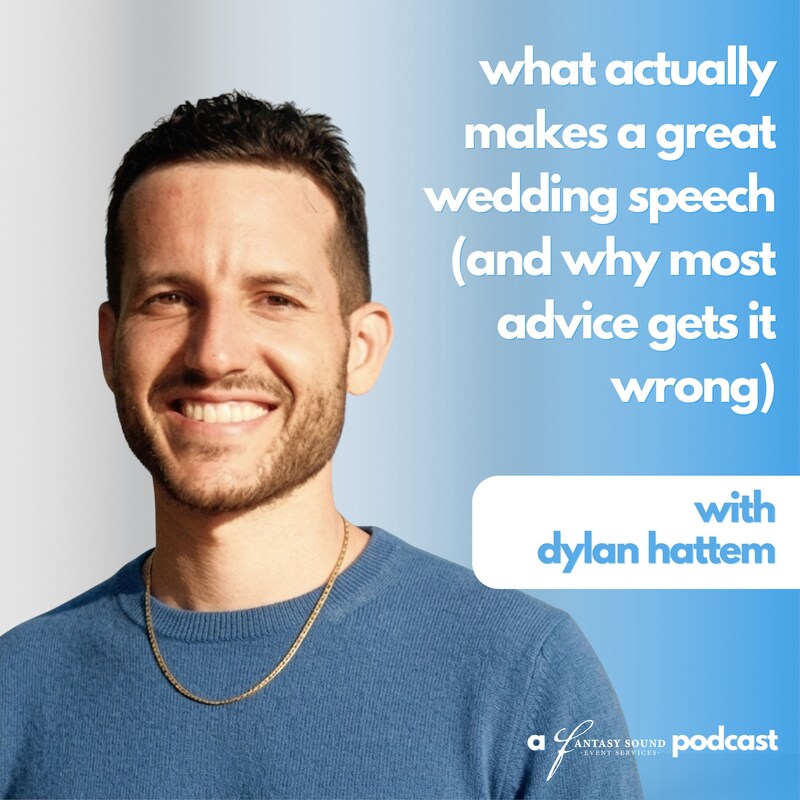
In this episode of Now That I’m Engaged, How Do I Get Married?, Kevin Dennis and August Yocher sit down with Dylan Hattem, author of The Wedding Speech Crisis: A Guide to Writing a Toast People Want to Hear, to break down one of the most overlooked yet memorable parts of a wedding day: the speeches.
Dylan shares why so many wedding speeches miss the mark, from making the moment too much about the speaker to dragging on far longer than guests can stay engaged. Together, they unpack why giving a great speech is harder than people realize, and why so much traditional wedding speech advice simply doesn’t work in real life.
The conversation dives into what actually makes a wedding speech meaningful, including how to create structure, connect with the full audience, and balance humor with sincerity without turning the speech into a stand-up routine or an inside joke only a few people understand. Dylan also explains why the best speeches are rooted in love, vulnerability, and selflessness rather than attention-seeking moments or embarrassing stories.
You’ll also hear practical advice on handling nerves, delivering a speech confidently, writing memorable openings and endings, and why preparation matters far more than people think. Dylan shares insights from his new book on how wedding speeches can genuinely shape the energy of a wedding and become one of the most memorable moments of the entire celebration.
If you’ve ever had to give a wedding speech, worried about public speaking, or sat through a painfully long toast wondering how it could have gone differently, this episode will completely change the way you think about wedding speeches.
Dylan Hattem is a sales executive, entrepreneur, and the author of The Wedding Speech Crisis: A Guide to Writing a Toast People Want to Hear. With a background in entrepreneurship and storytelling, Dylan wrote the book to help people create wedding speeches that feel authentic, engaging, and memorable while avoiding the common mistakes that often make speeches uncomfortable or forgettable.
Highlights
• Why so many wedding speeches miss the mark
• The biggest mistakes people make when giving toasts
• How to balance humor, sincerity, and storytelling
• Why speeches should focus on the couple, not the speaker
• The importance of structure and theme in a speech
• How to make guests feel included and engaged
• Tips for managing nerves and delivering a speech confidently
• Why wedding speeches can become one of the most memorable moments of the day
Connect with Dylan:
Order the Book!:
Connect with Kevin & August:
Transcripts
All right, folks, welcome to another episode of Now That I'm Engaged, How Do I Get Married? I am your host, Kevin, with my co-host August here. And we have the one and only Dylan Hattem with us today. And we're talking about some interesting, we're going to talk about what actually makes a great wedding speech and why most advice gets it wrong. And I like the end, why, and why most advice gets it wrong. Cause I think there's so much advice out there on what to do and what to say with the wedding ⁓ speech. And I think you're right. As many wedding speeches as I've seen.
August Yocher (:Mm-hmm.
I'm sorry.
Kevin Dennis (:a lot of that advice gets it wrong. but Dylan, before we jump into our topic, can you tell us a little bit about yourself and how we got you here today?
Dylan Hattem (:Yeah, of course. Well, thank you so much for having me. I'm smiling because I'm so excited to have this conversation. And yeah, a bit about me is first time actually ever writing a book. But now I guess I can consider myself to be an author. So that's exciting. I'm a previous entrepreneur. I built a few different companies in the marketing economy space. I built a fintech company, now a sales exec and
Kevin Dennis (:You
August Yocher (:Yeah!
Kevin Dennis (:⁓ yeah.
Dylan Hattem (:I like to do a lot of different things. It's as simple as that. I love side projects. Sometimes they stay very small and don't get released. Other times they get released and they blow up. And there's many reasons why I decided to write this book, which of course we can get into. But this was just one of those projects that saw the light of day and has started to pick up steam and excited to chat about it.
August Yocher (:Yeah.
Kevin Dennis (:Yeah.
⁓
All right. So, all right, Dylan, you built an empire or I'm sorry, you have built an empire, but an entire guide around wedding speeches. So what's the biggest thing most people get wrong right at the right at the bat?
Dylan Hattem (:Yeah, you know, it's so interesting because I always get asked this question and the unfortunate reality is like so much is wrong with these speeches that I'm like, where do I start? That's why I wrote the, that's why I titled the book, The Wedding Speech Crisis, because it's truly an epidemic. Like I genuinely think to a certain extent it is. The biggest thing is length.
August Yocher (:It's true!
Kevin Dennis (:Okay.
August Yocher (:Mm-hmm.
Dylan Hattem (:That is absolutely critical because here's why. The other biggest thing is people make these speeches about themselves. And so we'll get into what I call the driver's seat trap, but people make it about themselves. Here's the reality. I can suffer through a four minute speech that's all about yourself. That is totally fine. I actually can't if it's 15 minutes long. That's the truth. So you could talk
August Yocher (:Yeah.
Mm-hmm. Mm-hmm.
Kevin Dennis (:Mm-hmm.
No. Yeah.
Dylan Hattem (:negatively about the bride and the groom, you could talk negatively about yourself. If you can make it three to four to five minutes, I can forgive you. If you make it longer, it is extremely hard to bounce back from.
August Yocher (:Yes.
Kevin Dennis (:Hmm.
August Yocher (:Yeah, and like in the grand scheme of the wedding day, 15 minutes is a very long time. But I'm also kind of curious, like, was there like one speech or multiple speeches that you heard that kind of was like the catalyst of like, oh my god, I have to write this or people need to know about this? Was there like one defining moment where you're like, that's it, I got to take this into my own hands.
Dylan Hattem (:have a few responses to that. The first one is on the timing. I'm pretty sure some speeches take up like 15 to 20 % of an entire wedding reception.
Kevin Dennis (:Mm-hmm.
August Yocher (:Which is
crazy. Like no one wants, I mean, and I've said this on the podcast before, but like, and I've only given one speech and I, and I feel so bad. I, I work in weddings and I definitely broke all the rules. I was making it a little bit about me, but it was probably about like seven minutes. And, and I am sitting here being a hypocrite telling all of our clients, yeah, tell couples it's two to three minutes. But you know, when you've been friends with someone for so long, like there's just a lot that you want to say and it's hard to get it out in a certain amount of time.
Kevin Dennis (:Meh.
Dylan Hattem (:There wasn't a, we were talking about the sort of defining moment that I wanted to write this. There is a crazy story that I heard one time that I wasn't there for. It goes that someone was speaking at a wedding going on and on and on and on. And at a certain point, the uncle of the bride,
August Yocher (:Mm-hmm.
Mmm.
Dylan Hattem (:stood up and yelled this is not about you and and this was a big wedding and this was a very big expensive wedding which also goes to the point of Weddings are the most detail oriented event of one's life You can buy your way out of any problem at a wedding You cannot buy your way out of
August Yocher (:Ugh.
Damn.
Kevin Dennis (:my
gosh.
Yeah, yeah, yeah.
August Yocher (:Mm-hmm.
Dylan Hattem (:a terrible wedding speech. And so this wedding was, you know, probably a million dollar wedding, but your best man that you've known since, you know, you were in the second grade, it's very hard to be able to vet what they're about to say. And so that's one example. And I just find that, you know, I'm a little critical.
August Yocher (:Mm-hmm.
Kevin Dennis (:You
August Yocher (:Wow.
Kevin Dennis (:Yeah.
August Yocher (:Mm-hmm.
Dylan Hattem (:Okay, let me let me just sort of start there or and there or middle there. I'm a little critical. And to be honest, I'm actually trying to work on not being so critical. But I just feel like every time I go to a wedding, I'm listening to these speeches. And I'm like, Can we just do something about this? Like, why? Why is there not a a, you know, social media algorithm that just like, a feed pops up to or an image or video pops up to the everyone's top of their feed, and just says, like, let's come together as a community and really solve
August Yocher (:⁓
Kevin Dennis (:No, I like that.
Dylan Hattem (:this crisis around these terrible wedding speeches.
Kevin Dennis (:Yeah, that's crazy. So Dylan, why do you think so much of the traditional advice around speeches just doesn't work anymore?
Dylan Hattem (:i was preparing for this conversation and sometimes I get like very meta in my answers and when I'm asked that question, it's very hard for me because it's almost like a societal answer. Why do we as a society make all of these interesting decisions when we have all of the resources in the world? I'm not the first person to write a book that says, give a shout out to the bride and the groom, maybe don't.
Kevin Dennis (:Hehehe. Hehehe.
Okay.
August Yocher (:Mm-hmm.
Kevin Dennis (:Yeah, yeah, yeah, yeah.
August Yocher (:Mm-hmm.
Dylan Hattem (:talk for 30 minutes. You've got chat, GPT, you've got Google. This is just one of those things where giving a speech showing your love, it's not inherently natural for a lot of people. They don't have a lot of experience. A lot of people just so happen to be self centered. And so it's not just about like wedding speeches as a whole. It's about like, as a society, we're not great at certain things.
Kevin Dennis (:That's a good point.
Dylan Hattem (:And this puts a highlight around things that we're really not that good at, which is showing your love to other people through a story arc in a compressed amount of time in front of a lot of people. There's a lot of factors going against you if you're not a professional getting in front of a room of so many people and having to deliver one of these toasts.
Kevin Dennis (:Mm-hmm.
Good point, very good point.
August Yocher (:Yeah, it's really tough. Like just, it's exactly what you said. Like how do you convey all of your love, all your entire relationship also acknowledge either the bride or the groom in such a short amount of time? And like I said, when I gave my speech, I was definitely struggling with that. And it's hard. Like there's a lot that you want to say, So what actually makes a wedding speech great?
versus just fine or forgettable? Because obviously, we're trying to stick within that under five minute window, but how do we get people leaving the wedding still thinking about the speech that they gave?
Dylan Hattem (:If I was like a professional author, which I guess I kind of am, would say, I would say, I would say, go check the book out, but I'm gonna, I'm gonna, I'm gonna throw some game. There's, there's a few principles that I think about that are really important. Number one, it's leading with love. So it's like love and positivity should just underpin everything about the speech. And so it's like really like starting from there that I think is so important. The other element and other principle is
Kevin Dennis (:Mm-hmm.
August Yocher (:You are
now, it's okay.
Kevin Dennis (:Okay.
Dylan Hattem (:bring everyone in. So it's one of those things where when you give a speech, you genuinely think you're the most important person in the entire world. And in that moment, with that group of people, you sort of maybe am, but you want to give so much love to you and your relationship with the person that asked you to speak, you forget about everyone else. And so one of the biggest answers to like, how do you give a fantastic wedding speech is, is to bring everyone in.
Kevin Dennis (:Mm.
August Yocher (:Mm-hmm.
I like that.
Dylan Hattem (:I just
don't care about your story about sneaking out of your bunk in the second or third grade to hang. You know, it's like we don't we weren't there. So bring us all in being vulnerable is really important to. And again, this is hard. It's a societal thing. It's some people just aren't that vulnerable. But this is one of those times where you can really be open. And and one other point I'll add is I actually do write in the book that
August Yocher (:Mm-hmm.
Kevin Dennis (:Yeah.
Dylan Hattem (:This moment and this speech actually can be about you if you do it the right way. And the way that you can do it is by being entirely selfless. again, going back to me being a very meta person, I genuinely think that a good wedding speech can change the trajectory of one's life. Think about it. How often are you in front of up to a few hundred people that know you very well, know you in a certain light?
Kevin Dennis (:Mmm.
August Yocher (:Wow.
Kevin Dennis (:Mm-hmm.
Dylan Hattem (:And a lot of people will see you in different environments and they'll say things about you or they'll know about you in certain lights. Giving a speech and redirecting people to how you want to be known, this is like one of the only times in the world that like that's ever going to happen. So I can sort of keep going about other principles that I have up there in the book, but I'll sort of take a breather and see what other questions you have.
Kevin Dennis (:Mm-hmm.
No, that was a good point. So we talked about like speeches kind of being too long is a mistake, making it about yourself mistake. Is there any other like mistake that you hear people over and over again making speeches?
Dylan Hattem (:I have two others that I think are really interesting. Number one is, and this is a key to life, is don't be too self-deprecating. I think that's really important.
Kevin Dennis (:Okay? Yeah.
August Yocher (:Mm-hmm.
Kevin Dennis (:Okay.
August Yocher (:⁓
Dylan Hattem (:Everyone wants to break the ice. You know, if you think about comedians, unfortunately, comedians are the most depressed people on earth and and all they do is just bash themselves. And a lot of people, you know, feel like this is a time where they want to put the bride or the groom on a pedestal. And that means putting themselves down, but it actually doesn't mean putting themselves down. And so being like not self-deprecating is really important. I think the other thing that's important is staying true to yourself.
Kevin Dennis (:100 % yeah.
August Yocher (:Absolutely, absolutely.
Dylan Hattem (:So if you're not a natural comedian, you don't have to write a speech that is a five minute stand up. You know, if you are way more sentimental than someone else, like lean into that. And I think a lot of people, they go into, know, what is the best way to give a speech in, you know, Claude or ChatGPT, and it's very generic, but it has to be catered to like who you are as a person.
Kevin Dennis (:Yeah.
August Yocher (:Mm-hmm.
Kevin Dennis (:Mm.
August Yocher (:Yeah, and I've, i mean, obviously Kevin and I have seen our share of speeches over the years and I can think of one, and it's the one I think of when I think of like a bad wedding speech. It was probably close to 20 minutes. It was the best man. And you know, typically we'll prep a toaster like, you're gonna stand here because photo and video need to get ready and like have their shot on you.
But it was exactly like you said, he kept trying to crack these jokes and he just didn't have like the cadence or like the persona for it. And I felt like there was a lot of pity laughs from the audience, but you could feel that the energy was very uncomfortable. And the thing is he tried, like he really did, but it just like wasn't him, right? And he kept pacing back and forth across the entire dance floor in front of the sweetheart table, like.
Like as if he was a comedian, like he was trying to bring the audience in, but I don't really think anyone was connecting with his material, so.
Dylan Hattem (:Yeah,
look, it's hard. you know, the other element about opinions that are so odd is it's just one person's point of view. So like, here I am, you know, on my own pedestal right now saying like, this is a crisis. This is how you give a great speech. The reality is, it's really not that deep. You know, like, it's really not that deep. It is and it isn't. And I just think, you know, the important thing is
August Yocher (:Mm-hmm.
But it is.
Kevin Dennis (:Mm-hmm
Dylan Hattem (:Everyone really does want to do their best. And all I'm trying to do is maybe say, here's how you can just be like 5 % more effective or 10 % more effective at showing up and giving what you are trying to give. You're just having a little bit of difficulty presenting.
August Yocher (:Okay, and I know you mentioned like if someone is a little bit more humorous, maybe they'll lead in with the humor side or maybe they are more sincere, so they'll lead into that. But is there like, and I know everyone's different, but is there a right balance between humor and sincerity when giving a speech?
Dylan Hattem (:I don't know. I'm gonna deflect the question and I'm gonna say something that I think is more important. Because again, who am I? I've been in speeches where I was laughing the entire time. You know, I've been in speeches that were 20 minutes long. It was the greatest speech in the history of speeches. Okay, I swear to God, it wasn't the best wedding speech. It was the greatest speech I've ever heard in my entire life. So...
August Yocher (:or just depends on the person, and when that's a totally fine answer too.
Kevin Dennis (:You
August Yocher (:Mm-hmm.
Yeah.
Dylan Hattem (:Who knows? don't know. I don't have the answer to that. think what is most important though is having ⁓ a structure behind a meaning. That's really important, you know? And so ultimately, knowing what the root of your story is, what is the theme of your story? Is it love? I actually default to that word all the time. It's like so silly of me to do that. I'm like, duh, it's about love, but it's easy. It's like, what's the theme?
August Yocher (:Hmm.
Kevin Dennis (:Yeah, no,
no.
Dylan Hattem (:Where are
you rooting yourself? It's like deep love. Okay. And then you can kind of put the structure behind it and try to tell a bit of just like an arc. And again, this has nothing to do with a wedding speech. This has to do with like how to like talk and present in general. It's you have a theme and then you have a beginning and a middle and an end. And I think that's more important than, you know, what percent should be funny or not funny. It's like, I, who am I to say? But I will say you probably want to have a beginning and a middle and an end.
August Yocher (:Mm-hmm.
Kevin Dennis (:Yeah, that's a good point because I think people have a beginning but then they have no way to wrap this thing up. You know, they they it just keeps going and going and going so that Yeah Yeah, yeah so Do you think there's like certain stories that people should or like taboo or something that they think is funny or like maybe meaningful but really isn't the right setting for a wedding, know, like
August Yocher (:or like a tie back or something, like bookends, something like that.
Kevin Dennis (:talking about the bachelor party. Like I did, yeah, yeah. Or I had a wedding where the best man gave a speech and he kept referring to all the groom's ex-girlfriends and why the wife is better than all these ex-girlfriends. so is there...
August Yocher (:Yeah, that's so bad.
Dylan Hattem (:Yeah, you know, I know there's probably so many clickbait answers to this. It's like everyone knows what not to say. That's that's the funny thing about again as a society, like we all know what not to say, like don't say something too graphic. Don't say something that is mean. Don't make sexual comments like people are almost just like going to do it anyways. That's why it is so hard to offer these suggestions.
Kevin Dennis (:Okay.
August Yocher (:Mm-hmm.
Kevin Dennis (:Yeah.
August Yocher (:Mm-hmm.
Dylan Hattem (:And even like, I wouldn't say it was hard to write the book, but sometimes I just think, you know, what's the actual impact of all this? You know, like you can lead a horse to water. So it's weird. Like we all know what not to say yet people continue to say it. Maybe my deeper meaning of life is to figure out like why people just don't listen to what the obvious answers are. Sorry, I know I'm giving like somewhat vague responses on these. It's just interesting because it's like, I can give the answer.
Kevin Dennis (:Mm-hmm.
August Yocher (:Hmm.
Kevin Dennis (:Yeah, that's a good point. No, yeah.
August Yocher (:No, I love it though.
Dylan Hattem (:But I think it's very interesting to almost figure out, you know, what's the solution to it? Yeah. Yeah. Like don't talk about drugs. Like got it. Okay. We like, I think we know that.
August Yocher (:Or the why, yeah, behind it.
But they... and it is
interesting that people still do, but it's like you're saying like a clickbait or like people are wanting a reaction, but it's like, you know Miss 85 year old grandma is sitting in the audience, so why are we sharing these stories, you know?
Dylan Hattem (:Yeah, look, it's the same reason why do people overshare on social media? Why do people honk their horns too much when they're in traffic and it can't go anywhere? Why are people rude to people when they know that they can't change the outcome of it? It's just like how we were raised.
August Yocher (:Yeah.
Well, it goes back to your first point,
like you're making it about you because ultimately that's kind of what it is. Like you're searching for that reaction and you're not making it about the couple because if you were, you wouldn't want to embarrass them on the day of their wedding. So, I guess kind of on the same thread, but how can someone make a speech feel personal without oversharing?
or making the guests feel uncomfortable.
Dylan Hattem (:Yeah, so I'd mentioned this before, you know, bringing in the guests. So here's like a little trick is if you think about it roughly, half of the guests there are going to be from not your let's say most people have one person that typically wants them to speak. OK. And so then you have the the partner and then the partners guess. So let's just assume like 50 percent of the guests.
August Yocher (:Mm-hmm.
Kevin Dennis (:Yeah.
Yeah.
Dylan Hattem (:don't know you or like your stories, the biggest hack is bringing them in like immediately. So, you know, imagine a world where you are in New York, your friend who asked you to speak is from New York, your friend's wife is from Portland, and you know, her entire family comes in from Portland. Right away, show some love and say like, welcome to the like, New York to like all my Portland people.
Kevin Dennis (:New York, yeah.
August Yocher (:Mm-hmm.
Kevin Dennis (:Yeah.
Dylan Hattem (:You know,
and then it's like, boom, like right away I'm listening. Right away I'm listening because I feel like this person appreciates and understands me and is bringing me into the fold. That's probably like the biggest hack I would say, because then you can get away with a lot. You know, you can get away with a lot once you bring people into the fold. You've earned their trust to then maybe say, you know, some stupid joke, bring them in.
Kevin Dennis (:Yeah.
August Yocher (:Yeah.
Mm-hmm.
Dylan Hattem (:right
away.
Kevin Dennis (:They'll have a little bit more understanding and a little bit more leeway with that. Yeah. Yeah.
Dylan Hattem (:Mm-hmm.
August Yocher (:I was gonna say trust and like your
credibility goes up, you know? Yeah.
Kevin Dennis (:Yeah.
All right. So if I have no idea where to start and I need to give a speech, like, is there a good structure people can follow or something other than going to Google or chat GPT or Claude or any of these other, you know, like where, where, where, where should they start?
Dylan Hattem (:Yeah. So start by getting my book, the wedding speech crisis dot com. Buy it on Amazon. McNally Jackson. We've got 15, 20 other bookstores. Where do you start is start in your notes. Just start writing down stories, you know, when you're commuting or instead of like scrolling, take 30 seconds just to write some notes down and stories, memories, thoughts. And really quickly, you're going to like figure out
Kevin Dennis (:I love it.
August Yocher (:you
Dylan Hattem (:what the theme can be. And once you have that theme, you then have actual meaning behind what you want to talk about. And then there is like an outline, which for 95 % of people giving toast, it's a very seamless ⁓ outline. You your introduction, your opening frame, anecdotes about the friend, anecdotes about the partner. I kind of talk about all this, but the biggest thing is
Don't just start writing a speech start just sharing your thoughts with yourself and and and you know It's just like any other test if you give yourself enough time and you're not cramming it to the last second You can do a good job
Kevin Dennis (:Mm-hmm.
Well, that's probably a good point. think too many people wait till the last second. And then if you took the time to do it, you're going to have a much better product in the end. So yeah, it really is.
Dylan Hattem (:like most things in life.
August Yocher (:Yeah. Okay, so I know we talked a little bit about like opening a speech. Like it's really great to grab guest attention that don't necessarily know you. We're bringing the entire audience in, but let's talk about the end a little bit. So what do you feel is the best way to end a speech so it lands well with the entire audience?
Dylan Hattem (:Yeah, so
You got to tie it with just a little bit of a bow, you know, and so what does that actually mean? It's it's taking that theme that you initially introduced and bringing it sort of back in. think that's that's the biggest thing. Again, beginning, middle and an end. In the end, reintroduce what you initially spoke about, and that signifies to the people like, this is coming to an end and you can sort of start to wind it down.
August Yocher (:Mm.
Kevin Dennis (:Mmm.
Dylan Hattem (:I find that to be extremely helpful. And then there's kind of just the obvious of, ⁓
Kevin Dennis (:Mm.
Dylan Hattem (:having a glass ready when you're saying, and here's to your friend and their partner and enjoy a lifetime of happiness. Now raise a glass to the beautiful couple. ⁓ So there's a little bit of the, there's a little bit of like what's the actual speech itself. And then there's the actual delivery, which is actually a whole other part of the book that I added in like last second, which is how you actually bring this to life.
August Yocher (:Yeah.
Kevin Dennis (:They forget it.
August Yocher (:Mmm.
Kevin Dennis (:Yeah.
Dylan Hattem (:you know,
how you deliver it, when you know to speed things up, when you know to slow things down, where do you put the glass when you go up? How do you go up and and have confidence and like I have like a, I could talk about all that but yeah, there's the there's the speech and then there's the actual delivering of the speech.
Kevin Dennis (:Yeah. All right. So getting on the delivery of the speech, I, someone that may be a little bit nervous or have a fear of public speaking, how can someone on the day, on the wedding day manage, you know, the nerves, you always hear people, I'm going to get it, you know, I'm going to get, take a shot. No, that's the worst. I think the thing. Yeah, don't do that. But
August Yocher (:No, don't do that. Ugh, I've...
Ugh, yeah, I had a Maid of Honor once give a speech so drunk it was just... so bad. A cautionary tale for everybody.
Kevin Dennis (:Yeah.
Dylan Hattem (:Cautionary tale, know what? probably would have been a bad speech sober. So I don't actually to be honest don't think the drinking really matters ⁓ I have two thoughts that I think aren't so obvious So obvious ones like practice. They're gonna be great. Like I don't need a book to like tell me that There's two things one is owning the walk-up and again so much of this is actually just about wedding speeches and it's more about just like speeches and being confident overall owning the walk-up
Kevin Dennis (:Okay.
August Yocher (:Mmm. Yeah.
Eww.
Dylan Hattem (:And so, you know, the reality is so much of life is about tricking yourself into success. And no matter what, when your name gets called, boy is your heart. And just channeling like the jitters and walking up with a positive body language and walking up with a smile on your face and looking around is, is so, so helpful. And you know, the other element is.
August Yocher (:Yeah
Kevin Dennis (:100
% yep
Dylan Hattem (:breaking the ice with an off script comment.
Kevin Dennis (:Mmm.
August Yocher (:Hmm.
Dylan Hattem (:So, I was like, why would anyone read the book? I'm literally just getting everything here. Is you have to change your vocal, like, okay, when you go up to give a speech and you have everything written out, you are walking into a situation where you almost like, and I haven't thought about this until just now, but you almost like lose control.
Kevin Dennis (:No.
August Yocher (:No, it makes me want to read it more!
Dylan Hattem (:Because there's a parameter and a box that you need to stay in. And so your voice stays inside of that box. Your mind stays inside of that box. Your energy stays inside of that box. Going up and breaking the script, breaking the ice off script, is a very cool way to trick your mind into waking up. It's almost like taking a cold shower. So,
August Yocher (:Mm.
Dylan Hattem (:as you're going up saying something off the cuff about wow, that was an epic speech or or just that that's a great speech. Let's give it up one more time. And then the questions like, how do you remember to say that if it's I don't know, again, I'm not I'm not I'm not like, the owner of all this, you're gonna have to just kind of figure out how to break the ice. But you know, that's what a beautiful night so far or Wow, that was great. And by the way,
Kevin Dennis (:Yeah, yeah.
August Yocher (:Yeah.
Kevin Dennis (:Yeah.
Dylan Hattem (:beautiful dress, you look amazing. Hopefully I can continue this. Your, your vocal cords when you do that, it like changes your body into now feeling like you're more present.
Kevin Dennis (:if the groom does a thank you or does a little something, I always think the one, the one opportunity they miss is to tell everyone how beautiful their, their partner is or, know, like whatever, you know, like acknowledge their partner in some way or the hard work they put into the way, whatever it is, but they, they just, they're like so brain dump focused on dumping everything that they need to say. They forget like,
Recognize the person you're with.
Dylan Hattem (:Yeah, I'd be so curious. You know, when you see people up there, you know, they're holding their piece of paper and like they're shaking like crazy. I actually would be so curious from a scientific perspective if breaking the ice and going off script actually can channel jitters. I'm very curious if that is the case. If so, I'm probably on to something. But if anything, it's again.
August Yocher (:Yeah.
Kevin Dennis (:Yep.
August Yocher (:Mmm.
Kevin Dennis (:Yeah.
Yep.
Dylan Hattem (:Who am I? What do I know? This is more so just here's some thoughts that you should have as you're going into a big moment in your life and take what you want and don't take what you don't
August Yocher (:Yeah, but I like the fake it till you make it walk up with confidence mentality because like, and I don't know if it's just me because I've, you know, been doing this a long time, but I feel like people can read your your body language. Like if you're walking up all hunched over and like nervous and like the people who look down, they aren't like scanning the audience. They aren't including everyone. They aren't looking over at the couple. I feel like people are
less engaged and they're not really bought in to what you're trying to say. ⁓ But yeah. So as far as writing the speech and speeches go and delivery, do you think they should be written word for word? Should we have like loosely outlined bullet points? Should it be memorized? Like is there one way that you would recommend or is it kind of just depending on the type of person?
Dylan Hattem (:Yeah, I agree.
So I would say this book is for the vast majority of people and the vast majority of people should have it written out. Full stop.
August Yocher (:Mm-hmm.
Kevin Dennis (:Yeah,
I agree.
Dylan Hattem (:on a piece of paper, not on a phone.
August Yocher (:Yeah. Yeah.
Kevin Dennis (:No,
well, I'm to say I was the next my little follow-up. You see so many people up there with the phone and then you have this Well, but then they have a weird glow on their face from the phone and it doesn't look good in photos. So Yeah
August Yocher (:Yeah.
And it's like, doo, doo, doo, doo, doo.
Mmm.
Dylan Hattem (:Yeah, yeah,
I'm like a older millennial, I guess, maybe not older, but I'm not Gen Z. And so I just think there's something old school about having paper and it just seems more professional. And making the font as small as possible that you can still read it without squinting, you you don't want to like 15 pieces of paper like for me, I'm pretty sure the speeches I've given, it's maybe front and back or just two pages, really like max.
Kevin Dennis (:Yeah, I agree with you.
Yeah.
August Yocher (:Mm-hmm.
Kevin Dennis (:You know, it's funny. I saw a dad do it on note cards. You know, like he no, no, no, no, but he it turned out really, he got bigger note cards. No. And he printed it on there, but it looked very like, like almost like game show hostess. You know what I'm saying? Like it looked, it actually looked good. I was like, I was like, where is he going with this? But yeah, yeah.
August Yocher (:god.
okay.
Dylan Hattem (:Yeah.
Yeah, I don't like all the flipping though.
And you know, when you're up there, and again, people are like, people freak out because it's like the mic and where I put my drink and the notes and number one, just like, just slow down. It's really not that deep. Just give your drink. Just give your drink to someone. Hold them like, just just do whatever you got to do. Just don't just don't hold it. And I think if you could minimize the amount of paper, it's also less distracting. And you're not
August Yocher (:It's distracting.
Set it on the sweetheart table.
Kevin Dennis (:Yeah.
August Yocher (:Mm-hmm.
Kevin Dennis (:Good advice.
Dylan Hattem (:fumbling around you know if you got a mic in hand and you got six note cards it's like every 30 seconds you're you're but if you got one or two pieces of paper folded in half smaller size you could really like hold on to that paper in a more confident way than having a bunch of smaller scraps loose in your hand
Kevin Dennis (:Yeah.
Yeah, good advice. All right, so speaking of advice, what's one piece you would give someone who is procrastinating to write their speech?
August Yocher (:Mmm. ⁓
Dylan Hattem (:I'm a procrastinator, so I'm not gonna answer that question.
Kevin Dennis (:Hahahaha!
August Yocher (:You're like, I do my best
work in a limited time frame.
Dylan Hattem (:I don't know. Figure
it out. You're not gonna get that advice from me.
Kevin Dennis (:All right, love it.
August Yocher (:I get it, I get it. That's kind of me too. I do my best work last minute. But I think, like you said, think while you're commuting, you just kind of start thinking about that stuff. You know the speech is coming up. You know it's about to happen. So I feel like you're kind of already thinking about it before you even start writing it.
Dylan Hattem (:Yeah, I guess the more serious answer is think about how important this is to the people that ask you to speak. And if you're a little bit more on the narcissistic side, then think about how this can change the trajectory of your life if you give a great speech.
August Yocher (:Mm.
Mm-hmm.
so we have a couple more questions, but I did want to ask before we start getting to those last couple questions, is there anything from your book that you'd like to read to us today? Like little excerpt? I don't know if you have it nearby or if there's something, a little snippet you could share.
Dylan Hattem (:You what's funny? I actually do have it in the background.
Let's see if I could find something. Let me pull it up.
August Yocher (:Okay, perfect. Just to give people a little taste of the wedding speech crisis.
Dylan Hattem (:Let's see...
Kevin Dennis (:It's such a good name too, because it's like, no, is a crisis.
Dylan Hattem (:Thank you.
It is okay. So I guess just the first the first page of the first chapter. If you're reading this book, you're probably preparing to give a toast at a wedding. Picture it. You'll have a front row seat near the couple in love. Wonderful music is playing. There's flowers galore. The energy is buzzing across every guest. Suddenly the champagne flutes are filled and you hear the unmistakable chime of knife against glass. A bright delicate sound that calls everyone's attention to the front. The music fades, the laughter quiets.
August Yocher (:Okay.
Dylan Hattem (:Then comes the double tap of the microphone, a hollow thud that booms awkwardly through the speakers, jolting the room into full silence. While you think you're paying attention, it takes your seat partner tapping you on the shoulder with a go get them for you to process that it's your time to take the mic.
Kevin Dennis (:You
That's perfect.
August Yocher (:I love it.
Are we gonna see you on audible soon? Is there gonna be a recorded version of the book?
Kevin Dennis (:I know, it's like that sounds really good, you should do it.
August Yocher (:Yeah. On the way, on the way. Okay, perfect. All right, well we just got a couple more questions for you, but if you could cut one thing out of every writing speech moving forward, would there be one thing?
Dylan Hattem (:On the way.
Kevin Dennis (:on the way. All right.
August Yocher (:or just like, I guess it kind of goes back to our mistake.
Dylan Hattem (:I guess just the personal
stories that people can't relate to. That like, you know, you're so confident everyone's gonna love it, but so often no one cares or they can't relate. And so it's almost like your most personal stories are like kind of the worst ones to share. Even though you're trying to convince everyone that you're up there for a reason, you need to recognize
Kevin Dennis (:Mmm.
August Yocher (:Hmm.
Mm-hmm.
Kevin Dennis (:Yeah.
Dylan Hattem (:everyone already knows you're up there for a reason. And so cutting out the inside jokes is probably like, at least for me, one of the more non interesting parts of a speech, I would say.
Kevin Dennis (:Yeah, makes sense. No, totally. I agree because sometimes they're telling a story and you're like, I don't I can't connect the dots to this and why are we even talking about that? No, so that's good advice Dylan. All right, so to wrap up if someone's listening to our podcast and they need to first go out and the book before they write their speech, but they're giving a speech. What's the one thing they should kind of focus on you think the most? Is it the love?
Dylan Hattem (:Yeah.
August Yocher (:Yeah.
Kevin Dennis (:like leading with love.
Dylan Hattem (:realizing how important this moment is for the bride, the groom, whether it's a bride and a bride or a groom and a groom or a bride and a bride, whatever it is, whoever it is, just just realizing that it's their moment. It's not yours. And that's actually in the book. One of the early chapters is called the driver's seat trap where a lot of people and they're asked to give a speech. They think they're in the driver's seat. Their friend is in the passenger seat. Their partner is in the backseat and the guests are sort of nowhere to be found.
Kevin Dennis (:Mmm.
August Yocher (:Mm-hmm.
Kevin Dennis (:Mmm.
August Yocher (:Hmm.
Dylan Hattem (:and you need to switch that up where you're the backseat narrator and the bride and the groom or the bride and bride groom and groom yada yada. They're in the front and you're sort of narrating their story while all the guests are, you know, FaceTimed into the car.
Kevin Dennis (:Yeah.
watching. Yeah.
Yeah, that's a good good like visual. Yeah.
August Yocher (:And it happens. Like, all the time
I'll be listening to speeches and I'm like, this just seems like it should be a one-on-one conversation. Like, this is between you and the bride or you and the group and like the rest of us are like kind of eavesdropping on this very intimate moment where, yeah, we don't necessarily feel connected in any way.
Dylan Hattem (:Yeah.
Yeah.
Kevin Dennis (:Yeah,
yeah, I agree. All right, so Dylan, where can everyone find the book? You mentioned a bunch of stuff, but we want to promote it.
Dylan Hattem (:Yeah, the wedding speech crisis. you Google it, it'll probably show up on Amazon Barnes and Nobles. And you can also go to theweddingspeechcrisis.com. Thank you.
Kevin Dennis (:All right. Love it. All right.
We're going to be make sure we have all that information out there in the show notes and where to find Dylan's information. Folks, Dylan, we can't thank you enough. That was a really, yeah, really good episode. We, I mean, I think it's one of the most overlooked things, like you said, in the wedding and it has a lot of impact. People are going to remember if it's bad and they're going to remember if it's good, you know? Yeah, it's good. So.
Dylan Hattem (:Thank you.
August Yocher (:Thank you!
Dylan Hattem (:Yeah.
August Yocher (:Yeah.
Dylan Hattem (:Yeah, thank you both so much. I really appreciate you having me on. This is so much fun.
Kevin Dennis (:Of course. then, all right, thank you to all our folks for listening. We want to remind everyone to hit the like and subscribe buttons on wherever you're listening to us. And also, don't forget to send our story, send us your stories or questions you'd like us to attack on the podcast here at podcast at fantasysound.com. Dylan, thank you so much. All right, folks, we'll see you next time.
Dylan Hattem (:Thank you so much, I appreciate it.


