Shownotes
What if the one thing that makes you feel “broken” is actually the beginning of becoming whole again?
In this deeply honest conversation, Michael revisits a timeless episode with bestselling author and grounded performance coach Brad Stulberg. They dive into the myth of stability, the power of small disruptions, and how change doesn’t just happen in crisis—it unfolds every day, moment by moment. Brad also reveals how real growth comes not from perfection, but from learning to respond—rather than react—through mindful practice and community.
- Discover the real science behind personal change and why we’re wired for transformation—not control.
- Learn Brad’s “order-disorder-reorder” framework to navigate any season of life with clarity.
- Hear how community, mindfulness, and small, consistent actions are more powerful than any life hack.
Take a deep breath and learn how to master the one thing you can’t avoid—change—and find peace in the process.
Receive my free text messages by texting Whole Again to 866-612-4604
Did you know that stickers are wonderful visual cues to help you create healthy habits? You can get one of my free Pause Breathe Reflect stickers by clicking sticker.
To discover more and sign up for My RIPPLE EFFECT newsletter by clicking Ripple Effect.
We can also connect on LinkedIn. or at [email protected]
Subscribe to be sure you don’t miss any of the micro-meditations, wellness tips, and guidance that I publish every Monday, Wednesday, and Friday at 7:11 am.
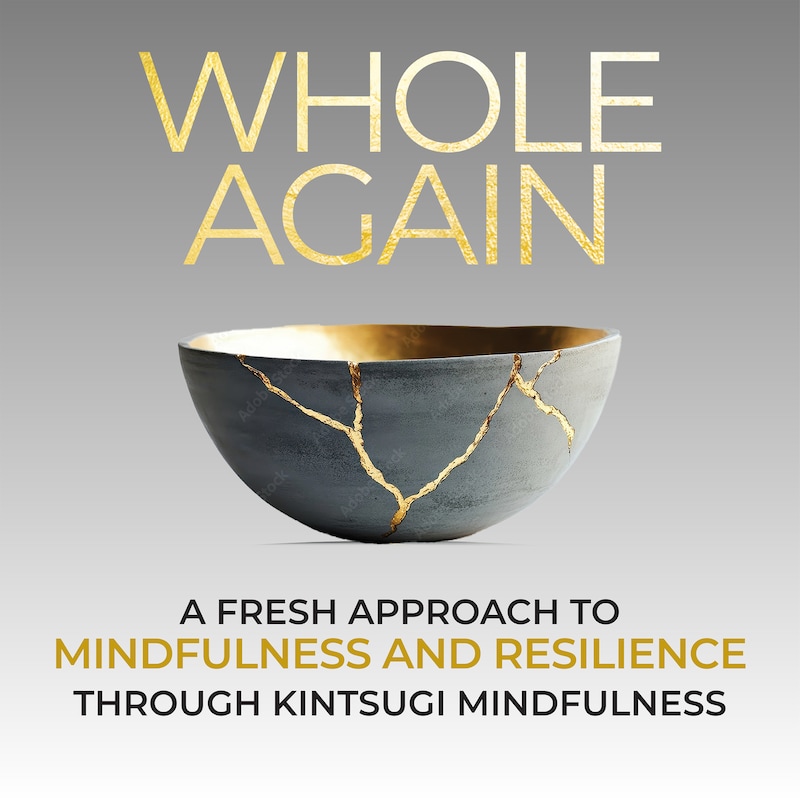
With Whole Again: A Fresh Approach to Healing, Growth & Resilience after Physical Trauma through Kintsugi Mindfulness, listeners explore resilience through personal stories of trauma, scars, and injury while learning to overcome PTSD, imposter syndrome, self-doubt, and perfectionism with self-compassion, self-love, and self-worth. Through insightful discussions on building resilience, resilience building, resilience and fitness, fitness and resilience, stress management, mindfulness practices, and digital wellness, the show offers practical tools like breathwork, micro-dose meditation, grounding techniques, visualization, and daily affirmations for anxiety relief and stress relief. Inspired by the art of kintsugi, the podcast embraces healing as a process of transformation, encouraging a shift in perspective from worry and being overwhelmed to gratitude and personal growth. By exploring the mind-body connection, micro-dosing strategies for emotional well-being, and holistic approaches to self-care, this podcast empowers listeners to cultivate emotional resilience and live with greater balance and intention.
Transcripts
In this episode, you'll discover what is earthquake proof. Hey there, it's Michael. During the early days of my recovery when I was still in the hospital, my wife would bring me lemonade with lunch. Besides being super delicious, it was a reminder that we can take lemons and make lemonade. And we are gonna do just that over the next seven weeks on our Friday episodes.
During this period, I'm going to be helping one of my family members recover to help them feel whole again. That's the lemon part of it. The lemonade is, it gives me an opportunity to reintroduce to you some of the amazing guests I had on the podcast when it was known as the Kintsugi podcast. And in this episode, I'm so happy to share one of them with you.
But before we get to the episode, I first wanna say thank you for being here, and thank you for being a survivor. And as I've mentioned over the last couple weeks, if you wish to receive those great text messages that are just the right message at the right time, and they're all free. Well text me whole again to 8 6 6 6 1 2 4 6 0 4.
I'll say that one more time. 8 6 6 6. 1 2 4 6 0 4, and I'll set you up. Now let's dive into today's conversation with.
here. We sat down in April of:It's pretty cool. So if you're ready to get to know Brad Stohlberg, take a healthy breath in and a slow releasing breath out and get to know Brad Berg's take on change.
Brad, good to see you, brother. How are you?
I am well. It is a pleasure to join you today.
I've been following your work for quite some time. I have all your books as I just mentioned, and we sit here in the new year, only a few days away from the big football game. So as a double Michigan guy, I gotta ask you, how are you really feeling about this coming weekend and Michigan's chances in the big game?
ng that hasn't happened since:So I'm a little bit torn because when you put yourself in the mind of a Detroit sports fan, you think you have to make these trade offs. So I think to myself, would I be okay with a Michigan loss if it meant that I could get one Detroit Lions playoff win one game closer to the Super Bowl? So it's nice.
I'm a sports fan, but I don't care that much, so I care just enough where it's exciting to watch, but I know so many people that get like devastated and it ruins their day if the outcome's not what they want, and I'm not on that level.
I know a lot of people like that as well. Like you. I'm also not on that level, so my team, I grew up in upstate New York, Western New York, so my team would be the bills, and so they have a big game this weekend, so we'll
see.
We'll see what happens. They do for them. It's a matter of getting into the playoffs, is that right?
Yeah, the math is a little complicated as it usually is this time of year. If they win, they're in the playoffs. If they lose and get some help, they can still be in the playoffs. So much like a Detroit fan, a Buffalo fan has had their fair share of heartbreak and they're very optimistic and hopeful fans.
So I am, I'm right there. I'm right there with you. On my wife's side of the family, they're from Michigan. My father-in-law who has since passed, he went to the University of Michigan's med school, so we are rooting for Michigan, although the whole family moved to Portland, Oregon. So there is a complicated factor.
Do you root for the Pacific Northwest, which often gets slighted or do you root for Michigan? And so it's gonna be a fun weekend. However we slice it. And again, we don't get too worked up about it because it's only sport. There are bigger things in life to focus in on. So I wanna start here. I always love starting here when I sit down with people, what's one good thing that's already happened today before we sat down that's happened for you?
I had a wonderful workout in the gym. Felt really strong and good. A couple of my favorite people that I often run into there were there. So really from a social standpoint, it was just a lovely way to spend an hour and a half this morning.
Awesome. I love that. So the show is about connection. So in that spirit of kazuki, so my wife and I love connection stories when it comes to couples.
So in your latest book, which we'll get into, you have a dedication to your wife, your partner, and so I'd love to know how you guys met, if you are willing to share.
Of course, Caitlin and I met in undergraduate school, so way back in the day, and we had a mutual friend, and this was the summer after my junior year and the summer after her sophomore year we're really just kids.
I guess it's more politically correct to say young adults, but we were kids. We all had internships in Washington DC of various sorts, and we shared a house for that summer, and that's when I first met Kaitlyn.
Wow. That's so cool. So where was the house? I asked because my wife and I, we met in DC as well.
Oh, neat. The house was, I'd say somewhere in between DuPont Circle and Adams Morgan, if I'm remembering correctly. So Upper Northwest part of Washington, DC
Yeah, probably off of 18th Street or Connecticut Avenue around there.
We were in Upper Northwest DC in the DuPont Circle, Adams Morgan area, somewhere between Fire Hook Bakery and Kramer Books in that side of town.
And those are institutions that were there back then and are still there now and hopefully will be there forever.
That is perfect. You might remember the city paper while you were there. So my wife and I met in a personal ad in the city paper before we got to apps on phones and match.com and all that stuff like that.
So that's how we met. We lived on Yuma Street, so closer to Tenleytown and American University, so that was our neck of the woods.
Whereabout on Yuma Street. That's where my, my wife's family lives right in that neighborhood.
Oh. So we were 37 19 Yuma. So now people can go to wherever you go to, to check out homes.
So that was our first home together. Oh, neat. I lived in Old Town Alexandria when we met, or in Fairfax as well. And she lived in near Adams Morgan. We did the whole personal ad thing and then we went on a date, we went to the Austin Grill and the rest is history. Come May, we will be married 30 years. Yeah, so pretty cool stuff.
And I also love the fact that you're an animal lover and I have to give you props for the name of your dog, which is fantastic. So well done. Can you share that
with us? I can, my, my dog's name is Ananda and Anda is in the poly cannon, which is one of the, the oldest living Buddhist texts. He is a very frequent contributor.
And is seen as the Buddha's first in hand loyal attendant. Now, what's interesting is people say, does that mean that you think that you're the Buddha? No, that's not why we went with the name Ananda. I'm quite far from it, but there's a passage in the text where the Buddha is with Ananda and Ananda throughout Buddhism appears as just this innocent, curious kind of kindhearted wandering soul.
And he says, you know, Buddha, you've once said that friendship is real important in the spiritual path. And I've heard that friendship is 50% of the spiritual path. Could that possibly true? Could friendship possibly be 50% of the spiritual path? And the Buddha says, no. No. And onto your mistaken friendship is not 50% of the spiritual path.
Then Ananda says, what is it then? And the Buddha looks at him and says, Ananda friendship is the whole of the spiritual path. It is the entirety of it. And a dog is a man's best friend or a woman's best friend. A person's best friend. Absolutely. Hence the name Ananda.
I love it. And that's so great. That's a great name, origin story.
All right, so we'll strip away what you do professionally. Obviously, we're gonna get into your book so people know you as an author, you're also a professor, a coach. So if you had to put that to the side or the back burner, Brad, how would you describe who you are today? Because we'll get into change, it's different in all of our eras, but how would you describe yourself today?
I would describe myself first and foremost as a father and husband. And then I would describe myself as a aspiring crafts person.
Alright, cool. So in any particular craft.
I would say the crafts are writing and which is professional. Sure. Yeah. And then strength training, deadlift and bench press in particular, which people often don't think of as a craft if you're, oh, it's a craft not initiated.
People think of it as meatheads going to a gym, but it's actually a lot closer to woodworking or swimming or archery when you really get into it. And yeah, I'd say that I have limited interests, but I'm very fortunate that I get to pursue them fully. And for me, those interests are really my family and my friends.
I should include in that. My writing and then this current foray into strength training.
Yeah, there's precision in strike training that I think a lot of people don't necessarily appreciate because they do think it's a bunch of meat HUDs throwing weight around, but there's an art to it. There's precision, as I just mentioned to it, in order to be able to lift things and use your body as leverage to get the weight up, which I think is like just fantastic when you break it down that way.
That's right. The way that I've come to think of it is very similar to swimming. And I was never a great swimmer, so I know this all too well. You can get to be a pretty good, decent swimmer just by brute force pushing the water back. But at a certain point that just doesn't work. And the only way to become a good swimmer is to get a feel for the water.
And I never would've imagined that trying to deadlift 500 pounds is the same, but you can't brute force that bar up. At a certain point, you have to get like a feel for the bar, and that's the part of it that is just so addictive to me. It's like finding that feel and trying to replicate that feel.
People call it like getting in the slipstream or getting in the pocket of the lift, and it is, it's a very gratifying feeling and it's fun.
I can appreciate that as a cyclist. There's something about getting into your sweet spot. Some would call it maybe flow a sweet spot and flow. If we were gonna really break it down as you are gonna be a little bit different, but that sweet spot where you just feel one with the bike and you're with your sport and you're with your body and things almost feel a bit effortless and it's pretty, it's a pretty good buzz in terms of all the buzzes that you can feel.
So I love to know in the spirit of a few good men, we want answers. So how does someone who grows up in Michigan, goes to University of Michigan, goes to dc, ends up doing the work that you're doing, the things that you're really passionate about, talking about performance and change? And I loved your book about groundedness.
I read that before A big trip and a big adventure. So how did you get into this being your true calling and passion?
It was a very circuitous path. The high level answer is I've been very fortunate and I think that timing has a lot to do with it. So I grew up, I loved writing and I love sports. I was the captain of the varsity football team and also the editor of the school newspaper.
Oh wow. What a cool combination.
So those were my two things, and it became very clear to me by the time I was in college that I wasn't gonna be a professional athlete, but maybe I could be a professional writer. But then I got rejected from journalism school and so many people that are age 17 to 19. I was, again, I was a kid.
I assumed, all right, I guess I'm not gonna be a writer. I did other things. But this was in the early two thousands, right at the turn of the century. And this was really the golden age of the blogosphere.
Yes.
So there was no social media, there was no such thing as having a following or a platform. There were all of these very bare bones blogs and it took no cost.
There were no barriers. No one was worried about selling themselves or how am I gonna gain followers? He just had a blog. If you liked writing, you had a blog and I had a blog because I liked writing and it was very much just a side project and a hobby for me. I don't think anyone read my blog, but it kept me writing throughout school, throughout my first job, throughout my second job.
And eventually I caught some lucky breaks and people started to read the blog and I got offered very small at first magazine opportunities to write a, a short 400 word piece for magazines that no longer even exist. But I just kept pursuing that interest as a side hustle, what I guess now would be called a side hustle.
Back then it was just a hobby. I didn't have kids. I was young, and then couple lucky breaks and have the opportunity now to write books and write for larger audiences. I say that because oftentimes now young people, or not even young people that wanna get into to writing ask me how, and it's hard to be like, you just gotta write, keep at it, because that's a little bit disingenuous because it feels very different now.
It feels like there are greater barriers to entry than there were back then. But perhaps this is just a sign that I'm getting old and this is what everyone says about the good old days when things were easier and that could very well be true too.
In your spirit. It's yes and both. It's all of it. And that's one of the things that I appreciate about your work is the expansiveness where you take topics, it's a yes.
And even what you shared, just your high school experience is a yes and type of situation. There's a dichotomy there. It's like. Football and the school paper or football and head of the drama club, like you wouldn't put those two together. And here we are. You've put those two together into now what your profession is.
So let's get into the master of change, which the title in itself is a dichotomy.
I'm glad you caught that. Not every reader caught that. That was very intentional.
Yeah. So tell me more about that. 'cause that was the first thing when I picked it up, obviously I heard about the title and bought a copy right away and I'm like, master of change.
We're always changing, so how can you be a master of something that's always changing? So do tell us more.
You just said it as well as I could. And that's the play that I wanted to do with the title. I'd say that a small percentage of readers immediately pick up on that. What I hear more often is that I got the book because I thought it was gonna make me a master of change.
And then by the end of the book, I understand what you were trying to do with the title. That is speaking to a lot of the non-duality that I've come to think about the topic of change. With that, the way to be a master of change is to realize that you're always changing and it's a moving target, which is very counter to how most people think about mastery, which is you attain this or you achieve this thing, and then you've got it.
So if you try to master change that way, you're just gonna be frustrated. Whereas what I've learned in researching and reporting this book is the way to master change is to accept that is always like the art of mastering change is never going to be the same as it was the day, the week, the month, the year before.
Yeah. What I read, my takeaway was the way to master change in my words now, and correct me if I get this off base. But the way to master change is to accept that change is always going to be happening. That's the one true constant, and things are gonna be hard, right? It's almost accepting. There's a quote near the end of the book from, I live in New Jersey, so we gotta go to Bruce Springsteen.
So I'm not sure if you remember what you put there, but,
oh, how could I forget? It's one of my favorite quotes in the book.
Yeah. So there's a beautiful quote by the boss, and since you know I'm a guy from Jersey, or now I live in Jersey, can you share that with us? Because to me, I think that captures the whole notion of how we can have a better relationship with change.
So I'm going to paraphrase, but Bruce Springsteen said that becoming a mature adult means accepting the world on its terms, not yours, but not giving up the belief that you can change the world and maintaining a hopeful attitude nonetheless. Yeah, I love that.
It's so good. So good.
He is so good.
Yeah. Yeah.
He's, he is a talent. It's one of those, one of those gems, here's a guy, almost like you're blogging, right? Blog. And you wonder if anyone's reading your blog. He's performing and performing, wondering if anyone's really listening to his music and then he keeps showing up. Yeah. That's a big part of it. And then you get lucky and you just might get a, a break.
And that's the really cool thing about what can happen when you keep showing up.
That's right. I've come to think of it and I'm not the first person that said this is increasing your surface area for luck. So I do think you have to get lucky, but you can increase your surface area for luck. So the more that you show up, the wider that surface area is that you're gonna get lucky.
Doesn't mean that you're gonna get lucky. A lot of people show up and they do great work and they never get lucky in their pursuit, but you have a much better chance of getting lucky if you have a lot of work that you put out there. To the Springsteen quote. What I loved about it and why it comes so late in the book is I think it really encapsulates what, for me, was one of the most profound insights from the book, which is this notion of tragic optimism, which is another example of not this or that, but this and that, which really is about accepting all the pain in suffering that is inevitable to even the most average human life in.
Not sugarcoating all that is broken about the world, but at the same time not falling into nihilism or despair and maintaining hope and optimism and agency, and a belief that what you do matters. At the same time and holding both of those competing ideas at once. The term itself tragic optimism was coined by Viktor Frankl, Holocaust survivor psychoanalyst.
Best known for his work on meaning. But it kept showing up in my reporting on individuals that have just weathered unbelievable. Periods of disorder and chaos and change, whether that's external, so things that happen to them or around them or internal changes that they made in time. Again, there was this ability to see things clearly and not be a Pollyanna.
And even when you see things clearly and the, and things are hard because impermanence is hard, maintaining that hope and optimism and agency all at once, and that really became just a guiding principle for the book and a new way to think about change, which is really all about. Both and not tragedy or optimism.
Tragedy and optimism. Not ruggedness or flexibility. Ruggedness and flexibility.
on my Cycle Across America in:At the time, two dogs with us. But just knowing that it was going to be hard and it was gonna be difficult and it was gonna hurt, but at the same time, I could hold space for the pain, the suffering, and also hold space for the joy and all the other more pleasant emotions that we come to think of all at the same time as I pedaled across America.
So I love the fact that you included his wisdom in the book.
That's right. And I think that taking on big feats like cycling across America are so meaningful because they allow you to practice this in what is still somewhat of a voluntary way. Like you could have pulled the trigger on that if you wanted to and said, I just don't wanna do this anymore.
And. I'm sure there are all kinds of psychological reasons why that would've been really hard, but you were choosing to do it. And I think that a big benefit of taking on big, challenging, scary, hard projects is that it helps prepare you a little bit for when you don't get to choose when there's a health diagnosis or a loss.
The real hard things of life. Not to compare something that's voluntary and involuntary. They're very different, but you get just to practice holding some of those dichotomies and I think that's really valuable.
Yeah, it's tremendously valuable and whether there's something comes externally or internally, I think at the end when we boil it down, it's still, we still feel the pain wherever it's coming from, wherever the source may be.
We still feel. The pain. And a lot of people come to me and say, I've never been through something like you've been through. And I'm like, we're not gonna compare our trauma. We're not gonna get into that battle. It's we're all dealing with something and we're all dealing with some level of disorder. And I would love to get into that because in this cons, Sugi spirit.
You have this beautiful piece of pottery that's the order, and like you, I fouled Father Richard Rohr. So I love the whole concept of it and love the fact that it appeared in the book.
So I would love Brad if you could talk further about this whole concept of order disorder reorder, because so many people think we're just gonna go back to normal. We're gonna go back to order, we're gonna go back to homeostasis, which is something you also talk about in the book. So can you elaborate on this concept a little bit further?
I can. So this was one of, one of those instances where I'm reading in different disciplines and I keep seeing the same. Pattern or the same theme, but these disciplines don't normally talk to each other. So Father Richard Rohr, Franciscan Friar writes beautiful books of real, authentic spirituality, talks about order disorder, reorder being like the way that we gain wisdom, and he comes at it from a Christian perspective.
Mark Epstein, the wonderful psychotherapist and Buddhist teacher, talks about orientation, disorientation. Reorientation is a way that we experience growth getting out of the spiritual realm and into management science. University of Northwestern Kellogg Business School, Stanford Business School, they talk about organizational change as a process of freezing unfreezing refreezing.
So relationship therapist, we'll talk about stability, rupture, repair. So this theme just kept coming up and I was real curious, is this just a universal truth? And then I got to the biology, which I think is a good place to search for ground truths because when you explore how life evolves, that's been going on forever.
So if we're gonna find a pattern that is probably pretty universal, it's a good place to look. For the longest time in biology, the model of change was called homeostasis, which says that you have order or stability, then disorder or chaos, and then you get back to order. And more recently, just in the last decade, the life science research community stepped back and said, this is not an accurate model of change.
When you look at how a healthy species flourishes and excels over time, they don't follow a homeostatic path. And they coined this term allostasis, which describes change the cycle of order disorder, reorder, just like Richard Rohr. And what it acknowledges is, yes, it's true. We like stability. We thrive when we have stability, but that stability is never the same.
It's always a moving target. It's always recreating itself. The etymology of these two words, homeostasis versus allostasis. I think just so elegantly summarizes this subtle but very important difference. So homo comes from the Latin root, that means same, and then stasis means standing. Homeostasis means you achieve stability by staying the same, whereas aloe comes from the Latin root.
That means change or variable. And then again, stasis means standing. So Allostasis says that you achieve stability through change, and it has this beautiful double meaning that it's possible to be stable through change. It's possible to be a master of change, but the way to be stable through change is through change, is by changing and much like the beautiful.
In pottery tradition that you've really come to embody and you're show and in your work, that piece of pottery, it's the same as it was before, but it's the same but different. And as an individual that lives a life, we're the same as we are, but we're also always different. We're very recognizable. You are recognizable from where you were five years ago.
You're the same Michael, but you're also so different. And both of those are true at once. And what I've learned is that you don't. Navigate change by being rigid and just by being rugged and saying, I'm not gonna change. I'm gonna fight back. I have the will to power. I'm gonna control everything. That will make you neurotic and miserable, but you also don't have to say to hell with it, everything's always changing.
So why even try to form an identity and why even try to do anything to take action in the world? You can both have stability and change and it doesn't have to be either or. And for my brain that grew up in the western world where we think linearly and everything is this or that. That was really a pretty profound shift in thinking.
And then to see it hold true across science and spiritual traditions, that became the backbone of the book.
Yeah, it's such a good theme throughout the whole book around disorder. I imagine when some people hear that word, they think of catastrophic change. Like the pottery busting, open or breaking or what happened to me, or a cancer diagnosis, or a big divorce, or losing a big executive job, like big change.
And we use the analogy of a caterpillar coming into a butterfly and just turning into Caterpillar soup and. I would love for you, Brad, to share a little bit more about that. 'cause in the disorder, we're not talking about massive change. It can be incremental change. That's
right. It can be, but it's not always.
I think a disorder event could be a cancer diagnosis or the loss of a loved one or a layoff, a capital T trauma. It could also be a big success getting a huge promotion at work, having a child moving to a new geography, moving across the country. It could be meeting a new best friend. That can really change your life.
It could be distancing from an old friend. So there's major disorder events, and those can be positive or negative, winning the lottery, losing a loved one, and there's a lot of focus on those. But then there's just the disorder of day-to-day life. What do you do when you've got a plan and your dog has diarrhea in the middle of the house, right before you're supposed to hop on Zoom for an important meeting?
That is a small disorder event. And while again, the focus is on the big things, what actually makes a life is the day-to-day stuff and there's disorder everywhere and. It's really about how do you roll with the punches without getting hit by them. How do you maintain your strength and stability in what I call ruggedness, while learning to be really flexible?
And that's really what all stasis the scientific term is all about. It's about the stability through change.
You might like this story because you own a couple cats and a dog and other creatures in the house. So we're sitting down for people listening as the new year begins, as I mentioned. So here we are, January 1st, my wife and I go to bed.
We're out with friends for New Year's. We wake up. I wake up, I'm the first one up and I go downstairs to do my morning thing that I do and my yoga and all that jazz. And I notice our cats got into one of our dogs is on an antibiotic. Mm. So during the night, they got into the meds. So that morning, one of our dogs, her name is Hope, so Hope got up first and she never gets up first, Brad.
So I'm thinking. Oh, hope's getting up first. This could be a really hopeful year. This could be the word or the theme of the year Hope, because let's be honest,
we need it.
Yeah. As we look at:We go outside, she does her business. I come back in and I see all the medicine all over the place, and the cat ate. Eight of his antibiotic tablets throughout the night. So here we are. My wife's still sleeping, and that's the first few minutes of the new year. And to your point, like that's disorder. Yeah.
And what I think a lot of folks miss in mindfulness, because you have a mindfulness practice, I believe because you know you're studied in Buddhism, is the marketing of mindfulness, is this whole relax. Chill out like hypo arousal state, which there is a notion of how can mindfulness change our relationship with stress and ease stress and all that jazz.
But we often talk about mindfulness. Oh, you seem upset, you need to go meditate. Like it's like that, but it's really finding that sweet spot between hypo arousal and hyper arousal. So you can find that sweet spot. So in that moment of disorder, the cat eating the antibiotics, you can have a clear head and be thoughtful in how you make a decision and you can move throughout the day and get into some, a better fashion of reorder.
That's right. The Sanskrit word for mindfulness actually means to remember. I think what a mindfulness practice helps you do is remember your agency, remember your stability. Remember that things are always changing and impermanence. And then from that place of remembering, it allows you to have a better chance at responding instead of reacting.
And responding is deliberate. It's thoughtful, it's wise. Even if it doesn't go your way, you never regret responding. Whereas reacting is rash and emotional and instinctive. It's when you snap on someone or you hit send on that email that immediately after you said, uhoh, why did I do that? And I think mindfulness doesn't ensure that you're always gonna respond to disorder, but it gives you a better chance.
Sure thing. And we always seem to react with the people that we love the most, right? So as a parent, I'll raise my hand even practicing mindfulness and meditation for 20 plus years. If the conditions were right and my girls did something that would land on dad's nerve, I had some moments where I reacted and then it was like, ah, why did I say it that way?
'cause they run off to their room crying, and then I run off to my room crying. You beat yourself up for being a bad parent and then hopefully you come back together and hug it out. But you know those moments called for a little bit more responsiveness as opposed to reactiveness.
I think that any parent knows that kids are Zen masters and they're very hard Zen masters, and they're also really humbling because you realize that you can do 20 years of mindfulness practice and still snap on your kid.
And that's not a good thing, but I think that there's a certain kind of humility and compassion for yourself and other people that comes with it. If you have kids and that doesn't make you more humble and that doesn't make you realize that you have no control over anything, then, then you're either a guru in your own mind or an actual guru in the world.
Yeah, true that. So a big old mirror, they walk around with a big old mirror and they're like, Hey, do you see yourself, dad? Do you see yourself? Mom, I'd love to ask you. This question, it really gets to, I would say, the industry, if we want to call it the industry of personal growth and improvement. You've written some amazing books.
Again, I've read 'em all other people have, I do my coaching and I have my books and, and we've put a lot out there into the world. There are plenty of books and you can go on to LinkedIn. We're both on LinkedIn and we put posts up there about how people can get better and change and do this, that, and everything.
So do you feel like we're moving the needle? Because sometimes it can feel like the needle's not moving. I will also say if we look backwards 10, 20, 30 years, we can probably say that it has. But do you think we have a lack of information when it comes to how can people step into becoming better? Or is there something else getting in our way so we can.
Maybe accelerate if we can, the pathway towards more personal growth because where we sit today as a society and as a planet does call for us stepping into our potential so we can work on some of the things together that we have an opportunity to work on. I'd love to get your thoughts.
There's a lot to unpack here.
Yeah,
I don't think it's a lack of information. I think if anything, there's maybe too much information. I think one of the challenges is that there's a whole lot of noise in this space and not a lot of signal, and it's very easy to get caught up in the noise and also to struggle to discern what is noise versus what is signal.
I think another challenge is so many of the principles and practices and habits that have the biggest impact are the least enticing, alluring. They don't have good sex appeal, and I think a trap that people fall into is chasing like the next new fad or big thing. And this is as old as time. Quite literally, people would give up their life savings to travel to the fountain of youth.
Which now today I think of is like the whatever Longevity Guru has a new supplement. It's the same thing. We are the same people. We just wear different clothes. I think that's a big trap that many well-meaning people fall into is the cycling from thing to thing in search of the silver bullet. Because moving your body and exercising, trying not to eat ultra processed food, not smoking and having friends, that's not sexy, that's boring.
And if we're being really accurate, modern, very extreme moderation with use of alcohol and some focus on sleep. That's really it like in my own life. If I am sleeping well, if I'm going to the gym five days a week, and if I have an hour and a half to do some kind of creative work, I am a high functioning happy person.
You take those things away from me and I deteriorate pretty quickly. That's it. It's no special smoothie. It's no retreat. And there's nothing wrong with these things, but like it is the day-to-day mundane stuff that really serves as the foundation for growth and potential. And you see this in sport. We started by talking about sports, like really mastering the fundamentals is what makes you great at something.
It's not the latest and greatest diet or training approach. It's the showing up every day and consistently doing the fundamentals over and over again. Now what my literary agent would say is, why are you saying this? No one's gonna buy your book. And what I would say to that, and I have said to her is, actually I think it's good reason to buy my book and your book in in many books is because this stuff's hard.
It is hard.
Yeah.
It's really helpful to have someone there. Helping you holding your hand and also, which is really what I view my whole job in this writing game, is just to try to find language in words for things that people feel and they know, but they don't yet have words for. Because once you can name something, it just loses its power over you.
It becomes so much more concrete and real and you can work with it. So it's less about trying to come up with this like new, crazy approach and it's more about saying, Hey, here's what works and here's what you maybe know works, but you just don't have the words for it yet.
I so appreciate that because yeah, this non-sexy stuff is the sexy stuff.
It's getting your butt on a cushion. It's getting your heart rate up, it's doing your strength training. It's eating a whole food plant-based diet. It's stopping the alcohol. It's, or at least a 90% rule on some of this stuff. You just continue to show up and do the work. And in some ways, as we mentioned earlier, you create some luck.
You, you create your chances for luck and that's how we get it done. But to your point, yeah, there is so much noise. That's why I think we. Probably need more quiet, more silence just to be able to digest this and be thoughtful about how we want to respond and show up in the world. And what I love about your work, Brad, is that there is a consistency to it.
As I read your book, I'm like, okay, Uhhuh. Admittedly, I didn't come. Oh wow. Huge aha. Oh my God, this is a brand new thing. I should just eat this berry. But it was so appealing because you're consistent with your message and you're also role modeling it and how you're showing up, and that alignment makes.
Your message resonates. I'll just say for me, but I know a whole bunch of other people who have bought your book and follow your work and attend your seminar. So I just wanna say on behalf of human beings, I want to thank you for being consistent and in alignment with what you're doing. You're just not preaching it, you're living it.
I try that really means a lot. I appreciate those very kind words. Thank you.
Oh, you're welcome. I'm gonna get you out on these two questions. So in your book around groundedness, you talk a little bit more about community. We talked about community a little bit further. The way I talk about community as a cyclist, I asked the question, who's in your Peloton?
I know you've done some endurance sports. So you know what a peloton is, a group of cyclists in a bike race. And since we're riding so close together, we need a lot of trust and collaboration. Communication and sometimes you're drafting off of someone and sometimes you're out in front. And it's really a remarkable community that's moving in the spirit of together.
We go far and together we go faster. So when it comes to change, can you speak to the value of community?
I can. Community is just so important. A way biologists would talk about it is. When a organism has demands that exceed its resources and capabilities, it needs to borrow from other organisms. That's true for bacteria.
That's true for algae and sea creatures. And it's true for us. And I think that sometimes during change, when we go through that disorder or that un integrion or that unfreezing, it can feel a little bit like we're on shaky ground. And I think community is. A source of stability and strength. It's a safety net.
It is the earthquake proof building that you still might feel shaky, but you know that the ground that you're standing on is solid because you've got these people that are there for you.
I like that imagery. I do think, yeah, leaning into your community during disorder, because as disorder can last longer than we expect it to,
it often does, and it feels that way.
And it's easy to tap out prematurely and community, or an accountability partner or an encouragement buddy can help you stay in the disorder and the discomfort just a bit longer to get through it. So I know when I'm in a race and it's really hard and I wanna tap out. I just try to look to the person to my left or right.
I count to 10 and hopefully the pace has eased a bit or I've been able to meet the pace, and if that doesn't work, I count to 10 again until I figure it out. So yeah, I love the, I love what you said. I love that imagery. So here's the last question. So it's a paraphrase from a show called Inside the Actor Studio.
I'm not sure if you know it. So James Lipton. Yeah. He would ask those rapid fire questions before rapid fire questions was a thing. So with his Blue note cards, so he would ask a question that, so, sounds like this. So let's assume that heaven exists, and when you pass the pearly gates or get to the pearly gates and you arrive into heaven, you get to meet your elders, your ancestors, the people who came before you.
So what do you hope they'll say to you when you meet them again?
Oh man, that is a tough one. Good to see you.
Yeah, good to see you again here. Have a seat. So
yeah, tell me about yourself. Yeah, I think that's it. Good to see you. If that were to happen, it doesn't have to be, I'm proud of you, or you did great, or you're carrying on the lineage, I think.
Good to see you. Welcome, welcome back.
I like that. I like that. Brad, thanks for joining us here on the katsuga Podcast. Again, as I mentioned upfront and a couple times throughout our conversation, I so appreciate the work. You're putting in and I've followed your work for a while, have your book. So it's a real treat for me to sit down with you since we have a lot of shared interests around performance and change.
And my encouragement to you for what it's worth is keep rippling what you're rippling into the world. 'cause the world needs your energy and needs your wisdom. So thanks for coming on.
Thanks so much, Michael. The pleasure is mutual.
I just love his perspective, and I hope you loved this conversation from our archives back when Hold again was known as the Cons Sugi podcast. In it, you discovered that the only constant is change. I'm a big believer that we actually like to change. It's the story that we tell ourselves about it that gets in our way.
He also shared how small changes matter. Just as much as big ones and how we go through a period of order disorder and reorder. And finally he shared that community, which we value so much here at Whole again, and in our meditation community. Pause, breathe, reflect. These are people who know how to calm things down, and they also are doing the work to reclaim their time from their phone so they have more time to make changes that bring them more joy.
While he shared that community is earthquake proof, it really sets the foundation strongly for change. So I hope you enjoyed what Brad shared with us, and I hope you'll pick up a few of his books or make a connection with him. And if you wanna receive those text messages, I keep talking about. You know the ones, the really cool ones with the best message right When you need to hear it.
Well send me a text type in whole again at 8 6 6 6 1 2 4 6 0 4. That's 8 6 6 6 1 2 4 6 0 4, and I'll set you up. As always, thank you for being here, and thank you for being a fellow survivor
and if you wish to further enhance your digital health, I'll invite you to take my smartphone wellness check and you can access it through the link in the show notes, or you can visit my website, which is Michael O'Brien shift.com and it's absolutely free. And it'll help you scroll less and live more.
And of course, I hope you'll join us here on whole again every Monday, Wednesday, and Friday, and discover how to heal, grow, and become more resilient and celebrate our scars as golden symbols of strength and resilience. Until then, remember, you can always come back to your breath. You've got this. And we've got you.