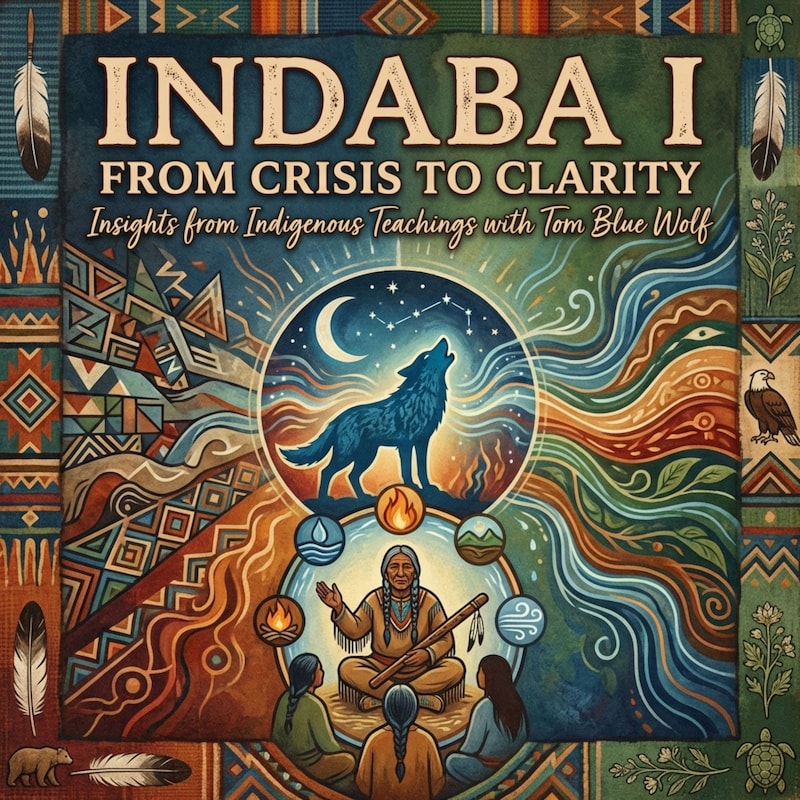
Shownotes
The salient theme of this podcast episode centers on the invaluable wisdom imparted by Indigenous teachings in navigating the unprecedented challenges confronting humanity today. We engage in a profound dialogue with Tom Bluewolf, a distinguished founder and director of Earthkeepers and Company, who elucidates the critical importance of fostering a harmonious relationship with both the Earth and one another. Through his extensive experiences as a spiritual guide and environmentalist, he emphasizes the detrimental consequences of perceiving ourselves as separate from nature, advocating instead for a collective consciousness rooted in kinship and respect. Our conversation explores the transformative potential inherent in altering the narrative surrounding our interactions, underscoring the necessity of kindness and empathy in our daily discourse. Ultimately, we seek to illuminate pathways toward a more compassionate and sustainable future, urging listeners to reflect on their language and its power to shape our shared reality.
Takeaways:
- Tom Bluewolf, the founder of Earthkeepers, emphasizes the significance of nurturing our relationship with the Earth and each other in today’s chaotic world.
- Indigenous wisdom teaches us that humanity's separation from nature leads to detrimental consequences for both the environment and our well-being.
- The podcast discusses how language shapes our reality and highlights the importance of using kind and respectful communication to foster positive change.
- A story was shared about a village's unique approach to rehabilitation, which emphasizes community support and compassion over punitive measures.
- The conversation explores the concept of interconnectedness, suggesting that our words and actions resonate throughout the universe, impacting both ourselves and the environment.
- Tom Bluewolf encourages listeners to remember their shared humanity and the fundamental connection we have with the Earth, urging a return to empathy and kindness.
Links referenced in this episode:
Companies mentioned in this episode:
- Earthkeepers
- Intuitive Sound
Transcripts
Foreign.
Speaker B:Tom Bluewolf is founder and director of Earthkeepers and Company, a nonprofit organization dedicated to educating people of all ages on the importance of relationship with the Earth and each other.
Speaker B:He is a charter member of the World Council of Elders, the Indigenous Healers association, and travels the world teaching workshops, conducting ceremonies, and inspiring hearts with the message of peace and harmony with all our relations.
Speaker B:He is a board member of several local, regional, and national environmental organizations and active in many roles with youth programs around the country.
Speaker B:He has appeared on many radio and television programs, written hundreds of articles to present the views of the Earthkeepers Organization, and has received numerous awards and acknowledgments for his work with Earthkeepers over the past 34 years.
Speaker B:Tom is a Native American, Spanish spiritual guide, tribal ambassador, peacemaker, and faith keeper.
Speaker B:He is a musician, artist, herbalist, naturopath, environmentalist, author, and lecturer.
Speaker B:Tom was born in Southern Alabama, raised and taught in the traditional ways by his Creek grandparents.
Speaker B:Tom has tribal affiliation with the Yafala band Star Clan of the Eastern Lower Muscogee Creek Nation.
Speaker B: ntuitive Sound music label in: Speaker A:Well, welcome to the Nexus, Tom Bluewolf, my old friend.
Speaker A:How are you?
Speaker C:I'm good, thank you.
Speaker C:How are you?
Speaker A:I am above average, but I'm getting better.
Speaker A:There's good to see you.
Speaker A:Good to see you too.
Speaker A:We've just for full disclosure, I think we've known each other for about three decades now.
Speaker A:Maybe accounting and counting, but you know, when you get to the seasoned state that we are in, you know, you kind of counting isn't as important as it used to be, but it is relevant to, you know, to a track record, to, you know, there's a bunch of experiences that we have over the course of space and time.
Speaker A:Those experiences add to our perspective and the way that we look at the world around us.
Speaker A:And today, having this conversation with you about Indigenous teachings and wisdom and how that applies to what we're seeing in this, what I consider a transformative disruption in humanity and how those teachings and the wisdom of the Indigenous ancient peoples really can provide some guidance and some clarity to this chaotic time.
Speaker C:I think.
Speaker A:So you would hope so, right?
Speaker A:I mean, one of the things that I've noticed, and I'm sure you have as well, is as we have more experience in time, our perspectives are impacted and influenced by that and we look at the things that we have experienced, and then we see the new things that we're experiencing.
Speaker A:And you go, well, what kind of a filter am I going to use to process this new data set, this new stream of information, the tsunami of shit and the deluge of data?
Speaker A:And I think I know that in the many ceremonies and lodges that I've been blessed to share with you, there's always been a transformative enlightenment and kind of a cleansing in those experiences.
Speaker A:How do you see what we're.
Speaker A:What's going on today?
Speaker A:And how can the indigenous teachings and wisdom help us navigate through this crazy time that we're in?
Speaker C:That's a good question.
Speaker C:You know, that first thing we had to do is get people's attention.
Speaker C:You know, people seem to be stressed beyond the limits.
Speaker C:And, you know, one of the worst crimes, I believe it to be a crime ever perpetrated upon humanity was the idea that somehow we're separate.
Speaker C:You know, once upon a time, we used to think that if the cells in the body start attacking each other, there's an issue with our immune system.
Speaker C:We call that an autoimmune deficiency.
Speaker C:And we give them names, you know, like HIV and rheumatoid arthritis, Penis such as this.
Speaker C:Well, in the beginning, it was told to us that humans were the immune system of the mother.
Speaker C:We had the power to give her a good day or a bad day, Unlike other animals who always just give her a good day because they're all on a mission.
Speaker C:It's the humans that think they can make decisions to do what's right or to not do what's right.
Speaker C:And they call that free will.
Speaker C:But what happens is when they decide they want to start killing each other like cells in the body.
Speaker C:Mother surfers now from an autoimmune deficiency.
Speaker C:And these symptoms that people are calling climate change are basically symptoms of an autoimmune deficiency.
Speaker C:She's dehydrated.
Speaker C:They call that a drought.
Speaker C:She's got chills and fever.
Speaker C:She's got convulsions and seizures.
Speaker C:She's hooked up to IVs all over the world, Thousands and thousands of companies and organizations pulling fluids from her body.
Speaker C:She's surrounded by enough satellites that from Andromeda, it looks like the Earth is in a dialysis machine.
Speaker C:Everybody knows, you know, when you stub your toe, your whole body's evolved.
Speaker C:Well, the Earth is now the stubbed toe of the solar system.
Speaker C:Everybody knows she's in trouble right now.
Speaker C:Now.
Speaker C:And it's because of human behavior, basically.
Speaker C:Human behavior.
Speaker C:People want to deny that.
Speaker C:That's what it is.
Speaker C:And the behavior we have decided by watching and listening is a result of the conversation.
Speaker C:So our people say the world is perfect.
Speaker C:There's just a lot of people having a really bad conversation.
Speaker C:So if we could somehow build the agreement that everyone would raise the level of their personal poetry.
Speaker C:So the things we said to each other were actually a reflection of what we hold dear in our hearts about what it means to be human walking together on the Earth right now.
Speaker C:People are beginning to remember, but not fast enough, that we here who are walking on the Earth are in fact testimonials to a successful lineage of humans who somehow avoided the genocide that's been going on on this planet for thousands of years.
Speaker C:Our ancestors avoided that because here we are walking on the planet.
Speaker C:Millions didn't make it, but we did.
Speaker C:So our people believe that we were somehow chosen because we had what it took somewhere in our essence to actually make a positive difference in the transformation of life on Earth.
Speaker C: people Forget we're rotating: Speaker C:We're following a dwarf star through space at 66,000 miles an hour, and no one has a clue where we're going.
Speaker C:We think that's enough motivation to sing and dance and enjoy the ride.
Speaker C:Pick the low hanging fruit.
Speaker C:Fall in love.
Speaker C:Right now, it's not going to last long.
Speaker C:I did an experiment on myself recently.
Speaker C:I asked some of these astrophysicists and robotic engineers.
Speaker C:I said, you know, here on Earth, everything is slowed way down, all the frequencies, all the energy, all the vibrations so that things appear to be solid.
Speaker C:You know, the third dimension has a definite effect on us, you know, because of these energies, et cetera.
Speaker C:And so my life spreads out.
Speaker C:If I live to be a hundred, that's a long time on Earth.
Speaker C:So I asked my friends, I said, I wonder what I would look like if I wasn't on this ball.
Speaker C:If I was in space.
Speaker C:What would my life be look like?
Speaker C:They said, well, you have to use that equation E equals MC squared.
Speaker C:I said, really?
Speaker C:They said, yeah, that's how we got to the moon.
Speaker C:I said, okay, I'll do it.
Speaker C:So My mass was 170 pounds.
Speaker C:So I multiplied my mass times the speed of lightning and then I squared it.
Speaker C:So in space I would be 1.57 quintillion units of radiation.
Speaker C:That's 19 zeros.
Speaker C:That's a lot of energy.
Speaker C:And I said, well, what would that look like?
Speaker C:They said, blink.
Speaker C:And I did.
Speaker C:And they said, that's it.
Speaker C:If you blink, you miss It.
Speaker C:You go by that fast.
Speaker C:So our.
Speaker C:So it.
Speaker C:The.
Speaker C:In The.
Speaker C:The result of that experiment I did on my spirit was to realize how fleeting this all is.
Speaker C:And the illusion of ideologies that become delusional inside this bubble that we're put in has caused us severe crisis right now.
Speaker C:And if we want to make a difference and alter the steering, we feel the first thing we need to do is pay attention to our language.
Speaker C:Language is the fabric of the culture.
Speaker C:You want to change something, you speak, they call it.
Speaker C:You know, it's kind of like casting a spell, you know, spelling and all that.
Speaker C:So if we say, I'm about to say something, I want it to be true, I want it to be necessary, but most of all, I want it to be kind.
Speaker C:If we're kind to each other, it makes a big difference.
Speaker C:We.
Speaker C:We reduce all of these sophisticated and complicated issues.
Speaker C:People say, well, what about this?
Speaker C:And what about that and these, all these ideologies, right?
Speaker C:And I say, well, what if you just forget about all the ideologies and realize that we owe our entire existence to 12 inches of topsoil?
Speaker C:The fact that it rains.
Speaker C:Once we realize that, you think, well, who.
Speaker C:Who are you here with 700 and some odd billion people who all came through a mother.
Speaker C:We have that in common.
Speaker C:We also have it in common that we're all going to die.
Speaker C:You would think that we all have a mother and we're all going to die would be enough motivation to have us all get along and enjoy the ride, because we're all headed to the same place.
Speaker C:Like Ram Dass says, you know, we're all just kind of walking each other home.
Speaker C:The conversations that we have between birth and death are hideous right now.
Speaker C:Speaking of the current conversation.
Speaker C:So one of the things that I feel is greatly needed is diligent attempts to alter the global narrative.
Speaker C:And so it all begins right here, right now.
Speaker C:I mean, you.
Speaker C:You can't wait for.
Speaker C:For Calvary to come.
Speaker C:There is no Calvary.
Speaker C:We have to make the difference in our everyday conversation because it is all energetics and it is all connected.
Speaker C:You know, we what?
Speaker C:I think quantum physics calls it the entanglement theory.
Speaker C:What happens on one side of the universe is felt on the other.
Speaker C:The whole place is connected.
Speaker C:Once we actually remember that, then we can make a difference.
Speaker C:And so then we start speaking kindly to each other.
Speaker C:We start being respectful and bringing dignity to the situation.
Speaker C:We start caring about the children, we start caring about the water, we start caring about the topsoil.
Speaker C:All the things that really Matter about keeping this sweet dream of life on earth alive.
Speaker C:What we're doing now, we can see the end of the trail.
Speaker C:I mean, there's more plastic in the Pacific Ocean right now than there is fish.
Speaker C:So, I mean, we.
Speaker C:We have to alter the course.
Speaker C:And it begins by the.
Speaker C:I mean, you got to track it.
Speaker C:But believe me when I tell you it begins with the next thing we say.
Speaker C:How we speak to each other makes a huge difference.
Speaker C:So much so that when I take these trips to Europe and Africa and South American places, this is what comes up.
Speaker C:I was in Africa not long ago in Kenya, and I was talking to the Maasai people, okay, living in the bush, right in Kenya.
Speaker C:Big old fella.
Speaker C:Beautiful regalia.
Speaker C:They love red.
Speaker C:I mean, so everything is shades of red, you know?
Speaker C:And he grabs my arm, and that's the way they greet you.
Speaker C:I didn't know that at the time.
Speaker C:I was a little bit intimidated.
Speaker C:He grabbed my arm, and he said something in Maasai language.
Speaker C:It sounded kind of like he was just clearing his throat.
Speaker C:And I asked my interpreter, and I said, what did he say?
Speaker C:My interpreter said, he asked you how the children are.
Speaker C:I said, he asked me how the children are.
Speaker C:He goes, yeah.
Speaker C:And I was so touched.
Speaker C:I had never.
Speaker C:I mean, upon meeting somebody, that's never been the first question, how are the children?
Speaker C:And then my interpreter told me, he also said that whatever I said in response to that question would tell him everything he needed to know about me and the culture that I come from.
Speaker C:And so I'm thinking, this is what we need.
Speaker C:This is the kind of empathy and the kind of compassion that's missing in the conversations here today.
Speaker C:You know, how are the children?
Speaker C:Children of the future.
Speaker C:Water is life.
Speaker C:The earth gives us food.
Speaker C:Even the.
Speaker C:In our language, the word for plants is basically translated into English as those who care for us.
Speaker C:You know, the plant people are those who care for us.
Speaker C:So they are our relatives, our keepers, and they teach us about forgiveness, because no matter what we do to them, they keep coming back.
Speaker C:That's a beautiful forgiveness.
Speaker C:And so this is what I believe.
Speaker C:I believe that if we really want to make a positive change in anything we're doing, it begins with how we speak to one another.
Speaker C:We have to have respect and dignity.
Speaker C:We have to have love and forgiveness and compassion and empathy and reverence and all of these wonderful qualities.
Speaker C:And those qualities have to be inherent in every conversation that we have now more than ever.
Speaker C:Because right now, linguistics is like a medic in a battlefield.
Speaker A:I have to not Only echo that.
Speaker A:But it doesn't surprise me with the synchronicities of what you're talking about and the path that I've been on over the last several years, I've been developing this, what I call as my philosophy of reality and what I call it, the name of it is Informatica.
Speaker A:And informatica is just the simple things of the nut of the nugget, or what first people refer to as first principles.
Speaker A:Thinking, right.
Speaker A:And you have to get to the.
Speaker A:The essence of whatever it is, sans all of the wrapping and the.
Speaker A:The packaging that people have been putting around the language.
Speaker A:And one of the core components of Informatica is that language is the operating system of your mind.
Speaker A:The words, the letters, the sounds, the symbols all have certain meaning.
Speaker A:And they have.
Speaker A:And when they're put together, they become these ideologies that you're talking about.
Speaker A:And to the point you were making about how polluted essentially our conversation is, and it needs to be improved.
Speaker A:There's been a deliberate effort and intent, from my perspective, to mangle and manipulate the language, the linguistics, the meanings we have, all of this confused chaos of crap, and the conversations about our identities and our genders and our purpose and our place in reality and.
Speaker A:And in the.
Speaker A:The societies that we inhabit and that we navigate.
Speaker A:And I think one of the most important things, again, that you just talked about is the purity of the conversation, of the language in the conversation where it's coming from the individual, the integrity and the dignity and the authenticity of the individual and the words that they use to not only describe themselves, but the relationship that they're having with not only other people, but with the universe, with the cosmos, with the Mother Earth.
Speaker A:You know, the whole idea that plants and animals and everything is actually alive was something that indigenous and ancient cultures throughout millennia, through all of the cosmologies of cultures that we've been able to unearth and decode and decipher and try to gain meaning from.
Speaker A:They all have a common theme and characteristic in their cosmologies that somebody from up there came down here, told us something, taught us something, showed us something, maybe even had something to do with our development.
Speaker A:But all of the cultures looked at reality as everything was alive.
Speaker A:Not only us and the animals and the plants and Gaia and the solar system, the sun, the galaxy and the universe were all living beings.
Speaker A:And I think that the purity of understanding the reality of that is where the true essence of the conversation that you're talking about will, will come from.
Speaker A:Once people get rid of all the Crap and they get to really what it is that.
Speaker A:How do you feel about the, the nature of consciousness and reality that you inhabit?
Speaker A:Do you have an understanding?
Speaker A:Do you have a respect?
Speaker A:Do you have a way in which you are communicating with it that enables you to be as pure and as flowing in the flow in the daoist perspective.
Speaker A:Right.
Speaker A:I've told my daughters, if you don't go with the flow, the flow will make you go.
Speaker A:And you will find yourself either having a good trip down the river of life or you're going to be beached and maybe not even have a boat to float in.
Speaker A:Right?
Speaker C:Or like some people, hang on to the bank.
Speaker A:There's a lot of that going on right now, don't you think?
Speaker C:Yeah.
Speaker C:So I'm saying hanging on to the bank, waiting for a, waiting for a windfall.
Speaker A:They're waiting for somebody to throw them a rope, throw them a buoy, throw them a paddle, throw them a boat, throw them something, but they're not moving because they're stuck on the bank.
Speaker C:Well, you know, we say that in your mind, speaking about the mind, you know, our elders always told us that the coyote lives in the mind.
Speaker C:And the coyote knows your language, it knows your favorite words, knows the stories you like to hear, and tells them to you over and over.
Speaker C:And you get used to it.
Speaker C:It's a comfort zone.
Speaker C:The eagle lives in your heart, always tells the truth.
Speaker C:Might not be what you want to hear, might use words you're not used to, might say things that make you feel uncomfortable, but it's the truth.
Speaker C:So the eagle and the coyote are going at it all the time.
Speaker C:Coyote usually wins out because it's so familiar and it says what you want to hear.
Speaker C:So somehow another, we have to allow the coyote to exist, but just use it as entertainment value and amusement.
Speaker C:Don't let it make decisions.
Speaker C:And so value based decision making skills need to come from the heart, not the mind.
Speaker C:The mind is a trickster.
Speaker C:So that's, that's how we feel about that.
Speaker C:And it's interesting, you know, because one of the things that, that I thought was interesting is like on this next trip to Germany, they've asked me to, to recite native indigenous perspectives on ethics, morals and value based decision making skills.
Speaker C:And so when I speak them into this machine, they've set up this computer, it automatically translates them into a software program that installs them in robots.
Speaker C:And I was very, you know, like weirded out by.
Speaker C:And I'm saying because in my mind, because I'm so limited, I wasn't really thinking about artificial intelligence as though it were a humanoid, you know, and that they needed to be programmed.
Speaker C:But then I started thinking about it and it is kind of like what we've become.
Speaker C:And so I said, well, you know, first we need to install these ethics and morals into humans.
Speaker C:The robots think we can take care of them later.
Speaker C:I said, you know, it's humans who have forgotten what that means.
Speaker C:And.
Speaker C:And it boggles the mind when you see some of the lack of ethics and morals in humanity when people become angry or fear based or greedy, one sided.
Speaker C:All of these things that are just the opposite of compassion and empathy and respect and dignity against people that are in your own species, your own family.
Speaker C:Once upon a time, for instance, all the races had a mission.
Speaker C:You know, the red people were in charge of the fire, and the white people were in charge of the air, and black people were in charge of the earth, and the yellow people were in charge of everything else.
Speaker C:And we all sat at the table and everybody respected each other.
Speaker C:We were on a mission, not unlike everybody else on the planet.
Speaker C:And our main goal was to keep the dream alive, make people happy.
Speaker C:One of the events that really shaped some of the morals in me, some of the transformers, and I'm still, you know, digesting this.
Speaker C:I was in a village in Africa once where, you know, they don't have any police or no jails or anything like that.
Speaker C:Everybody just kind of like does what they're supposed to do.
Speaker C:Nobody commits a crime.
Speaker C:There's not even a word for it, you know, but having said that, this one old fella knocked another fellow over and when he did, he hit his head and it killed him.
Speaker C:And so I wondered what they were going to do about that because people were, you know, people took sides immediately.
Speaker C:You know, one guy gets the other guy.
Speaker C:One guy's dead, He's a victim.
Speaker C:The other guy killed him.
Speaker C:Was it an accident?
Speaker C:I mean, it went on and on and on.
Speaker C:It didn't last a long time, but it was peeing.
Speaker C:So they took the guy and they tied him to a chair and set him in the middle of the village, blindfolded him.
Speaker C:And the whole village came out and sang his birth song to him.
Speaker C:And then they told him stories about his family because, I mean, this village had been there for 10,000 years.
Speaker C:They knew every.
Speaker C:Everybody knew everybody.
Speaker C:I knew your grandfather, I knew your great grandfather, you know, so they're telling him all these stories within an old time.
Speaker C:He's crying like a baby, you know, from, you know, he was Just so remiss, you know.
Speaker C:So towards the end of it, there was a lady in another one of these little crawls, like the little huts they lived in, who was just about to give birth.
Speaker C:So they took him into that crawl, still blindfolded, and had him deliver the baby.
Speaker C:She delivered the baby right into his hands.
Speaker C:He couldn't see anything.
Speaker C:He could only feel it, smell it, you know, hear it, and he couldn't see it.
Speaker C:Well, after he.
Speaker C:After the baby went into his hands and he carried the baby over to the woman blindfolded, he fell to the ground in a fetal position and, like, primaled right there and became a priest.
Speaker C:To me, that was a beautiful expression of rehabilitation in the moment.
Speaker C:The same day, all of this happened the same day.
Speaker C:I mean, he didn't have to serve 20 years in a penal colony.
Speaker C:You know what I mean?
Speaker C:He didn't have to do all of these things.
Speaker C:It just doesn't really create rehabilitation.
Speaker C:Of course, it's sad, but instead of losing two people, we lost one person and turned the other one into a priest so that he could help other people.
Speaker C:I was.
Speaker C:I'm still digesting that.
Speaker C:And that happened 15 years ago and.
Speaker C:But I still think about it.
Speaker C:I mean, it was deep and intense about what people can do when forgiveness is at the top of the chart and mercy is at the top of the chart, and respect and dignity.
Speaker C:And so I'm thinking, you know, would that have happened here in the United States with the kinds of systems we've got set up?
Speaker C:Probably not.
Speaker A:Not a chance.
Speaker C:Not.
Speaker C:But this is the direction I really feel that the earth needs to move in.
Speaker C:Here's another story.
Speaker C:I think a quick story.
Speaker C:The Trail of Tears.
Speaker C:All right?
Speaker C:I knew my great grandfather.
Speaker C:My great grandfather was a toddler on the Trail of Tears.
Speaker C: told me stories about it from: Speaker C:And one of the stories was when we left here to go out to Oklahoma, people were concerned about what to do with the treasure.
Speaker C:Well, when the colony people, colonial people, colonizers, heard the word treasure, they thought, gold.
Speaker C:They're still digging up these mountains looking for that gold.
Speaker C:But that's not what we meant when we said treasure.
Speaker C:The treasure that we didn't want to leave was all of the songs we had for all the trees and the flowers and the plants and the animals.
Speaker C:All of those songs were sacred songs.
Speaker C:And we couldn't take them with us because they're here.
Speaker C:They're not in Oklahoma.
Speaker C:That's a different place.
Speaker C:So that was one of the saddest aspects of departure was we had to give up all these songs.
Speaker C:So they fretted over what they were going to do with them because they didn't want them to fall into the hands of the colonizers.
Speaker C:Because they seemed to be destroying everything they touched.
Speaker C:So after some debate, this old grandmother stood up and she says, there's only one place where our treasure will be safe.
Speaker C:They said, what's that?
Speaker C:She said, we had to get together and come up with the sweetest dream we can think of and put our treasure in that sweet dream.
Speaker C:She said, these people live in a nightmare they'll never have access to.
Speaker C:If someone of these people happens to stumble into our sweet dream, they're welcome to the songs.
Speaker C:These songs were made for the people who live in the Swedish dream.
Speaker C:And so I remember that to this day.
Speaker C:I mean, he told me that when I was 8 years old.
Speaker C:But I'm thinking, this isn't perishing, you know.
Speaker C:How do we keep the sweet dream of life on earth alive?
Speaker C:How do we keep respect and dignity and.
Speaker C:And.
Speaker C:And.
Speaker C:And generosity and mercy and most of all, love.
Speaker C:How can we keep love alive?
Speaker C:You know?
Speaker C:I say, well, who do you love?
Speaker C:What do you love?
Speaker C:People have forgotten.
Speaker C:One of the things I've noticed, too, is whatever we call the truth.
Speaker C:You know, it's like truth left town, truth is gone now.
Speaker C:People got the word opinion confused with truth.
Speaker C:You have an opinion, you think that's the truth.
Speaker C:Well, they said, truth left town.
Speaker C:I said, yeah, he's gone.
Speaker C:They said, where'd he go?
Speaker C:I said, he lives up behind my house by Jack's River Falls.
Speaker C:And now if you want to find the truth, you got to go deep into the forest and find a waterfall.
Speaker C:That's where the truth will be.
Speaker C:And so truth hung out there for a while, several years.
Speaker C:All of a sudden, here comes beauty walking down the road.
Speaker C:Truth forgot all about beauty.
Speaker C:But then when he saw it, it all came back to him.
Speaker C:And he just.
Speaker C:His heart just exploded.
Speaker C:He just fell in love with this beautiful woman entity.
Speaker C:Well, she didn't want to have anything to do with him at first because he'd been in the forest so long, he looked a little tattered, you know.
Speaker C:But the truth is persistent.
Speaker C:So she finally saw the truth, and she fell in love with the truth.
Speaker C:So they got married.
Speaker C:So now our people say we don't have to look for the truth anymore.
Speaker C:We just look for beauty.
Speaker C:And so I could say, don't you think those grandbabies are beautiful?
Speaker C:And you'd say, boy, ain't that the truth?
Speaker A:Very nice.
Speaker C:Yeah.
Speaker C:These kinds of stories and the use of these kinds of words in this kind of language is what we're, is what we're going to have to do to change the outcome.
Speaker C:You want to change the future, you really have to change the conversation because it will lead to our destiny.
Speaker C:Whatever we talk about, we've already established our destiny.
Speaker C:And I think in the scriptures it said, he who lives by the sword will die by the sword.
Speaker C:Well, I think you could say he who lives by a horrible language will die by a horrible language.
Speaker C:Because that's what happens.
Speaker C:You create your destiny.
Speaker C:So you've got.
Speaker C:I mean, it's imperative that we start speaking to people in a kind manner.
Speaker C:That we start giving people respect, everybody wants respect.
Speaker C:That we start bringing dignity to the situation.
Speaker C:And all these other ones like forgiveness and mercy and reverence, compassion and empathy will follow suit because our people said we were only.
Speaker C:My grandfather told me this one time, he said we were only given two rules, he said, but they weren't sophisticated or complicated enough.
Speaker C:And the colonizers had the capacity to mess up a two car parading.
Speaker C:The first rule was to love the creation with all of your heart.
Speaker C:And the second rule was to love all your relatives.
Speaker C:So if you love the creation and you loved all your relatives, we've got a shot at thrivability that will keep the dream alive.
Speaker C:And we can enjoy the low hanging freedom and we can sing and we can dance and we can care for each other.
Speaker C:Because originally we were shepherds and stewards and caregivers.
Speaker C:That's when for hundreds of thousands of years, we foraged and we gathered and we hunted and cared for the forest and we cared for each other.
Speaker C:Mostly we hear the bad news, you know, the thousand years of peace, you know, as soon as you hear the story and it says okay, and they lived happily ever after, there's no more story.
Speaker C:They don't write it down again until somebody hits somebody, you know what I mean?
Speaker C:Then they start telling the story again.
Speaker A:Yeah.
Speaker C:So for thousands of years we were happy and at peace.
Speaker C:But nobody hears about.
Speaker C:We only hear about the wars and the fighting and the mischief.
Speaker C:You know, that language starts to be wrapped around that.
Speaker C:So, you know, the English language has lie, cheat, steal, manipulate, plot, scheme, deceive.
Speaker C:You can't say those things in indigenous languages.
Speaker C:There's no words for them.
Speaker C:You want to keep the sweet dream alive, keep the language sweet, you know what I mean?
Speaker C:Say good things that will keep the actions higher as well, because actions and Behavior follows the language.
Speaker C:So I think about that.
Speaker A:So bringing that to our current set of circumstances and the chaos and the crap and the conversation that's going on around the planet.
Speaker A:I've noticed that my husky has just arrived.
Speaker C:That's right.
Speaker C:Welcome that.
Speaker C:Yeah, yeah.
Speaker A:The conversation is.
Speaker A:It's purposely polluted, in my opinion.
Speaker A:There's been an overt intentional effort to cause the chaos and the crap that's conversation.
Speaker A:And at the same time, it seems to be.
Speaker A:And like your thoughts on this, it seems to me that it's.
Speaker A:It's rather isolated in that the majority of the conversation with all of the nonsense in it, the carefully crafted and curated crap that they've thrown into it, is really.
Speaker A:It seems to be kind of limited, in my opinion.
Speaker A:It's a smaller group of people that are doing this.
Speaker A:They just happen to be the noisiest, the loudest, the most persistent in trying to push the stuff that they've curated to cause the confusion and chaos.
Speaker A:But when I go out and I leave my little bunker here and I go and engage with humanity and the little town that I'm in, I don't see all of this as much of the volume and velocity would indicate that it would be out there.
Speaker A:There seems to be.
Speaker A:From my perspective, I think what's happening is we're seeing a paradox of change.
Speaker A:We're seeing an old cycle of energy that is diminishing in its substance and the intensity that it has been on.
Speaker A:It's been about 400 years or so.
Speaker A:When I look at things like astrology and the different cycles within cycles of the energy of the cosmos, and that while that one's diminishing, there's this other one that's emerging.
Speaker A:And we're kind of in that cross parable of the diminishing and the new one that's arising.
Speaker A:And in that space is a bunch of confusion because of the transformation of energies.
Speaker A:When I go out and see that I engage with humanity and the rest of reality outside of my bunker.
Speaker A:I hear the chaos that people say is existing, the conflict of ideologies, and all of the chaos that people are trying to shove into the conversation.
Speaker A:But I don't see it when I go outside.
Speaker A:I see it and hear it from the feeds that people are manipulating to shove their information and their version of reality into the.
Speaker A:The news and information that you have access to.
Speaker A:But when you dump that and you go out and you just engage with humans, it seems like there's more of a.
Speaker A:At least let me put it this way.
Speaker A:It seems to me that this transformative energy that we're going through, this paradox of change, that there's more people that are feeling and engaging with this rise of new energy, they don't know what it is.
Speaker A:They're confused because the information they've been given to filter the information has been, you know, it's purposely been manipulated to cause the confusion.
Speaker A:But people are starting to feel the rise of this new energy, and they don't know what to do about it.
Speaker A:They feel like it's probably a good thing, but they're still feeling the effects of all the crap, so they're having a hard time filtering the good stuff.
Speaker A:That's about.
Speaker A:In the energetic cycles of what we're seeing.
Speaker A:Does that make any sense to you?
Speaker A:Do you see any of that kind of.
Speaker C:Absolutely.
Speaker C:I call it as people with the lack of clothes.
