Shownotes
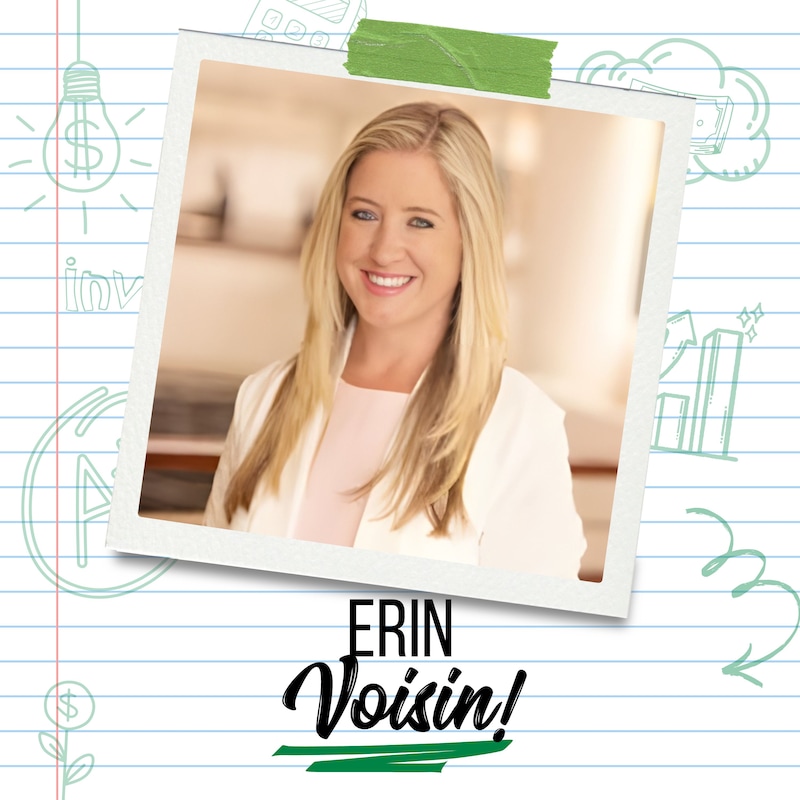
Welcome back to Don’t Retire… Graduate! In today’s episode, we’re diving deep into the path to purposeful financial planning, how the industry is evolving, and the pivotal role empathy and advocacy play in our profession. I’m thrilled to be joined by Erin Voisin, a powerhouse in the wealth management space. As a financial advisor at EP Wealth and a leader who's grown her team from three to over 60 in less than a decade, Erin brings a wealth of real-world experience. She’s also devoted to pro bono work, particularly through the Financial Planning Association’s initiatives and volunteer work supporting cancer patients. In our conversation, Erin and I explored the unpredictable roads that lead so many of us into financial planning—often “falling into” the profession unexpectedly—and why that non-linear journey matters. We discussed her remarkable leadership journey, growing a department and cultivating a culture that values both technical expertise and the human side of finance. Erin shared how her team’s growth has been fueled by a commitment to providing clients with not just planning, but an entire suite of hands-on, multi-disciplinary services—from tax and estate planning to specialized family office offerings. 5 Key Takeaways:
- The Human Side Sets Us Apart: Erin emphasized that while all advisors have access to similar tools, it’s the client experience, the team approach, and the genuine relationships that differentiate great firms from the rest.
- Growth Through Opportunity and Diversity: Her remarkable team expansion wasn’t just about numbers—it was built through organic and strategic growth, focusing on both service breadth and hiring talent from all backgrounds, especially by nurturing young professionals through internships.
- Combatting Industry Misconceptions: We discussed the persistent negative stereotypes about financial advisors, tracing them to media portrayals like “The Wolf of Wall Street.” Erin believes showing up with empathy, advocacy, and authenticity is key to changing minds.
- Financial Literacy and Pro Bono Advocacy: Erin’s commitment to pro bono work—particularly supporting cancer patients and educating women—shines a spotlight on the importance of making financial advice available to everyone, not just the wealthy.
- The Future is Relational, Not Transactional: Looking ahead, Erin and I agreed that the next evolution in financial planning will revolve around holistic financial wellness—where coaching, empathy, and mental preparation for major life transitions are as vital as investment returns.
Join us for this candid and inspiring conversation as we talk about building a more inclusive, human-centered future in financial planning. As always, I hope you find ideas and motivation to spark your own journey toward financial freedom and purposeful living. Don’t forget to subscribe, rate, and share the show to help us spread the word. [embed]https://www.youtube.com/watch?v=u4_9KFnJP38[/embed]
Mentioned in this episode:
Don't Retire... Graduate! is presented by BFG Financial Advisors
BFG Financial Advisors helps individuals and families design a financial future that supports the life they want to live—not just the numbers on a page. From retirement income and tax strategies to legacy planning and investment management, our team builds personalized plans designed for clarity and confidence. Ready to take the next step? Visit bfgfa.com to schedule a free consultation and start planning your next chapter.
Transcripts
Welcome to Don't Retire Graduate, brought to you by BFG Financial Advisors. We're here to rethink what retirement really means to you so you can graduate into the next chapter of life with purpose and with passion. I'm your host, Eric Brotman, and in this, our seventh season, we'll be bringing you interviews with guests who will share their money stories with us every other Thursday. If you haven't already done so, please subscribe so you never miss an episode. Today, I'm pleased to be joined by Erin Voisin. Erin's a financial advisor on the west coast of the US for individuals, families and institutions. In her nine years at EP wealth, she's grown her team from three people to over 60, which is mind numbing and I'm excited to talk about it. She's passionate about industry membership, guiding her own team members and participating in various initiatives, including the Financial Planning Association's Pro bono Financial Planning days.
Eric Brotman [:And she's an FPA Pro Bono for cancer volunteer and just an all around star in our industry. Erin, welcome to Don't Retire Graduate.
Erin Voisin [:Hello. Thank you. Thank you for having me.
Eric Brotman [:You know, it's always fun when I get a chance to interview another financial advisor for a couple of reasons. One is some financial advisors would be too threatened to go on another financial advisor's show. And two, some, some financial advisors would be too threatened to have a financial advisor on their show. So being that we're coming from an abundance mentality rather than scarcity, tell us a little bit about you and let's start with, why did you get into our amazing industry?
Erin Voisin [:Yeah, I'm the classic, I fell into this industry. So I started as an intern when I was 20 years old. And it really stemmed from I'm from the Midwest, I'm out in California, and my dad had told me, hey, if you want to stay in California once you graduate, you need to graduate with a full time job. And so all I did was go to my college website. I applied to every single internship that I could find and I wound up with MetLife in their case design unit, which was essentially their financial planning department, and fell in love with it. I was going to school for business and psychology and found this and couldn't believe that I got to work with numbers and I got to work with people. I was like, this is the perfect job and never left. So almost 20 years later, here I am, still in the industry.
Eric Brotman [:It's funny because I think so many of us fall into this career. I mean, we could do a full show on why that's happening because I don't think there's much of a career path. Like, people, young people know, if they want to be an accountant or a lawyer or an engineer or a doctor, they know how to do it. There's a linear path, but the path to being a financial advisor is not linear. It's kind of ridiculous. A lot of career changers. I mean, I studied English and psychology, so. So maybe it's the psychology that binds us, Aaron.
Erin Voisin [:Maybe it's the psychology.
Eric Brotman [:The psychology binds us. I love that you started as an intern. You know, we have a number of financial advisors here who started as interns who have been growing their careers. What I don't understand is how you went from three people to 60. And you've got to explain that story to me, because I started with three people, but it was 22 years ago, and we are 24 people with two offices and think we're big. So I have apparent envy of whatever you've been able to do. So tell. Tell me, how have you done that? What is.
Eric Brotman [:What is the secret?
Erin Voisin [:Yes. I mean, it's. Honestly, I think for me, one of my proudest moments of the career is just getting to see the team grow. So when I started with ep, there was three of us on the team. And my goal in coming here was to build out the financial planning department and our service offering. And we've grown. We have grown both organically and inorganically. And so through that, I've really been able to build and develop out my team, especially as we've built and developed out our offering.
Erin Voisin [:So going from financial planning to having a dedicated retirement plan services team, to then adding our tax team and our estate team, now having our corporate trustee team, and then the latest is our family office service team. So all of that has meant that we've had to add amazing talent to our bench. And I think as of the end of the year, we hit 70. I think we have a new team member starting next week, but we just anticipate continuing to grow that. And, you know, you said, like, starting as an intern. We love our interns, and if we can bring interns on and help grow them into, whether it's someone in my department or another, you know, that's really the ultimate goal, is to keep bringing people into the firm and growing our bench.
Eric Brotman [:Now, how do you. I mean, other than going on podcasts and telling your story, how do you differentiate yourself and market yourself in what is a very crowded, sometimes challenging space? A lot of firms sound the same. You know, I Did a study once with. Are you familiar with the ensemble practice with Philip Palavez?
Erin Voisin [:Yep.
Eric Brotman [:You know him? All right. So Philip had 30 or 40 of us in a room once, and he asked us each to introduce ourselves and talk about our firms. And then he handed us sheets of paper that had quotes from the homepage of each of our websites and said, which firm belongs to which person? Only two. Only two were even recognizable. The other 38 all sounded exactly the same. People got their own wrong. So how do you stand out in such a crowded, convoluted space where everyone's throwing around the same buzzwords?
Erin Voisin [:It's funny because we talk about this a lot. Like, everyone says they do financial planning and investment management, or everyone says they do wealth management. And I always compare it to, you know, like, building a house. Like, everyone has the same tools. Like in our industry, everyone has the same tools in their toolbox. We're all trying to offer financial planning. We all have access to the same softwares, you know, the same stocks, mutual funds, et cetera. So how do you go and differentiate? And that's where the experience comes in.
Erin Voisin [:So the experience that you have a client go through when offering all those solutions is how we differentiate. So it's the team that we've built around the advisors to go out and have that relationship with the client beyond just the advisor. So not necessarily like an advisor team. It's your tax person, your investment person, your financial planner, the estate team member that now has a relationship with you. We've just built what we still feel is very white glove, personal, customized to a client, but extends beyond that one advisor that they might look at as their relationship manager. So when a client starts to work with us and goes through our process, it's just the experience that they get. It's not only doing the plan, but it's implementing it and then it's monitoring it. It's one thing to put a PDF in front of someone and say, hey, here's your plan for us, it's the action plan.
Erin Voisin [:It's what do we actually have to do with you this year and ongoing? And I think that's what really starts to set us apart is the experience that our clients have when working with us.
Eric Brotman [:Well, I love that. And I do think we're kindred spirits and are meant to stay in touch because it sounds like you're doing some great stuff. Tell me, I mean, you've been with EP now almost a decade. No doubt you have seen some remarkable wins and had some amazing experiences where a client has said, oh, my gosh, you changed my life in all these profound ways. And it's one of the things that keeps, I think, all of us going. Are there some moments that you can identify? And I don't mean to put you on the spot, but moments you can identify where you said, oh, my gosh, that's why I do this?
Erin Voisin [:Absolutely. I mean, one that, like, when you say that, like, immediately comes to mind is, you know, I'm a cdfa, and a lot of people are like, divorce planning sounds awful. That's a highly emotional, complicated situation that someone is going through. But I also think it's one of those moments, you know, that matters to someone going through it, where they just need a confidant. They need someone who feels like they're their advocate and on their side. And it was the wife that I was working with, and I will never forget her sitting in a conference room with me, just sobbing into my shoulder, just like, crying, and her just telling me so many times, like, thank you for being here for me. Like, you're the only. Like, I feel like you're the only one I can talk to about this, but I feel like you have my back and you're in my corner.
Erin Voisin [:And that was just one of those moments that stuck with me because in my mind, all I'm trying to do is make sure that she gets what's rightfully hers and that she feels educated and empowered through. Through the process. So that's one that I definitely think will always live in my brain. And those are the moments that I think help. And we do something at our firm where I call it the Smile file. So I instituted this several years ago for my team, and we start every team meeting with the Smile file. And the Smile file is generally an email we've gotten from an advisor or a fellow client that is celebrating something that a team member did. Because it's great.
Erin Voisin [:It's one to. It's a good thing to celebrate what that person did. It's also a great learning opportunity because I'll put the team member on the spot. What did you do in that meeting? Like, what did you present? How did you react? Was there something you said that prompted this type of email to get sent to us? And so then the team members all hear that, and it's a good learning opportunity for everyone.
Eric Brotman [:What a wonderful idea. I mean, when you can take team meetings and turn them into high five moments. You know, I've never heard the term smile file, but we do high five moments in the hallway, you know, Sort of rooting together and feeling good. And I think that's important. So let me ask you, and I have no idea what you're going to say to this, which is part of the fun, but why does the media, and particularly Hollywood, paint financial advisors out to be some of the worst human beings ever? Is it just because that's what sells advertising and that's what sells tickets? I mean, how rare is it that you see a story where a financial advisor has been the hero? They're always the villain. Why is that? Because those aren't the people I know in this business.
Erin Voisin [:They're not. And I mean, I say this all the time, like when I'm talking with friends, you know, at a, at a party, because they always want to ask, you know, about the market or something like that, but they always want to bring up the Wolf of Wall Street. Like that is their go to thing. Like, oh, is everyone like the Wolf of Wall Street? And it's like, no, that isn't. Like, yes, is a person who exists in real life. And that unfortunately did happen, but that was in another place at another time. Like, we're a highly regulated industry. We do great things.
Erin Voisin [:And again, I sometimes feel like people have to go through it themselves to see it and understand exactly what it is that we do. I mean, it's so. It is. You know, when they tell you to go into an elevator and have your elevator pitch in 30 seconds and talk about what you do, it's hard to capture it because again, you are changing people's lives in a different way.
Eric Brotman [:The Wolf of Wall street did us no favors. Bernie Madoff did us no favors. There are so many stories like that. And, and by the way, you know, I was asked when I started this show seven years ago, I had hired some consultants to help me figure out how to podcast. I didn't know how to do this naturally. I think I do now. You can tell me, but they always ask, what do you want this to be? And I said, well, I think the world deserves better than Susie Orman and Jim Cramer. Why not me? And I don't say that to besmirch them as individuals, but I recognize that what they're doing is entertainment and not edutainment.
Eric Brotman [:And I think it's really important for us to be able to bring stories and things to life that are uplifting and that are. That's not to say there aren't cautionary tales, but, you know, it's our job to educate, but also to listen and to be. You said the Word advocate, which I think is maybe the most important one. People feel very alone and finances are not talked about at home. It's not taught in school. You come out, you get your first job, you're 21, 22 years old, and they hand you the hundred page here, sign up for benefits. We need this Friday. And you don't have a clue.
Eric Brotman [:You don't even know where you're parking for work yet. It's a very difficult thing and no one talks about it. It's taboo.
Erin Voisin [:It is.
Eric Brotman [:How do you get no.
Erin Voisin [:And I think that's why financial literacy is so important.
Eric Brotman [:So. So you're doing a lot of pro bono work with fpa and you know, I. There's the story with, with the fpa. I was actually a member for many, many years and chaired the State of Maryland's FPA and got to choose a vice chair. And the vice chair I chose, this was now 20 plus years ago, is now our incoming CEO and is taking my spot. She wound up joining our firm. And so the FBA has brought together some amazing people. And certainly I'm a huge fan.
Eric Brotman [:You're really involved in the pro bono work, which is providing financial advice for people who maybe are underserved or can't get financial advice someplace. Talk a little bit about why that's important to you.
Erin Voisin [:Yeah, I mean, I kind of have that belief that everyone deserves a financial plan, you know, regardless of how much money you have. I just think there has been, there's been so much that you can help other people with. And so when I started with the FPA in their pro bono days, it was really just okay, if I can go dedicate four hours, I'll sit in the library downtown in LA and answer questions. And then that really transitioned to working with FPA pro bono for cancer. And that was really a passion project. You know, cancer is something that has affected my family tremendously and I saw the financial impact that it could have. And so being able to, to connect with people who are going through something so traumatic While you're getting $50,000 bills every other day in the mail for chemotherapy, and you're just like, I don't even know what to do with this. How do I battle insurance? What does this all mean? Was incredibly rewarding.
Erin Voisin [:And unfortunately they kind of disbanded that program. And it still exists in a different format, but really then it's transitioned to the work I do with the CFP board and the Women's Initiative and just always going back to how do we continue to educate people on this industry, like we talked about, you know, a couple minutes ago, this is a fantastic industry for people, specifically for women. You know, that's another passion of mine. And the more that we can be out there, you know, I, I fundamentally believe in the saying, you cannot be what you cannot see. So no one's going to know that this exists if we're not out there. And whether that's at college fairs, college campuses in the high school, when they're starting to think about this, I just think it's important for us to be out there educating that next generation on this amazing profession.
Eric Brotman [:I share your passion for that. And in fact, in fact, you know, our leadership team is 50% female. Our new CEO is an amazing woman. I was telling you about from fpa. There's. I happen to think women are better suited as financial advisors than men are. And a lot of people get very upset when I say that because there obviously are terrific advisors of all types of. But the job of a financial advisor, certainly a CFP practitioner, is very different than the job of a stockbroker in 1975.
Eric Brotman [:It's a very different job. It's not transactional, it's relational. It's not, it's not. There's this, this myth that girls aren't good at math. I'm a, I'm a, a dad of a daughter who is fantastic at math. I also try and explain to people that the math in our business is middle school math. It's not upper calculus, it's algebra at worst, and most of most of it's arithmetic. So we're not talking about higher level math where you need to be a certifiable genius.
Eric Brotman [:But I will say that the relational side of this business, the trust level, the empathy level, the ability to connect with people, is not uniquely female, but it is more innately female, in my opinion. I don't know if you share that opinion, but, but that's the way I feel about it.
Erin Voisin [:No, I actually think to your point, I mean, it's. Everyone can have those qualities, but it is more innate in women. It's just empathy and relationship building and being able to like, just, you know, listen and have those type of conversations. And I think what you said is very accurate. I mean, we joke all the time, as many advisors do, that. You know, our business is probably half math, half therapy, which again goes back to like, probably why people interested in psychology flourish in this business. Because you want to understand people. It's not about understanding the stock market all the time.
Erin Voisin [:It's about understanding People and what's going to actually make them tick or be emotional or drive to decisions.
Eric Brotman [:I also go to a lot of conferences, as I'm sure you do. And I look around the room and it's all old white guys, and I'm not throwing stones because I am one, and therefore that's okay. But you look around the room and the industry is, I've heard it called stale, pale and male. I don't know if you've ever heard that. But the pendulum needs to swing and it needs to start with some of the college recruiting, which you talked about. I think it also needs to start. And the CFP board has tried to do advertising around it, and I think they've missed the mark as much as they've hit the mark in various ways. But I don't think people really identify what a CFP is.
Eric Brotman [:Like they do a cpa, they know a CPA like it was like it was taught to them in third grade. And yet a CFP is a mystery to people. How do we. How do we, as fellow practitioners, there's. How many. How many CFPs are. There's a hundred thousand, right? A hundred thousand have.
Erin Voisin [:Yeah.
Eric Brotman [:Somewhere around there, past the credential. I don't know if they're all practicing anymore, but 100,000 folks, which is still a very small number relative to the population of even just this country. So we are a country of very underserved communities who need what we do, who often either can't afford or think. They can't afford or think. This isn't for me, and not just for the families who we want to serve, but for the people who might look at this industry. We've had people tell us that, that, that they were, you know, not encouraged to even go to career fairs in our industry because they thought, oh, that's not for us, that's for these other people. How do we change the narrative? I mean, other than one person at a time or one podcast at a time.
Erin Voisin [:Yeah, I mean, it goes back to like, we just. It really takes the. A hundred thousand of us being out there in communities in the, you know, whether it's. It's podcasts, it's conferences, it's local career fairs. I mean, as sad as this is to say, I'm in a local mom's Facebook group. And that has been something that I've leveraged to try to be more vocal because the amount of women that go in there and post financial related questions, just desperate for someone to give them answers. And you get, you know, 3040 responses from every mom out there who thinks that she knows the answer. But I like, I go out there to just say, make sure you're working with the cfp.
Erin Voisin [:Like this credential is important and like you can post a link to the CFP website. But it's like it really is finding every opportunity that you can. And it might be as simple as a Facebook group or, you know, a community that you're involved in or a group that you're involved in to just do those education moments. Because I just think people don't get it. They think insurance broker, they think someone's going to sell me insurance. They think of the stockbroker, you know, someone who works at one of the large brokerages who's just going to put them in some account. There's just not enough education about even like the RIA industry. Like how many times I have to explain what an RIA is to people.
Erin Voisin [:I think is almost up there with.
Eric Brotman [:What is a cfp, maybe, maybe worse. I bet there are people watching this show right now who don't know what an RIA is. You know, registered investment advisory for those of you keeping score at home. So not only is this a tough narrative, but there's no barrier to entry to call yourself a financial advisor. You know, you show up for your first day of work at XYZ Mutual Insurance Company or XYZ Brokerage and you have financial representative or financial advisor or financial consultant or I've even seen financial engineer, whatever that is. There's. But it's the first day you show up, you're no more credentialed than the next door neighbor. And you can't do that with other professions.
Eric Brotman [:You can't. You can't show up for your first day at med school and say, I'm a doctor.
Erin Voisin [:Right.
Eric Brotman [:Why is it that this industry still allows? Maybe it's lobbying, maybe it's politics. I definitely don't want to get into politics. But maybe there's a reason why this industry still allows themselves to call people financial advisors when they are no more credentialed than the person they're advising.
Erin Voisin [:I think a lot of that goes back to the suitability and fiduciary standard. I think as long, and this is just like me saying this, as long as we still have something that we could consider suitable, you're going to have those people that can go out and pass their insurance exam, you know, and get a 70% and go out and sell these products or sell, you know, go take the 65 or whatever. You know, series exam might be needed and be able to go out and do this. I think it's. I almost think it would almost have to be a requirement. Just like you said, you want to go represent someone in court, you got to have a law degree. You want to go represent someone in finance, you've got to have a CFP or a cfa. Like, there could be a company, couple options, you know, in our industry, but it's just.
Erin Voisin [:It's not. We've let people pass exams with a 70% passing rate and said, you're qualified to go do this.
Eric Brotman [:All right, well, that's terrifying. So this is consumer beware. There. There are standards for certified financial planner practitioners. I feel like we're doing a commercial for the CFP board, which I don't mean to do, but there, but there really are standards for that, not only as a fiduciary, but also in terms of ethical behavior and fiduciary requirements and regulatory requirements. And we are a pretty heavily regulated industry. And yet still people get under that radar, which is tough. So let me ask you to look into your crystal ball, because like all financial advisors, there is one.
Eric Brotman [:I'm not going to ask you what the S and P is going to do this year because, frankly, I don't think it's terribly important. And I know that sounds strange to some people, but you likely agree, where's the industry going? Where's the financial advisory industry going to be in five or 10 years? What does that look like?
Erin Voisin [:I think it goes back to a lot of what we've talked about on the, like, empathy and coaching side. I think there's really going to be a focus on financial wellness and not so much just, are you financially okay? Just are you mentally, emotionally prepared for retirement and all these things that come with it? It's not always about, you know, do you have enough money? It's also, are you mentally and emotionally prepared to enter this new chapter? So I really think the industry is going to start to really lean into the empathy and social aspect of it to ensure that people feel well rounded, you know, going into some of these big life events and moments that matter. And I think you're going to continue to see a push for the ria, the fee, only to really make sure that people feel like they're getting that true fiduciary standard. I do think that is going to continue to become a big pain point for the people that aren't, you know, that have the suitability standard that aren't fiduciaries. I think you're going to start to see more clients look for someone who feels like they're sitting at the same side of the table as them. And I think that's, that's something that our part of it can really lean into. I mean, that's what I love to say to clients is I'm on the same side of the table as you. You make money, I make money.
Erin Voisin [:You lose money, I lose money. Like, there's no financial gain in here for me. I'm not selling you a product. There's no secret commission that I'm getting. So, again, you feel like you're winning together with a client. And I think that's where we're going to continue to see, you know, that evolve.
Eric Brotman [:So how about in terms of generational work? We've got the multigenerational wealth transfer, which has been discussed for my entire career. We've been talking about it for decades. And it's sort of here, I think people have still lived longer than even we predicted, you know, 20 or 30 years ago. But there's, there's an enormous amount of wealth that's changing hands, and it's changing hands to generations who feel very differently than their parents and grandparents do about money. So, you know, I, I see a lot of stories about millennials, and particularly Gen Z's who want their money to, they want to do well while doing good in a very different way, whether it's impact investing or social investing or, or whether it's just being more of a philanthropist than maybe their, their prior generations have been. Are you seeing that pendulum swing within your clientele or the meetings that you're in? Am I onto something? Are we, we going to see more of a, a push toward having money be a tool for good, not just for rich?
Erin Voisin [:I definitely think we are, because I do think, you know, just people right now value different things. It isn't, you know, that I think you're seeing it even in, like, the workplace and what employees are looking for, especially in the younger generations. And I see it with just friends, friends that I know have elderly parents who are going to pass them on some wealth. And, you know, there's a different psychological aspect to it of, like, I want to be financially okay myself. Like, I don't want to rely necessarily on mom and dad to give me this big nest egg. So what can I do with that nest egg that's going to help? Or how can I foster my kids to be more philanthropic? So a lot more conversations, you know, about, like, the donor advised fund and how you can do the annual meeting with the kids or the grandkids and start to pick out the charities that matter and getting more people involved, we have definitely seen an uptick in that. And I think that's special because then you're really just starting to make all those generations just more thoughtful about what they can do with their money, the types of organizations they want to give to. And you're setting kind of some good standards.
Erin Voisin [:And I've definitely seen that happen more and more.
Eric Brotman [:Aaron, I love that and I echo everything you just said. I think you're right. Spot on. I have to ask you the all important question. I've asked you where you thought the industry was going and where he said the generations were going. But I need to know what, what you want to be when you grow up.
Erin Voisin [:Yeah, I want to be a coffee shop owner on the beach. So if you were to ask me what my retirement looks like, I will. I want to own a cute little cafe, coffee shop on a beach and just hang out with whoever the locals are drinking coffee. That is. That's what I want to be when I grow up.
Eric Brotman [:All right. I want to be in that story somewhere. Which beach are you thinking? Do you not care? Any beach. Or do you have a favorite?
Erin Voisin [:I do have a favorite. I grew up going down south to Gulf Shores, Alabama with my family. It's where my husband and I got married.
Eric Brotman [:That is a beautiful.
Erin Voisin [:And I just love, I love that area and I've always envisioned, like, retiring there with my little coffee shop.
Eric Brotman [:I expect that you're already putting together the signage and starting to think about that, even though hopefully you've got a nice Runway left. As a, as a financial advisor and a, and an advocate and so forth, where can people learn more about you and more about ep?
Erin Voisin [:Yeah, I mean, obviously I was a. Feel free to connect with me on LinkedIn. I am definitely one of those people that read my messages. I respond. I get a lot of college interest, you know, people, students that are interested in the profession that are reaching out. I respond to those messages. I take those calls. You know, I'm always happy to talk with anyone who's ever interested in learning more about our profession and what we do.
Eric Brotman [:That's fantastic. And we'll put some of that information in our show notes. It's, it's been, this has been great. I, I really. First of all, you make me feel incredibly optimistic about the industry. I'm not going to date myself, but I think I've got a number of years on you. I'm part of the stale and male thing we talked about earlier. But you, you give me an incredible sense of optimism for the industry.
Eric Brotman [:And, you know, you know, we need more folks like you. And so particularly folks who are considering this career, who are on the west coast, who want to stay on the west coast, should definitely get in touch with you because it sounds like you're building something really special. I congratulate you on your, on your success, and I am proud to be a member of the same industry as you. So, Aaron, thank you for being on Don't Retire Graduate.
Erin Voisin [:Likewise. Thank you so much for having me.
Eric Brotman [:I'd like to thank everybody for watching and listening today. If you enjoy our show, don't keep it a secret. Share it with friends and family so they can join you on your journey to financial freedom. We'll be back in two weeks with another engaging guest. In the meantime, next Thursday, be sure to check out BFG Financial Advisors webinar series Diary of a Financial Advisor, which you can [email protected] for now, this is your host, Eric Brotman, reminding you don't retire graduate.
Voiceover [:Securities offered through Kestra Investment Services, llc. Kestra is member finra, sipc Investment Advisory Services offered through Kestra Advisory Services, llc. Kestra as an affiliate of Kestra is Kestra is or Kestra as are not affiliated with Brotman Financial or any other entity discussed.

