Shownotes
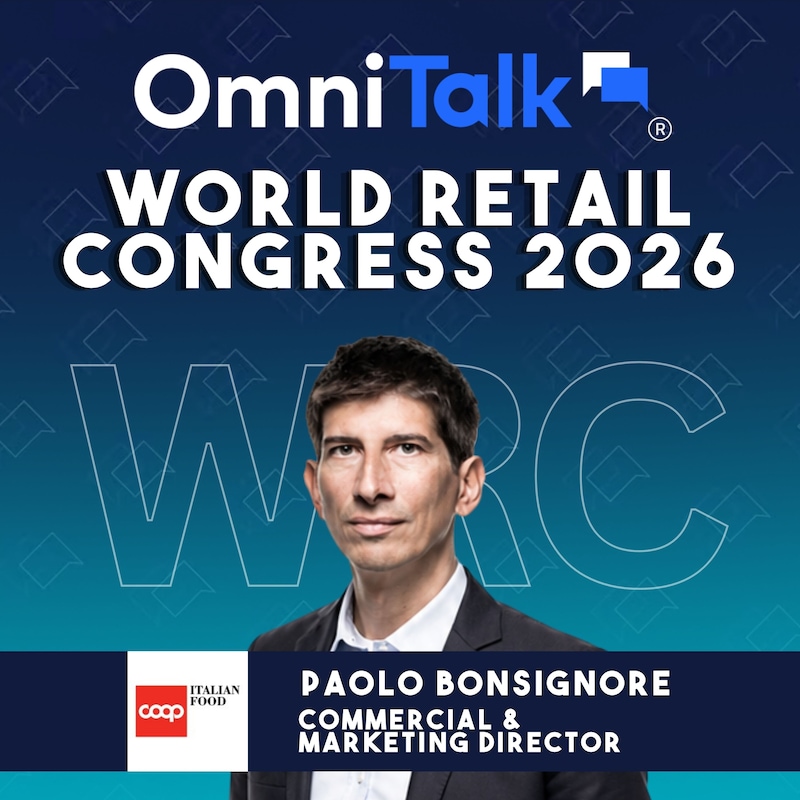
In this Omni Talk Retail interview, recorded live from World Retail Congress 2026 in Berlin, Chris Walton chats with Paolo Bonsignore, Commercial and Marketing Director at Coop Italian Food, to discuss why private label can no longer compete on price alone.
Paolo shares how Coop Italian Food has evolved private label into a true point of differentiation by building emotionally driven brands, category storytelling, and packaging that connects with consumers on a deeper level. From neuroscience-backed design testing to AI-powered packaging feedback, the conversation explores how retailers can rethink private label strategy in a world where consumers expect more than “me too” products.
The discussion also dives into Italy’s unique food ecosystem, why retailers underestimate the power of their own banner brands, and how Coop Italian Food helps global retailers source authentic Italian products while building stronger private label programs.
Key Topics Covered:
• Why “me too” private label strategies no longer work
• How emotion and storytelling drive stronger packaging design
• The role of neuroscience and AI in product development
• Why selling well matters more than simply buying well
• How Coop Italian Food supports retailers around the world
• The future of private label differentiation in grocery retail
• Why banner trust became even stronger after COVID
• How retailers can create more engaging shelf experiences
• The opportunity for AI to accelerate packaging and design decisions
Thank you to Vusion for supporting Omni Talk Retail’s live coverage from World Retail Congress 2026 in Berlin.
#WRC2026 #WorldRetailCongress #OmniTalkRetail #PrivateLabel #GroceryRetail #RetailInnovation #CPG #PackagingDesign #AIinRetail #RetailStrategy
This podcast uses the following third-party services for analysis:
Podcorn - https://podcorn.com/privacy
Transcripts
Hello, everyone, this is Omnitalk Retail.
Speaker A:I'm Chris Wall and I'm coming to you live once again from the World Retail Congress in fabulous Berlin from the Fusion Podcast studio.
Speaker A:And joining me is Paolo Bonsignore of Cup Italian Food, and he is the Kopp Italian food commercial director.
Speaker A:Paolo, welcome to omnitalk.
Speaker A:Thanks for joining me.
Speaker A:Hopefully I didn't butcher that name.
Speaker A:Too bad.
Speaker B:It's okay.
Speaker B:I've seen.
Speaker B:I heard worse.
Speaker A:You've heard worse?
Speaker A:Yeah, yeah, yeah.
Speaker A:I like to claim that I have Italian in my background, so I just totally did not represent.
Speaker A:But let's start by telling audience a little bit about what it is that you do, but also give an overview of the company that you work for.
Speaker B:Yeah.
Speaker B:So Initially there is COP, which is the leading retailer.
Speaker B:Basically 60 billion turnover, 55,000 employees and colleagues.
Speaker A:Wow.
Speaker B:Within copy.
Speaker B:There is Copital and Food, and it's a much smaller company.
Speaker B:And we do two things.
Speaker B:We do brokerage of our own private label products.
Speaker A:Okay.
Speaker B:For retailers abroad outside of Italy.
Speaker A:Oh, really?
Speaker A:Okay.
Speaker B:And then we also do consulting, strategic consulting, particularly on private label, because we are a good operator.
Speaker B:We have a model that is quite unique and is working quite well.
Speaker B:And so we've been asked to provide some guidance and some pointers to quite a few retailers around the world.
Speaker B:So that's what we do.
Speaker A:Wow.
Speaker A:Having worked for Target, this is really interesting.
Speaker A:So make sure I heard that.
Speaker A:So you own your own retail stores and then you also do private label for those stores, but then you also sell that private label to other customers and consult other retailers on how to do their private label.
Speaker B:Yeah.
Speaker A:Wow.
Speaker A:Okay.
Speaker B:And the reason why it works is that it's very difficult from someone who lives outside of Italy to source Italian products.
Speaker A:Okay.
Speaker B:Italy is a thousand kilometers long and there are four pasta producer per km.
Speaker A:Really?
Speaker B:Yeah.
Speaker A:Four per km.
Speaker B:Yeah.
Speaker B:A little bit more than that.
Speaker A:Wow.
Speaker B: We have: Speaker B:So when you go on Google and you look for a pasta producer, it's kind of, you know, it's kind of tricky to find the right one for you.
Speaker B:I bet.
Speaker A:Yeah.
Speaker B:And then they need to speak a good English.
Speaker B:There is a product factor.
Speaker B:There are certifications involved, company culture, speed, chemistry.
Speaker A:Yeah, right, right, right.
Speaker B:So it's quite difficult to find when you want to have cross categories.
Speaker B:Assortments takes a long time.
Speaker A:Got it.
Speaker B:So we have them ready.
Speaker B:And so we basically just change the label.
Speaker B:And we are, we believe, the best private label in Italy in terms of quality and control.
Speaker B:And so we basically change the dress and give these products to our partners around the world.
Speaker A:Wow.
Speaker A:Okay, so.
Speaker A:Oh, wow.
Speaker A:So this is a significant part of your business then, in terms of how you think about it?
Speaker A:And it's all Italian made products, right?
Speaker B:Yeah.
Speaker A:Does the expertise only extend to Italy?
Speaker B:Yeah, we have 95% of our private label is made in Italy, so we work with that.
Speaker A:Okay, got it.
Speaker A:So you've talked about in the past and possibly even on stage this morning, because you were on stage this morning.
Speaker A:I'm curious if you talked about this too.
Speaker A:You've talked about turning private label from what has traditionally been called like an own brand or an own label into more of a point of differentiation.
Speaker A:So if you're going to do that, what do you think the ingredients are for the retailers to do that successfully?
Speaker B:So the era of the me too is long gone.
Speaker A:Okay.
Speaker B:And what happens now, in our view and what we've seen in our stores happening, is that we probably underestimated and undervalued the power of the banner brand.
Speaker A:Okay.
Speaker B: we've been in business since: Speaker A:Right.
Speaker B:We're famous for our private label.
Speaker B:People come back to our stores because of the private label.
Speaker B:But also during COVID all retailers, you know, provided that an incredible service to the population and the perception of the retailers and the banners grew up significantly.
Speaker A:Right.
Speaker B:Now, if you connect this to the need to have private label, and I say need because what you want to do is to differentiate your banner from any other banner, because otherwise it becomes comparable only by price, right?
Speaker B:So you want to offer something different that other banners don't have.
Speaker B:So now suddenly it becomes pretty obvious that if you only follow the me too logic, you fill up your store with one view, you know, only one dimension, private label.
Speaker B:So what we did was the opposite was we went from black and white to Technicolor.
Speaker A:Okay?
Speaker B:So if you take one positioning, let's take for example, coffee.
Speaker B:Before we had a me too of the leading brand.
Speaker B:Now we have eight brands in coffee.
Speaker B:One that enters with the angle of intensity, one that enters with the angle of origin, one that enters with the angle of grinding or type of coffee.
Speaker B:Italians are crazy about coffee.
Speaker B:So there's so many different ways to get into the coffee world.
Speaker B:Now suddenly you have eight entry points at the same price level, more or less into the coffee world in mainstream.
Speaker B:And then you have functional and then you have a premium, whatever for trade, etc.
Speaker B:So this becomes something fun for consumers to explore.
Speaker B:They see novelties, they see the shelf moving, and they don't get the feeling that they are forced to buy a private label product.
Speaker B:They see different proposals and that's a winning strategy.
Speaker A:Right.
Speaker A:And it's merchandising that way in the store, too.
Speaker A:That's wild.
Speaker A:Eight coffee brands.
Speaker B:Yeah.
Speaker B:We have 80 private brands.
Speaker B:Yeah.
Speaker A:Wow.
Speaker A:Okay.
Speaker A:Wow.
Speaker A:All right.
Speaker A:Wow.
Speaker A:All right.
Speaker A:So I'm curious then, to that point, you know, to make it stand out at shelf or even online in today's day and age, what, what goes into good packaging design in terms of thinking about private label?
Speaker A:How do you need to think about packaging design, you know, and where packaging design is evolving too?
Speaker B:So packaging design is absolutely key because nobody can support, you know, with advertising spending, so many brands.
Speaker A:Right.
Speaker B:So the packaging is the entry point for everything.
Speaker A:Okay.
Speaker B:And the issue, let's say the obstacle, the cultural obstacle in the retail business.
Speaker A:Yeah.
Speaker B:Is that it is everything is seen through the lenses of the buyer because the retail thinks that if you buy well, you're successful, which is true.
Speaker B:But that's like good manners at the table.
Speaker B:You know, that should be taken for granted.
Speaker B:You know, where you make a difference is if you sell well.
Speaker A:Yep.
Speaker A:Yeah.
Speaker A:You heard, you say that this morning.
Speaker B:Selling well is more important than buying well.
Speaker B:Now there is a new variable that comes into play, which is emotions.
Speaker B:And people buy because of emotions, and then they justify rationally.
Speaker B:So emotions go through the packaging.
Speaker B:So if you develop a packaging with a purchasing mindset, it's going to be optimized, it's going to be cheap, it's going to be quick, but it's not going to leverage emotions.
Speaker B:If you develop a packaging with emotions in mind, you have to work to raise emotions and involve customers, then you're going to have successful packaging.
Speaker B:How to do that?
Speaker B:Yeah, Neurosciences.
Speaker B:Super, super effective, super quick, super accurate.
Speaker B:And now neurosciences coupled with artificial intelligence make it even faster.
Speaker B:When you take a picture, when you.
Speaker B:When you submit the design to the artificial intelligence and to the neurosciences in 30 seconds, you get the feedback.
Speaker A:Yeah.
Speaker A:Right.
Speaker B:If it's working or not.
Speaker A:Right.
Speaker B:So that's how.
Speaker A:Wow.
Speaker A:So that's really interesting.
Speaker A:I've never thought about that, actually.
Speaker A:You know, and I oversaw private label for a long time in my career at Target.
Speaker A:But so, yeah, you're saying, like, if you're truly trying to create a differentiated private label brand, you probably don't want your packaging to be utilitarian in its design.
Speaker A:You want it to convey some type of emotion and That's a card carrying ingredient that you would say people need to be successful in that endeavor.
Speaker B:I'll give you an example.
Speaker B:If you look at cereals.
Speaker A:Okay, yeah, yeah, right.
Speaker B:Usually the same brand has different flavors.
Speaker B:And if you look at the picture though, the splashes are always the same, the cup is always the same, the bowl is the same.
Speaker B:But if you take different pictures for each packaging has a dedicated picture.
Speaker B:It creates that feeling that over time goes through the consumer of care that you took a real picture of a real product and you're paying attention, your care for what you do.
Speaker A:Right.
Speaker B:And if you multiply this for all the millions of pieces that you sell every year, that becomes a very powerful statement.
Speaker A:Wow.
Speaker A:So, okay, so you mentioned AI.
Speaker A:AI can help in that, in terms of, you know, identifying.
Speaker A:If you're hitting on emotions, you can probably test different packaging designs more quickly, get better feedback on them as well.
Speaker A:How else do you think AI is going to.
Speaker A:And maybe you can talk about that a little bit more too, but how else do you think AI is going to impact private label?
Speaker A:Is it going to speed up development?
Speaker A:Is it going to improve margins?
Speaker A:Is it a little bit of everything?
Speaker A:What would you say the big impacts are going to be?
Speaker B:Well, it's a tool, so it depends on how you use it.
Speaker B:Right.
Speaker B:So if you use this tool with an old perspective and old logic, you're going to probably maximize the old logic.
Speaker B:If you use it with, with the new logic, you will be able to be faster and more effective in developing things that go in this direction.
Speaker B:Right.
Speaker B:It's like a speakerphone.
Speaker B:Yep, A speakerphone.
Speaker A:Okay, I haven't heard that analogy before.
Speaker B:Yeah, Accelerate sense.
Speaker A:Yeah.
Speaker A:Right, right.
Speaker B:So I believe that it depends how you use it on how you use it.
Speaker B:I believe that if you use it correctly and correctly for me, and some people might disagree is what I said before.
Speaker B:I think you can have higher quality products, higher quality packaging, higher quality marketing support and at an incredible speed.
Speaker B:And I believe that people who would probably, in the old world, it would take them two years to develop a sensitivity on packaging and design, naming and colors, they would get that in two months now.
Speaker B:So I believe there would be a great acceleration.
Speaker B:And that of course means margins.
Speaker A:If you play it well, do you also anticipate it improving the operational side of it?
Speaker A:Because one of the tricks with private label too, of course, is the scale, you know, and the cost of making the products as well.
Speaker A:Like, do you see it anticipating that arena in the work that you do?
Speaker B:The honest answer is, I Don't know.
Speaker A:You don't know?
Speaker B:Okay, I don't know.
Speaker A:No.
Speaker A:That's a great answer.
Speaker A:That's great.
Speaker A:I love when people say that on this show because they're being honest.
Speaker A:Yeah.
Speaker B:I'm curious to see what's gonna happen.
Speaker A:Yeah, yeah.
Speaker A:The reason I asked that question, I was having a conversation with a buddy of mine who was in this CPG space and, you know, I was saying to him, to him, couldn't you actually just like, take the factories and say, hey, we want to produce this item, given our current processes this much faster or quicker and cheaper and not lose quality?
Speaker B:I'm sure it's going to help to optimize.
Speaker B:I don't know if it's going to be helpful to create something new.
Speaker A:Right.
Speaker B:I'm sure that with all the data that come from production machines, you can turn them up much faster and then see the optimizations.
Speaker B:But this is common sense.
Speaker B:I'm not saying anything new.
Speaker A:Right.
Speaker A:In theory it can work, right?
Speaker A:Yeah, theory, it's untapped.
Speaker A:But, but, yeah, but the key points that you're saying in terms of where, you know, you think you're gonna, where AI will impact the business is what you've said.
Speaker B:Yeah.
Speaker B:That I, I, I could already see it.
Speaker A:You've already, yeah.
Speaker A:You probably are seeing it, right?
Speaker A:Yeah, for sure.
Speaker B:That's quite exciting.
Speaker A:Yeah.
Speaker A:Right.
Speaker A:All right, well, hey, thanks for making time for me today, Chris.
Speaker B:It was lovely to see you.
Speaker A:Yeah, no, it was so great.
Speaker A:Yeah.
Speaker A:You were so nice on, on LinkedIn and email, like, just back and forth.
Speaker A:It was really great.
Speaker A:So thank you for your time.
Speaker A:I know you're a busy guy.
Speaker A:Again, thank you to Vusion for making our coverage of the World Retail Congress possible.
Speaker A:And as always, be careful out there.