Shownotes
Bio
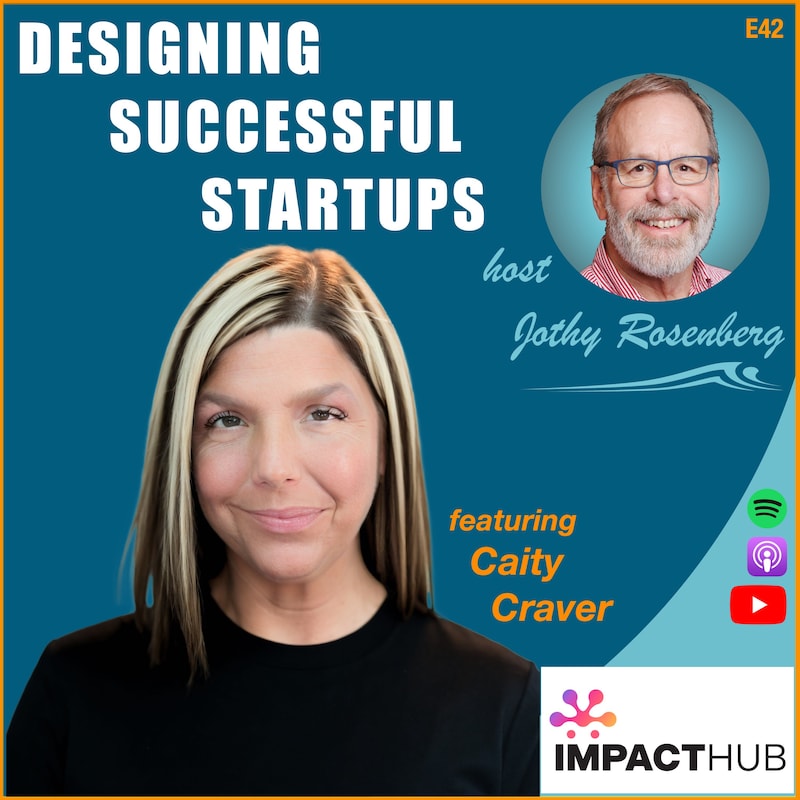
Caity Craver has spent nearly 30 years empowering nonprofit organizations through innovative software solutions that blend art, analytics, and artificial intelligence. Her career has been dedicated to amplifying the impact of nonprofits by centralizing marketing success and simplifying the fundraising process.
As the founder of DonorTrends, a pioneering analytics company, Caity revolutionized how organizations target donors with precision. Now, with the launch of the Impact Hub, she is bringing together decades of expertise into one comprehensive platform. The Impact Hub integrates marketing campaign management, creative and asset management, analytics, and success showcasing, all tailored exclusively for nonprofit organizations and their supporting agencies and vendors. Caity's goal is to help nonprofits "Do Less, Better. Do More Good.”
Summary
In this conversation, Jothy and Caity discuss the 9 lessons learned from her first SAAS exit that are now shaping her approach to building a more resilient and impactful second SaaS venture. From embracing the power of just starting to understanding that you don't need to boil the ocean, these insights will provide aspiring founders with practical, hard-earned advice on navigating the complex world of SaaS development. Tune in to discover how these experiences can help you build better, smarter, and more successful startups.
9 Lessons learned
- Just Start
- You don’t need to boil the ocean; you just need to warm the pond.
- You’re not alone
- Retention over Acquisition
- Customer-Centric Development: Build What They Need, Not What You Think They Want
- Set your systems up to sell
- Build a Strong Team: Surround Yourself with the Right People
- Embrace Failure: Learn Fast and Pivot When Necessary
- Be Prepared for the Long Haul
Takeaways
- Caity Craver is a solo bootstrapped founder developing the Impact Hub software.
- Nonprofit marketing requires a unique approach to fundraising and donor engagement.
- Lessons learned from previous ventures are crucial for current success.
- Retention of customers is as important as acquisition, especially in the nonprofit sector.
- Building what customers need rather than what you think they want is essential.
- Setting up systems for potential exit is important for future success.
- Embracing failure as a learning opportunity is vital for growth.
- Grit and determination are key traits for entrepreneurs.
- The nonprofit sector faces unique challenges due to tight budgets and high demand.
- Collaboration and support from peers can help navigate the entrepreneurial journey.
Sound Bites
"It's a marathon, not a sprint."
"Just start, just get it up."
"You don't need to boil the ocean."
Chapters
00:00 Introduction and Background
02:59 Nonprofit Marketing Insights
06:00 Building and Selling Donor Trends
10:06 Developing the Impact Hub Software
18:53 Lessons Learned from Previous Ventures
32:02 Retention Over Acquisition
40:03 Embracing Failure and Grit
Transcripts
Hello, I'm Jaffe Rosenberg, the host of designing successful startups, where today's guest is Katie Kraber.
Katie Kraber:You know when you're getting a male, you know, from habitat for humidity or heifer, you know, or you're seeing commercials with really sad looking dogs and Sarah McGlockliff sitting in the background asking you for $19 a month, or the St.
Katie Kraber:Jude, that is a particular kind of marketing.
Katie Kraber:And those nonprofit direct response marketers in the agency that serve them, they're a tiny but mighty group.
Katie Kraber:If we look think just about charitable giving in the United States.
Katie Kraber:It's a half a trillion dollar.
Jaffe Rosenberg:Katie has spent nearly 30 years empowering nonprofit organizations through innovative software solutions that blend arthem analytics and artificial intelligence.
Jaffe Rosenberg:Her career has been dedicated to amplifying the impact of nonprofits by centralizing marketing success and simplifying the fundraising process.
Jaffe Rosenberg:As the founder of Donor Trends, a pioneering analytics company, Katie revolutionized how organizations target donors with precision.
Jaffe Rosenberg:Now, with the launch of the impact hub, she is bringing together decades of expertise into one comprehensive platform.
Jaffe Rosenberg:Katie's goal is to help nonprofits do less better, do more good.
Jaffe Rosenberg:And here is Katie.
Jaffe Rosenberg:Hi, Katie.
Katie Kraber:Hey there.
Katie Kraber:How's it going?
Jaffe Rosenberg:Good.
Jaffe Rosenberg:Glad to finally have this come together.
Jaffe Rosenberg:It's been a little bit of time in the planning.
Katie Kraber:Yes.
Katie Kraber:Thank you so much for having me.
Katie Kraber:And for those that are listening, thank them for their time.
Katie Kraber:It's great to see your face.
Jaffe Rosenberg:So I always like to set context and ask people, where are you originally from and where do you live now?
Katie Kraber:I am originally from right outside DC in Arlington, Virginia.
Katie Kraber:So I don't know if you're familiar with the northern Virginia area, but that's where I grew up.
Katie Kraber: And the time in: Katie Kraber:So I'm in Charlotte, North Carolina right now, but originally from DC.
Jaffe Rosenberg:Okay.
Jaffe Rosenberg:So I haven't had a guest on so far who's from the nonprofit space.
Jaffe Rosenberg:So that's, so you're, you've got a first there.
Jaffe Rosenberg:And, and you did want to start.
Katie Kraber:You run a nonprofit?
Jaffe Rosenberg:You know, I do.
Jaffe Rosenberg:I do.
Jaffe Rosenberg:You've done one.
Jaffe Rosenberg:And one of the things you wrote to me about was you learned a lot.
Jaffe Rosenberg:We all make quite a number of mistakes when we do these things.
Jaffe Rosenberg:There isn't a playbook for exactly how to handle every single possible thing that could come at you.
Katie Kraber:That's right.
Jaffe Rosenberg:And so I think you're doing a really good thing of trying to think through what are the things that I learned?
Jaffe Rosenberg:And I'm sure that if there are things that you learned, then conveying what you learned to other people could be very beneficial.
Jaffe Rosenberg:And you're trying to absorb all this in what you're doing for number two.
Katie Kraber:Exactly, yes.
Katie Kraber:Yeah.
Katie Kraber: , that we exited from that in: Katie Kraber:So, as you said, I'm trying to remember these lessons that I learned.
Katie Kraber:And I feel like today I'll probably be like a therapy session with you as we're really deep in development, ready to launch over the next four to five weeks.
Katie Kraber:And so it's like I had to remind myself of some of these lessons learned the first time around.
Jaffe Rosenberg:So you sold the other one and then you took a break and then you're starting one now.
Katie Kraber:Yes.
Katie Kraber:So donor trends just kind of back up where my world that I come from for the beginning of my career, and really the family that I was born into, my parents in the seventies, eighties, nineties, had an agency that was focused on helping nonprofit organizations with their direct response strategies and execution.
Katie Kraber:So when you're getting a male from habitat for humidity or heifer, or you're seeing commercials with really sad looking dogs and Sarah McLaughlin singing in the background, asking you for $19 a month, or the St.
Katie Kraber:Jude, that is a particular kind of marketing.
Katie Kraber:And those nonprofit direct response marketers and the agency that serves them, they're a tiny but mighty group.
Katie Kraber:If we look think just about charitable giving.
Katie Kraber:In the United States, it's a half a trillion dollars, $567 billion is generated from charitable gifts.
Katie Kraber:About 70% of that is coming from individual giving in the United States to motivate not only individuals to give, but corporations and foundations, all of that takes a really serious marketing machine to persuade and motivate people to give, and that is done.
Katie Kraber:We don't usually think about that in the world of marketing.
Katie Kraber:We think about big commercial now, digital marketing and global brands.
Katie Kraber:But someone like a habitat for Humanity or a red cross or a St.
Katie Kraber:Jude, they're raising hundreds of millions of dollars and doing incredible things for people and animals and the planet everywhere.
Katie Kraber:And, you know, your organization does incredible things.
Katie Kraber:So in that space, because budgets are really, really tight, resources are very tight.
Katie Kraber:Even though there's so much demand, there's more and more things that need mission towards them.
Katie Kraber:Raising that money is really challenging.
Katie Kraber:And so the first company that we built called donor trends, used predictive science to look at the transactional behavior of a donor you gave to Habitat for Humanity this year, and you've given two gifts in the past.
Katie Kraber:How likely are you to give again, and what will that gift be?
Katie Kraber:So we applied predictive intelligence to help fundraisers manage their marketing and list selections more efficiently.
Katie Kraber:So instead of mailing a half a million, if we can mail 300,000, we save a lot of money and get the same results.
Katie Kraber:So donor Trends was an analytics business that helped nonprofits target their files more efficiently.
Katie Kraber: And we sold that in: Katie Kraber:And then I had an employment agreement with the company and our intelligence got merged into a CRM, which is so exciting to have it part of a software solution.
Katie Kraber:And then now I'm back at it, where my goal with the impact hub is to bring a fuse, the art of marketing with the science of marketing.
Katie Kraber:And we can talk about that more, but certainly building donor trends.
Katie Kraber:The first company I learned a lot, which I'm trying to apply to this.
Jaffe Rosenberg:Next solution, and you've mentioned that you're in the process, you and your team are in the process of developing this new software.
Jaffe Rosenberg:How involved are you in that?
Jaffe Rosenberg:Are you the designer of it?
Jaffe Rosenberg:Are you doing some of the implementation?
Katie Kraber:Yeah, that's a great question.
Katie Kraber:So this time around, I am a solo bootstrapped founder.
Katie Kraber:So in donut trends, I had an incredible partner, Ben Miller, who is the company that bought ours, and then it became merged with another big merger thing.
Katie Kraber:He's the SVP of analytics over at the big company still.
Katie Kraber:So he's still working for that company.
Katie Kraber:This time around, I'm just on my own, so it's just me right now.
Katie Kraber:And then the developers, I've outsourced the development.
Katie Kraber:So I don't have a CTO who's in this with me, so it's just me right now.
Jaffe Rosenberg:Have you outsourced to a team that you can interact with pretty easily, or are they halfway around the world?
Katie Kraber:No, that's a great question.
Katie Kraber:So the way that I went about doing the, in fact, the impact hub is like it was originally called creative keeper, then marketing manager.
Katie Kraber:So we're now on the third and kind of final name for now.
Katie Kraber:But the way I had an idea where in just to talk a little bit about what marketers have to go through, and specifically in this kind of nonprofit fundraising space, we think about marketing.
Katie Kraber:There's more and more marketing, there's more and more channels.
Katie Kraber:When I first started this business, there was like mail, phone, face to face.
Katie Kraber:Then there's like the Internet came to be a thing.
Katie Kraber:So now we have all this digital content and podcasts, so there's tons more channels than there used to be.
Katie Kraber:Content is almost developed hourly these days.
Katie Kraber:And the way that all of that gets connected together is chaotic.
Katie Kraber:So we have file storage systems where imagery and our PDF set, we have analytics sitting somewhere else.
Katie Kraber:We have in the market that I'm building for because a lot of them use like a sharepoint.
Katie Kraber:They can't really, certain people can't access files certain ways.
Katie Kraber:So it's a chaotic environment for marketers.
Katie Kraber:And the goal is to bring everything into one place instead of using more and more software solutions.
Katie Kraber:Let's keep our files together in a way that we're using AI to visually search that those images and extract whatever we're looking for.
Katie Kraber:So if you need to find a green envelope through AI visual search, you'll be able to look at all of your different content and find your green envelopes.
Katie Kraber:When you're going to try to find a case study to respond to an RFP, everything will be organized in a way where you can share it and where we're bringing the data, the outcomes of your marketing into view.
Katie Kraber:So right now, if you're sending out a marketing campaign and you want to show your boss or your board how well this campaign is doing for the organization, you have to go to each individual PDF of artwork, take a thumbnail of that, drop it onto a slide, go to somebody else who has the outcome or data of the campaign, find that, paste it somewhere else.
Katie Kraber:So it's tens, if not hundreds of hours of just manually piecing together the marketing story.
Katie Kraber:And the impact hub brings all of that together.
Jaffe Rosenberg:I think we got all used that in just our daily lives, not just when you're doing.
Jaffe Rosenberg:I mean, I can't tell you how many times I'm searching on our Dropbox for where did we put this?
Katie Kraber:Right, right.
Jaffe Rosenberg:And what was it called?
Katie Kraber:What was it called?
Katie Kraber:And so much of what agencies are hired to do is just for that institutional knowledge, because turnovers and this, I'm just so familiar, my expertise is in the nonprofit and agency space.
Katie Kraber:So perhaps it's like this in all industries, but turnover is pretty high.
Katie Kraber:People are shifting jobs usually every 2.1 years.
Katie Kraber:And so it's like the knowledge, it's even file structure.
Katie Kraber:So when we're searching just using keywords or text within documents, as marketers, I want something that has the.
Katie Kraber:The goose on it.
Katie Kraber:I want, you know, marketers are looking for different images to use in different campaigns.
Katie Kraber:And so my kind of mantra with the impact hub is do less better.
Katie Kraber:So whatever we can do to minimize, we want to do less better so we can do more good with these tiny but mighty teams.
Katie Kraber:If we can bring everything into one central location, it just saves them so much time and frustration.
Katie Kraber:So that's my goal here, is just to empower those marketers to do less better so they can do more good.
Jaffe Rosenberg:So it sounds like you're the designer of this new software, you're directing the team, but in order to do that, and you don't view yourself as a coder, you're not a.
Katie Kraber:Well, no, no, no.
Katie Kraber:Definitely no, no, no.
Katie Kraber:Definitely not.
Katie Kraber:And I'm sorry, don't think I answered your ask me about whether it was halfway around the globe or locally.
Katie Kraber:So the way I went about, I had the idea for the impact hub.
Katie Kraber:Like we need to have the central location for this stuff.
Katie Kraber:I built a prototype first with a development company that I used with the donor trends analytics business.
Katie Kraber:And they're mainly in Macedonia.
Katie Kraber:They have team members kind of all around the globe, but they're in Macedonia and so it's a much, at the time it was a better price than what we could get.
Katie Kraber:Now pricing for development has kind of stabilized in certain regions.
Katie Kraber:So I went back to them and what we did was basically just a clickable kind of figma file, but along with that also a requirements document.
Katie Kraber:So here's the bigger idea.
Katie Kraber:Let me take this prototype.
Katie Kraber:And then I went out and I talked to 80 prospective customers and I've been in this industry for a long time, so I felt so grateful that these contacts that I've had for a long time are willing to meet on screen and go through this idea.
Katie Kraber:And I got great feedback.
Katie Kraber:As you can imagine, with every conversation there's going to be, wait, this was here and that was here.
Katie Kraber:But sometimes you'll find those common denominators.
Katie Kraber:And that's after I heard a piece of feedback for the fourth or fifth time, I knew, okay, we have to really think about this.
Katie Kraber:Enough functionality.
Katie Kraber:I'll give you an example.
Katie Kraber:Early on it was called Creative Keeper was the first name, which really just sounds like a place where you would put your yarn or something.
Katie Kraber:But the creative keeper, I did not want to get into project management because there's Asana and Monday.com.
Katie Kraber:that project management space is so saturated.
Katie Kraber:The last thing I wanted to do was try to rebuild an asana, but it became clear in terms of what technology solutions a lot of these marketing teams were just trying to solve for right now was those workflows and tasks and to dos across multiple teams and entities.
Katie Kraber:And so while we're not setting out to rebuild a complicated tool like Asana, we did add into it wasn't there, the original prototype.
Katie Kraber:But in what we're building in the MVP, we do have workflows and tasks and the ability to get content approved through the system because I learned that during that prototype.
Katie Kraber:So I used the same company, itlabs, to help build the prototype and write the requirements document.
Katie Kraber:But ultimately I moved to a different team that's based here in the US.
Katie Kraber:And the main reason I shifted, I was very impressed by their AI knowledge and how they could immediately, even in the MVP stack, integrate some AI tools into MVP and version one and the timing and the language barrier.
Katie Kraber:Sometimes with marketing as we know, there's phrases and catchphrase.
Katie Kraber:It was a better fit for me.
Katie Kraber:So it started out Macedonia.
Katie Kraber:It is now us based.
Katie Kraber:Short answer.
Jaffe Rosenberg:I just have to stop and commend you for 80 customers is very impressive in anybody doing any kind of product development.
Jaffe Rosenberg:I actually say in my book, you ought to try to speak to 40.
Jaffe Rosenberg:And I consider 40 to be a lot.
Jaffe Rosenberg:40 is a lot and most people have a lot of, and it's really helpful if you have been in an industry and you know, a lot of people, and it sounds like you had not a short conversation with each one, you had to show them your mock up and you had to explain how it works and what were the goals.
Jaffe Rosenberg:And I bet each of each conversation was at least an hour.
Katie Kraber:It was at least an hour and a lot of it because Covid has, you know, it was a few years ago, I hadn't, we got acquired and then six months later Covid hit.
Katie Kraber:So I hadn't really been back kind of on the scene.
Katie Kraber:This is a very small, and maybe a lot of markets are like this, but it's a very niche community.
Katie Kraber:You know, it's, or tight knit.
Katie Kraber:There's not a ton of us.
Katie Kraber:And so a lot of it too is like reconnecting with people.
Katie Kraber:So I was so grateful for the time, but I also recognize that I'm old.
Katie Kraber:So when you can get 80 people or 40 people to want to jump on screen with you to discuss something, you've been around for a long time.
Katie Kraber:If there are people joining today's conversation that haven't been, you know, it's like when you've been somewhere for decades, hopefully you can get that many people on screen and they were just so gracious with their time.
Katie Kraber:Yeah, some people I went back to you know, multiple, because I want to make the times and then some, you know, you have to save, because when you think about your rollout strategy, it's like you can't target everybody either, you know, but I wanted to ensure that the features and functionality, I feel like if they had some say so on how we built the product, then it's certainly a great way for me to, like, go back to them and say, hey, remember when you told me that this would be great to have, like, you know, we incorporated it and now it's time to buy it.
Jaffe Rosenberg:Okay, so you, you've told me that you've got maybe lots more, but you've distilled down the lessons that you feel like you learned from number one to a core set of nine things.
Katie Kraber:Yes, yes.
Jaffe Rosenberg:And how are you, we can talk about what those are, but how are you trying to use those in what you're doing?
Jaffe Rosenberg:Do you read the list every morning and say, okay, you know, I'm not going to do these things or I am going to do some of the ones that tell me, you know, what I should be doing.
Jaffe Rosenberg:What's the deal?
Katie Kraber:Some of them, yes.
Katie Kraber:And I'm, but I'm one of those cheesy quote people.
Katie Kraber:Not necessarily the posters with, like, the eagle soaring or anything, but I do have, like, before you walk out the door, I do have, like, you know, check yourself before you wreck yourself.
Katie Kraber:You know, there's certain things that I tell my kids, like, so one of my lessons from the first to now is just start.
Katie Kraber:You know, just start.
Katie Kraber:I guess Nike says, just do it.
Katie Kraber:So I guess it's not that, you know, because I'm stealing from Nike here.
Katie Kraber:But just, no, no.
Jaffe Rosenberg:If you just, if you have a two word thing and you've used one word that they've used, I don't think that's stealing.
Jaffe Rosenberg:I didn't think of Nike when I saw that.
Jaffe Rosenberg:I just thought, do you have that sign somewhere in your house?
Katie Kraber:I'll have a Martin Luther King quote that says, you just see the first step and not the whole staircase.
Katie Kraber:And then to me, that's the same thing as just start.
Katie Kraber:So sometimes those quotes.
Katie Kraber:But I always think, just do it.
Katie Kraber:Sometimes you wait for the best.
Katie Kraber:Whatever.
Katie Kraber:I'll come up right now building my new website.
Katie Kraber:I had one up for the creative keeper.
Katie Kraber:Now I need to launch the impact hub, but I don't want it to be, here's the features and functionality.
Katie Kraber:You know, I want it to be something better than that.
Katie Kraber:So.
Katie Kraber:But right now, because we're launching in five weeks.
Katie Kraber:Like, just start.
Katie Kraber:Just get it up.
Katie Kraber:Stop.
Katie Kraber:You know?
Katie Kraber:So I even write today.
Katie Kraber:I have to look at, like, so some of it is a list.
Katie Kraber:I do have a list of nine right here.
Katie Kraber:I'll have some quotes in the other room, just as constant reminders, because you've done this so many more times than I have.
Katie Kraber:But, you know, it's when you're in the thick of it, sometimes you forget these, like, these lessons that you've learned, and they can really help you out where you are today.
Jaffe Rosenberg:I actually feel like I need to read my own book again soon because I finished writing it back in December of last year, and I feel like when I look in it, it's like, wow, I should read this again.
Katie Kraber:Maybe you should read it to me.
Katie Kraber:Maybe we should have, like, turn the podcast into a weekly chapter or something.
Katie Kraber:Because clearly, like, every morning that I sit down, I have this wonder woman thing that I push.
Katie Kraber:Sometimes you have to take a stand, you know?
Katie Kraber:So maybe we need, like, a version of you giving, like, quotes from your book that I can also push every morning and get me straight.
Jaffe Rosenberg:Okay.
Jaffe Rosenberg:But just so you know, you are getting a copy of it for being on my podcast.
Katie Kraber:Thank you very much.
Katie Kraber:And I will buy a copy as well, because I'm sure there's, like, some great knowledge in there.
Jaffe Rosenberg:Hi.
Jaffe Rosenberg:The podcast you are listening to is a companion to my recent book, tech startup how to launch strong and exit big.
Jaffe Rosenberg:This is the book I wish I'd had as I was founding and running eight startups over 35 years.
Jaffe Rosenberg:It's like a memoir of my entrepreneurial journey.
Jaffe Rosenberg:I tell the unvarnished truth about what went right, and especially about what went wrong.
Jaffe Rosenberg:It's for the founder, the CEO, and wannabe founders of tech and non tech startups.
Jaffe Rosenberg:You could get it from all the usual booksellers and also from the publisher@manning.com.
Jaffe Rosenberg:i hope you like it.
Jaffe Rosenberg:It's a true labor of love.
Jaffe Rosenberg:Now back to the show.
Jaffe Rosenberg:Well, okay, so just start that.
Jaffe Rosenberg:That one is very self explanatory.
Katie Kraber:That was very probably the hardest one for me to do.
Katie Kraber:Just get it.
Katie Kraber:You know, just.
Katie Kraber:Just start another important one.
Katie Kraber:And I've highlighted it a few times today, but that you don't need to boil the ocean.
Katie Kraber:You just need to warm the pond.
Katie Kraber:I think the actual saying is a little bit more crass than that, but you just need to warm the pond and.
Katie Kraber:You mean.
Jaffe Rosenberg:You mean it's crass and it's just supposed to pee in the pond?
Katie Kraber:Yes.
Katie Kraber:Yeah, exactly.
Katie Kraber:Oh, my God, that's funny.
Katie Kraber:And so I think about that in the way that I look at vertical SaaS development.
Katie Kraber:So I've mentioned, like, the nonprofit space a number of times.
Katie Kraber:So it doesn't have the greatest tam, the total available market.
Katie Kraber:While there are a lot of registered nonprofits, there's almost 2 million registered nonprofits of that population.
Katie Kraber:Those that have buying power for a technical solution is maybe 275,000.
Katie Kraber:But I choose to build tools in this space because I know the market so well that when you're starting to build something out, be the best of something for a specific target, then once you capture that market, then we can expand out of.
Katie Kraber:So when I think about this, when I'm like, oh, my gosh.
Katie Kraber:Well, commercial marketers have, like, so much more budget spend than these nonprofits.
Katie Kraber:What am I doing this again?
Katie Kraber:In this space, nonprofits are stuck.
Katie Kraber:It's challenging because once they lock in their budget number for the year, it's not like they have some disposable fund that they can unlimited money somewhere.
Katie Kraber:It's a nonprofit.
Katie Kraber:So their accounting compliance is different than other b, two b types of sales.
Katie Kraber:So it's like, I have to remember I'm building in this space for a reason.
Katie Kraber:And the reason is because I know these people really well.
Katie Kraber:It's like I'm doing this second as a passion.
Katie Kraber:Like, I know this tool is going to help change the way they do business.
Katie Kraber:And so.
Katie Kraber:But I just have to, like, you know, warm the.
Katie Kraber:Warm the pond.
Katie Kraber:Don't have to boil the ocean.
Jaffe Rosenberg:You know, the reason that jumped out at me is because you may have heard of Walden Pond.
Jaffe Rosenberg:It was from, you know, Henry David Thoreau wrote about it.
Jaffe Rosenberg:It's up here in Concord.
Jaffe Rosenberg:It's about 5 miles from my house.
Katie Kraber:Okay.
Jaffe Rosenberg:And it's where I work out all summer.
Katie Kraber:Oh, nice.
Jaffe Rosenberg:But they came out with an article in the Boston Globe earlier this year, and they said they sort of were admonishing people, please stop peeing in Walden Pond.
Jaffe Rosenberg:And it's like, well, it's a big pond, okay?
Jaffe Rosenberg:So it's half a mile long and about a third of a mile wide.
Jaffe Rosenberg:And it's a hundred feet deep.
Jaffe Rosenberg:So very deep pond.
Jaffe Rosenberg:But they can measure.
Jaffe Rosenberg:So so many people are in it, and they could.
Jaffe Rosenberg:And it has no inflow or outflow.
Jaffe Rosenberg:It's.
Jaffe Rosenberg:It's.
Jaffe Rosenberg:It's got no streams.
Jaffe Rosenberg:So it's like, well, so when you wrote, you just need to warm the pond, I'm thinking, well, no, not this pond, please.
Jaffe Rosenberg:No.
Katie Kraber:I wouldn't even know it.
Katie Kraber:Like, ps, fish, don't read.
Katie Kraber:You know, I don't know, like, that's funny.
Katie Kraber:Wow.
Katie Kraber:Huh?
Jaffe Rosenberg:What's the next one that you've learned?
Katie Kraber:Romeroll, please.
Katie Kraber:We're on number three of nine.
Katie Kraber:You are not alone.
Katie Kraber:So maybe that's more just for affirmation, especially this time around for me because it's am solo founder, the last venture I had my partner, Ben.
Katie Kraber:So leaning on people like you, your incredible podcast, your bulk, just know that that's reaching people like me that are doing this somewhat isolated and knowing that I have these resources that I can tap into.
Katie Kraber:So I appreciate all that you do to put this podcast out and the time that you spent writing your book, because it is helpful for entrepreneurs like me.
Jaffe Rosenberg:Is Ben going to stay over there or might Ben come back and rejoin you?
Katie Kraber:I think Ben will probably stay over there.
Katie Kraber:I haven't connected with him in a couple of months, but I think his skillset is so incredible over there, then maybe.
Katie Kraber:I think dreams will retire one day, but I know that he'll always be there if I need business help or I especially being in that kind of corporate space, he sees a lot of m and a coming and going.
Katie Kraber:I think as the market starts to shift and we build this thing up for exit, I'm hoping he's helpful down the road.
Jaffe Rosenberg:What does retention over acquisition mean?
Katie Kraber:So I think especially for startups where we're so focused on new business, new business, new business.
Katie Kraber:Acquiring, acquiring, acquiring.
Katie Kraber:And of course we are because we're trying to build revenue.
Katie Kraber:I think it's also important.
Katie Kraber:It's also important with the nonprofits that I counsel, I'm always talking about donor retention, holding onto your donors.
Katie Kraber:Same thing when you're building a business is that, yes, it's important that we acquire more and more, but you have to pay equal attention, if not more, to those existing customers.
Katie Kraber:And that means that welcoming or that onboarding strategy.
Katie Kraber:Be thoughtful before you land your first customer.
Katie Kraber:What that journey.
Katie Kraber:I don't love the word journey, but what that journey will look like.
Katie Kraber: ths, they're still here since: Katie Kraber:And when we exited from donor trends, retention, obviously insurance is a big metric that people are looking at in acquisition and so we were proud of our retention rate.
Katie Kraber:But it's just a constant reminder when I'm building something, whether it's developing the software or when I'm thinking about launch, it is how am I going to give those customers the best experience?
Katie Kraber:So they'll want to stay after year one.
Katie Kraber:And because I am solo right now, that means for year one, I can't really take on more than ten accounts to ensure that they're getting the best experience and we're getting them into the tool and using the tool again so they don't leave.
Jaffe Rosenberg:Yeah, and so it's again going to be a SaaS application.
Jaffe Rosenberg:Will it be a big installation integration process or does it have a.
Jaffe Rosenberg:A lighter touch?
Katie Kraber:It depends on it has a lighter touch.
Katie Kraber:I really will have more information after the first year.
Katie Kraber:I want to see how people engage with the tool because this integrates file storage with analytics, there's a lot of different users that plug into the same campaign or the same project.
Katie Kraber:So we'll submit a the goal is that on the enterprise level, for the first year, I'll give away the service for free, but the contracts will be structured where they'll be paying a cloud based fee and then also a service fee.
Katie Kraber:That service fee for initial customers will be zeroed out, but I imagine kind of a $2,500 flat service fee to help those enterprise clients onboard and get the system customized in a way that makes sense for their marketing operations.
Katie Kraber:This software takes a level of change management, which isn't easy.
Katie Kraber:And so I won't have, I don't think, a good system set up until I really have seven to ten people using it to see how they're interacting and how we need to improve onboarding in years, too.
Jaffe Rosenberg:When you launch the product, will you hire some people to help?
Jaffe Rosenberg:That will be helping the customers acquire the product and get it working?
Katie Kraber:Yes.
Katie Kraber:In fact, in my projections, I changed.
Katie Kraber:Initially I had sales coming in as the first person was, the first hire I would make would be sales.
Katie Kraber:But I changed that to customer success for this very reason.
Katie Kraber:Retention over acquisition.
Katie Kraber:I know that I need somebody to come in, not only know the system to help back in with testing, but to ensure that those accounts are running as smoothly as possible and then to start bringing in another customer success in years.
Katie Kraber:I think I have them right now, like two years, seven months for a second customer success person.
Katie Kraber:But obviously, all of that ties into the pricing, that level of handholding.
Katie Kraber:You're not selling a product that's $100 a month.
Katie Kraber:So this type of solution needs to be priced.
Katie Kraber:And again, we're talking about nonprofits.
Katie Kraber:So it's one thing if it's $99 a month, but a lot of heuristics come into play when you're talking a couple grand per month, because if it's $2,500 a month, they haven't baked that in to their current fiscal year budget.
Katie Kraber:But with that level of service and handholding, pricing obviously needs to, to match that human interaction.
Jaffe Rosenberg:Your next one is near and dear to my heart because.
Jaffe Rosenberg:And it's the part that says, build what they need, not what you think they want.
Jaffe Rosenberg:Because it is so common for a good engineering team to say, well, I know they're going to need this.
Jaffe Rosenberg:And one of the things that I always try to get people to do is say, you don't need to architect this for the 20 year timeframe.
Jaffe Rosenberg:You just need to make sure that it's got what they need and have confidence in yourself that you can refactor it as we want to add features and capabilities, but otherwise you're spending money on something that they're not going to use, and then you've wasted it.
Katie Kraber:Right.
Jaffe Rosenberg:Time and money.
Katie Kraber:And I think right now, if my development team was like back here, they'd be like, amen, keep telling you.
Katie Kraber:Because I think that we're at that point in development where I know what they want to be saying is like, we don't need that right now.
Katie Kraber:And in my mind, because I've already, like, painted this, like, grand vision of what this thing should be right now, you know, so it's meeting those expectations.
Katie Kraber:So I'm sure I'm driving the team insane right now.
Katie Kraber:So hopefully, once they listen to this, we'll already be past all that stuff.
Katie Kraber:We'll see.
Katie Kraber:But, you know, that's, that's.
Katie Kraber:I'm trying to remind myself this is like a lesson that I'm currently in right now, and I'm trying to remind myself of this every day.
Jaffe Rosenberg:What's number six?
Katie Kraber:Set your systems up to sell.
Katie Kraber:And what I meant instead of sell, maybe exit is a better word.
Katie Kraber:So it's not necessarily selling the product.
Katie Kraber:But I learned a lot when we sold donor trends, and part of that is simple admin, housekeeping stuff.
Katie Kraber:I'm very fortunate to have had a business partner the way that we kept from the very beginning, contracts and NDAs and, you know, all of our accounting.
Katie Kraber:Like, we were very thorough with how we kept things.
Katie Kraber:But I know I've talked to people that have sold where they've lost a lot of money because these records were not kept.
Katie Kraber:So it's learning those lessons, especially around contracts and ensuring your books are really tight.
Jaffe Rosenberg:I.
Katie Kraber:That those were important lessons during due diligence, you know, it was myself and Ben and on the other side for due diligence, like we had just like 32 people alone on the due diligence team from Deloitte.
Katie Kraber:It's like, whoa.
Katie Kraber:You know, like, whoa.
Katie Kraber:It was a lot of like resources.
Katie Kraber:And so going through that due diligence process was intense.
Katie Kraber:You know, I mean, I was really proud that we had kept such meticulous records because it helped to facilitate the process.
Katie Kraber:I could imagine if people had to be digging through things and looking for things and who do we work with?
Katie Kraber:It helped that our team was tiny, but that's what I mean, set your systems up.
Katie Kraber:To sell or to exit is like, I think about that.
Katie Kraber:My file system now is triplicated and the contracts are all saved a certain way.
Katie Kraber:Have you experienced that in any of the exits?
Jaffe Rosenberg:Absolutely.
Jaffe Rosenberg:And in fact, one of the things in the book that's kind of didactic is actually I go ahead and lay out what a data room should look like and I mean, everybody's is going to be a little bit different.
Jaffe Rosenberg:But I'm hoping that when they see this one, which has helped with like eleven financings and or acquisition, which are roughly the same kind of due diligence, a major investment from a venture capitalist, so it's kind of the same.
Jaffe Rosenberg:And, and then they might, they might see something that needs to be added or maybe I have something that they don't need, but at least it's going to get them to think about.
Jaffe Rosenberg:This is a pretty significant list.
Jaffe Rosenberg:It's like, I think it's like 42 top level folders.
Katie Kraber:Wow, that's great.
Katie Kraber:Even just seeing what those are, is going to be educate so many people.
Katie Kraber:Like, oh, I never thought, you know, like, I wonder what that's, that's amazing.
Katie Kraber:I can't wait to get my hands on this book.
Jaffe Rosenberg:Okay, well, we'll fix that.
Katie Kraber:Yeah.
Jaffe Rosenberg:Okay.
Jaffe Rosenberg:So strong team.
Katie Kraber:Yeah.
Katie Kraber:So build up on a team.
Katie Kraber:You know, I think that that's just, that's part of life.
Katie Kraber:I don't think that that's a big, not just from selling the business, I learned that, but I just.
Katie Kraber:The team again, we were a small team at donor trends, but just so dedicated and it was like the right people around.
Katie Kraber:So I think that it's just a reminder this time and I feel like for the impact hub that I have like been surrounding myself by incredible people and I'm grateful for that.
Jaffe Rosenberg:Well, you're all by yourself, so you better hope that you're surrounded by the right people.
Katie Kraber:Thank God I'm with you.
Katie Kraber:And hopefully your books do, you know, be me and yourself.
Jaffe Rosenberg:So it is a special feeling, and it's unique to a startup.
Jaffe Rosenberg:You're not going to see this at a big company that when all the people you have, everybody is trusting each other, everything's clicking is fantastic.
Jaffe Rosenberg:And, yeah, when you have a team within a big company, you can have that, but of course, you still have to interact with the rest of the company.
Jaffe Rosenberg:And I've had challenges with that the times that I have worked at a big company.
Jaffe Rosenberg:So it's amazing how great things are.
Jaffe Rosenberg:And one of the ways I've always gotten there is that I have a rule that we will hire no strangers in the first 25 people.
Katie Kraber:Oh, I like that.
Jaffe Rosenberg:And that means it's either people you know and.
Jaffe Rosenberg:Or have worked with before or somebody else on your team has.
Jaffe Rosenberg:And so as you start to add to the team that you use, the circle that you can include in that no strangers is getting larger.
Jaffe Rosenberg:So it's not like they all have to be your, you know, immediate contact.
Katie Kraber:Right.
Jaffe Rosenberg:It still is.
Jaffe Rosenberg:It's a.
Jaffe Rosenberg:It's a good philosophy, I think.
Katie Kraber:Right.
Katie Kraber:And then who hired this fool?
Katie Kraber:You know, at least we could just.
Katie Kraber:Yeah, no, I love that.
Katie Kraber:I love that rule.
Katie Kraber:And then there's some familiarity and someone's like, you know, I like that a lot.
Jaffe Rosenberg:I like that you still can make mistakes.
Jaffe Rosenberg:And hiring is not a science, it's art.
Katie Kraber:No, that's what.
Katie Kraber:Yeah.
Jaffe Rosenberg:And the corollary, or the rule that goes with that is to hire slowly and fire quickly.
Jaffe Rosenberg:The second part of that is the.
Katie Kraber:Most important I can see, especially, like, in sales, you know, like I.
Katie Kraber:Right.
Katie Kraber:I think that that's so true.
Katie Kraber:And knowing and not keeping people around for too long.
Jaffe Rosenberg:If they're not working out, then they can start to really drag the whole rest of the team down because like we just said, you know, they're all really trusting each other and everybody's working, you know, very efficiently and communicating.
Jaffe Rosenberg:And then if somebody kind of is, you know, the wrench in the, in the cogs of the machine, then.
Jaffe Rosenberg:And you and somebody make sure you are aware of that, then it behooves you to do something about it quickly so that your team isn't when we.
Katie Kraber:Start to build out.
Katie Kraber:I think that's another great lesson.
Katie Kraber:I need to put that on my wall.
Katie Kraber:I think that's really smart to be aware of how much time goes by in assessing whether it's a fit or not.
Jaffe Rosenberg:The shorthand for that was that within the team, they would say, the bozo bit has been flipped.
Jaffe Rosenberg:And that means that this person is a bozo.
Jaffe Rosenberg:And once the switch is flicked, unfortunately, they have to go right.
Jaffe Rosenberg:And I don't, like, you know, say, oh, well, the hiring manager needs to take care of that.
Jaffe Rosenberg:I feel like it's my responsibility to act quickly, to take care of it, to ask that person if they would go ahead and leave, come back on Saturday, get their stuff, and then you rally the team and you say, this is what just happened, and here's why.
Jaffe Rosenberg:And now we're all moving forward.
Katie Kraber:Yeah, that's a great way to handle it.
Jaffe Rosenberg:Okay, so let's talk about embracing failure.
Katie Kraber:I think that I've always been, I guess to say, like, I don't love to fail, but I do think learning from your failures and not being too scared to fail has always been a big part of who I am since my kids have been little, like, we'll talk about, like, how did you fail today?
Katie Kraber:Which they always would find such a strange, like, why are you promoting this, like, failure?
Katie Kraber:But I do think so much.
Jaffe Rosenberg:That's the first thing you said when I got home from school, I would.
Katie Kraber:Talk about how I failed.
Katie Kraber:I would come home and be like, guess who?
Katie Kraber:Like, let's talk about how I failed today, only to remove the.
Katie Kraber:So I feel like, so what?
Katie Kraber:Like, humans are really held back in life by, like, being like, I guess it'll be embarrassment.
Katie Kraber:You know, is what we, what holds us back, because we're just, you know, we're too scared to be embarrassed.
Katie Kraber:Then that would be failure.
Katie Kraber:But I think learning from, let's not be too scared to fail.
Katie Kraber:It's, you know, again, just, just start, which was number one, just start.
Katie Kraber:And then if we do fail, what do we learn?
Katie Kraber:And then turn those into lessons.
Katie Kraber:And I think, like anybody in software, it's like, that's kind of what we do.
Katie Kraber:We iterate.
Katie Kraber:How did that, did that work?
Katie Kraber:Did that not work?
Katie Kraber:What do customers want?
Katie Kraber:So I think that's an important part of, like, what's in us.
Jaffe Rosenberg:But I also think people in marketing have the same attitude.
Jaffe Rosenberg:The idea of you try a campaign and then you measure it, and then you say, well, you know, that wasn't as good as I'd thought.
Jaffe Rosenberg:I wonder why.
Jaffe Rosenberg:And the other thing is that the cool thing about marketing is you could try five different versions of a campaign with five different segments of your target population.
Jaffe Rosenberg:So that's pretty similar.
Katie Kraber:Yeah.
Katie Kraber:And pivot when necessary.
Katie Kraber:And you were just talking about this with, with team members.
Katie Kraber:You know that if change is needed, let's, let's pivot quickly.
Katie Kraber:Let's not, you know, let's.
Katie Kraber:If something's not working, let's figure it out and keep it moving.
Katie Kraber:I think it's.
Jaffe Rosenberg:And at a startup or, you know, any kind of small organization, you can do that pretty quickly.
Jaffe Rosenberg:I've, I've watched some big companies where it's like turning an aircraft carrier.
Jaffe Rosenberg:It's just like analysis paralysis.
Katie Kraber:It really is.
Katie Kraber:I was shocked at.
Katie Kraber:I shouldn't have been like, shocked, but I guess going from startup environment to after acquisition, there's probably just whole podcasts around, just that kind of that limbo period.
Katie Kraber:How do we fit into this giant machine?
Katie Kraber:And we still need to hit numbers and all of this, but watching how something on such a large scale is created versus what our process for our platform was, it's like every decision and getting on the roadmap and all the meeting, you know, it's like, whoa, it was, it's just a totally different way of getting, you know, product developed.
Jaffe Rosenberg:Okay, last but not least, be prepared for the long haul.
Katie Kraber:This is true.
Katie Kraber:It's a marathon, not a sprint, right?
Katie Kraber:I think that's right.
Jaffe Rosenberg:Like, that's another way to say it.
Katie Kraber:Yeah.
Katie Kraber:Like, and I think that it's just like having, just being gritty is what I say.
Katie Kraber:You know, 1ft in front of the other, if we fall down seven times, whatever that energy is, that gets us up the 8th time, that's just keeping that in mind.
Katie Kraber:Just 1ft in front of the other, and we'll get there eventually, and it's not going to happen overnight.
Katie Kraber:And sometimes in this process, I'm still very, very, very early on, but even reflecting back of when this used to just be an idea, even thinking about what this idea is going to help marketers do, just remembering, it's like, I know I'm in.
Katie Kraber:It's like a marathon, and I just, you know, just left the start, but we'll get there.
Jaffe Rosenberg:Well, you used my favorite word just now, so you're obviously very gritty.
Jaffe Rosenberg:And where do you think your grit comes from?
Katie Kraber:I don't know where it comes from.
Katie Kraber:To me, there's like, it's an energy that, but it starts like, it starts with a need, like something to, a desire, like something to prove or that I have to fix.
Katie Kraber:There's an energy, and so I don't know where it comes from.
Katie Kraber:All I know is I'm so dedicated to changing something, and I think for everybody, that energy, that dedication to wanting something to change becomes a goal, and that grit is the accomplishment of that goal.
Katie Kraber:And so, but it doesn't.
Katie Kraber:I'm not gritty for everything, but for this, for the.
Katie Kraber:I'm so passionate about what this tool can do that I'm willing to, like I said, fall seven times, and that grit's going to get me up for the 8th time and the 9th time and the 27th time.
Katie Kraber:And so it does start with, like, just that, that notion that I know that there's this problem and I'm going to solve it.
Katie Kraber:What is your definition of grit or where do you think it comes from?
Jaffe Rosenberg:Well, for me, it came from what I had to go through as a kid, having cancer and losing my leg.
Jaffe Rosenberg:That just forces you to.
Jaffe Rosenberg:Or you give in, you just sort of cave in and you just, you know, but, um, solve a.
Jaffe Rosenberg:Solve a really big problem, uh, and build a company that can deliver on that.
Jaffe Rosenberg:That is something that takes grit.
Jaffe Rosenberg:And there's some people that are drawn to that.
Katie Kraber:Yeah, it's.
Katie Kraber:And I applaud those that are, that are doing it.
Katie Kraber:You know, it's.
Katie Kraber:You're right.
Katie Kraber:It does take great and delusion.
Katie Kraber:Maybe two tablespoons.
Katie Kraber:Insanity.
Katie Kraber:Four tablespoons grit.
Katie Kraber:Yeah, I'm sure there's a.
Katie Kraber:I'm sure there's a recipe.
Jaffe Rosenberg:How old are your kids?
Katie Kraber:17 and 18.
Jaffe Rosenberg:Oh, nice.
Jaffe Rosenberg:Nice.
Katie Kraber:Yeah, they're like, you know, big now, which is good.
Katie Kraber:Yeah, they're doing this with me this time, which is for, you know, so all the new business development.
Katie Kraber:And because this platform has meant, you know, where, where marketing is stored for almost two years, I've signed up for all kinds of marketing.
Katie Kraber:So they're in charge of scanning all the mail packages and organizing them by organization.
Katie Kraber:So they're the impact hub.
Katie Kraber:Interns.
Jaffe Rosenberg:Are they unpaid interns?
Katie Kraber:Correct.
Katie Kraber:Well, the wife, they get Wi Fi.
Jaffe Rosenberg:So they get Wi Fi and food.
Katie Kraber:Right.
Katie Kraber:They get Wi Fi, food, electricity.
Katie Kraber:I mean, that's this economy, you know, it's probably like $8,000 a month right there.
Jaffe Rosenberg:All right, well, fantastic.
Jaffe Rosenberg:Thank you so much.
Katie Kraber:Well, I appreciate you guys.
Katie Kraber:Thank you for listening.
Katie Kraber:Thank you so much for the opportunity to join you today.
Jaffe Rosenberg:That's a wrap.
Jaffe Rosenberg:Thanks for tuning into this week's episode of the designing successful startups podcast.
Jaffe Rosenberg:Check out the show notes for resources and links.
Jaffe Rosenberg:Please follow and, and rate us@podchaser.com designingsuccessful startups also, please share and like us on your social media channels.
Jaffe Rosenberg:This is Jothi Rosenberg saying, tTFN, Tata for now.

