Transcripts
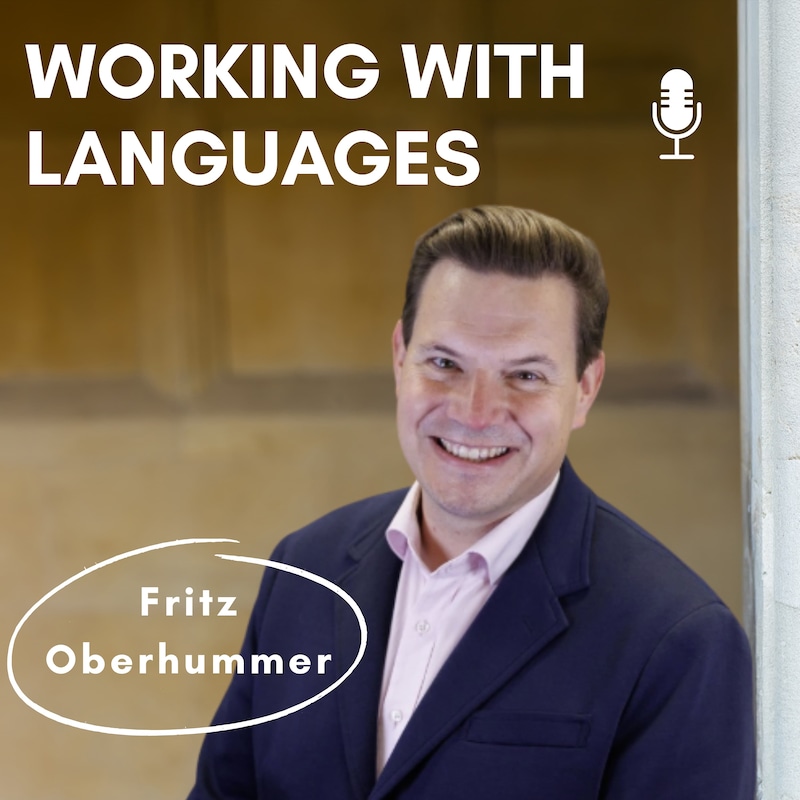
Sonia Kampshoff: Welcome to working with Languages. My name is Sonia Kampshoff - I'm your host and a multilingual digital marketing consultant. If you have ever wondered how the travel industry is changing, and in particular the technology that powers it, this conversation is for you. Fritz Oberhummer has lived and worked in a number of countries.
He views languages as a means for getting things done When working in international teams, the conversation then moves over to AI and technology. And how the way we travel is already changing. Before we dive in, I would like to apologize for the audio quality. I had some technical issues, but I think you'll agree that the conversation makes up for it.
Hello, today my guest on the podcast is Fritz Oberhummer. Hello Fritz.
Fritz Oberhummer: Hi Sonia. Thanks for having me on your podcast.
Sonia Kampshoff: It's great to have you here on a podcast. So Fritz works in technology in the travel industry, and he's the head of solution architecture for EMEA at Saber Corp. And he's going to tell us more about his job in detail later on.
But first of all, would you like to tell us your favorite word in a language that you speak?
Fritz Oberhummer: Well, there's two favorite words to say, and I think the second was actually three words in one. But I think the context is interesting. First of all, I speak a little bit of Ukrainian. So my favorite work in Ukraine is дякую, which means thank you. And it sounds very nice when you say it.
And the second will be in Spanish, which is Todo bajo control, which means everything's under control. Which is just kind of like a joke. I, kind of, said to my wife on days when things are rushed. So because we lived in Spain, todo bajo control. Sounds really nice.
Sonia Kampshoff: That's very, very nice. So can you tell us a little bit more about your background, your upbringing, your education? Where did you learn the languages that you speak?
Fritz Oberhummer: Sure. So I grew up in Austria in a ski resort and my family has a hotel there since three generations. So from a very young age, I was used to having people from all kinds of countries, languages around me. So it was very natural for me to kind of talk to people and I wouldn't even speak the language.
Now because so many people came to us, I always wanted to explore the world and go out there. So my first bigger trip for me, I was 12 years old going to New York, so we had some friends there, at the time lived in the Hamptons. It's a very, very nice area lab, New York.
And for me it was very interesting to choose to explore not only a different language, but also the culture. And I went there again when I was 14 years old and spent the summer in the US and that gave me the taste to live somewhere else and explore countries and languages.
And that desire hasn't left me. So when I was finally done with school I left home on a dime and moved to London, lived two and a half years in London, where I had the first kind of culture shock. Discovering in English doesn't necessarily mean English, right? I worked in a hotel in Knightsbridge. And I had colleagues here from the UK and some of them were Scottish and some were Irish.
And my first boss, he was Scottish. And I remember the first time he spoke to me and I couldn't understand a single word he said. He just looked at me and said, oh, that's all right lad. And I finally said like, whatever he said was a good thing for me. So I think one of the first things you discover about languages is when you go to countries that the language you've learned in school, which was English, it's certainly not the same once you're in the country and also the way you would express yourself in that language.
So through my career, I went down to the US and lived in California for a while and I tried to kind of use my English skills, what I had learned in Great Britain, and I had trouble with people understanding me.
Simple things like, may I have a glass of water? It just didn't fly, because most Americans said, can I have a glass of water? My pronunciation was really off and there is stuff that I used to say, when people look at me like, okay, you speak a bit funny. Well, I lived in London that explained it, but I also then said to them I understand, okay, languages come in a different kind of context now.
I then that's when I came back to Europe, I moved to Munich and spent some time there and then started to work for Expedia Travel Company, a big one, where I made some nice career progress and finally came to the decision point to move to another country for a new job within the organisation. And the country was Madrid because my boss at that time was from Madrid, and was filling out the office that was still there, which brought me to a real culture shock, because I didn't speak Spanish.
Actually I learned some Italian when I was younger. I spent some time in Italy when I was younger in Firenze, and I also did French in school. Mainly I probably never used the language. So you only airdropped into a country, you don't speak the language. Now, common knowledge would have it that you go to another big capital in Europe and people understand you when you speak English.
That doesn't necessarily happen in Spain. They're Spanish, it’s not widely spread there and most people speak Spanish and it's expected of you to speak Spanish. So I had a tough time in the beginning adopting to it. Same for my wife, because we both didn't speak Spanish. In the beginning we still in the supermarket and you point at the things and you know, you're a bit lost. And I went there when I was over 40 years old and had to learn a complete new language. It's very difficult at the beginning. It gets better after a while. And then you kind of like get into the jokes, you sense of the culture.
And you learn a lot watching TV like anyone does. So my recommendation, if you go to a country, where you don't know the language and you go to classes, just watch TV series, local whatever, telenovelas, really try to understand the culture from a TV series, 'cause there's a lot of things from a language point that I understood, but I didn't understand the culture of context where it was in.
So my wife and I have spent a lot of time watching TV series like Los Reyes Catholicos, Phenomenal Isabel, about their story and just the whole history of Spain. Then you would understand some of the, of the jokes, some of the behavior, and also understand that there's more than just to Spain in the Spanish language because you had this very strong heritage from being in the hispanic empire for many hundreds of years.
And it has left an impression in the culture and the society. For example, guitars is obviously something that came from that culture as well, but also a bit of the drama and all of that. So it's definitely there. So the cultural way to approach such a country is not to say, okay, I'm learning the language and I'll still behave like a German, which i did at the beginning that means in meetings I was pressing my boss to get things done and I didn't get anywhere and I was really, for me it was like being used to like the germanic and kind of way of working, even having lived in UK and US, I was still after the 15 years in Munich I was very germanic so to say. And it took
Sonia Kampshoff: Sorry to interrupt. So was your boss Spanish?
Fritz Oberhummer: He was Spanish.
Sonia Kampshoff: And the other people on your team?
Fritz Oberhummer: A mixture. All kinds of cultures, a lot of Spanish people from anywhere from the Nordics, from Germany, Southern Europe, French. So there was a whole hodgepodge of different cultures influencing and part the office culture in Spain was very Spanish.
Sonia Kampshoff: Okay.
Fritz Oberhummer: So you had to understand if you needed something from my boss, it was best if we go and have lunch and if it's a really hard topic, I'll drop it at the end after lunch. And I think this is one of the interesting points I wanted to bring to this today. Languages themselves are one thing, so you can learn a language, you can understand the culture, but the biggest problem with working the languages is conflict situations. How do you deal with a conflict situation in a different language?
And that's very, very hard because there is some certain kind of cultural norms and way how you express yourself in those situations, which can help you a lot. Or definitely can be something that could be reconstrued. It was hard for me at the beginning, sometimes in the UK you would never really say a hard thing very straight out, forward, right?
The German way is let's put it on the table, this is what it is that will never work here. So I think that's interesting and even less so in Spain or in France or Italy, some of the southern cultures of Europe. The way you would also put such bad things forward in the US is you put it with a lot of positivity around it and say the very hard thing and then make some another positive comment because that's what's expected of you.
So I was struggling a lot with that until I finally found a book called The Culture Map from Erin Meyer, which I really recommend to anyone. Erin Meyer, she is great. There's other books she's written, but this is probably her signature book and it explains to you how other countries and cultures work and behave, and then you need to understand and read that and then put the language, cultural context with it.
Sonia Kampshoff: Very interesting. So how long did you, do you think it took you to get into the culture in Madrid? Was it months?
Fritz Oberhummer: Yeah, I think, I'd say years actually, to be honest.
Sonia Kampshoff: Really, years?
Fritz Oberhummer: I was only there for two and a half years, which very unfortunately was cut short by COVID and I'd love to stay in Madrid, maybe some, some more years to really get deep into it, because my English level, my Spanish level is something on a B2. My wife is better, she's made it to C1 or C2 already. So some more years would've been super, super helpful. So I feel like I haven't discovered everything there is.
Sonia Kampshoff: For listeners who are not familiar with B2 and C2, that's sort of an intermediate level.
Fritz Oberhummer: Exactly, yes, an intermediate level so you can get on by in situations. And I had started to have some conversations in Spanish, business meetings as well, although people were reverting to English and they still do. But even now when I go there, I'll try to at least have conversations with people. Taxi drivers or in Spanish to kind of get back into it. But I still miss something and I think also brings up the point that if you really want to learn a language, you have to live in a country at least three to four years to really get into the meat of it. I promise, any country around the world, one to two years will cover your basics and your basic understanding, but really get into it, so I make the recommendation learn a language by going to a country and living there. It’s the only way to learn to understand how the culture works around the language. The second one is you have to stay serious.
Sonia Kampshoff: Yeah, I agree. It does. Just moving to a country, first of all, it takes a few months. I always think of, you know, five, six months for you to adjust and learn the new routine and the basics of living there, and then sort of your mind can move on to the next level of moving to a different country and that involves learning the language deeper and the culture deeper. And you're right, it does take even, you know, a few years to really get into this deep level of understanding of language and culture.
Fritz Oberhummer:I think as well when you manage a global team which I did in Expedia and you have people from different time zones, from different countries as well, you have them all in the same meeting, you always have to find a suitable middle ground to make sure you're there. So this is why at that time there's a lot of training programmes on how to talk to people, how to express yourself.
There's one way of culture that the company built around that, and that's super important, super helpful. To be honest, there's still countries where I have a hard time today to crack through the code.
Trying to sort for me was an interesting thing at one of the jobs. I worked with a local Chinese company at HRS who worked for the company, getting hotel profit or getting hotel breakdown of payments in and out. We had a local development team there as well. So it just always felt like something escapes kind of my conversation there. I think as well, that will be one of those places, like if you want to know China, you probably have to live there more than three years, you have to live there a long time that you understand a lot of the nuance and how things are said and being done, which I think also when it comes to such countries comes from the way they construct the language and how they write it.
Here we have our very fanatic language in the western hemisphere. There they work a lot of pictures, right? Like the language is like, it's like pictures, so to say. You interpret those pictures in the different kind of pronunciations and arrangements and how that language is written. Then kind of like changes what the sentence would mean, and that's something where like in you, if you have a conversation with somebody in English who is from China, even though you speak the same kind of language there, the outcome, understanding for the person might be very different then it is for you.
There's a few moments, but very painfully, I made this experience and I think as well, you have to be aware that certain countries, it will be hard for you to understand it even after years.
Sonia Kampshoff: So you said that your stay in Madrid was cut short by COVID. What did you do then? Where did you move to?
Fritz Oberhummer: So, as my wife got a job in Austria, we stayed on in Austria, because the chance is nice for my kids as well to kind of feel a bit of home as well, because a lot of things with moving around with your kids is, you get a feeling that they have no sense of where they really belong. So we spent some four years in Austria, my relatives and parents were all there and kind of putting a lot of the root on the culture and a lot of the Austrian accent as well, and the slang words and everything. So that's really interesting.
But they would identify that as well as home, but we’re always like, okay, come on, let's go somewhere else. And then an offer came up with Saber, my current employer, who owns one of the biggest flight ticket distributors in the world to work for them. And they said, they said they wanted to come and I should come work for them.
It was interesting, even having lived here, moving back to UK with family, you discover a lot of things again, and you discover how different the culture is. Nonetheless, I think London is one of those places in the world where everybody comes together and a lot of those cultures can coexist in a very peaceful manner, which just makes it many places in the world.
So, coming back here now is a new challenge as well to make sure that the whole family as well is dipping great into British society and the way things work here, it's different and the way you speak to people is different and see some of those pains that I've gone through when I came here first for my family as well. Talk to somebody from Scotland or from Ireland or from Wales when they have those different accents. I think after this first year now, I think they’re starting to finally break into this, so it's interesting to see someone else working this same experience.
Sonia Kampshoff: Absolutely. Can you tell us a little bit more what your job involves? What the company you work for does, and maybe a bit more about the team you work with and what you do.
Fritz Oberhummer: So interestingly enough, I'd say I'm a translator of languages as a head solution architect, so I'll translate the languages of commercial into the languages of tech and back.
One of my jobs is to understand what the landscape is on the market and work with strategic initiatives with our partners out there.This big travel agencies were partners with us and see how our technical offering would stack up against their business problems, because this role was especially created for me that didn't exist before because we have now moved from a world where sales used to be a very kind of commercial driven process, but now especially technology is going more into a consultative technology process. So you have to have people who understand the language from the tech guys of the building, but can translate this into commercial teams for the C level board of both companies, so our leadership team here to other leadership teams.
So I'm an intermediary and who I work with for the different business units, property units, project integration teams, the sales team of course, but also with our marketing teams and PR teams and campaigns. It's a very interesting role as our world changes and this translation of technical requirements into business requirements and how it should be told how the story needs to be told. It has become a very different one, maybe five or ten years ago.
Sonia Kampshoff: And what changes have you seen in the last few years? Not only from a technology point of view, also travel, of course. COVID was a pretty big change for travel. First, no one was allowed to travel and then people were allowed again to travel, but we now travel differently. What kind of an impact has it had on your business and on the work you do?
Fritz Oberhummer: So I think one of the things now with the travel industry is a lot of those processes that were going on already, but just sped up by a factor of ten. So there's consolidation that happened in the travel sector and travel now is a lot less. Less smaller companies and there's a few big companies will dictate the scheme. Now, we've now come into a world where there's a lot of unrest, turmoil, there's wars, there is political kind of issues, and that all puts strain on travel and I think everybody feels that.
So I think that's the one side of this is uncertainty. This is scripted travel space and we can still feel that it's not COVID anymore, but it's uncertainty of today as well. On the other hand, the technology has progressed so fast and so quickly, especially in the last three years, because one of the things that do, my current companies work on their go-to- market strategies for our AI products, and the thing that the AI products that there is, they help travelers on the road.
So there's a saying called the travelers journey. It really means from the moment that the travelers had about where he wants to go, you know where he wants to go and where he searches, where he books, where he gets on that car, on the plane where he's on the destination and comes back from his journey.
A lot of those points are not automated today still, but we're very quickly now moving the world that all of that gets fully automated and that's for the use of AI agent models. So little agents driven by AI who can do things for you. They can reroute your flight, they can cancel a hotel, they can make a reservation.
And that's all been put in together in this whole journey. So it becomes way more integrated than before, which is much, much easier for you as a child than now. Some years ago from a personal blog post I brought about an idea how facial recognition technology and AI together will help you to change from in such a way that you potentially could just walk out the building, get a taxi, go to the airport, fly, get out, get to the hotel. You don't never need ID, credit card, no nothing, because your facial recognition would be your passport to the world. It's all automatically built into your credit cards.
Everything's connected to that, and that was just a LOF division, but that's moving very quickly into a direction that will happen because now we have digital wallet IDs, we have digital passports. There is exchange tokens. How those identities can be exchanged between those different points along your travel. And I think very soon we'll come to a point where travel will be much, much easier to do, less paperwork, less passports, less trouble and there's gonna be way more personalisation based on where you are.
Now, that sounds all a bit scary. In a way they like, okay, AI is taking over and I don't want my facial recognition to happen. But there is a thing when I talk to people about this is like you get to the airport and you go to the kiosk, where you can put your passport in right to walk through the fast track. Would you rather stand in line and let somebody human check this or do you take the other one way where it takes you 20 seconds to go through.
I was like, well take this other one. It's like, well, your face does, get scanned. There's initiatives all along the way that your face gets scanned. It does, and attach to your wallet and you can buy things with that. You don't need a card or anything. Or you can access a lounge just with your face identity, or you can access the hotel room also just by your facial identity.
So I think that's coming or just by the, so what you have and it, since the signal opens up the door for you. So for me, that's most scary, but interesting. And that's also going to help us to move quicker through the world.
Sonia Kampshoff: I think that convenience makes a big difference. You know, as soon as you make something convenient, like going through an electronic passport check in a faster way that makes it easier to get people on board to use it.
You know, it's just about convenience. It's very interesting. So, you're not talking only about booking a trip or a plane or a hotel. It's really the whole experience, which is something that most people in everyday life who are not in the business, they don't think about that. And going back to the aspect of security, do you think that enough is being made to keep the information and the data confidential and safe and that, how do people feel about it?
Fritz Oberhummer: So there are, I'm in part of different working groups who work on facial identity or identification. And there's also, but it's startup by now, called Neoki who kind of work on that. And that's a combination of the private sector, the public sector. There's a lot of effort being put into how can we make sure that it's a very secure process, but along the traveler’s way, this can be tracked and it's going to be becoming a part of the countries like in China, where you need to commit yourself that the face will be scanned, right?
Sonia Kampshoff: Yeah.
Fritz Oberhummer: So that you can't get in otherwise. Or if you go to the Middle East, for example, in Dubai, they'll scan your face. They don’t have laws that don't exist like you do here. So I think it's part of safety initiative now. And a lot of crypto technology that's been used to make sure it's super safe and the stuff I've seen so far is really, really good.So we'll definitely go in that direction.
And I think that the government is involved in this, it is not something of a deep state, but just do something to say, let's put a proper framework in place that all people can agree to and all the parties, who are along this journey can agree to have certain kind of rules.
So for me, I'm not so concerned about the security of this 'cause for the most part, it's been done today already and it's something that is moving forward very fast. It's also some, if you look at the iPhone for example that just released last year, a very deep integration into facial recognition, connected through your digital passport and how that can be used.
So everybody's used to open up an iPhone with just facial recognition. So that's one more step where the device connects to another, can you scan your face and then eventually just. I think it will be so convenient to use this. People will not want to queue anymore. We’ll have to see if I click the password.
was, and we're talking about:I normally ask my guests how they use AI, I think you've covered already a lot.
Fritz Oberhummer: Yes. I think there's, so there's some interesting aspects about AI they discovered in the last few months and the limitations of it, but also how you can announce it. Now, if you think what is AI? AI is just a computer analysis of human text that puts connections between the words for the vector, and it's called rag, repeat augmented... But it basically means that you say this is a long text. What kind of factors between those words could I use to make something new out of it? So in AI is nothing else but interpretation of human text words.
So this is why AI is having such a hard time with code, by the way, which we just find out, right? When we did an upgrade from a Google version to a newer Google version, and all of a sudden, according to Twitter, wouldn't work anymore. Now, the interesting thing is if you, if you think, okay, that's, it's a problem out because you can't do code, but how do you interact with AI?
Most people, what they do is they would type something in AI, right? They would type something in prompt. Now that's actually the worst thing you can do, and let me explain why, because when you type something on the computer, we, as a society we are trained to not write long emails, but condense everything you like to someone else.
Communication needs to be short, whether it's in WhatsApp, whether that's in emails, any kind of communication of 140 characters in Twitter, we do things short. But in reality, when we talk, we talk much, much longer, and we give much more context and thought about this. So with that being said, the best way to work with AI is use your voice, record what you think, what you're doing, because your thought process of how you get to something, how you describe the process will be better for AI to understand your intent then typing it in, because when you think about something, you will start to condense it down. Then you'll start to type, so that does for AI is a bit like it’s a big block, but when you talk about it, you'll talk about it in different aspects, different steps, and allows the AI to understand your thought process and give you a much better answer.
So I've started to do it myself with recording, but also with projects and ideas. I just talk by a microphone and the results are vastly different and much, much better. So I think it's weird to obviously talk to your AI, but very quickly I think it will become the standard kind of way how people will get better results from AI, so everybody will be sitting in front of their microphones and there's some music you could watch some developers who just talk to AI and it develops while they talk and interfere and they cannot interact with it.
Not much quicker out than the clumsy way of typing, which is just a leftover for us having to type something and can't be a lot, because even when you think, where does typing come from? It comes from typewriters. Typewriter paper was expensive and you couldn't put a ton of papers into a letter. So we've started to condense our information according into smaller pieces, which this actually goes the other way around. Now we have to expand again, how much this saved and more the better.
Sonia Kampshoff: Interesting. Never heard about that.
Fritz Oberhummer: That's the language of AI and it's going to be an interesting thing to figure out.
Sonia Kampshoff: So can you give us some examples of how you use it, either at work or in your private life or both?
Fritz Oberhummer: So I think mostly I use it for analysis of companies, they come across the technologies I come across. So for me to, to build a context of, to say that's a company, that's a technology, what kind of competitors do we have or developments do we have? How could I sum this up? What architectural pieces do we need? And I also bring in then some commercial questions of models that have been used with that, and to build more of a coherent thought process to how do I attack strategic problems that we might have to say, Hey, we’ve worked we’re gonna take it to the market, or with a client with a certain kind of theme. What does it translate to when it comes to the technology?
AI is super helpful for that. It doesn't take away all the work, but it gives you a very quick initial pattern of thoughts that you can build on and then refine rather quickly. So I think that's really good and that's what I use it mostly for. Don't play with it as much and stuff like that.
What I try to do is some of the coding work with it. Still unhappy with that, I think it’s still clumsy in some aspects, and that's a good equation with GitHub Copilot for example. It’s a technology creation how you can code. But I think for most part, any kind of thought patterns, where you need to bring different things together, draft framework, that's AI.
Sonia Kampshoff: Do you think that there are any industries or countries that are more in tune with AI or some other ones that are taking a bit longer to adapt to the changes?
Fritz Oberhummer: Well, mostly only in Europe we are a bit behind, like China is forging out with AI and at an incredible pace. Bring a lot of resource into this and a lot of process into this as well. And I think as well other countries, federal countries you might call them, probably going to leapfrog a lot of what we do here, but saying like, this really helps us to get things done.
So I think mostly China's and of course the US where a lot of the AI technology comes from, has been used. Now, one of the problems you wanna have with that is the rapid progress of AI, the rapid progress of jobs get taken away. For example, in China you have a lot of automation in factories, where it's fully end automated with robots and everything, all AI driven.
But it means people get driven out of work. And that's something where I think the scary part for me, AI is not so much that the AI is gonna, you know, rule the world like a terminator will be. No, it's, the problem is very similar to what happened when the car and the railways came into this world and horses all of a sudden become extinct fairly quickly.
And so everybody, who had to do with horses had to find a new job. Now, this is much more massive, especially with agents in AI. All the people who work as agents and call centers, support functions, their jobs might be gone in three to four years. But what you do with those people, and those are especially in India, in Indonesia, and all of those countries, where there's a lot of effort have been put over years to put people in call centres infrastructure.
All of a sudden they're all gone. People are out on the street. So I think we'll have a big transition phase coming up. I think there's a very good non principal contact contractive wave, have you ever heard about that.
Sonia Kampshoff: No.
Fritz Oberhummer: So the contractive wave is any groundbreaking moment in human history, that were change us forever. That was industrialization. There was the internet age. Probably now we've come to of the biggest called AI age and we're right in the middle of it. So you will not see the effects as you live in it. As you, as you've progress forward, you do. And our job landscape will completely change 'cause a lot of the manual work that's been done right now by people, it's gonna be replaced very quickly by AI agents.
It's a bit of a scary bit. I think humankind will pull through. Then new jobs will be created, or old jobs will come out of their obscurity to say handcrafted things in a very special way, or handmade books. There's, there's gonna be those things that are gonna be precious and the handcrafted is probably gonna be precious, but are jobs just going to go away?
And I think that will lead to further social analyses in the world as well. That's one aspect we haven't thought about. If you put so many people out of their job so quickly. What will this do to countries and economies where people are all of a sudden on the other side of a job. Because if you have an AI agent versus a regular travel agent, you might not need them for most things.
But companies will get used to the fact that, okay, there's a big disruption like COVID, where example, Expedia had 60,000 calls an hour. Now everybody within the company had to get on the phones and agents were there to handle it all. In reality, could spool up 60,000 AI agents to handle that as well and I think that kind of scalability you get through AI eradicates whole job families fairly quickly. And that's, that's a very scary piece. So we'll have to see how that plays out.
Sonia Kampshoff: Very interesting. Yeah. It's something that individuals and governments and companies need to think about and address and come together to find a solution together. But yeah, it is something that we don't really know a solution yet.
We still have worked out. So this is really all I wanted to ask you. Is there anything else that you would like to add that we haven't covered?
Fritz Oberhummer: A question for you maybe? What is for you, the biggest challenge you had in your career life when it came down to languages. What obstacle did you overcome for like that relates to language, and was it a real obstacle for your life?
Sonia Kampshoff: I don't think I've ever had any obstacles in languages. For me, languages have always been a plus, a pro. Something that I could add to my set of skills. I think for me when it came to languages, it was more about how do I want to use them? What kind of career do I want to have? And I started as a translator. I, at university, my bachelor was in translation studies and then translations can be a very wide area. What exactly do you want to translate? And I remember thinking, what do I want to specialize in? The university that I attended, some of my colleagues went on to work for EU institutions, for example.
And I thought it's a great option, but that again, I knew that I wanted to be geographically independent of where these institutions were located. I also considered more creative options. For example, translating travel guides. Again that really nice, but in the end I opted for something completely different probably a little bit at the opposite spectrum and that was localisation.
So translating software, both you know, what you see on the screen, but also everything that goes on behind the screen. And from there I developed it. I then went on to work for a startup in the FitTech sector and for me, I never saw it as a challenge. It was more about how do I want to develop it? Where do I want to live? Which industry do I want to work with, and which people do I want to work with? And what the product or service is that I wanted to help promote.
Fritz Oberhummer: Okay. And, and the second question is, if you had a magic wand, what language would you want to speak?
Sonia Kampshoff: I think I'm very curious about Asian languages. I've never studied any of them, because it feels like they're so different to any European languages that I've studied and that I know, but, and it feels like a mammoth task. But I feel like I'm drawn to them even the different way of writing and the different way of thinking because a language really reflects the way people think and what they wish to express.
So I think if I were to learn a new language. A little bit or more in depth, it would probably be an Asian language.
Fritz Oberhummer: Thank you.
Sonia Kampshoff: Thank you very much for coming on the podcast. It was a pleasure.
Fritz Oberhummer: Thank you very much, it was great to be here.
Sonia Kampshoff: I love this conversation. There is so much depth to it. From his suggestion to watch local TV shows to not only learn the local language, but also understand cultural nuances to his examples of when and how to address difficult topics based on the culture of the person you're interacting with as a self-described translator between the commercial and the technical worlds and the travel industry.
His steps of knowledge is second to none. He also makes the case for a future of travel based on a seamless experience and convenience. I love his positive note that while AI will remove some jobs, we will also see the rise of handmade local goods driving jobs in this area. If you would like to connect with Fritz, you can find all the links in the show notes, and please do share this episode with someone you think may enjoy it too.

