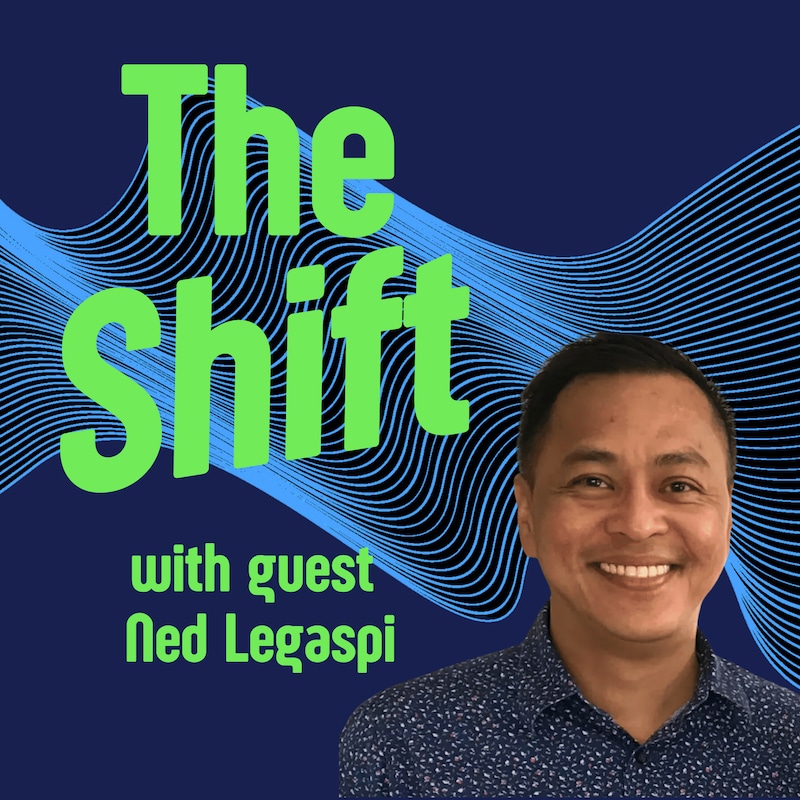
Shownotes
In this episode, Trisha is joined by returning guest Ned Legaspi, CQ Fellow, cultural intelligence consultant, and author of Culturally Intelligent Storytelling for Southeast Asian Creators, for the third instalment of CQ at the Movies. Together they turn Ned's Bamboo Framework on the Australian film The Drover's Wife: The Legend of Molly Johnson — a powerful retelling of a colonial-era story rewritten and directed by Indigenous Australian Leah Purcell. What does a story rooted in settler-colonial history reveal when seen through a CQ lens? How does a film's meaning shift when it travels beyond its cultural origin? And what can storytellers learn about the gap between intention and interpretation?
Trisha has a copy of Ned's book to give away! To enter, share this episode on LinkedIn or Facebook, tag Ned or Trisha, and tell us about a movie or story that shifted your perspective. Trisha will reach out to the winner directly.
Connect with Ned at nedlegaspi.com and on LinkedIn. His book, Culturally Intelligent Storytelling for Southeast Asian Creators, is available globally on Amazon, Apple Books, and Google Books.
Join Trisha in this journey of growth and discovery throughout the year via Substack or LinkedIn.
Show Notes:
- Greg Durley's podcast: The Culturally Intelligent Safety Professional
- Join Trisha's virtual gathering — Friday 20 March, 10:00 AM Sydney time: Register here
Transcripts
[00:00:14]
[:[00:01:09] I just mentioned cultural intelligence. For those of you who don't know about it, we sometimes speak of it as cq, and it's made up of four capabilities. There's the motivational side, CQ Drive, the cognitive side, CQ knowledge, the metacognitive CQ strategy where we think about our thinking and the behavioral CQ action.
[:[00:01:59] Ned developed the Bamboo framework. Which is a culturally intelligent approach to storytelling that helps creators craft narratives that resonate across cultures. Ned has deep experience in the movie and media and entertainment worlds, he also has a PhD in Filipino culture so, he's bringing that depth of experience to this. Welcome Ned. Good to have you with us again.
[:[00:02:31] Trisha: You three times. Yeah. That's the
[:[00:02:33] Trisha: first.
[:[00:02:37] Trisha: You are indeed. Yes. Yeah, we spoke with Ned, and one of the reasons that he has returned for this the third time is because we, realize the importance of stories in helping us shift perspectives. So sometimes we hear a story, we see a story in a movie, and we see something from a new perspective that we hadn't seen before.
[:[00:03:29] So in episode 72, Ned and I chatted about the movie, how To Make Millions Before Grandma Dies. may have been a part of, what was it, Ned, the TikTok Crying Challenge or something that centered around that movie. And we looked at that movie through the lens of his bamboo framework. Today we're going to look at an Australian movie.
[:[00:04:07] Ned: The movie, but before we go into the movie, I would just to say that one interesting for me personally is that, this is actually the first time in my life that I encountered the word drover.
[:[00:04:20] Ned: Yeah, I realize that we don't really have a term in the Philippines, and I, I don't think there is a language equivalent in Southeast Asia either.
[:[00:04:48] Trisha: I dunno about the uk it would be people in New Zealand would have an understanding of a rover, but I think it is an Australian. Perspective. That is a very good question, and that makes me think so how often would people who might be interested in a movie otherwise be put off by a title?
[:[00:05:26] to, yeah.
[:[00:05:54] Trisha: That process of moving animals, sheep and cattle here for an extended journey is one that does take some time. So as soon as people say that there are a drover, you think of them as being on the road.
[:[00:06:23] Trisha: Yeah,
[:[00:06:24] Trisha: so I wanted to touch a little bit on the historical roots of the story because this is not the first Drover's wife. yeah, So Henry Lawson wrote in 1892, the original Drover's wife. It was a short story, and it was about a mother with children on her own because her husband was away on a drive, a drove droving she had to defend her home and the children against a snake.
[:[00:07:01] Trisha: a snake.
[:[00:07:19] Ned: what about the other characters like Yadaka the Aboriginal character and then, sergeant Klintoff, as well as
[:[00:07:39] Ned: Oh,
[:[00:07:57] This story is about a land that is not empty. So we have Yadaka who shows up as an indigenous character and shares a little bit about the story of the indigenous experience in relation to settlers.
[:[00:08:14] So this is like a retelling of that
[:[00:08:18] Ned: short story. Yeah.
[:[00:08:22] Different characters or dimensions.
[:[00:08:26] And the retelling, the rewriting is done by Leah Purcell, who is the main,
[:[00:08:39] Ned: She's also the director.
[:[00:08:56] So what was your overall feeling about the story?
[:[00:09:03] Trisha: Go for it.
[:[00:09:11] Trisha: Shall I just say, excuse me, Ned. Dear listeners, we are talking now about Ned's framework and so we're talking about the story root. So what is the story grounded in? So we've already mentioned a little bit about the grounding from a historical and social perspective, and now Ned is unpacking a little bit about some of the cultural dimensions, the values that show up in the story.
[:[00:09:38] Ned: Yeah. So if you look at the story world, it is extremely individualistic. Molly and her children are almost, yeah, almost completely isolated. And, since I come from Southeast Asia, we have people living in remote areas but. Usually they have some kind of community around them.
[:[00:10:23] Trisha: No, I didn't. So
[:[00:10:27] Trisha: there is a contrast though when we look and listen to Yadaka
[:[00:10:35] Trisha: Yeah. So his experience of the world is much more collective. So he's talking about his mob and how they, they support each other and get together. Yeah.
[:[00:11:02] Because Yadaka is sharing to Molly about the community.
[:[00:11:08] Ned: Yeah. So if we look at the other dimensions in terms of power, distance, there are really very clear hierarchies.
[:[00:11:45] Yeah. In terms of the rules meaning universalism versus particularism, though of course there's the colonial legal system. It appears in the story though, and that represents the universalistic logic. No, that rules are it's supposedly it's supposed to apply to everyone.
[:[00:12:30] So much of what happens in the film or communicated through, space. Tension body language. So my initial reaction, if you look at the cinematography, you would, you'd really feel the isolation, no cinematography was very impressive, but at the same time, it gives you that feeling of isolation and at the same time, restraint.
[:[00:13:32] And in this film, know the cultural, oh, the historical conditions that make those events possible.
[:[00:14:26] Molly has murdered her husband as he attacked her, and
[:[00:14:31] Trisha: it's a, it's an incredibly misogynistic story, and you feel this sense of, as Ned said, the hierarchy of gender. And then the I guess injustice that you feel as she is being charged and held for the murder of her husband, who is a violent wife beater.
[:[00:15:11] It wasn't right. And this is, it's wrong that she has to lose her life as a consequence. But yes, so there is that way that she then comes to support Molly. But it is, the landscape and the inhumanity of people to people seem to almost combine in some ways, and really almost the only point of comfort seems to come from Yadaka as he shows up and as he teaches connection to the land and connection to other people. Apart from the sergeant's wife and the sergeant is obviously torn, but apart from his wife, there doesn't appear to be a lot of caring for Molly in her situation.
[:[00:15:57] Trisha: Yeah. Yes. The sergeant's wife, Louisa, yes.
[:[00:16:09] Trisha: Yeah,
[:[00:16:12] Ned: 18. Yeah.
[:[00:16:17] Ned: End of her time. Yeah.
[:[00:16:35] But the rewriting of it. Gives a more valid perspective because we know that the land wasn't empty. And so acknowledging the indigenous place in the land, but then the balancing out almost of those different values between individualism and you've gotta, you've gotta be tough and you've gotta survive.
[:[00:17:04] Ned: I think also the, I think the original story is trying to project that a different what is this? Representation of Australia during that time as compared to this one. This is really more grounded in realities. And, actually if you if I think about my reaction to it it's actually very unsettling because yeah, because you are.
[:[00:17:38] also. Yeah. About there's the bigger issue about colonialism and how, it affected a lot. No, a lot of, the First Nation settlers
[:[00:18:10] I think the film is not trying to entertain in the conventional sense, but I think it is trying to immerse us audience in the lived reality of that historical moment. Because as an audience, yeah, it was, the film was, unsettling
[:[00:18:44] But I guess the director intended that for us to look at that historical moment thinking that this these things exist or existed during that period.
[:[00:19:08] Ned: Yeah, like.
[:[00:19:11] Trisha: Yeah,
[:[00:19:13] Trisha: But I think it is trying to step into history and show us the reality of the time. And I think I think of some very significant movies that have done that around the Holocaust. So like Sophie's Choice, some of those,
[:[00:19:28] Trisha: that were like incredibly unsettling and sometimes when.
[:[00:19:43] Yeah.
[:[00:20:09] Uh, so I kinda. Relate to it. But I think other cultures without that shared historical colonial past would probably look at it as a story of they, they would appreciate or the motherhood that that you know, the protection that the mother
[:[00:20:30] Yeah, but I think for countries like Australia and New Zealand, or even countries like the Philippines because we were under Spain for more than 300 years issues about colonial rule.
[:[00:20:55] Yeah.
[:[00:21:08] That, that can resonate anywhere. I also think the story and the recognition of colonialism can resonate as well and perhaps resonate more powerfully when the cultures are more conflicting because I think. With the Spanish. Um, There may have been some similar values between the Spanish and the Philippines, whereas there were vastly different values between the British and the indigenous.
[:[00:22:01] It got a lot of nominations for AACTA awards and for some other. Recognition, especially at more festivals. So recognition on almost the fringes rather than the center. But yeah, but I think it's a powerful story that could resonate. And especially where I think it could be powerful is that I understand the original story is taught in school, the driver's wife is taught in school, but we would want, we don't want that original story to be recognized as. As powerfully as this one, because this one perhaps teaches more. Although I do think that it would not really be a very suitable movie for showing in school.
[:[00:23:06] Ned: So it's interesting that this the original Drover's wife is being taught in school.
[:[00:23:20] Ned: But, talking about resonance, I'd like to ask you Trisha. Do you. Do you agree that, a story would resonate most strongly in societies that share similar historical memories of colonial settlement, such as Australia and New Zealand?
[:[00:24:05] Yeah.
[:[00:24:07] Trisha: It does open your eyes sometimes to a slightly slanted perspective, but still helps you to see things from a different perspective. Yeah,
[:[00:24:33] For,
[:[00:24:40] Trisha: Yes. Yeah and the historical dimension. So if we think of like Asia, then we are thinking just about every country except Thailand. Has in some way been colonized. If we think of the South Pacific, then we are thinking so many islands perhaps except Tonga have been colonized. So that experience of colonization is certainly one that speaks.
[:[00:25:30] Ned: Yeah, it, yeah.
[:[00:25:32] Trisha: say your story leaf, which is the last part of your framework, thinks about what can storytellers learn from it? And this is where we're focusing right now, isn't it? It's that sense of, what is the part of it that's gonna reach out and be seen visibly in other places. Is that how the, this part of the model works?
[:[00:26:06] Then the story policy is how the audiences respond. The story leaf is the reflection.
[:[00:26:21] In the book. I always say, I often say that, the story root determines where the story resonates most naturally. And I'd like to refer to episode. 72 where we discuss how to make millions before Grandma dies the Thai film, the story root aligns very closely with the cultural DNA of Southeast Asia.
[:[00:27:28] One takeaway that I get here is that stories like this now, the Drover's wife in, when they get outside of the origin country resonance may come from different aspects of of the story.
[:[00:28:17] Trisha: Absolutely. And I wonder if a storyteller needs to think. And I guess that goes back to the root where the storyteller's thinking about it. Who do I want this story to be for? And I guess I don't know. I'm not a, I'm not a storyteller who write who puts in movies. But maybe everybody's desire is to be recognized by Hollywood.
[:[00:28:58] Ned: Yeah. Yeah. Yeah. And probably I'd like to rephrase it also by saying that in terms of the takeaway, no, I think the film is also reminding us that, stories can carry multiple meanings at the same
[:[00:29:14] For some viewers it's it is just a survival story, but for others it's a reflection on colonial history.
[:[00:30:25] Trisha: Yeah, and people enable people. Enable that story to shift perspectives.
[:[00:30:35] Trisha: whether it's people within your own culture or also people externally most storytellers are going into a story to do more than just entertain.
[:[00:30:46] Trisha: I think most storytellers have a desire to spread something. And so it's interesting to see.
[:[00:31:22] And so I think that's the real, that's one of the key messages to think about there. Ned, thank you so much for all your contributions. It has been wonderful speaking to you about this, and I'm sure we are going to I know we'll be meeting up at some stage, hopefully this year, and we'll be talking about these and people.
[:[00:32:03] And I think it's really interesting to see people's different perspectives because he had, some great perspectives in there as well. And this is part of storytelling. You're getting people to tell you how they see things. Which is, part of CQ strategy, helping us to think about what we are thinking.
[:[00:32:39] Ned: Thank you very much. Also I really enjoyed guesting on the shift for, three times.
[:[00:33:11] And I will reach out and get your address and we can, I can send you this copy of the book.
[:[00:33:40] And we know that we have listeners. I, the Shift has listeners in many parts of the Middle East and also globally. So we just wanna reach out to everybody and I'm sure Ned is gonna echo this in a moment, but we just want to reach out to everybody and share those things that I said at the beginning of the year that I believe we can bring to cultural intelligence, that we can bring that sense of kindness and caring for each other and that we can bring a sense of connection around the globe.
[:[00:34:26] Ned: I just want to echo what you said. Yeah, I have a brother and a nephew living and working in the Middle East, and yeah, they are quite worried about the situation. But just what you said, I would like to say that we feel you. And that really is the purpose of cultural intelligence.
[:[00:35:11] Yeah.
[:[00:35:14] Okay, so before we wrap up today, I want to extend a personal invitation, especially if you're listening from my region, the APAC region. I'm hosting a small virtual gathering on Friday the 20th of March at 10:00 AM Sydney time, and I'd love for you to join us. It's open to listeners of the shift cultural trainers or anyone using cultural intelligence or needing cultural intelligence in their work or their research.
[:[00:36:14] and then we'll make some space for people to connect with each other. Because some of the best things that come out of this work happen in the conversations between the people who need and use this work. The zoom link is in the show notes. I hope to see you there and in the meantime, for those of you from other regions who'll probably be asleep when we are having that meeting.
[:[00:36:53]
