Shownotes
Audio • Season 2 • Episode 8 • Season 2 Episode 8 - Part 1, The Lambeth Articles to Hampton Court, No Bishop, No King!. 1. Britain and its beginnings, language and religion.
© 20 26 The Rise of the Protestants., Author, Shaughan Holt.
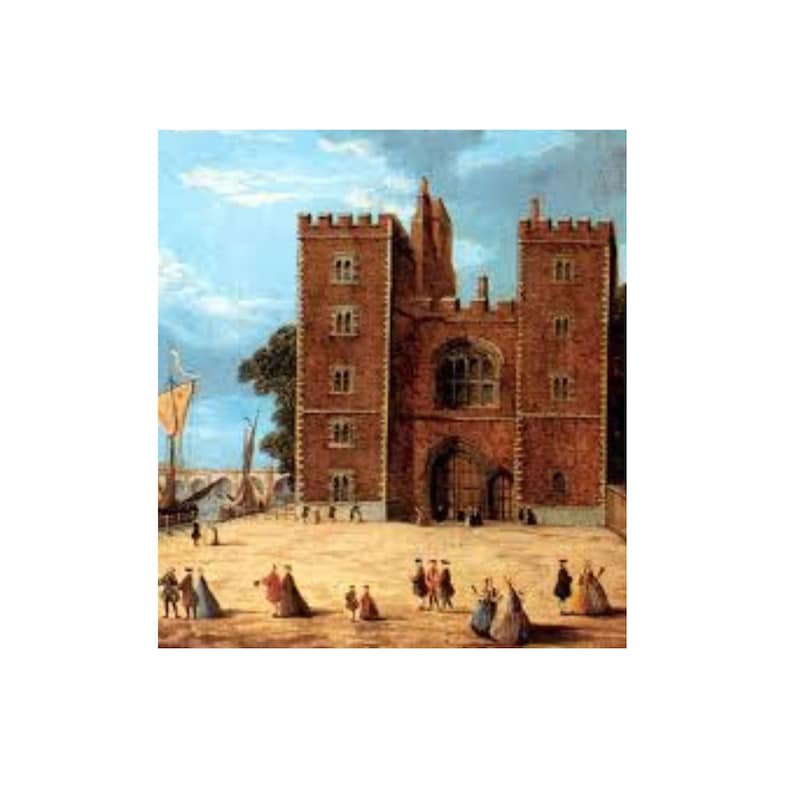
Artwork • Lambeth Palace.
Lambeth Palace is the official London residence of the Archbishop of Canterbury.
Located in North Lambeth on the south bank of the River Thames, it stands roughly 400 yards southeast of the Palace of Westminster, home to Parliament, directly across the river.
Music • Rhenish Hymns of Praise to the Virgin (c. 1500)
Song:Puer natus in Bethlehem, “A child is born in Bethlehem”, is a medieval Latin Christmas hymn. Its thirteenth-century text is traditionally paired with a fourteenth-century melody of the same name.
It relates the story of Jesus' incarnation, from the announcement by Gabriel to the visit of the Three Wise Men.
Performed by: Ars Choralis Coeln.
The hymn appears in the Songbook of Anna of Cologne, an important late-medieval manuscript from the Rhine–Meuse region, compiled around 1500 with additions after 1524.
The original manuscript is preserved in the Berlin State Library.
The songbook contains eighty-two Latin and vernacular songs, primarily in German and Dutch. Twenty-four include musical notation, of which only two are polyphonic.
Attributed to its first owner, Anna van Collen, who likely lived in a Beguine community, the manuscript was copied by seven different scribes, indicating a communal effort.
It offers valuable insight into the spiritual and cultural life of Beguine convents in the Lower Rhine during the Late Middle Ages and reflects the ideals of the “Devotio Moderna”, which emphasised using everyday language as a tool for devotion and instruction.
Beguine communities were groups of lay religious women who lived communally without permanent vows. They focused on prayer, work, and caring for the poor, supporting themselves through trades such as weaving or teaching.
Widespread in the medieval Low Countries, they offered an independent alternative to marriage or convent life, though many later declined due to Church opposition.
Overview Notes
While revisiting this episode, it became clear that parts of it needed updating—and in the process, the scope grew larger than expected.
The story simply demanded more room to breathe.
For that reason, this episode has been reworked and divided into two parts.
In Part One, we begin with a brief but powerful journey through the origins of the British people and the land they came to inhabit.
From the pagan Celts to the marching Roman legions; from relentless attacks by Germanic tribes to near-erasure at the hands of Viking hordes—these islands have endured wave after wave of conquest and upheaval.
And just when survival seemed achievement enough, Britain faced its final great invasion: subjugation by the Norman conquerors.
It is a history marked by resilience, adaptation, and survival against overwhelming odds. Yet what followed is perhaps the most remarkable chapter of all.
Instead of turning inward and tearing ourselves apart once more, Britain looked outward—often by force—and went on to build a global empire unlike anything the world had seen before.
As for where Part Two will take us… that’s a story you’ll have to wait to discover. But not for long—I promise.
Part 1 Episode Notes.
We start with the earliest pagan traditions, then look at our gradual conversion to Christianity, first as a Catholic nation, and finally our often reluctant shift to Protestantism.
In 1603, the theologian John Robinson delivered a sermon in Norwich on Psalm 118:24, expressing cautious hope that the accession of King James would bring positive change to the Church of England.
That hope had been building for years amid growing theological tension.
On 20 November 1595, senior church leaders—led by Archbishop of Canterbury John Whitgift—had met at Lambeth Palace to draft what became known as the Lambeth Articles.
Drawn up without the knowledge or consent of Queen Elizabeth I, these nine doctrinal statements were intended to settle fierce disputes over predestination.
In doing so, they represented the first explicitly Calvinist supplement to the Thirty-Nine Articles and were aimed squarely at countering the rising influence of Arminian theology.
With James I now on the throne, long-standing grievances resurfaced.
Part 2 Preview Notes.
In January 1604, the new king convened a conference at Hampton Court Palace in response to the Millenary Petition, which called for further reform within the Church of England.
The meeting—delayed from November 1603 due to an outbreak of plague—brought together representatives of the established church and leading Puritan figures.
Presiding over the bishops was Archbishop Whitgift, supported by eight senior clergy, including Richard Bancroft.
Together, they stood firmly against most Puritan demands, setting the tone for James’s religious policy and signalling that, despite initial hopes, sweeping reform would not come easily.
© 20 26 The Rise of the Protestants., Author, Shaughan Holt.
"All rights reserved. No part of this podcast may be reproduced, translated, distributed, or transmitted in any form or by any means, including photocopying, recording, or other electronic or mechanical methods, without the prior written permission of the copyright holder, except in the case of brief quotations embodied in critical reviews and certain other non-commercial uses permitted by copyright law".
Requests regarding translation, licensing, or republication should be directed to: [email protected]
Your feedback matters,send me an email at [email protected], with any comments, suggestions, or criticisms. I read every message
Transcripts
© 20 26 The Rise of the Protestants., Author, Shaughan Holt.
"All rights reserved. No part of this podcast may be reproduced, translated, distributed, or transmitted in any form or by any means, including photocopying, recording, or other electronic or mechanical methods, without the prior written permission of the copyright holder, except in the case of brief quotations embodied in critical reviews and certain other non-commercial uses permitted by copyright law".
Requests regarding translation, licensing, or republication should be directed to: [email protected]
Your feedback matters, send me an email at [email protected], with any comments, suggestions, or criticisms. I read every message
Series 2.
Episode 8.
The Lambeth Articles to Hampton Court; No Bishop – No King.
Part 1. Britain and its beginnings, language and religion.
The naming of Britain, can be traced back to Pytheas of Massalia, a Greek explorer who visited the island around 325 BCE, and recorded the names, used by the people living there.
In the years that followed, ancient geographers, would often rely on Pytheas’s accounts, preferring his writings over their own firsthand observations.
In the first century BCE, the Greek historian Diodorus Siculus, referred to the island as Pretannike, which is a Greek version of a Celtic name.
Its root word Pretani, likely meant “painted people,” referring to the body paint or tattoos worn by some early inhabitants.
Over time, changes in Greek and Latin pronunciation and spelling, led to the letter P, being replaced by the letter B, transforming Pretannike into Britannia.
Before the Roman conquest, Britain was a pre-Christian society.
Its people, known as Britons, following diverse spiritual practices that varied widely by region.
While their beliefs are not fully known, they appear to have revered nature and honoured their ancestors.
The Roman conquest of Britain, began in 43 CE, though contact with Rome had dated back to Julius Caesar’s expeditions in 55 and 54 BCE.
Christianity came to Britain through trade and cultural exchange, and by the fourth century it was common, though some old pagan customs remained.
As the Western Roman Empire declined, Roman troops left Britain around 410 CE, leaving it open to invasion.
Taking advantage of this, Germanic tribes—the Angles, Saxons, and Jutes—migrated to Britain and established kingdoms, forming the basis of "Angle-land", which would later, be known as England.
The Angles came from Angeln, a historic peninsula in northern Germany, the Saxons from Lower Saxony, and the Jutes from the Jutland peninsular of Denmark.
These groups introduced their own languages and customs, and although initially distinct, they eventually merged to form the English identity.
Over the following centuries, these kingdoms developed a strong warrior culture, creating distinct regions such as East Anglia, Wessex and Mercia, introducing, "Old English", a West Germanic language that would gradually replace Celtic and Latin.
Further shaped by Latin, Roman Christianity, and Old Norse through Viking contact, "Old English" began to evolve into regional dialects, including West Saxon.
However, after the Norman Conquest of 10 66, the language was profoundly reshaped by Norman French, which introduced a vast new vocabulary—especially in law, government, food, and warfare—and simplified its grammar.
This transformation marked the transition from Old English to Middle English, producing the rich hybrid language we know today, with French-derived words such as justice, beef, and parliament.
The Anglo-Saxons, believed in many gods, most of them drawn from Germanic traditions, that also influenced Viking religion.
Traces of these beliefs remain, in our modern weekday names, as Tuesday through Friday are named after major Anglo-Saxon deities.
Woden, king of the gods and associated with wisdom, war, poetry, and death, gave his name to Wednesday.
Thunor, the god of thunder and storms, and the equivalent of the Norse Thor, is remembered in Thursday.
Tiw, the god of war, law and justice—famed for sacrificing his hand to the wolf Fenris—lent his name to Tuesday.
Friday comes from Frige, Woden’s wife, and the goddess of love, marriage and childbirth.
Other deities were also worshipped.
Eostre, the goddess of spring and rebirth, is believed to be the source of the name Easter.
Erce, sometimes called, "The Earth Mother”, appears in an Old English farming charm, a spoken spell or ritual, and is linked to fertility.
The sun and moon were also personified, as Siȝel and Mone, influencing the names Sunday and Monday.
Alongside these gods, Anglo-Saxon paganism included belief in supernatural beings such as elves, dwarves and dragons, which were believed to inhabit the natural world, but these traditions gradually faded, as the Anglo-Saxon kingdoms became Christian during the 7th and 8th centuries CE.
In 13 47, the bubonic plague began its spread across south-eastern Europe, causing severe outbreaks and resulting in the deaths of approximately one-third of the population.
By 13 49, the plague had reached Cambridge, resulting in a significant loss of life.
Among the deceased was Margaret Andrew, a key benefactor, in establishing, what would later become Corpus Christi College.
Amidst this chaos, three prominent businessmen, William Horwode, Henry de Tangmere, and John Hardy, founded the Guild of Corpus Christi in Cambridge.
The earliest recorded reference to the guild, appears in Margaret Andrew’s will, dated 7 May 13 49, in which she bequeathed lands to the guild.
Corpus Christi College was established in 13 52, and is the sixth-oldest college at the University of Cambridge.
Members of the Guild of Corpus Christi, and the Guild of the Bless-sed Virgin Mary, collaborated to establish the college.
The Latin phrase "Corpus Christi", translates to "the body of Christ".
This devotion gained popularity approximately a century earlier, mainly due to the influence of Juliana de Cornillon.
In medieval society, guilds played a vital role, serving as networks of mutual support and spiritual communities, for both the affluent and the less privileged.
The primary objective of Corpus Christi was to provide social and spiritual support, by funding prayers and masses for deceased members, thereby assisting their souls.
The College archives, have preserved Margaret Andrew’s will, together with the memorial lists from the Guild of St. Mary, thereby ensuring, that her wish to be remembered, is honoured.
The year is 16 03.
In 16 03, John Robinson delivered a sermon in Norwich, based on Psalm 118 : 24.
He expressed an optimism, that King James would implement positive reforms, within the Church of England, while he also criticised, the continuing presence of unqualified ministers.
Psalm 118 : 24–26, as translated in the Geneva Bible, states:
"This is the day the Lord has made, let us rejoice and be glad today.
We beg you O Lord, save us, we beg you O Lord, give us success.
Bless-sed is the one who comes in the name of the Lord, we bless you from the Lord's house".
These verses, refer to a pivotal moment in history, when the Son of God entered Jerusalem, was initially welcomed as the Messiah, and then subsequently rejected, an event which holds considerable significance.
Two informants, placed there by Bishop Jegon, attended Robinson’s sermon.
They described him as, “A restlessly critical, yet hopeful young religionist", who remained optimistic about reforms, and did not appear to endorse Separatism.
John Jegon was an English academic, and Bishop of Norwich, born at Cogges Hall in Essex.
In 15 90, on the recommendation of Queen Elizabeth, Jegon was appointed Master, of Corpus Christi College Cambridge.
He improved the college’s finances, by admitting Gentleman Commoners, who were wealthy students from middle- and upper-class backgrounds.
These students often did not formally matriculate.
They typically remained at the college for one or two years, before proceeding to legal studies, and were not required to take examinations or earn degrees.
The college benefited financially from this arrangement, as the students customarily presented silver cups or tankards.
At least 260 such items were collected, though most were subsequently melted down for profit.
On 22 July 16 01, John Whitgift appointed Jegon as Dean of Norwich.
Two years later, on 14 May 16 03, Jegon was consecrated as Bishop of Norwich.
In contrast to Archbishop Matthew Parker, Jegon was not noted for kindness.
He exhibited the specific faults prevalent in his era, such as cruelty and a dark sense of humour.
As Bishop, Jegon advocated for uniformity in Anglican doctrine, which led to tensions with John Robinson.
Nevertheless, he supported local Puritan groups, by providing them with qualified preachers.
In 15 93, Jegon objected to a sermon, delivered by William Barrett that criticised Calvinism.
William Barrett was an English priest and theologian, who held positions within the Church of England.
Barrett commenced his studies, at Trinity College Cambridge on 1 February 15 79.
He was awarded a Master of Arts degree, in 15 88, and subsequently became a fellow, at Caius College.
As part of his Bachelor of Divinity requirements, Barrett delivered a sermon entitled, "Concio ad Clerum," meaning, "a Sermon to the clergy," at St. Mary the Great Church, in Cambridge on 29 April 15 95.
In his sermon, he strongly criticised the Calvinist tenets popular at Cambridge University at the time, particularly the doctrines of Assurance and The Indefectibility of Grace.
The doctrines of Assurance and the Indefectibility of Grace are related theological concepts primarily associated with the Reformed theology of Calvinism, which teach that a person's salvation is entirely the work of God's grace and is eternally secure.
The Calvinist View of “Assurance”.
In Calvinist theology the Doctrine of Assurance holds that true Christians can and should be confident that they are saved.
This confidence is called Assurance, and comes from trusting God’s promises and the work of the Holy Spirit, not from good deeds or changing feelings.
Assurance is inseparably connected to the “Perseverance of the Saints”, which holds that those truly elected and regenerated by God will persevere in faith until the end and attain eternal salvation.
Those who permanently fall away were never truly regenerate.
Arminians also believe Christians can be confident in their salvation, but they see this confidence as conditional.
Assurance depends on continuing to trust Christ and follow Him. If a believer later rejects Christ and falls away, salvation—and the assurance that comes with it—can be lost.
The Catholic Church does not teach that anyone can be absolutely certain of their final salvation.
Instead, Catholics are encouraged to trust in God’s mercy while continuing to live faithfully.
Salvation is seen as a lifelong journey that begins with Baptism and requires ongoing faith, good works, and participation in the sacraments, rather than a one-time event that guarantees heaven.
The Calvinist View of “The Indefectibility of Grace”.
This doctrine, the final point of the TULIP acronym in Calvinism, affirms that those whom God has elected and genuinely drawn to Himself through the Holy Spirit will not fall away but will persevere in faith until the end.
Its key tenet is that none of those whom God has elected will be lost; they are eternally secure in Him.
God is directly responsible for the preservation of His elect, and Christ continues to intercede for them.
Arminian theology opposes this, affirming only ”Conditional Security" and the possibility of a true believer committing apostasy and ultimately paying the price, which is to perish for eternity.
The term "indefectibility" is also used in Catholic theology, but in a different context.
It refers to the belief that the Church as an institution will last until the end of time and will not fail in its essential mission, structure, or core doctrines, though its human members may sin.
It does not refer to the indefectibility of an individual's state of grace.
In Christian theology, "Grace" is defined as an unearned, freely given gift from God.
And as such, Grace, is regarded as a foundational element of Christian doctrine, and is believed to serve as the means, by which, humanity attains salvation.
The developments, leading up to the creation of the Lambeth Articles of 15 95, illustrate the growing divisions among late Elizabethan Calvinists.
At the heart of this unfolding drama, stood William Whitaker, the influential head of St. John’s College Cambridge, and Regius Professor of Divinity.
In February 15 95, Whitaker delivered a sermon on predestination, which initiated substantial debate concerning grace, assurance and divine sovereignty in relation to salvation.
Although historians often identify, the subsequent sermon by William Barrett, as the immediate catalyst for the Lambeth Articles, Barrett’s sermon was actually a response to Whitaker.
Whitaker’s sermon, strongly defended strict Calvinist doctrines, particularly the belief, that God exercises complete control over salvation, and that Christ’s atonement was limited to the elect.
He rejected the notion, that God wants everyone to be saved in the same way.
Whitaker’s primary objective, seems to have been to reassure believers, that God safeguards the salvation of only those whom, He, has chosen.
At the time, many leading Cambridge theologians, including Laurence Chaderton, William Perkins, and Andrew Willet, agreed with him, creating a strong Calvinist consensus.
Whitaker was also responding, to increasing opposition within the theological community.
Some preachers argued, that strict predestination made God responsible for sin, and Whitaker feared these views threatened church unity, opening the door to Catholic influence.
By the mid-15 90s, it was becoming clear that agreement among Calvinists was breaking down.
Figures such as Lancelot Andrewes, challenged assertions regarding the certainty of salvation, while William Perkins, cautioned, that doctrines, emphasising human effort in salvation were re-emerging.
Rather than calming the situation, Whitaker’s sermon only served to increase the tension.
In April 15 95, William Barrett, a chaplain at Caius College, delivered a controversial sermon at Great St. Mary’s Church Cambridge.
In this sermon, Barrett argued that strong assurance could result in overconfidence, that human effort was significant, that God could not exercise total control, without incurring responsibility for sin, and that predestination was not absolute.
Barrett also criticised prominent Calvinist theologians, including Calvin, Beza, and Peter Martyr, provoking strong opposition from Whitaker and his supporters.
In response, numerous Cambridge scholars signed a petition opposing Barrett, and college authorities issued a statement defending the established doctrine.
Under pressure from university leaders, Vice-Chancellor Dr. Dupont summoned Barrett to explain his sermon.
Barrett then met with college authorities, acknowledged that some criticisms were valid, and was advised to withdraw his statements.
On 10 May 15 95, Barrett publicly retracted his remarks at St Mary’s Church.
However, his manner was seen as insincere, suggesting he still held his original views.
As a result, the college sought permission from Lord Burghley to discipline him, which was granted.
Facing the threat of expulsion, Barrett appealed to Archbishop Whitgift, who criticised the college for acting too quickly.
Historians disagree about how Whitgift responded at this point.
Some think he tried to stay neutral, others believe he first defended Barrett’s right to speak, and some see him as cautious and slow to act.
As things progressed, on 19 August 15 95, Whitgift asked Matthew Hutton, the Archbishop of York, for further advice and direction.
On 30 September 15 95, Whitgift instructed all parties to cease discussion of the disputed issues.
Nevertheless, his directive was not fully observed, particularly by Whitaker.
Whitgift sought to maintain unity and assert his authority, but later would permit Whitaker to question Barrett directly.
The college leaders then asked Whitgift to review Barrett’s defence, and Barrett was summoned to Lambeth Palace for further examination.
The delay now gave the Cambridge theologians a chance to step in and handle the controversy first.
Barrett appeared before a committee led by William Whitaker, where he formally recanted his earlier positions.
This questioning prompted Whitaker to compose a set of doctrinal statements that would later become known as the Lambeth Articles.
On 20 November 15 95, a group of church leaders, under the leadership of Archbishop John Whitgift, convened at Lambeth Palace.
The meeting was held without the Queen's approval, and she subsequently expressed dissatisfaction, that a synod had been convened, without her authorisation.
Archbishop John Whitgift, played a central role in the creation of the Lambeth Articles, he convened the meetings, approving the text drafted by theologian William Whitaker, and signed the final document, though his intention was to use them for local use at Cambridge to settle disputes, not as official church law.
These nine doctrinal statements, were intended to address the ongoing controversy within the Church of England, concerning the doctrine of predestination.
Whitaker was clearly trying to bring the university together and build an agreement.
Thomas Fuller believes that this was not a private conventicle, but, according to a letter from Cambridge, these men were sent to London by Common Consent.
This is possibly the nearest the 15 90s came, to pleading for a national Calvinist consensus.
The fact, that the Articles were then passed on, and only partly amended, only serves to reinforce the point that it was more, than just a Cambridge affair.
The Lambeth Articles of 15 95, constituted a significant Calvinist addition, to the Church of England’s Thirty-Nine Articles.
This was the first time a Reformed church had attempted to address, the theological issues that would later be known as Arminianism.
Dr. William Whitaker, Regius Professor of Divinity at Cambridge, authored the articles with assistance from Dr. Richard Fletcher, Bishop of London; Dr. Richard Vaughan, Bishop-elect of Bangor; and Humphrey Tyndall, Dean of Ely.
A close examination of the nine articles reveals an interesting structure.
The first three articles were clearly intended to form a philosophical definition of predestination, the second, or middle three articles were designed to give the pastoral or salvation implications of predestination, with a view to preaching Assurance.
Finally, the last three articles were unashamedly negative in structure, and were directed specifically, at the doctrine of free will.
In March 15 97, Whitgift warned authorities that Barrett might flee the country, but the warning came too late.
Barrett had already left England, converting to Roman Catholicism while abroad, and later returned to England to live as a layman.
In 16 19, English representatives presented the Lambeth Articles at the Synod of Dordt, to articulate the Church of England's position regarding the Arminian controversy.
The presentation, highlighted the shared theological principles between the Lambeth Articles and the Canons of Dordrecht.
The Synod of Dordt was the only ecumenical church assembly held during the Reformation.
Its Canons, remain significant within Reformed theology, defining key beliefs, such as election, atonement, and perseverance.
Many Reformed churches adopt the Canons of Dordt, as a confessional standard, particularly in response to Arminianism, due to their emphasis on divine sovereignty in salvation.
The Canons also inform pastoral practice, providing guidance, on grace and the assurance of salvation, while taking into account historical context and theological nuances.
Arminianism, refers to a Protestant theological tradition, named for the Dutch theologian Jacobus Arminius.
This tradition, emphasises human free will, and God's universal love in salvation, which distinguishes it from the Calvinist doctrine of predestination.
The nine articles adopted at Lambeth, contain a clear, and strong articulation, of the Predestinarian system, teaching that:
1. God has, from all eternity, pre-destined certain individuals to life and consigned others to death.
2. The cause of pre-destination to life is not the foreknowledge of faith and good works, but solely the absolute and simple will of God.
3. Among those who are pre-destined, there is a fixed and certain number that can neither be increased nor diminished.
Four. Those not pre-destined to salvation, will necessarily be condemned for their sins.
5. True, justifying faith and the sanctifying Spirit of God are not lost, nor do they pass away, either totally or finally, in the elect.
6. The truly faithful person, endowed with justifying faith, possesses full assurance of the remission of sins and eternal salvation through Christ.
7. Grace sufficient for salvation, is not afforded, communicated, or granted to all individuals, by which they might be saved if they so desired.
8. No one can come to the Son, unless drawn by the Father, yet, not all are drawn by the Father.
9. The will or power, to attain salvation, is not granted to every individual.
In 16 03, Sir Walter Raleigh, an English politician and adventurer, was imprisoned in the Tower of London for the second time, at the age of 51.
Raleigh would spend 13 years in prison, after he was involved in a plot to overthrow King James.
Conspiracies, primarily orchestrated by courtiers, sought to kidnap the king and install his cousin, Lady Arabella Stuart, on the throne.
Lady Arabella Stuart (15 75 – 25 September 16 15) was an English noblewoman and first cousin twice removed of Queen Elizabeth.
Viewed as a potential heir to the English and Scottish thrones, she secretly married William Seymour, Lord Beauchamp, on 22 June 16 10, without royal approval, which led to their imprisonment by King James I of England.
Under the circumstances, the King wondered whether the marriage was the prelude to an attempt to seize the Crown itself.
Arabella was confined to Sir Thomas Perry's house in Lambeth, while Lord Beauchamp was imprisoned in the Tower of London.
In June 16 11, Beauchamp escaped, hoping to reunite with Arabella, but their plan was thwarted.
Arabella's ship was overtaken by King James's men just before it reached Calais, and she was returned to England, and imprisoned in the Tower of London.
Beauchamp found refuge in Ostend, but the couple, never saw each other again.
Tragically, on 25 September 16 15, Arabella died in the Tower at 39, succumbing to self-imposed starvation.
She was buried in Westminster Abbey on 29 September 16 15.
