Shownotes
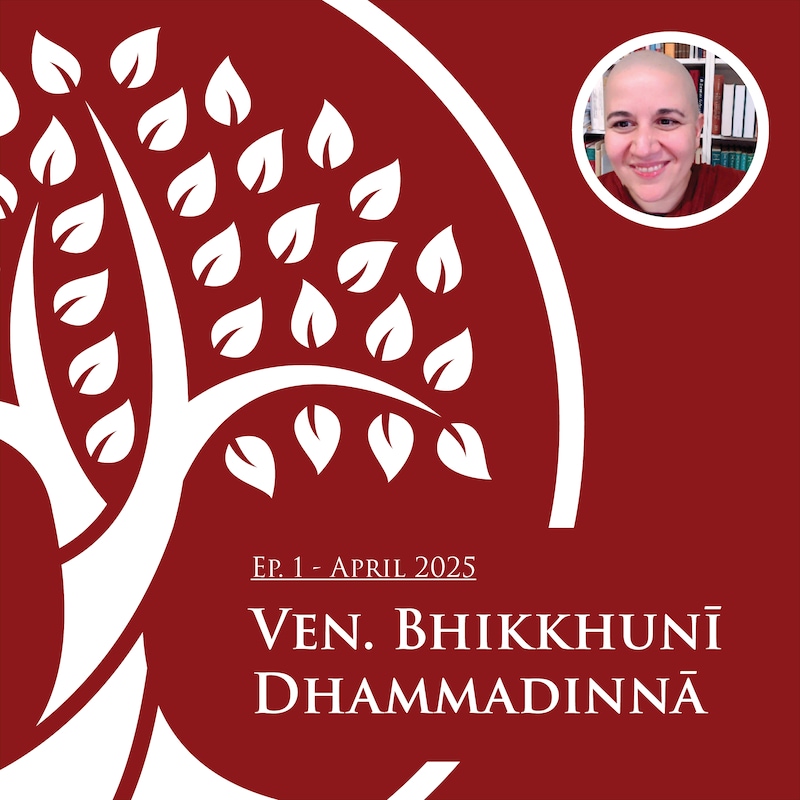
Ven. Bhikkhunī Dhammadinnā talks about the journey of her research in relation to the historical transmission of Buddhist texts, the process of integrating her two lives as an academic and monastic, and the relevance of Buddhism’s “two truths” doctrine in the present day.
Born in Italy in 1980, Bhikkhunī Dhammadinnā went forth as a monastic in the Theravāda Buddhist tradition of Sri Lanka in 2012. She studied Indology, Indo-Iranian philology, and Tibetology at the University of Naples "L’Orientale," at the International Research Institute for Advanced Buddhology at Soka University in Tokyo, and at the Institute for Research in Humanities at Kyoto University, receiving her doctorate in 2010 with a dissertation on the Khotanese "Book of Zambasta" and the formative phases of bodhisattva Mahāyāna ideology in Khotan in the fifth and sixth centuries. Her scholarly work focuses on early Buddhist Sūtra and Vinaya literature as well as the doctrinal and historical development of Buddhist meditative traditions in India. She is the co-founder and director of the Āgama Research Group (established in 2012) and an associate research professor in the Department of Buddhist Studies of the Dharma Drum Institute of Liberal Arts in Taiwan. Bhikkhunī Dhammadinnā also serves as a Buddhist minister with the Italian government through the Italian Buddhist Union.
Interview by Miles Osgood.
Transcripts
Dhammadinnā Episode Transcript
[Prologue]
MILES OSGOOD: Welcome to The Ho Center for Buddhist Studies at Stanford Podcast. Come join us by the tree.
[music - Ani Choying Drolma, guitar]
Where do the study and practice of Buddhism intersect? When there are centuries of traditions to learn, and a continent to cover, how do we find our way to a particular community or a particular archive? And in our current epistemological crisis–where we no longer feel we can trust the information around us, or even our own interpretation of that information–what help can be found amid Buddhism’s earliest texts and techniques?
Ven. Dhammadinnā: “The baseline practice of mindfulness shared by all Buddhist traditions definitely gives tools to pause and to self-reflect. So probably, this is one of the strongest, most powerful tools that can be adopted from the Buddhist perspective.”
[music - Ani Choying Drolma, guitar and flute]
We’re recording from the Ho Center for Buddhist Studies at Stanford, where we talk to the world’s leading Buddhist scholars about the history, philosophy, and practice of Buddhism.
I’m your host, Miles Osgood. Today, for our very first episode, I’ll be talking to Venerable Bhikkhunī Dhammadinnā, a major scholar of early Buddhist scriptures working in Italy and Taiwan who is also a Theravāda nun, ordained in Sri Lanka and serving the Italian government as a Buddhist Minister. Lucky for us, the Venerable Dhammadinnā is local to the Bay Area this spring: she’ll be joining us on Stanford campus at the Buddhist Studies Center’s Library from her current post at UC Berkeley, where she is a visiting professor this term.
[music - Ani Choying Drolma, guitar and bells]
A running theme in the conversation that follows is how to integrate sides of this discipline that sometimes feel like opposite poles: universalism and historicity, the academic and the monastic, the ancient and the present.
That’s because of the range of Venerable Dhammadinnā’s own research. Her thesis was about the Mahāyāna Book of Zambasta from the Central Asian kingdom of Khotan in the 5th century, but she always wanted to focus on early Buddhist scriptures, and that’s what she does now as co-founder and director of the Āgama Research Group.
To give you a sense of the breadth of her publications, and to prepare you for some of the references in the conversation ahead, I want to mention two of her articles up front.
The first involves a famous recurring analogy in Buddhist philosophy between the self and a chariot. In twenty twenty, Venerable Dhammadinnā wrote about the first recorded instance of this simile, in a debate between the god Māra and a fully awakened female disciple of the Buddha, Bhikṣunī Śailā. In the story, Māra tries to divert the nun’s study with philosophical questions about the nature of individual being, and Śailā responds by denying the existence of any such being. Just as a chariot is an impermanent assembly of different physical components, she argues, so is the self with regard to its mental components: its “aggregates” or skandhas.
This essay of Venerable Dhammadinnā’s only comes up briefly in the conversation, but it seems pertinent to her wider reflections for a few reasons: the case study shows us a nun inventing a foundational philosophical motif, and the analysis gets us to think about what it might mean to identify, separate, or integrate the different parts of oneself.
The second piece is more of an outlier amid Venerable Dhammadinnā’s work–as she was keen to clarify–but I think it will be interesting to some of our listeners for that very reason.
Earlier this year, Venerable Dhammadinnā co-wrote a “Letter to the Editors” of the neuroscience journal Brain Topography, in response to a study that claimed to have provided “neural data” on a meditation session, including a so-called “cessation” experience. The letter was an opportunity to clarify, in the pages of the scientific journal, how exactly this attainment–that is, the true cessation of craving–is assessed in the Theravāda tradition.
What emerges is a kind of comparative cartography. In the pages of Brain Topography, Venerable Dhammadinnā alludes to a different map we could consider: (quote) “the Theravāda Buddhist mapping of the path to progress to the final goal of meditative practice.”
And with that, I think we have a sufficient map of our own to navigate the discussion ahead.
Let’s head into the library.
[bell chime]
We are honored to have you, Venerable Dhammadinnā. Thank you so much for being here.
VEN. DHAMMADINNĀ: Thank you, Miles, for having me here.
MILES OSGOOD: Yeah. Of course. Well, as a way of starting our conversation, I wanted to give listeners just a quick sense of the range of your work and where your vocation has taken you, geographically and historically. To me, I guess the question is, with all of this breadth—and especially this breadth early in your career, right—where you have Central Asia in play, you're doing language study in Sanskrit and Tibetan, you are traveling to East Asia, and Japan, and Taiwan, and then you're ordained in Sri Lanka—you're getting, surely, such a sense of the diversity and variety of Buddhist studies, and trying to figure out what your own specialization is going to be within that. So I wonder just how that informed your work at the time, how you look on it now as a specialist, and I just thought I would ask that first.
VEN. DHAMMADINNĀ: Oh, thank you. Yeah. I mean, I guess, this is just like an organic or like a natural reflection of really, you know, the routes taken by the Buddhist transmission, and textual transmission, and institutional transmission. I mean, I just allowed myself to, you know, to kind of follow it through, in a way. It's not that—I mean, I don't know. I mean, I think Buddhist studies is inherently like this. I mean, so I don't see this kind of, you know, like my special case. But it was just like more coming from this recognition of the fact that you can't do Buddhist studies without really acknowledging this variety. And seeing diversity and also in all these text-historical developments. Yeah, I mean, ideally, of course, you know, you can have scholarship which is very detailed and vertical, and then you may have more breadth. I mean, hopefully, I mean, I don't end up being a jack-of-all-trades and master of none. (chuckles) That's kind of a risk too. But I think in a way, I mean, in the 21st century, we do need to face this. I mean, to confront this kind of breadth, and to have an overall sense of the direction for these traditions.
MILES OSGOOD: Yeah, and I really like the original insight, that there's something there about following a transmission history that is just part of the history of the religion. And I guess, I wonder about that: that, you know, I'd imagine in those various travels and in that scholarship, you're not always going chronologically, as it were, from, you know, the origins to its most contemporary manifestations. In some ways, in fact, at times it seems as though you're going backwards, right? You're starting in the middle period and then you're working your way back to early texts. Does that reading backward, as it were, or moving backward and forward in time, allow a certain perspective as you're working?
VEN. DHAMMADINNĀ: Yeah. I mean, I have to say, I'm really impressed, you know, that like a non-specialist in Buddhist studies already has this perspective on the history of the discipline, of the field, and also moving through that. Yeah, I mean, personally, I do come—maybe this is also like in my Italian conditioning, or this kind of grammar-school background: you know, we get drilled in with this idea that you have to have a text-historical perspective. So, I think this is also part of my background in a way. So, it's kind of natural to have this sense of history and text-historical development, and institutional history, and ideological history. So, I think it comes from there to an extent. And also, I think it's kind of natural. I mean, at least for me, it's been natural, you know, to observe what goes on around me and to, you know, see through certain dynamics in the light of, you know, this very Buddhist principle of dependent arising and conditionality and historical, you know, kind of the impact of historical conditions on ideas and individuals and communities. So I think it's not, again, it's not like an intentional going back and forth, but it's more like a type of, you know, kind of, I mean, a way of looking at things, and I couldn't escape from that way. (laughs)
MILES OSGOOD: Yeah, that makes sense. And so, there's a lot of work that must go into every one of those moves intellectually and just geographically to kind of get your bearings and figure out what the context is that you're working with.
VEN. DHAMMADINNĀ: Yeah, and then you have also, you know, like the language, you know, things to work out. Because, of course, you do need to read the primary sources, I mean, to the best of your ability. So I'm not like a trained, you know, Sinologist as such, or a trained, you know, Tibetologist—like if I'm doing heavy work in Tibetan, for example—but you do need to have direct access to the heavy-duty work. MILES OSGOOD: So for the Āgama Research Group, if you want to be able to access that side of early Buddhist texts, you need to have some access through your collaborators or through your own work to Chinese, I guess.
VEN. DHAMMADINNĀ: Yeah.
MILES OSGOOD: Yeah.
VEN. DHAMMADINNĀ: I think in a way, you do have to, you know, surrender to the fact that you are not going to be, you know, like the perfect Indologist, or the perfect Sinologist, or the perfect Japanologist, to this service of having this broader picture, but also I think you have to be honest in recognizing your own limitations. So maybe you do own, or at least you try to build some sort of, you know, deeper knowledge and understanding, you know, within at least one main field, you know, with all the language and philology, et cetera. And then, I mean, there's collaboration for that. And also, I mean, I think if you do know the extent of your ignorance, it's easy in a way, you know, I suppose, to be a bit more careful. And so, if you're warned about your delimitations of your own tools, then, you know, it's epistemically acceptable, so to say, to do these excursions, you know, outside your field. If you just, I mean, you know, you end up being so conceited that you don't know the kind of, you know, limitations of your knowledge, of course, then it turns up very flat or, you know, just, I mean, wrong, really. So, I think it's also like negotiating this curiosity and wish to look at other things and knowing your limitations, really.
MILES OSGOOD: Right. So it does sound like there's a balance there. That on the one hand you use this language, this kind of humble language of limitations and ignorance and worry about that the opposite pole might be conceit. But I guess, I wonder if there's a different pole, as it were, of advantage of inciting collaboration because you need it, or seeking out some kind of comparativist move because that's the thing you come with, or if it's just a matter of having a slight unfamiliarity with a subject that allows you to see it in a way that those who are doing the kind of deep, expert, vertical study of something might not have. Has that ever been the case?
VEN. DHAMMADINNĀ: The way I'd put it, it's more like, I mean, you begin to recognize the impact of so many different conditions on textual transmission, textual formation, and reception. And, I mean, with the texts also the contents of the text. So it's, in a way, you know, if you really have to acknowledge the impact of these conditions—which is anyway also what traditional, you know, philologists have been doing way before, you know, this kind of arising of Buddhist philology as a subfield—I mean, to the extent that you recognize the impact of so many different, you know, aspects, you do have, you know, to have a methodological dialogue with, you know, other areas and fields, which are actually working with those conditions and studying those conditions. So, I think it's really, like, multidimensional, so we just try to look at the same phenomenon from multiple angles. Angles? Angles? I'm sorry, my pronunciation might be wrong. So, from multiple angles. And so, again, I see it just as a reflection or as a demand of the materials we're working with, and this like human phenomenon we are working with.
MILES OSGOOD: Yeah, so there will always be this nice overlayering of the experience of the scholar who's trying to move maybe between languages and traditions, and just the experience of the scripture or of the material itself, having also been brought up that way, as it were. That's great. You mentioned something in passing earlier that I wanted to touch back on, which is the feeling of also maybe having glimpses of this history when you're there now—if I caught that right—that, like, by nature of having traveled to all these places, and as we will get to, also being a practitioner in this religion, I guess I wonder, have there been moments for you where you've been able to perceive elements of that context, elements of a particular tradition? Things that may be taken for granted on the ground that for you were really striking when you kind of arrive on the scene, where you say like, "Oh, I know this happened in this century, or this century. I can see it happening now here."
VEN. DHAMMADINNĀ: Yeah, absolutely.
I think this is—I mean, as a Buddhist practitioner and monastic, this academic background has been, you know, really like a protection in a way, and, you know, like a safe haven from the impact. For example, I mean, as a female monastic of, you know, terrible discrimination in the Theravāda world. I mean, by the way, I'm ordained in the Theravāda tradition, which is one of the contemporary-living Buddhist traditions. So, I think having this perspective, you now, for once you see this kind of long kind of tide of, you now, kind of historical kind of development. And so, your own sense of agency somehow, you know, is perceived in a totally different way—you know vis-à-vis like a person who simply—I mean, I'm not saying simply in a kind of diminishing way, but, you know, if you're fully identified with your religious persona in a way, so all your eggs are in that basket, so to say, and so you don't have this metacognition, you know, of your own kind of agency within that kind of context. So in a way, I think, I've been vaccinated by my academic understanding because things hurt less in a way on the personal level, or you also, you know, see through things in a different way, instead of having, you know, invested 100% into building a religious identity without this kind of meta-awareness or metacognition, so to say. So, I think that this has been really extremely helpful, I mean, on a very personal, like existential level. And this also ties in with the kind of talk we're going to have this evening. And also, in general, I really think that seeing, you know, like the long tide of history, it's so helpful. And it's just also so helpful to kind of also disengage from this, you know, monocausal kind of understanding of religious phenomena, because you really see the kind of multiple conditions. Again, you know, coming back to this conditionality topic, you know, you see the impact of different things, so it's not new. I mean, for example, you know, with this neuroscience, you know, thing, I mean, we had a little conversation before the recording, so I can just pull from, you know, pull it out, you know? Like Miles used this word, "Oh, what kind of..." I mean, I'm not quoting verbatim, but it was like, "What kind of pernicious things do you see in this, you know, misappropriation?"
MILES OSGOOD: Trying to stir up drama on the podcast.
VEN. DHAMMADINNĀ: Yeah, something like that. And, you know, this kind of click-bait thing. But, you know, actually, it's interesting, because I don't see it as pernicious, but you just see that this rewriting of new canons and, you know, redetermination of the tradition has already happened in history. So, you don't come from like a judgmental position. And I'm not now advocating for being non-judgmental, per se. But somehow you don't have this kind of moralistic or traditionalist kind of standpoint, and the idea that you have to defend tradition at all costs. But rather, you're also aware, you know, I mean, of your own conditioning actually there. So in a way, I mean, of course, I mean, as a Buddhist practitioner, I do feel, you know, there is something which is inconsistent there. But I do think, again, that—
MILES OSGOOD: Sorry, could you say more: inconsistent in what way?
VEN. DHAMMADINNĀ: Oh yeah, like, you know, in certain kind of trends in this kind of contemporary, basically, deployment of, you know, meditation states for research in neuroscience, which is not fully informed by the paradigm emic to the Buddhist tradition. So, I mean, it's not a traditionalist position. It's just that you need to have a full dialogue with the other partner. So, you have to take the dialogue, the conversation part fully on board. So, of course, I mean as a Buddhist practitioner, I might react to that in a way. But actually, this academically informed understanding of my own sense of being, of self, does help with, you know, coming up with an interest, so: "let me understand what's going on here." Rather than this kind of black-and-white traditionalist, or, you know, outraged, textual scholar kind of thing. So I think that there is a lot of scope for actually having like a wider, you know, perceptive, perspective, wider perspective.
MILES OSGOOD: Yeah, and that's a great way of putting it. And I think what I was seizing on there was the opportunity to think, "Oh, here is a potential critique," you know, from kind of purely within the discipline to someone who's maybe outside of it, but rather to think about it in terms of a curiosity maybe: to think that like, oh, that allows you one more way of being broad-ranging in your research, to take an interest in what others are doing, and, you know, maybe to critique, maybe to correct, but so as to kind of understand what it is that they're working on, and then contribute to it. Does that sound right?
VEN. DHAMMADINNĀ: Yeah, yeah, yeah. And, I mean, I also think, and here I am advocating for, you know, for Buddhist scholarship, or on behalf of Buddhist scholarship. I think it's also time to emerge from this orientalist or, you know, colonialist paradigm, so that if we are dealing with Buddhist constructs, we do need to have a text-historically informed understanding of these Buddhist constructs. So you can't have research in neuroscience, or mindfulness in general, or on a certain state because these states are actually controversial within tradition itself. So, so to say, if you are willing to have such a complex, and nuanced, methodological approach within your own field as a scientist—let's put aside now the ideology of science, vis-à-vis religious studies, and all of that—but anyway, if you're willing to be, you know, epistemically like solid in your own field, you do have to grant that kind of, you know, position and integrity also to the so-called object you are analyzing, otherwise you are just reifying it. And this object happens to be a living body, by the way.
MILES OSGOOD: Let me turn to something that you brought up, and that of course I think is a fascinating part of your biography to many listeners, which is the dual identity of being a scholar and a practitioner. And one way that you talked about it was to say, having the academic perspective means that when you go into various contexts, it gives you potentially a kind of distance or maybe an objectivity, or at least a kind of mode of assessing things that might otherwise be difficult,
or unpleasant, or just disorienting, perhaps. And I just kind of wanted us to go along that line and think about it a little bit. So what does that mean for your interactions, on the one hand, with other scholars, coming in as a nun? And, I guess, what seems more pertinent to that particular story is then talking to other nuns and monks or practitioners, coming in as the academic.
VEN. DHAMMADINNĀ: Now, that's interesting. I don't think it gives me like an objective stance, but perhaps more an understanding of, you know, the fabrication of my own subjectivity there. So, I think just this sense of, you know, being aware of what you bring with you into the discussion. So, I mean, no, I used to feel, when I was younger, you know, that there was neither one thing nor the other. You know, I was like neither a scholar nor a practitioner. And now, you know, maybe getting old, (chuckles) it's kind of getting more integrated. So, actually now I feel, "Oh wow, you know what? I belong to both worlds." So it's actually a much more comfortable place. And also, of course, I mean, when you're younger or when you are, you know, maybe less mature—but I mean, I'm not claiming I'm mature now—but somehow I think the sense of identity becomes more divisive in a way and you cling more strongly, you know, to either side. So, you play, you know, the kind of scholar with practitioners—and then you kind of, you know—or you play the practitioner with scholars, in a way. But somehow, I think you can really have this kind of, you know, double identity together if you're not clinging so strongly, you know, to this kind of righteousness about one standpoint.
MILES OSGOOD: Right. Right. Where there could be that temptation on either end to say that there's a certain kind of purity of this field or that identity. So could we talk about the two directions then? So, for instance, being a practitioner amongst scholars, and maybe bringing that into your scholarship. What might that look like as a teacher or a writer?
VEN. DHAMMADINNĀ: I don't know. It feels so natural that I don't remember.
MILES OSGOOD: Well, but it sounds like it wasn't always natural. Is that right?
VEN. DHAMMADINNĀ: Yeah. Yeah, I don't have a meta-narrative with it now. But, yeah, I think, well, I mean, going personal, you know, it's like, for me, it's more like you can be yourself more. So maybe when you are like not fully confident maybe, or you're feeling threatened, or you're like, you know, you just lack the sense of personal integrity, you now, you end up having two different personas, you know, in two different fields. Or it's like a bit like, you know, when you have your own self with your parents, and then you have your own self with your friends. But like, slowly, I mean, like I really see it, you know, kind of with time, these two things kind of come together, so I feel a stronger sense of integrity in a way, and, you know, it's less about playing that or that, you know: this is what I am now. So I'm actually happy to have come to this kind of place of more integration compared to this kind of more conflicted, a sense of, you know, being—not quite knowing where you're placing yourself, in a way.
MILES OSGOOD: Sure, that makes sense. So, one thing we talked about when we met before this interview was a little bit about how this might manifest specifically in teaching. You've got a seminar right now at Berkeley on Buddhist texts, and then you mentioned you were kind of getting more into Dharma-teaching recently. So, I wonder about, you know—I'm somebody who cares a lot about teaching particular, and I imagine a number of our listeners might as well. Those seem like they have to be, by discipline, kind of fundamentally different ways of doing instruction, and for different ends and for different purposes. But now you're at this place, perhaps, where you feel like an integrated self, an integrated double-self in both of those contexts. So, does that change what, you know, a classroom or a gathering looks like in either of those contexts?
VEN. DHAMMADINNĀ: Yeah, this kind of seminar setting, I think, is quite interesting because I feel, well, for one, it's like a work in progress, so everyone is included. And I think maybe the kind of contribution that comes from Buddhist practice is that, you know, you are less, I mean, or comparatively less kind of anxious about delivering, you know, it's more like I'm enjoying very much the process, you know, with colleagues and students. I mean, if I screw it up, I screw it up, it's okay. You know, I mean, of course it's not always okay. I mean, you may feel embarrassed. But somehow, I feel that, you know, there is a place of self-confidence in the kind of, you know, your honest attempt at, you know, doing your academic work, and doing your—I mean, and living with some kind of coherence or consistency. So, there is a different sense of, I feel like, confidence that doesn't come from having to have the intellectual package or the professional package all completely sorted out. But, of course, I mean, I also know that I can say this because, honestly, I do put the work in, in textual work, so it's not just, you know, like fluff? (laughs) So I think that this is actually interesting for me. And I see that the students, they might not be practitioners or anything like that, but on the human level, I do feel, you know—maybe if anyone is going to listen to our interview and was in the seminar, maybe they have a different opinion—but I do feel that there is some kind of a human kind of connection there, and there is this sense of ease around that, and so it creates, actually, space, you know, for looking at things, again, with curiosity, and, I mean, really investigating things and not having to perform. So this, I think, this lessening of the kind of performance urge, if you embody it genuinely, I think it's also like an example for, you know, younger students and also—
MILES OSGOOD: Yeah, who might be tempted to posture in some way.
VEN. DHAMMADINNĀ: Yeah, yeah, yeah.
MILES OSGOOD: Absolutely, that makes sense. So then conversely, when you're with members of the Sangha, are they curious about things that you're publishing academically? Do you bring in some of the things that are currently on your mind, in terms of your research, in those kinds of contexts?
VEN. DHAMMADINNĀ: Yeah, I think more and more, actually, there is more opening to, you know, academic studies and cross-fertilization and all of that, in the Sangha over the last, you know, few years. And I mean in Taiwan, of course, I mean, in the Chinese world, this kind of literacy, Buddhist literacy in the Sangha is already established, so it's taken for granted there. It's a totally different kind of, you know, background, and kind of, you know, historical trajectory. As far as like so-called Western, or let's say modern, postmodern, contemporary, urbanized, elite, you know, whichever kind of category historically we want to kind of bring up, I think, there was a lot of like anti-scholastic, anti-doctrinal kind of preconceptions.
MILES OSGOOD: Why is that?
VEN. DHAMMADINNĀ: I think it's just a result of the transmission of the Dharma to the West, in particular, kind of strains of Buddhist ideology that have become dominant. And I think it's also part to do with this celebration of subjectivity and, you know, "my own truth," and this kind of epistemic kind of positioning. So, there was, I mean, a lot of that, and it's changing. I find it's changing. So, maybe it's like second, third, fourth wave. I don't know. But somehow, I think there is a lot more interest in understanding the texts and the teachings as they have been historically transmitted, and there is less kind of dogmatism in other ways, so less dogmatic stances. "This is what the Buddha said," you know, "period," and/or "this is what my kind of trustworthy, subjective experience says." So, I find a lot more balance and openness. So, it's actually a lot easier to have these conversations now than maybe like 20 years ago or 15 years ago. Yeah, it's changed a lot, actually.
MILES OSGOOD: Do you have a sense of where it might go from here? Do you think that's a tendency that might continue to move in that direction of integration, or are there risks that it wouldn't?
VEN. DHAMMADINNĀ: Yeah, this is a kind of complex question, in a way, I think, because with this whole jeopardizing of truth in this country and in the contemporary world in general, I think we are beyond, you know, this fact-checking already, and then we are beyond assertions of truth, which is foundational to Buddhist discourse. So I think, in a way, I mean the Buddhist traditions, the living Buddhist traditions, they are living entities, so they are definitely going to be influenced by what goes on culturally, you know, in general. So I do see that this sense of delegitimization of truth, this is beyond just, you know, non-factual truth. It's kind of a much deeper level of delegitimization of actually making truthful statements or reality. So, I think in a way, actually, the Buddhist traditions do have interesting tools to offer in this kind of conversation. But on the other hand, you know, the impact of these ideologies, I mean, is going to make itself, that is also—
MILES OSGOOD: ... it could be corrupting or poisonous in a way. Could you say more about the tools of where you feel Buddhism might have a role to play or be useful?
VEN. DHAMMADINNĀ: Yeah, I mean, definitely, you know, the baseline practice of mindfulness shared by all Buddhist traditions is a great tool. It doesn't carry, you know, truth value in itself. It's not that it aligns with wisdom in itself, but it definitely enables the person, or groups, or communities in this attempt at, you know, like looking closely at your own, you know, biases. So it's not that mindfulness is not biased or it's kind of objective.
MILES OSGOOD: ... or that it's dredging up propositions and facts.
VEN. DHAMMADINNĀ: Absolutely, and I'm not subscribing to this in a kind of positivistic, you know, understanding of construct of mindfulness, but it definitely gives tools to pause and to self-reflect. So, probably, this is actually, I think, one of the strongest, most powerful tools that can be adopted from the Buddhist perspective.
MILES OSGOOD: That's fascinating and worth thinking about. So, in terms of the specific work that you're doing, so much of your research recently, and your position with the Āgama Group in your various roles, has to do with specifically collecting, translating, interpreting, analyzing early Buddhist texts. Could you tell us a little bit about sort of after having had all of that breadth and having seen Buddhism from all these different temporal, and you know, geographical dimensions, how you gravitated toward that study and what it has brought to light for you?
VEN. DHAMMADINNĀ: Yeah, actually that was my interest when I started, you know, my Buddhist practice. But, you know, back then I had no real understanding of what like Theravāda Buddhism was about, or so-called early Buddhism was about or, you know. It was all very vague, you know? And it was like the pre-internet era. And, you know, in Southern Italy, it was extremely exotic. I mean, the first kind of Sanskrit grammar book I had was in Latin, you know, from the local library, so it's a totally different world. I mean, it's like I feel extremely old in this conversation.
MILES OSGOOD: You're just taking whatever was available and doing the sorting later.
VEN. DHAMMADINNĀ: Exactly, so really, I had no idea whatsoever of this. And so, you know, just again, your conditions and also just personal encounters with scholars and teachers who were actually doing—like Khotanese Buddhism for example, which was my PhD project. So I had a lot of respect and trust and admiration for my teacher. And so, this was also like an impactful factor for me, you know, going that direction. But this was like always my interest, you know, throughout. And then, finally, I was really, I mean, very lucky actually in having the right conditions in Taiwan for going back to this field. In Taiwan—I mean, Taiwanese kind of Buddhist scholarship has like a long tradition in this field. So I think it was very supportive. I mean, the environment was extremely supportive for that. I think maybe the outcome of all of this kind of circling around and about, is really this sense that even so-called early Buddhist, or, you know, early Buddhist texts or thoughts, this is absolutely also just like an artifact, you know? This is the result of philological practice. So, it's not that now I'm claiming that this is what the Buddha taught or thought—and then here you're left to work it out with my accent. You know what I mean? (laughing) So, teaching and thinking. So, we are not really in that position to make, you know, claims like that, and it's not a verbatim record of the Buddha's teachings. So, I think this understanding that these human phenomena, religious phenomena, they are like that. And so taking on board these uncertainties that we also have, you know? I think it's also very helpful, you know? I mean, I feel I'm far less dogmatic than I used to be as a result of all this trajectory of, you know, having to kind of really study all these different traditions and back and forth, et cetera. So, you really see the historicity of all of this. So, I think, I mean, for me, this is the main takeaway. So, like lessening this kind of dogmatic stance over the teachings as a practitioner.
MILES OSGOOD: Yeah, that's wonderful. So I'm thinking a little bit over the corpus of the writings of yours that I've gotten to know, where you've written about the nature of giving and sacrifice as basic principles, maybe the first instance of the chariot simile, and a rebuke of Māra. You've written about sex change within one life, as a kind of metamorphosis and rebirth across the sexes and ways in which those kinds of scriptures are then reinterpreted in later periods. Is there a particular project that comes to mind for you when you think about learning about that historicity, or having some kind of personal insight?
VEN. DHAMMADINNĀ: Yeah, actually, I mean, this ties up with what I was saying earlier. So, this study I did on the chariot simile: so this is like a very famous, very well known simile in Buddhist literature. So, it's about so-called relative truth and so-called ultimate truth. So, it's like: are the components of the chariot, you know, the same thing as the chariot? So, there is this kind of just nominalist thing about calling an entity, you know, like the functional assemblage of something, a chariot. So, you know, what's the kind of the truth there or the relative? So, in Buddhist thought, there's been this very early, probably, arising of this construct of two truths. So the relative truth and ultimate truth spelled out in different ways in different texts. I mean, this is like hyper-, hyper-, hyper-, over-, over-, over-simplification.
MILES OSGOOD: Sure, that's helpful.
VEN. DHAMMADINNĀ: But anyway, and so most Buddhists, well, all living Buddhist traditions, they basically operate taking this construct for granted. And this is also part of mainstream Buddhist discourse. Sometimes, you know, it's brought in—"Oh, this is just conventional truth"—as if, you know, there was like subscribing only to conventional reality, vis-à-vis the ultimate, et cetera. And, I mean, sometimes it's also been used, you know, to defend or support institutional violations, et cetera. Because, you know, it's like in the name of relative truths, things are known, et cetera. And so, what I'm interested in right now is actually finding out how this construct has arisen in Buddhist thought and in Buddhist texts, because we have basically the absence of any such a kind of dichotomic understanding of truth, or principles of truth in the early layer of the text. And then we have this fully fledged construct, which is found everywhere in Buddhist sūtra literature—so discourse literature—it's everywhere in scholastic literature, et cetera. So right now I'm trying to work on this topic, and I find this is quite, you know, relevant to this whole post-modern truth discourse. And it's very interesting for me, you know, to see how this very foundation, you know, the kind of epistemic foundation for in the Buddhist teachings has been also going through major ideological changes within Buddhist traditions themselves.
MILES OSGOOD: Is there anything you can tell us that might be useful to us on our own era about a historical moment where the concept of relative truth suddenly becomes apparent? And then when it becomes, as it were, ossified as of the new dogma... or...?
VEN. DHAMMADINNĀ: I wish I knew. I'm still working on it. (laughs)
MILES OSGOOD: Yeah.
VEN. DHAMMADINNĀ: I'm working on it. But definitely, this move towards, you know, more scholastic, boxed kind of descriptions and models: so this has had an impact. So within this kind of classificatory thrust that the Buddhist tradition started to take, you know, you do need to allocate things to this or that box.
MILES OSGOOD: ... category.
VEN. DHAMMADINNĀ: Category. And so this is, I mean, I think this is like part of like a larger movement towards scholasticism, and towards classification, and description, rather than mere normativity. So it's all part of a like a bigger movement which led to the arising, for example, of the Abhidharma traditions or other constructs. MILES OSGOOD: Well, could I ask you just by way of closing, perhaps, to say a couple words about what listeners and viewers might see at the lecture tonight? Would you like to say just a little bit?
VEN. DHAMMADINNĀ: Oh, yeah. So, maybe you know the title better than I do. (laughs) But anyway, the idea is that I'll be sharing some, I don't know, like findings or reflections on this whole theme of the revival of the Bhikkhunī Sanghas, or the fully ordained, female, monastic community in the Theravāda tradition, which is the monastic tradition I was ordained in. And I'm particularly looking, again, at institutional history: so, at legal ideologies involved in this revival, which is sometimes not part of the discourse, because I mean you do need to have, you know, a certain sensitivity for these kind of topics. It's also not part of, you know, the explicit discourse that you find in modern Buddhist circles.
MILES OSGOOD: It sounds like, in any case, there's some things there that'll be topical for things that we've been talking about: between the scholastic and the subjective, between, you know, the two identities that you've been pulling together, and a kind of historical view and a contemporary view of how Buddhism has manifested itself today. Well, wonderful. I'm looking forward to that. I'm sure others are looking forward to that. Well, thank you very much, Venerable Dhammadinnā. It's been wonderful to talk to you and learn a little bit about your life, your practice, and your scholarship. So thanks so much for being here.
VEN. DHAMMADINNĀ: Thank you, Miles, also for really like doing the homework, the Buddhist homework, before our conversation.
MILES OSGOOD: I was very happy to.
VEN. DHAMMADINNĀ: Yeah, it's really impressive, and I really appreciate it very much.
MILES OSGOOD: It was fascinating reading.
VEN. DHAMMADINNĀ: Thank you.
MILES OSGOOD: And I encourage others to go and read it as well.
VEN. DHAMMADINNĀ: Thank you. Okay.
MILES OSGOOD: All right. Well, thank you.
[Epilogue]
[music - Ani Choying Drolma, guitar and bells]
To watch a video recording of the conversation you just heard, head to our YouTube Channel, @thehocenterforbuddhiststudies, or visit our website: buddhiststudies.stanford.edu.
Online, you can also find future guests and events hosted by our center.
[music - Ani Choying Drolma, guitar and bells]
Thanks again to Venerable Dhammadinnā for coming on the show. You can read more of her work at her academia.edu page, by searching for “Bhikkunī Dhammadinnā.”
I mentioned a few of these essays at the beginning of the episode, but if I can give a plug for a personal favorite, it would be an article from twenty eighteen in Religions of South Asia, titled, “When Womanhood Matters: Sex essentialization and pedagogical dissonance in Buddhist discourse.” In forty pages or so, you really get a sense of the range that Venerable Dhammadinnā is able to cover–from early Buddhist texts and the first bhikkhunīs to contemporary Western Buddhism and the “sacred feminine.”
[music - Ani Choying Drolma, Oṃ maṇi padme hūm̐]
The music for this episode is a recording from Ani Choying Drolma’s “Buddhist Chants and Songs,” performed at Stanford’s Memorial Church in twenty seventeen on the occasion of the Buddhist Studies Center’s 20th anniversary. We’ll leave you with her voice, accompanied by the audience, singing the mantra “Oṃ maṇi padme hūm̐,” or “praise to the jewel in the lotus.”
Until next time, this has been “The Ho Center for Buddhist Studies at Stanford” podcast.
[music - Ani Choying Drolma, Oṃ maṇi padme hūm̐]

