Shownotes
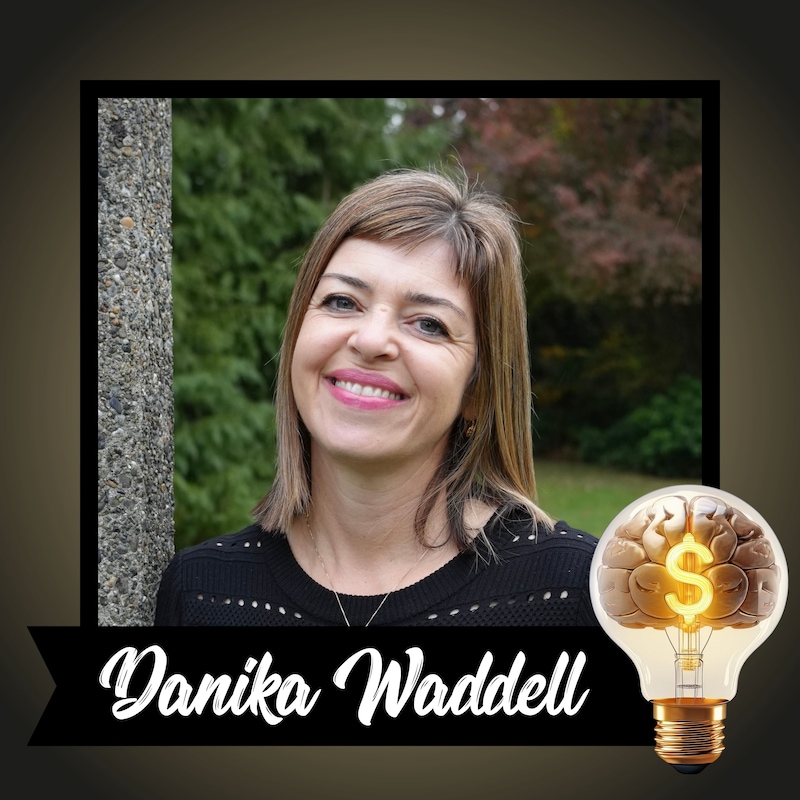
In this episode of the Financial Behavior Thought Leaders podcast, Dr. Mary Bell Carlson welcomes Danika Waddell, CFP®, MS, RLP, a human-centered financial life planner known for her unique approach to ongoing client engagement and holistic life planning. Danika Waddell brings her heartfelt story of how she entered the world of financial planning—a journey that began with degrees in math and psychology, winding through career shifts before finding the perfect balance between analytical rigor and values-driven guidance. The conversation dives deep into what it means to go beyond traditional, technical financial advice and truly help clients align their money with their purpose and life changes over time.
Together, Mary and Danika explore why modern financial planning isn’t just about creating beautiful plans or offering technical recommendations. They discuss the crucial “human side” of advising—empowering clients to articulate their deepest values, revisit those goals regularly, and hold themselves accountable to the life they most want to live. Danika Waddell shares real-life stories from her practice, provides a behind-the-scenes look at her keynote speech, and offers simple, actionable shifts any advisor can use to make their client relationships more impactful and lasting. The episode closes with a personal note on living your own values as an advisor—illustrating why authenticity matters when inspiring others to pursue their dreams.
Five Key Takeaways:
- The Power of Human-Centered Advice:
- Danika advocates moving “beyond the three questions” of initial client discovery to maintain meaningful engagement throughout a client’s life. She explains that technical expertise is just table stakes: true impact comes from ongoing conversations about clients’ values, goals, and life transitions.
- From Advisor as Expert to Client as Expert of Their Own Life:
- Financial professionals are trained to be technical experts, but Danika stresses the importance of shifting the focus—putting the client in the driver's seat as the expert on their own values and priorities. This mindset empowers clients and leads to more authentic, lasting transformation.
- Why Financial Plans Don’t Get Implemented:
- Technical plans often sit unused because they aren’t connected to real motivation. Advisors need to revisit clients’ original goals and values regularly, reflecting clients’ own words back to them. This accountability can be a catalyst for clients to make changes, as illustrated by Danika’s moving example of a client re-evaluating his work-life priorities.
- Adapting in an AI-Driven World:
- With the rise of AI and automated planning tools, delivering a “standard” financial plan is no longer a differentiator. Danika argues that what will set advisors apart is their ability to integrate deep, ongoing behavioral work—focusing on values, dreams, and emotional support, which technology simply can’t replicate.
- Simple, Actionable Tools for Any Advisor:
- No matter where you are in your career, adding just one new human-centered question, tool, or reframing technique can deepen your client relationships. Danika’s keynote and approach are designed to help advisors at every level immediately make their client work more meaningful and effective.
Tune in for insights, practical applications, and inspiration from one of the leading voices on blending technical mastery with the art of human connection in financial planning. Discover how you—and your clients—can create lives aligned with your deepest values, not just your bottom line.
Transcripts
Hello. Welcome to Financial Behavior Thought Leaders. I'm Mary, and this podcast takes you behind the scenes with top speakers in financial services. So whether you're a financial advisor booking for a client event, an event planner looking for the perfect keynote, or a financial professional wanting to learn from industry thought leaders, you're in the right place. Today we're delighted to feature Danika Waddell, a human centered financial life planner who helps clients move beyond the typical discovery phase and into lifelong, evolving engagement. Danika, thanks so much for being here.
Danika Waddell [:Thanks for having me, Mary.
Mary Bell Carlson [:Okay, so before we dive into your keynote, I want to hear how did you get started in your speaking career?
Danika Waddell [:Great question. I came to it a little bit later. It's not a natural skill or gift that I feel I have, but as I became more proficient as an advisor, I felt honestly kind of called to share what I was learning because I was so.
Danika Waddell [:Deeply moved by some of the learnings that I was coming across through the Kinder Institute and some of the other trainings that I experienced. And I did really feel called to share what I was coming across and felt that it was really part of my work to not just interface with clients, but to sort of spread the word to other advisors and in a.
Mary Bell Carlson [:Way, give back what you had received and kind of give to others, as I hear that. And so maybe bring us back a little further and tell us about how you got started in the industry to begin with.
Danika Waddell [:I graduated from college with a degree in math and a minor in psychology. And I had no idea what I wanted to do with. Took me a little bit more than a decade to find financial planning. And so in those interim years, I tried teaching. I did accounting for many years. And there were things about those different endeavors that I really loved, but I still felt like they weren't quite the right fit. And I didn't really know that financial planning existed as a career until probably my early 30s. And once I learned more about it and got in, you know, started to have conversations with people, I was like, oh, that is actually the perfect use of my skill sets of sort of this analytical side and then more of the behavioral values driven side.
Danika Waddell [:And so I didn't realize it at the time when I was in college, but I feel like that math and psychology combination really led me to find financial planning. And indeed, that mixture really feels like the perfect place for me. So it took me more than a decade after college to find the career and then transition in, but it does really suit my natural tendencies.
Mary Bell Carlson [:Yeah, well. And I don't feel like that's that uncommon to find this winding road, right. That people kind of fall into it and they're like, oh wait, this was really meant for me and what I wanted to do. So I love to hear those. I think it makes such a difference in knowing where you came from to understand and as you said, minor in psychology. This seems to be a perfect fit. So let's take it to the next level. You specifically specialize in life planning and human centered financial advice.
Mary Bell Carlson [:So you're helping clients not just with their money, but with purpose and change over time. Walk us through these areas and really what they mean to you and why they're so important for advisors today.
Danika Waddell [:Yeah, it's becoming even more important than when I first got interested in these parts of our industry. But I was working as a financial advisor. I was very focused for the first time, several years of my training on technical expertise. So I really was learning about all of the things that you learn in the CFP curriculum and different tax strategies and all of these kinds of things. And several years into that work, I was really aware that there was something missing. There would be clients I was working with who just, you know, I gave these like great financial plans to them and all these awesome recommendations and then just, you know, crickets, like they, they just didn't implement anything. And I'm, I'm thinking, why are people signing up for this very expensive financial advice and not taking it? So I was very aware that there was something missing. And as I started to explore, my first exposure to all of this was through the Kinder Institute and the Financial Life planning training.
Danika Waddell [:Subsequently, I have explored various other components of financial therapy and behavioral finance. And the more that I learn, the more I realize how absolutely essential it is to have a grasp of these things in order to effectively serve our clients. And what's especially interesting to me now as we are seeing sort of this AI revolution is that, you know, just delivering a financial plan is really not going to be enough. People are going to start taking the their data, putting it into chat GPT and getting basically what a lot of financial advisors have been giving for many years as their product. And so if you're not doing these other aspects of, you know, values aligned financial planning, life planning, coaching, if you're not incorporating those things, I think you're going to be out of a job.
Mary Bell Carlson [:Yeah, yeah. Well, and it reminds me, back in the day we used to do financial plans on Excel, right, And print them out. Remember the thick printing? And we'd always laugh because like, yeah, it just gets set on a shelf and collects dust. Well, whether it's sitting on a shelf collecting dust or in someone's computer or email somewhere getting lost, it has the same effect. If it's not getting implemented, then it doesn't matter how beautiful it looks, how fancy the graphics are or the technical side of things, it really matters the implementation side. And I think that's what you really focus in here in your keynote. So your keynote is entitled Life Planning beyond the three questions, what is the core message of this and who's it suited for?
Danika Waddell [:So I think many advisors are starting to get this message that there's this whole other side of working with clients and that we do. I mean, clients have a better experience when we have that level of expertise where we're able to help them navigate, say, some money history that's maybe holding them back or you know, a real identity shift. If they've had a, you know, sort of a sudden money kind of event where they've inherited a lot of money and their identity has changed. You know, if we can really bring those aspects into our planning work again, I think the experience for a client is going to be much more meaningful, long lasting, all of those things. So we think that message is, is starting to get through to advisors. And the CFP board has added, you know, financial psychology as part of their curriculum. So certainly the newer advisors that are going through the CFP coursework are getting that training. Many advisors, I believe, are now starting to add in something in their discovery process.
Danika Waddell [:Whether it's using the Kinder Institute's three questions, maybe they're using some money quotient tools. There are a lot of different options out there. And so I really commend the advisors who are starting to incorporate some of these tools into their discovery process. That's a fantastic place to start. Where the keynote picks up is, okay, you've done some of that exploration in say meeting one or two with a client, but now you've been working with them for five or ten years. And are you continuing to use some of these tools throughout your work with clients and how do you do that? Right, because many of them are designed for the discovery phase. So the idea with the keynote is that we're taking it beyond the discovery phase and continuing to weave those tools throughout our client process.
Mary Bell Carlson [:So what I'm hearing says so many tools exist for that very initial, like inside capturing the client, but really just kind of tapers off. So help us understand how that has made an impact with your clients to not Just leave it at the discovery phase, but take them all the way through that process. What difference does that make?
Danika Waddell [:Made. I have a really good example of this that just came up with some clients of mine who I've worked with for many years. So probably seven or eight years we've worked together. And I did take them through the three questions and the George the Kinder Institute's life planning process. And that was about three years ago. And I don't believe that we've reviewed those questions and answers since that time. So three and a half years ago we went through. Last week I met with this couple and the husband has been working really hard.
Danika Waddell [:He's absolutely kind of at his wits end. He's really, really stressed. And so we're having a conversation about whether or not he can retire. He's mid-50s. We were looking at the financial planning software. It looks very doable. But he was still kind of hesitating and feeling like, well, I'm not sure I'm ready yet. So I just brought up this document that showed his answers to the three questions.
Danika Waddell [:Again, it was about three years old. And the entire document over and over and over again was just reiterated how important time with his wife and time with his children was. Like that was his number one priority. And when I brought that up, I said, my goal here is not to change your mind. I just want to remind you that you told me these things are the most important thing to you and you can't get time back. And I mean, tears in his eyes, tears in his wife's eyes, tears in my eyes. All of us were really pretty moved when we revisited this man's work. His own words that were actually really beautiful about, you know, his relationship with his young kids, that he's, you know, he's barely seeing his kids.
Danika Waddell [:So it was a really powerful moment of just taking a touch, you know, this. We had this touchstone of what he told me three years ago was important to him. And it's like you said that. But if I look at your life today, that's not the life that you're living. You're living a life where work is your priority and you barely see your kids. And it really hit home for him. He, he. I don't know quite how that's going to play out, if he's going to actually walk away from his job right away, but it definitely struck a chord.
Mary Bell Carlson [:Wow, that's powerful. And I think what I heard in that, that's super powerful is the fact that it's not your words it's the client's words, and you're reflecting back to him the values that he set for himself. Right. And so it's you as the advisor, taking the time and the patience to walk him through the process and ask the right questions to be able to do that. So let me ask you if I'm an advisor or for any of our advisors listening that say, great, that that works for you, Danika. But I'm very nervous. I have my process. This has always worked for me.
Mary Bell Carlson [:What would you tell those advis that are maybe sitting on the fence and saying, I don't know yet.
Danika Waddell [:I do think some of this can be a stretch and, or a leap for advisors. And the reason why I say that is because most of us are trained to be the expert in the room. We are the. And we are the financial experts. We absolutely know more about the financial topics than our clients. What we are not the experts on is. Is our client and what's important to them. And so to me, that's the biggest shift is thinking about the client as the expert of their own lives.
Danika Waddell [:So in this case, you pointed it out already. I think that is the most important thing was using the client's own words, hey, you, you, client, are the expert of your own life. This is what you have said is the most important thing to you. So I'm not trying to, again, I was not trying to change his mind. I'm just holding up a mirror and saying to you, hey, guess, guess what you have said in the past, what you're living is not is. There's a disconnect. And when I put the client in the driver's seat, now it's his decision. I'm not sitting here saying, well, the retirement models look really good.
Danika Waddell [:I did show him that. You know, we looked at the Monte Carlo simulations, and so the financial data was also there. But I'm putting the client in the driver's seat, and I'm allowing them to say, you are the expert here, and I trust you to make the decision that's right for you. So to me, that's the biggest shift for advisors is I still want advisors to be the financial experts as we are, but ultimately, it's the client's life, and they are the experts there. So with the context of our financial expertise, I am empowering the client to make their own decision.
Mary Bell Carlson [:I love that. Well, help us inside this keynote, then. They're hearing these shifts and these changes. What are some of the actionable takeaways that after hearing this speech, they can walk away with and add to their, their advisor toolkit, so to speak.
Danika Waddell [:My goal with the keynote is to give wherever you are in the journey. Every advisor is on a journey of some description with their expertise and their training. Wherever you are in this journey that you have one additional tool that you can walk away that you can use immediately. Not everyone is going to want to learn about financial therapy or take the, the Kinder Institute's training and that's totally fine. But even if it's one single question, if it's one single way of reframing that you can use with a client, I want every advisor who's sitting in the keyNote to have 1,1,1 tool that they can use immediately at whatever place they are on the journey.
Mary Bell Carlson [:I love that keeping it simple and actionable, where there really is meaning coming out of it that you hear it and yet you know how to implement it. And I think that's so important in, in hearing a speech is being able to say how does this apply to me? If you love that story and you want to dive deeper into Danika's approach, download her speaker sheet@financial behaviorthoughtleaders.com so Danika, in our wrap up there's a question I really like to ask because a lot of times people may hear your information or see you somewhere but not really get a chance to know you. And so in this last question I would like is tell us something that people, most people don't know about you and that really how that helps connect to your message that you shared. Today.
Danika Waddell [:My family is very interested in travel so we love to travel. It's a huge priority for us and we're also very active so we combine those things quite regularly. And I have a milestone birthday coming up next year. Last night I was sitting around the living room with my husband and we had guidebooks out and website. You know, we're doing all these Google searches but we're trying to plan a really significant multi day hiking trip through probably through the Alps TBD on the exact location. But why that ties back to, to the keynote is because that, that is what we love. And so we have designed our life to be able to support those things. So we've made decisions about trade offs so that we can afford to take, you know, adventurous and active travel as much as we can.
Mary Bell Carlson [:So you're really living what you're telling others to do. It goes clear back to the story you shared. You're living the life that you want to dream and I think that's important for advisors to hear.
Danika Waddell [:Agreed. And I share that with clients. You know, I let my clients know that I am doing a version of this myself so that they can actually see that I'm, I'm walking. The walk basically allows them to be.
Mary Bell Carlson [:More authentic with their dreams as well. I love that. Make them real. Well, thank you so much. And if you're looking for a speaker who can help your audience move from foundational financial planning into ongoing lifestyle centric care, someone who blends human purpose with professional strategy, you can learn more and book danika waddell@financialbehaviorthoughtleaders.com thank you so much for joining us. And we'll be back soon with more conversations that bring you closer to the leading voices in financial services.
Danika Waddell [:Sam.
