Shownotes
Episode Summary
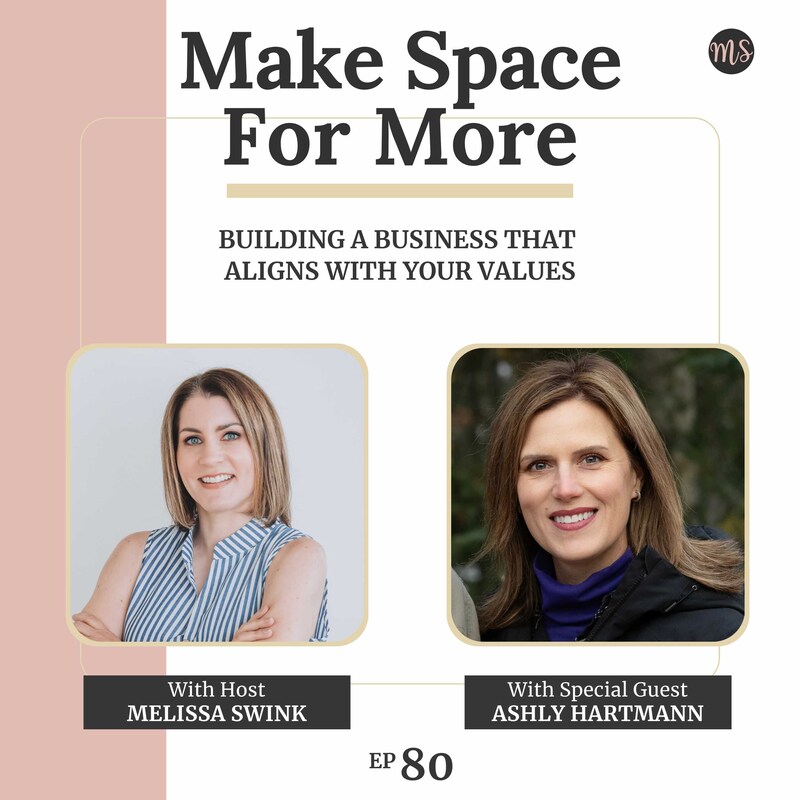
In this episode of the Make Space for More podcast, host Melissa Swink speaks with Ashly Hartmann, Vice President of R-Value Insulators, about scaling a business in the building trades industry, and the importance of aligning that business with your personal values and lifestyle.
Tune in to hear a discussion about the challenges and rewards of entrepreneurship, the significance of team dynamics, and the necessity of delegating responsibilities. Ashly shares insights on hiring, the role that coaching has played in the business’s growth, and how having support at home can enhance productivity. The conversation also touches on the importance of networking and building relationships in business, as well as the joys of traveling and living life on one's own terms.
Key Highlights:
- Discover why aligning your business with your personal values is essential for sustainable success.
- Learn how strategic delegation and hiring support (both at work and home!) can transform your business from overwhelming to organized.
- Understand why investing in coaching might be the game-changer your business needs to reach the next level.
- Find out how successful entrepreneurs are redefining work-life balance in the construction industry.
- Get the inside scoop on building a team culture that supports both business growth and personal freedom.
- Learn why embracing failure as feedback might be your fastest path to success in the building trades.
About Our Guest:
Ashly Hartmann, VP of R-Value Insulators serves her family and the building trades industry from her home in Northern Wisconsin. RVI provides building science education to tradespeople and homeowners by delivering efficient solutions that maximize home performance, provide overall comfort, and bring peace of mind. With an entrepreneurial spirit, Ashly continually seeks opportunities to extend the educational reach of RVI to builders and tradespeople eager to understand the science of building. Family and exploration are the cornerstones of Ashly's heart, propelling her on adventures across the globe.
About Melissa:
Melissa Swink, Founder & CEO of Melissa Swink & Co., has a team of virtual assistants who provide administrative and marketing support for small businesses and non-profits.
Since 2012, Melissa and her team have helped more than 100 businesses grow through the services they offer, and she is dedicated to helping entrepreneurs create profitable, scalable businesses they love.
Her work is all about doing what works (and eliminating what doesn’t) and driving real, measurable results. Visit www.melissaswink.com to learn more!
Thanks for listening!
If you enjoyed this episode and think that others could benefit from listening, please share it using the social media buttons on this page. Do you have some feedback or questions about this episode? Leave a comment in the section below!
Subscribe to the podcast
If you would like to get automatic updates of new podcast episodes, you can subscribe to the podcast on Apple Podcasts or Stitcher. You can also subscribe in your favorite podcast app.
Leave us an Apple Podcast review
Ratings and reviews from our listeners are really valuable and greatly appreciated. They help our podcast rank higher on Apple Podcasts, which exposes our show to more awesome listeners like you. If you have a minute, please leave an honest review.
Transcripts
Hi everyone, welcome to the Make Space for More podcast where we talk strategies for growing and scaling your business in a way that's authentic and aligned for you. I'm your host, Melissa Swink, and in today's episode, we have a very special guest joining us. She is one of our clients. She is building a business that is aligned and authentic and also building it in a way that aligns with the way that she wants to live life on her terms. I'm super excited to dive into
all the things business related and all the exciting things she has going on personally that all kind of comes together in a natural fit. Ashley Hartman is the vice president of Our Value Insulators. She serves her family in the building trades industry from her home in Northern Wisconsin. So fellow Wisconsinite, I'm in Green Bay for those who don't know. So it's always great to talk with somebody who is from my home state here.
An RVI provides building science education to tradesmen and homeowners by delivering efficient solutions that maximize home performance, provide overall comfort, and bring peace of mind. With an entrepreneurial spirit, Ashley continually seeks opportunities to extend their educational reach of RVI to builders and tradesmen eager to learn the science of building. Family and exploration are the cornerstones of Ashley's heart.
propelling her on adventures across the globe. I wanna ask more about that during our conversation, Ashley, but first things first, welcome to the show. Thank you so much for making the time to chat with me today.
Ashly (:Thank
Ashly (:Thank you for having me and creating this community and giving us this opportunity to hear from one another.
Melissa Swink (:Absolutely. Yes, I love the storytelling that comes out of this. There's always so many interesting things that are shared and there's a lot of great tips and tools and strategies that people share kind of along the way as well. It's always interesting to hear what's working for people, what's not working for people, how are they kind of balancing both the work and the personal. So I can't wait to see what kind of golden nuggets come out of our conversation today. But first things first, why don't you just kind of tell us a little bit about yourself?
Ashly (:So I'm a wife and mom, homeschool teacher, business owner, operator, entrepreneur. I'm a lifelong learner and I'm a friend. I feel like I'm all those things, you know, a community member just running wild.
Melissa Swink (:you
Melissa Swink (:Yes, running wild, all things that you love. But yeah, I can definitely see where, know, so many of us, have so many, we're multi-passionate, we are wearing a lot of hats, we have a lot of different roles, like wife, mother, friend, you know, boss, like all the different things. And so it can be, it can be a lot all at once sometimes.
Ashly (:Hmm?
Ashly (:Yes, but I mean, we wouldn't have it any other way because the minute I have a moment of downtime, I find myself thinking about what's next and what can I do today to make what we've already got going better and where are we going and always referencing back to the why each day of the business and.
Melissa Swink (:Right.
Melissa Swink (:Yes, the mind of an entrepreneur, for sure. Yes, always going or what's the next thing, like being grateful for where you're at, but then always thinking about, and what's next or how can I make this better or how we can do a little bit more. So that makes total sense. Your hands are not idle for long, if they are at all. Absolutely. So tell us a little bit just for our audience to get to know a little bit about your background.
Ashly (:Right,
Melissa Swink (:Tell us a little bit about how you came to be the VP of R-Value Insulators. There's probably a double story here in terms of how RBI got started and where you are today, but then also how you got involved in the business as well.
Ashly (:Right. Well, we've been in business for over 20 years. And back when I was in college, my fiance purchased RVI from a local gentleman who was insulating on the side. And my husband was a contractor building custom homes in Wisconsin and always thought that would be his next step, that he would take over his dad's business. And what better way to learn the business than to be a subcontractor.
Like he could be a great general contractor if he understood what the subs were going through. So he purchased RVI and at night and on the weekends, he was insulating. He then learned that Wisconsin had a massive need for energy efficiency and he started working closely with.
a gentleman named Rich Urban to learn about testing homes and the building science of homes, which ultimately led him to working with Focus on Energy.
t growing and growing. And in: So in: Melissa Swink (:Sure.
Melissa Swink (:Wow.
Melissa Swink (:Right?
Ashly (:The paperwork side was not where his interests lied. So I started opening up the bills and organizing it for him. And it just grew from there. And then especially once we started to really create a revenue, just keeping things organized for him. So that's really how I started. So at the, at the base.
Melissa Swink (:Sure.
Melissa Swink (:I love that. So you have been there since the very beginning. Yes. And then, so I'm just curious when you decided to go all in on RBI and to maybe let go of your full-time job and let go of the home building business, like what were some of the things, I'm just curious, that led you to this decision? Were there certain things...
Ashly (:Yeah.
Melissa Swink (:or certain things about the opportunities that were in front of you with our VI compared to some of the other options that were on the table at the time.
Ashly (:Right? So this, as passionate as Sam is about running the high performance, energy efficient homes, at the base, we were back, back at that time, we had our son, our family, we knew we were running out of time. We couldn't just keep trading our time for building these businesses. So we had to make that choice of letting something go. And ultimately we decided we wanted to
be business owners. And so it was evaluating which business made the most sense for our family and our lifestyle and how we liked interacting with the customers. Sam found he really enjoys working with builders because they speak the same language and he felt like he could supply them with this service that was a hole in the industry up here.
Melissa Swink (:Yes.
Ashly (:for a high performance air sealing and insulation package and teaching them. Whereas building custom homes, he's only touching one client a year and they're a homeowner. They are not passionate about building the way that the builders are. So it just, we realized that that business model was the one that we wanted to pursue.
Melissa Swink (:Sure, yes.
Melissa Swink (:Awesome, that makes perfect sense to me. And I love how you so thoroughly and succinctly at the same time kind of wrapped up like here's all the things that were in front of us and here's kind of what led us to that decision. Again, I feel like the theme of our conversation is just gonna be alignment and figuring out what's aligned with you and such. So RBI, it's something that he was passionate about. And there's definitely something to be said for being.
B to B versus being B to C, where to your point when you're a home builder, you're working a lot with consumers and people are excited about their homes. I would gather that consumers, generally speaking, there's a lot of emphasis on the design of the home and the layout of the home and what it's going to look like when it's done and what it's going to feel like to live there. But Sam has just this building science wealth of knowledge where
I could see where he would get a lot more fulfillment out of working on that side of the business instead of with consumers.
Ashly (:Right. Having a comfortable, durable home that doesn't cost a lot to operate is important to clients. Very important, some more than others, especially if they need a healthy home. But it's not the wow factor of your hard surface countertop or your copper sink.
Melissa Swink (:Yeah. Sure.
Yep.
Melissa Swink (:Yes. You're right. You're right. And also, again, to reiterate for those listening, we're in Wisconsin and what most people who are not from Wisconsin or if they're down south or on the coast, they think Wisconsin like cold weather. And we certainly do have very frigid winters here. However, we also have the extreme heat in the summer as well. I don't think people realize. So it's like the home has to be built for very extreme temperatures.
Ashly (:Right, in northern Wisconsin, we're in climate zone seven. You cannot hide a poor air sealing and insulation package up here. You are going to feel that and you will have failures that are not experienced even in Green Bay.
Melissa Swink (:and
Melissa Swink (:Right, sure, yep, difference even from being up north. You're right, you're right, absolutely. So you naturally, you were involved with the business from the beginning. I was smiling to myself and kind of chuckling as you were describing the bills on the stairs and kind of, or the mail I should say, on the stairs and kind of starting with almost being, kind of filling that accounting type of role. Here's the bills that need to be paid, here's what needs to be invoiced.
I remember when my parents, or particularly my dad, my parents both owned and operated businesses when I was a kid, my dad, I remember making extra money in the summertime in my teens by doing my dad's invoicing, getting the bills out during the day when he was at work in his nine to five. So, yep, so that's, I can see how that starts. So then ultimately you left your full-time role. You guys went all in on RBI. Tell us a little bit about how your role has changed and expanded over the years.
Ashly (:All right.
Ashly (:And it happens slowly. The years go by quick. However, there was a lot of time that I spent when we first went out. It was very scary. I have to say that each one of these decisions you push through and you make your choice. We thought, can this business support both of us? Because I was staying home with our kids and working on RVI part time. Pretty soon that part time became
able business. And I think in:can be difficult. You know, because you're... Yes. And we're together, even though we didn't work together day to day because our roles were very different, it can start to create some challenges. And I realized with my goals in life and his, I needed to replace myself in the business, which...
Melissa Swink (:Yes, I feel like it works or it doesn't for many people.
Melissa Swink (:Mm-hmm.
Ashly (:is always the goal as the business owner. You want to replace yourself. I happen to have an excellent candidate in mind and the other lady and I who were working together knew we had to bring my office manager on board and we called her and she joined us in 2020 and it has been fantastic ever since. She completely replaced me in the day to day. It allowed me to step into only the vice president role.
which I'm always there for the team if they would need me, but my day to day is not required in the running of the business.
Melissa Swink (:Sure. Yeah. So what are you focusing on these days as the VP of the company? Since you've left some of the day-to-day management and operations of it, you, I shouldn't say you've stepped back from those responsibilities and delegated it to your office manager.
Ashly (:Right. Everything for me is based on our vision traction organizer. So I'm always looking at the big picture and then we have our meetings. They're not where our management team meets. Formally once a month, we're always talking, we're always communicating, but it's always helping make sure that we're meeting those marks, meeting those KPIs. I'm looking at the breakeven analysis. I'm looking at what's next. I'm looking at staffing needs.
helping be a sounding board for my office manager and for Sam. So I would say that's I think I'm spending a lot of time.
organizing and keeping our vision, but then also working on what's next. How is this going to continue as Sam replaces himself? What is he going to do next? That's his passion. And then I'm trying to create those funnels now in, in the thought that that will happen in three years. We're creating, training courses and we're working with partnerships in that. And so I facilitate a lot of that behind the scenes work that is going on that
Melissa Swink (:Yes.
Ashly (:our team, the office manager and Sam can't focus on, they're making sure to satisfy our clients in the field.
Melissa Swink (:Sure, yes, absolutely. So taking a bit of a step back, I love everything that you said because that role just, I feel like is a dream for so many of the people who are in a stage of building their business that they are still involved in a lot of the doing. They're like, if only I could spend more time doing that visioning and the strategy in the higher level pieces. Taking a bit of a step back, what does your current team look like? I know it's certainly evolved and grown over the years, but.
You have your office manager. I know that.
Ashly (:We have our office manager. We have three guys in the field. And I say that like three pretty consistently. We had a great summer help who's going back to high school. We have a gentleman who has years of experience who helps us and he works in the field, but he also takes care of a number of the smaller detail things. He's fantastic with customers. And we have Sam.
And last week we hired an operations manager and he will start next week, which is our our biggest hire. We're very excited to bring him on. Thank you.
Melissa Swink (:Congratulations! That is so exciting! That's a huge step!
Ashly (:Huge and we can't wait to see what he brings to the team and I'm excited for Sam to have that opportunity that I had with my office manager for him to have an opportunity to see someone who can take over what he's done and help continue to make it grow.
Melissa Swink (:Yes.
Melissa Swink (:Yes, yes, absolutely. Just out of curiosity, your operations manager, what's kind of your vision for that role or what are some of the things this person will be focusing on? Maybe like from the starting point here and certainly knowing that, you know, like any small business, it'll grow and evolve naturally. But what are some of the things just out of curiosity?
Ashly (:Right.
From the starting point, he gets to go in the field because he doesn't know fully what we do at RVI, which is so important. Why are we there? We operate on why, how, what. A lot of companies are, what do you do? And here's why we are here. We are here to make you have this energy efficient home, durable, comfortable. want to make sure every system works together. How do we do that?
Melissa Swink (:Okay.
Ashly (:we insulate and we air seal. And what do you do? Well, technically we put insulation in the wall, but there are so many more parts and pieces. So he'll spend the first part getting to work with the team, understanding the need for the field work really getting done and managing those projects. And then he'll move into analyzing those projects, project managing a little stronger, and then even into sales eventually.
Melissa Swink (:Yes.
Melissa Swink (:Okay, love this.
Ashly (:He's going to help the team stay running and give Sam the opportunity to dive into his other passions within building science.
Melissa Swink (:I love this, congratulations again. That's a huge step for the company. I'm super excited for you because I know this is something, this was that next step that, I don't wanna say that we've talked about in detail, but some of our other conversations is freeing up Sam was a huge part of what's next. And this is a huge part of that, I love that.
Ashly (:Thank you.
Ashly (:Yes.
Ashly (:Mm-hmm. Right. Right. It's very exciting and I'm very hopeful.
Melissa Swink (:Yes. Yes, I love it. I love it. So going back a little bit, so we talked about kind of your current team, we're looking at, you even shared a glimpse of kind of what's next for the company as you continue to grow and evolve and essentially replace at some point, replace Sam to a degree. mean, Sam's not completely replaceable because he's just got such a wealth of knowledge, like you say, in that building science industry.
Ashly (:Right, Sam's never leaving. His favorite thing is the field work.
Mm-hmm.
Melissa Swink (:that I can't imagine him ever going away completely just based on all the conversations we've had, but having even that extra set of hands for the things that Sam is doing, that's huge. So you had actually kind of hinted at this a little bit. So taking a step back, early days of the team, Sam was doing the insulating, you were doing some of the office manager work behind the scenes and ...
Ashly (:Right.
Melissa Swink (:juggling at first a full-time role and then motherhood and helping keep some of the operations and the accounting side of the business running. You had mentioned that you had hired a marketing person and got a website built and things. Was that one of the first things that you had outsourced or what are some of the things that you had outsourced early on or started to hire out as the business continued to grow?
Ashly (:The very first thing I outsourced was getting a cleaning lady. And I don't think you cannot talk about running a business without understanding what it takes to make sure your home life is okay and that that is running because we cannot do it all. We have to have a team no matter what we're doing. So I think that was my catalyst. It was the first thing I hired.
Melissa Swink (:I think.
Ashly (:We kept it a secret for a while. You know, you didn't want to talk about it. And then I realized I have to talk about this. Number one, I love this woman. She still cleans for us. She feels like family. It's been 20 years together. can't imagine my life without her. recently, a builder actually was coming over to do some work at our house and needed to work on a door. I said, oh, yeah, you're
Melissa Swink (:my god.
Melissa Swink (:I love this. Yeah.
Ashly (:come on over the cleaning lady will be there, but I'll just let her know that you're coming. And she, this builder, let me know that made me feel so good that you are normalizing. need, we have to hire help. And, and yet it's no problem if I say we work with a VA, here's their contact information. This is the coach we work with. Here's their contact here. You know, that's all fine, but the help at home is what
Melissa Swink (:Yes.
Ashly (:gets inside of people maybe.
Melissa Swink (:So I feel like there needs to be an award on this show because you're the first guest to talk about hiring a housekeeper and getting help at home. Like my mind is going like, somebody has brought this up. It has not come up in conversation before. And it's not because it might not be happening, because I know for a fact that I have clients and people who've been on the show who have home help to some extent or another. Even...
Ashly (:Mm-hmm.
Melissa Swink (:I know a couple of people even have their meals prepped where they might not be at a point where they're hiring a personal chef who comes and cooks for them multiple days a week, but they're getting meals prepped by local chefs in the area. There's so much at-home help because you're right. That's the stuff that kind of, I don't want to say it weighs on your mind during the day, but that's the kind of stuff that if it doesn't get done, it really starts to affect everything else.
Ashly (:Mm-hmm.
Ashly (:Right.
Ashly (:correct.
Melissa Swink (:Yes, I love it. So hiring a housekeeper, that's the best. my gosh. Thank you so much for bringing that up. Absolutely. So let's see, there's so many other things that I want to ask you about too. So you had actually brought up, you know, working with a business coach and you were talking about, you know, some of your visioning and your role. I, excuse me, I forget what you call it, the tracker that you use to really kind of assess
Ashly (:Mm-hmm.
Melissa Swink (:where you are in the business, financially, in terms of your goals and your profitability, but also some of your marketing metrics and things like that. Can you tell us a little bit about that, the support that you're getting from your coach? Because that's a huge part.
Ashly (:Yes. So through the Wisconsin builders association, they work with a company called small business growth partners within the building trades and you can meet with them and they do a, um, a synopsis on your business and you go from there. Well, we signed up to coach with them. It was an excellent format. They really put the ball in your court. You are required to do a lot of work in order to, um, move forward.
And they follow traction to help you create an, you know, an entrepreneurial operating system. And what I call is the VTO, which is my vision traction organizer. And that's where we keep all our ideas. What's coming, you know, what's behind us, what's coming, the health of the business and all the KPIs are in there. That coaching was such a meat and potatoes type of coaching. was excellent. I.
Melissa Swink (:Okay, yes.
Melissa Swink (:Yes, okay.
Ashly (:but talk about it in our blogs because when you can have that system that works for you, you want to share it.
Melissa Swink (:Yes, yes, absolutely. And I love that you ended up finding a coach in that resource that was industry specific. These are people who truly understand the type of business that you have and how to make it run smoothly and how to increase profitability.
Ashly (:Mm-hmm.
Ashly (:Yes.
Mm-hmm.
Melissa Swink (:I love that, I love that. So we're talking about getting help at home, building a team, working with our company for VA services, we're talking about coaching and all the different tools and things that you've used. Is there anything throughout the course of your time in business that you've invested in that maybe didn't quite pan out the way that you thought, maybe it wasn't quite the right fit or maybe that you would...
Caution others. I don't want to say against but maybe some words of wisdom like if you're thinking about going in this direction Here's you know, maybe some things that you should look for before proceeding any any words of caution that would be helpful for our audience
Ashly (:I spent a little time thinking about this and what I realized and it's something my team has talked about for a while. We are constantly trying things and but what we have learned to do is move on quickly. So we are failing all the time. We just don't see it as a failure. We see it as a learning experience and we move on. We
Melissa Swink (:Yes.
Ashly (:have a way to analyze what we're faster to avoid spending money on it. So I don't have a specific but what I would say is having that attitude of let's try it. Let's know vet it make sure it's something you should be trying and then kind of go all in and try it. But if it doesn't work have your meetings let it go and so fail move on because that's how you find.
Melissa Swink (:Yep.
Melissa Swink (:Yes.
Ashly (:what works and what doesn't. And then you can confidently, as something new comes up, you can confidently say, no, that's not the direction we'll go.
Melissa Swink (:Yes, yes, I love that. So much that I want to impact there. It's almost like that theory of like hire fast and fire faster kind of a thing that I think about because I have a situation right now. There's a current client of ours who's expanding, which is fantastic. And just they really need to hire more help in their company. And they're not hiring that through our team. They're hiring it elsewhere.
Ashly (:Mm-hmm.
Melissa Swink (:And every time that I'm checking in, like, is that going? How can we support you? Can we help with a job description? There's so much analysis paralysis happening where I'm just like, just hire, hire attempt, hire attempt, test it out. Don't feel like you have to jump in with two feet with, you know, full time and benefits in this longterm. I'm like, test it out, do something, because I think to your point, you're right. Like if you're not going to know until you try it. Yes.
Ashly (:Right, right.
Ashly (:Right. And back to Good to Great, which is still a relevant book today. You need the right people on the bus, but until you start filling those seats, you might not know.
Melissa Swink (:Yes.
Melissa Swink (:Right? Yes. Yes. Waiting, driving, trying to drive around with this empty bus and finding the perfect person to put in that very first seat that's, you know, I guess tedious and we're all going to make mistakes. I think about, you know, some of the hiring mistakes that I've made in the past. And I'm sure you can think of a bunch of things in the past where it's like, well, that didn't turn out the way that I thought, or that really wasn't the best use of, you know, money to invest.
Ashly (:Perfect.
Ashly (:Mm-hmm.
Melissa Swink (:You move on to your point. You learn and you move on.
Ashly (:Right. And you create your team and like our team right now is we're so happy and so thrilled and the attitudes are fantastic and that carries on to everyone new you bring on and it makes it more obvious if the new person will be a fit or not.
Melissa Swink (:Yes, yes, absolutely, absolutely. Just out of curiosity, when you're vetting potential opportunities or maybe systems or hires, are there things in particular that you've learned like, hey, this is maybe something that there's, this is an indicator that it might not be a fit or are there things that on the flip side where you're like, this is how I know that I'm going in the right direction?
Ashly (:yeah, well, we were working with a software program for a while that was a time tracker and we could also take pictures on it. And it was working well for us. There was an expense, not a high expense. We felt really great about the program for a long time. But then when we were looking at another, like a CSM system, we realized, well,
Melissa Swink (:I'm just curious.
Melissa Swink (:Okay.
Ashly (:I guess we don't really need this time tracker because we'd rather have our money here in the CSM. And it kind of made the decision for us, like, wow, we were, we never would have walked away from that if we hadn't all of sudden wanted to focus over here. And it wasn't all of a sudden, it's something we've been looking at and wondering about if we want to move. so I, to me, it was just surprising how quickly we were like, yeah, we don't like that as much as we thought we did.
Melissa Swink (:Yes.
Ashly (:or it's not as necessary. But then we found an issue with the photos that, well, now we don't have a great spot for photos. So that was like something that stood out from that. So we're still kind of working through that.
Melissa Swink (:Yes.
Melissa Swink (:Yeah, it sounds like it's kind of evaluating what are the needs, first and foremost. That's a good point. the wants are next. Yes, absolutely. To your point, there's a system that my team and I are very much interested in implementing. It's going to replace...
Ashly (:Yeah, and are they needs or wants? Would they be nice? Right. So.
Melissa Swink (:it could potentially replace, I should say. It's designed to replace our project management system. There's also a built-in client portal, which is really cool for collaboration and such, but there are key elements not yet released in the software that we absolutely need in order for it to make sense because it's probably about triple the cost of all the software combined that we're using. We're using some separate things and it's going to consolidate that. Until those things are released,
Ashly (:Mm-hmm.
Melissa Swink (:doesn't make sense for us to move forward with this. So to your point, it's like, this is exciting. There's a lot of wants in there, but there's some needs that have to be in there first before we can justify making that transition and that investment.
Ashly (:Right.
Ashly (:Mm-hmm.
Melissa Swink (:Yeah, absolutely. So Ashley, before we wrap things up, I would love to shift gears just a little bit here because as I mentioned in the beginning, when I was introducing you, you really are building a business that you and your husband are very passionate about. You are, and you're pouring so much into your team and making sure that you have the very best tools and systems that you can.
And also at the same time, you're also living life on your terms as well. You've done a lot of travel and even with the kids. And can you tell us a little bit about that? Because I think that's fun for people to hear as well. We've been focusing on the business side, but because you have these things in place in the business, that allows you to do some of the things that you're personally passionate about.
Ashly (:Right, right. Especially bringing on the office manager that made all the difference for me. A few years ago, because of her help, we fell into homeschooling. It was a unplanned idea. And once I was homeschooling the kids, I realized most of my work could be done remotely. And...
Melissa Swink (:Mm-hmm.
Ashly (:I made a plan to travel with them. We traveled as a family to a few places, more of like spring break trips, but we were able to start extending those for two weeks. Now that concept is difficult for Sam, but he did enjoy that one. But after a year of homeschooling, I made a plan to take the kids to Spain to study abroad there and put them in an immersion.
d I took off in the spring of: Melissa Swink (:Mm-hmm.
Melissa Swink (:I love that. Yes, yes. What an honor and privilege to be able to do that and create that experience for them and for yourself too, because you were there. You were traveling right along with them and experiencing it.
Ashly (:Yes, having, you know, probably a better time. was overwhelming to them and not everyone has the travel bug like I do. And in mind, it's not about vacation. It's about going there and seeing their culture and eating the food and learning and meeting people.
Melissa Swink (:Sure.
Melissa Swink (:Yes. Yes, absolutely. I think there's been times as well where you've even been able to do some business retreats even on your own. Is that right? Yeah.
Ashly (:I did. Yes. A friend of mine advertised that she was going to a business retreat in Chicago and it was a leadership. I thought, well, that, that aligns with what I'm doing. I want to learn more about this. And so I took off and went by her and that was one of my first coaching experiences. And I think through that is actually how I learned about your company and a few others. And then I learned the huge benefit of networking.
Melissa Swink (:Yes.
Melissa Swink (:interesting.
Ashly (:and how many resources it would bring together for us.
Melissa Swink (:Yes, yes, absolutely. Building relationships, feel like has been probably the most rewarding part of being an entrepreneur. You're just, I feel incredibly blessed to meet so many different people in different industries and it's great to hear their stories and what they're creating and also be able to connect them. Like if there's, if there's,
people who are looking for that resource or like, gosh, I feel like the two of you would really connect. You have a similar background. That's one of the things I think I enjoy most about what I do as an entrepreneur. Yeah.
Ashly (:Right? And you work with every different industry, seems like. So you get, you really get that 30,000 foot view of what's going on and help pull people out of their own zone to understand what's next.
Melissa Swink (:Yes.
Melissa Swink (:Yes, absolutely. It's interesting that you bring that up because there's, I know someone who also owns a virtual assistant services company. We have very different business models. have fairly different clientele. Cause to your point, we work with a lot of, we work with a wide variety of clients in different industries and such. But one of the things that she's been focusing on, she got really laser focused on one type of industry. And there's a lot of benefits to that because her marketing,
is very specific. The services that they provide are, I mean, they're a well-oiled machine for that particular industry because they're very familiar with it. But the interesting thing is, is that then I had coffee with a local owner of a marketing agency and she's like, actually, we have chosen to diversify the types of clients we work with because then she's like, just feel like number one, we have more of a variety.
for our team, but then number two, she's like, I feel like we're not putting all our eggs in one basket so that if that particular industry experiences a downturn, then we're not trying to figure out like, okay, who else can we serve? Or she's like, we're not having to pivot so much. she's like, I love that we kind of have a more diversified client portfolio, if you will, when it comes to industries. So yeah, that's just.
Ashly (:Mm-hmm.
Melissa Swink (:you know, something that's interesting because I feel like sometimes there's two schools of thought there.
Ashly (:Completely and it all depends on what you put on your vision and what you want
Melissa Swink (:Yes. Yes. Yes. Absolutely. Absolutely. Well, Ashley, thank you so much for sharing not only your story, but also just so many golden nuggets for how your role has changed over the years, how you have essentially somewhat, I'm going to say somewhat replaced yourself, at least from some of the day to day, and how you're really looking ahead to how do we continue to build a business that's sustainable.
so that it's not dependent on any one person in order to run and to function. I mean, you talked about the things that you've been able to do with your time, things that you're passionate about, you're talking about the resources and the people that you have depended on to help you grow. There's just so much that you have shared with us. So thank you so much for that. If somebody is hearing your story or is...
living in northern Wisconsin and interested in checking out our RVI, wants to network with you, where can we find you online? What's the easiest way for us to connect with you?
Ashly (:You can find us on Facebook under RVI. The bulk of our information is on our website, ourvalueinsulators.com. We write a blog, so there's a lot of learning information there.
Melissa Swink (:Love it. Love it. Thank you again so much. So, and to all of our listeners, I really appreciate you tuning into another episode of Make Space for More. I hope that you were able to take away some golden nuggets in terms of how you want to be building your business and your organization on your terms this year. What can you do to lighten the load for yourself, not only at the company, but also at home because that's just as much, if not even more important.
for just being in the right mental place, for being able to have that vision and that creativity, because when we are buried and we're overwhelmed, a lot of that dries up for many of us. hopefully you've taken away some great nuggets there, and I will be back next week with another episode of Make Space for More, where we will share more tips, tools, and strategies to grow your business beyond you. Have a great day, everyone. Bye-bye.




