Shownotes
What would you build if you wanted to leave something that lasted for more than a thousand years? A spaceship? A castle? How about… a university?
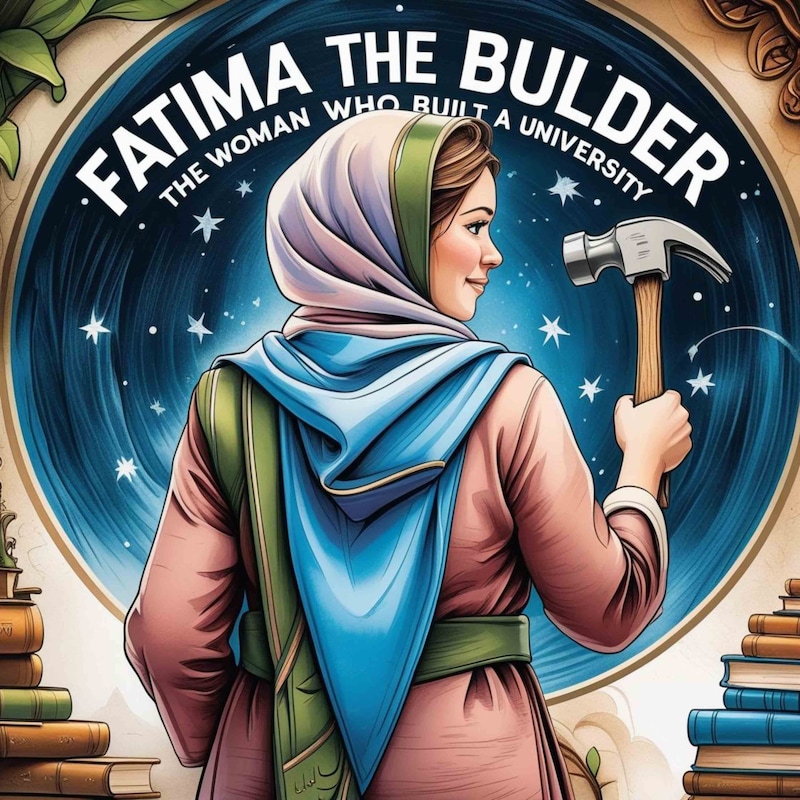
In this inspiring episode of Faithfully Explore!, we travel back to 9th-century Fez, Morocco, to meet Fatima al-Fihri a Muslim woman whose vision and generosity helped create Al-Qarawiyyin, the world’s oldest continually operating university.
Through storytelling, soundscapes, and interactive moments, kids and grown-ups alike will discover:
- Fatima’s remarkable journey from Tunisia to Morocco
- How her love of learning and deep faith inspired her to build a mosque that became a world-famous center of education
- The ripple effect of her work... welcoming Muslim, Christian, and Jewish scholars, influencing European universities, and shaping the Islamic Golden Age
- Connections to other learning traditions around the globe, from Buddhist monasteries to Jewish yeshivas, Christian cathedral schools, and public libraries
Along the way, you’ll join in movement breaks, play our “Echo Explorers” listening game, and take on Fatima’s Learn & Teach Challenge where you discover something new and share it with someone else.
Belief Backpack Takeaways
- Cherish knowledge and keep learning
- Be generous with your talents and resources
- With faith and determination, you can make a lasting difference
This episode is perfect for classrooms, homeschooling, or family listening. Offering both a history lesson and a gentle reminder that one person’s vision can light the way for generations.
Listen now and be inspired to build your own legacy of learning!
Transcripts
Imagine having an idea so powerful it could outlast kings and keep on shining for more than a thousand years. What would you build? A spaceship to explore faraway galaxies and discover worlds no one has seen before?
A school where curious minds can learn anything they want.
Hi, friends, I'm Laura, your friendly guide on Faithfully Explore the podcast where we meet amazing people, explore big ideas, and discover how different beliefs can help us grow kinder, braver, and more curious.
lim woman who lived more than:If you are ready to time travel, stretch your imagination, and collect a few treasures for your belief backpack, Give me a tiny drum roll on your legs. It sounds like we're ready to expl. Before we jump in, let's wake up our imaginations. Shake out your hands, wiggle your shoulders.
Now take one big deep breath in and let it out. All right, friends, are you ready to travel back in time with me? On the count of three, we'll whisper a magic word together. Bismillah.
Bismillah means in God's name in Arabic, something many Muslim friends say at the start of an adventure. Ready? One, two. Two, three. Israel. Welcome to Fez.
Imagine terracotta rooftops glowing in the sun, narrow streets winding like puzzle pieces, and a wide courtyard where people share ideas. We are in the 800s. No smartphones, no laptops. But there is something powerful here. People are talking, teaching, reading, and building.
Before we meet Fatima, we need a quick backpack of background. What is Islam and who are Muslims? Islam is a world religion that began in the 600s with the prophet Muhammad.
Muslims believe there is one God called Allah. In Arabic, Allah means the God. Muslims believe the Quran is the holy book of Islam and they follow the example and teachings of the Prophet muhamma.
There are five core practices called the five pillars. Can you count them with me? 1. Shahada is the declaration of faith.
Muslims say that there is no God but Allah and that Muhammad is the messenger of God. 2. Salah are the daily prayers. Many Muslims pray five times a day, taking moments to pause, be mindful and connect to God. 3.
Sukkot is giving to help people in need. 4. Swam is fasting during the month of Ramadan, a time of reflection and gratitude. 5. Hajj is the pilgrimage to the holy city of Mecca.
If a person is able. If you haven't yet, you can listen to our episode about Hajj. You might hear a beautiful phrase in Islam that I love, Iqra.
It is Arabic for read or recite. It points to a big idea. In Islam, seeking knowledge is important. Learning can be an act of faith. Now let us meet Fatima Alfieri.
She was born in Karawe, in what is now Tunisia, North Africa, around the year 800. Fatima was born into a loving Muslim family.
Her father, Mohammed Al Fiiri, was a successful merchant, which is a kind of business person who traded goods far and wide. He cared deeply for his community and especially his daughters.
He made sure his daughters received a good education, which was pretty rare for girls at the time. Fatima and her sister Miriam studied their faith, reading, writing, and every bit of knowledge they could get.
When Fatima was a young woman, her family decided to move to Fez, Morocco. Let's imagine that journey together, maybe with a caravan of camels or horses carrying your belongings.
Explorers, stand up for a moment We've got a long way to go. Start marching in place as if you're walking mile after mile. March, march. Feel the sand shifting under your feet.
Now let's add in a sway from side to side just like you're riding on a camel's back. Sway, sway, sway. Do you see those mountains ahead? Take a deep breath in and lift your knees high towards your chest. A little higher.
We're climbing uphill now. High step. High step up High step. Almost there. Phew. Wipe your brow. The desert sun is hot.
Finally, after days of travel, the Alfieri family reached the bustling city of Fez. The air is full of new sounds going out. Donkeys you've made, made it now. Fez, in the 9th century, was a booming city.
It was full of people from different places. There were local Moroccans and also many families who, like Fatima's, had migrated from other places.
Fatima's father set up a business there and the family did well. For a time, life was good and comfortable. Fatima got married and she and her sister continued to learn and contribute to their community.
But then some sad times came. Within a short period, Fatima's father died. Not long after her husband and even her brother passed away. It was a lot of loss all at once.
Fatima and her sister Miriam were very sad, as you can imagine. But they also inherited their father's wealth, since there were no brothers left.
All of a sudden, these two sisters had a lot of money and land, which gave them independence and a big decision to make. What should they do with this wealth? They could have lived like queens or moved away. But guess what?
They chose to do something Truly generous and visionary for their community. Fatima and Miriam looked around at their new hometown and noticed a problem. The local mosques in Fez were too small and crowded for all the people.
Especially with so many refugees and newcomers from other places. Fatima was a devout Muslim. Her faith was very important to her. She knew that in Islam, learning and knowledge are highly valued.
Fatima made a big promise. She decided to use her wealth to create a space that would help her community pray, learn, and grow.
She envisioned a mosque with a courtyard where classes could be held, where teachers and students could gather, and where knowledge could flow like water. People would come to discuss the Quran, law, language, math, medicine, astronomy, and more. She wanted a place that honored God and welcomed learning.
She wasn't an architect or a builder, but she was determined. In the year 859, that's over 1,160 years ago, Fatima started her project. We're going to play a slightly different game today called Echo Explorers.
While we're on our imagination journey, you'll hear different sounds from Fatima's world. When I pause, I want you to guess what you're hearing. Close your eyes and picture it. You are standing in the morning light.
The air smells like wet stone and fresh plaster. Pause. What do you think that sound is? It's workers making bricks from clay and straw and shaping stone for the walls.
In front of you is a plot of land where the mosque will rise. Pause. Any guesses? That's water being poured into a trough to mix the plaster that will hold the bricks together. Fatima stands nearby.
A woman in her late 20s is greeting workers, listening to plans and checking details. Her face is calm and kind. She is wearing a simple, modest dress and a scarf, walking around the site with purpose.
Some people are surprised to see a woman leading such a project. But she has a reputation in the community for wisdom and kindness, so they respect her. In fact, you hear someone call to her. Pause.
What do you think that name might mean? It means mother of the boys or children. People called her this because she helped take care of students as if they were her own kids.
Next, Fatima shows you a drawing of an arch. She explains that arches share weight, so buildings stay strong. You run your finger along the curve of the arch on the parchment.
It feels like a smile. Pause. Do you know what this sound is? That's the adhan, the Muslim call to prayer echoing over the streets of Fez. People pause what they're doing.
Some head to pray. Others lower their voices out of respect. When prayer is finished, the work continues. You imagine yourself picking up a Brick.
It's heavy, solid, warm from the sun. Pause. What do you think just happened? That's you setting the brick into place on the growing wall. Thank you, Priya. Thank you, Amar.
Who do you think is saying that and why? That's Fatima's voice. As she thanks workers by name. She also reminds them to take care of their bodies, to drink water, and to rest.
All right, echo explorers. You can open your eyes now and shake out your hands. We just traveled through sight and especially sound to step into Fatima's world.
Every hammer tap, every splash of water, every voice calling her name was part of building something that would last for more than a thousand years. And just like Fatima listened to the needs of her community. You listened closely today to catch the details in her story.
Remember, listening is a kind of learning. When we pay attention, we notice small but important things. And those little things can help us understand the big picture.
So give yourself a quiet well done clap and tuck today's sounds into your belief backpack right next to your curiosity. Now let's see what happened next In Fatima's incredible project. Fatima didn't just sit back and watch others work.
She actively guided the construction. She carefully spent her money to make sure the mosque would be big enough and well built.
She even purchased additional land around it as the project grew, ensuring that there would be plenty of space. Slowly, walls rose, arches were built. A minaret, which is a tall tower for the call to prayer, was constructed and courtyards laid out.
After around two years of hard work, the mosque was completed. The first thing Fatima did was gather with everyone to pray, offering prayers of gratitude in the beautiful new mosque she had helped create.
Just imagine the celebration on opening day. The community rejoicing. Thank you, Fatima. A call to prayer echoing from the new minaret for the very first time. It was a huge achievement.
Fatima named this mosque Al Karouiyin. Why such a name? Because Al Quirouiyen means the people of Karaween.
It honored the community of immigrants from her original hometown who now lived in Fes. How thoughtful is that. Over time, Al Karawiyin became more than just a mosque. It was both a place of worship and a place of learning.
You see, in that time, major mosques often served multiple roles. People didn't just pray there. They also held classes, discussions and community meetings in the courtyards. And Fatima's mosque was no exception.
From early on, scholars and teachers began to hold study circles there. As time passed, Al Qarawiyan organized its teaching. More and more, it developed a reputation as a place for advanced Study.
People came to study the Quran and Islamic law. It also taught non religious things like poetry, logic, mathematics, medicine, astronomy and geography.
Picture yourself as a kid In Fez, maybe 800 years ago, walking into Al Kateriya. You step through grand doors into a courtyard with arches and columns.
The floor is marble, and in the center there's a fountain where people watch before prayers. You hear the murmur of lessons going on underneath the porticos.
One teacher is explaining astronomy, the study of the stars and planets, to a small group. Another corner has a circle of students studying mathematics. Over there, a scholar is reading poetry.
Some students have come from faraway lands to study. You see scrolls and books stacked up and an old librarian carefully writing in a big ledger book. It smells a bit like ink and old paper.
A mosque, a university, a library. One place, many gifts. That is the legacy of Fatima's vision.
And it did not only help one family or one neighborhood, it helped a whole city and sent ripples of learning through North Africa and beyond.
This was part of a larger time, sometimes called the Islamic Golden Age, when scholars across the Muslim world translated texts, improved scientific methods, explored medicine and math, and wrote poetry that still sings today. Now, what happened to Fatima Al Fiiri after she built the mosque? Historical records about her life after the founding are a bit scarce.
Even the exact date of her death isn't certain. It is said she lived to see the mosque becoming a renowned place of learning.
She was highly respected in her community, often remembered for her charity and wisdom. Her nickname, Mother of the Children, suggests she mentored or supported many young learners.
She loved knowledge and believed it should be shared freely with everyone. And that belief left a legacy that has lasted over a millennium. Al Qatariyan flourished so much that it still exists today in Fez.
How many founders can say their school lasted over a thousand years? Even though technically it started as a mosque and informal school, people consider it the oldest continuously operating university in the world.
By the 14th century, it had about 8,000 students enrolled. That's like a big college campus today. Over the centuries, some incredibly famous people studied or taught there.
One famous student was a Christian monk from France who traveled all the way to Fez to learn math. At Al Kadarian, he discovered something brand new to Arabic numerals.
The numbers we use today, like the 1, 2, 3, 4, 5, 6, 7, 8, 9, and the ideas of zero. Back then, most people in Europe didn't even use zero.
He brought that knowledge home, and he later became Pope Sylvester ii, the leader of the Catholic Church. Imagine that, a pope who Learned math at a Muslim founded university. That's some pretty amazing cross cultural learning.
Another famous visitor was Maimonides. He was a brilliant Jewish philosopher and doctor. He studied alongside Muslim scholars at Al Qaruyen.
The ideas he learned there shaped his famous writings and he went on to become one of the greatest Jewish thinkers in history. Al Qatarin welcomed Muslims, Christians and Jews.
People from different faiths and backgrounds learned side by side, proving that knowledge can be a bridge that connects us. In fact, Al Kateriyin became a model for the very first universities in Europe.
It was giving out certificates and degrees long before anyone else, which is why it's often called the first degree granting university in history. Pretty neat, right? For centuries during the Islamic Golden Age, Al Qadairiyyan was the place for big thinkers and curious minds.
And it all started because Fatima Alfieri chose to give everything she had to help her community learn. Her story reminds us that one person's actions can light a torch that keeps burning for generations.
Fatima Al Firi's dedication to education wasn't unique to Islam. The love of learning is something people all around the world in many religions share.
Let's walk across our friendship bridge together and peek into a few different communities, past and present, to see how they also value knowledge and education. Picture a peaceful monastery high in the mountains of ancient India or Tibet. The air is cool. Prayer flags water.
Buddhist monks in bright orange or red robes sit under a banyan tree, reading and disgusting big ideas. Long ago, there was a famous Buddhist university called Nalanda in India.
It was like a giant school where monks and visitors from all over Asia came to study Buddhism, medicine, Math, astronomy and more. Nalanda lasted for almost a thousand years.
In Buddhist tradition, learning the truth is part of the spiritual path, a way to grow in wisdom and compassion. Just like Fatima built a place for learning, Buddhist communities built monasteries that were also schools.
In both places, knowledge was a treasure to be shared. Now let's stroll to a different scene. Imagine a bright room with tall shelves of books and long tables.
Around those long tables, students wear small caps called yarmulkes. And they're leaning over books, talking in excited voices.
This is a yeshiva, a Jewish school for studying holy writings, especially the Torah and Talmud. In Judaism, learning is a holy duty. There have been yeshivas for centuries. The idea is similar to Fatima's vision.
Gather people who want to learn, give them teachers and books, and dedicate that learning to God. Even today, yeshivas exist all over the world. Next, we're in Europe in the 800-00 or-900s. Imagine a stone cathedral reaching toward the sky.
Back then, Europe was mostly Christian, and many schools were connected to cathedrals or monasteries. Some taught local children to read, write, sing and count.
A ruler named Charlemagne even made a rule that every monastery and cathedral should have a school. Over time, these cathedral schools grew into the first European universities. Just like Fatima's mosque school grew into a university.
For Christians, studying was a way to understand the Bible and the world God created. Even though Fatima probably never met a European monk, her university and their schools were like faraway cousins in the world of learning.
Our last stop isn't about religion, but it's all about sharing knowledge. Think of your local library. Anyone can walk in, young or old, rich or poor, and borrow books for free. Isn't that amazing?
Fatima's university was also a place where the community could come and learn without paying. Libraries are like non religious temples of knowledge where everyone is welcome. Do you see the pattern, friends?
Across history, in Buddhist monasteries, Jewish yeshivas, Christian cathedral schools, and today in public libraries, people have believed that learning is good, that it helps us grow, and that it's something worth sharing. Each tradition might have had different reasons or methods, but they all built places for learning, just like Fatima did.
This is something that connects us as human beings. We all have curiosity. We all ask questions about our world.
And many people of many faiths believe that learning brings us closer to truth, to God, or to understanding each other. That might even be why you're listening to me right now. Time to move again. Stand tall like a book tower.
Place your hands on your head like you're balancing a book. Take five slow steps forward. 1, 2, 3, 4, 5. Turn gently and take five slow steps back. 1, 2, 3, four, five.
Stretch your arms wide like the open doors of a library. Cross your arms in front of you like you're giving yourself a big hug for being a learner. And shake it out.
Now that we've stretched, it's time for our weekly challenge. What will it be? Here's a hint. It's going to inspire you to be a little more like Fatima.
But don't worry, I'm not asking you to build a whole university in your backyard. It's called Fatima's Learn and Teach Challenge. Sounds pretty simple, right? Let's break it down. First, learn something new.
It can be anything that interests you. For example, you could read a fun factbook and learn five new cool facts about students. Space. Or ask a parent to show you how to bake cookies.
You might learn a greeting in a new language. Or discover something About a culture or religion different from yours. Maybe you'll watch a nature documentary and learn how butterflies migrate.
Next step, teach it to someone else. When you've got your new nugget of knowledge, share it. Tell your grandma that cool space fact you discovered.
Maybe draw a picture of what you learned and explain it to your friend. If you learned to say hello in Arabic, go say it to your family and then teach them how to say it. The idea is to be like Fatima.
She valued knowledge and wanted to spread it around. You can do that on a small scale. When you teach someone what you've learned, two things happen. You remember it better and you're spreading knowledge.
For an extra challenge, try setting up a mini knowledge sharing day at home. Each family member learns one new thing and then you can all take turns sharing at dinner or over a video call with relatives. It could be really fun.
Like a tiny family university night where everyone's a professor of their own little subject. I can't wait to hear what you all choose to learn. Remember, it doesn't have to be huge. Fatima's journey began with small steps too.
She learned from her father and teachers when she was young, which prepared her for big things later. And if you want, you can have your grown ups help you send us a note about what you learned and taught. I love hearing from you.
Now let's pack up some souvenirs from today's story in our Belief Backpack.
Every episode, we gather a few takeaways or life lessons from our story and imagine putting them into our Belief Backpack, a magical backpack that's not for school books, but for wisdom and values to carry with us wherever we go. Let's open up our Belief Backpack and see what three precious lessons Fatima Alfieri has for us today.
Fatima's life shouts this lesson loud and clear. Learning matters. She built a whole university because she believed.
Knowledge brings us closer to our faith, helps our community, and lights up our minds. Remember, learning isn't just something you do at school to get grades. It can be a joy, an adventure, a way to grow as a person.
Fatima's example reminds us to be curious, read more, ask questions, and never take education for granted. In many parts of the world, even today, some kids, especially girls, struggle to get education.
Fatima's story encourages us to appreciate and advocate for education. So lesson number one is cherish knowledge and always keep learning.
Fatima inherited a fortune, but instead of keeping it all for herself, she chose to give it away to help others. You might not be as rich as Fatima. I know I'm Not. But we all have something we can give. It can be our time, our skills, or just our kindness.
Maybe you're great at math and can help a friend who's struggling with homework. Or you can donate an old book to the library so that others can read it. Fatima's generosity wasn't only in money. It was in spirit.
She genuinely cared about others. Lesson two is be generous and use your talent and resources to help your community. Even small acts of service can build into something that lasts.
Fatima was guided by her faith every step of the way. She prayed, fasted, and stayed humble. But she was also a doer. She didn't wait for someone else to solve the problem.
She rolled up her sleeves and led. Building that mosque that turned into a university took perseverance, a lot of patience and hard work.
Lesson number three is with faith and determination, anyone can make a difference. And that includes you. Fatima was a woman in a time where men usually led big projects.
But she proved that with determination, she could do something amazing. If you believe in a cause or have a dream to help others, don't be afraid to step up and lead. Persevere when things get tough, just like Fatima did.
All right, Fantastic. Zip up that backpack now. We have a love of learning, generosity for your community, and perseverance.
These lessons from Fatima Alfiri can inspire us in our daily lives. Now we've learned a lot about Fatima and her faith. How about we hear a story from the Islamic tradition that reflects the importance of knowledge?
It's story time, friends. But first speed round. I ask you shout the answer. Ready? Who built a place that became one of the oldest universities? Fatima Al Fihri.
What city are we in? Fez. What religion did Fatima follow? Islam. Muslim, what is our weekly challenge called? Fatima's Learn and Teach Challenge. Perfect.
You are courtyard scholars now for today's story time. I've chosen a story that was special to Fatima and is very special in Islamic history.
It's about the very first word Muslims believe God revealed to the Prophet Muhammad. And that word was ikra. Ikra in Arabic means read or recite.
This story is often told to Muslim children to show just how much Islam values learning and reading, just like Fatima's story does. Lets travel back about 1,400 years ago to a quiet, dark cave on a mountain outside the city of Mecca.
A long time ago, before he became a prophet, Muhammad was known for being thoughtful and honest. He cared about people. But he also felt sad about the unfairness and problems he saw in his society. Sometimes he needed time alone. To think and pray.
He was about 40 years old when he began climbing up to a cave on Mount Hira to spend days in quiet reflection. Imagine him there one night, sitting on the cool stone floor, maybe with a tiny oil lamp flickering. Suddenly, the stillness is broken.
Out of the darkness, an angel appeared. The angel Jabril, or Gabriel. The cave is suddenly filled with a bright, powerful light. Muhammad is startled, maybe even scared. And who wouldn't be?
The angel speaks one word in Arabic. Muhammad is confused. Read. But he never learned to read or write. Like many people of his time, he hadn't gone to school. I cannot read, he says.
The angel embraces him tightly and repeats the command. Heart pounding, mind racing. Again, Muhammad says, I cannot read.
The angel embraces him a third time and says, this time Muhammad asks, what shall I read? And then the angel recites the very first verses of what would become the Quran, the holy book of Islam. Read.
Speaker B:In the name of your Lord who created created man from a clinging clot or a tiny life form. Read. And your Lord is the most generous who taught by the pen, taught man what he never knew.
Speaker A:These words teach that God is the creator and that God is the one who gives people knowledge. Muhammad listens carefully, even though he's trembling with fear and amazement.
He repeats the words back to the angel he has just read, not with his eyes, but with his voice, because the angel brought him the words to say. Then, just as suddenly as he appeared, the angel is gone. Muhammad's heart is still pounding as he hurries down the mountain.
When he gets home, he tells his wife Khadijah what happened. She comforts him and says she believes him, that God would never let anything bad happen to such a good and truthful man.
Muslims remember that moment as the beginning of the Quran's revelation. And the very first command from God was not pray or give or do. It was read. That's a big deal.
It means that seeking knowledge is one of the very first steps in living a faithful life. From that day on, Muhammad dedicated himself to sharing the knowledge revealed to him.
He encouraged people to listen, to learn, and to write things down. So the story of Iqra or Reed, teaches Muslim children and grownups alike that God wants us to learn to read and to think deeply.
That makes it a perfect match for Fatima Alfieri's story. Fatima built a real university where people could live out that command to seek knowledge.
Next time you open a book or learn something new in school, you can remember this story and know that learning can be a sacred, powerful thing. Wow. We've covered so much today, haven't we?
From the dusty streets of Fez to a cave of revelation, from playful quizzes to bridges of friendship across cultures. My heart feels full and my mind is buzzing with all this knowledge and inspiration.
I am so proud of you for being such curious and respectful listeners. Remember, the world is full of amazing stories like Fatima's that show how we're all connected by common values like the love of knowledge.
Maybe tonight at dinner or bedtime you can tell someone in your family one cool fact about Fatima Alfieri, even if it's just her name and that she starred at the very first university. Trust me, you'll sound super smart and you'll be sharing knowledge, which is exactly what Fatima would love. Thank you for joining me on this journey.
If you enjoyed learning about Fatima or have questions or drawings or thoughts to share, I'd love to hear from you. Grown ups can help send me a message. Maybe you've been to a library or a school that reminds you of Fatima's story. Tell us all about it.
Or if you did the weekly challenge, let us know what you learned and taught. Your experiences could even be featured in a future episode. Next time on Faithfully Explore.
Sharpen your curiosity because we are heading to a tradition that loves gentle courage and careful self love control. It is called Jainism and we will explore the nine jewels of Jainism. The Dakshlama way.
If you like the idea of living softly on the earth, you will love this one. Until then, keep exploring, keep asking questions and keep building bridges of friendship and understanding.
And as our friend Fatima Alfiri might say in Arabic, jaza kula uhayrin, which means may God reward you with goodness. Take care my young friends. Stay curious, stay kind and I'll see you next time on Faithfully Explore. Bye for now.
