Shownotes
Lifestyle is a Plan podcast is for agency founders who are done with the growth hustle, and want profitability over pressure instead.
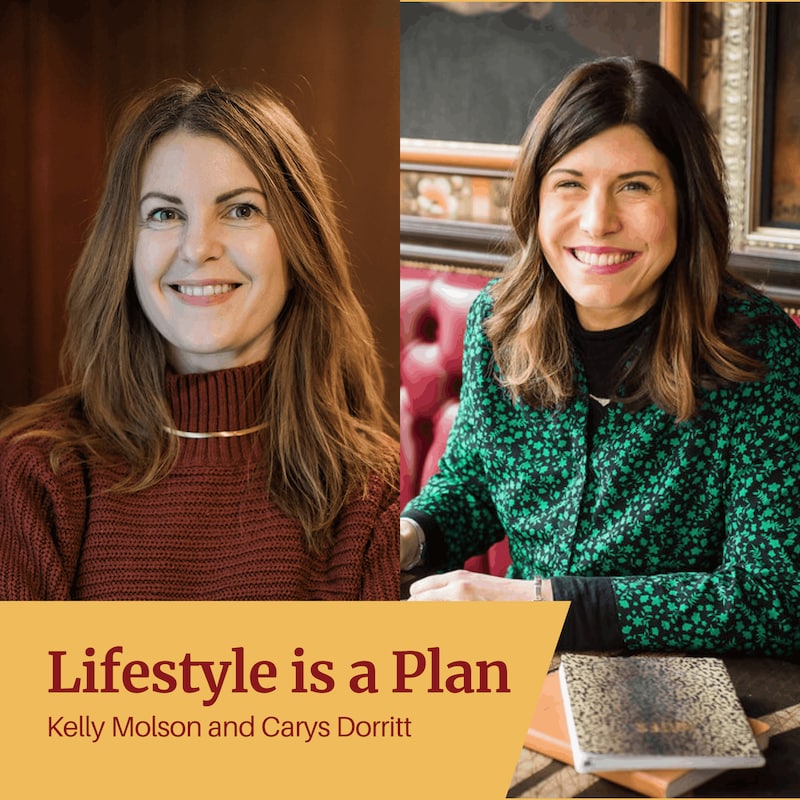
In this episode of Lifestyle is a Plan, Kelly Molson is joined by Carys Dorritt, founder of The Polka, a team of marketing experts helping expertise-led businesses become the go-to.
Carys founded The Polka to help organisations use smart marketing to create meaningful connections with their audience. With 20+ years experience in marketing, digital and communications she recognised the challenges and frustrations marketing folks feel when they simply don't have enough hours in the day.
I’m talking to Carys Dorritt today, founder of The Polka, a team of marketing experts helping expertise-led businesses become the go-to.
What I love about this episode is that Carys created something she needed but couldn’t find herself. You’ll hear how and why she’s developed a "career returner" agency model, and created a workplace where career returners can really thrive.
You’ll discover:
- How to build a "career returner" agency model
- The importance of flexibility and work-life balance in agency-life
- Creating a culture of confidence
- Key Pros / Cons to this approach
- Advice to agencies looking to create a workplace for career returners to thrive
Guest details
Website: www.thepolka.co.uk
LinkedIn: www.linkedin.com/in/carysdorritt
Podcast recommendations:
Brought to you by:
Lifestyle is a Plan is brought to you by me, Kelly Molson - an agency advisor on a mission to support solo founders build the agency they want. I’m here to show the agency world that ‘lifestyle agency’ is not a cop out. It’s the future of our industry’s sustainable growth.
You can join my Lifestyle is a Plan newsletter at kellymolson.co.uk
Subscribe wherever you get your podcasts, leave a glowing review and share it with your founder friends.
Edited by Steve Folland. stevefolland.com
Transcripts
Kelly Molson
Hey, I'm Kelly. How you doing? Welcome to Lifestyle Is A Plan, a podcast for founders who are done with the Growth Hustle. I'll be chatting to creative founders, agency advisors, and all kinds of brilliant people sharing real stories and practical tools to help you design an agency that supports your life, not takes it over. You'll learn about unconventional agency models, incredible lifestyle agencies and the choices that you have to build your agency exactly on your terms. I'm talking to Carys Dorritt today, founder of The Polka, a team of marketing experts helping expertise led businesses become the go-to. What I love about this episode is that Carys has created something she needed but couldn't find herself. You are gonna hear how and why she's developed a career returner agency model and created a workplace where career returners can really thrive. So let's go. Carys! Welcome to the podcast.
Carys Dorritt
Hi, Kelly. So nice to be here. Thank you for having me.
Kelly Molson
I am delighted. We're gonna start with a couple of icebreakers because this gets us warmed up and into the flow 'cause we've got lots to talk about. I wanna know. What is your favourite comfort film? If you had an afternoon off and you were feeling a little bit under the weather and you grabbed a duvet and you got on the sofa, what would be the film that you would whack on that would be like, ah, it's like, a warm hug.
Carys Dorritt
That is such a good question. I love all things historical. I often refer to some of my favorite historical detectives like Miss Marple and Poirot in everyday life. So I would have to go for a sort of similar, 20th century theme, which would be Gosford Park, the period murder mystery film, which I particularly love. So that would, I think, be my comfort favorite film.
Kelly Molson
Nice. I'll have to go and revisit that one as well. Good. Okay. what I wanna know is, when you were at school, what did you think that you would grow up and be?
Carys Dorritt
because it had just been the:Kelly Molson
That's quite polar opposites in terms of a career, isn't it?
Carys Dorritt
Just a bit. Yeah. Neither of them actually happened, so...
Kelly Molson
No. However, they've probably spurred a love of things that you've got going on now, which is quite interesting. I'm really intrigued just to see how, what you thought that you might do as a job turned into what you actually now do as a career. The wiggly way that we get to the end point, I guess is what I'm interested in. Okay. Not in politics. Not a fashion designer, also not old. And I also remember the days of entering Blue Peter competitions as well. So I'm with you on that. But tell us about The Polka.
Carys Dorritt
So The Polka is a marketing agency that I founded a few years ago. We help expertise led businesses become the go-to in their niche and we help them connect with their audiences, find the people that they really want to work with and help them navigate their decision making journey. So they're the obvious choice at the end of all of that.
Kelly Molson
Expertise businesses? What kind of, are you like sector focused?
Carys Dorritt
We have a lot of clients in the built environment. So we work with people like planners, architects, designers, contractures, agents. So a great deal of our focus is around the built environment sector specifically.
Kelly Molson
Okay, and we need to know about the name. So where does The Polka name come from?
Carys Dorritt
I'm afraid that there's no brilliant story about the name except for the fact that I wanted to have a name that had some energy and action in it. So the Polka is not about dots and about joining those dots, though I'm happy if that's what people want to think, because that's also pretty cool. It's about the dance, the Polka being a dance, a traditional European dance, I think, and it has kind of energy and action in it. And that's what I wanted. A name that has like verve.
Kelly Molson
I like that. I like that people can interpret it in completely different ways as well. Yeah. However they seem fit. Yeah. I like it. Okay. So we've worked together for a while now, so I, do have an understanding of what The Polka does, and who you best fit as well. But what I'm really interested in understanding about is the model, the agency model that you've developed. Because what you've done is, designed a model that gives super flexibility, like not only just to you, but also for your team. So that kind of work-life balance thing is something that's really important. Why was that so important to you? Why did you go down that road of looking at that model?
Carys Dorritt
I'm a career returner. I took some time out of the paid workplace, when I had young children. I've got three children, and I found particularly before COVID, I think that if anyone has additional responsibilities, in another part of their life, caring responsibilities, whatever that might look like, and it's different for different people, I think the workplace was quite a difficult place to navigate. We're all aware around gaps in pension contributions and earnings for people that have stepped out of that workplace and consequently, there are many people that haven't been able to fulfill their potential because the workplace just isn't set up and doesn't work for them. So that was the particular challenge that I was facing. And before COVID, I'm sure there were brilliant organizations doing great things, but they were harder to come by. And so I just thought I would make my own place to work and I would create an environment that allowed other people in a similar situation to me, returners like I was, to thrive and unlock their potential in the workplace again.
Kelly Molson
And what have you done differently to facilitate that for you and for your team?
Carys Dorritt
I think that one of the biggest barriers and challenges that career returners face is around confidence. And that is exacerbated by the speed of which skills and the skills that we need in the workplace are changing. If you can imagine stepping out of the paid workplace now for six months, you probably wouldn't know how to use the AI tools that everyone's using, let alone a year or a year and a half, or two years. And, the problem just compounds the more time you take out so people can feel that their confidence is low because our status is often attached to our work and workplace practices change and so on and so forth. So one of the barriers that I think people particularly face is confidence. And I am extremely keen that if we start with the view that you believe in people and you believe that they have the potential to do really great work and you trust them and you think that they are going to do a good job because you know that they are, even if they don't necessarily know it at that moment because they might have had a bit of time out, then you are starting from a place that is positive and people just grow into that and are able to perform and deliver and do the great things that you know, you knew was possible. And with that, of course is high trust, high support, and high flexibility. So those three things combined make an agency model where people can thrive even when they have additional responsibilities, often carrying responsibilities, and so on.
Kelly Molson
Sure. Yeah. I'm really interested to understand what kind of things you've put in place that facilitates that happening. You talked about, like the confidence aspect. So do you do anything differently in terms of like your team's personal development plans around that? What kind of things have you put in place that has made this model so valuable for your team?
Carys Dorritt
We do a couple of... some practical things and some things in just the way we act and more implicit things. Firstly, I think it's important that we just face it head on, that technology is changing and the way that we work is changing and the skills that we all need is changing and we can't avoid that and actually say that we are equipped as well as anyone else to just grasp it and run with it and do really good stuff. So I guess we start from a place of belief in ourselves, that is empowering. Empowering for everyone, I think. And we always try and be on the front foot and try and be excited about new things. So not fear them, but just bring them on and just try stuff. So I think that is the first thing. Having a go, rolling your sleeves up and just having a play. Whatever you might want to call it. We share in our weekly team meetings a roundup of marketing industry news. So that keeps us abreast of changing trends and it means that it gives us the kind of space to think, is this something that we should be trying? Is this something that is relevant to us? Is this something that we should use? So there's that kind of aspect of wanting to try things and being interested in the new and having a go. I think there is something else, which is very practical that we've done, is we have a daily coworking space, which is effectively just like a Teams call, which is open for anyone to log in on and work together. We do have an office, but some of us are completely remote. Some of us are hybrid. I work at home and I work in the office. So having a space that is always there for those that are remote that day to connect and work together is really important because it's a place where you can support each other and have those incidental conversations and asides and the chat, even if you're not literally sitting next to someone in the office and that, that can be a real barrier, I think, in teams that are operating with a much more flexible model. So I think encouraging the new, encouraging this idea of having a go and trying new things out is really important. And putting in place sort of practical things on in the every day, our coworking for instance. But I do think fundamentally what we are doing is, is important because there's a growing digital skills gap in society. The skills and the tools and so on that are needed are changing almost daily. We both see that Kelly. And there is also a problem where people are stepping out of the paid workplace because it's difficult and then they don't come back in. So to create a model such as this, where we're encouraging people that have been out of the paid workplace to return with confidence, knowing that they will be supported and giving them the chance to succeed in a role where we know the country has a skills gap, I think is something that is really important and not only gives purpose to those individuals, but helps solve a problem for society, albeit in a very small way too.
Kelly Molson
Yeah, absolutely. I think one of the things that you said there about the cowork space. It's twofold, isn't it? It's, amazing that you can create something like that brings the team together. So you're building a culture when it's difficult to do that when everybody can be virtual. But it's also a space to support people in terms of building their confidence too. So like you said, with returners to the workplace, if you are not surrounded by people that you can ask questions, have that support network, it becomes very difficult and, it also can become quite isolating as well. So it helps facilitate that culture of confidence that you've, that you're trying to build out as well.
Carys Dorritt
It does, it's a culture of confidence that we all believe in each other, that we all have a purpose. And that in turn is a high support culture and a high trust culture. We are all adults. We all can take responsibility for our own work and we'll help each other and we don't have to clock in our lunch hour and things like that. That is not the culture that I want to create.
Kelly Molson
No.
Carys Dorritt
And we do things that are in person and fun when we can to, so we've got a Lego Serious Play Workshop day in the diary for two weeks time, and that is gonna be really fun. It's based around super strengths. So it's another way of drawing out our own skills and strengths and how we perceive them in others. So I'm really looking forward to that day particularly.
Kelly Molson
I love that. I'm gonna make the assumption that your team have flexible working. So not everyone works full-time. You've got part-time team members and stuff, and I think with the whole model itself, I'm interested to know if there are any kind of like really key pros and cons to that model. I guess it would be good for people that are listening to this approach to see where potential changes could be made.
Carys Dorritt
It's not always easy and I understand why people like to have everyone in the office most of the time. I do think the truth is there are many people for whom that just does not work in a model, and therefore you marginalize an enormous amount of talent from the workplace if that is the route that you go down. It's just not my route because I was a living example of someone who faced those barriers and therefore I built something that would be right for me. In terms of the pros and cons. I think that probably the biggest con is you have to be more intentional about time. You have to know when people are working and know when they're not, and be very considered around communication. Really have your systems and processes nailed because there is less room for just a kind of quick mop up at the end of the day because people are working in different ways and different patterns. So we've spent an awful lot of time trying to nail our processes and our operations and systems we use so that everyone can work in the way that works for them. And it can be picked up in different and flexible working patterns. So there is a demand to be more intentional, I think for the people that are working like that and potentially more planned, which is harder in some ways. Of course, the huge pro, I think, is that you get brilliant people who otherwise might not be able to contribute and fully give their potential and offer to the world.
Kelly Molson
Highly skilled people. Super talented. That can work for X amount of the time and not all of the time. Yeah, it's great. Okay, so I know that you and I have the same like trigger point. So Ian Harris, of Agency Hackers calls this a berserk button, which I absolutely love. I heard him talk about this in a workshop. I think at one of his events last year, and I just love the term, but our berserk button is when someone says, you are just a lifestyle agency, and it drives us a little bit crazy. I wanna know how you feel when somebody would look at your business and say, 'it's just a lifestyle agency'.
Carys Dorritt
I love Ian's framing of a trigger. That's cool. I like that. There's no 'just' about it really. There's absolutely no 'just' about it. And you could throw that on its head and just actually say you're trying to solve a problem, that I outlined earlier, which is more and more people drop out of the paid workplace because workplaces are not set up and are not modeled to work for people that have different or at different stages of their life. And increasingly as the population ages, we will be looking after parents and there is an elder care dimension to this as, as well as a childcare dimension. So there are different ways of looking at this. But a lifestyle agency, if you want to call it that, that tries to solve a societal problem, which helps people back into the paid workplace and addresses a skills gap, I think is a pretty cool thing. And definitely, no 'just'.
Kelly Molson
I think it's a pretty cool thing as well. Definitely no 'just' about what you and your team achieve there. And what advice would you give to other agencies that are looking for a different way of doing things? You mentioned systems and processes. Previously, which I, know you've spent a huge amount of time nailing down and really getting right in the past year. It's one of those things that I think people often... It comes at a later stage. We don't always start with the systems and processes in place, and we often have to go backwards in doing it. So I'm just interested to understand if that's something that has been challenging for you and you would advise people to do sooner potentially. And all of the other things that you think might be, if, agencies were looking to put something like a model like this in place, what would you would say that they should do?
Carys Dorritt
It's a bit like a pension. You should always do it sooner.
Kelly Molson
Yes!
Carys Dorritt
If I go back to your first question, which is, what did I want to do when I was at school and I said, either be a fashion designer or work in politics. You can see that neither of my motivators were about process and procedure. I'm fairly creative and I like words and how things look and feel. Processes and operations and systems are not my default go-to. So as you correctly identify Kelly, it is absolutely always something that people should do sooner. In my case too. I do think that it's probably not the thing that many agency founders love, so they don't default to it as a task that they grasp with relish. But I would say that, and as we've put an awful lot of time into our own systems and processes in the last six months to a year. And it has transformed the way that we work. Getting off email ourself. Just a really simple thing. So we very rarely email each other in the team. We use a system that we are communicating on with all of our workflows and our tasks so that everything is transparent and tracked and so on and so forth. So things like that take time because they're not the easiest thing to do. It's easier to send an email, but then you end up being caught in traps that those emails aren't visible to anyone at all times and so on. Yeah, like the pension, do it sooner. And try and get a system in that removes reliance internally on email, that tracks workflows, that is multifunctional even better. But more importantly, get everyone aligned and using it in the same way. So it's used efficiently and there aren't just lots of different ways to do something similar.
Kelly Molson
Good advice there. So what is next for The Polka?
Carys Dorritt
events, during the course of:Kelly Molson
It is lovely. I think that, that's one of your, as an agency, it's a superpower. You facilitate excellent conversations. You're a connector of people. You and the team are connectors of people. It's been really lovely to see how you've developed that out over the past year of working together. And I think it also sits at the heart of this agency model that you've developed where you bring excellent people together because your team, as dispersed as they are, works together so beautifully as this kind of one unit, and that is down to the fact that you've just been able to connect all of these wonderful people with this skillset together so perfectly.
Carys Dorritt
Yeah, no, the team are absolutely amazing. we are a service based business, so it's just all about people, isn't it? And the magic that they bring. And I'm incredibly lucky that the team is full of magic and it brings brilliance every day. That's fantastic for me and it's a joy to be a part of and work in every day. I think we have an answer to something that's quite profound and I would absolutely love to be able to scale it out further because I think that there is, there's some really big questions that we face and in our own small way, we have proven with our model that things can be done and I'm not sure what the answer is for us and what's next? But I do think there is more that we can do and more that can be done. And I think that The Polka is a proof of concept of that. So I'd absolutely love to roll it out and scale it out and showcase it even more and allow more brilliant people to have their potential unlocked and all their greatness given back out to the world. Watch this space.
Kelly Molson
Greatness given out to the world. I really love that. This is the starting point of probably a wider conversation as well, isn't it? It would be really interesting to hear from other agencies that are either looking at this model or thinking about different ways to do things in terms of bringing kind of career workers back into the workplace. Maybe this is the start of that conversation and there's more people that would be willing to have a chat and get in touch and see what we can do more as a collective, maybe.
Carys Dorritt
Sounds brilliant. I'm always up for talking about this thing because it's something that I feel passionately about and I really believe in.
Kelly Molson
Absolutely, as you should. I hope this does open up a few more conversations. So if you are listening to this and you'd like to get in touch with myself and Carys to share your experience of career returners or even just to talk to about it from your own perspective. If you're a career returner listening to this, what's important to you, what would make a brilliant agency workplace for you? You can pop us an email. It's [email protected] and we will share all of Carys' information shortly. I always ask my podcast guests to recommend something, another podcast or something that keeps you creatively inspired that our agency audience would find like really interesting.
Carys Dorritt
My favorite podcast, it's a big podcast, to be honest. It's no kind of hidden gem, but I'll just share it anyway, is The Rest Is Entertainment because I absolutely love the kind of intersection of business, media and culture. I really enjoy how they weave those topics together. And yeah, I love listening to it on a biweekly basis .
Kelly Molson
Okay. We can add that into the show notes. So The Rest Is Entertainment. If people wanna get in touch with you Carys, what is the best way for them to find you?
Carys Dorritt
They can find me on LinkedIn. I think I'm the only one Carys Dorritt, so that's easy. Or email me [email protected].
Kelly Molson
Carys, thank you so much for coming on today and to talking about your agency model.
Carys Dorritt
Thank you, Kelly. Thanks so much. It's been really good fun.
Kelly Molson
Thanks for listening. I'd really love to know what you think. If you've enjoyed this episode, then there's a few ways that you can support it. Subscribe wherever you get your podcasts. Leave a glowing review and share it with your founder friends. You can even sign up for My Lifestyle Is A Plan newsletter at kellymolson.co.uk. This podcast is hosted by me, Kelly Molson, and edited by the excellent Steve Folland. Have a brilliant week.
