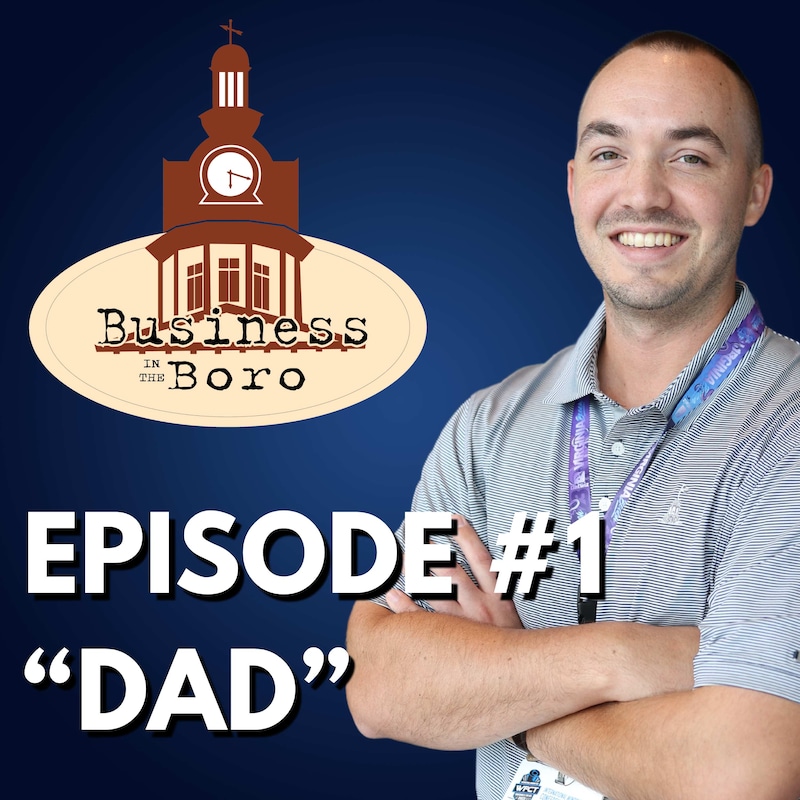
Shownotes
Tyler from Business in the Borough interviews Pat Lordi about his entrepreneurial journey. Pat describes his initial experiences growing up in a hardware store and then taking over the business at a young age after his father's passing. He explains the struggles he faced and the decisions he made that helped him grow the business, including his shift from retail to wholesale. He talks about the importance of hard work, customer relations and understanding the industry. Pat also shares the story of how a soft pretzel at a trade show led him to land a major customer. Finally, he discusses selling his business with his family and the importance of adaptability in entrepreneurship.
00:11 Introduction and Background
00:25 The Start of an Entrepreneurial Journey
00:40 Taking Over the Family Business
01:24 Lessons from Father and the Decision to Become a Businessman
02:06 The Impact of Early Business Experiences
03:04 Transitioning from Retail to Wholesale
04:17 Breaking into the Property Management Industry
06:05 Scaling the Business and Overcoming Challenges
07:07 Reaching the Million Dollar Milestone
07:59 Strategies for Continued Growth
11:41 The Importance of Personal Relationships in Business
12:45 Leveraging Trade Shows for Business Growth
16:28 Advice for Aspiring Entrepreneurs
19:46 The Journey to Becoming a Self-Made Millionaire
20:04 Reflections and Future Plans
22:04 Conclusion and Preview of Next Episode
Transcripts
Hey, Murfreesboro, this is Tyler with Business in the Borough.
2
:where every business has a story and
every story deserves to be heard.
3
:Now, throughout this podcast, we're
going to be interviewing local businesses
4
:throughout Murfreesboro, but today
I've got a special treat for you guys.
5
:All the way from Pennsylvania to
you he's Pat Lordi, to me, it's
6
:dad, the one that inspired me to
start my entrepreneurial journey.
7
:Pat Lordi: I grew up in the, in a
retail hardware store with my father
8
:who was in the business for many years.
9
:Back in 1985, , unfortunately he
passed away and left the business.
10
:Pat Lordi: I decided to
take the business over.
11
:Based on my experiences with him
learning through him as a young child
12
:growing up in the store, starting
off as a floor sweeper and inventory
13
:clerk learning the books, et cetera.
14
:It inspired me to really do my own thing.
15
:And yeah, it was quite a journey.
16
:It started with when he passed
away, running the hardware store.
17
:Unfortunately, after a year, my mother
ended up selling the business and it
18
:left me with a crossroads of a decision
to make do I go to work for somebody or
19
:do I take what I learned from my father
and apply it to being an entrepreneur?
20
:And I decided to second.
21
:There we go.
22
:I decided to become a business man.
23
:And that's what it began.
24
:Tyler Lordi: So you could say really
being an entrepreneur is in our blood.
25
:Pat Lordi: It certainly was in mine and
I really didn't think, I thought I would
26
:have a longer journey with him, with my
father, but I never thought of myself
27
:doing anything different, to be honest.
28
:It's all I ever knew as a kid growing up,
listening to his business stories watching
29
:him conduct business as a professional and
similar to your childhood, it was a win.
30
:It was better than any
college course I ever took.
31
:For sure.
32
:Tyler Lordi: Definitely.
33
:That college was pretty expensive.
34
:It was an expensive hobby.
35
:You could say,
36
:Pat Lordi: yeah, I felt
that a couple of times.
37
:Tyler Lordi: Talking about, your dad, what
was one of the best stories that, he told
38
:you that kind of impacted, your decision.
39
:Pat Lordi: Some of the life
lessons are really important.
40
:So what you go through in
your life lessons as a child.
41
:Through character moments, through
teachings, oftentimes apply to business.
42
:So I remember my father always telling
me when I was that 13 year old doing his
43
:general ledgers and I knew what to do when
I was giving him advice at 13 years old.
44
:He used to tell me to be quiet.
45
:Open my eyes and listen.
46
:And, a lot of times we speak first
and we don't really hear what people
47
:have to say or what their needs
or concerns are before we speak.
48
:So I thought that was valuable.
49
:And obviously learning how to talk to
people and the importance of customer
50
:relations and how my father really dealt
with his customers as the most important
51
:aspect of his business is really where
I learned and applied it on my own.
52
:Tyler Lordi: Yeah, and you can
take that a long way for sure.
53
:Mom sold the business.
54
:What did you do next?
55
:Pat Lordi: Here we go.
56
:What do I do?
57
:Obviously you go from a little
bit of security to zero.
58
:And a lot of people that start a business
oftentimes don't have guarantees.
59
:There's no recipe for 100 percent success.
60
:It's a crapshoot sometimes.
61
:And it certainly was for me as
a 18 year old, what do I do?
62
:So I decided to go out and hustle.
63
:And part of what I could do the
best is to go out and hustle.
64
:I started a company in the little
bit different than a brick and mortar
65
:that my father had as a retail store.
66
:I decided to start a wholesale company
selling to contractors, hardware
67
:supplies, construction supplies.
68
:Et cetera.
69
:And I was running around in my own
vehicle, just going to job sites and going
70
:to customers and selling for a living.
71
:And it worked out well, the
construction industry is a little bit
72
:unstable, it's unstable, especially
on the financial side, because
73
:unfortunately you might have somebody.
74
:doing contracting work in one town
and then the next day they're gone.
75
:So it was a little bit
of a eye opener, right?
76
:But it really enabled me to get my start.
77
:And after a couple of years, I thought
that there would be more for me.
78
:I decided to dive into a little
bit of a different industry.
79
:That's when I went to rep for a company
out of Maryland who was breaking into
80
:the New Jersey, Pennsylvania market
selling to apartment buildings to
81
:property management and within two
months I became their top salesperson,
82
:came off of salary, went to draw and
decided to do that for the next year.
83
:Tyler Lordi: That's awesome.
84
:Now talk to us about how you
got to that level so quickly.
85
:A lot of people take forever, especially
they're they're young and they're
86
:trying to ramp up their sales skills.
87
:What kind of stood apart with
you versus everyone else?
88
:How did you get to that level so quickly?
89
:Pat Lordi: Hard work, customer relations.
90
:I really didn't have, they didn't have a
clientele base in the Pennsylvania market.
91
:So it was up to me to knock on
doors and to use a high level of
92
:persistence to establish clients.
93
:There's obviously, they had a reputation
in the Maryland market that kind of
94
:carried them, up into the Pennsylvania.
95
:New Jersey market.
96
:But that's when I really finalized
that, when you're still repping
97
:for somebody you have, you're
not a full entrepreneur, right?
98
:You're not, you're working for
somebody versus working for yourself.
99
:And that's what I
realized after 12 months.
100
:of being their top salesperson
that I wanted much more.
101
:So I advanced my sales rep
mentality and started picking up
102
:different product lines at the time.
103
:I still had my company, but I
wasn't fully engulfed into the
104
:property management industry.
105
:After I left that company within a year,
that's when I decided to go full scale
106
:on my own into the apartment industry
with my connections, with very little
107
:resource, very little finance, but decided
to start the beginning process of growth.
108
:So when you do that, the
risk obviously is dramatic.
109
:It's pretty, pretty high intense.
110
:But at the end of the day, I
felt confidence in myself that
111
:I could go out and I could sell.
112
:And I could build customer relationships.
113
:It was just a question of now I'm building
my own part numbers and I'm starting
114
:to establish the beginning phases of my
company with a little bit of experience
115
:that I had certainly as a child growing
up in the hardware business, but certainly
116
:into that property management industry.
117
:So as we started climbing $400k, $500k,
$600, we started reinvesting into new
118
:Inventory, we started to look at the
way we were buying material tried to buy
119
:things a little bit less expensive based
on volume, looking at alternative product
120
:categories that may have been an option.
121
:So if you didn't want the best
product in a certain category,
122
:we had a secondary option that
was a little bit less expensive
123
:and a little bit less in quality.
124
:So not everybody wants the best, not
everybody wants the worst, right?
125
:So that certainly helped
us get to that next tier.
126
:And we started to approach
a million dollars.
127
:And then I said to myself,
Jeez, this is doable.
128
:We had the recipe, we
had the customer base.
129
:We had really pushed to grow each customer
to gain an all exclusive relationship
130
:with customers where they can rely on
us for just about everything they need
131
:to purchase because of our dependability
and our product, best product offering.
132
:That they didn't really need to shop
with two or three different vendors.
133
:So that started to really increase
our numbers and get to that, that
134
:first million dollar plateau.
135
:Once we hit it, I remember
sitting in the office going, I
136
:can't believe I just did that.
137
:What a great thrill.
138
:The problem is now you get to a million.
139
:Now you're wondering how to get to 1.
140
:5.
141
:Tyler Lordi: More money,
more problems, right?
142
:Yeah, no, definitely.
143
:I'm sure that was an amazing
feeling, but I don't obviously
144
:know it didn't end there.
145
:So what do you, what did you do?
146
:What did you decide to be like,
okay, this is what we're gonna do
147
:next to get to that next level.
148
:Pat Lordi: Push a little harder.
149
:Obviously we had our
established relationships.
150
:We had our reputation.
151
:The foundation was built.
152
:The dependability and the
industry reputation was there.
153
:Where I thought it was time to really amp
up a little bit and so we added a person.
154
:We had an additional employee.
155
:Again, we reinvested into
additional inventory.
156
:We bought a second truck, we hired
a second driver, and that could
157
:really elevate our distribution,
which certainly affects our numbers.
158
:So it was really a situation
where we were ready to launch.
159
:And our goal was not the 1.
160
:5, but it was to get to 2 million.
161
:The other thing that happened
was we started concentrating.
162
:On companies that had maybe
six, eight, 10, 12 properties.
163
:So we wanted to try and
add at least one portfolio.
164
:We did that probably about maybe
15 years in 12 to 15 years in,
165
:we added another portfolio.
166
:We were ready.
167
:We certainly would have been ready.
168
:The first eight years, seven years, but
we were ready and we added, and that
169
:certainly allowed us to jump over that 1.
170
:5 into that 1.
171
:8, almost 2 million range.
172
:And now all of a sudden we had to
ask ourselves, okay, part of what
173
:we need to do as entrepreneurs is
assess our daily situation and what
174
:it is that we're looking to do.
175
:Are we accomplishing our goals?
176
:Are we still staying within our
principles that we establish?
177
:And the foundation that we established.
178
:And are we able to fulfill
our customer needs?
179
:To their expectations and if we're not
able to do that, do we continue to push
180
:forward or do we take a step backwards
and fortunately I was able to, again,
181
:ramp up, get ourselves in a situation
where we're now handling 2 million and
182
:then the question now becomes, okay,
what's the next, what's the next step
183
:and eventually what's going to happen is
you're going to put people in positions
184
:to allow you to help you do that, right?
185
:Can you rely on other people more
than yourselves as an entrepreneur?
186
:My answer is no, but it's like very
hard at the end of the day, if you can
187
:get mind like people and you can get
people that understand the importance
188
:of what the company's trying to do
and how it's important to take care of
189
:clientele, then I think you're fine.
190
:So we had gotten over that 2 million hump.
191
:We went to a different, a little bit
larger facility and really tried to
192
:kind of balance all the challenges.
193
:Now, again, there's financial challenges.
194
:I've never used commercial credit.
195
:Certainly didn't use it
throughout this time.
196
:All of our inventory was always paid for.
197
:And one of the other factors
too, is evaluating your finances.
198
:When entrepreneurs have a business,
they oftentimes wear different hats,
199
:they're the salesperson, they're
the inventory control expert,
200
:they're the warehouse manager.
201
:They're the accountant, right?
202
:And so you have to really know what your
company is tolerating on a daily basis and
203
:whether it's time to take that next step.
204
:And I felt it was time.
205
:Really the difference between us going
from 2 million to 3 million was adding
206
:another portfolio, which we were able
to do, which literally took us about
207
:a million dollars up in an uptick.
208
:Now all of a sudden we got a different
set of problems this is when you
209
:started to come into the picture after
graduating with honors from college.
210
:Now you come in and all of a sudden.
211
:Now the company is going to continue
to go upward because the foundation
212
:and the core principles didn't have
to readjust, didn't have to be sold.
213
:They were only there when you came in and
you just took the ball and ran with it.
214
:So it became a little bit easier to
get over to that 3 million fees and
215
:sustain it, which is oftentimes the
challenge where we can get there, but
216
:how do you sustain it to a level of
satisfaction, both from the client.
217
:So having that situation where you
have a lot of different options
218
:today in regards to marketing.
219
:Hiring a company like yours to create
a website, which you did a great job
220
:doing for my company, , other ways
that you can innovate, and create,
221
:opportunities to get in front of customers
is a positive, but in my personal
222
:opinion, I don't think anything beats
that personal one on one relationship
223
:with a customer, knowing personally
what they want, when they want to have
224
:it, how they want to have it, having
the ability to be able to negotiate.
225
:Tyler Lordi: Definitely.
226
:At the day, people buy from people.
227
:Right.
228
:People buy from people and having
that connection allows you to
229
:give them exactly what they need,
allows you to upsell your products
230
:.
And services, it just allows you to build that relationship.
231
:So that's, what's awesome about having,
a local community business, but I
232
:knew you had a lot of insight on that
with the way you built your business.
233
:So that's awesome.
234
:Let's talk about some other ways to,
I know trade shows were really big in
235
:the apartment industry and, we went
all the time to these trade shows.
236
:So let's talk about, the different unique
strategies that we did, the different,
237
:nuances and then some relationships
built along the way through that.
238
:Pat Lordi: Yeah.
239
:So that it's a great opportunity
to, certainly get in front of the
240
:industry, present, uh, brand new
relationships or new opportunities.
241
:A lot of times what we would
do is we'd create a promotional
242
:flyer for that particular show.
243
:Create maybe some new product
Indo introductory opportunities.
244
:One of my reps would be able to display
a brand new drain cleaning machine
245
:that may just come into the industry.
246
:But one of the greatest things that
happened to me at a trade show, happened
247
:in my early years of, being a business.
248
:And that was one of my long lasting,
biggest customers had a portfolio.
249
:We sold about 15 of their properties.
250
:We used to give out soft pretzels to
everybody and we see the person that got
251
:one and the person would take 10, right?
252
:Tyler Lordi: Listen,
these guys were hungry.
253
:Pat Lordi: Right, and that's okay because
you never know those 10 pretzels could be
254
:worth, you know, 50, 000 sales someday.
255
:Right.
256
:But, um, one of the owners of, of this
particular company who I knew back when
257
:I was a rep, he came to the show with
his daughter and a lot of times the
258
:owners, the big boys of these, companies
would come later on in the afternoon.
259
:So when everybody was packing
up to go home or to get to the.
260
:The, after trade show party, I stayed
till the very last second and I happened
261
:to run into this owner who was with
his daughter and I asked his daughter
262
:if she would like a soft pretzel.
263
:And, uh, she, she said, yes.
264
:Uh, so I gave her a soft pretzel
and I asked her, she liked
265
:mustard on the pretzel, which kind?
266
:So we'd have yellow, we'd
have honey mustard, we've had
267
:golden, hot spicy mustard.
268
:And so she said, I'll
take a honey mustard.
269
:So I put it on the pretzel for her.
270
:Well, the owner Was extremely
impressed with that time that I was
271
:able to spend or offered to spend
with his daughter We ended up being
272
:a 35 year Relationship customer.
273
:I'm not sure if it was just
because of the soft pretzel, but
274
:at the end of the day I think that
275
:Tyler Lordi: I'd like to think so.
276
:Pat Lordi: It'll be the the best
pretzel I ever bought, right?
277
:Right, but um, it just shows you that
if you're genuine if you show Um,
278
:the human side of this instead of the
financial side, that that goes a long way.
279
:Tyler Lordi: Definitely.
280
:Definitely.
281
:Yeah.
282
:Talk about ROI,
283
:Pat Lordi: I always felt that if I could.
284
:Reach out certainly one the trade show
was to keep the core clientele attached.
285
:So you're representing Your
ability to show face that
286
:you're a legitimate company.
287
:You're in it.
288
:You're in the game with everybody else
But more importantly I always wanted to
289
:come away with a handful of perspective,
what I thought were serious, inquiries
290
:and maybe gain a customer or two, right?
291
:It's the percentages, if you
can drum up a hundred people,
292
:you might get, you know, 1%, 2%.
293
:It has a lot to do with relationships
and your ability to have fun and show
294
:a personal side that a lot of people
fail at when they own a business.
295
:People think that they form a business
and people are just going to buy from
296
:the product or from the brick and mortar.
297
:That's not who runs a
business successfully.
298
:It's the people inside.
299
:It's the ownership.
300
:It's Rest of the people, right?
301
:So yeah, there's certainly
some opportunities.
302
:Tyler Lordi: I love that.
303
:Yeah.
304
:So a lot, a lot of organic growth, a lot
of boots on the ground, a lot of just,
305
:you know, old school methods and some of
them are, if not all of them are still
306
:very valid today and really shouldn't be
forgotten about, they should be in mix
307
:with, a digital strategy, so to speak.
308
:Now, anyone listening out here, whether
they're starting out or maybe they're
309
:struggling to scale, what's like
the best advice you have for them?
310
:Pat Lordi: I think the, again,
first and foremost, you have to know
311
:your industry and know your core
values within your business, right?
312
:Believe what it is that you're doing
and the service that you're providing is
313
:of extreme value, whatever that product
or service might be, that you do it
314
:to the fullest extent of your ability.
315
:if you do that, certainly that's
how we can lay our head on the
316
:pillow and go to sleep at night.
317
:If you can't do that or need to do it
in different facets, then you need to
318
:obviously look at personnel to do that.
319
:Being an expert in your industry is
probably the biggest thing because there's
320
:always somebody that knows something more
than you or know something different.
321
:Tyler Lordi: That's huge.
322
:That's definitely huge.
323
:And I think, uh, a lot of
people can learn from that.
324
:They want, they want
the, the fast returns.
325
:They want the big businesses quickly,
but there's a lot of sweat equity.
326
:You gotta, you gotta put in.
327
:Pat Lordi: And you could get lucky.
328
:You know, there, there are situations
where, you know, you never know
329
:you could buy a stock and it could
split tomorrow and all of a sudden
330
:you're twice as wealthy, right?
331
:But at the end of the day, most businesses
fail in the first 7 years, right?
332
:And that's not because it could
be today, but it's not because of
333
:maybe it's not because of finance.
334
:Maybe it's not because of lack of trying,
but, um, if you know your industry
335
:and you try to do things better than
everybody else, especially in a local
336
:situation where there is maybe a couple
different businesses that are about
337
:the same in an offering, just be better
than them, make it a conscious effort
338
:that you're going to be the first one in
the building and the last one to leave.
339
:That's what I did for, for 35, 40 years.
340
:I was always the first
in and the last out.
341
:Um, Michael Jordan was always
the first in the gym, last one to
342
:leave when everybody was home, he
was shooting free throws, right?
343
:There's a reason why he was one of
the greatest players in the world.
344
:So I, that's probably the biggest thing.
345
:That being said, if you work hard.
346
:Nothing says that you can't reap
the benefits and be a little bit
347
:different later on in your career.
348
:I chose to be a hard worker all the time.
349
:And that's the way I was patterned.
350
:That's the way I was taught.
351
:I don't know that I could have changed
even if I wanted to, because I just
352
:knew head down and grind it out.
353
:But you know that there might be some
different ways to do it for different
354
:businesses and my industry, I needed to
be there all the time for my customers.
355
:Not because I had to,
but because I wanted to.
356
:Tyler Lordi: A lot to learn and.
357
:And to think about when, you know,
someone's starting a business
358
:or maybe that they're stuck,
like, why are we not growing?
359
:Like we should go back to
more traditional methods.
360
:Maybe, maybe you got to work harder.
361
:Maybe I'll stay later.
362
:Pat Lordi: And that could too
be economical reasons, right?
363
:If your industry's in a.
364
:In an economic turn, maybe it's in
an educational turn, maybe it's in a
365
:innovation turn, whatever the situation
is, adaptability and flexibility
366
:is important because I know one
way of having a customer relation.
367
:If that kind of shifts a little bit and
I don't shift with it and adapt with
368
:it, then I could pay the price for that.
369
:So having the flexibility
to say, okay, I know this.
370
:But I can also consider this where
there's something different if
371
:that comes to, to be in the play.
372
:And that's important too.
373
:Tyler Lordi: Yeah, definitely.
374
:Started a business as when
were you like 19, 20 years old,
375
:Pat Lordi: almost 18 years old,
376
:Tyler Lordi: 18 years old.
377
:Um, we won't tell everyone how old
you are now, but, we'll just say
378
:maybe like mid fifties or so where
you were able to sell the business.
379
:What's next for you?
380
:Pat Lordi: Trying to enjoy some of the
fruits of the labor, um, I, when I sold
381
:the company, uh, we sold May 1st, um, I
never thought I'd ever be in a situation
382
:where I'd have the opportunity to do it.
383
:Um, I decided that it was
time, it was a family decision.
384
:It wasn't just my decision.
385
:It was, um, it was a
family decision as well.
386
:And once we made that decision, I said,
I'm going to take a year to figure out
387
:what I want to do, fortunately, I was
able to become a self made millionaire
388
:from the sale, uh, through the hard work.
389
:But, at the end of the day, I don't
need to go to work for somebody else.
390
:If I choose to do it, I will.
391
:If I choose not to do it, I won't.
392
:I can pretty much do what I want to do
when I want to do it, how I want to do it.
393
:Which is pretty unique.
394
:Tyler Lordi: That's the dream, right?
395
:Pat Lordi: Right.
396
:Unless I'm living in my
mom's basement, right?
397
:It's pretty, pretty unique
to be able to do that.
398
:Because of everything that you did prior,
and that's the whole thing, I never
399
:borrowed a penny from anybody, I never
had help from anybody, I started from
400
:zero, and I ended up different than that.
401
:At the end of the day, from an
ego perspective, if I threw this
402
:into an ego conversation, what
much more could you ask for?
403
:Right, you accomplished, and
a good friend of mine said it,
404
:he goes, you went from A to Z.
405
:And you're reaping all
the benefits from it.
406
:And, there, there's some truth to that.
407
:There's parts of it
there's vacancy, right?
408
:So when you're used to doing all
this, and then you're no longer
409
:doing it, there's some challenges.
410
:There's some, some roller
coasters, some ebbs and flows.
411
:For sure.
412
:But, um, I'm fortunate.
413
:I've got a great family.
414
:I've got a great supporting.
415
:Uh, wife and I, as much as I miss
it, sometimes, uh, I'm able to,
416
:to know that I finished on top,
which again is a nice situation.
417
:Tyler Lordi: Absolutely.
418
:Well, I'm so happy you were able to
fly down here and tell your story.
419
:I'm so glad you guys got to listen
and hear the ins and outs and,
420
:the journey behind it all.
421
:So thanks for coming out.
422
:Pat Lordi: Appreciate it.
423
:Best of luck.
424
:Tyler Lordi: Thank you.
425
:Thank you.
426
:Again, this is a very special episode.
427
:Next time we'll be talking
about businesses all
428
:throughout the local community.
429
:See you soon.